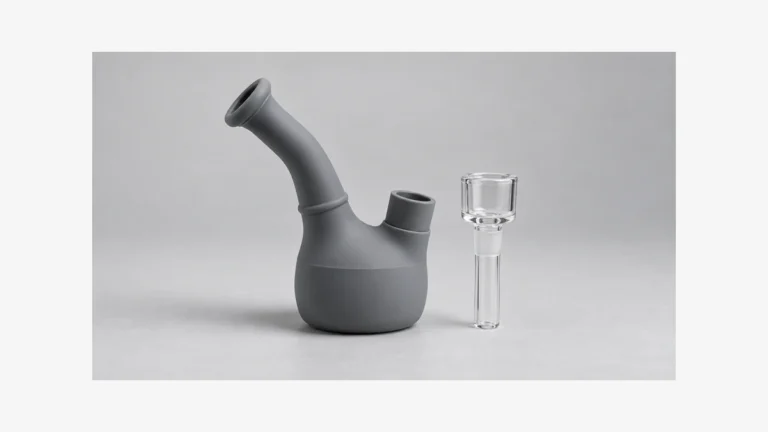
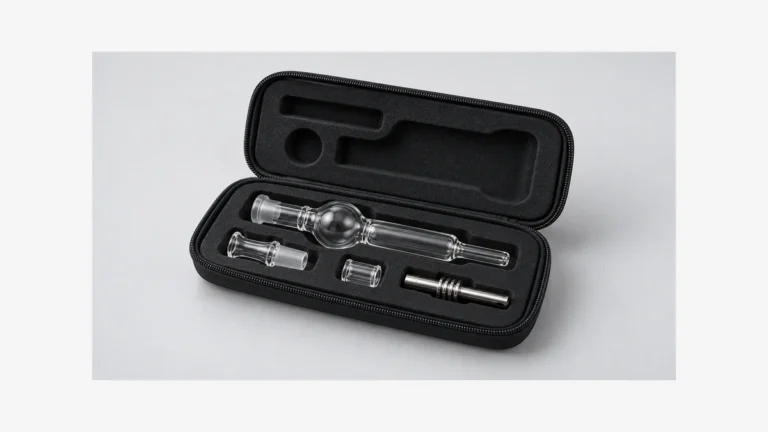
The brush reaches the mouth of the bong, but not the ring farther down. A longer handle will not solve that if a fixed ice catch blocks the head. For a bong cleaning brush, the useful question is whether the whole head has a clear route to the intended surface and back out again. The opening at the top is only one part of that route.
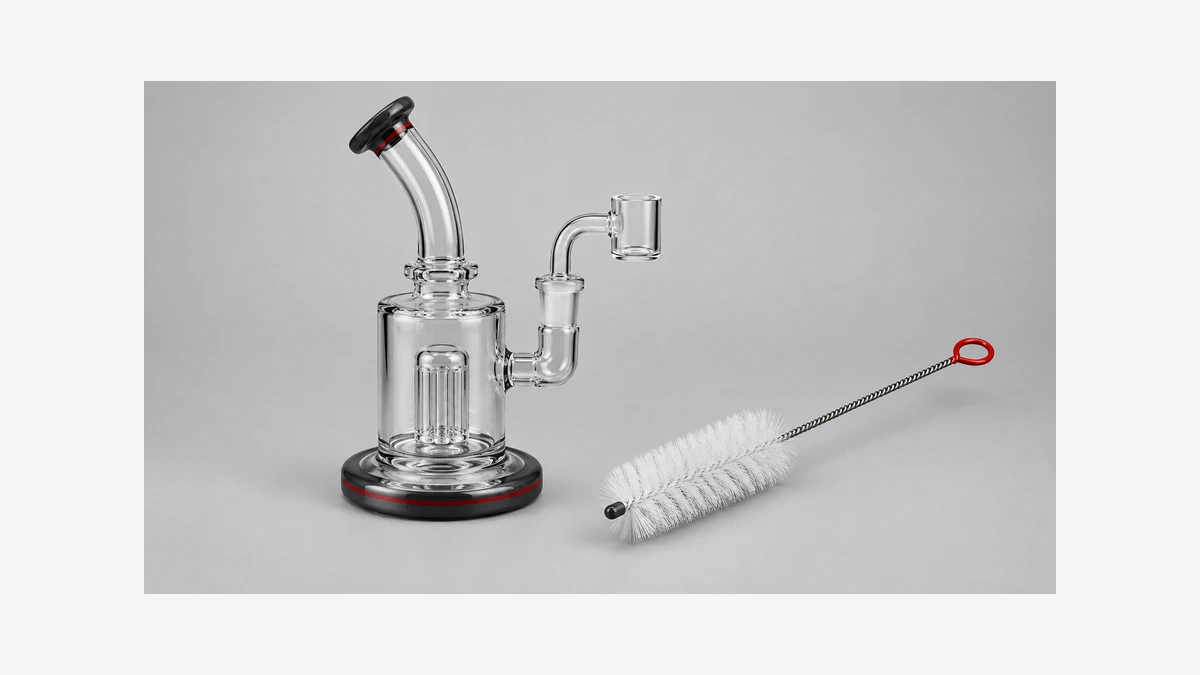
This is the frustration behind several owner discussions: a visible mark seems close, yet the tool cannot approach it. It helps to separate three problems that often get bundled together: access through the glass, the brush’s construction, and identifying the mark. Changing one does not automatically resolve the others.
🚪 1. Start with the route, not the handle length
Look at the empty, cool piece before introducing a tool. A straight opening may lead to a much narrower gap between inward projections. A chamber may be visible through the wall without being accessible from the neck. Visibility tells you where the mark is; it does not establish that a brush can travel there.
In a discussion about a ring below ice catches, replies repeatedly proposed getting a brush through a gap, while another participant pointed out that the owner had already described that access as blocked. The useful information is the obstruction itself. The thread does not establish which particular brush would fit, or that a manufacturer had approved one.
Think of a bottle with a wide body and a narrow shoulder. A tool can fit through its lip and still have no room to turn toward the wall. An internal glass feature adds another restriction. These are different shapes, so a photograph of the outside silhouette cannot supply the missing internal clearance.
For an existing piece, describe the accessible route in ordinary language: an open straight neck, a neck interrupted by catches, or a side opening connected to a removable part. If the route disappears behind opaque decoration, say that it cannot be seen. Do not turn an unseen passage into an assumed open passage just because a brush is flexible.
📏 2. A bong cleaning brush has several different dimensions
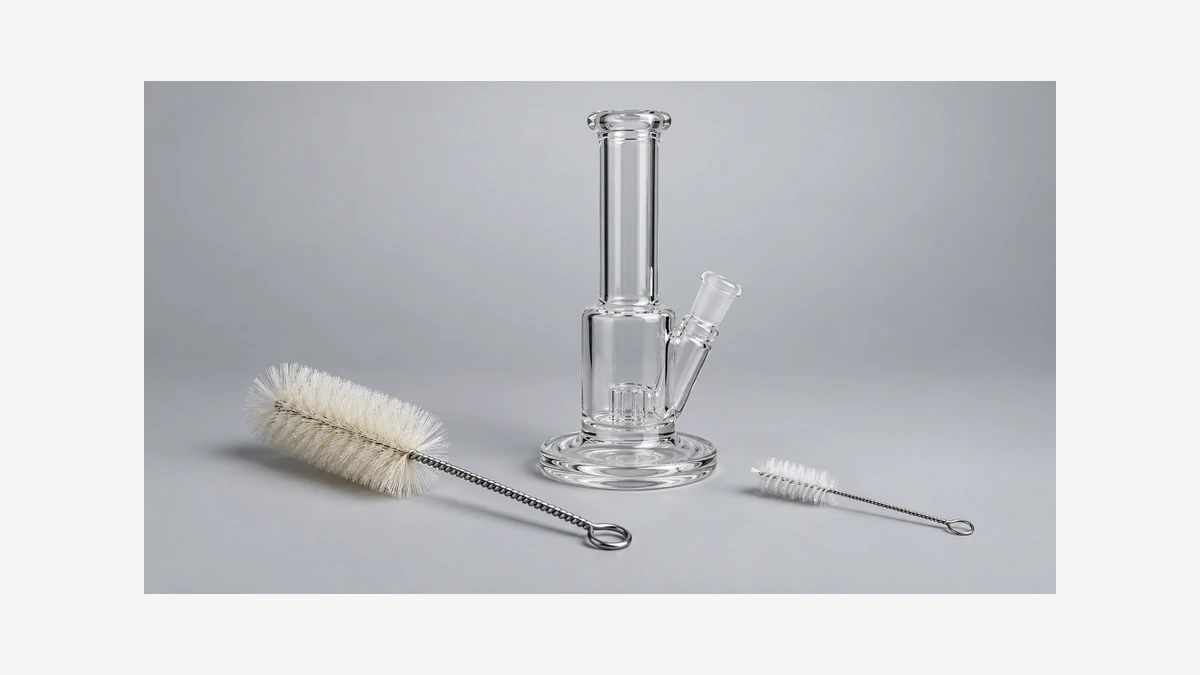
The package length is often the easiest number to find and the least complete description. It may include a handle that remains outside the piece. Bristle-head length, head width and usable shaft length describe different things. A short broad head and a long narrow head can share the same overall tool length while approaching entirely different surfaces.
The widest part of the head matters at an opening, but so does the shape behind it. A rounded end, a cylindrical bristle section and a broad sponge end do not occupy the same outline. Describe the actual head rather than assuming every item called a bottle brush has the same construction.
📐 2.1 Record accessible measurements without probing blind gaps
A ruler beside the opening can establish an accessible external dimension. It cannot establish a hidden gap deep inside the chamber. Keep measurements and estimates separate in a note: the visible opening can have a measured width, while the clearance between internal catches may remain unknown. This prevents an approximate photograph from becoming a false exact fit claim.
Length also needs a named starting point. A measurement from the end of the handle differs from one starting where the bristles begin. When asking about an existing tool, include a photograph of the whole brush beside a scale, then a separate photograph of its head. Neither photo requires forcing the tool into the glass to demonstrate a fit.
An owner asking which brush fits down a neck received several different brush suggestions. Those replies reveal how differently people interpret the same request. Without the particular opening and internal route, a description such as long or small still leaves the main question unanswered.
The broader cleaning-kit explanation covers the separate jobs assigned to different tools. Here, the narrower point is that a collection of brush sizes does not create access through fixed glass. Record the restriction before treating another tool in a kit as the answer.
For a simple description, imagine two brushes of equal overall length: one has bristles only at the end, while another has a long cylindrical head. Even if their widest dimensions match, they occupy different lengths inside a neck. This is an illustrative comparison, not a fit calculation. The actual tool still needs its own dimensions and construction identified.
A handle measurement also needs to account for the section intended to remain outside the glass. Treating every centimeter of the tool as usable reach can hide that distinction. Ask which dimension the maker publishes rather than subtracting an assumed handle length or guessing how far a flexible shaft can be pushed.
🧽 3. Inspect the working surface as well as the bristles
A brush’s soft-looking exterior can hide a different structure underneath. Notice whether the end is covered, whether the head has changed shape, and whether the shaft or a hard fitting is exposed. The relevant surface is whatever could actually contact the glass, including the end and the sides of the head.
Laboratory-glass manufacturer DWK recommends soft, flexible sponge brushes and warns against hard utensils and wire-core brushes that may scratch glass. This is a limited glass-care reference, not approval of a particular brush for an unidentified bong. Its chemical procedures should not be transferred to an unknown mixed-material assembly.
A worn brush also deserves its own description. Missing bristles, a split sponge or a displaced end cover are visible changes to the tool. They do not tell you what caused a mark inside the glass. Keeping the two observations separate avoids blaming a tool without evidence or continuing with it simply because the glass still looks clear.
Photograph the brush outside the piece if its construction is unclear. Do not demonstrate the suspected contact by repeating it. A close image of the head can show the exposed part more clearly than a photograph through curved glass. The related glass-pipe kit guide explains why tool surface and access belong in the same conversation.
🧩 4. A removable part can change access; a fixed feature cannot
A separate downstem may have its own documented removal and care instructions. A fused ice catch is part of the glass body. These can appear close together, but their roles are different. The presence of a seam elsewhere on the piece does not mean every obstruction can be removed.
Use the maker’s parts diagram or care instructions to identify what is intended to separate. If a component is stuck or its identity is uncertain, that is a separate support question. This article cannot establish removability from a photograph, and resistance is not a reason to apply more leverage.
Once a documented removable component is outside the body, it becomes a separate item with its own openings. Its cleaning instructions still matter. Access to the main chamber does not mean every small passage in the removed part is now reachable, and an open chamber does not establish that its surfaces tolerate every tool.
A paired magnetic pad is a different tool arrangement, discussed in the magnetic-cleaner access and retrieval article. It should not be treated as a universal substitute when a shaft brush is blocked. The inner component also needs an appropriate opening and a way out. Different mechanisms leave different unresolved fit questions.
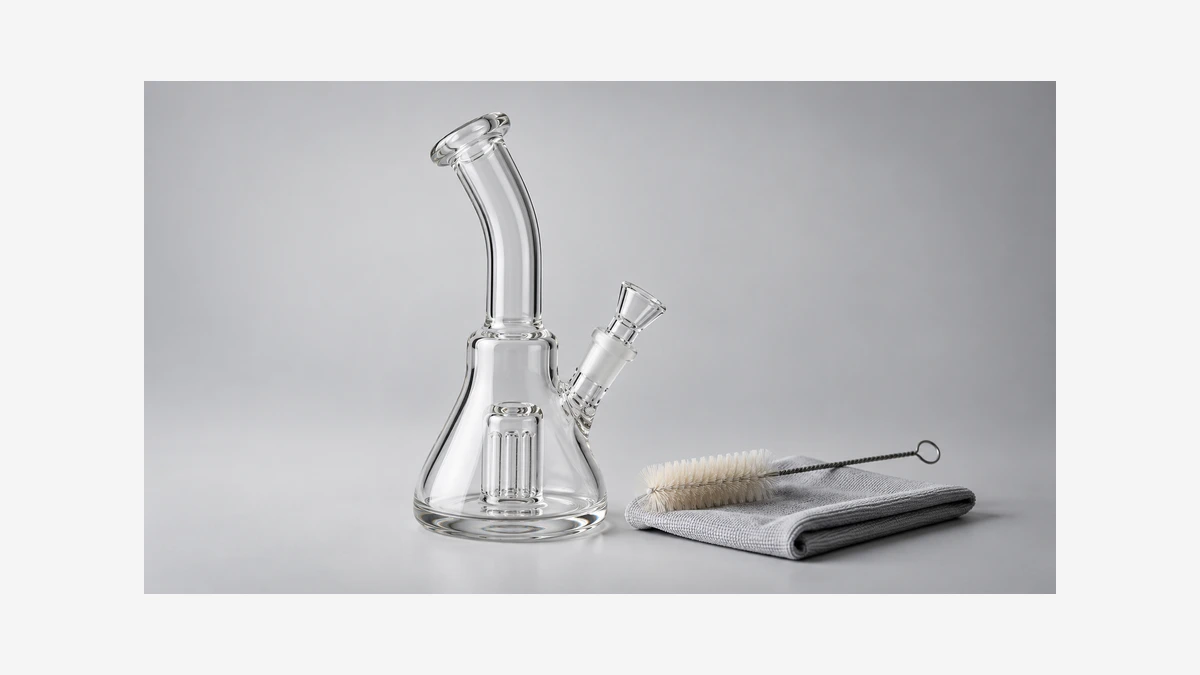
🔍 5. Describe a mark before deciding what it is
A brown ring, a cloudy patch and a fine line are descriptions, not diagnoses. A photograph may show their position without establishing their composition or depth. A stubborn appearance does not prove that harder scrubbing is appropriate, nor does a pale appearance establish that a surface is undamaged.
The thread about a brush that would not fit quickly became a disagreement over cleaner and abrasion claims. Those replies are useful evidence of the owner’s confusion, not a controlled comparison. The number of recommendations does not identify the mark or verify compatibility with that piece.
Record whether the mark was noticed before or after a particular event, but keep timing separate from cause. A line first noticed during cleaning may have been hidden previously. Conversely, not remembering an impact is not evidence that no damage occurred. A useful report can state what is known without trying to settle the explanation.
If visible damage is suspected, stop treating the situation as ordinary residue removal and ask the maker about the condition. Do not scrape a questionable line with another object to see whether it catches. A destructive test would change the very surface you are trying to describe.
The location of a mark can be described without putting the brush beside it inside the chamber. A photograph from outside can show that it sits below the catches or opposite the side opening. This preserves the useful spatial information while avoiding another contact with an area whose condition is unresolved.
If the glass has an opaque section, distinguish the last visible point in the route from the position where you think the tool stopped. These may be different. The first can be shown in a photograph; the second is an observation about an earlier attempt. Keeping both labels accurate makes a support conversation less ambiguous.
💧 6. The brush has its own care and drying instructions
Cleaning the glass and caring for the brush are separate tasks. Follow the instructions for the brush’s materials, including its handle, sponge, bristles and any adhesive joints. Permission to use a cleaner on glass does not automatically extend to the tool that happens to touch it.
Look at the brush outside the piece after its own care step. Debris caught between bristles can be harder to notice than material on the outside of a smooth handle. A head that looks different after cleaning should be recorded as a change, rather than assumed to be a harmless cosmetic effect.
Give the brush a separate place while it dries according to its instructions. Do not return a damp head to a closed sleeve simply because the glass is ready for storage. A sleeve may be a dust cover rather than a drying arrangement. Read its intended purpose instead of assigning it both jobs.
Keeping the brush identity with its instructions helps when the original package is gone. A photograph and a short note about the material and head shape are more useful than remembering only the color. That record also prevents care directions for one brush from gradually being applied to every tool in the drawer.
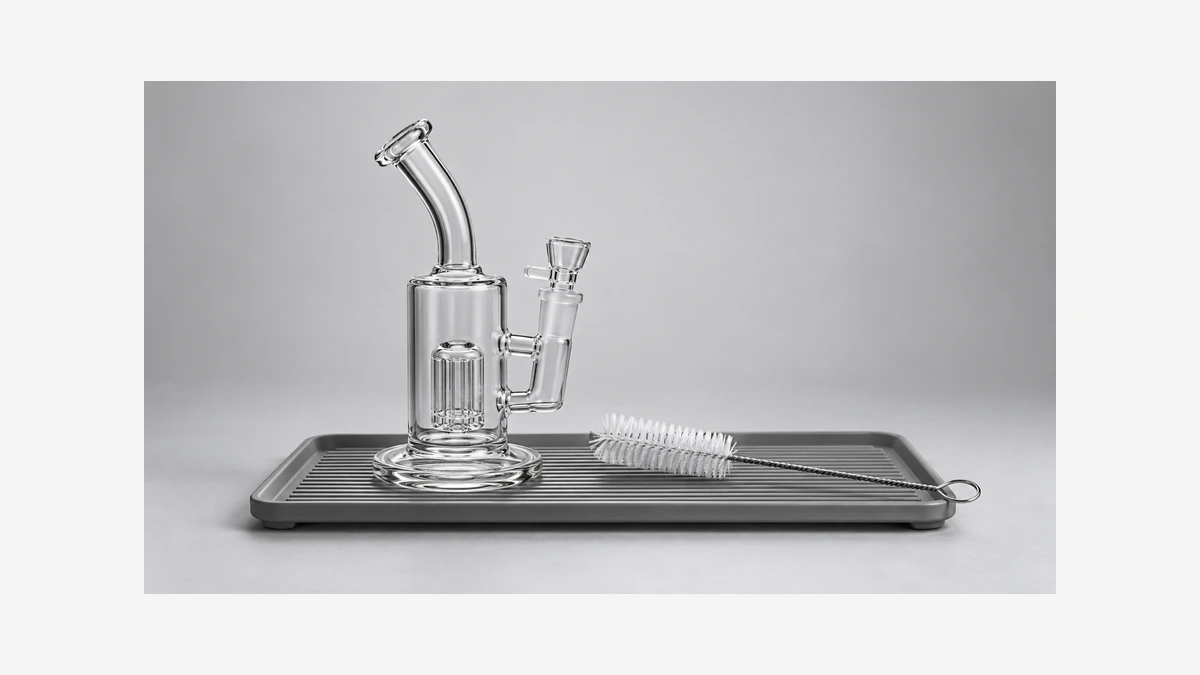
📝 7. Ask an access question someone can actually answer
A clear support request identifies the piece, the intended cleaning area and the obstacle between them. Include an overall photograph, an image of the opening and a view of the visible internal feature. State which components the manual identifies as removable. Leave unknown dimensions explicitly unknown.
Describe the brush separately: head shape, accessible measurements and whether any hard part is exposed. Explain the issue as a route question rather than asking which product is strongest. The answer may be that a particular passage is not intended for brush access. That is more useful than an unsupported promise that enough flexibility will get through.
For undocumented glass, preserve the same record without inventing a specification. There may be no reliable answer about a hidden passage. The concrete next step is a photograph and a precise description of the obstruction, not another attempt to make the head pass a point that has not been identified.