A folding rolling tray earns its space only when it works as a tray after it opens. The useful comparison is not simply folded versus flat. It is whether the hinges disappear beneath a level work surface, whether the edges contain small material, and whether every seam can be cleaned without turning into a permanent residue line.
That tradeoff is easy to miss in product photos. A compact object can look clever while closed and still rock, bow, pinch, or scatter material when deployed. Judge the open tray first, then decide whether the folded package is genuinely easier to store.
🧭 1. A folding tray saves space by adding seams and moving parts
A one-piece tray is structurally simple: the base and raised edge stay in the same relationship. A folding tray divides that surface into panels connected by fabric, living hinges, metal hardware, magnets, or another flexible joint. Each connection creates a place where alignment can drift and residue can collect.
The benefit is real when cabinet depth, drawer width, or transport space is limited. A tray that folds in half may fit where a rigid tray of the same working area will not. The cost is that its most important surface now depends on the hinge settling into the correct position every time.
Open the tray on the same kind of counter or desk where it will normally be used. Press lightly near each corner and along the fold. A panel that lifts when the opposite side is touched will feel unstable once a grinder, tool, or container is placed on it.
Do not assume a stronger hinge is automatically better. Thick hardware can create a ridge through the center, while a soft fabric hinge can let the two panels rotate past level. The best mechanism is the one that opens predictably, supports the surface, and exposes no unreachable pocket.
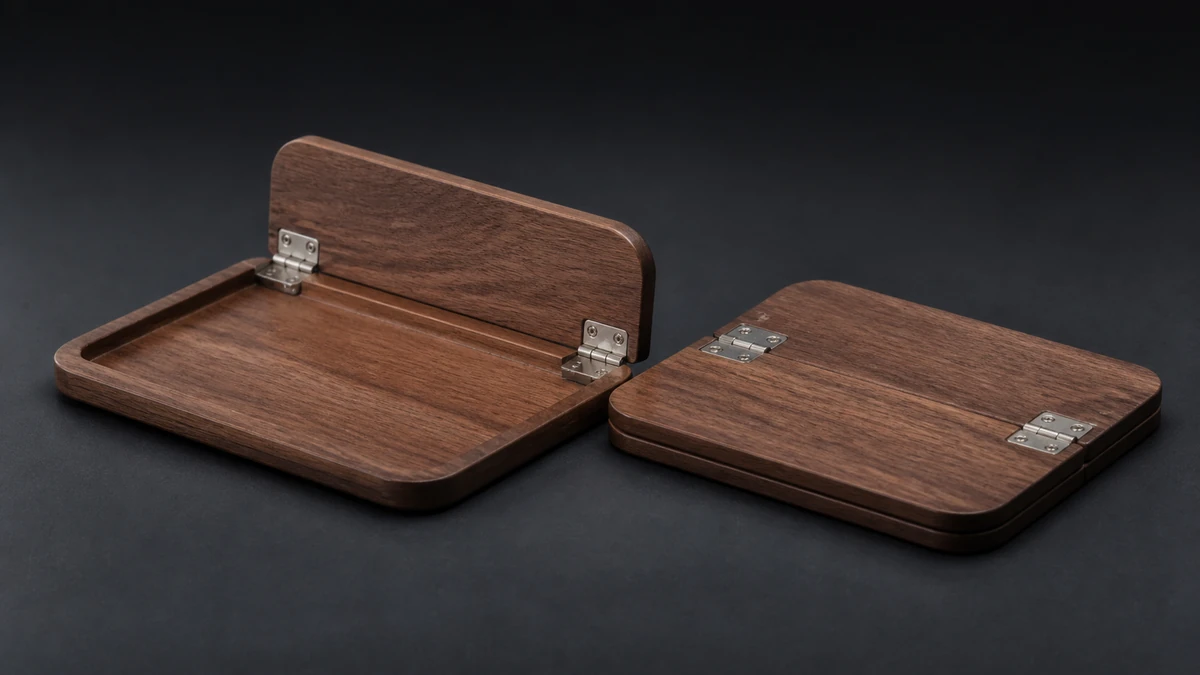
🧩 2. Folded size is useful only if the tray opens flat
Listings often emphasize the closed dimensions because those numbers make portability easy to market. Record both sets of dimensions. The open tray needs enough clear area for the actual routine, while the closed tray must fit the intended drawer or case without relying on pressure to stay shut.
Look at what happens around the fold. A raised center strip divides the work area and makes it harder to sweep material toward one corner. A recessed hinge can create a narrow channel. A magnetic seam may close neatly yet attract small ferrous accessories. None of these details is necessarily disqualifying, but each changes how the surface behaves.
A closure should stay closed during storage without requiring so much force that opening it flexes the panels. Magnets, snaps, and sleeves also need clearance from loose material. If the closing action sweeps across the working surface, clean the tray before folding it.
🔍 2.1 Test the tray with ordinary objects
Place the grinder, brush, and containers that normally occupy the tray on the deployed surface. Check whether their weight pulls the fold out of alignment. Then remove them and sweep a few clean paper fragments across the seam. This simple dry test reveals ridges and gaps without contaminating a new tray.
Portability also means repeated setup. Open and close the empty tray several times and watch whether the edges meet consistently. A product that needs to be bent back into shape on each use is not saving much effort.
🔍 3. Hinges, corners, and closures become residue traps
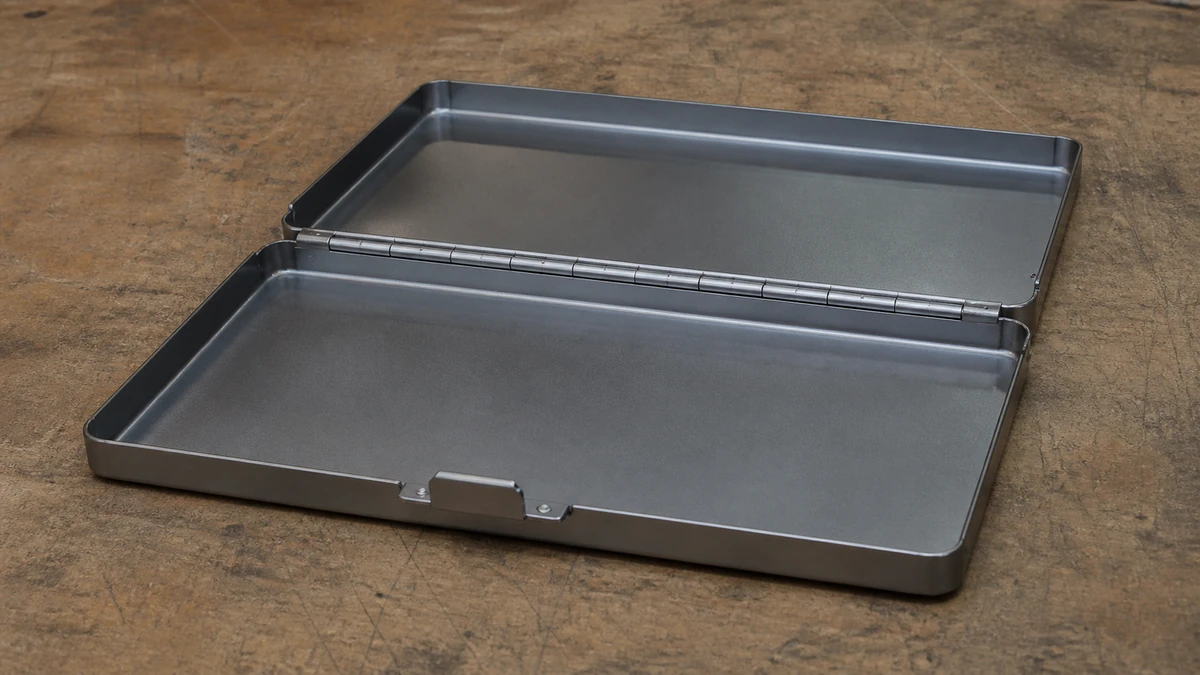
The places that make a tray fold are the same places that make it harder to wipe. Exposed hinge barrels, stitched fabric edges, overlapping panels, and magnet pockets can hold fine debris after the broad surface looks clean.
Inspect the underside as well as the top. A hinge gap that opens toward the table can release material when the tray is lifted. Fabric backing may absorb a spill that a hard top would shed. Mechanical fasteners can also leave raised points that mark a wood desk.
Choose a design that lets you see the entire fold when the tray is open. A wipeable channel is better than a sealed-looking seam whose interior cannot be inspected. If the maker specifies removable inserts or panels, confirm that they can be reinstalled without distorting the hinge.
⚙️ 3.1 Clean before closing
Folding a dirty tray presses residue into its seam and transfers it to the opposite panel. Brush or wipe the surface according to the material instructions while the tray is fully open. Let it dry completely before closing, especially when fabric, wood, or adhesive-backed components are present.
Do not flood hinges or magnets with cleaning liquid. A surface-compatible damp cloth may be appropriate for one construction and wrong for another. Follow the maker’s care guidance rather than treating every metal, wood, silicone, or coated tray the same way.
⚙️ 4. Raised edges and a usable sweep corner prevent spills
Edges give the tray its basic function. They should be tall enough to stop a brush or small tool from rolling off, but not so tall that hands collide with them during ordinary use. On a folding design, compare the continuous outer edge with the joint where two edge sections meet.
A gap at that joint becomes the most likely escape route. A large hinge cover can create the opposite problem by blocking the sweep path. The most usable trays provide at least one smooth corner where small material can be gathered without catching beneath hardware.
Rounded inside corners are generally easier to wipe than sharp boxed corners. A removable corner insert can help only if its underside is accessible and it seats flush. Decorative ridges, embossed graphics, and deep logos add texture that may work against cleanup.
🧼 5. Surface material decides grip, noise, and cleaning
Metal panels feel rigid and make loose tools easy to hear, but a thin panel can flex and a painted finish can scratch. Wood feels quieter and visually warm, yet unfinished edges and hinge holes can absorb residue. Silicone grips objects and tolerates flexing, while soft surfaces can collect lint and may not support a perfectly flat panel on their own.
Coated composites and synthetic fabrics vary widely. Ask what the exposed working surface is, not just what the internal panel is made from. A product described as “wood” may have a laminated top; a “metal” tray may depend on a fabric spine.
Color also affects maintenance. A dark surface can hide debris that a lighter neutral surface reveals. A glossy surface shows smears but wipes visibly clean. The practical choice is the finish on which residue can be seen and removed before the tray is stored.
🛠️ 5.1 Check the product’s cleaning boundary
Confirm whether the top may be wiped, whether the hinge should remain dry, and whether any liner is removable. Avoid abrasive pads on decorative coatings and sharp tools in seams. If odor or staining remains after maker-approved cleaning, replacing an inexpensive insert may be more sensible than scraping the substrate.
🛠️ 6. Portable accessories still need an adult storage routine
A folding tray is portable in the sense that it occupies less space. It is not automatically a sealed case, odor barrier, or secure storage container. Small tools and residue can escape from the sides even when magnets hold the panels together.
Clean the tray, close it empty, and store it with adult-use accessories in an appropriate location away from children and pets. Do not rely on a decorative closure as a lock. If the tray travels inside a larger case, keep clean accessories separate from any used or sticky parts.
Think about the outside surface too. Once folded, the former underside may touch the interior of a bag or drawer. Feet, fasteners, and exposed hinges should not snag fabric or scratch nearby devices.
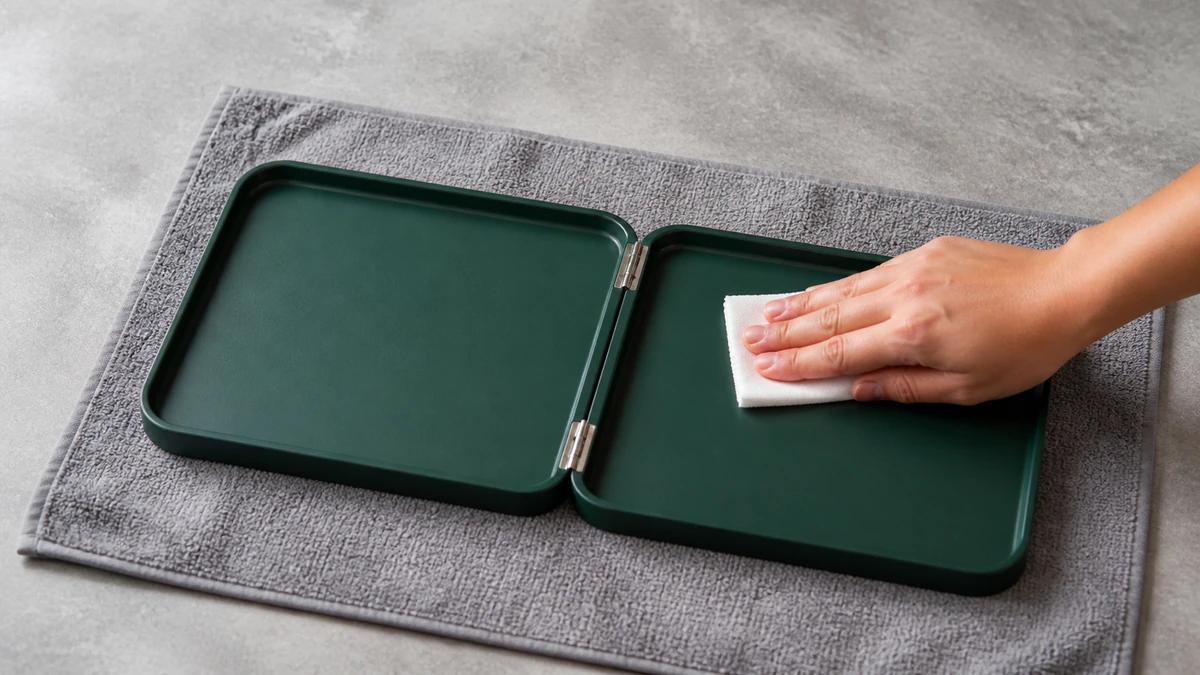
✅ 6.1 Compare folding mechanisms as serviceable parts
A fabric spine can flex quietly but may fray or absorb residue. A piano-style metal hinge aligns rigid panels well but adds a barrel and pin that need clearance. Interlocking plastic folds keep weight down yet can whiten or crack where the material bends repeatedly. Ask whether the hinge is replaceable, stitched, bonded, or molded as part of the tray.
Open the empty tray to its normal limit rather than flattening it beyond the intended stop. Examine the hinge after repeated cycles for loose fasteners, separated adhesive, torn fabric, or a panel edge that no longer meets its neighbor. A moving joint should age predictably and remain easy to inspect.
📦 6.2 Plan the accessory layout before choosing compartments
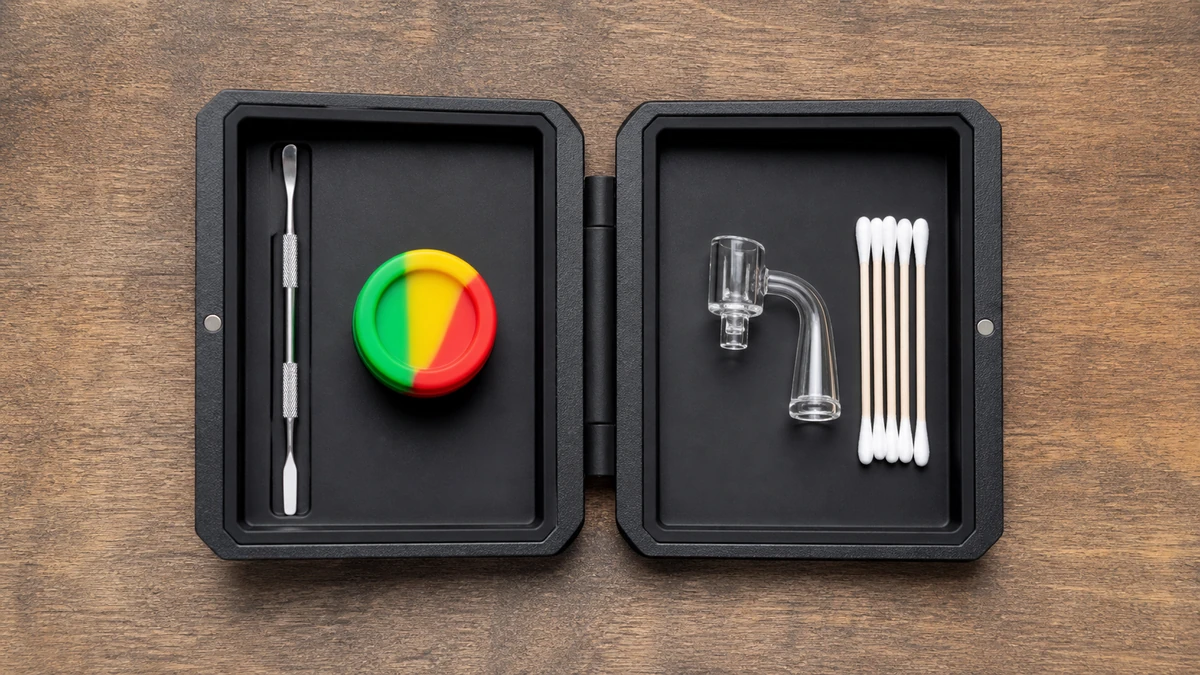
Built-in wells and tool slots look organized when they match the owner’s hardware. They become dead space when a grinder, brush, or container is a few millimeters larger. Trace the everyday objects on paper and compare that footprint with the clear open area. Keep the center mostly uninterrupted so the tray can still perform its basic job.
Deep pockets are not ideal for every small item. A narrow well can trap residue and make a short tool difficult to retrieve. Removable cups are easier to clean if their undersides remain accessible and they do not rattle loose when the tray is folded.
🧭 6.3 Connect the tray to the rest of the routine
A tray does not grind or clean the accessories placed on it. Readers comparing a complete setup can use AOVAPE’s herb grinder selection guide to evaluate cut and cleanup, then review the custom grinder specification guide when branding is part of a commercial project. The vape cleaning kit guide offers the same useful principle for tools: include only items that match the surfaces and openings actually being maintained.
Keep cleaning tools off the working surface until they are clean and dry. A folding tray should simplify setup and teardown, not become a mixed storage area for clean brushes, used swabs, loose tools, and powered devices.
🧩 6.4 Evaluate the tray for a retail assortment
Accessory buyers should sample the opening action, flatness, edge alignment, and cleanup rather than approving from a folded product photo. Compare several production samples on the same level surface and confirm that magnets, snaps, or hinges land in the same position.
Packaging should keep the panels closed without placing long-term pressure on a flexible hinge. Include material-specific care instructions and the true open and closed dimensions so customers can judge both the work area and the storage benefit.
Finally, lift the open tray by the edges only if the maker presents it as movable while deployed. Some folding designs depend on the table for support and should be cleared before they are relocated. Knowing that boundary prevents a convenient fold from being mistaken for a carrying handle. Test that movement with the tray empty first. Check the closure again after cleaning because trapped lint or residue can keep magnets and latches from seating evenly.
✅ 7. Choose the simplest fold that stays flat and cleans easily
Start with the open working area, edge continuity, and a smooth sweep corner. Then inspect the hinge, closure, and underside for places that cannot be reached. Finally, confirm the folded dimensions actually solve the storage problem you have.
A folding rolling tray is a good choice when a rigid tray will not fit, the deployed panels stay level, and the seams remain visible and washable. If the fold creates a ridge through the middle or requires a complicated cleaning routine, a smaller one-piece tray may be the more portable option in practice.