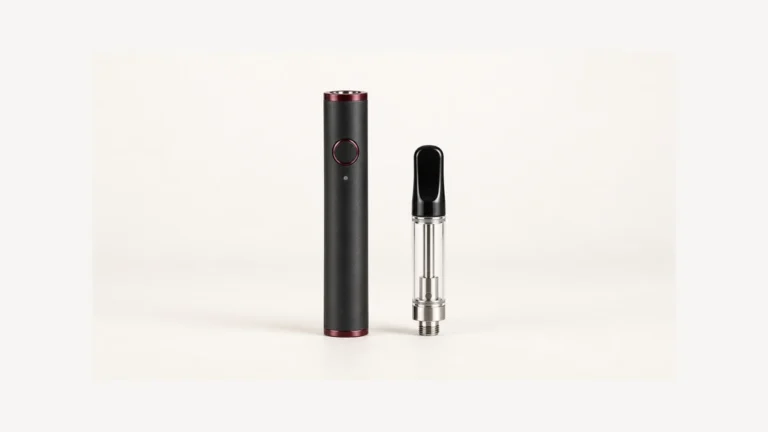
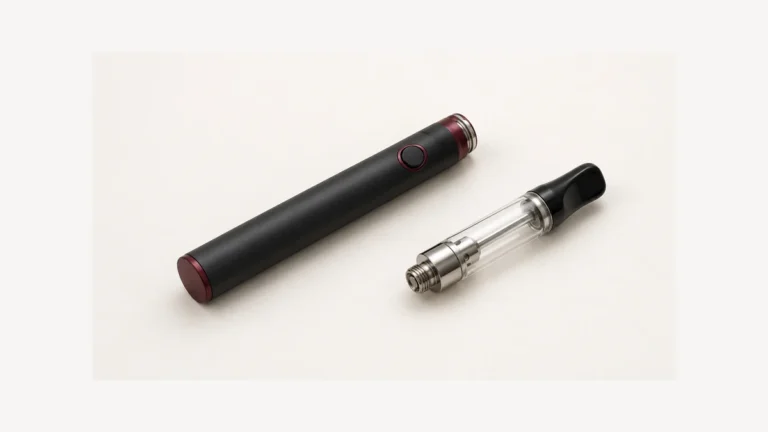
If your cart won’t unscrew from the pen, stop increasing force and identify the intended connection first. The mouthpiece may be turning while the threaded cartridge base stays put; a recessed body or magnetic adapter can make that difference hard to see. If an electrical socket lifts, wires become visible or glass cracks, leave the assembly out of service and seek device-specific support. This is a connection-identification problem before it is a removal problem.
🔧 1. A Cart That Won’t Unscrew From Its Pen May Involve Another Joint
The urgent instinct is understandable: grip the visible top, turn it and expect the cartridge to follow. But a removable mouthpiece and the base that connects to the battery can be different pieces. A top separating does not demonstrate that the intended base thread has loosened. If that has already happened, preserve the observation rather than repeating the motion with a tighter grip.
A stuck assembly may involve resistance at a thread, contact with a surrounding recess, a separate adapter or an unidentified joint. Those are possibilities to distinguish, not a list of diagnosed causes. The manual’s drawing tells you which interface is intended to separate. A line around a decorative cap or a sealed cartridge mouthpiece should not become a removal point merely because it is easier to reach.
Mechanical removal and a blocked airflow path are separate questions. A cart can remain attached to a battery while the owner is asking about a clogged mouthpiece; it can also be mechanically stuck without any information about airflow. Searching both problems together can bring up advice meant for a completely different task. In your description, say that the assembly will not separate at its documented connection. Do not operate it to decide whether it is also obstructed.
🧩 2. Mouthpiece, tank, base and battery socket
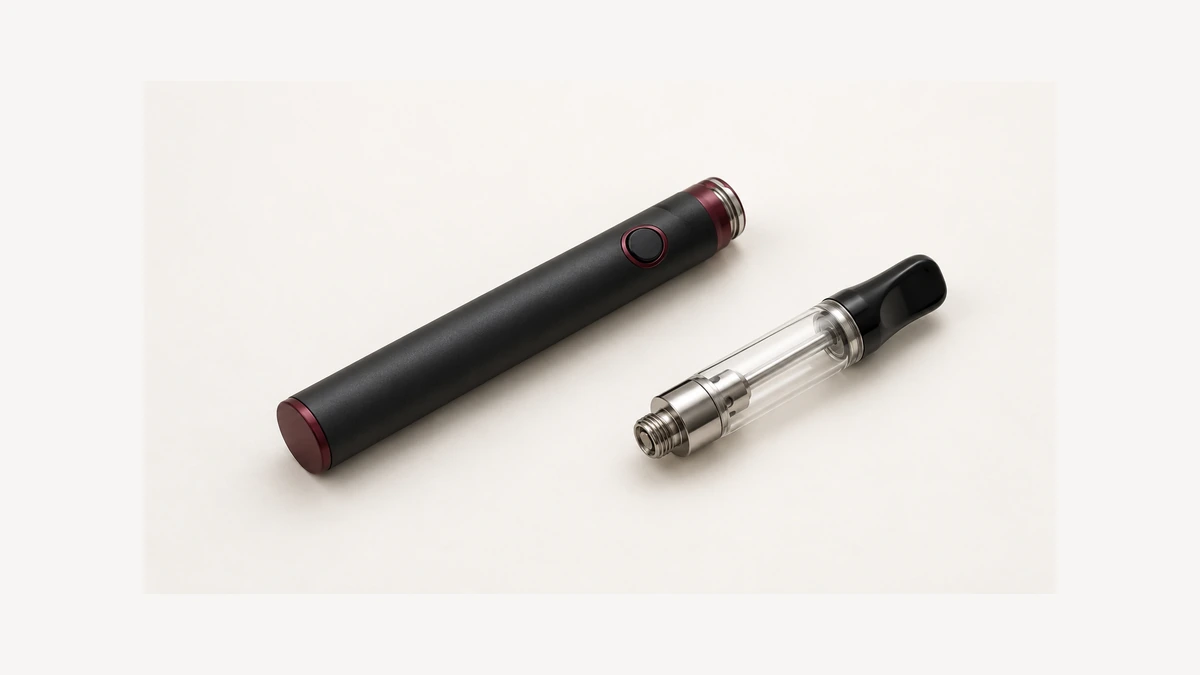
Keep four areas distinct: the mouthpiece at the top, the reservoir body, the cartridge’s connecting base and the battery socket. These are areas to name, not four user-removable joints. A cartridge can have a permanently attached top, and the battery socket can be part of the device rather than a loose adapter. The 510 threaded connection guide explains the physical connection; that connection does not make every nearby seam a thread.
An end cap on the battery is another possible visible boundary, but its presence does not establish a removable cell, charging access or an opening procedure. Do not unscrew a battery housing to reach a stubborn cartridge. The relevant drawing is the one identifying the cartridge interface and any documented adapter, not an assumption that every cylinder can be opened from both ends.
This is also a useful moment to separate a name from a feature. The word pen describes a broad external shape. It does not confirm direct 510 threading, a removable magnetic ring or a sealed all-in-one construction. The cartridge and host identities have to match the instructions you are reading. If the assembly has never been identified, a removal video for a superficially similar cylinder may begin with the wrong assumption.
🔎 3. A recessed body limits what is visible
A recessed battery can hide much of the reservoir body and the base connection. What remains above the housing may be mainly the mouthpiece. In its own stuck-cartridge support guidance, Vessel distinguishes the cartridge tank from a twist-off mouthpiece. That is a narrow maker-specific distinction, not a universal extraction method or a recommendation for a cartridge size.
The practical implication isn’t a procedure — it’s a reminder that what’s turning under your fingers and what’s actually threaded together aren’t guaranteed to be the same piece, especially when the body itself blocks a clear view of the joint.
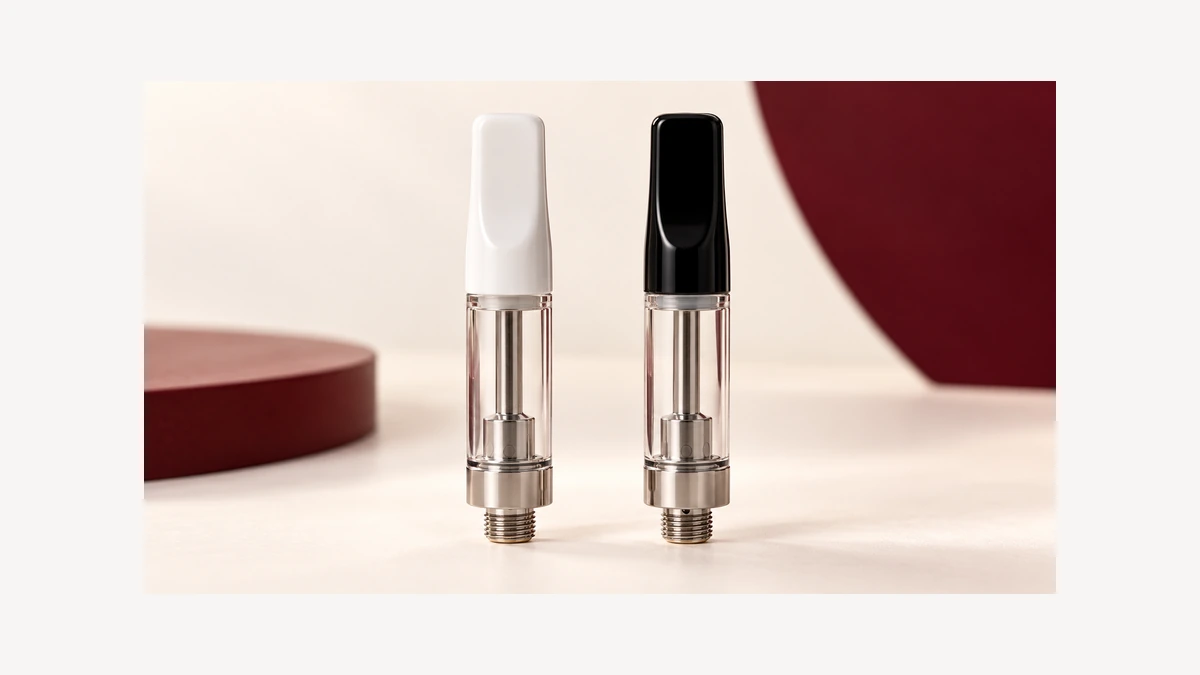
Consider a photograph in which the upper black piece has moved but the lower metal rim has not. That supports a report that the top changed position relative to the rest of the cartridge. It does not reveal why the lower part remains seated. A wider view that includes the housing rim can be more informative than an extreme close-up of the mouthpiece alone. Do not operate or manipulate the stuck unit to make a clearer demonstration.
🧲 4. An adapter may add a second threaded interface
In a threaded magnetic adapter arrangement, the cartridge can thread into a separate ring while that ring is retained magnetically in the battery recess. The threaded cartridge-to-ring boundary and the magnetic ring-to-battery boundary are different interfaces. Other adapters can have different layouts. Confirm the actual arrangement before assuming that a ring visible near the base must unscrew from the battery.
These examples show why the visible outline is only a clue; the documented connection defines the intended separation:
| Layout | Distinction |
|---|---|
| Direct threaded cartridge | Cartridge base and battery socket. Appearance does not prove: That the mouthpiece also unscrews. |
| Cartridge with magnetic ring | Thread at cartridge-to-ring; magnetic retention at ring-to-host. Appearance does not prove: That the ring threads into the battery. |
| Recessed cartridge body | Reservoir exterior and surrounding housing. Appearance does not prove: Which connection or obstruction lies below the rim. |
A deep recess alone does not identify magnetic retention, and an exposed metal ring alone does not identify a threaded adapter. If the drawing or part identity is missing, leave that uncertainty explicit. Trying both pulling and twisting with increasing force is not a reliable way to discover an interface hidden inside an electrical device.
An adapter may also remain hidden because it was installed with the cartridge some time ago. If you have its original package, an earlier photograph or a documented part name, keep that information with the report. Do not infer that every added ring is a compatibility adapter: an exterior collar, protective band and connector can have similar outlines while doing different jobs. The identification belongs to the specific component, not its color.
🩹 5. Visible residue is a clue rather than a diagnosis
Visible sticky material near the base is worth describing, but its color or texture does not identify the cause of a jam. In a separate Vessel support explanation, the maker describes leaked residue acting adhesively and abrupt unthreading dislodging its flexible electrical pin. This is its account of a specific failure pattern; it does not establish that every stuck assembly leaked or that every battery uses the same contact construction.
Describe the location rather than assigning blame: material is visible around the top rim, at the reservoir edge or beside the base. Those positions are not interchangeable. An earlier spot at the mouthpiece is not proof that the hidden socket is coated. Conversely, a clean exterior cannot establish that a concealed connection is undamaged. A support photograph can preserve what is visible without claiming to see through the housing.
A report can preserve uncertainty plainly: there is a dark band at the visible edge, but the connection below the rim is not visible. That is more useful than saying the threads are glued shut when no one has seen them. If a photograph is safe to take, retain the full image so the location remains clear. There is no need to scrape the mark away first; doing so can remove the very detail you wanted support to interpret.
🔥 6. Why stronger tools and heat are poor substitutes for identification
A gripping tool does not tell you which connection is resisting. It can put force on a top, a reservoir wall or a socket while the intended interface remains unidentified. External heat or a solvent bath also does not supply the missing part diagram. Do not use heat, powered firing, soaking the battery, improvised leverage or opening a sealed cartridge as a general removal recipe. Obtain the care or service method for the actual assembly instead.
The Reddit reports show why a claimed success is not enough to establish a method. In one discussion a mouthpiece separated while the base remained inside; another included both reports of successful tool use and accounts of cracked glass. Those descriptions concern different outcomes and uncontrolled handling. They cannot tell a reader how much force their own reservoir or battery socket will tolerate, or whether the apparently similar housing contains the same connection.
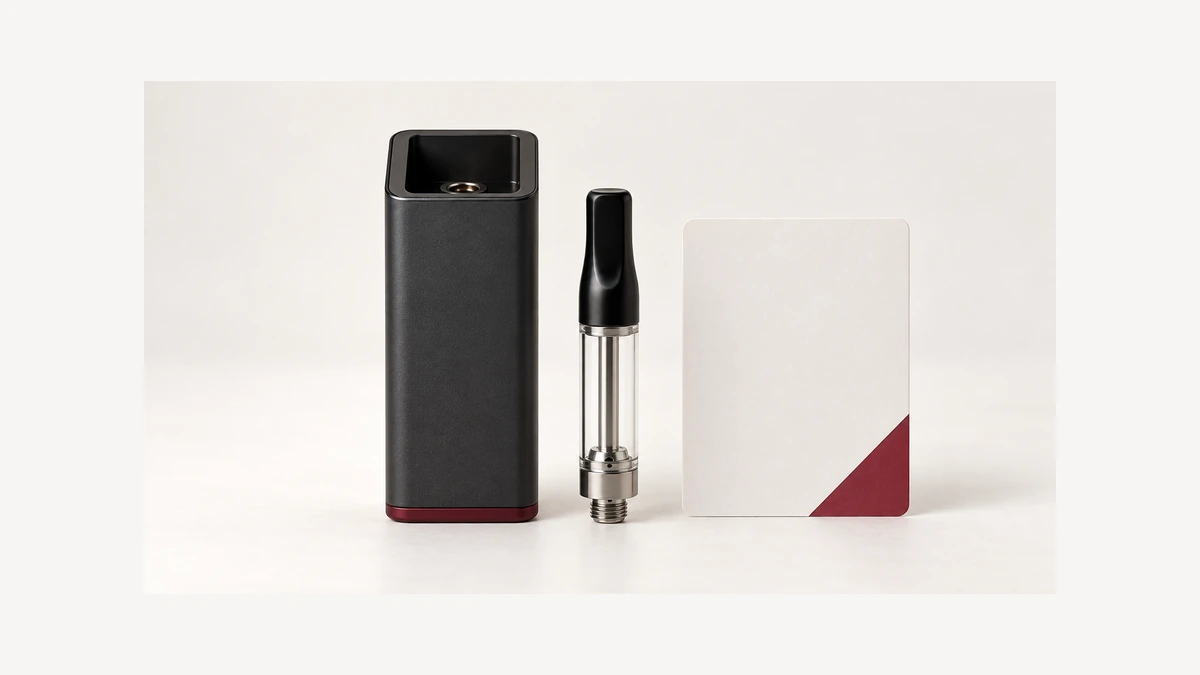
An instruction to use a stronger grip leaves several important questions unanswered. What surface is being gripped? Is it the cartridge body or a detachable top? Is that surface accessible on this housing? Is the adapter the one shown in the instructions? Until those questions are resolved, the instruction is incomplete even if it worked for someone else. A tool mark or a new crack would add another problem without answering the original interface question.
⚠️ 7. Stop if the socket or wiring moves
If the socket assembly lifts out, wires are visible or a fixed housing part moves with the cartridge, stop handling it as a routine threaded accessory. Some contacts are designed to have limited movement, so movement of an unfamiliar pin alone is not a universal diagnostic test. Do not probe or pry to compare it. Switch off only as the manual permits and is safe, and leave damaged hardware out of use and off charge while seeking the appropriate service advice.
📦 8. Send a useful description and preserve the parts
Keep any already separated mouthpiece, cartridge and adapter identified with the device, without fitting them to another battery as an experiment. A useful service description says what moved, what stayed seated and where any visible material or damage appeared. Routine 510 battery care assumes access to the intended surfaces; it should not be treated as permission to flood an inaccessible joint or dismantle a socket.
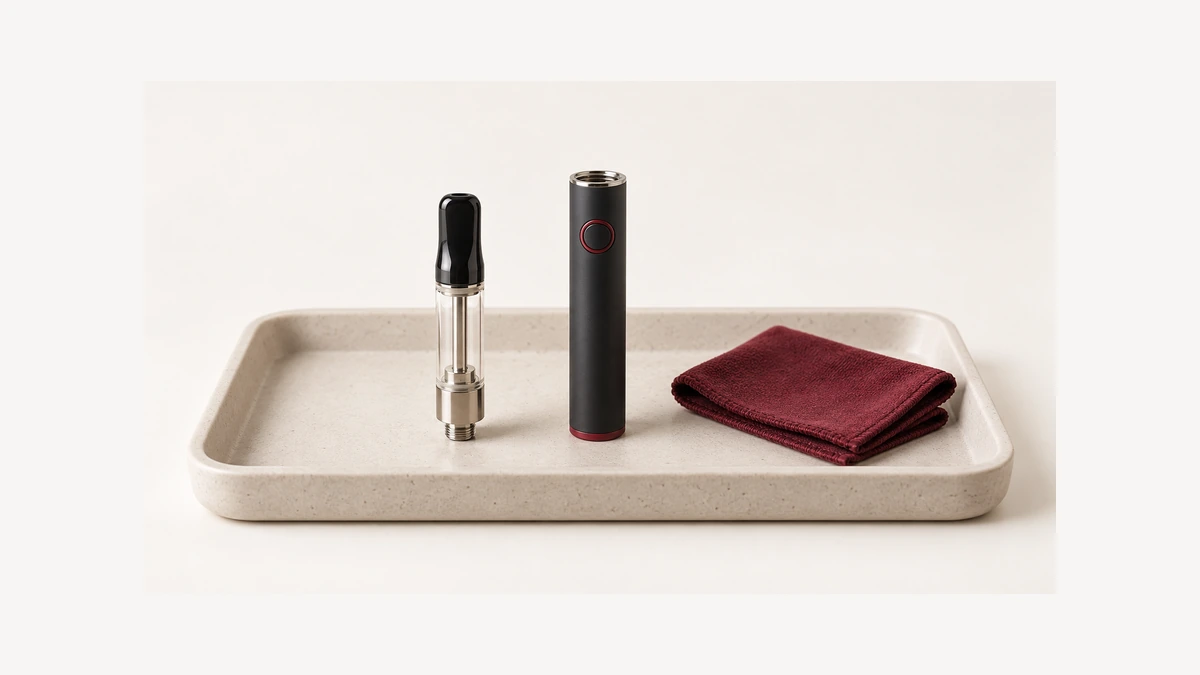
Leave the unresolved assembly intact for the specific service route whenever that is safe. Ask whether the documented interface is the one shown in your photograph and what the authorized next step is for a part that will not release. A reply about another battery’s removable adapter is not enough. The aim is to preserve the hardware and identify the connection, rather than turn a stubborn joint into a broken electrical assembly.
Include what was already attempted, even if it did not help. Mention that the mouthpiece turned, that an adapter was previously fitted or that a tool contacted the exterior. Support needs the present condition and its history; a simple statement is enough. Do not repeat an unsuccessful attempt to produce a video, and do not claim that a cartridge remained undamaged merely because its exterior still looks complete.
The history of the fit can be stated without repeating it. Was the assembly difficult to separate on its first removal, or did it become resistant after a period in place? Was an adapter added at installation? Did the top separate during an earlier attempt? Each answer narrows what support needs to identify. None requires estimating a torque, assigning blame to leaked contents or promising that a different cartridge would have avoided the event.
If the exact original paperwork is missing, preserve the exterior identity that remains available: the device label, cartridge packaging and any adapter name. Do not assume a generic online image identifies an internal revision. Tell support when a component identity is uncertain. That small admission can prevent a response based on the wrong removal arrangement, which is more useful than a confident but unverified guess about which part is stuck.