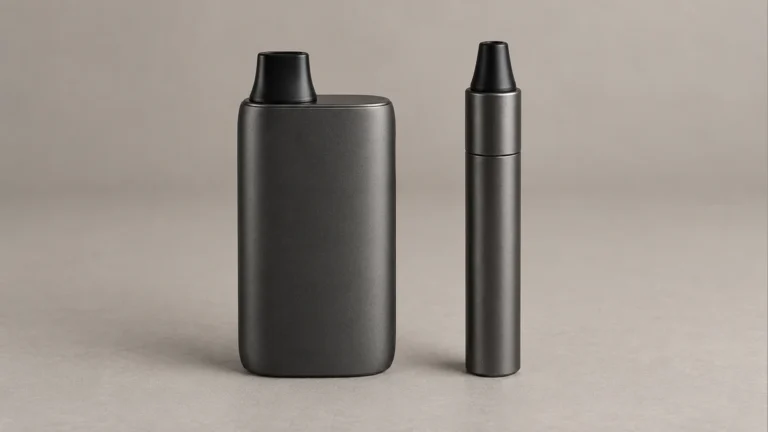
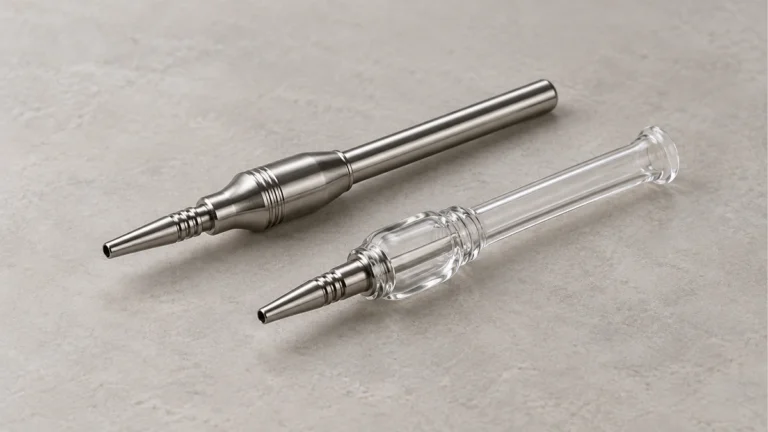
Two-in-one vaporizers look simple from the outside: one body, one battery, one mouthpiece. Swap a chamber or an atomizer and the same device supposedly handles dry herb one day and wax concentrate the next. In practice, the “one body” framing hides two very different engineering jobs happening inside that shell. Dry herb and wax are not interchangeable materials, and a device that handles both well is really running two separate systems that happen to share a housing and a battery.
This guide walks through why that separation matters — chamber shape, heat transfer method, screens, airflow, and cleaning — so the practical differences make sense before anyone assumes a shared connector means shared performance.

🧭 1. Two Materials, One Housing
Dry herb is a plant material with cell walls, moisture content, and a physical structure that has to be broken down by heat to release its active compounds into the airstream. Wax concentrate is already broken down — it is a viscous, often sticky substance that behaves more like a liquid or a semi-liquid under heat than a solid plant matter does.
Because of that basic difference, dry herb needs to sit in a chamber where hot air (or a hot surface) can pass through or around it repeatedly, slowly drawing vapor out over multiple draws. Wax needs to sit against a heating surface that can liquefy it almost immediately, since a small dab reaches its usable state much faster than a bowl of ground herb does.
🔎 1.1 Why Manufacturers Combine Them Anyway
Combo devices exist because a shared battery, shared control board, and shared shell reduce manufacturing cost and let one device serve people who want flexibility without carrying two separate units. That’s a legitimate design goal. But the battery and the button are the only parts that are genuinely shared. Everything that touches the material — the chamber, the heating element, the screen, and often the mouthpiece path — is built or swapped specifically for one material type.
This is why combo kits almost always ship with two separate attachments rather than one universal chamber. The body is shared. The material path is not.
⚙️ 2. Heat Transfer Is Not the Same Job Twice
Heat can reach material three ways: conduction (direct contact with a hot surface), convection (hot air passing through or around the material), or a mix of both. Dry herb chambers and wax chambers usually lean on different combinations of these, because the materials respond differently to each.
Ground herb has surface area and airflow gaps between particles, so convection — or a hybrid of convection and light conduction — works well. Air moves through the grind, picks up vapor as it passes, and carries it up through the mouthpiece. Pure conduction on dry herb tends to scorch the material touching the hot surface while leaving material just a few millimeters away barely warmed, which is part of why stirring or grinding consistency matters so much for herb chambers specifically.
Wax responds better to direct conduction. A coil or heating plate in contact with the concentrate liquefies it quickly and evenly, since there’s no particle structure to work around — just a mass that needs consistent surface contact to melt and vaporize.
🔎 2.1 Temperature Range Differences
Dry herb chambers are generally built around a wider, lower-to-mid temperature range because the goal is a slow, even release across a bowl that might be drawn on repeatedly over several minutes. Wax chambers often run at a higher, narrower range aimed at quickly liquefying a small dab and keeping it vaporizing without letting it harden back down between draws.
This is also why the two chambers in a combo kit rarely share a heating element. A coil tuned for herb’s convective needs won’t liquefy wax efficiently, and a coil tuned for wax’s higher, faster conduction can carbonize herb far quicker than intended.
🧩 3. Chamber Design and Airflow
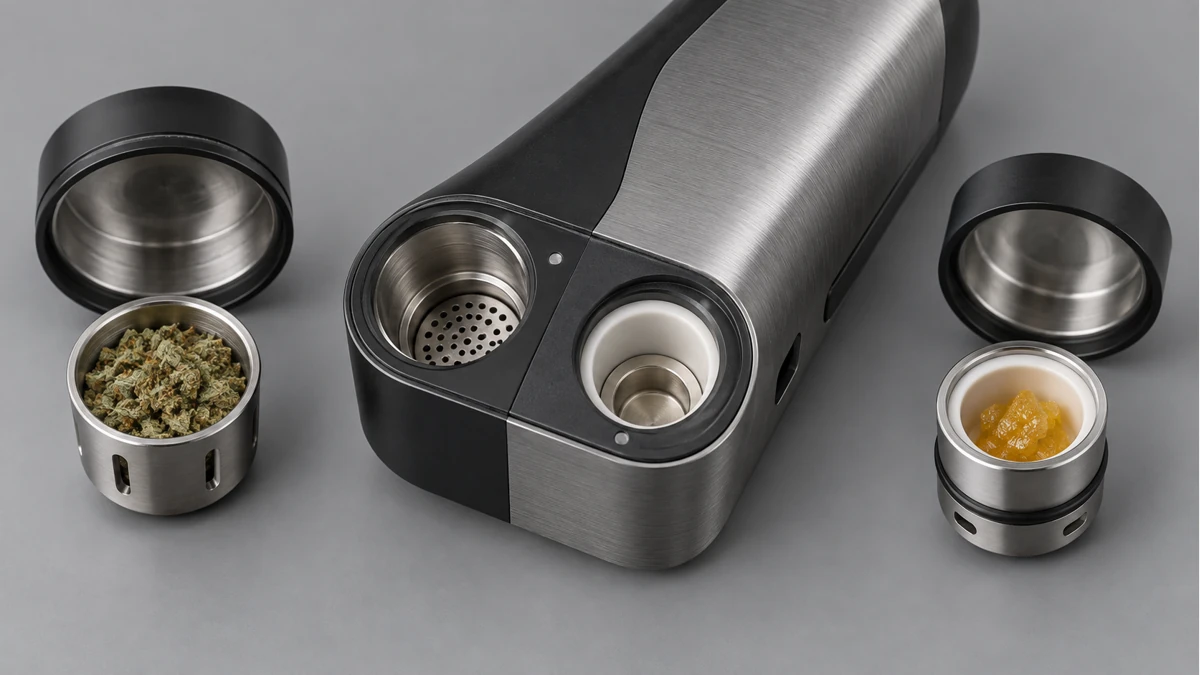
Open up a dry herb chamber and a wax chamber side by side and the shape difference is immediately obvious. It’s not cosmetic — it follows directly from how each material needs to sit and how air needs to move around it.
🔎 3.1 Dry Herb Chamber Geometry
Dry herb chambers are typically wider and shallower, giving ground material room to sit loosely rather than packed tight. Airflow paths are designed to distribute air across the whole bowl rather than funneling it through one point, because uneven airflow means uneven vaporization — some material gets hit repeatedly while the rest barely warms.
Chamber walls in herb attachments are also often designed to hold and radiate some heat themselves, supplementing the convective air with a bit of conductive warmth from the sides, without creating a hot spot that would scorch material touching the wall directly.
📏 3.2 Wax Chamber Geometry
Wax chambers tend to be smaller and deeper, built around a coil, dish, or quartz-style insert that concentrate can be dabbed directly onto. Airflow matters less for distribution here and more for pulling vapor up and away once the concentrate liquefies, since the material isn’t spread across a wide surface the way ground herb is.
Because wax residue is sticky rather than dry, wax chambers are also usually shaped to minimize places where liquefied concentrate can pool or run into gaps it shouldn’t reach, like threading or airflow slots.
🔬 4. Screens, Coils, and Residue
Screens exist for one reason: keep loose particulate out of the airpath and mouthpiece while still letting vapor through. What counts as “loose particulate,” though, is completely different between the two materials.
🔎 4.1 Screen Mesh and Clogging
Dry herb screens need a mesh fine enough to hold back small plant fragments but open enough not to restrict airflow, since airflow is central to how convective vaporization works. A herb screen that’s too fine chokes draw resistance; one that’s too coarse lets debris through into the mouthpiece.
Wax doesn’t produce loose fragments the way ground herb does, but it does something herb doesn’t: it liquefies and can drip or splatter. A screen meant for wax is less about filtering particles and more about containing liquefied concentrate so it doesn’t run down into airflow channels or the battery housing. That’s a structural difference in purpose, not just mesh size.
📏 4.2 Residue Buildup Differences
Herb residue accumulates as a dry, brittle film that mostly needs to be brushed or scraped out. Left alone, it can flake into the airpath and cause a burnt taste on later draws, but it generally doesn’t gum up moving parts.
Wax residue is sticky and often carbonizes into a dark, tar-like buildup on the coil or dish over repeated use. That buildup can insulate the heating surface, meaning the same temperature setting produces less effective heating over time until the residue is cleaned off. This is a mechanical reason wax chambers typically need more frequent attention than herb chambers, independent of the device’s overall condition.
this related AOVAPE hardware guide

🧼 5. Why the Connector Doesn't Mean Interchangeable
Combo kits use a shared magnetic, threaded, or friction-fit connector so the herb chamber and wax chamber can both attach to the same battery body. That connector is a mechanical and electrical interface — it passes power and sometimes a temperature signal. It says nothing about what’s safe or effective to put inside the attachment itself.
🔎 5.1 Atomizer vs Bowl Swap Mechanics
Swapping a wax atomizer for a dry herb bowl (or vice versa) usually just means disconnecting one attachment and connecting the other. The device’s control board typically recognizes which attachment is connected and adjusts its heating profile automatically, or the user selects a mode that matches. What it isn’t doing is somehow converting a herb chamber into something that can safely liquefy wax, or turning a wax coil into something that can evenly convect air through ground plant material. Each attachment does its one job; the shared connector just lets them take turns on the same battery.
📏 5.2 Cross-Contamination Risk
Using the wrong material in the wrong chamber is a common source of frustration people report — herb residue baking onto a wax coil, or wax runoff gumming up a herb chamber’s airflow slots. Beyond just performance, mixing residues between chambers makes cleaning harder, since the equipment and techniques for scraping dry residue versus dissolving sticky residue aren’t the same, and using one method on the wrong kind of buildup can smear it around instead of removing it.
📐 6. Cleaning Routines Differ by Path
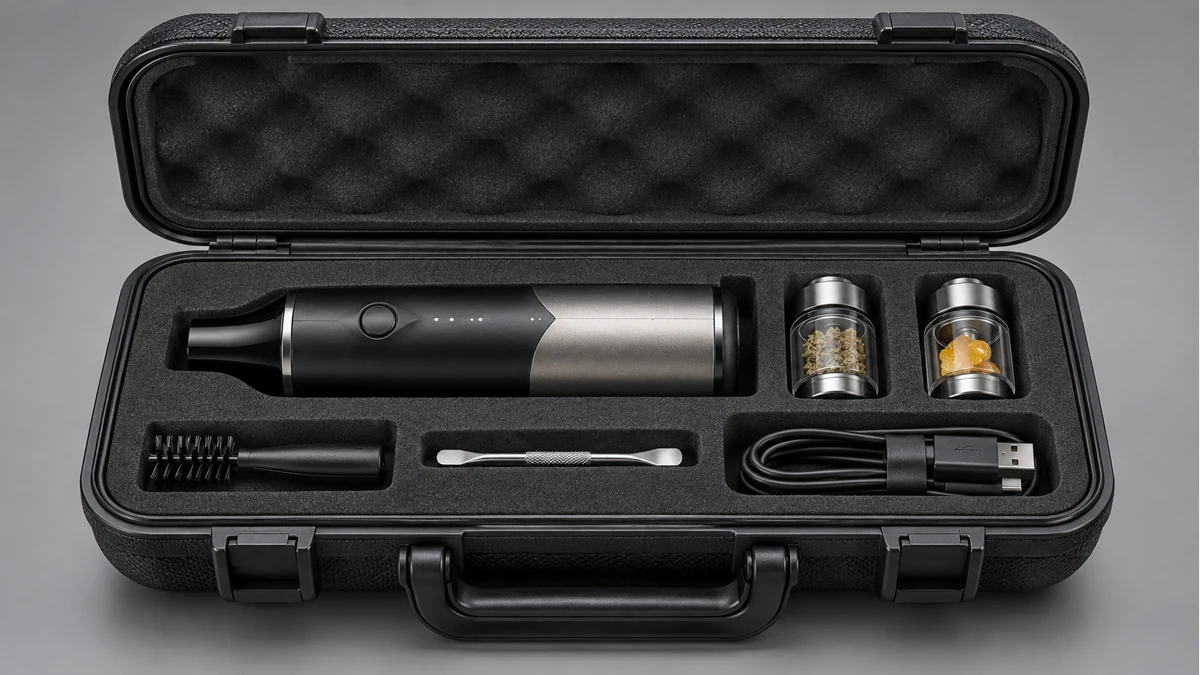
Maintenance is where the two-materials-one-body design becomes most obvious in daily use. A cleaning habit built around one chamber often does nothing useful for the other.
🔎 6.1 Dry Herb Maintenance
Herb chambers mainly need dry cleaning: brushing out spent material after each session and periodically clearing the screen of accumulated fine particles. Because the residue is dry rather than sticky, liquid cleaning is usually reserved for deeper, less frequent maintenance rather than routine upkeep, since introducing moisture to a chamber that’s otherwise dry can slow drying time and isn’t necessary for normal buildup.
📏 6.2 Wax Maintenance
Wax chambers benefit from more frequent attention because carbonized residue builds up on the coil or dish with regular use. Letting it accumulate doesn’t just affect taste — it can reduce how efficiently the coil heats, since a layer of built-up residue sits between the heating surface and fresh material. Cleaning a wax chamber typically involves addressing that sticky, carbonized layer directly on the heating element rather than just brushing out loose debris the way a herb chamber allows.
Treating both chambers with the same cleaning schedule or the same tools usually under-serves one of them — either the herb chamber gets unnecessary moisture, or the wax chamber gets under-cleaned because it’s treated like a dry-residue bowl.
this related AOVAPE hardware guide
🔍 7. Common Questions From Real Users
People shopping for or troubleshooting combo devices tend to ask a similar handful of questions once they realize the two chambers aren’t just cosmetic variants of each other.
🔎 7.1 "Can I Just Use One Chamber for Both Materials?"
Technically it’s often physically possible to put wax in a herb chamber or vice versa, since nothing stops the material from sitting there. But it defeats the purpose of the chamber’s design: a herb chamber’s airflow-heavy geometry isn’t built to liquefy wax evenly, and a wax chamber’s small, hot, conductive surface isn’t built to convect air through a bowl of ground herb without scorching the material closest to the surface.
📏 7.2 "Why Does My Wax Chamber Need Cleaning So Much More Often?"
This comes back to how residue forms. Dry herb leaves behind loose, brushable debris. Wax leaves behind a sticky film that carbonizes with heat exposure and gradually insulates the coil. The frequency difference isn’t a flaw in one chamber or the other — it’s a direct result of how each material behaves once it’s been heated.
🧪 7.3 "Does the Same Temperature Setting Work for Both?"
Usually not, and most combo devices account for this by offering separate temperature ranges or presets tied to which attachment is connected. A setting tuned for slow convective vaporization of herb is typically too low to liquefy wax efficiently, and a setting tuned for quick conduction on wax runs hot enough to scorch herb rather than gently vaporize it.
this related AOVAPE hardware guide
None of this makes combo devices a bad idea — sharing a battery and control board across two attachments is a reasonable design compromise. But it’s worth understanding that the compromise stops at the connector. Everything past that point — chamber shape, heating method, screen design, and cleaning needs — is built separately for each material, because dry herb and wax concentrate simply behave differently once heat is applied. Recognizing that helps explain why a device can be excellent at one material and merely adequate at the other, and why the attachment in hand matters just as much as the body it’s plugged into.