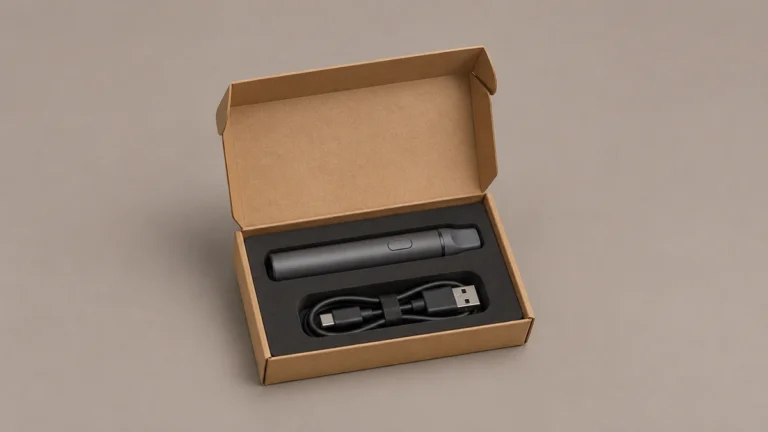
A dab pen holder has two jobs on a desk: support the pen body and stay steady on its own base. A tall stand can hold the pen snugly and still wobble against a mouse pad. A wide stand can sit firmly while leaving too much room inside its socket. Start by finding which of those two movements you can actually see.
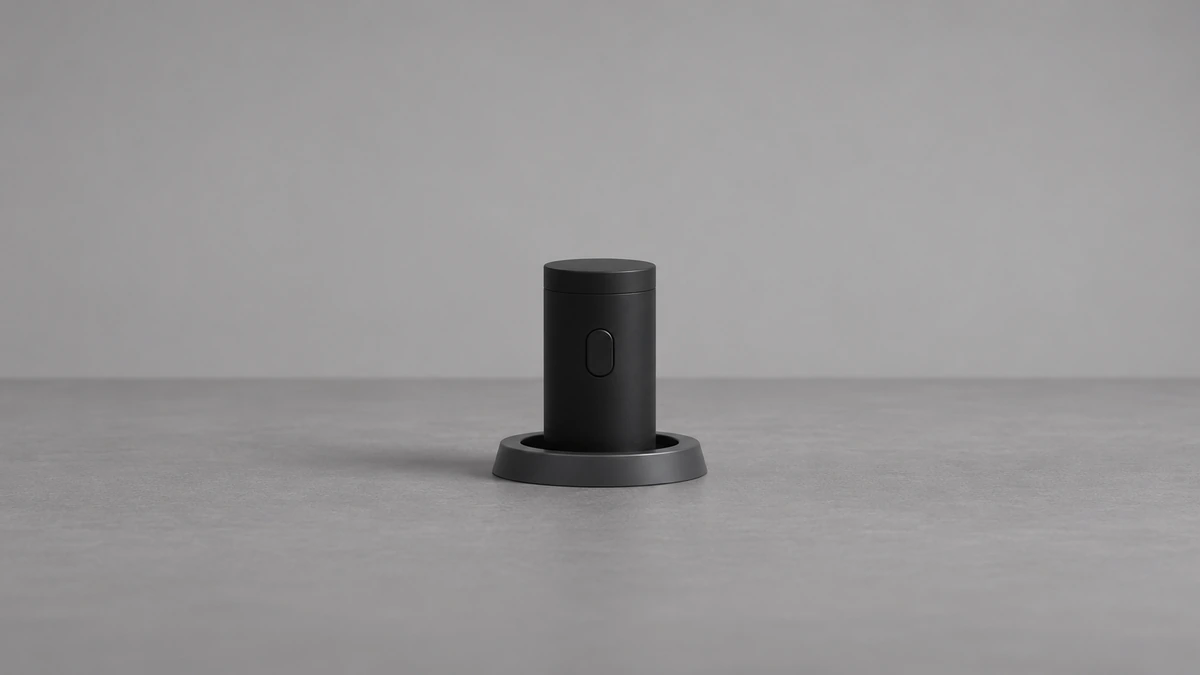
🧱 1. Why Desktop Stability Starts With the Footprint
Look at the underside of the holder before judging its outside profile. A broad foot may contact the desk across a flat surface, on a narrow rim, or at a set of small pads. The contact area is what supports the stand. An outside flange above the desk may look wide in a photograph without adding support at the surface.
When the whole stand rocks, look at the desk surface and the foot. A seam in a mat or a cable caught under the edge can keep a portion of the foot from touching the desk. If the stand remains still and the pen moves, look instead at the walls and depth of the socket.
A shorter pen can still have a wide cap, protruding control, or weight concentrated near one end. The guide to compact dab pen bodies explains how the assembled outline can differ from the measurement of the main housing.
Write down which dimensions you are comparing. The height of the exposed pen, the width of the actual foot, and the amount of movement inside the holder describe three different features.
📐 1.1 Height-to-Base Ratios in Practice
Picture two holders side by side on the same desk: one is tall and shallow, cut just deep enough to slip a pen body partway in, and the other is broad and low, with a wider base and a deeper pocket that supports more of the pen’s length.
In the first example, the narrower foot gives the combined stand and pen less room to shift sideways before their weight moves beyond the supporting edge. A high point of contact on the exposed pen also gives a sideways bump more leverage. These are separate observations. A deeper socket can reduce movement inside the stand without changing how much of the foot touches the table.
Keep the whole assembly in view when comparing the examples. The pen and stand may have different weights, and a low base can still be light or uneven. The shape alone does not tell you how strongly either assembly will resist a bump.
A round opening can support a round pen differently from an oval one. How much either pen can turn depends on the space around the body and which parts of the walls it touches.
🎛️ 2. Button Clearance Along the Holder Wall
A second, separate consideration is whether the inner wall of the holder’s slot comes close enough to a side-mounted button on the pen body to press against it when the pen is set down or rotated slightly inside the slot.
Take a hypothetical pen with a single button set flush along one side of a cylindrical body; if the holder’s slot wall sits very close to that side at the same height as the button, simply lowering the pen into place at a slight angle can bring the wall into contact with the button edge before the body settles fully into the pocket.
Check the opening as well as the final position of the pen. A button can pass a narrower part of the rim before reaching a wider section below it. At a glance the seated pen may appear to have more clearance than it had on the way down.
Holder designs that account for this tend to leave a visible gap or a cut-out near where a button is expected to sit, but the underlying point is about clearance between two stationary surfaces, a topic explored at greater length on the page covering button placement and shell clearance.
Because button position varies across different compact pen shells, a holder slot cut for one placement will not automatically clear a button set at a different height or rotation on another body, which is why this clearance has to be checked against the specific body shape rather than assumed from overall size alone.
🧢 3. Cap and Mouthpiece Snag Points
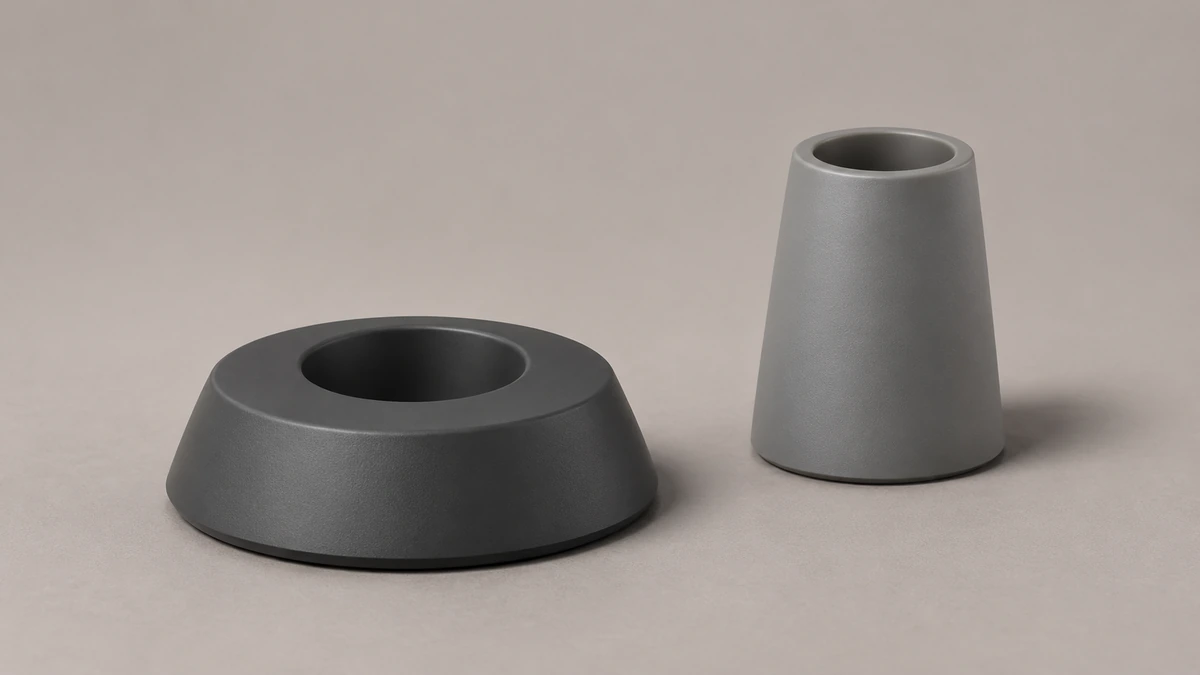
A cap or mouthpiece cover can have a wider edge than the body below it. That edge may be irrelevant in a shallow stand where the cap remains above the rim, yet become the first point of contact in a deeper holder.
If the holder’s slot opening is cut close to the exact diameter of the main body, that small extra width at the cap can catch on the rim of the opening when the pen is lowered in or lifted back out, even though the body itself would have fit the slot without issue.
This kind of snag is purely mechanical — two rigid edges meeting at a slightly mismatched width — and it has nothing to do with how secure the fit feels once the pen is resting; a cap can catch on the way in or out while the pen sits perfectly still once seated.
Holders that taper or chamfer the top edge of the slot reduce this kind of contact by giving the wider cap edge a sloped surface to pass over rather than a sharp lip to catch on, though describing that shape is different from claiming it solves the issue in every case.
🔘 3.1 Friction-Fit Caps at the Rim
Consider an oval pen whose cap extends beyond the housing on its longer side. The cap sits above the opening when the pen is vertical. If the pen leans toward the holder wall as it comes out, the projecting edge can meet the rim first.
From the outside this can look like the holder is “too small,” when the actual cause is the angle of entry meeting a cap edge that is wider than the body passing through the opening below it.
This is also where oval bodies differ from round ones: an oval cap edge is wider along one axis than the other, so the same pen can seat cleanly when aligned one way and catch when rotated ninety degrees, a detail that has nothing to do with the holder’s depth and everything to do with rim shape meeting cap shape.
When that happens, name the two surfaces that touch: the cap’s projecting edge and the holder rim. This gives the reader or support team more to work with than a note saying the pen feels tight.
📏 4. Support Depth for Cylindrical and Oval Bodies
Support depth refers to how much of the pen’s length actually sits inside the holder’s slot, as opposed to how deep the slot looks from the outside; a slot that appears deep but only grips the pen near its very top is offering shallow support in practical terms.
In a round socket with even clearance, a cylindrical body may be able to rotate freely. If that socket is wide, the pen can also lean. Contact around the full circumference is not a given. The shape, dimensions and any liner together determine where the body rests.
An oval body in a circular socket can have less clearance along its long axis than across its narrow one. As it moves, it may contact the wall in one direction while leaving a visible gap in the other.
A deeper socket can support the body over more of its length if the walls are close enough. If the socket widens lower down, the extra depth may leave much of the pen unsupported.
🥚 4.1 Oval Cross-Sections Change the Contact Line
Picture an oval pen in a circular opening wide enough to admit its longer axis. There is space beside the narrower side. The pen may lean toward that gap even though it appears snug when you look at it from the other side.
An oval socket may reduce that side gap. The actual fit still depends on where the two surfaces meet. A seam, raised button, taper, or lining can change contact even when the opening and pen look similar from above.
This distinction — contact line versus contact depth — explains why two holders with identical slot depth can feel different in practice if one is cut for a round body and the other for an oval one.
It also means a holder sized generically for “a dab pen” without reference to cross-section shape may support a round body well while leaving an oval body of similar overall size less evenly supported.
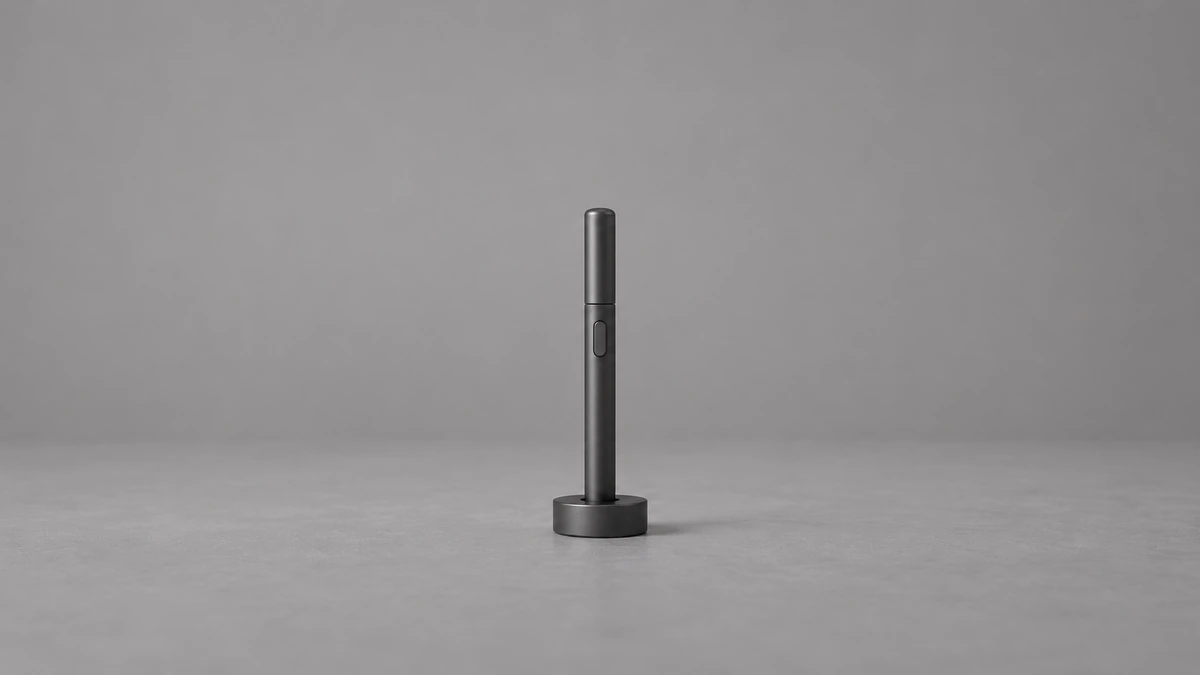
🪑 5. Settled Position Versus Lift Clearance
A pen can look completely stable once it has settled into a holder and still present a different problem the moment it is lifted back out, because the motion of removal is not simply the reverse of setting it down — it often involves a slight tilt or rotation that the initial placement did not.
A friction-fit cap that cleared the rim on the way in at one angle may catch on the way out at a different angle, particularly if the lift motion brings the wider part of the cap edge across the narrowest point of the slot opening.
Button clearance follows the same pattern: a button positioned just inside the slot wall’s reach may clear comfortably in a settled, vertical position but brush against the wall during a lift that angles the body even slightly before it clears the opening entirely.
Looking at settled position and lift clearance as two separate checks, rather than assuming one guarantees the other, is a more accurate way to describe how a holder behaves across a full use cycle on a desk.
🧩 6. Where a Desktop Holder Fits Among Other Accessories
A desktop holder is a stationary support for a pen that is already powered off and at rest; it is not built to protect a pen during movement, impact, or storage in a bag or drawer, and treating it as if it served that purpose misreads what the shape is doing.
It is also distinct from accessories meant to support other parts of a device, such as an exposed tip on a longer tool shape, or general hardware pieces like chambers and mouthpieces that attach to the body rather than hold it from outside.
🧳 6.1 Transport Fit Differs From Desk Fit
A slot cut to hold a pen steady on a flat, stationary desk is solving a different problem than a case built to keep a pen secure while it moves inside a bag, since a desk holder assumes the surface underneath stays still and a transport case assumes it does not.
A pen that seats cleanly in a desk holder is not automatically well protected during transport, and a case sized for safe carrying is not automatically a good fit for upright desk display, because the two shapes are solving for different kinds of motion, a distinction covered separately on the page about transport case fit.
🔧 6.2 Naming Hardware Correctly
Terms like chamber, mouthpiece, and cap describe parts that attach to or sit on the pen body itself, while a holder is a separate object the pen rests inside; keeping these categories distinct avoids describing a holder as if it were performing the job of a part, or a part as if it were a stand.
A fuller breakdown of how these terms are used is kept on the dedicated page for naming pen hardware and tools, which focuses on the parts themselves rather than anything a pen rests in.
🏷️ 7. When a Maker Lists a Named Model
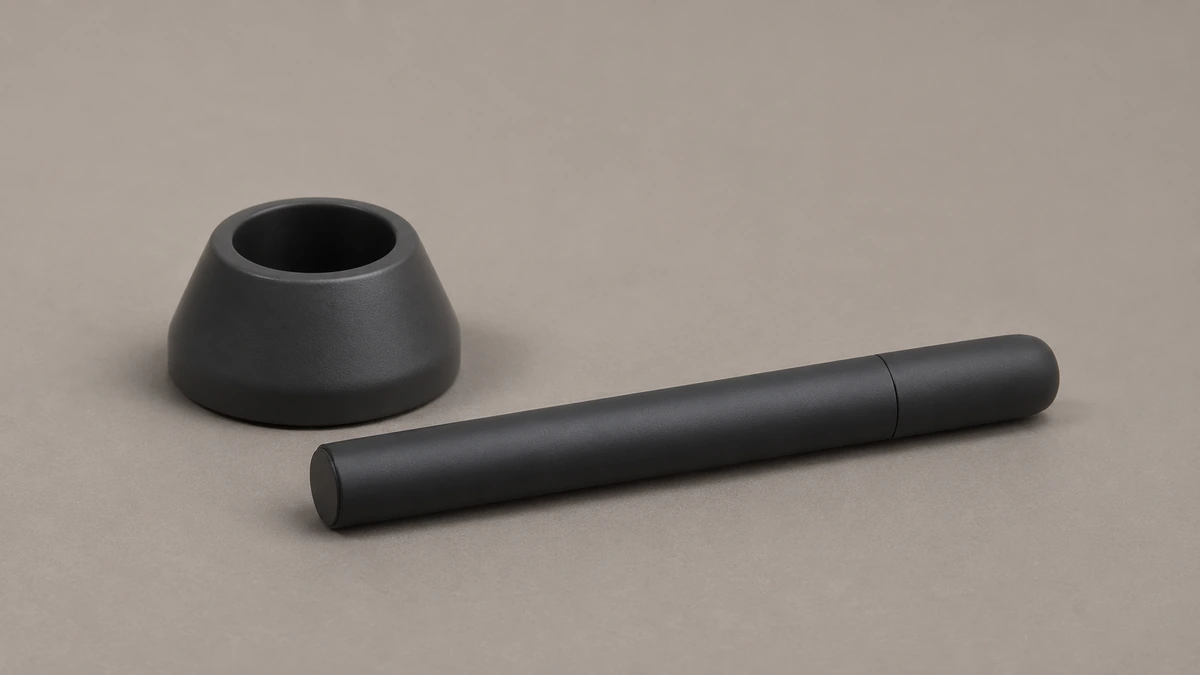
Separate from general-purpose desk holders, some accessory listings offer a display stand built around one specific named pen model, sized and shaped to match that model’s exact body rather than a general size range; this is worth noting only as a category that exists in the market, not as a comparison, a ranking, or a suggestion to seek out that listing.
Public discussion threads about keeping a pen upright on a desk tend to circle back to the same underlying issues described above rather than to any single product: one reader asking how to keep a pen from tipping reported standing it on its end and having it fall over, another thread showed repeated tip-overs where replies focused on identifying the exact model pictured because fit and geometry clearly differed from one body to the next, and a third thread showed a pen falling from a desk multiple times, with design comments pointing to weight distribution, ease of access, and placement on the desk as the relevant factors rather than any flaw in the pen itself.
The posts suggest a useful starting question: did the pen move inside its support, or did the support move across the desk? The answer determines which two surfaces to photograph.
📷 8. Record Which Surface Moves
A side photograph at desk height can show whether the holder sits evenly and how much pen remains exposed. An overhead photo can show the opening and the space around the body. Include the model label separately if the maker uses different shell revisions.
If a holder has a cutout, take the overhead view with the cutout visible. Note whether the controls line up with it when the pen sits in its normal position. A small socket can make the entire assembly turn when you try to reach the button side.
A useful observation names the motion and the surface involved. “The stand stays flat, but the oval body leans toward the wider gap” points to a different fit question than “the foot rocks on the desk.” Keep those observations separate when you compare another stand or ask the accessory maker which body it was designed around.