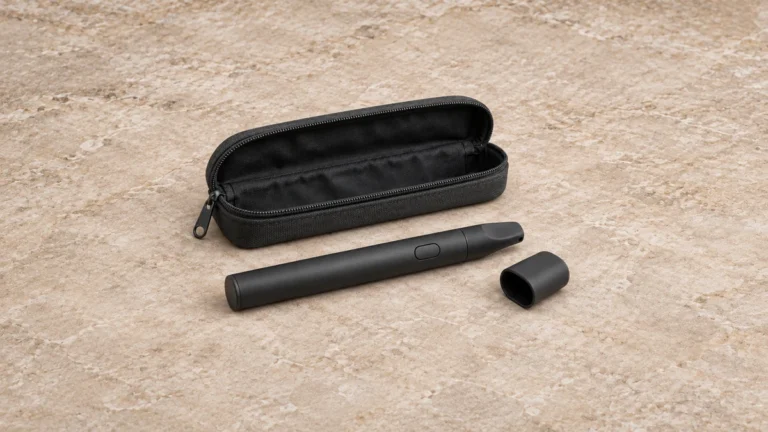
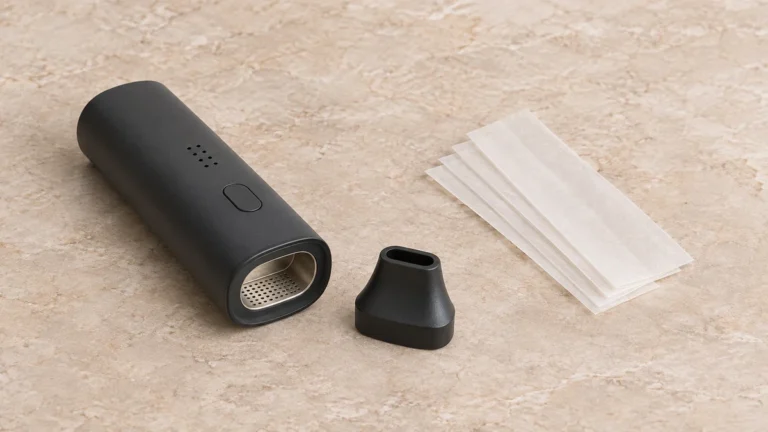
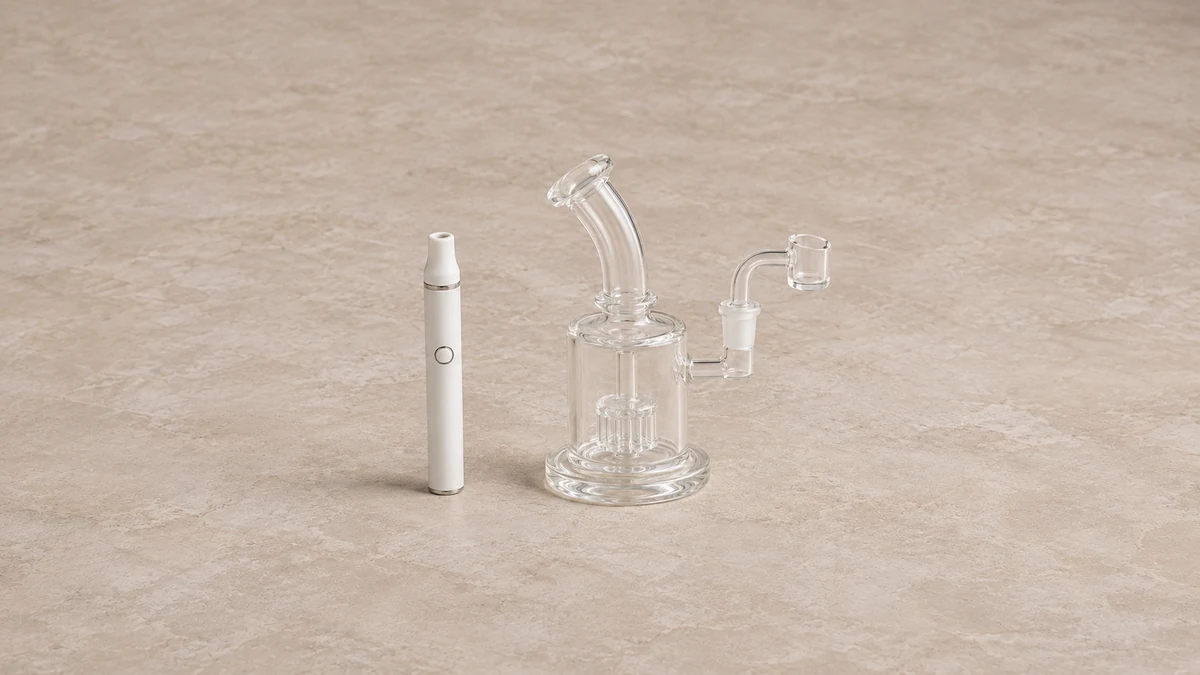
A dab pen carries its chamber, battery and mouthpiece in a handheld assembly. A conventional dab rig separates the glass body from an attached nail or banger and its heat source. An electric rig rearranges that picture again, putting a chamber and powered base beneath separate glass. Comparing the complete assemblies explains more than comparing the size of a pen with the height of a rig.
The practical question is what stays with you when a component comes off. Does removing the chamber leave a powered connector exposed? Does the glass detach from electronics? Does a replacement include the working cup, its cover or only a housing? These differences affect cleaning and service even when two devices happen to fit in the same bag.
🧩 1. Start With Three Objects on the Bench
For this comparison, keep three arrangements separate: a refillable concentrate pen, a conventional glass rig with a separate heated attachment, and an electric rig. The term dab pen here describes a chamber device rather than an oil cartridge attached to a battery. Similar outer shapes can obscure that distinction. A clear photograph should show the chamber and mouthpiece together with the part that supplies power.
🖊️ 1.1 The Pen Carries Its Chamber and Power Body
A pen’s short outline can contain several service parts. The mouthpiece may cover a separate chamber cap; the chamber may contain a replaceable heater or be supplied as one replacement assembly. Its outer housing is not automatically the heater itself. Health Canada’s cannabis-accessory resource identifies the chamber, battery and mouthpiece as basic dab-pen components. That naming is useful without importing any claims about a particular device’s construction or performance.
Consider a pen with a clean exterior but a restricted mouthpiece. Replacing its battery would not, by itself, remove that obstruction. Conversely, cleaning a detached mouthpiece does not assess the powered body’s condition. Our electric dab pen hardware guide follows the chamber, power and air paths separately. The same approach helps keep a comparison with a rig tied to actual components.
🏺 1.2 A Rig Adds a Supported Glass Assembly
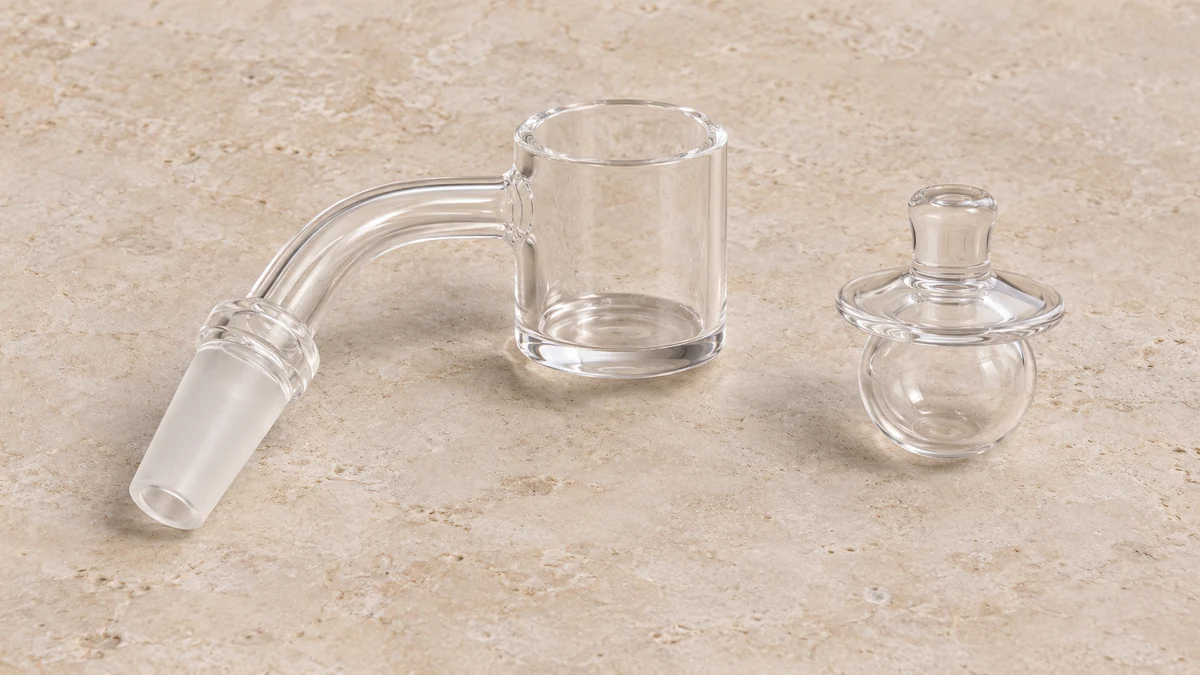
A conventional rig has a glass body and a connection for a separate working component, often a bucket-style banger. The banger’s neck links that bucket to the body connection. A cap, when present, is another component. The base supports the assembled glass on a surface, but the side attachment can extend beyond it. The outline of the empty body therefore does not describe the full arrangement.
Power is a separate question. An externally heated attachment and an electrically heated attachment can be paired with glass bodies that look broadly similar. An external electrical heater may introduce a controller, cable and support hardware. Calling everything a rig leaves those pieces uncounted. The dab rig heater guide distinguishes the controller, coil, working component and support rather than treating them as one interchangeable accessory.
⚡ 2. Electric Rigs Complicate the Usual Comparison
The familiar shorthand is that a pen has a battery and a rig needs a separate heat source. That describes some comparisons, but it misses electric rigs. An electric rig can have a rechargeable base, an attached chamber and removable glass. It may therefore share an electrical power source with a pen while retaining the glass-body and supported-chamber arrangement associated with a rig.
A battery-powered pen and a battery-powered rig need not use the same chamber connection, control system or replacement heater. Even a familiar connector outline does not establish electrical compatibility. Identify the exact device and replacement part before treating a chamber as transferable. A product photograph can show where the component attaches, but it does not reveal every contact assignment or supported electrical requirement.
This matters when someone describes a small electric rig as simply a larger pen. The phrase may communicate approximate size, yet it gives no reliable service information. A replacement purchased under that assumption could be the wrong assembly even if its cup looks similar. Keep the format description and the manufacturer’s part identifier together; each answers a different part of the question.
🪟 2.2 Glass Is Not the Powered Base
Removable glass does not make the assembly beneath it washable. Puffco’s current Peak support instructions give separate procedures for the chamber, base and glass, including removing the glass for its cleaning procedure and keeping liquid out of the base’s connection area. This is a specific manufacturer’s distinction between components, rather than a universal cleaning recipe for electric rigs.
A pen can have a glass attachment too. Its presence does not turn the entire pen into an electric rig, and its absence does not establish that a device is a simple cartridge battery. Follow where the glass connects and what remains underneath when the permitted attachment is removed. A short glass mouthpiece and a separate water chamber can add very different parts to an otherwise compact assembly.
🔧 3. What a Replacement Actually Removes
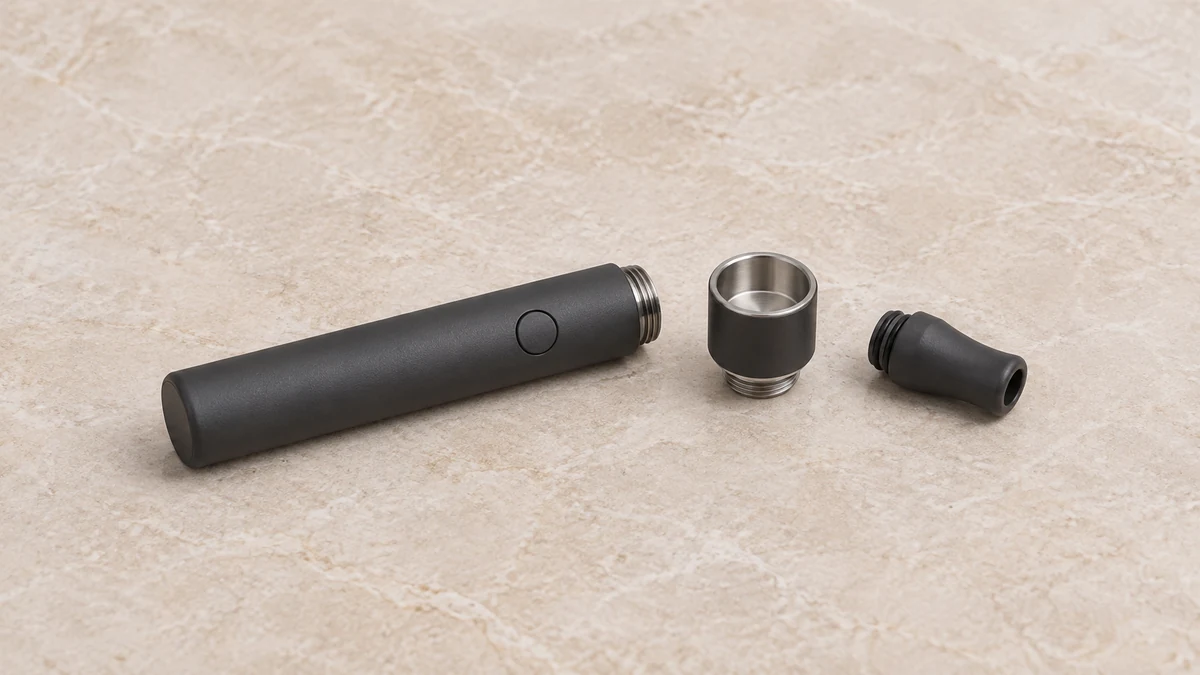
The most useful ownership comparison often starts with a replacement listing. A pen owner may need a complete atomizer assembly; a rig owner may need only a banger; an electric-rig owner may need a model-specific chamber. Those are not equivalent service events. Compare what is included and what remains on the device rather than assuming every item called a coil contains the same pieces.
🔩 3.1 Chamber, Coil and Cap Are Separate Names
Manufacturer terminology varies, so use its drawing or parts list to establish the assembly. Yocan’s Evolve Plus documentation, for example, identifies a wax atomizer and a separate coil cap. That example shows why an outer mouthpiece, an internal cover and a heater can require different names. It does not establish that other pens contain the same layered construction or accept those particular parts.
If an order contains only a cap, a matching diameter will not supply the missing heater beneath it. If it contains a complete chamber, transferring an old inner component may be neither necessary nor permitted. Read the package contents before disassembly. A photograph showing the component from above and below can answer more than a close-up of the cup surface, especially when the connector is hidden underneath.
A practical parts record can use three lines: the item removed, the pieces included in its replacement and the parts left on the device. For a pen, that might distinguish a complete chamber assembly from a separate cap. For a conventional rig, it separates the banger from the glass body and its joint. For an electric rig, it distinguishes the removable chamber from the base beneath it. This record is more informative than counting replacement packages: one package can contain several components, and two similarly named packages can replace different portions of an assembly.
📐 3.2 A Rig Joint Adds Another Fit Question
For a conventional rig, the glass connection has its own size, gender and orientation. The bucket’s material does not establish any of those properties. An adapter can join documented connections, but it also changes the distance and direction between the body and attachment. A fit question should include the complete assembled orientation rather than only the opening that happens to be visible in a photograph.
The body connection needs assessment too. Replacing a banger does not repair a chipped joint on the rig, and replacing a pen chamber does not assess damage to the powered connector beneath it. Separate the condition of the removable part from the condition of its seat. If the mating surface is damaged, identifying the correct replacement item is only part of resolving the hardware problem.
🧼 4. Follow the Cleaning Boundary
Small equipment is not automatically low-maintenance equipment. A short pen can have several narrow passages and seals; a larger rig can have accessible glass alongside a difficult internal bend. Count the surfaces that require care and identify which components the owner is allowed to remove. Neither footprint nor price describes that access, and a neat exterior does not reveal whether an internal passage is clear.
🧽 4.1 An Accessible Cup Does Not Make the Whole Pen Washable
A chamber opening may be easy to see while the connection below it remains concealed. Any cleaning method must belong to the actual removable component and its materials. Permission to clean a detached mouthpiece does not extend to the powered body, and a procedure for one chamber does not become valid for every device that uses the same material word.
Keep the scope of a complaint equally precise. Residue on a cap, a restricted mouthpiece and a poor electrical connection can all interrupt ownership in different ways. They do not justify the same repair. Record the affected component, visible condition and exact model before contacting support. Speculative forum diagnoses can help reveal the question a reader has, but they do not identify the cause in another device.
💧 4.2 Detached Glass Has a Different Care Route
A conventional glass rig and an electric rig’s removable glass can both need care around narrow necks, joints and internal passages. That shared need does not mean their complete assemblies can be treated alike. Keep electronics, seals and separate adapters within the care boundaries stated for them. An attachment containing several materials may have different instructions from an otherwise similar one-piece glass component.
Storage follows cleaning as a separate task. A component can look clear while moisture remains in a less visible passage. Follow the specified drying requirement before reassembly, rather than judging by the outside surface alone. With removable glass, retain its identity while it is separated from the base. Similar-looking replacements on the same drying surface can be confused before their differing connections are noticed.
🎒 5. Measure the Whole Carrying Arrangement
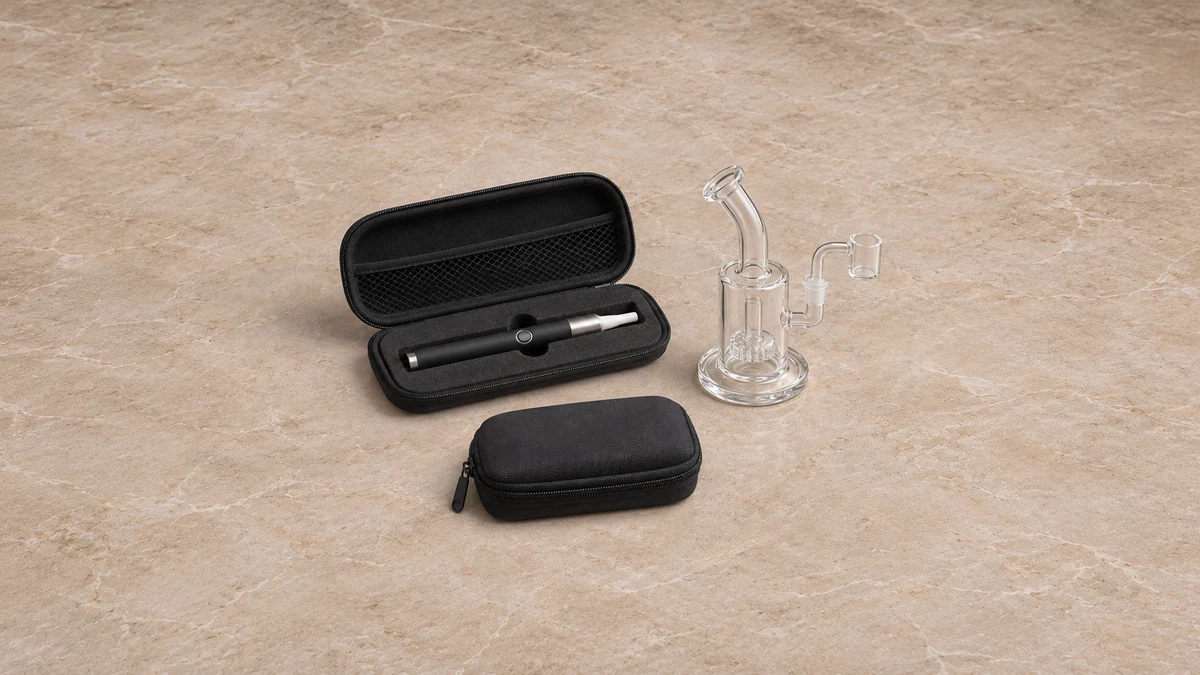
A bare pen, a pen with a glass attachment and a pen beside its spare chamber are three different carrying arrangements. Likewise, an empty rig body photographed without its banger does not show everything that needs protection. Compare the equipment as it will actually be stored, fully cooled and unpowered, including loose parts that the maker permits removing. A single overall length is only one dimension of that arrangement.
The rig’s side joint and the pen’s chamber connection deserve particular attention because another object can load them from the side. Space around the broad body does not guarantee space around these projections. A case should support the intended parts without its lid forcing them into position. Our dab rig case guide explains why the neck, side attachment and loose glass need separate consideration.
There is also a difference between protecting a complete pen and storing a loose battery cell. A device housing contains its own controls and connections. An exposed spare cell has terminals that require the protection specified for that cell and device. Treating both as ordinary small objects in a shared accessory pocket erases a useful distinction. The manufacturer’s transport and battery instructions remain part of the carrying arrangement.
🧰 6. Count the Maintenance Tasks
Instead of assigning each format a fixed cleaning score, list the tasks associated with the actual configuration. A glass rig may involve separate glass and banger care. A pen may add charging and model-specific chamber replacement. An electric rig can combine glass care, charging and a separate chamber procedure. These descriptions identify work categories without promising how frequently a particular owner will encounter them.
📝 6.1 Compare Like-for-Like Service Events
Replacing a failed electrical chamber is different from cleaning an accessible surface. Buying a new glass attachment is different from replacing an entire powered device. Keep those events separate when reading reports about ownership cost or reliability. A comment saying a device needed replacement is incomplete until it identifies what was replaced. One person’s short service history cannot establish a lifespan for the format.
| Arrangement | Parts to identify before discussing care |
|---|---|
| Refillable dab pen | The mouthpiece, any separate cap, the chamber or heater assembly and the powered body beneath it. |
| Conventional glass rig | The glass body and joint, separate nail or banger, cap if present, and the actual external heating arrangement. |
| Electric rig | The powered base, its model-specific chamber, removable glass and any separate seals or adapters identified by the maker. |
🔍 7. Two Hardware Problems That Look Similar
Imagine a pen with a detached clean mouthpiece that still will not seat correctly. The remaining questions concern the mating component, retention method and whether the correct version is present. More cleaning does not prove a dimensional match. Now imagine a rig attachment that rocks at its joint. That raises questions about the connector and its condition rather than about the pen-style retention system in the first example.
A second comparison concerns a device that appears inactive. A pen’s indicator, an electric rig’s chamber message and an external controller’s display refer to different assemblies. Their signals cannot be interpreted through a universal color chart. Use the exact documentation and describe the observed response without repeatedly trying mismatched parts. A category name identifies the broad format; it does not supply a fault code dictionary.
✅ 8. Finish With a Parts Map
The most useful dab pen versus dab rig comparison shows where the chamber sits, what powers it, what glass is attached and which pieces can be serviced separately. Add the complete packed outline and the care boundary for each removable part. That produces a meaningful description of ownership without inventing a winner, a maintenance interval or a performance equivalence between physically different assemblies.