A dab rig case sounds like a simple purchase until you actually try to pack one. The rig itself is rarely the hard part — it’s the joint, the loose bowl or banger, the carb cap, and sometimes a torch or dab tool that all need to survive the same trip without knocking into each other. A lot of people start out using a cardboard box or a repurposed gig bag, and it works fine sitting still on a shelf. It falls apart the moment the case gets picked up, tilted, or set down harder than expected.
The Reddit threads on this topic make the pattern pretty clear. People aren’t just asking “what case fits my rig” — they’re asking for one case that works for storage at home and for the occasional trip out the door, and they’re asking pointed questions about custom foam and impact protection rather than just dimensions. That’s a more specific problem than it looks like at first glance, because storage and transport actually pull the design in different directions. A case that’s great for parking a rig safely on a shelf isn’t automatically great for surviving a car ride, and vice versa.
📦 1. One Case, Two Very Different Jobs
Sitting on a shelf, a rig mostly needs to stay upright, stay dust-free, and keep the joint from getting bumped by whatever gets set down next to it. That’s a low-stress environment. A case that’s really a padded sleeve or a soft-sided pouch can handle it because nothing is moving.
Put that same rig in a bag, in a trunk, or under a car seat, and the situation changes. Now there’s vibration, tilting, sudden stops, and other objects shifting around nearby. The joint — the narrowest, most exposed point on most rigs — becomes the thing most likely to take an impact it wasn’t built for. A case that only accounts for the “resting” scenario tends to fail exactly here.
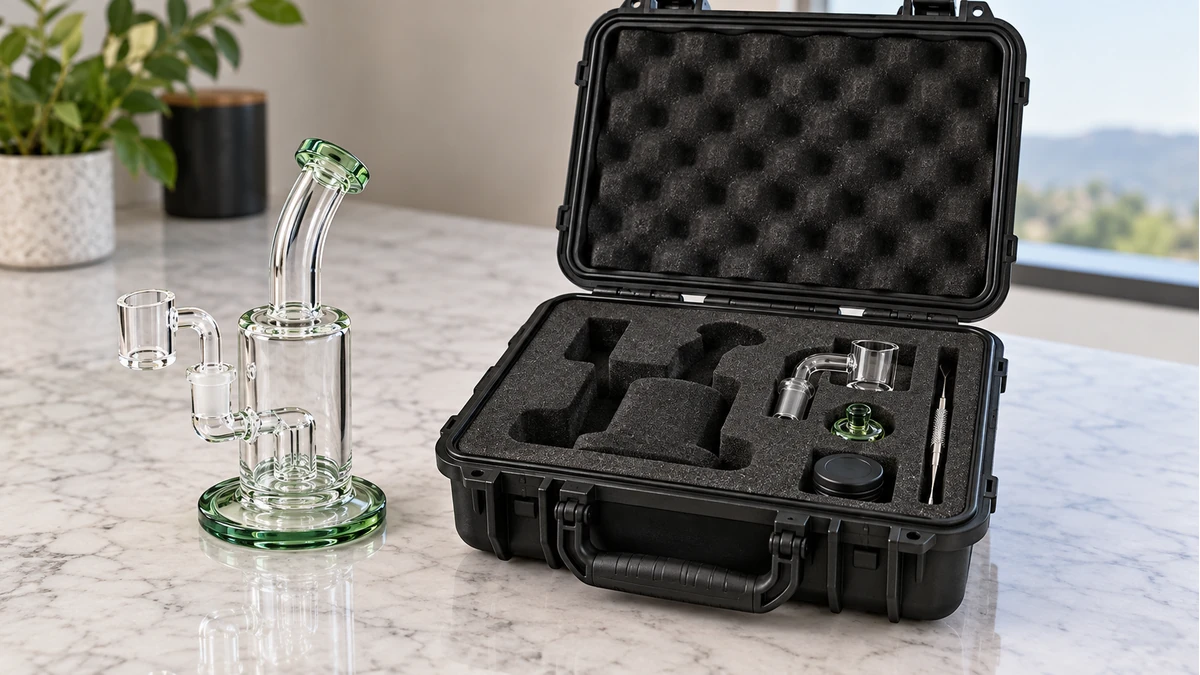
The honest answer to “storage or travel” is that most people eventually want both, and a case built around a rigid outer shell with cut foam inside tends to satisfy both jobs better than something built for just one of them. That doesn’t mean every case needs to be a full hard-shell unit — but it does mean it’s worth being clear about which job matters more before choosing, since a case optimized purely for shelf storage often isn’t the same product as one optimized for a bag or a car.
🧱 2. Hard Shell vs Padded Soft Case
Hard-shell cases use a rigid outer structure — usually a molded polymer or a reinforced composite shell — with cut or pluck foam inside to hold the rig’s shape. The shell absorbs and spreads out impact energy so it doesn’t transfer directly to the glass. Padded soft cases skip the rigid shell and rely entirely on padding thickness and stitched compartments to cushion the contents.
Neither format is objectively better; they solve different problems. A hard shell is the stronger choice when the case is going to be tossed in a car, checked as luggage, or generally handled by someone other than the owner. A soft case is lighter, easier to compress into a bag, and perfectly adequate for careful, hands-on carrying where the person holding it is paying attention the whole time.
| Factor | Hard shell | Padded soft case |
|---|---|---|
| Impact resistance | Higher — rigid shell spreads force | Lower — depends on padding thickness alone |
| Weight | Heavier | Lighter |
| Packability | Fixed shape, takes up set space | Compressible, fits into other bags |
| Best fit | Car travel, checked transport, shared handling | Home storage, careful hand-carry |
Anyone who’s already read into a bong travel case guide will recognize this same tradeoff — it’s less about the piece and more about how it’s actually being moved from one place to another.
🧩 3. Foam Geometry and Joint Isolation
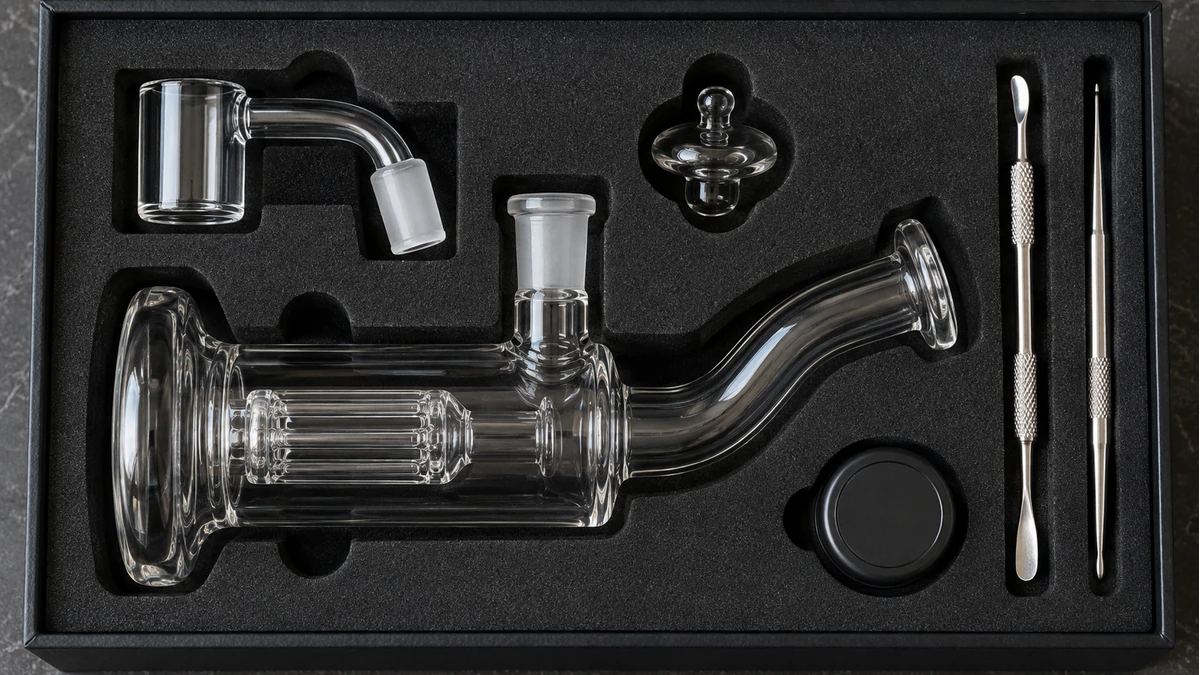
Foam is where most dab rig cases actually succeed or fail, and it’s also where the custom-foam questions from r/Pieces come from. Generic pluck foam works fine for straightforward shapes, but rigs are rarely straightforward — recyclers, percolators, and off-center joints all create weird negative space that a flat foam block doesn’t account for.
🧩 3.1 Why the Joint Needs Its Own Cavity
The joint is the single narrowest, most load-bearing point on most rigs, and it’s usually where the bowl or banger attaches. If the foam cavity treats the whole rig as one uniform shape, the joint ends up either floating with no support or pressed against foam that isn’t cut to match its angle. Either way, it’s absorbing stress it wasn’t designed to take.
A cavity that’s actually shaped around the joint — supporting it from underneath and cradling the angle rather than just wrapping it — keeps that stress off the glass. This is the detail worth checking before buying: not “does it fit the rig,” but “does it fit the joint specifically.”
🧩 3.2 Loose Glass Needs Its Own Compartment
Bangers, bowls, and carb caps are usually stored loose, and loose glass rattling around inside a rig cavity is one of the most common failure points people report. It doesn’t matter how well the rig itself is cushioned if a banger is bouncing around next to it on every bump.
Separate foam cutouts or small zippered pockets for these accessories solve this directly. Anyone working through a carb cap for dab rig guide already knows these pieces vary quite a bit in shape and size, which is exactly why a single generic cutout rarely holds all of them securely — a dedicated slot for each piece, sized to it individually, is what actually keeps things from knocking together.
🔄 4. Upright vs Horizontal Layout
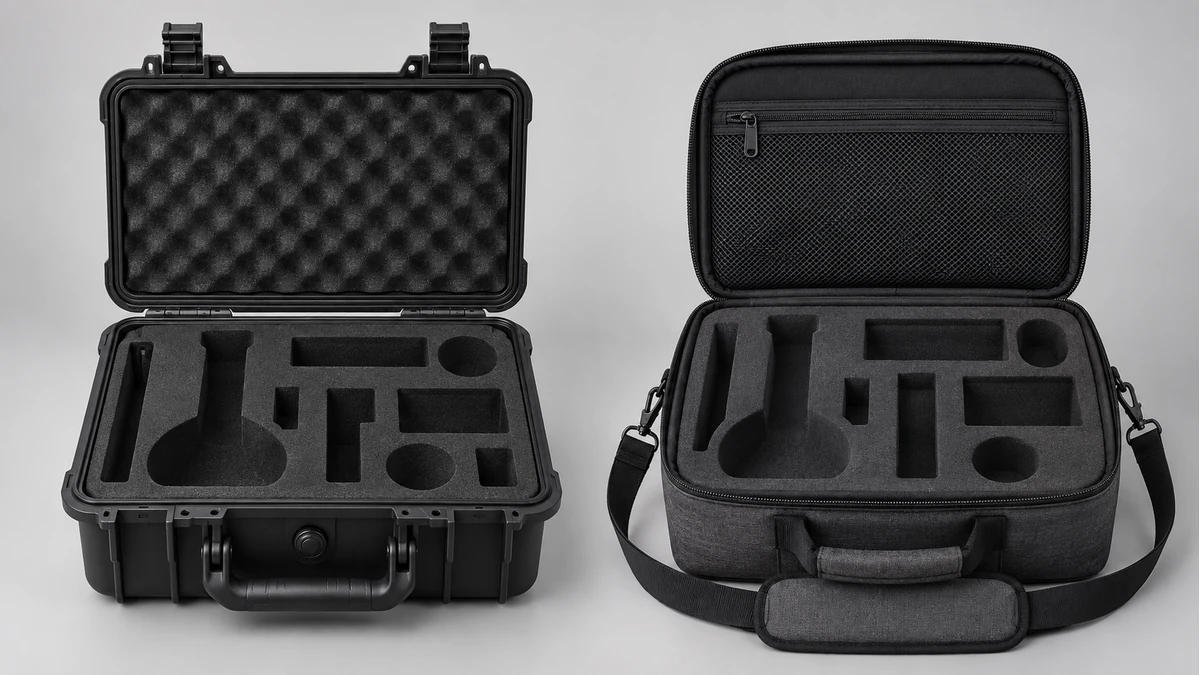
Cases generally lay a rig out one of two ways: upright, standing on its base the way it would sit on a table, or horizontal, lying on its side inside a foam trough. Both have real tradeoffs, and neither is a universal answer.
Upright layouts keep the rig in its natural orientation and tend to protect the base and joint well, since the foam cavity is built specifically around that footprint. The tradeoff is case height — an upright layout needs a case tall enough for the rig’s full height plus foam clearance, which can make for a bulky, awkward case for a tall piece.
Horizontal layouts solve the height problem since the case only needs to be as long as the rig, not as tall. The tradeoff shows up at the joint: lying a rig on its side puts lateral pressure on the joint and any attached accessories unless the foam trough is specifically shaped to keep that area suspended and unsupported by direct contact. A horizontal case with a flat foam trough and no joint relief is a common way rigs end up cracked at exactly that point.
The r/concentrates thread about wanting a combined station-and-case setup runs into this same tradeoff directly. A layout built to double as a display stand at home usually assumes upright orientation, while a layout built for a bag or car often favors horizontal for the lower profile. Trying to force one case to do both jobs well is possible, but it usually means picking whichever layout matches how the piece spends most of its time and treating the other use as secondary.
🌬️ 5. Odor Containment vs Impact Protection
It’s worth being clear-eyed about what a case actually controls. Odor-focused cases rely on lining materials and sealed zippers to reduce smell escaping the bag; impact-focused cases rely on foam geometry and shell rigidity to reduce the chance of breakage. These are two separate design goals, and a case that’s excellent at one isn’t automatically excellent at the other.
A soft case with an odor-resistant liner might not have enough structural padding to handle a real drop or a heavy jostle. A rigid hard-shell case with thick foam might have seams or a hinge that aren’t sealed tightly enough to contain smell the way a dedicated odor case would. Knowing which problem matters more for a given trip — a quiet ride in a bag versus a loud toss into a trunk — makes it much easier to pick the right case instead of assuming one feature covers the other.
💧 6. Clean, Dry Packing and Realistic Travel Limits
Packing a rig clean and fully dry before closing the case isn’t a minor step — it’s the difference between a case that stays usable and one that starts smelling or staining its foam after a handful of trips. Any residual moisture sitting inside a sealed foam cavity has nowhere to go, and foam holds onto whatever it’s exposed to far more than a hard, wipeable surface does.
It’s also worth setting realistic expectations about what a case can and can’t do. No case — hard shell, soft case, or otherwise — makes a rig indestructible, and no foam cutout fully compensates for careless handling, extreme temperature swings, or being crushed under something heavier. A case reduces risk from routine handling and typical transport; it doesn’t eliminate risk from every possible scenario. Treating it as a meaningful reduction in risk rather than a guarantee keeps expectations grounded.
🧳 7. Handle and Zipper Loads
The hardware holding a case together carries more weight, literally, than people usually think about. A loaded rig case is heavier than an empty bag of the same size, and that weight is concentrated rather than evenly spread. Handles and zipper pulls take that load every time the case gets picked up or carried, and cheap stitching or a lightweight zipper track will show wear at exactly the stress points first — usually near the handle attachment or at the corners of the zipper pull. For related hardware context, see AOVAPE’s bong travel case guide.
A reinforced handle mount and a zipper track sized for the case’s actual weight, not just its size, matter more here than most people expect going in. This is a detail worth checking on a case before it’s fully loaded, since a handle failure with a rig already inside is a far worse moment than the same failure with an empty case. For related hardware context, see AOVAPE’s dab tool kit guide.
📏 8. Measure the Whole Rig, Not Just the Height
The most common mistake in choosing a case is measuring only the rig’s height and assuming that’s the number that matters. Height matters, but it’s rarely the failure point. The base diameter, the widest point of any percolator or recycler chamber, and — critically — the joint angle and any attached accessory sticking out at that joint are what actually determine whether a rig fits safely inside a given cavity. For related hardware context, see AOVAPE’s carb cap for dab rig guide.
A rig can be shorter than the case’s interior height and still not fit properly if the joint sticks out at an angle the foam cavity doesn’t account for, or if a wide percolator chamber presses against the cavity wall instead of sitting with clearance around it. Measuring the whole silhouette — base, body, and joint angle together — before choosing a case avoids the frustrating situation of a case that technically closes but leaves the rig under pressure the whole time it’s inside.
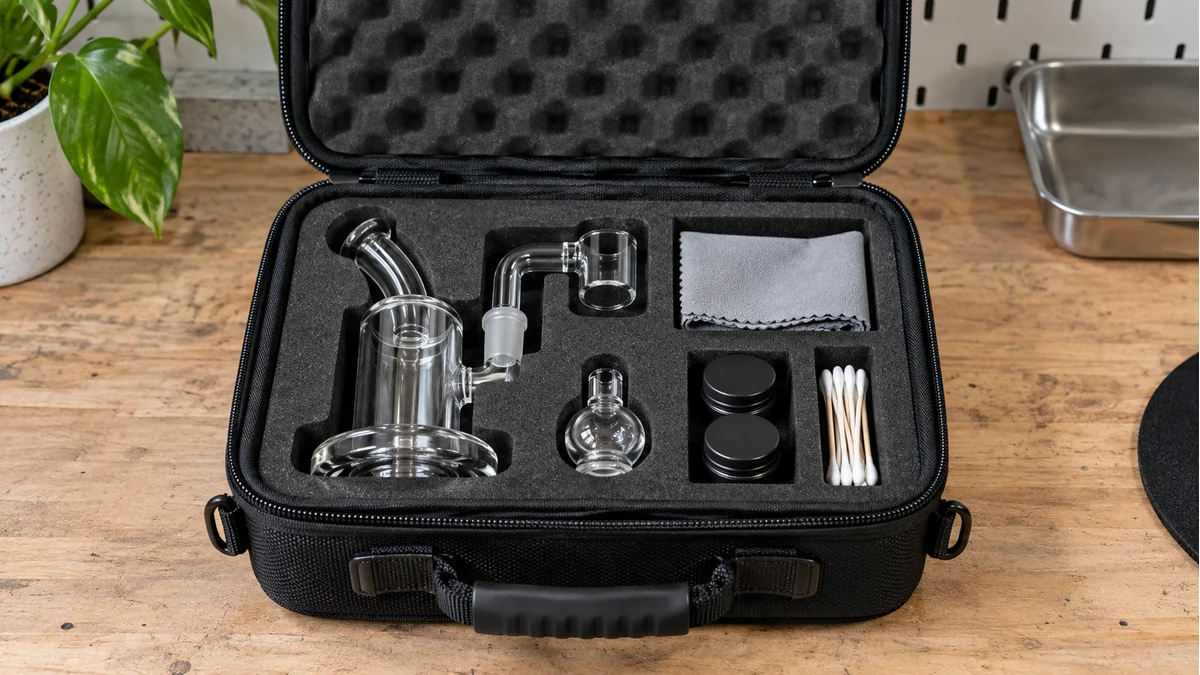
None of this is complicated once it’s laid out, but it’s easy to miss when shopping by height alone or by whatever case happens to be marketed as an “all-purpose” fit. A case built around the joint, the loose accessories, and the actual shape of the piece — not just its tallest dimension — is what ends up doing the job well, whether that job is sitting on a shelf or riding along in a bag.
🧭 9. Treat the Interior as a Parts Map
Before cutting or ordering foam, place every dry component on paper and draw the removal path. The rig needs space to lift without catching the joint, while caps, bangers, tools, and small containers need separate cavities that do not unload into one another when the case turns sideways.
A good layout also leaves room for fingers. Foam that hugs glass with no pickup space encourages people to pull on the neck or joint. Small relief notches beside the strongest section of each part make removal more repeatable without sacrificing the surrounding support.