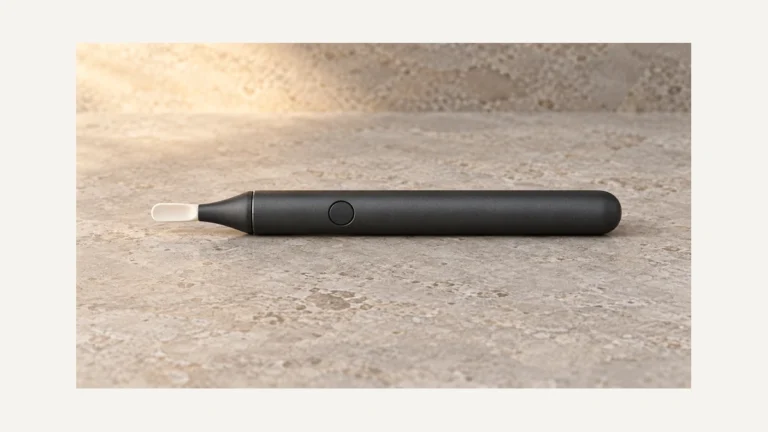
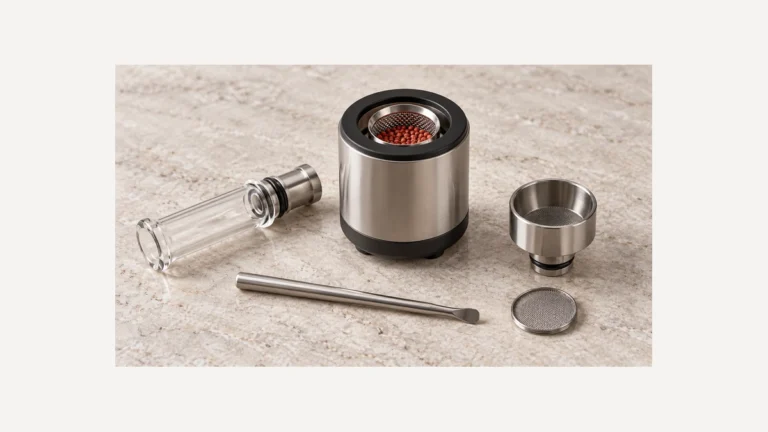
Search “dab rig heater” and you’ll get a strange mix of results: e-nail coils, induction base units, temperature controllers, and full electric rigs that look nothing alike but somehow share the same name. That’s not a mistake in how people search — it’s a reflection of how loosely the vape and dab accessory world uses the term. The phrase gets stretched to cover a coil that wraps around a nail, a box that controls that coil, an induction plate that heats a banger from below, and an all-in-one chamber that skips separate parts entirely.
This confusion shows up constantly in online discussions where people describe wanting “a heater for my rig” without knowing whether they need a coil, a controller, a whole e-nail kit, or something else entirely. The goal here isn’t to recommend a specific setup, but to pull apart what each piece actually is, how it physically connects to the rest, and where the boundaries between components tend to get misunderstood.
🔍 1. What People Mean When They Say “Dab Rig Heater”
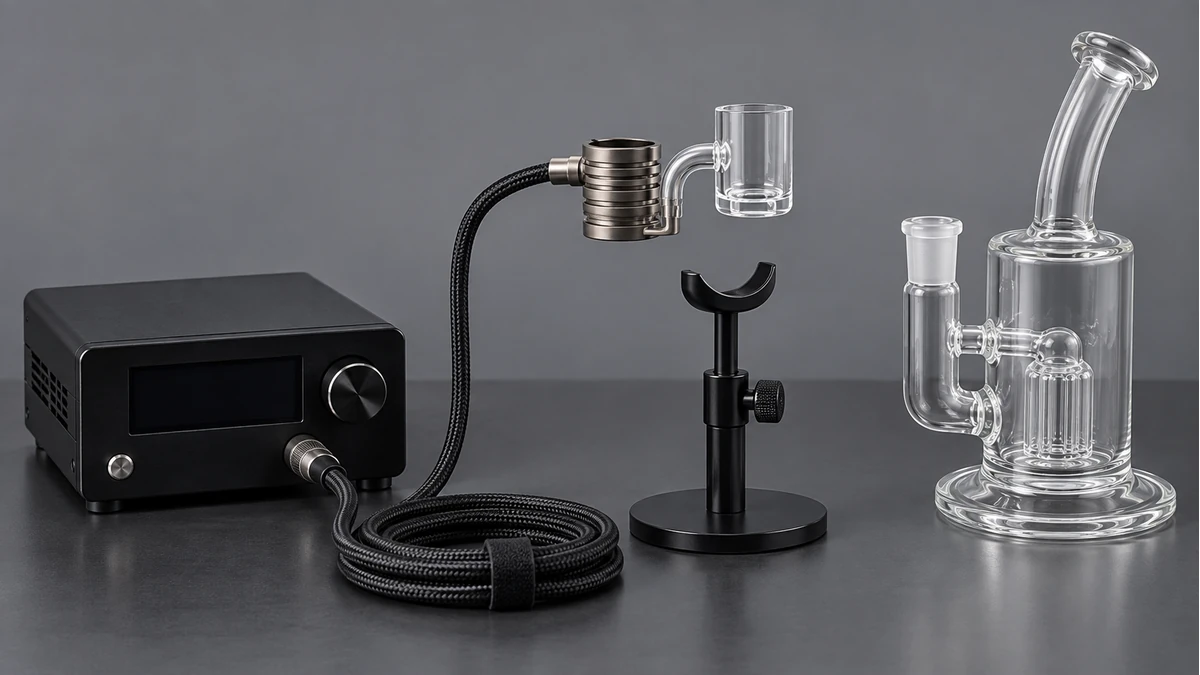
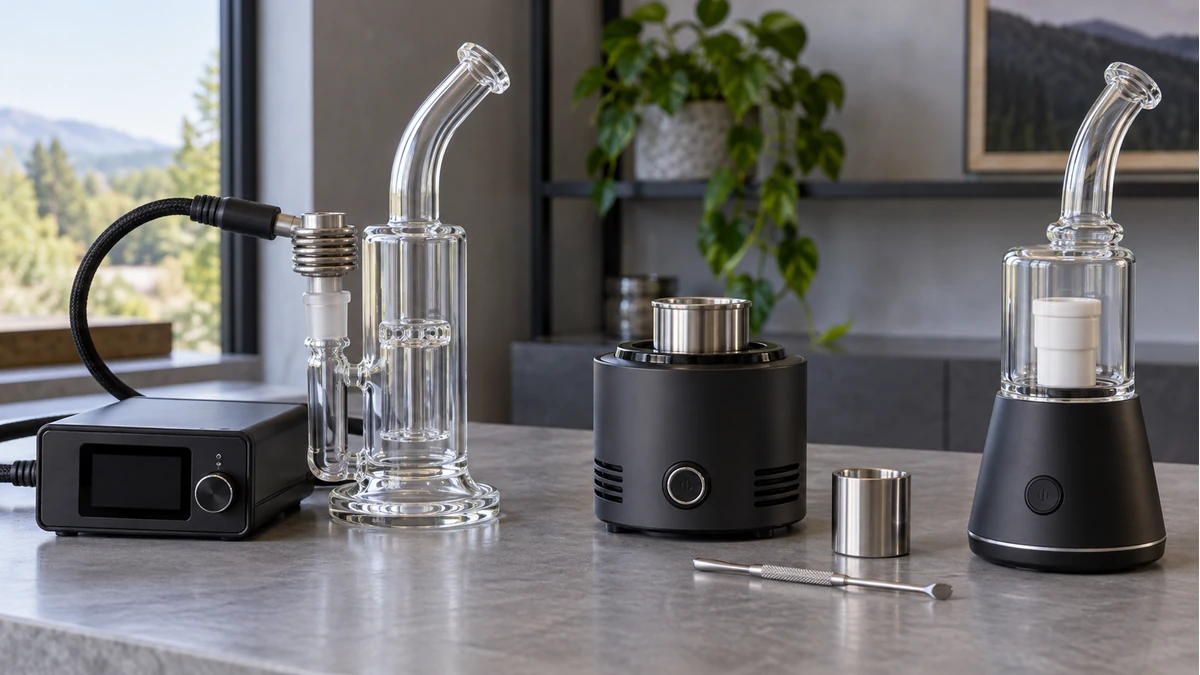
“Dab rig heater” isn’t a defined product category the way “banger” or “carb cap” is. It’s a catch-all phrase that different shoppers use to mean different things depending on what they already own. Someone with a traditional glass rig might use it to describe the coil-and-controller combo that turns their setup into an e-nail. Someone starting from scratch might use it to describe an integrated electric rig that has no separate glass nail at all.
That ambiguity matters because these are not interchangeable purchases. A coil is a physical heating element sized to wrap around a specific nail. A controller is the electronics box that regulates power to that coil. An induction heater is a different mechanism entirely, using a base plate rather than a wraparound element. And an integrated e-rig chamber is a sealed unit where the heating component isn’t meant to be separated from the rig body at all. Knowing which category someone actually needs is the first step before comparing any products.
🧩 2. The Core Components and Where They Separate
Once you break “dab rig heater” into its actual parts, the picture gets much clearer. Most setups fall into a small number of distinct physical categories, and each one has its own fit requirements and its own point of connection to the rest of the rig.
🌀 2.1 Coils vs. Controllers
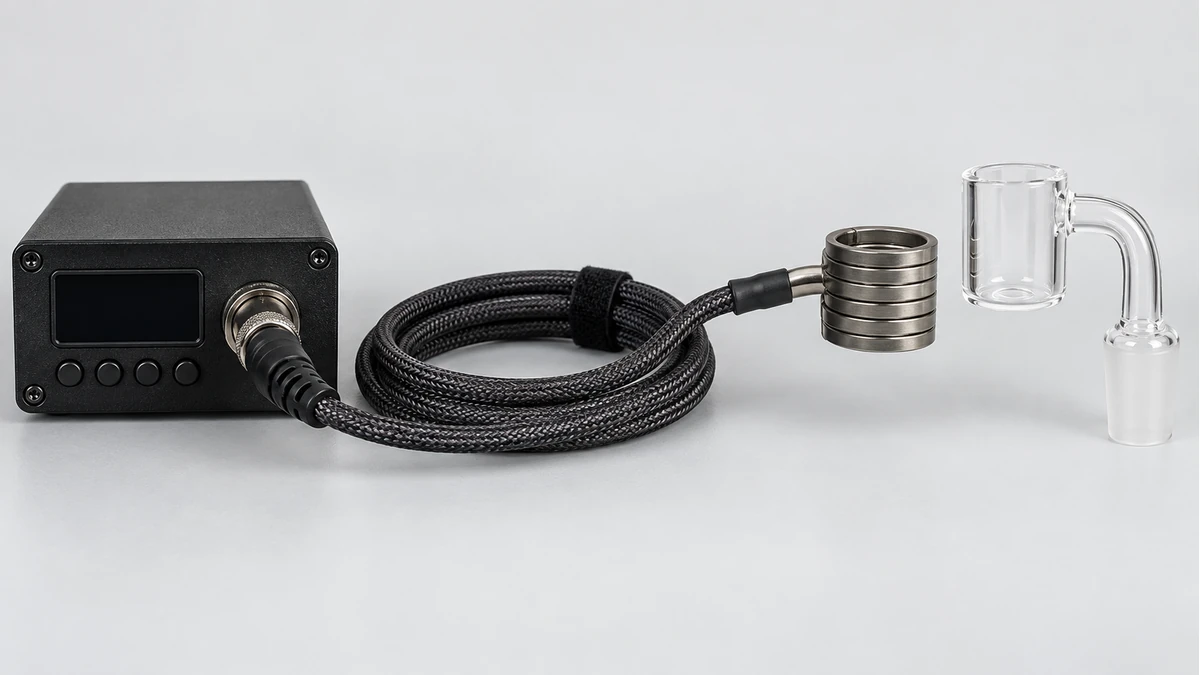
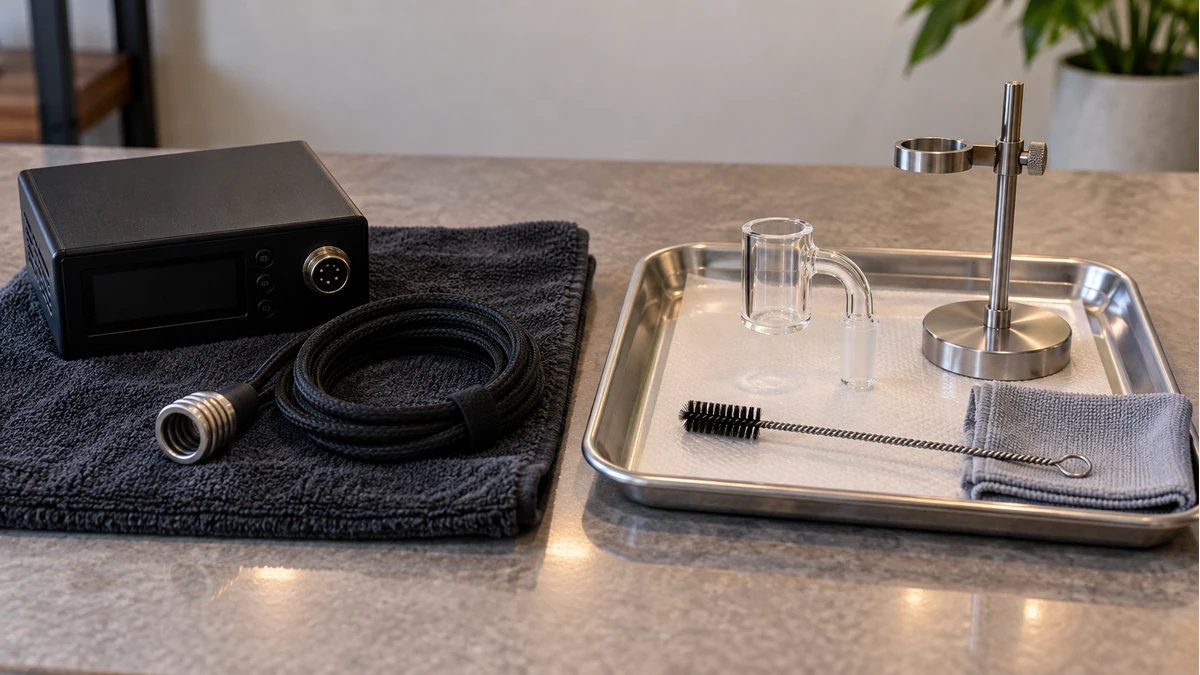
In a traditional e-nail setup, the coil and the controller are two separate physical objects connected by a cable. The coil is the part that actually wraps around the nail and gets warm; the controller sits away from the rig and manages the power delivered through that cable. People sometimes buy these as a matched pair, but they are still mechanically distinct parts — the coil has its own diameter and shape requirements tied to the nail, while the controller’s job is purely electrical.
This separation is useful to understand because it means a “heater” replacement might only mean replacing the coil, not the whole electronic system, or vice versa. Assuming they’re a single fused unit leads to a lot of confused troubleshooting later.
🪨 2.2 The Nail or Banger Itself
The nail or banger is not the heater — it’s the piece the heater acts on. This is one of the most common points of confusion in casual conversations about dab rig heaters, where people describe “the heater” when they actually mean the quartz or titanium piece the coil wraps around. The nail has its own shape, joint size, and material considerations that are separate from anything electrical. If you’re trying to understand how nails, bangers, and e-nails relate to one another as physical pieces rather than as heating systems, a dedicated comparison like a dab nail vs banger vs e-nail guide is a better starting point than trying to sort it out through the heater alone.
⚡ 2.3 Induction Heaters as a Separate Mechanism
Induction-based heaters work differently from coil-and-nail setups. Instead of wrapping around the nail, an induction base sits beneath it, and the nail itself (often with a metal core or insert) responds to the field generated by the base. This means induction heaters and traditional coil e-nails are not drop-in substitutes for each other — the physical relationship between the heating hardware and the nail is fundamentally different, even though both get lumped under “dab rig heater” in casual searches.
🔌 3. Fit, Diameter, and Connector Details
Once you know which category of heater you’re actually dealing with, fit becomes the next major hurdle. This is where a lot of mismatched purchases happen, because coils, connectors, and stands are not universally standardized across brands.
📏 3.1 Coil Diameter and Shape Matching
Coils are made to match the outer profile of a specific nail size and shape. A coil built for one diameter range won’t sit securely on a nail outside that range — it may be too loose to maintain even contact or too tight to slide into place without stress on the coil’s winding. Some coils are also shaped for a particular nail style, so a coil designed for a bucket-style nail may not seat the same way on a nail with a different taper. When people talk about buying “a heater” separately from their existing nail, this is the compatibility check that gets skipped most often.
🔗 3.2 Connector Pinout and Controller Pairing
The cable connecting a coil to its controller isn’t just a generic plug. The pin arrangement and connector housing are specific to how that controller reads temperature and delivers power, so a coil from one system generally shouldn’t be assumed to work with a controller from another unless the manufacturer explicitly says so. Mixing mismatched coils and controllers isn’t just a “might not work” situation — miswired connections between incompatible electronics are a real risk, not just a compatibility inconvenience. This is one of the strongest arguments for treating a coil and controller as a matched set rather than shopping for them as unrelated commodity parts.
🧵 3.3 Cable Strain and Stand Placement
The physical cable running from controller to coil is often overlooked until it becomes a problem. If the controller sits too far from the rig, or if the rig’s stand doesn’t route the cable cleanly, the cable ends up under constant tension or gets pinched every time the rig is moved. Over time, strain at the connector end is a common failure point — not because the electronics failed, but because the physical cable connection wore out from repeated bending in the same spot. Placing the controller close enough to the rig, and using a stand or base that lets the cable hang with some slack, reduces this kind of wear-and-tear failure that has nothing to do with the heating element itself.
🧽 4. Cleaning Boundaries Between Parts
Because “dab rig heater” spans several different physical components, cleaning routines aren’t one-size-fits-all either. The nail or banger, the coil, the controller, and the rig’s water chamber each have different tolerances for moisture, solvents, and disassembly, and treating them as one unit during cleanup is how components get damaged.
The nail or banger can typically be cleaned on its own, separate from anything electrical, since it doesn’t contain wiring or circuitry. The coil, by contrast, should generally stay dry — its job is to sit around the nail, not to be submerged or scrubbed the way glass is. Controllers and their cables are electronics housings and should be treated with the same caution you’d give any powered device: no soaking, no spraying cleaner directly onto ports or connectors. The rig body itself, especially the water chamber, has its own cleaning needs that are closer to standard glass rig care than to anything involving the heater.
Because these boundaries aren’t always obvious, especially on integrated e-rigs where the chamber and heating element are built into a single housing, working from a resource focused specifically on separating these steps — like an electric dab rig cleaning guide — is more reliable than guessing which parts can handle which cleaning methods.
| Component | Physical Role | Typical Fit Concern |
|---|---|---|
| Coil | Wraps around the nail to transfer heat | Diameter and shape match to the nail |
| Controller | Regulates power sent through the cable | Connector pinout compatibility with the coil |
| Nail/Banger | Receives heat from the coil or induction base | Joint size and material, independent of electronics |
| Induction base | Generates a field the nail’s core responds to | Nail must have a compatible metal insert or core |
| Integrated e-rig chamber | Combines heating and rig body as one sealed unit | No separate nail or coil to swap independently |
🗂️ 5. Choosing Terminology That Matches What You’re Buying
The most practical takeaway from all of this is that “dab rig heater” is a starting search term, not a final product description. Before comparing listings or asking for recommendations, it helps to know which of the categories above actually applies to what you’re trying to buy or replace: a standalone coil, a controller, an induction base, or a sealed integrated unit.
If you’re assembling a setup from separate parts for the first time, working through the relationships between the nail, the coil, and the controller as a package — rather than shopping for a “heater” in isolation — tends to prevent the mismatched-connector and wrong-diameter problems described above. An e-nail dab kit guide is a useful way to see how these components are typically bundled together as a coherent system, which makes it easier to spot when a listing is selling just one piece rather than a complete, compatible set. For related hardware context, see AOVAPE’s e-nail dab kit guide.
Ultimately, the confusion around this phrase comes from the fact that dabbing hardware evolved from simple glass nails into a range of electric and induction systems, and the vocabulary hasn’t fully caught up. Splitting “dab rig heater” into its real components — coil, controller, nail, connector, stand, and chamber — turns a vague search term into a set of specific, checkable questions. That’s a much sturdier foundation for comparing hardware than relying on a single ambiguous phrase to do all the work. For related hardware context, see AOVAPE’s dab nail, banger, and e-nail comparison.
🧭 6. Trace the System From the Outlet to the Glass
A clear component map starts at the power source, moves through the controller and cable, reaches the heating element, and ends at the nail, banger, or integrated chamber. Each handoff has its own fit question. A controller connector can look familiar while using a different pin arrangement, and a coil can wrap around a banger without making the intended contact. For related hardware context, see AOVAPE’s electric dab rig cleaning guide.
That is why replacement shopping should begin with documented model compatibility, not a photo comparison. Record the controller model, connector, heater shape, mating diameter, support hardware, and the part that actually contacts the glass or metal component. If any one of those fields is unknown, the phrase “dab rig heater” is still too broad to identify a replacement.
🧾 6.1 Keep the Documentation With the Components
Controllers and coils are often separated during cleaning or storage. Keeping their original labels and instructions together preserves the pairing information that disappears once loose parts enter a drawer. It also makes it easier to distinguish a heater problem from a glass-fit or support problem without guessing.
🧱 6.2 Support Hardware Is Part of the Heater System
A stand, clamp, or cradle may look secondary, but it controls where the heated assembly rests and how much load reaches the glass joint or cable. The support must match the component’s shape and intended orientation. A generic opening that merely accepts the part may still place pressure on a connector, leave the coil unsupported, or make removal awkward.
Integrated e-rigs package these relationships inside one housing, while modular e-nails expose them as separate purchasing decisions. That distinction explains why advice for one format does not transfer cleanly to the other.