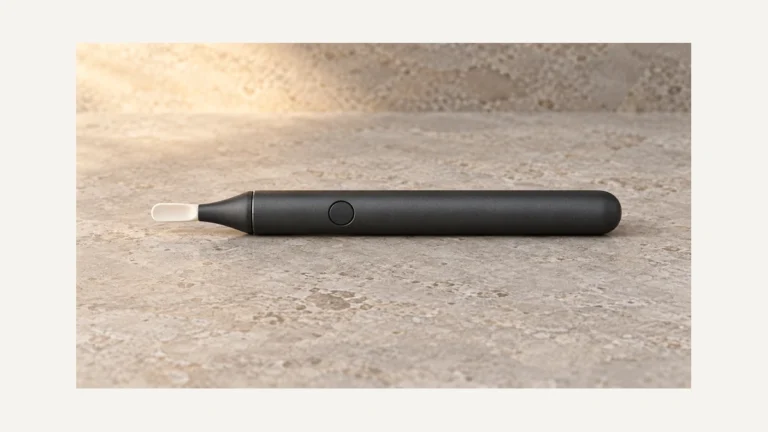
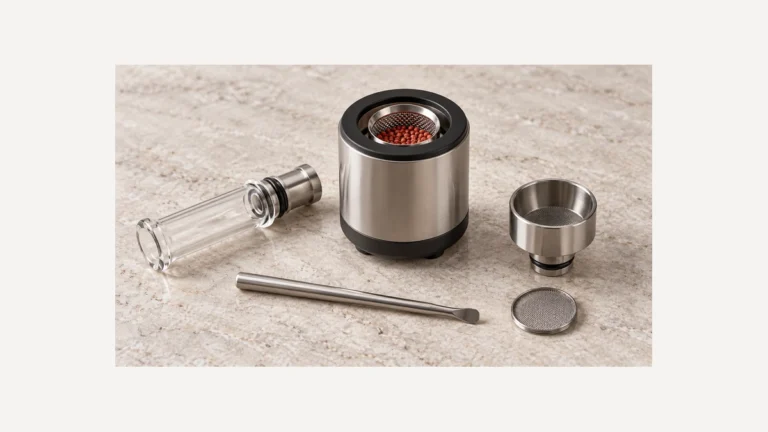
Scroll through any dab-focused subreddit and you’ll find the same question phrased a dozen different ways: which piece actually makes the biggest difference? Someone posts a setup that clearly works and asks if swapping one part will “improve the routine,” while someone else lists a banger, a cap, a torch, and a cleaning brush and asks what each one is even for. The honest answer is that a dab rig isn’t one product with accessories bolted on — it’s a chain of interfaces, and each link has to match the ones next to it. Understanding what each piece does, and how it physically connects to the next, matters more than picking a “most suitable” component in isolation.
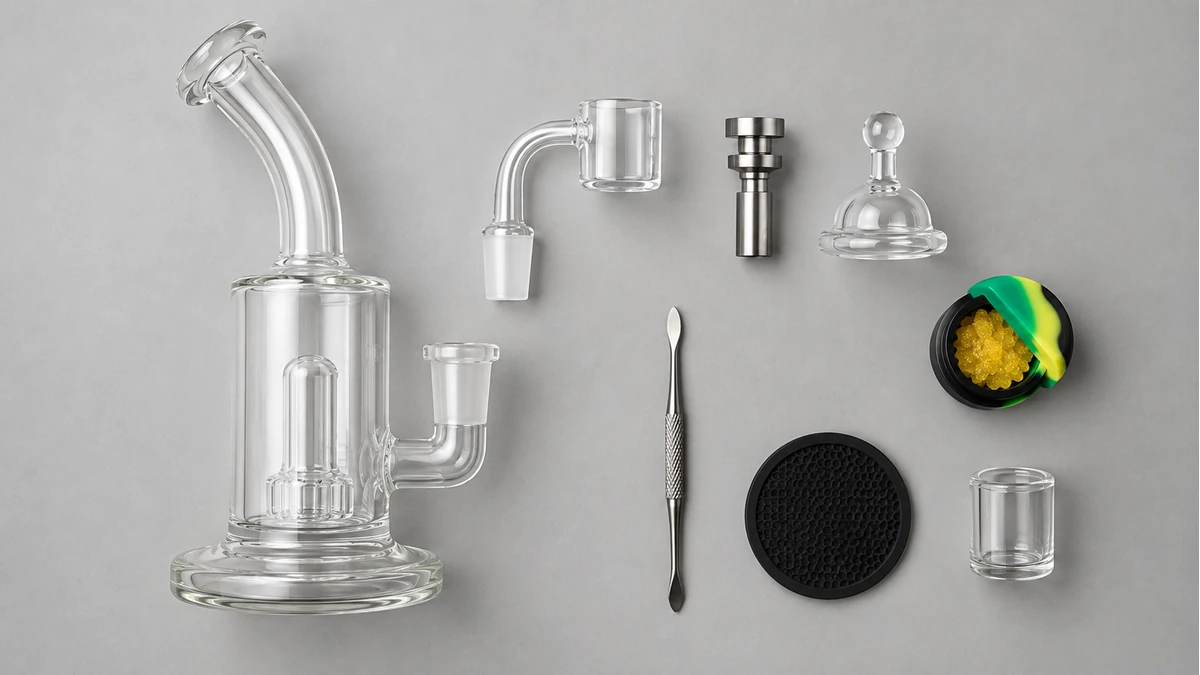
This guide walks through that chain in order: the glass body that holds everything together, the joint that determines what can attach to it, the banger or nail and heating source that do the actual heat work, the carb cap that manages airflow over that heat, and the handling accessories — dab tool, reclaim catcher, cleaning supplies — that keep the whole system usable over time. None of these pieces are standardized in a legal sense; sizing and shape conventions are just common industry habits, not fixed rules, so checking compatibility before you combine parts is always worth the extra minute.
🧊 1. The Rig Body: Chamber, Percolator, and Why It’s the Foundation, Not the Whole Story
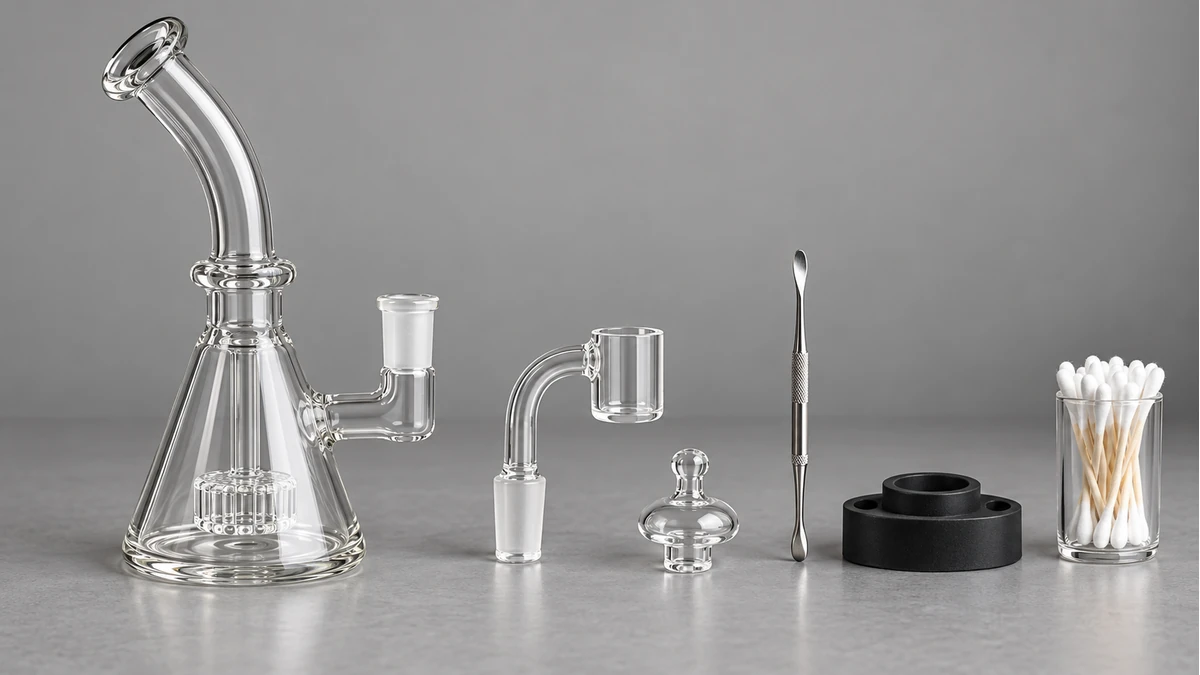
The rig body is the glass (or occasionally silicone or ceramic) vessel that holds water, filters vapor as it passes through, and gives the whole setup its physical shape. Most bodies include some kind of percolator — a diffusion element inside the chamber that breaks vapor into smaller bubbles as it travels through water. Common styles include showerhead, tree, and honeycomb percs, each producing a different amount of diffusion and drag. More percolation generally means smoother-feeling vapor but also more resistance when pulling, so there’s a real tradeoff rather than a simple “more is better” rule.
People coming from the Reddit threads above often assume the rig body is the piece that defines quality, since it’s the largest and most visible part. In practice, the body mostly controls filtration and airflow feel — the flavor and vapor production are driven much more by the banger, the heat source, and how they’re used together. A simple, well-built body paired with a properly matched banger and cap will usually outperform an elaborate body paired with mismatched heat-path parts. That’s why the confusion in the “should I get an X” posts often resolves once people realize they were evaluating the wrong link in the chain.
🧩 1.1 Joint Size, Gender, and Angle
Where the rig body meets everything else is the joint — the ground-glass connection point near the top of the neck. Three variables define whether a joint will physically accept a given banger or nail: size, gender, and angle.
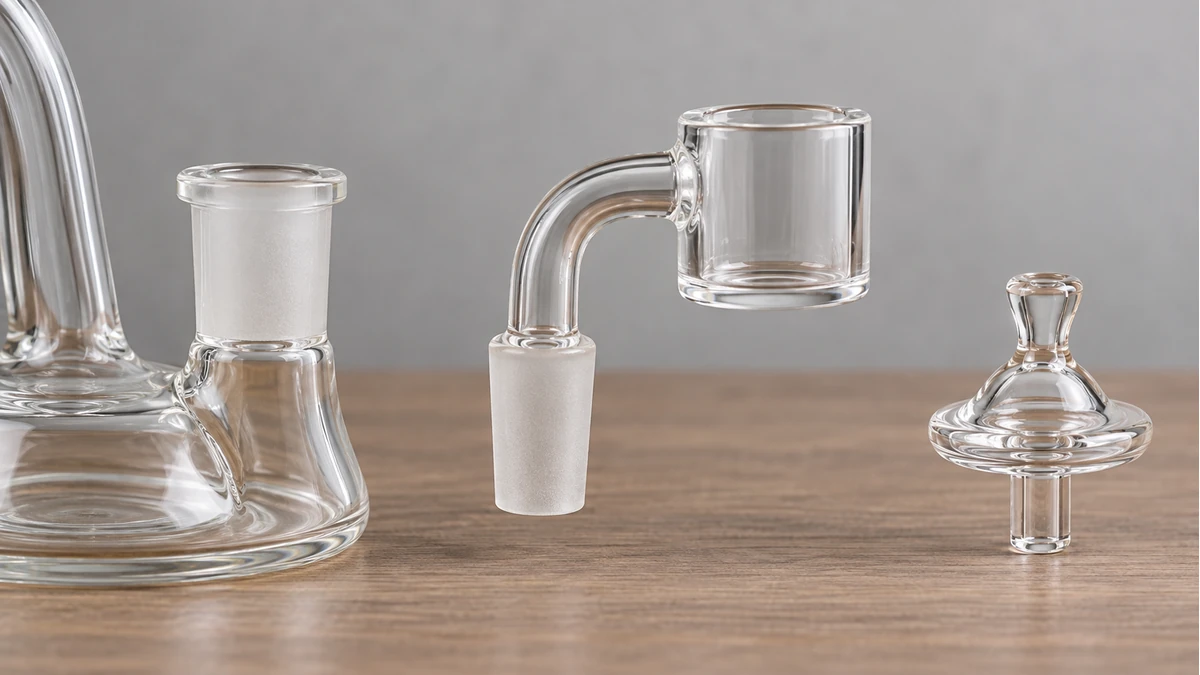
Size refers to the diameter of the joint opening. The concentrate world commonly uses a handful of size conventions, often labeled in millimeters, and these labels are industry habits rather than an enforced standard — which is exactly why mismatched pieces show up in secondhand rigs and mixed sets. Gender refers to whether the joint is male (the ground glass is on the outside, tapering inward) or female (the ground glass is on the inside, tapering outward). A male joint fits into a female joint of the same size; they don’t interchange. Angle describes how the joint is oriented relative to the rig body, most often listed as 90-degree or 45-degree. Angle affects ergonomics and how a torch or e-heater can approach the banger, but it doesn’t change whether a piece fits — that’s governed entirely by size and gender.
Getting these three details right before buying a replacement banger or nail avoids the single most common compatibility headache people run into. If you’re unsure how these pieces relate once you’ve got the sizing sorted, our dab nail vs. banger vs. e-nail guide goes deeper into how the heat-path piece itself is chosen once the joint is settled.
🔥 2. The Heat Path: Banger/Nail, Heating Source, and Carb Cap Working Together
Once the joint is sorted, the next three pieces form what’s really the functional core of the setup: the banger or nail, the heating source, and the carb cap. These three exist as a set — changing one often means reconsidering the other two.
🧩 2.1 Banger or Nail
A banger is a bucket-shaped quartz or glass piece that sits in the joint and holds the material being heated. “Nail” is the older, broader term and can refer to a banger or to a flatter, solid-top design; in current use, most people default to “banger” for the bucket style and reserve “nail” for the flat or domed versions used with certain caps. Bangers are typically quartz for heat retention and clarity, though titanium and other materials exist with their own heat-retention characteristics. The banger’s size has to match the rig’s joint exactly — this is the piece most directly affected by the size and gender conventions described above.
🧩 2.2 Heating Source: Torch vs. E-Heater
The heating source is whatever brings the banger up to temperature. A handheld butane torch is the traditional option — direct, portable, and requiring the user to judge temperature by timing and visual cues. An e-nail or e-rig heater is an electric alternative that uses a coil and a controller to hold the banger at a set temperature without an open flame. The two aren’t interchangeable in terms of setup: e-heaters typically require a banger with a compatible base or a coil sized to the joint, while torches work with any banger geometry. Neither is universally “correct” — they’re different approaches to the same job, and the choice affects portability, consistency, and how much hands-on adjustment the process requires.
🧩 2.3 Carb Cap
The carb cap sits on top of the banger after material is loaded and heat is applied. Its job is airflow control — directing air across the heated surface and, on many designs, allowing the user to control pressure and vapor movement within the banger. Cap styles range from simple bubble caps to directional carb caps with an angled airpath, and some include a built-in dabber tip. The threads and forums referenced above frequently show newcomers unsure whether a cap is optional; it isn’t purely cosmetic, since it changes how vapor is drawn out of the banger, but the specific mechanics of that airflow are covered in more detail in our carb cap guide rather than repeated here. What matters for fit is that most caps are designed to sit over a specific banger style and size, so the same size/gender logic that applies to the joint also applies loosely to matching a cap to a banger.
🧰 3. Handling and Maintenance: Dab Tool, Reclaim Catcher, and Cleaning Accessories
The last group of pieces doesn’t touch the heat path directly, but it’s what keeps the rest of the setup functional and easy to live with over time. These are the parts that experienced users tend to mention almost as an afterthought, even though beginners in the threads above are often missing them entirely from their first purchase.
🧩 3.1 Dab Tool
A dab tool (sometimes called a dabber) is a small metal or glass rod used to handle concentrate before it goes into the banger. Tips vary — flat paddle, pointed, scoop-shaped — mostly for handling different textures of material rather than any functional difference in the heat path. It’s a low-cost piece, but it’s also one of the ones beginners most often forget to include when assembling a first setup, since it doesn’t attach to anything and is easy to overlook on a parts list.
🧩 3.2 Reclaim Catcher
A reclaim catcher is an optional glass adapter that sits between the joint and the banger, designed to collect residual concentrate that would otherwise run down into the rig body or water. It doesn’t change how the banger heats or how the cap seats — it’s purely a collection accessory — but adding one does change the overall joint height and angle slightly, which is worth checking against banger and cap clearance before assuming it will fit cleanly into an existing setup.
🧩 3.3 Cleaning Accessories
Cleaning supplies — pipe cleaners, cotton swabs, brushes, and glass-safe cleaning solutions — round out the handling category. Residue builds up in the joint, on the banger, and inside the rig body, and a joint with residue in it can seat improperly even when the size and gender are otherwise correct, which is a subtle source of the “my new piece doesn’t fit right” complaints that show up in beginner threads. Keeping joints clean isn’t just about hygiene; it directly affects whether pieces seal and seat the way they’re supposed to. For related context, see AOVAPE’s nail, banger, and e-nail comparison.
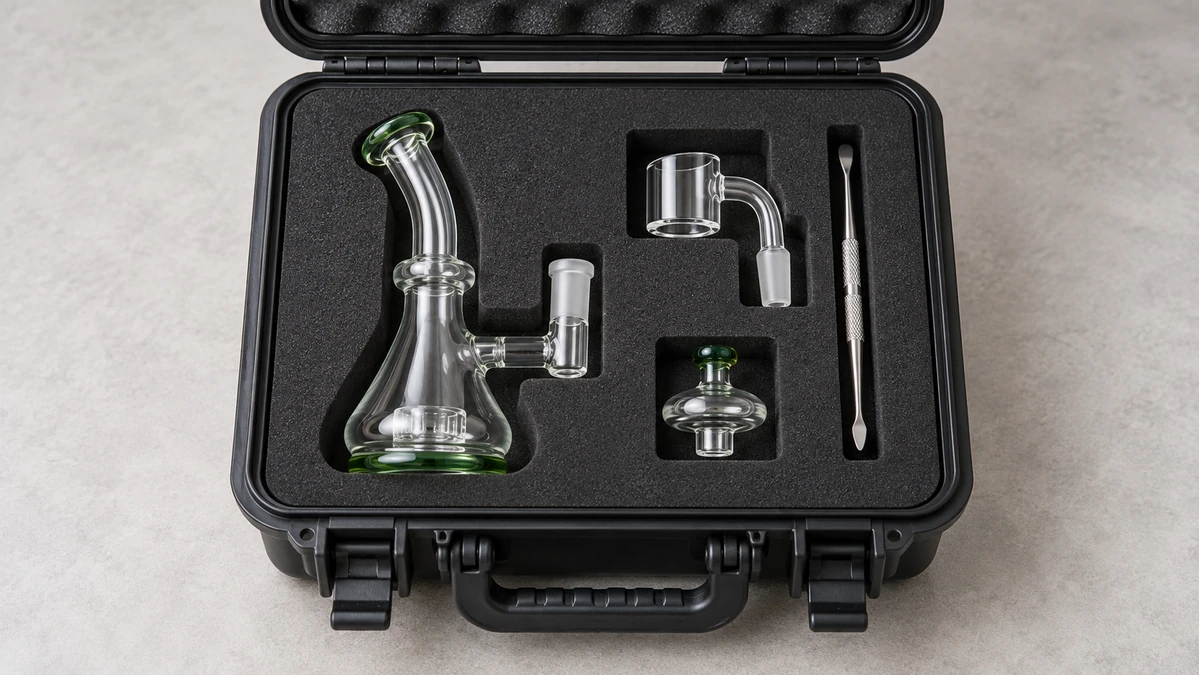
Storage and transport matter here too, especially once a setup includes several loose glass pieces, a torch or heater, and small accessories that are easy to lose or chip. A dedicated case keeps the banger, cap, and tools together and protected, which is especially useful if the rig travels or gets broken down between uses — our dab rig case guide covers what to look for if that’s a gap in your current setup. For related context, see AOVAPE’s carb cap fit guide.
🧭 4. Matching Pieces Into a Working Setup
Coming back to the original question — which piece actually improves a dabbing routine — the answer depends on which link in the chain is currently the weak one. If the joint size and gender aren’t matched to the banger, no amount of upgrading elsewhere will fix a piece that doesn’t seat properly. If the heating source can’t reach or hold a consistent temperature, a nicer banger won’t compensate for that. If the carb cap doesn’t match the banger’s airflow design, vapor management suffers regardless of how good the rig body’s percolation is. For related context, see AOVAPE’s dab rig case guide.
The practical takeaway from the confusion in those Reddit threads isn’t that one component is secretly more important than the others — it’s that these pieces have to be evaluated as an interconnected system rather than a shopping list of separate upgrades. Start with the joint size, gender, and angle on the rig body, since that determines everything downstream. From there, choose a banger or nail that matches, a heating source suited to how that banger is meant to be heated, and a carb cap sized to the banger. Round it out with a dab tool, optional reclaim catcher, and cleaning supplies to keep the whole system functioning the way it was designed to. Approached this way, “which piece matters most” stops being the right question — the right question is whether every piece in the chain actually fits the one next to it.
🗺️ 9. Map Every Piece to One of Four Paths
The glass path holds and routes vapor. The heat path begins at a torch or electrical controller and ends at the heated surface. The air path enters through the cap and moves through the banger and rig. The handling path includes the tool, stand, swabs, storage, and every place a removable part rests.
This four-path map prevents a common naming mistake: calling every detachable object an accessory. The banger and cap directly shape the working air and heat paths, while a case and stand manage handling. Knowing the role makes compatibility questions more precise.
🧩 9.1 Interface Notes Beat a Generic Parts List
Record the joint diameter, joint direction, insertion angle, banger opening, cap seating surface, and any heater geometry as separate fields. A complete-looking kit can still contain pieces that do not mate correctly. Photos should show those interfaces rather than hiding them inside an assembled rig.