That does not turn time into temperature. Quartz thickness, room airflow, torch technique, and how long the setup has been in use can all change the surface condition reached at the same number. The timer is best treated as a disciplined notebook you can operate with one hand, not a thermometer.
A dab timer with a +5 control does one narrow job well: it lets you repeat and adjust a cooling interval without rebuilding the countdown after every cycle. Start the timer at the same observable event each time—such as removing the torch from the banger—and the button becomes a quick way to test a five-second change.
🎯 1. The Event a Dab Timer Is Actually Measuring
A torch-heated banger doesn’t cool on a fixed schedule. The moment you kill the flame, the quartz or titanium is at its hottest, and it sheds heat quickly at first, then more slowly as it approaches room temperature. A timer doesn’t track that curve. It tracks one instant — the moment you start it — and counts forward in flat, even seconds.
That’s the “event” a dab timer measures: the interval between torch-off and dab. It’s a proxy for a cooling process, not a readout of the process itself. Two bangers can hit the same number on the timer and be at meaningfully different points in their cooldown if one was heated longer, made of a different material, or sitting in a colder room.
Understanding this upfront changes how you should use the tool. You’re not aiming for a “correct” number in some universal sense. You’re aiming for a number that, given your specific rig and conditions, gets you back to roughly the same surface state you liked last time. For a longer breakdown of how heat actually behaves in a banger between torch-off and dab, the banger temp reader guide covers the cooling curve in more depth than a timer alone can explain.
➕ 2. Why the +5 Button Exists
Most dab timers ship with a set of presets — common count-up or countdown intervals users tend to land on. The +5 control sits next to those presets for one reason: it lets you nudge a number up without rebuilding the whole sequence from scratch.
Say your usual preset is close, but not quite right for the session. Maybe the room is a few degrees colder than usual, or you switched to a thicker-walled banger that holds heat longer. Instead of scrolling through a menu or reprogramming a custom time, you tap +5 once or twice and shift the countdown in small, known increments. The adjustment is deliberate and trackable — you know exactly how far you moved from your baseline.
This is different from just picking a longer preset. A jump from a 45-second preset to a 60-second preset is a big swing with no record of the reasoning. Five-second increments let you make small, testable changes and actually notice what each change did, which is the point of having adjustable timing in the first place.
⏱️ 2.1 Preset vs. Count-Up Timing
It helps to be clear on the two basic modes most dab timers offer, because they solve slightly different problems.
- Preset countdown: You pick a number in advance — say 40 seconds — and the timer counts down to zero. This is useful once you’ve already found a number that works for your setup and just want a consistent alert.
- Count-up: The timer starts at zero and counts upward, and you decide when to stop it. This is more useful when you’re still dialing in a routine, because you can watch the seconds accumulate and decide in the moment whether it feels early, on point, or late, then note the number afterward.
Neither mode is objectively better. Preset countdown suits someone who has already settled into a repeatable routine and wants a hands-free cue. Count-up suits someone still experimenting, since it gives a record of what you actually did rather than what you planned to do. Many people use count-up during the first several sessions with a new banger, then switch to a preset once a number stabilizes.
🔥 3. Time Is a Repeatability Tool, Not a Temperature Reading
This is worth repeating because it’s the single most common misunderstanding around dab timers: the number on the screen is not a temperature. It’s an elapsed-time marker that stands in for temperature only because, under identical conditions, the same wait after the same heating pattern tends to land the surface in roughly the same range.
The word “identical” is doing a lot of work in that sentence. Change the torch’s fuel type, the length of time you applied heat, the banger’s wall thickness, or the ambient temperature in the room, and the same countdown number can produce a noticeably different surface state. The timer doesn’t know any of that changed. It just counts to the number you gave it.
That’s why two people can compare notes on “their number” and get confused when it doesn’t transfer. A 35-second wait on a thin-wall quartz banger in a warm room is not the same event as 35 seconds on a thick-wall titanium banger in a cold garage. The number is real, but it’s local to a specific setup, not a universal target. If you want to understand what’s actually happening at the surface rather than relying on elapsed time alone, the best temp for dabs guide walks through how surface temperature relates to vapor quality independent of any specific timer reading.
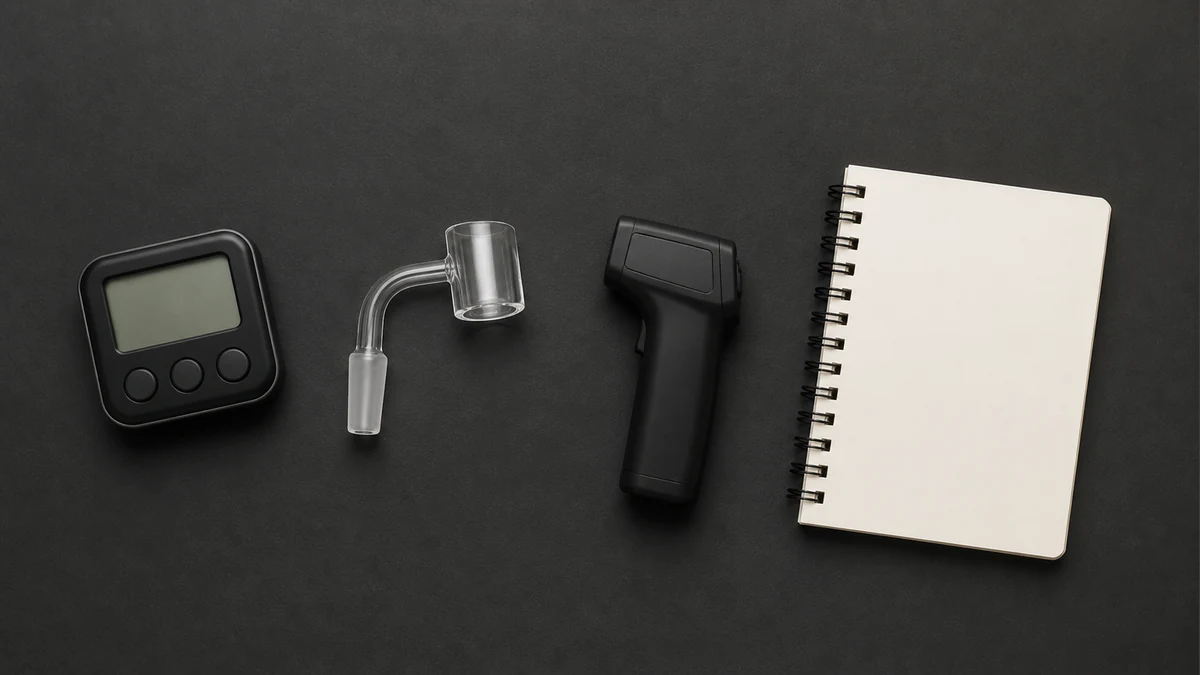
Some users bridge this gap by pairing a timer with an infrared thermometer or a laser temp gun during the setup phase — using the sensor to find a wait time that lands where they want, then leaning on the timer alone once that number is established. That combination, sensor first to calibrate, timer after to repeat, tends to produce more consistent results than either tool used alone.
✋ 4. One-Hand Use Around Hot Glass
There’s a practical dimension to timer design that’s easy to overlook until you’re actually holding a torch in one hand and a hot banger a few inches away. A timer that requires two hands, small buttons, or a multi-step menu to start is a liability in that moment.
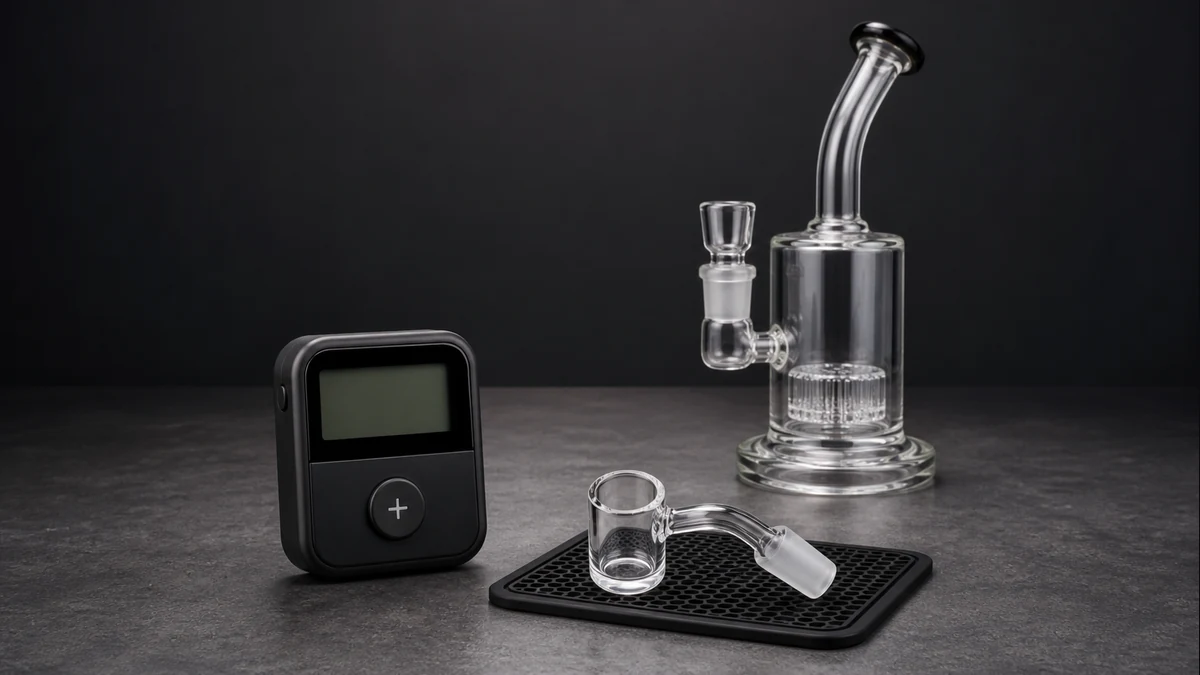
The better dab timers are built around single-hand operation: one large start/stop button, a +5 control positioned where a thumb naturally rests, and a display readable at a glance without picking the device up or turning it toward better light. This isn’t a minor convenience feature. When you’re managing a torch, a carb cap, and a dab tool in close sequence, fumbling with a timer is exactly the kind of distraction that leads to inconsistent heating in the first place.
A few things worth checking before settling on a timer, if one-hand use matters to your routine:
- Can you start and stop it with your thumb alone, without shifting your grip?
- Is the +5 button separated clearly enough from start/stop that you won’t hit it by accident?
- Is the display bright and large enough to read peripherally, without needing to focus on it directly?
- Does it clip, stand, or sit somewhere stable near your rig, so you’re not holding a fourth object during the routine?
None of this changes what the timer measures. But it changes how reliably you can use it the same way every time, which is the actual goal.
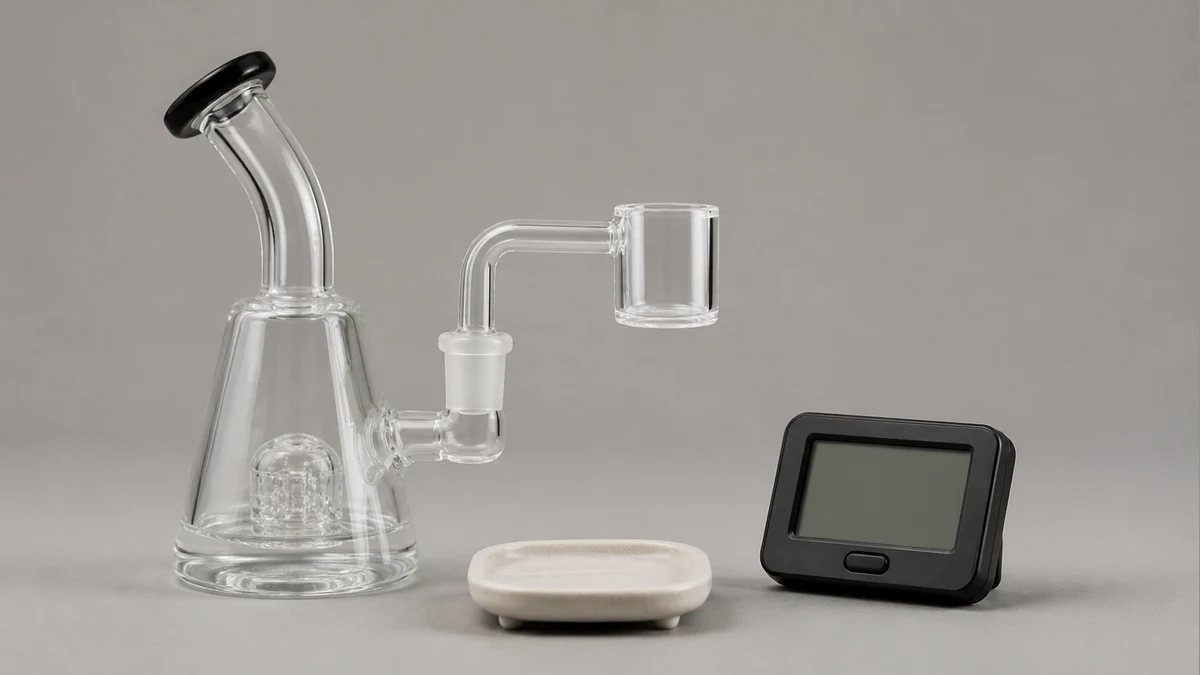
🌬️ 5. Ambient Conditions Shift the Same Countdown
The room you’re dabbing in is part of the system, even though it’s easy to forget. A banger cools by shedding heat into its surroundings, and the rate of that heat loss depends partly on the temperature and airflow of the space around it.
A banger heated the same way and left to cool for the same number of seconds will generally be a bit warmer at the end of that wait in a cold room with a draft than in a warm, still room. The airflow accelerates convective cooling; the temperature difference between the glass and the surrounding air also affects how fast heat moves out. Neither effect is dramatic on its own, but they compound with other variables — banger thickness, torch type, heating duration — to shift where a fixed countdown actually lands you.
This is one of the more common reasons a timer setting that worked reliably indoors during summer stops feeling right once the weather changes, or after moving a setup near an open window or a running fan. The countdown number didn’t change. The conditions around it did.
If your results start drifting for no obvious reason, ambient temperature and airflow are worth checking before assuming the timer or the banger is at fault.
📝 6. Record One Variable at a Time
Because a timer only measures elapsed time, and elapsed time only maps to a usable surface state under stable conditions, the most reliable way to build a repeatable routine is to change one thing at a time and note what happened.
That sounds obvious, but it’s easy to skip in practice. A common pattern looks like this: someone switches to a new banger, adjusts the torch heating time, moves to a colder room for the season, and changes the timer setting all in the same week. If the results feel off, there’s no way to tell which change caused it, because four variables moved at once.
A more useful approach is closer to a simple log, even an informal one:
| Session | What changed | Timer setting | Result |
|---|---|---|---|
| 1 | Baseline | 40s | Good |
| 2 | Colder room | 40s | Felt harsh |
| 3 | Colder room | 45s (+5) | Back to expected |
This kind of tracking doesn’t need to be elaborate. The point is isolating cause and effect so the +5 adjustment is doing real diagnostic work rather than being a random nudge made in frustration. Once you’ve made enough of these small, tracked adjustments, the number that works for your specific setup tends to become obvious, and you can stop thinking about it session to session.
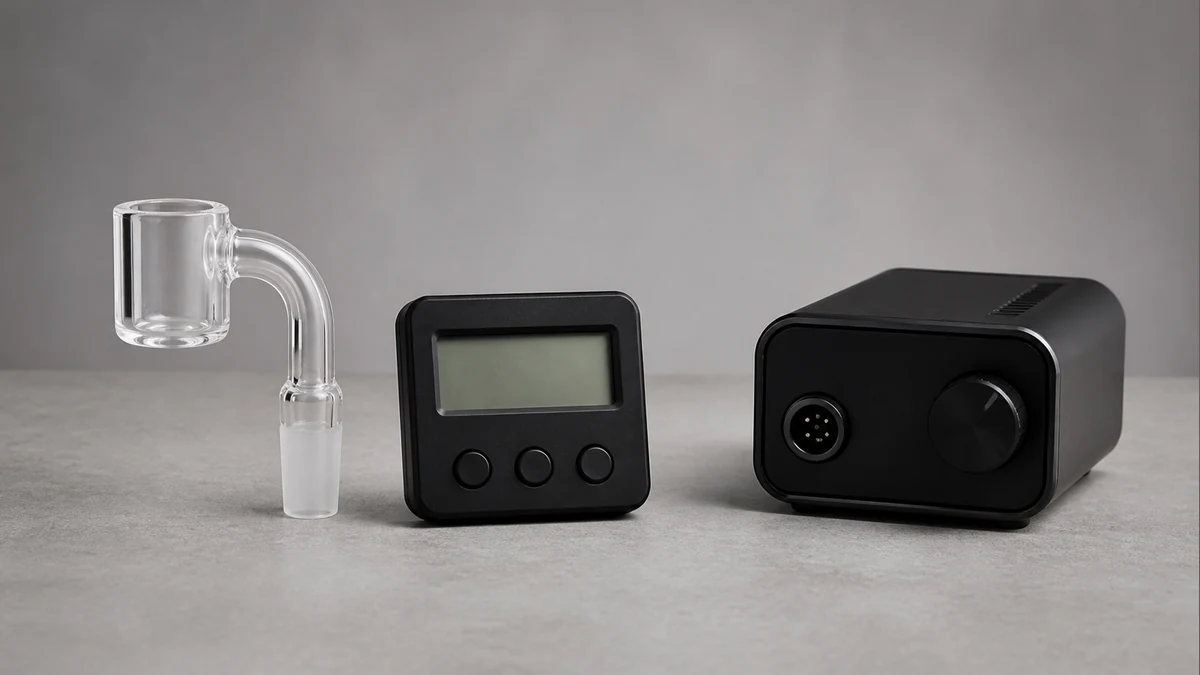
📡 7. When a Sensor or E-Nail Is a Better Tool
A dab timer is well suited to a specific situation: a torch-heated banger, a routine that’s already been dialed in through some trial and error, and a user who wants a consistent cue rather than a live readout. It’s less suited to other situations, and it’s worth being honest about where its limits are.
If you’re constantly changing bangers, torches, or environments, a timer alone will keep forcing you to re-find the right number, because the underlying relationship between time and surface state keeps shifting. In that case, an infrared thermometer or laser temp gun gives you a direct reading of the surface rather than an inference from elapsed time, and it adapts automatically to whatever’s changed. The dab temperature reader guide covers how these sensors work and where they fit relative to timer-based routines.
If your priority is eliminating the torch-and-timer routine altogether, an e-nail or enail setup controls temperature directly through a heating element and a digital controller, removing the cooldown-estimation step entirely. That’s a different tool for a different priority — consistency through direct control rather than consistency through a repeated countdown.
A dab timer isn’t trying to replace either of those tools, and it doesn’t need to. It’s solving a narrower problem: giving torch-and-banger users a way to repeat a wait they’ve already learned works, with a +5 control that makes small corrections easy instead of a chore. Once you’re clear on what the number represents, and what it doesn’t, it becomes a genuinely useful part of a consistent routine rather than a source of confusion when it doesn’t behave like a thermometer.
⏱️ 8. Choosing a Timer Only After Defining the Routine
The most common mistake in picking a dab timer is doing it backward: buying a device first, then trying to make a routine fit around whatever presets and controls it happens to have. It works better in the other order.
Start by figuring out roughly how you already dab, or how you want to. Are you using one banger consistently, or switching between a few? Is your space temperature stable, or does it shift with the seasons? Do you prefer a hands-off preset countdown, or do you want to watch a count-up and make the call yourself? Answering these questions first tells you what to actually look for.
From there, the feature list narrows quickly. Someone with a stable single-banger setup mostly needs a reliable preset countdown and a +5 button for small seasonal corrections. Someone still experimenting benefits more from count-up mode and a display that’s easy to check mid-session. Someone juggling multiple bangers or environments may find that a timer alone can’t keep up, and a sensor is the better first purchase.
Whatever you land on, the timer’s job stays the same: mark the event, count the interval, and give you a number you can return to. Everything else — the surface temperature, the vapor quality, the actual dab — still depends on the banger, the torch, and the room. The timer just gives you a consistent way to get back to the version of that combination you liked best.