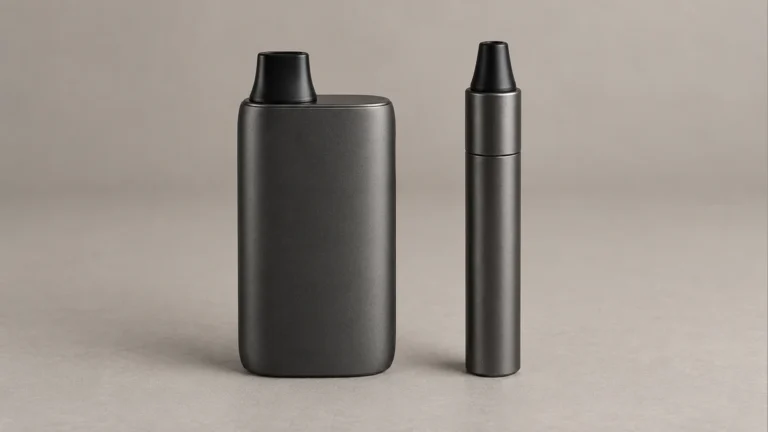
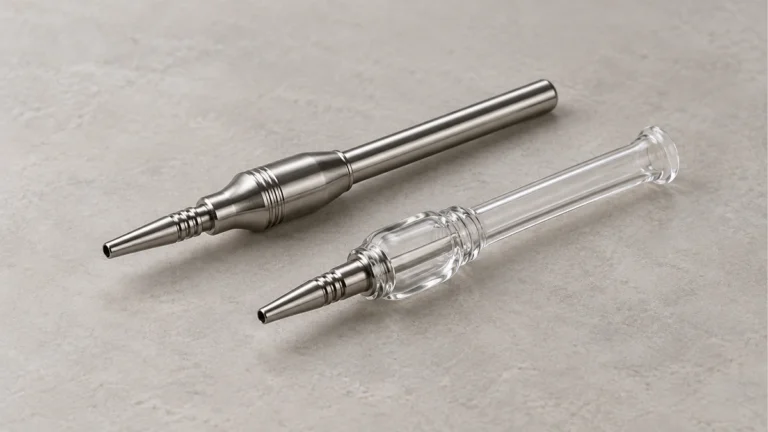
A dab torch looks simple: squeeze the trigger, get a flame, heat the nail, done. In practice it’s one of the pickier tools in a dab setup, because it’s the only part of the rig that involves an open flame, pressurized fuel, and a piece of glass or quartz that’s about to get very hot. Most of the friction people run into with torches isn’t about intensity — it’s about control. A flame that gutters in a draft, a base that tips the second you set the torch down, a tank that runs dry mid-session. None of that is dramatic, but all of it shapes whether a torch feels like a reliable tool or a small daily annoyance.
This guide treats the torch the way it actually functions: a handheld heat source with mechanical parts that can be evaluated, compared, and troubleshot. We’ll walk through flame behavior, base and handling stability, ignition and refill ergonomics, how to set up a heat-safe work area, and where an e-rig or e-nail changes the equation entirely. No extreme heating techniques, no invented specs — just what actually affects day-to-day use.
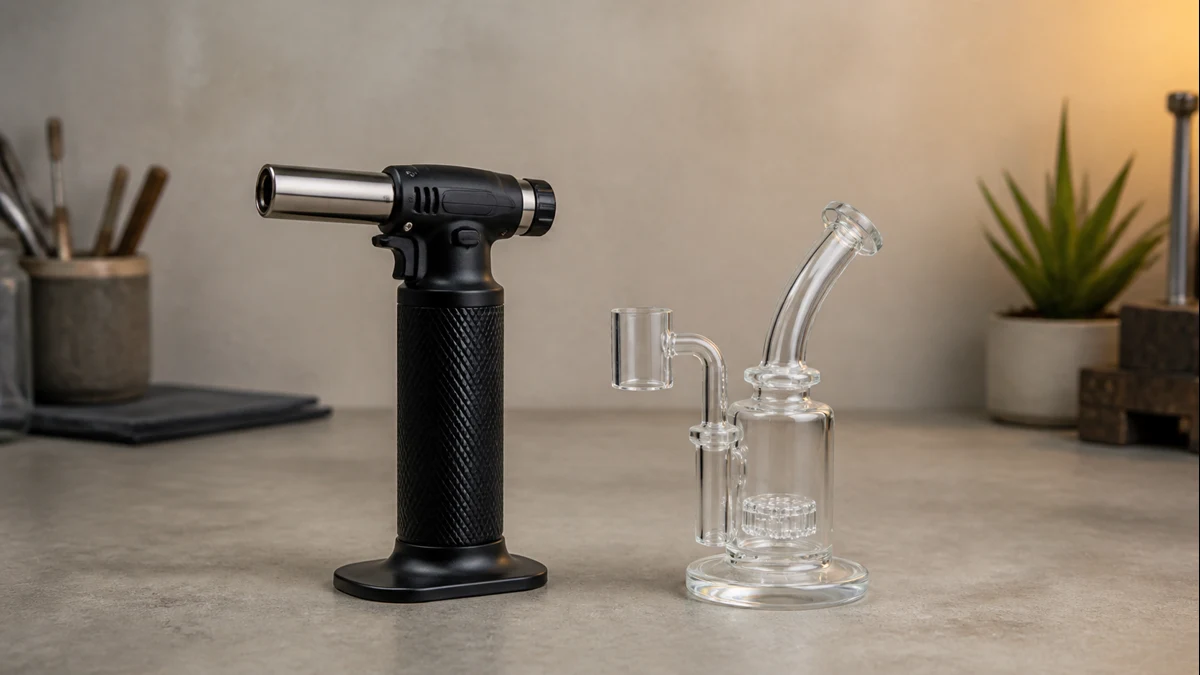
🔍 1. Flame Control and Type
Not all torch flames behave the same way, and the difference matters more than most buyers expect before their first refill. The two variables that actually change your experience are jet count and adjustability — everything else is largely cosmetic.
🧩 1.1 Single-Jet vs. Multi-Jet Torches
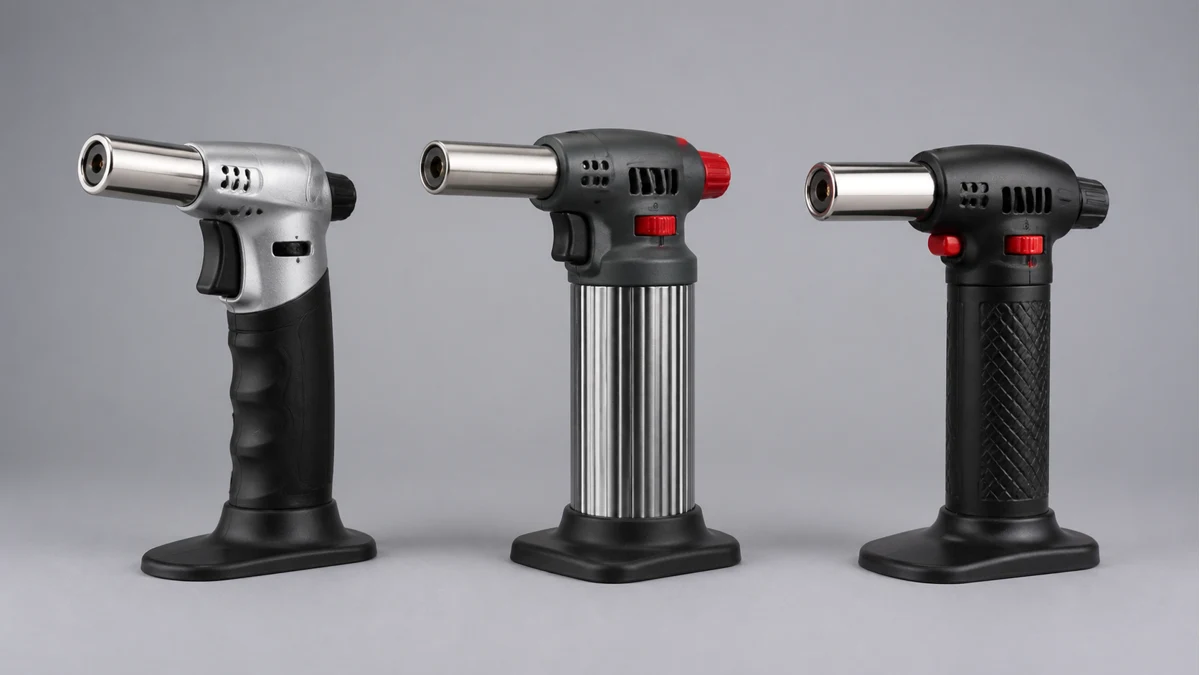
A single-jet torch produces one concentrated flame. It’s easier to aim and generally quieter, but it also takes longer to bring a nail up to temperature and is more sensitive to wind or airflow from an open window or a fan. Multi-jet torches (two, three, or four jets arranged around a central point) spread heat across a wider surface, which tends to produce more consistent nail heating and holds up better outdoors or in a drafty garage. The tradeoff is fuel consumption — more jets means faster butane draw, which shortens the working time per fill. Neither style is objectively “better”; it’s a question of where you use it and how patient you are with a single flame.
🧩 1.2 Adjustable Flame vs. Fixed Output
Almost every torch worth buying has an adjustment dial or slider that controls flame length and, indirectly, intensity. This matters for two practical reasons. First, a flame that’s too long is harder to control at close range and wastes fuel heating the air around the nail instead of the nail itself. Second, adjustability lets you scale the flame to the accessory — a small banger doesn’t need the same output as a larger one, and dialing back reduces both fuel use and the risk of overheating glass unevenly, which is a common cause of thermal stress cracks. If a torch’s adjustment mechanism feels loose, sticky, or doesn’t hold its setting under the trigger, that’s a sign of a cheaply made valve, and it’s usually the first part to fail.
⚙️ 2. Base Stability and Handling
Online discussion among dab users returns to this point often, in different words each time: torches tip over. It’s less a design flaw and more a function of shape — a torch is a tall, top-heavy object with fuel sloshing inside it, set down on a table, a tray, or a rig base that wasn’t built to hold it upright.
🧩 2.1 Why Base Width Matters More Than Weight
A wider base resists tipping better than a heavy one, because tipping is a leverage problem, not a mass problem. A torch with a broad, flat foot and a low center of gravity will sit stable on an uneven surface where a tall, narrow-based torch won’t. When you’re comparing torches in person or in photos, look at the ratio between the base footprint and the overall height — that ratio tells you more about stability than the stated weight ever will.
🧩 2.2 Setting Up a Stable Session
Beyond the torch itself, where and how you set it down matters. A cluttered tray with a rig, a carb cap, a dab tool, and a torch all competing for space is exactly the layout that leads to tip-overs. Giving the torch its own dedicated spot — flat, level, away from the edge of the table — removes most of the risk before it starts. Some accessory kits include a torch stand or holder specifically for this reason, and if you’re building out a full station, it’s worth browsing dab rig accessories designed to keep tools upright and organized rather than balanced against each other.
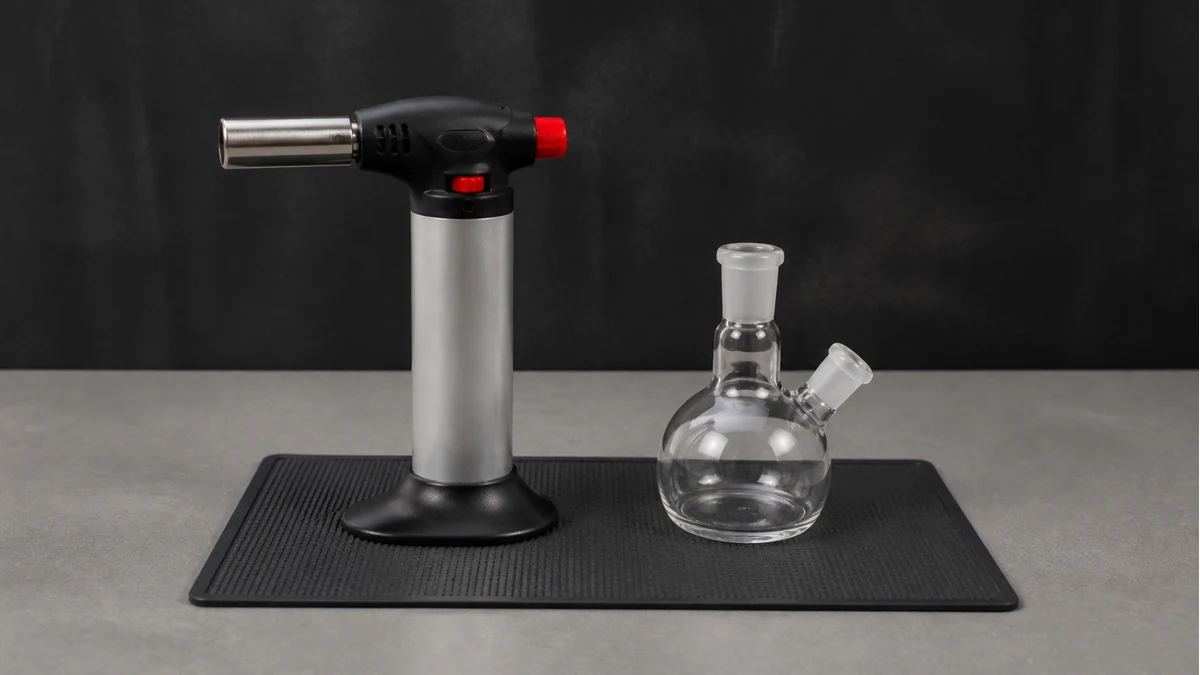
🧩 3. Ignition Reliability and Refill Ergonomics
A torch that won’t light on the first or second try isn’t just annoying — it’s usually telling you something about air in the line, a worn igniter, or fuel that hasn’t settled after a fill. Ignition and refill habits are where a lot of avoidable frustration lives.
🧩 3.1 Piezo Ignition vs. Manual Lighting
Most consumer torches use a piezo igniter — a spring-loaded mechanism that generates a spark when you pull the trigger, similar to a kitchen lighter. It’s convenient, but piezo igniters are also one of the more failure-prone parts of a torch over time, since they rely on a mechanical strike rather than a sustained flame source. Torches without a built-in igniter require a separate lighter or spark source, which is less convenient but removes one more part that can wear out. If reliability matters more to you than convenience, a manual-light torch with a simple, well-sealed valve can actually outlast a fancier piezo model.
🧩 3.2 Getting a Clean Refill
Refilling a butane torch seems trivial until it isn’t. The habits that actually make a difference: use a butane specifically labeled for torch refills, hold the torch upside down at the angle specified on the fuel canister, and let the torch sit for a few minutes after filling before lighting it. That rest period lets pressurized gas settle and reduces sputtering or weak flames on the first few uses. Skipping it is one of the most common reasons a “broken” torch turns out to be a fine torch that was lit too soon.
⚡ 4. Building a Heat-Safe Work Area
The torch is only half the safety picture. The other half is the surface you’re working on and what’s within reach of a flame or a nail that’s still radiating heat well after you’ve stopped applying direct flame.
🧩 4.1 Clearance and Surface
Work on a heat-resistant, non-flammable surface — a tray, a mat, or bare countertop rather than a cloth-covered table or anything near curtains, papers, or aerosol cans. Keep the torch’s flame path clear of anything that could catch, and be mindful of butane canisters stored nearby; they should never sit close to the flame itself. This is standard practice with any handheld torch, not a dab-specific rule, but it’s worth restating because it’s the step people skip once they’re comfortable with the routine.
🧩 4.2 Handling Hot Accessories
A heated nail or banger stays dangerously hot long after the torch is off, and this is where a lot of minor burns happen — not from the flame, but from touching or bumping the accessory afterward. Using a carb cap or dab tool to handle anything near the heated surface, rather than fingers, is the simplest safeguard. Puffco’s guidance on using a hot knife accessory makes a similar point about giving heated tools time to cool and using a dedicated implement rather than improvising with whatever’s on the tray. If you’re maintaining a rig regularly, buildup around the joint and nail area is also worth addressing — our guide to cleaning a dab rig covers how to keep residue from affecting heat transfer over time.
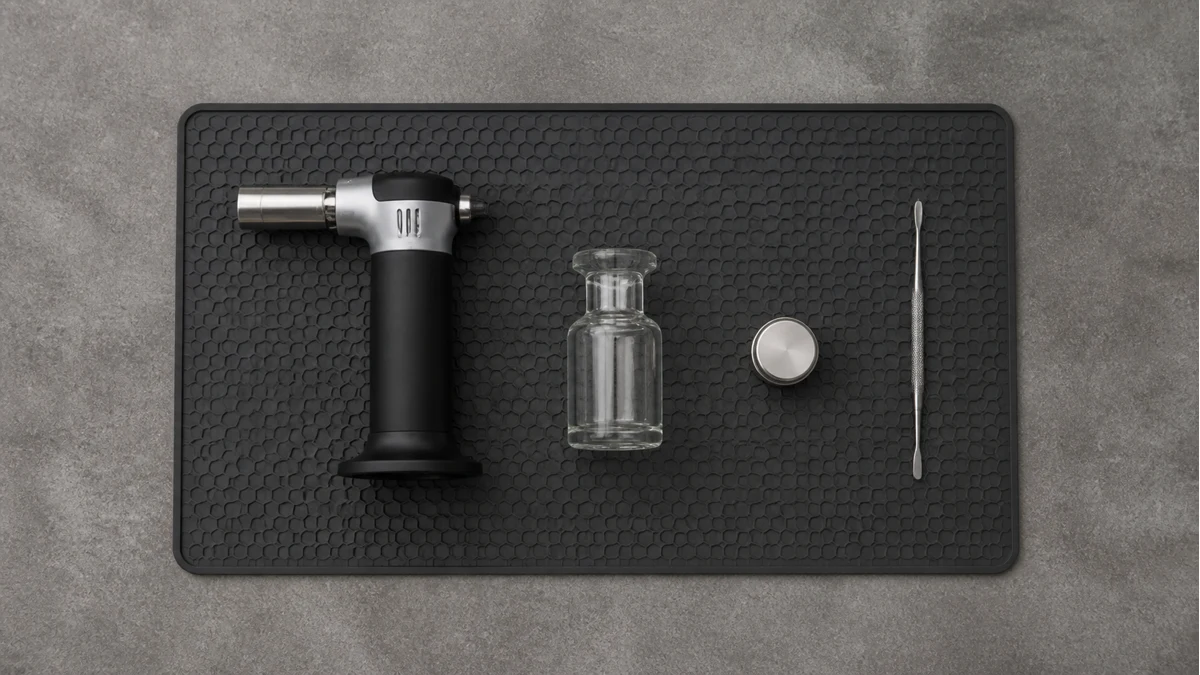
🛠️ 5. When an E-Rig or E-Nail Changes the Workflow
At some point, most torch users ask the same question: is it worth switching to something electronic? The honest answer is that it depends on what you’re optimizing for. A torch gives you speed, portability, and no cord — an e-nail or e-rig gives you repeatable, hands-free heat without an open flame at all.
🧩 5.1 Torch vs. E-Nail: A Practical Comparison
| Factor | Butane Torch | E-Nail / E-Rig |
|---|---|---|
| Setup time | Fast, ready in seconds | Slower; needs power and warm-up |
| Portability | Fully portable, no outlet needed | Limited by cord or battery charge |
| Heat consistency session-to-session | Depends on user technique and timing | More consistent once dialed in |
| Open flame involved | Yes | No, for plugged-in units |
| Ongoing consumable | Butane refills | Electricity, occasional battery for portable units |
Storz & Bickel’s operation guidance for their electronic devices illustrates the general pattern well: electronic heating tends to follow a defined warm-up and operation sequence rather than the instant, user-judged flame of a torch. That structure is exactly what appeals to people who’ve grown tired of guessing whether a nail is at the right temperature by eye. For a deeper breakdown of how nails, bangers, and e-nails actually differ in construction and use, our comparison of dab nail vs. banger vs. e-nail is a useful next stop before you commit to either path.
🧩 5.2 Battery-Powered Portables and Flameless Alternatives
Some portable e-rigs run on rechargeable batteries rather than a wall outlet, which introduces a different set of considerations — charging habits, battery care, and general awareness of how high-energy batteries should be handled, a topic the Consumer Product Safety Commission covers in general terms for battery-powered consumer devices. If the appeal of ditching the flame outweighs wanting a torch-style ritual at all, it’s also worth looking at sealed, cartridge-based options. Vaporizer cartridge hardware — the kind built around standards like CCELL’s — heats concentrate without any flame or torch step whatsoever. For readers weighing that path more broadly, our overviews of wax pens and vaporizers lay out how those flameless formats compare to a traditional torch-and-rig setup.
❓ 6. Frequently Asked Questions
🧩 6.1 How do I know if my torch’s igniter is failing?
If you’re pulling the trigger multiple times before it catches, or the spark sounds weak and inconsistent, the piezo mechanism is likely wearing out. Switching to manual ignition with a separate lighter is a reasonable workaround while you decide whether to repair or replace the torch.
🧩 6.2 Why does my flame sputter right after refilling?
This is almost always air or unsettled pressure in the line. Give the torch a few minutes to rest upright after filling before attempting to light it — most sputtering resolves on its own once the gas settles.
🧩 6.3 Is a more expensive torch actually more reliable?
Not automatically, but price often correlates with the quality of the valve and igniter mechanism, which are the two parts most likely to fail. A mid-range torch with a solid adjustment dial and a simple, well-sealed fuel valve will usually outlast a cheaper model with more features bolted on.
🧩 6.4 Can I use any butane for refills?
Refined butane intended for torch or lighter refills is the standard choice; using fuel that isn’t properly filtered can clog the valve and cause weak or uneven flames over time.
📏 7. Which Setup Actually Fits You
If your priority is speed, portability, and not depending on a wall outlet, a well-built multi-jet torch with a smooth adjustment dial and a wide, stable base remains the most practical choice — just pair it with a dedicated, uncluttered spot to set it down between hits. If you’re finding that flame inconsistency, refill timing, or tip-overs are a recurring annoyance rather than an occasional one, that’s a real signal to look at an e-nail or plugged-in e-rig, which trades portability for repeatable, flame-free heat. And if the flame itself is the part you’d rather skip entirely, a cartridge-based vaporizer is worth a look before you invest further in torch accessories. None of these are upgrades in a strict sense — they’re different tools for different sessions, and the right one depends on where and how often you’re actually using it.
📚 8. Sources
- U.S. Consumer Product Safety Commission — High-Energy Batteries safety guidance
- CCELL — Cartridge hardware overview
- Puffco — How to Use the Puffco Hot Knife
- Storz & Bickel — Device operation support article