A desktop dry herb vaporizer whip is a chain of parts. The glass elbow turns from the rigid chamber connection toward a flexible hose. The hose ends at a separate mouthpiece in many designs. A screen may sit inside the elbow, while a second screen can belong to the chamber below. If you find a glass elbow and two screens in the same parts drawer, the useful question is where each part sits in that chain. The outline of the loose piece is the starting clue. The model’s parts diagram is what lets you confirm that clue.
🔎 1. Locate the Whip on the Parts Diagram
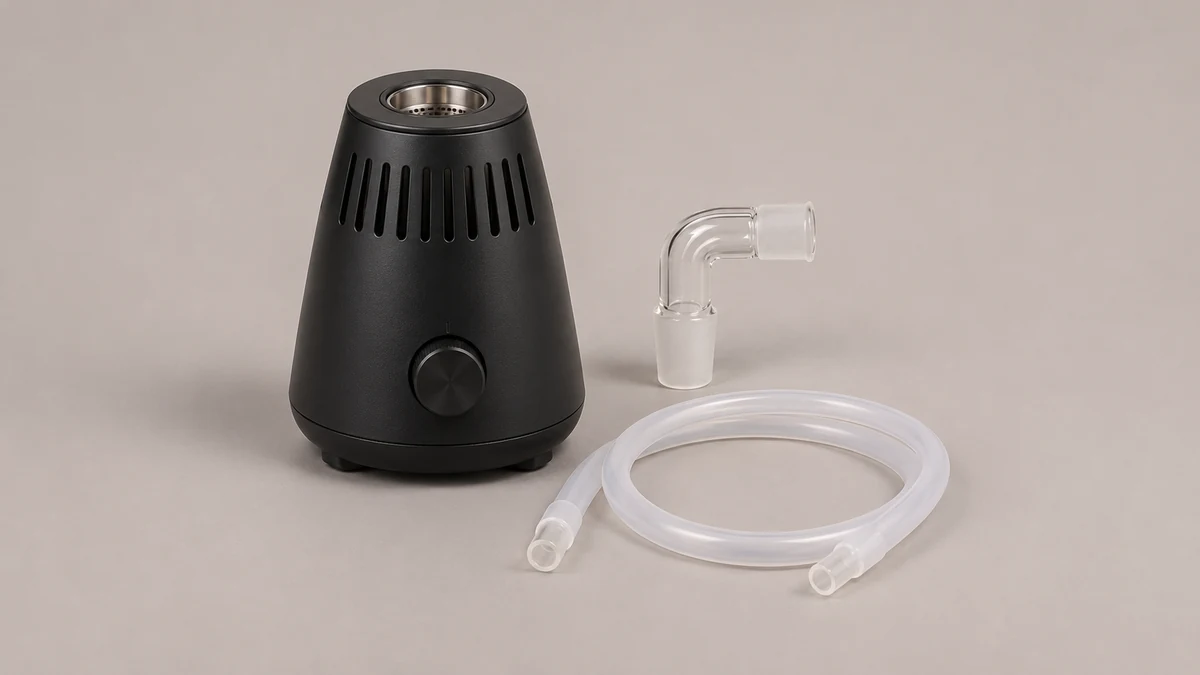
In a conventional whip system, the desktop unit and its chamber sit at one end. The hose and the piece at its far end form an external assembly. The elbow may be sold on its own or described as part of a whole whip. A photograph can use either meaning without making the distinction obvious. Start with the diagram for the exact model and locate where the chamber gives way to the external assembly.
🗺️ 1.1 Follow the Parts in Physical Order
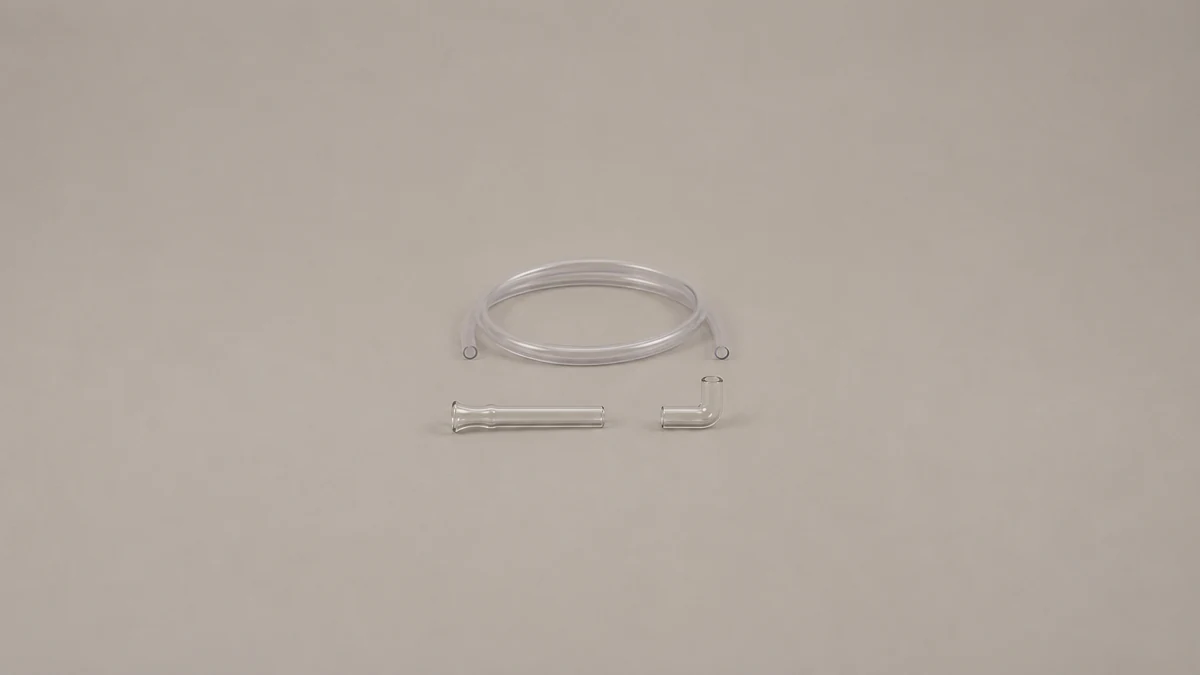
Imagine several cooled, detached pieces on a work mat: an upright glass chamber, a bent glass connector, a coil of clear tubing, and a straight glass tip. Line them up in that order without joining them. The glass connector should make sense facing two different neighbors. One side corresponds to the chamber opening, and the other has a profile that belongs at the hose. The straight tip is likely to explain what the other end of the hose connects to. There may also be tiny pieces that don’t belong in this horizontal lineup because they sit inside another part.
Putting the pieces in physical order gives a support technician a better description than the phrase “glass part.” The desktop vaporizer overview covers several delivery designs. This parts map applies to units with a hose and should be checked against the drawing when a unit has interchangeable attachments.
📐 2. Identify the Two Ends of the Glass Elbow
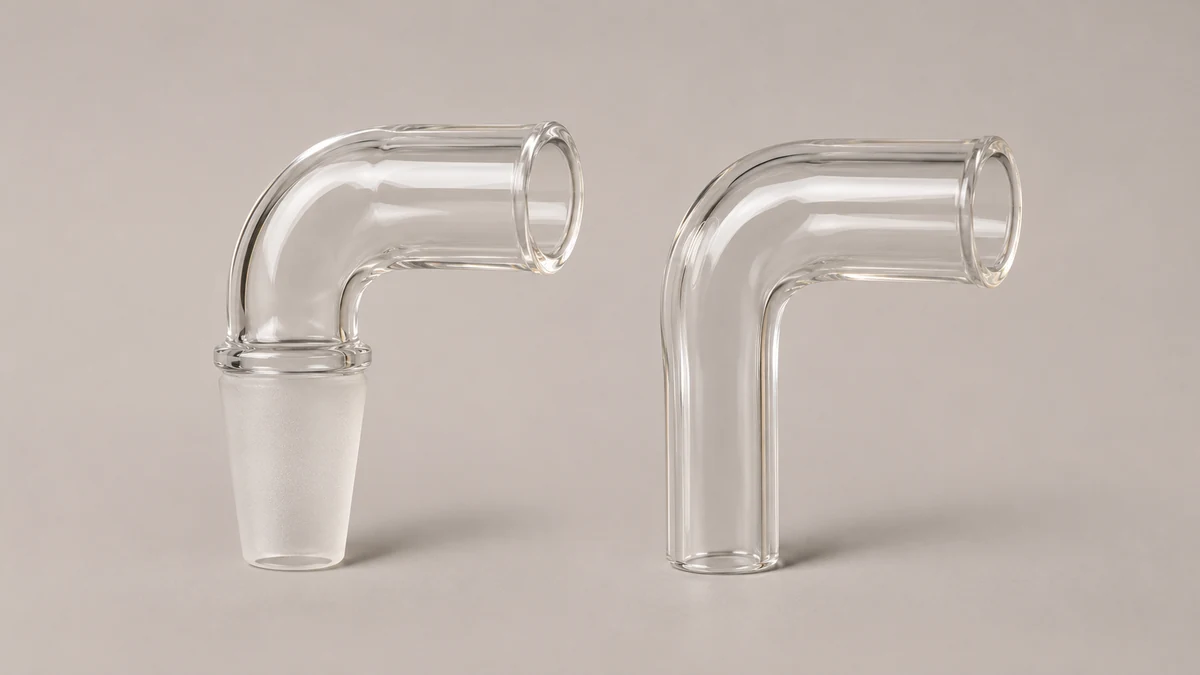
A glass elbow has at least two useful views. Viewed from the side, it shows the bend and the profile of each connection. Viewed directly into the end, it can show a lip, a recess, or an integrated screen that the side view hides. A listing image that shows only the curve won’t tell you whether the elbow connects to the same chamber or accepts the same hose.
↪️ 2.1 The Chamber End Has Its Own Joint
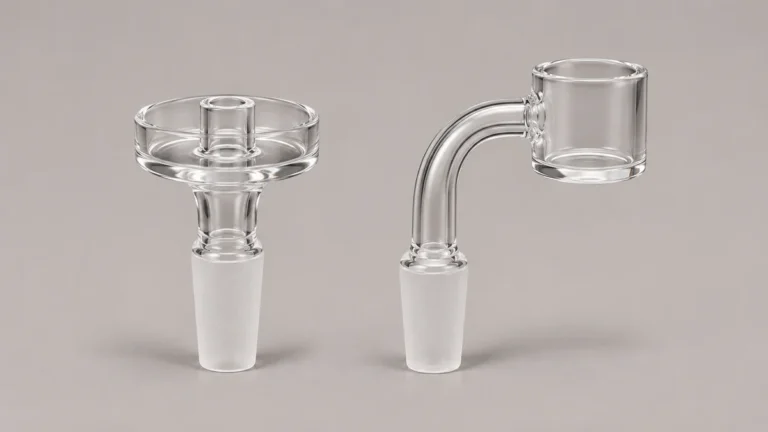
On a tapered design, a frosted section may mark the part of the elbow that enters a matching socket. It is the two mating profiles that matter. A frosted band may look wider in a close photograph than it does in another listing, simply because the camera is closer. If the model documentation names a joint size, keep that size attached to the chamber side in your notes. The product may also identify the opening as male or female. Use that description for the connection on the loose part itself, taking care that a listing isn’t describing the socket it mates with.
Arizer’s XQ2 parts catalog is a useful example of specific labeling. It identifies a male chamber connection on a listed glass elbow and separately identifies the screen supplied with the part. It also lists an elbow with a glass screen. Those descriptions establish that two elbows of a similar general shape can have different screen construction. The catalog applies to the listed parts, and a similar curve in a drawer is insufficient to identify either one.
📏 2.2 The Hose End Has a Different Job
The hose-facing side may have a relatively short stem with an open passage. A photo of the taper on the opposite end won’t establish the size or profile of that stem. A feature that looks like a bump on the outside may have more to do with how the hose sits than with the chamber joint. A chamber diameter alone describes the wrong end of this problem. If the replacement being discussed is a hose, pay attention to the two hose endpoints and the mating stems. If the replacement is the entire elbow, both ends matter.
A useful photo includes a side view of the hose-facing stem from its opening back to the shoulder. A second view can show whether a sleeve or other part stayed on the stem when it was separated from the tubing. If the product diagram doesn’t identify that piece independently, record it as visible but unconfirmed. Naming it a generic gasket can send the question in the wrong direction.
🧩 3. Tell a Chamber Screen From an Elbow Screen
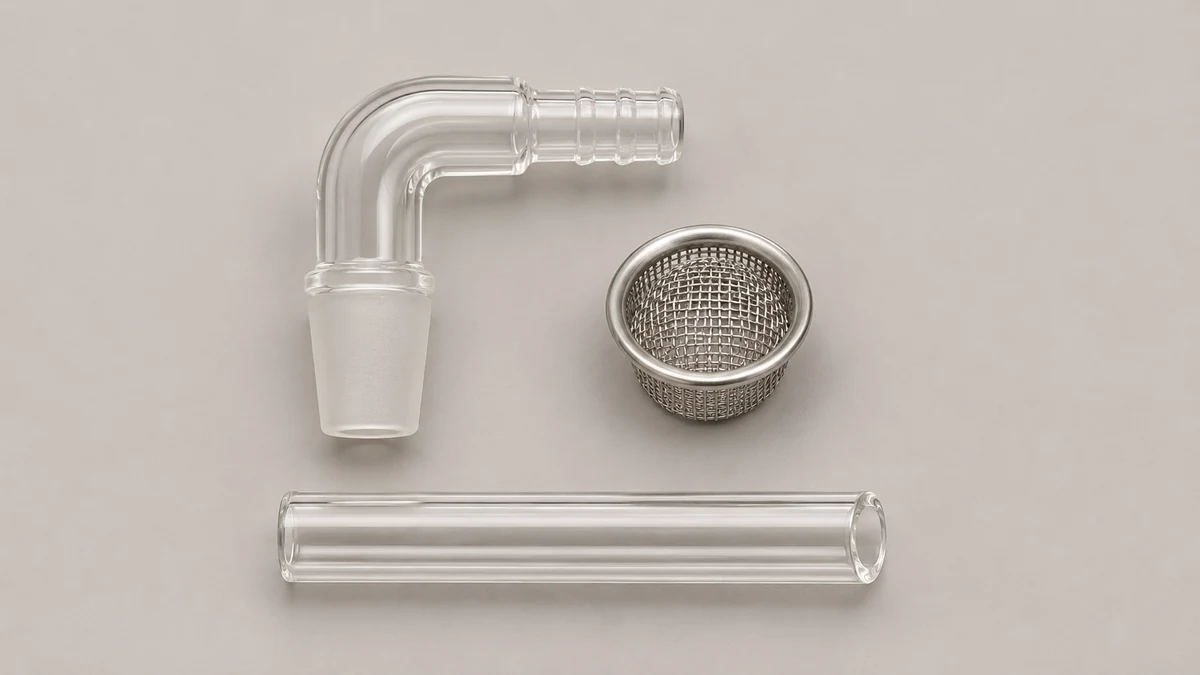
A flat screen and a domed screen may both be described as replacement mesh. Their profiles matter because each may have a different seat. A flat screen can rest against a ledge in a chamber. A domed or basket-shaped piece may belong against a recess in a connector. These descriptions are clues, and a photograph alone cannot establish where any particular screen belongs. Read the diagram in the order the pieces appear and compare each screen with its own seat.
🔍 3.1 The Screen Seat Is Often Easier to Identify Than the Mesh
Look into the detached elbow from its chamber-facing end. A visible circular ledge or recess is evidence that the geometry of that opening differs from a plain tube. Check whether the diagram shows a distinct mesh part there. A glass web permanently formed across the opening belongs to the elbow assembly. A parts diagram that lists a separate screen describes a different boundary. Even if both arrangements put an obstruction in the same place, the replacement unit can be very different.
A bowl screen question can coexist with an elbow screen question. If the flat screen sits loose at the bottom of one glass piece while the dome is missing from the elbow, record those as two observations. The guide to screen locations in vaporizer hardware explains why identifying the surrounding part is more reliable than relying on the shape of a loose piece of mesh.
🔗 4. Compare Both Endpoints of the Hose
A replacement described as whip tubing may be a plain length of hose. A complete whip may include the elbow, mouthpiece, and sometimes a listed screen. Neither label is enough to infer the exact contents. If there is a photograph, separate the actual items from contextual objects that show the product next to a machine. If there is a written list, give part numbers and the model diagram more weight than the product photo.
The hose has an inside diameter and an outside diameter. These describe different surfaces. A photo showing the outside of a tube beside a ruler can document approximate overall thickness, but it cannot establish how the inside opening corresponds to the mating stem. Product support may ask for both measurements, particularly if the hose passes through a holder or sleeve. A compressed or stretched end on old tubing is poor evidence for the original size.
🧰 4.1 A Mouthpiece Is a Separate Clue
The mouthpiece is often the removable rigid part that gives the end of the hose its shape. It can look like a short plain tube when detached, especially if most of its stem is normally hidden. Photograph the portion that sat inside the hose as well as the exposed end. Leave the two views separate when the ends look almost identical. Identifying which end was enclosed can prevent a photo of the visible end from being mistaken for a connection drawing.
🎈 5. Keep Balloon Hardware Out of the Whip Parts Pile
A desktop device may support more than one delivery assembly. Compact glass pieces can appear in both diagrams, particularly on systems with a short connector between the chamber and a second attachment. A bag mouthpiece, valve, or filling adapter may resemble part of a hose assembly when seen alone. Similar material or a matching taper doesn’t tell you which diagram includes the component.
Lay out the parts that were present with the tubing and the parts found with the bag separately. A short glass connector that still has a bag fitting on one end gives stronger context than a photo of the same connector after everything is pulled off. Where the sources use the term mini whip, read the diagrams before assuming that this describes a shorter version of the hose in hand. The guide to balloon bags and valves explains which part names belong to that separate assembly.
📷 6. Build a Useful Set of Replacement Photos
Good photos show the original relationship without requiring assembly. One wide view can show the loose chamber, elbow and hose in sequence on a plain surface. A closer side view centers the elbow and includes both ends in the same frame. A view straight into each end can reveal a mesh seat or a glass screen. Add a photo of the label on the base to keep the part pictures tied to a known device. A ruler is helpful as context in the same plane, though the model diagram remains the better source for precise specifications.
If the trouble is tied to a visibly loose part, name exactly where it was found. For example, an owner may see a mesh disc at the bottom of an empty chamber after removing the elbow. That observation describes where the mesh ended up. It does not establish whether the mesh began there. A photo from above the chamber and one showing the elbow opening provide enough context for someone to compare both seats.
🗂️ 6.1 Describe What Stays With the Assembly
A short inventory can clarify which piece is already accounted for. Write that the chamber is present, the hose and far-end tip are intact, and the elbow is missing, if those are the observations. If a screen is loose, describe its profile and the seat you can confirm. State that its placement is unknown if you cannot match it to the diagram. This is a useful distinction when the same listing is sold once as a connector and again as a connector with removable mesh.
✅ 7. Work Through Two Similar-Looking Parts
Suppose the first elbow in a drawer has a clean-looking circular opening, and the second has something visible across its chamber end. A front view can show whether the second feature is a recognizable separate mesh or part of the glass. A side view can then show whether the two hose stems have the same outline. The relevant comparison includes both observations and the source diagram. If the catalog lists just one endpoint, request a view of the other before concluding that the assemblies are the same.
Consider the opposite case. The glass elbow and its documented screen match the assembly diagram, but the tube label gives only a generic size. The missing evidence concerns the tube and the stems at its ends. A picture of the chamber taper won’t settle it. You could have the right elbow and still be looking at an unrelated piece of tubing. Keeping the camera pointed at the interface under question makes the evidence easier to compare.
💬 7.1 A Clear Parts Question
An effective description might say that the loose piece is the angled connector between the model’s chamber and the flexible hose. Its chamber end has a visible circular recess, and the existing mesh is a shallow dome that was found separately. The owner wants to confirm whether the recess is the documented screen seat and whether the catalog item includes the screen. This gives support both a specific connection and a specific question about contents.
Another owner might have a full whip but no identifiable tip at the far end. In that case, the broad assembly view can show that the elbow is already present while the close photo shows the open end of the tubing. If there’s a loose rigid tip in the drawer, an outline of both ends can help determine which end belongs at the hose without assuming that it was included with this model. The two cases use the same parts map and point to different missing information.
Suppose the two screens in the drawer are almost identical in diameter. One has a flat band around the edge, while the other has a raised center and a flexible rim. The useful comparison is between each screen and the surface that supports it. A ledge that catches a flat edge and a recess that contains a basket are different shapes. The head-on photograph shows diameter, while the profile photograph shows the height of the screen and where the rim lies. Compare both to the manufacturer’s diagram.
There is also a straightforward terminology trap: a retailer may call the glass elbow a screen adapter because the screen lives there, while a parts list may reserve that name for the screen alone. Preserve the part number and show the connector without the hose obscuring the two ends. A screen listed as included with an elbow might be listed separately elsewhere in the same catalog. For a support message, describe the one missing item rather than assuming the buyer must replace everything pictured alongside it.