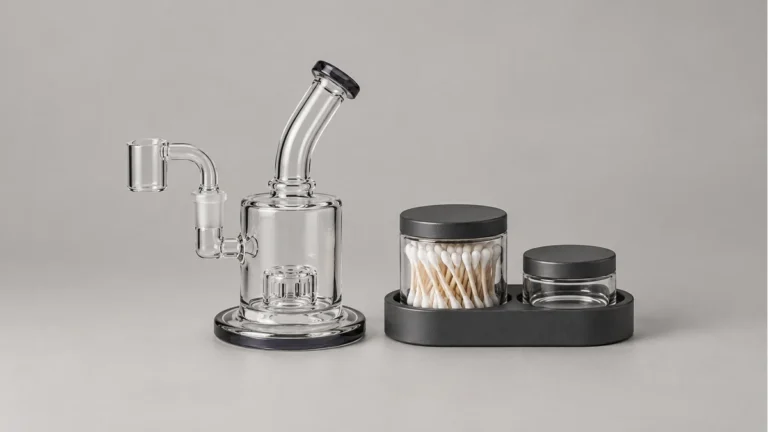
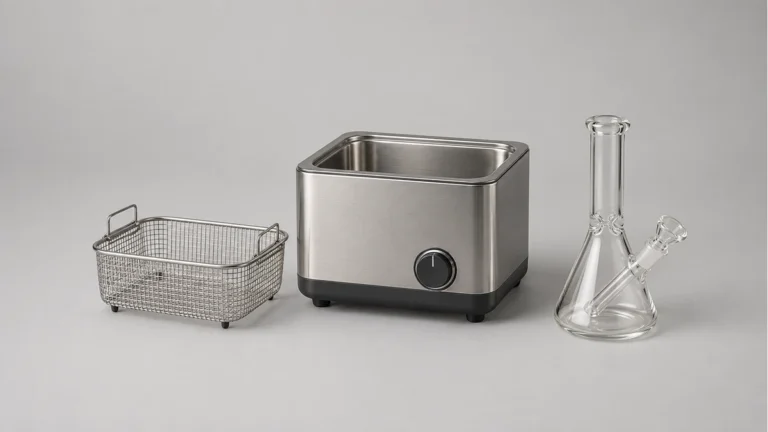
Compact one-hitter kits have become one of the most requested accessory categories among dry-herb shoppers who want something small, quiet, and easy to keep organized. The appeal isn’t just size. It’s the way a well-matched kit turns four separate tools — grinder, tube, cleaning pick, and storage compartment — into a single system that works without fuss. When shoppers search for a “one hitter with grinder,” they’re usually not looking for the cheapest bundle. They’re looking for parts that were actually designed to fit together.
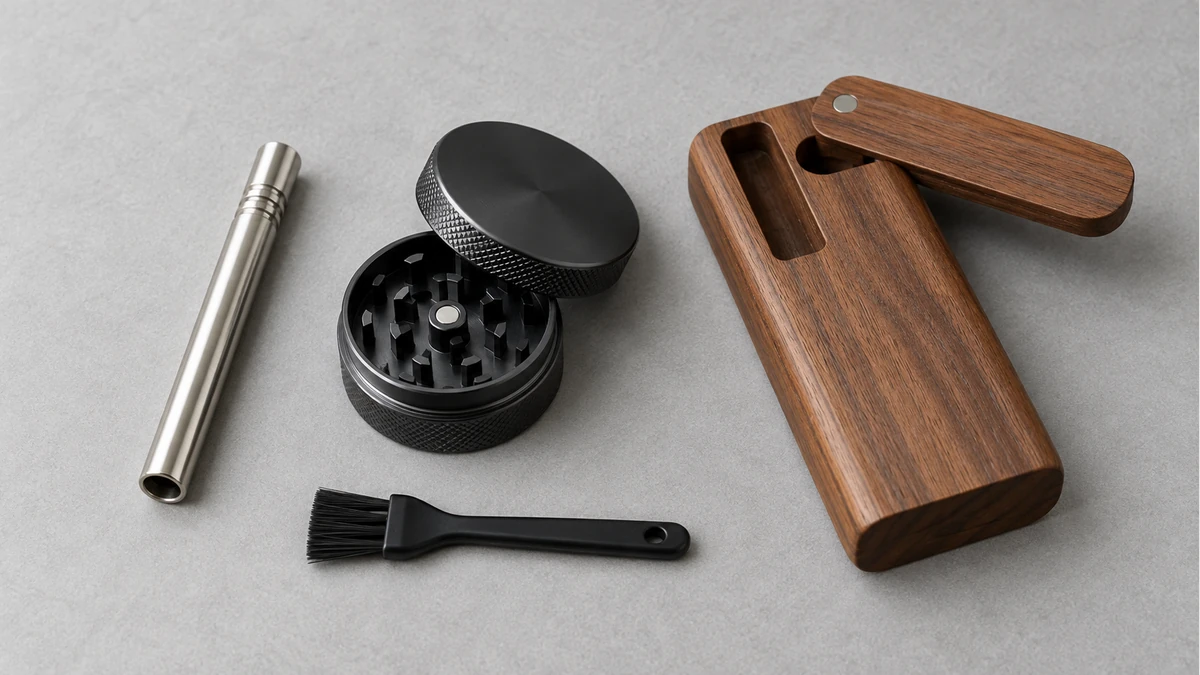
🧳 1. Why Compact One-Hitter Kits Appeal
The draw of a one-hitter kit is proportional restraint. A one-hitter tube holds a small, single-session amount of ground herb, which means there’s no leftover material sitting exposed in a pipe bowl or rolling paper. Everything gets packed fresh, used, and cleared. That cycle appeals to people who value low odor footprint, minimal mess, and a kit that can sit in a drawer or bag without drawing attention.
🌀 2. Why Pipes Clog or Pull Poorly
Most complaints about a pipe “pulling wrong” trace back to one of three things: an airflow path that’s too narrow relative to the bowl, a chamber that collects residue faster than it can be cleared, or ground material that’s inconsistent enough to pack unevenly. A one-hitter tube is essentially a straight or slightly tapered channel with a small bowl at one end. Because the channel is narrow by design, any buildup along the interior walls has an outsized effect on draw resistance compared to a wider pipe.
Clogging usually isn’t a single dramatic event — it’s gradual residue accumulation narrowing the internal diameter over repeated use. A tube that started with an easy, open pull can feel noticeably tighter after weeks of use if it isn’t cleaned. This is why the cleaning tool in a kit isn’t an afterthought accessory; it’s functionally tied to how the tube performs over its lifespan. For a deeper breakdown of how tube shape and bowl depth affect draw, the one-hitter and dab pipe guide covers the geometry differences between straight, tapered, and chamber-style tubes in more detail.
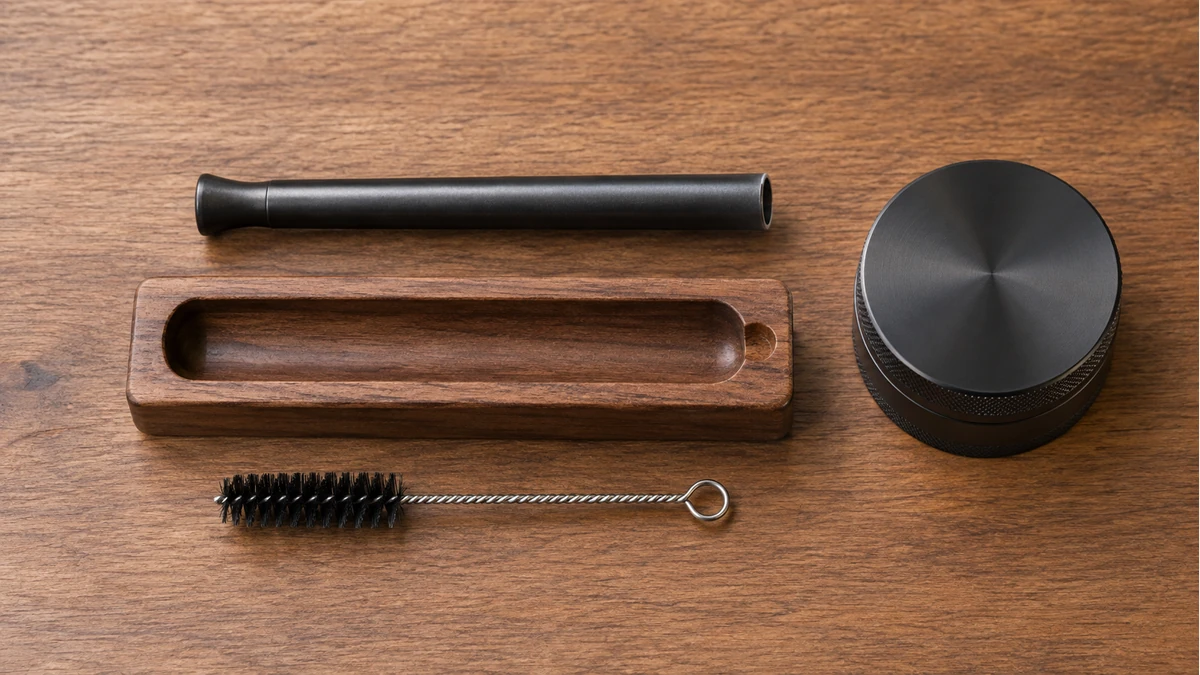
⚙️ 3. Does Grind Consistency Actually Matter?
Grind consistency matters more for a one-hitter than for almost any other format, precisely because the bowl is so small. In a larger pipe or a rolling paper, uneven particle sizes can average out — bigger and smaller pieces settle together and airflow finds a way around them. In a one-hitter bowl that might hold a pinch of material, there’s no room for that averaging effect. A few oversized chunks can block airflow almost entirely, while material that’s ground too fine can pack too densely and choke the draw from the other direction.
This is the mechanical reason a two-piece grinder is paired with one-hitter kits so often rather than tearing material apart by hand or using scissors. A grinder with sharp, evenly spaced teeth produces a narrower range of particle sizes, which translates directly into more predictable packing and a steadier draw. It’s not about achieving some ideal texture — it’s about reducing variance so the small bowl behaves the same way each time it’s loaded.
🔬 4. One-Hitter Tube Geometry, Bowl Opening, and Airflow
The geometry of a one-hitter tube is simple compared to other pipe styles, but that simplicity is exactly why small design choices have an outsized impact on how the piece feels to use.
🎯 4.1 Bowl Opening Size
The bowl opening is the mouth of the tube — the part that gets packed. A wider opening is easier to load and easier to clean but holds slightly less material per session due to its shallower depth in most compact designs. A narrower, deeper opening holds a bit more but is harder to pack evenly and harder to reach with a cleaning tool. Neither is objectively better; the right choice depends on whether a shopper prioritizes ease of loading and cleaning or a marginally longer single session.
💨 4.2 The Airflow Path
Past the bowl, the airflow path is usually either a straight channel or a slightly stepped channel with a small carb or air hole positioned along the body. Straight channels are easier to clean because a pipe cleaner or brush can pass through in one motion. Stepped or angled channels can filter out larger particles before they reach the mouthpiece, which some shoppers prefer, but they’re harder to fully clean and more prone to residue buildup in the corners where the angle changes. The tradeoff is the same one that shows up throughout compact pipe design: simpler geometry is easier to maintain, while more complex geometry can offer small performance benefits at the cost of upkeep.
🧲 5. Two-Piece Grinders: Size, Teeth, and Particle Consistency
The grinder is the component most likely to be mismatched with the rest of a kit, usually because it’s picked for its own merits rather than for how it fits the tube and storage compartment.
📏 5.1 Choosing a Size That Fits
Two-piece grinders — a lid half with teeth and a base half that catches ground material — come in a range of diameters, and size has real consequences beyond aesthetics. A grinder that’s too large won’t fit into a dugout-style storage compartment designed around a compact tube, forcing shoppers to carry it separately, which defeats the point of a unified kit. A grinder that’s too small can be awkward to grip and may only process a small amount of material per twist. For pocket-carried kits, a smaller diameter grinder paired with a proportionally sized tube keeps the whole assembly slim enough to sit flat rather than printing through fabric. The 2-piece herb grinder guide walks through diameter and depth considerations for matching a grinder to a specific kit format.
🦷 5.2 Tooth Pattern and Chamber Design
Tooth pattern affects both how much force is needed to twist the grinder and how consistent the resulting particle size is. Diamond-shaped teeth arranged in offset rows tend to shear material more evenly than teeth arranged in a simple radial pattern, because material has less chance to slip past untouched. Chamber depth matters too — a shallow chamber can bottleneck when it’s loaded past a certain point, leading to clumping near the teeth instead of an even grind throughout. Shoppers who want more background on how tooth geometry and chamber shape interact, including how these choices show up in customizable grinder designs, can find that comparison in the custom tobacco grinder guide.
🧹 6. Cleaning Tools and Access
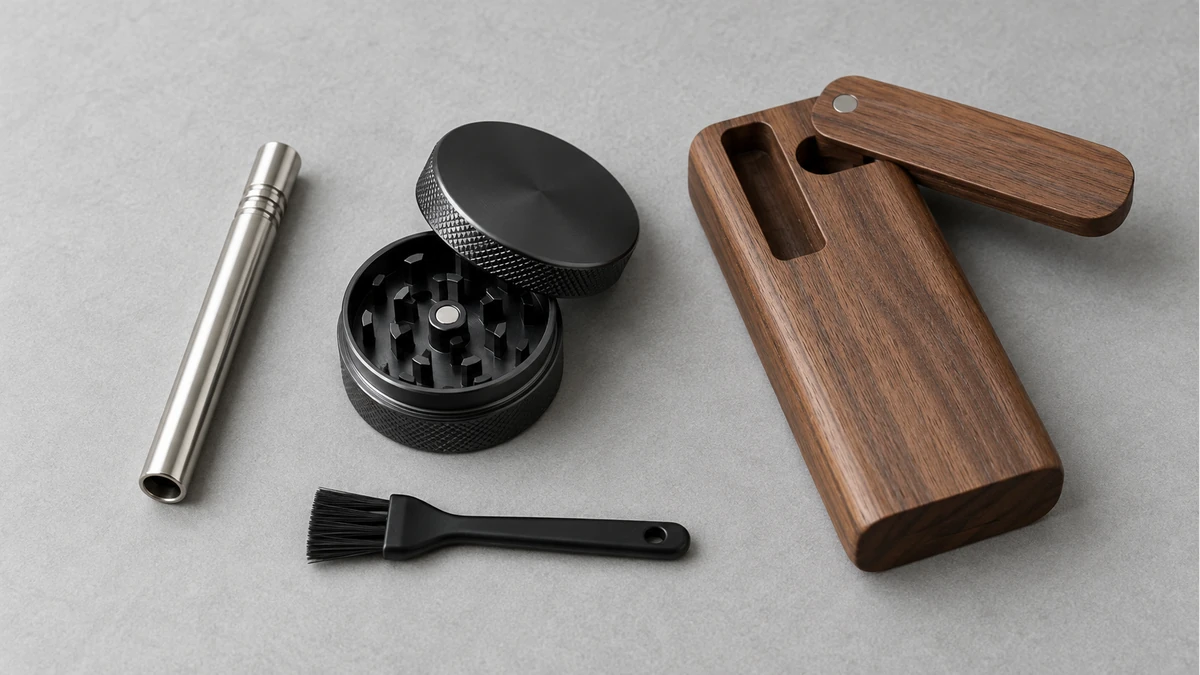
A cleaning tool is only as useful as the access it has to the parts that actually need cleaning. For a one-hitter tube, that usually means a thin metal pick or a small brush sized to the tube’s internal diameter. If the cleaning tool included in a kit is noticeably thicker than the tube’s airflow channel, it simply won’t reach deep enough to clear residue near the bowl, which is where buildup tends to concentrate first.
Grinders need attention too, though less frequently. Residue and fine particles can accumulate between the teeth and in the screen or kief catch of grinders that include one. A stiff-bristled brush handles this better than a metal pick, which can scratch softer grinder finishes. Kits that include both a pick sized for the tube and a small brush sized for the grinder tend to hold their performance longer than kits that include a single generic tool meant to do both jobs.
📦 7. Dugout-Style Storage vs. a Case: Different Problems
One of the more common points of confusion among shoppers is treating a dugout and a case as interchangeable, when they’re built to solve genuinely different problems.
A dugout-style compartment is designed around containment and quick access. It’s typically a solid block with carved-out slots sized to hold the tube and a small amount of ground material, keeping odor and loose residue contained within a sealed cavity rather than floating around in a bag. The tradeoff is that dugouts generally offer minimal cushioning — the material and grind sit close to the tube with little padding, so the compartment protects against mess and smell more than it protects against physical impact.
A case, by contrast, is built around impact protection and organization of multiple items. Cases often use foam inserts, rigid shells, or padded lining to keep a grinder, tube, and pick from knocking against each other during transport. They’re better suited to protecting components from drops or pressure but don’t inherently seal in odor the way a snug dugout cavity does, since most cases prioritize interior space and separation over an airtight fit.
Choosing between them comes down to what a shopper is actually trying to solve. Someone who wants to minimize smell and keep a grab-and-go single-session setup will lean toward a dugout. Someone who’s more concerned about a grinder getting scratched or a tube shifting around next to other items in a bag will lean toward a case. Some kits pair a dugout-style tube compartment with a separate padded grinder slot, which is a reasonable middle ground for shoppers who want elements of both.
🔩 8. Magnets, Threads, and Replaceable Parts
How a kit’s pieces connect to each other affects both daily usability and long-term durability. Grinders typically close with either embedded magnets or a light friction fit. Magnetic closures are more secure and less likely to pop open in a pocket, but stronger magnets can also make the grinder harder to twist open one-handed. Weaker magnets are easier to operate but can loosen over time or after repeated drops, especially on lower-cost grinders where the magnet isn’t recessed deeply into the housing.
Tube caps and mouthpieces are usually either threaded or friction-fit. Threaded connections tend to hold up better over repeated use because there’s no reliance on a tight tolerance that can wear loose, but they’re slower to open and close than a simple push-fit cap. For a compact kit that gets opened and closed frequently throughout the day, this small difference in mechanism adds up.
Replaceable parts are worth checking for before buying, particularly screens, if the tube design uses one, and any rubber gaskets or grommets around the joint between tube sections. A tube with a fixed, non-replaceable screen effectively has a shelf life tied to how well that single component holds up, while a tube with a swappable screen can be kept in service much longer. The same logic applies to grinder screens on models that include a kief catch — a screen that can be removed and replaced extends the useful life of the whole grinder rather than requiring a full replacement once it tears or clogs.
🎒 9. Pocket Bulk and Kit Organization
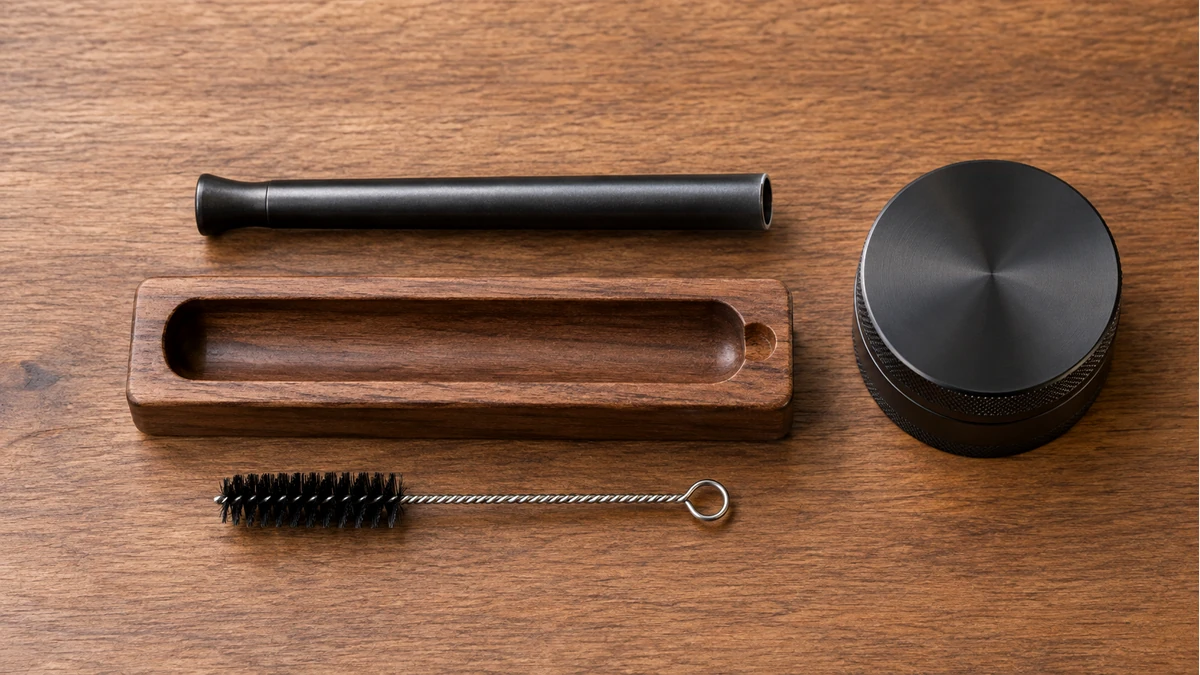
Pocket bulk is a function of how the kit’s pieces stack, not just their individual size. A dugout-style compartment that holds the tube flush and flat will sit better in a pocket than a case with rounded edges or a boxy profile, even if the case is technically lighter. Grinder height is often the biggest contributor to bulk in a stacked kit, since a taller grinder adds noticeable thickness when it’s layered on top of or alongside a tube.
Organization also affects how quickly a kit can be packed away. A compartment with distinct, correctly sized slots for the tube, grinder, and pick keeps each piece from shifting into another’s space, which matters most for dugout-style designs where the tube slot and material slot sit close together. Loosely organized kits — a pouch with everything tossed in together — are more prone to the grinder scratching the tube’s finish or the pick getting misplaced at the bottom of a bag.
📊 10. Comparison Table: Kit Components at a Glance
| Component | Primary Job | Key Fit Factor | Common Tradeoff |
|---|---|---|---|
| One-hitter tube | Holds and channels a single-session amount of material | Bowl opening size, channel diameter | Easier cleaning vs. slightly longer single load |
| Two-piece grinder | Breaks material into a consistent particle size | Diameter matched to storage slot, tooth pattern | Finer consistency vs. more force needed to twist |
| Cleaning tool | Clears residue from tube and grinder teeth | Pick width matched to tube’s internal diameter | Reach and precision vs. thicker, more durable tools |
| Dugout compartment | Contains odor and residue, quick access | Slot depth matched to tube length | Compact containment vs. minimal impact cushioning |
| Case | Protects components from impact during transport | Interior padding, separation between items | Better protection vs. less odor containment |
✅ 11. Fit Checklist Before You Buy
- Does the grinder’s diameter match the storage compartment’s slot, or will it need to be carried separately?
- Is the tube’s bowl opening wide enough to load and clean comfortably with the included pick?
- Does the cleaning tool’s width correspond to the tube’s internal channel, or is it a generic size that won’t reach residue near the bowl?
- Are you prioritizing odor and residue containment (dugout-style) or impact protection during transport (case-style), since one kit rarely maximizes both?
- Does the grinder use magnets or a friction fit, and does that closure strength match how often you’ll open it one-handed?
- Are tube caps and grinder screens replaceable, or are they fixed components that limit the kit’s usable lifespan?
- When stacked or slotted together, does the assembled kit sit flat enough for pocket carry, or does grinder height add unwanted bulk?
- Are the tooth pattern and chamber depth suited to producing a consistent particle size for a small bowl, rather than a coarse or uneven grind?