🔎 1. Two Architectures, One Umbrella Term
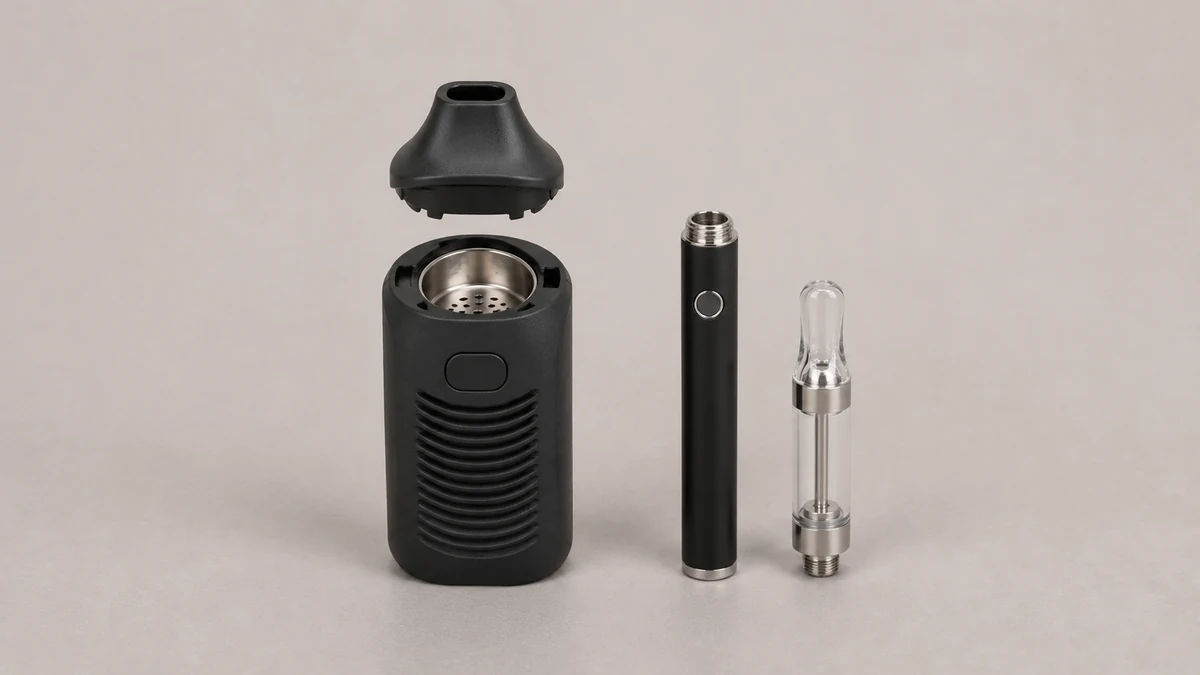
On a dry herb vaporizer with a built-in oven, the heating cavity stays in the body when you remove the oven lid. On a detachable 510 cartridge system, the reservoir, heating element, and cartridge mouthpiece generally leave together when the cartridge comes off the battery. Those are useful starting points when a listing calls either device a “vape” or when you need to identify a loose part.
Imagine an owner with two unmarked devices on the bench. One has a removable mouthpiece at one end and an oven lid at the other. With the lid removed, the cavity is still inside the body. The other device separates into a battery and a clear glass cartridge, and the tank and mouthpiece both leave with that cartridge. Even without a visible label, those physical boundaries give the owner better words to search for: an oven lid or a model-specific mouthpiece on the first device, a cartridge or the separate battery on the second.
That distinction also helps when a listing uses the word “chamber” for more than one part. A drawing may call the area around the cartridge a chamber because the housing surrounds it. The cartridge itself can still hold the reservoir and heating element. A service drawing for an oven model may call the heating cavity a chamber and show it as part of the body. Look at where the leader line on the drawing ends. A line to the outer bay and a line to the reservoir describe different components even when the callouts use the same word.
Look at the parts list before comparing marketing terms. An oven device may list its lid, screen, and mouthpiece as separate pieces. A cartridge specification can describe the tank material, heater and thread all on the same page. Those lists help explain how the hardware comes apart and what a replacement listing refers to. If a drawing names a part while a separate replacement list omits it, check which complete assembly the maker supplies and whether that assembly includes the part named in the drawing.
🧱 2. Where the Heater Sits Inside a Dry Herb Chamber
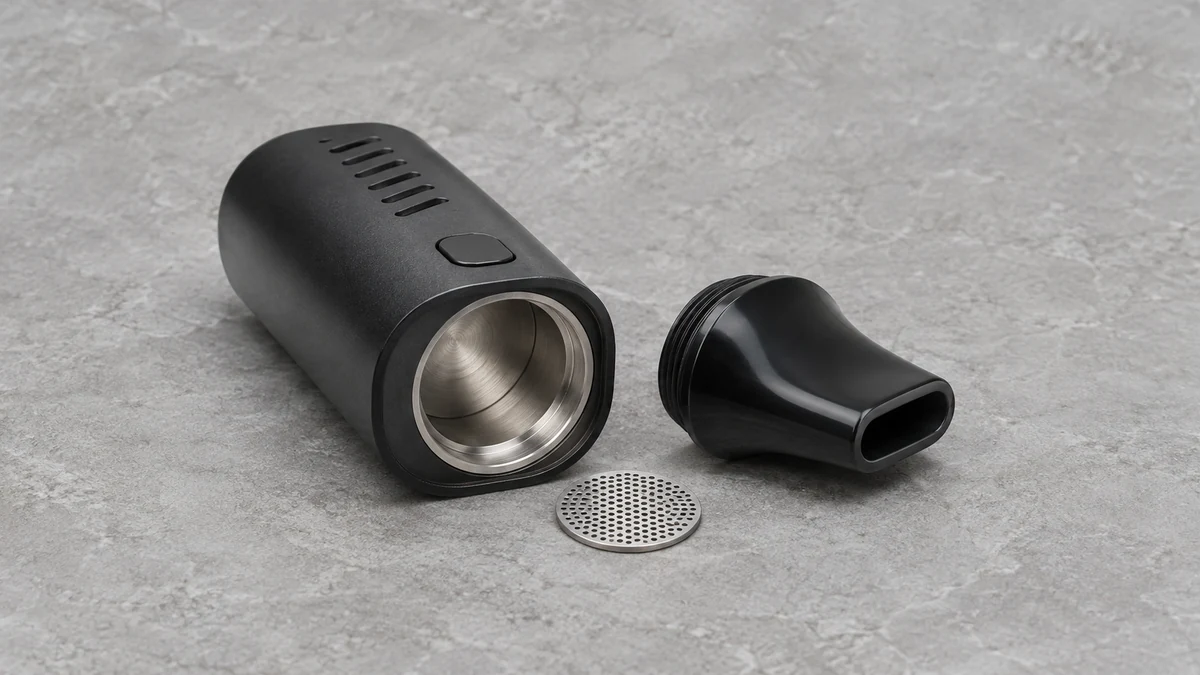
The PAX 2 manufacturer guide shows an oven in the body, a separate oven lid, and a mouthpiece at the opposite end. The locations are specific to that model. They illustrate why a drawing of the complete body can answer questions that a close-up of the lid cannot. The term “oven” identifies the cavity. A drawing or technical description of the heater is a separate piece of information, and the heater location can vary across dry herb designs.
📐 2.1 Oven, Lid, and Screen as Separate Parts
Read the screen and lid entries individually in the parts list. In a model that uses a separate oven screen, that piece can sit near the bottom of the cavity while the lid closes the opening. Another model may have a screen mounted in a lid or in the mouthpiece assembly. Those locations describe different parts and can change what the owner sees after lifting off the lid. The guide to dry herb vaporizer cups shows where a removable insert fits into this vocabulary. The outline of the insert is only part of its fit. Its support surface and where it sits relative to the opening matter as well.
A perforated metal disc and woven mesh can look similar in a small product photograph. Check the maker’s part number or drawing to see whether the screen comes alone or with the assembly that holds it. The photograph is often enough to identify what the seller means by “screen,” while the part number ties that description to a specific model. The screen shape alone gives little information about the heating method.
🔌 3. Where the Heater Sits Inside a Cart
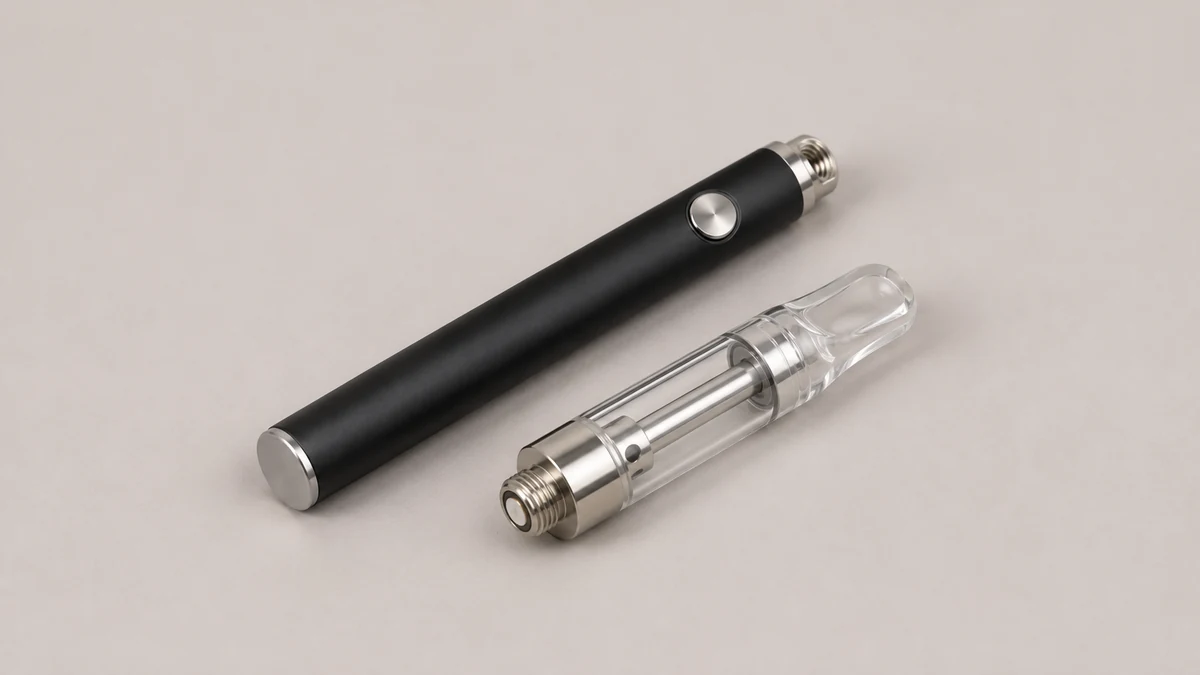
In a detachable cartridge system, the cartridge contains the heating element and reservoir, and the battery supplies power across the connector. The CCELL TH2-SE specifications describe a glass reservoir, ceramic heating element, and 510 connection on that particular design. Those details illustrate the parts that leave with the cartridge. Other models can use different materials, connections, and mouthpiece assemblies. Consult the model documentation to identify its serviceable parts.
🧪 3.1 Reservoir and Heater as a Single Shipped Unit
With the empty cartridge detached, you can identify three features without disassembly. The mouthpiece is the end you can see at the top, the body surrounds the reservoir, and the base meets the power connection. A glass wall may let you see the reservoir, but the internal heater or air passage may remain out of sight. The empty 510 thread cartridge guide covers details that a thread label leaves out, including the reservoir and the construction of the cartridge head.
A drawing may show an air passage running through the middle of a reservoir. Read the passage and reservoir as separate paths. The fact that a tube runs through the tank area says little about how the material reaches the heating element. Manufacturer diagrams are especially useful here because transparent outer walls can make adjacent parts look like a single cavity in a photo.
Pay particular attention to what the word “body” refers to. On an oven product page, it may refer to the complete housing containing the heater, electronics and oven. On a cartridge page, “body” can mean the glass or metal shell of the detachable cartridge itself. A listing for a “replacement body” is ambiguous unless it includes a photograph, diagram or part number. A cartridge body and a battery body can each appear as a short cylinder in a cropped listing image.
A 510 label refers to a connector format. On the cartridge example, the connector joins the cartridge to a separate power unit. A built-in dry herb oven can have no comparable joint between the cavity and the body, even if there is a removable cup inside the oven. Where a device uses a threaded heating attachment, identify the attachment separately and consult the maker’s compatible hardware list. A matching thread description gives only one piece of information about fit.
Check a recessed cartridge housing from the side as well as the top. The threaded connection can be deep in a bay whose width and height affect what physically fits. A connector label on a photograph tells you little about those outer dimensions. If a product listing describes only the battery and omits the cartridge, there may be no reservoir or heater specifications to compare on that page.
🌬️ 5. Conduction and Convection Paths Inside Each Format
The guide to conduction and convection in dry herb vaporizers explains how heat can travel through contact with a heated surface, through moving heated air, or through both in one design. Those terms describe routes that heat can take. A cartridge data sheet may give the heater material, as the TH2-SE specifications do, without showing the complete route from reservoir to heater. Use the architecture and the available technical description together.
In either format the airflow path can include passages that are invisible from the outside. A mouthpiece opening is evidence of where the air path emerges at that part. It does not show the layout below. For a built-in oven, the path can pass through or near the cavity, depending on the design. A cartridge may route air through a central passage, but the presence of a visible center tube alone does not describe the position of its inlets or the heater.
🧰 6. Maintenance Boundaries Set by the Architecture
Service information answers a different question from an exploded diagram. A diagram may identify a component deep in the body, while the service instructions list only the parts an owner can remove. For example, an oven lid may come off to expose a screen while the oven remains in the device. On a detachable cartridge system, the documented service boundary may be the complete cartridge and the accessible area of the battery around the connector.
🧹 6.1 Cleaning a Chamber Versus Replacing a Cartridge
For an oven device, first identify which parts the manual shows as removable. The oven lid might expose the top of a screen, while a separate mouthpiece can lift off at the other end of the body. Those openings can lead to different areas. For a cartridge, check whether the documentation describes the head as a separate assembly and whether that description applies to the variant in hand. An illustration of an assembly during manufacture does not necessarily describe something the owner can take apart.
If a manual identifies a removable screen, check which assembly it belongs to before assuming two similarly shaped pieces do the same job. One might be an oven screen, the other a filter in the mouthpiece. An instruction for that specific part is more informative than a general claim that the device “comes apart.” With a cartridge, a drawing showing several internal components can help identify them even when the documented replacement unit is the complete cartridge.
🧩 7. Caveats Where the Lines Blur
The outside of a device can conceal the same distinctions that an exploded view makes clear. A removable cup, a shell around a cartridge, and an integrated device may all have a compact housing. Start with the cavity or reservoir, then check which pieces the manufacturer groups as a removable assembly.
🔧 7.1 Removable Cups and All-in-One Devices
A removable cup is an insert within the oven system on a model that specifies one. If a parts photograph shows a cup alone, check whether the drawing shows a connector or separate heater assembly leaving with it. An insert that rests in the oven has a different relationship to the body from a cartridge whose reservoir and heater detach together. At the other end of the range, some cartridge-style devices integrate the reservoir and power supply in one housing. Calling one of those products “all in one” describes its packaging as a device, and does not establish the shape or accessibility of the reservoir.
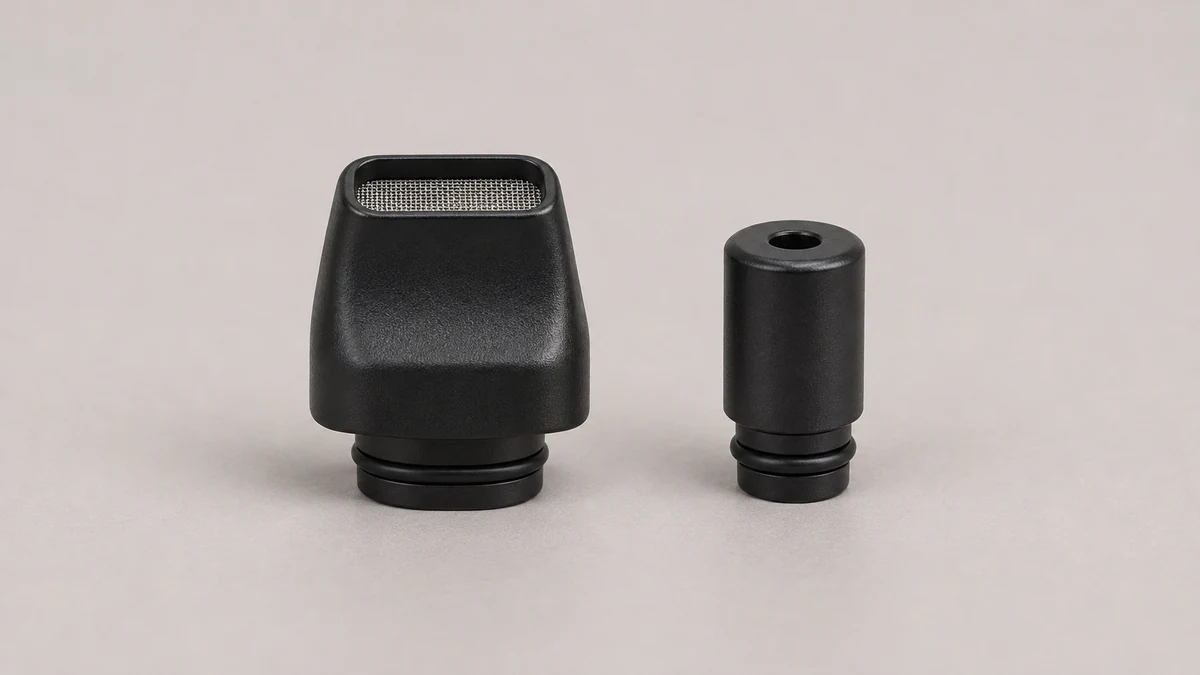
A detachable mouthpiece can appear on either system. On an oven model it might cover part of the body’s airway. On a cartridge model it might be part of the assembly above the tank. Confirming that a piece is a mouthpiece therefore only answers what the piece is. Identifying what stays behind when it separates answers which hardware system you are looking at.
🗂️ 8. Matching Labels to the Part in Front of You
Three reader questions help narrow an ambiguous listing. Is the listing for the whole device or only an attachment? Does the cavity remain with the body when the documented removable parts come off? Does a tank and heater travel together in a cartridge assembly? These questions apply equally to an unlabeled part on a bench and to a product photo that shows only the shell. An empty cartridge and an oven insert may both be small enough to disappear inside a housing, so the way each one mates to the device is often more informative than its size.
When comparing two spec sheets, start by checking the heading above each figure. “Chamber capacity” on an oven page and “reservoir capacity” on a cartridge page describe different components. On a page for a separate battery, the only relevant figure may describe the recess for a cartridge. A photo that omits the cartridge cannot establish the type of heater inside it, and a photo with an oven lid in place may not show the screen at all.
📷 8.1 Three Views That Help Identify an Unlabeled Part
Photograph the complete device from the side to show its proportions and seams. Next, take a view of the relevant opening or connector. Finally, photograph the pieces that the maker identifies as removable beside the body. A useful oven photograph shows the edge of the cavity and the loose lid together. A useful cartridge photograph shows its own base and the mating location on the battery. Take these photographs with the hardware empty, cool and disconnected where the design allows.
When asking a manufacturer to identify a part, add the model identifier and label the side you are showing. For an oven device, say whether the unidentified piece came from the mouthpiece end or the oven end. For a cartridge system, distinguish the visible tank from the separate power unit. If you only have a cropped sales photograph, ask what comes away from the body as a unit. The answer often narrows the replacement vocabulary before you have a drawing or a part number.
Keep the photographs together when sending a question. A close-up of a loose connector is much easier to place when the same message also shows the housing it came from.