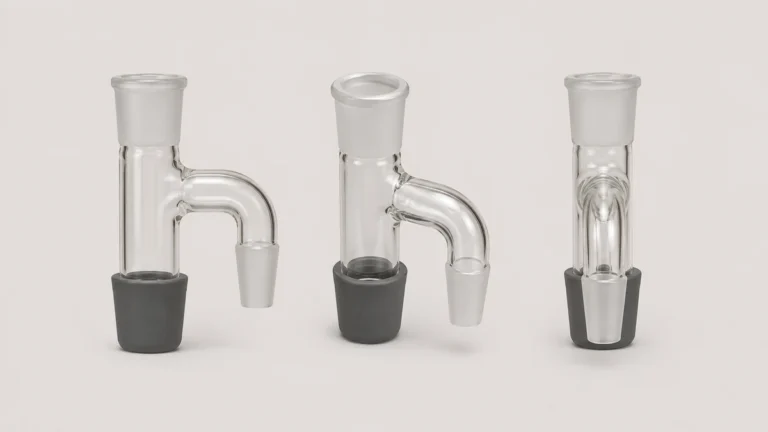
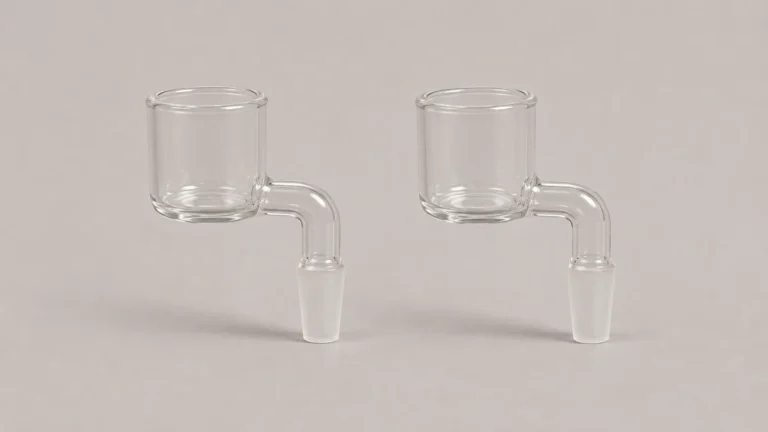
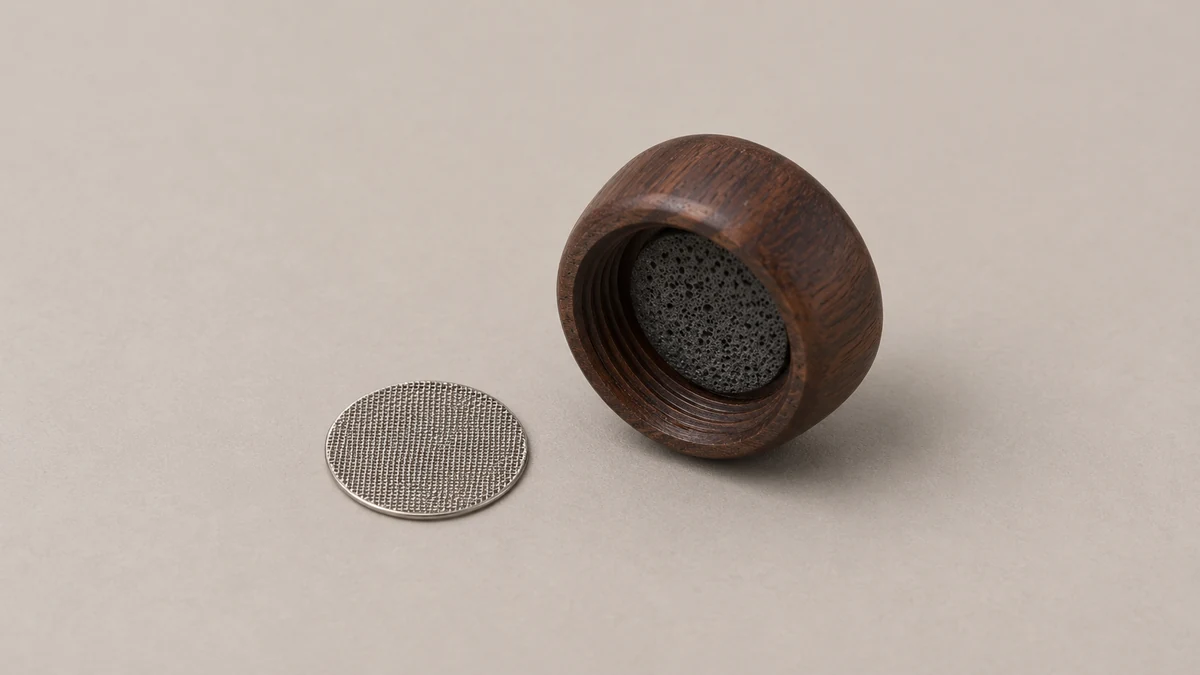
A dry herb vaporizer pipe may resemble a traditional pipe until you look inside its top. On one familiar manual design, a removable top contains a porous ceramic heating component and sits over a separate chamber. A lower screen belongs to that chamber. A product listing may call both pieces filters, which makes it easy to assume that a missing screen is a missing ceramic insert. The location of each part tells you which question you should ask.
Other manual formats have a chamber above the heat-facing end and a removable mouthpiece at the top. Their resemblance to a pipe comes mostly from the way the body is held and the route to the outlet. The outer silhouette does not reveal the direction of heat transfer. A maker’s diagram and a cool, empty view of the parts are more useful than a photograph of the finished shape.

🔍 1. Find the Covered Chamber
Start with the place that appears to be the bowl. Some pipe-shaped vaporizers have a round top that fills the outline of what looks like a single bowl in profile. The enclosed chamber sits underneath that part. Seen from above after the removable top is set aside as documented, the remaining body can show the bowl and its separate screen. Look for a seam between the two sections. If a diagram assigns different names to the top and the body, keep those names distinct even when both are made to look like one piece of wood.
VaporGenie’s Classic user guide illustrates an upper assembly containing a ceramic filter, retainer and threaded insert. The lower assembly drawing shows the bowl screen, its support, and the mouthpiece. That is an example of how a pipe form can contain two pieces that a casual description might call “the mesh.” One belongs to the ceramic assembly. Another lies at the bottom of the chamber. Their jobs and the parts supporting them are each documented for that design.
🧭 1.1 Start With the Ends of the Path
Find the opening described by the maker as the inlet and the opening at the mouthpiece. An external view can establish where those ends appear. A cross section or exploded drawing tells you more about what sits between them. A dark circle inside a top may be a porous medium or simply a shadow cast by the housing. Record it as a visible feature until the manual identifies it. This is particularly helpful in an old listing where the top is turned over and photographs of the inner surfaces are limited.
🧩 2. Give the Upper Filter and Lower Screen Separate Names
A porous ceramic element in the covered-pipe example is part of the documented heat-transfer assembly. The lower mesh is the bowl screen in the device drawing. The shape and placement of each component make them easier to distinguish. When a manual names a retaining ring or support coil, write it down as another component, even if it is normally supplied with one of those pieces.
📄 2.1 Use the Drawing to Resolve Conflicting Labels
Suppose a retailer calls a whole upper assembly a “filter cap” and a replacement listing calls the inner element a “filter.” Both names can describe real products. The first can include the top, carrier and insert. The second might include only the insert. Check the illustrated boundaries and the itemized contents before comparing prices, dimensions or parts lists. A small disc with a mesh texture can also be shown alongside the filter but still belong to an entirely different location on the pipe.
A missing chamber screen does not tell you whether anything is missing from the top assembly. Likewise, a loosened part discovered in the top does not identify it as the same size or material as the bowl screen. Tell the manufacturer which opening you are looking at and whether the visible piece is the upper retainer or the lower mesh. That gives them an exact location in the diagram. There is no need to describe how the device was used to identify the affected part.
When comparing drawings, check whether the lower screen is held by the chamber wall or by a named support beneath it. VaporGenie’s illustrated Classic layout labels a separate support coil below the screen. Its presence helps explain why a loose ring in a box does not have to be the same ring shown in the upper assembly. Get the upper and lower drawings into the same field of view and match the neighboring parts before using their names.
🪵 3. Separate the Decorative Body From the Functional Top
A curved wooden shell can give a pipe its shape while the heat-facing components sit in a different material. One stock photograph can show a wooden top and a wood body with a contrasting stem. A second can show a metal or glass version of the same concept. The wood profile tells you something about the exterior, but the material of the shell does not specify the material of the seat, insert or chamber. Ask whether the top, thread and lower body are interchangeable only if the manufacturer documents their dimensions and relationship.
The same boundary matters when a device has been handed down or collected without its box. You may recognize one wooden body by its outline and still have a top from a different version. A replacement top can look convincing on a table yet have a different shoulder or a different lower insert. Keep the part identifiers with each component whenever you can. Treat a maker’s statement about a specific replacement top as evidence only for the named model or models.
🪛 3.1 A Visible Ring Is Not Automatically a User Service Part
Some parts appear simple enough to remove, but the diagram can show a ring as part of an assembly that is supplied complete. Save an exterior close-up if you need to ask about a shifted component. Do not assume that every visible retaining feature can be repurposed or separated. On used hardware, an unusual seam could also reflect an earlier repair. The exploded drawing shows intended parts, and a photograph shows current condition. Both are useful when they can be distinguished in the record.
🌡️ 4. Compare a Layout With Heat Applied at the Chamber Side
An upper ceramic element is common to the documented covered-pipe example, but there are other manual layouts. A compact cup-style vaporizer can have a visibly exposed metal chamber and a separate mouthpiece that joins above it. The manufacturer of the Vapman Click, for example, lists a metal heating chamber and describes different mouthpiece materials. Its product documentation illustrates why a short wood-bodied device should not automatically be described as a covered pipe with an upper ceramic element.
The architectural question is where the heat-facing part sits in relation to the chamber and the outlet. A manual pipe with a porous upper element places a separate part between the inlet and the chamber. The cup style puts attention on the chamber and the material immediately around it. These are positions on a diagram. They do not provide a temperature recommendation or a universal operating rule. Our comparison of heating architectures in dry herb vaporizers explains the general terminology for heat transfer.
🔗 4.1 The Heat Source Can Be an Entirely Separate Object
A pipe-shaped outline can also belong to an electronic device with a draw circuit or a cartridge interface. A case or display photograph that shows a tube beside the object does not establish where the heater is. Check whether the diagram identifies an internal electrical chamber, an external heat-facing cap, or a separate heater that mates with a handheld stem. Our guide to caps, cradles and indicators shows how to distinguish the handheld part from a separate heater in another system.
🧱 5. Distinguish the Mouthpiece From the Upper Housing
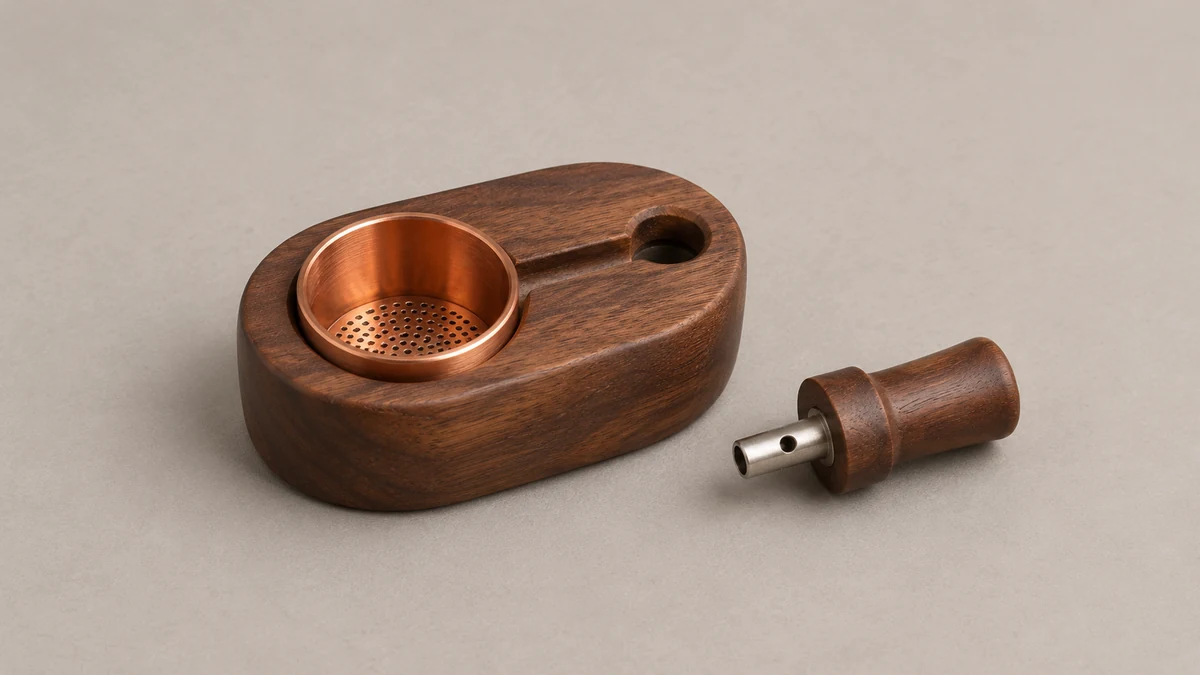
In a traditional pipe profile the mouthpiece may project from the long end, far from the top that covers the bowl. In a short vertical format the mouthpiece can form much of what a seller calls the top. The words “upper piece” are therefore unreliable without a view of the actual device. Identify the outlet and any documented detachable stem by its position. Then describe the lower chamber and heat-facing component separately so a support question about the bit does not get mistaken for a question about the heating top.
🗂️ 5.1 Record the Two Fit Questions Independently
The mouthpiece can fit its body while a replacement upper heating assembly has the wrong seat. An exact-looking upper housing can also leave the outlet connection unresolved. For one problem, photograph the joint between the stem and the body. For the other, photograph the area above the chamber. Our mouthpiece and stem terminology guide is useful for naming a shoulder, tenon or outlet cover, without assuming that this device uses any particular kind of joint.
If the manual includes more than one diagram, use the one that matches the revision. Match part labels with their neighbors before comparing the shape of a loose top or stem. For example, a diagram that labels a ceramic disc and its carrier separately is better evidence than an old front-of-box image showing both covered. When a view does not reveal the joint, describe the assembly as shown and ask whether a more detailed parts illustration exists.
You may also encounter a product photo with the top in place and a second picture showing a loose metal disc beside the housing. The photo could be showing an included spare, the installed part removed, or a second accessory. Look for a caption that identifies which. A parts list that distinguishes a complete upper housing from its internal components is a better source than a display image that leaves both roles unstated.
Manual layouts often place visually similar open ends at different parts of the assembly. A hole at the chamber end of the body may connect to the outlet elsewhere, while a hole in a loose cover could serve a completely different role. The only general observation is that the openings exist. A manufacturer cross section or parts diagram is what connects either opening to the rest of the system.
📷 6. Describe What You Can See on the Cold Hardware
Take one side view of the complete item, then capture any components that are detached according to the maker’s documentation. Keep the chamber, upper housing and outlet visible as separate landmarks. If the bottom screen is absent, say that the empty lower opening is visible and refer to the drawing that calls for a screen. If a dark layer is still visible in the top, avoid naming its material unless the documentation says what belongs there. Even on a well-lit photograph the apparent color can come from the lighting or the depth of the opening.
A useful note captures both the original arrangement and the current condition. “Top shown separated at the documented joint” describes an assembly boundary. “Inner ring appears out of position” describes the condition you are reporting. If a visibly damaged part is involved, leave it out of service and ask for model-specific guidance. The diagram helps identify the component, but it cannot determine whether its condition is suitable.

✅ 7. Keep the Product Shape and Parts List in the Same Record
Consider an unlabeled pipe with a wooden knob above the bowl. An accurate starting description is a pipe-shaped body with a separate upper housing and an outlet at the end of the stem. If the collar above the bowl matches a documented model, add the model and document revision. If you see only a shallow recess in the top, keep its supposed contents unconfirmed. This description is useful even before you know the exact name of the device.
Now imagine a short wooden vaporizer in which a cap was stored beside a removable mouthpiece and a visible metal cup. Calling the cap “the filter” could send a parts inquiry toward the wrong model. Photograph the top and cup in their observed positions, and use the diagram to establish whether the loose cap belongs to the chamber, the outlet or storage. The most reliable way to narrow the question is to describe which pieces are present, which opening they relate to and which item the maker lists separately.
Finish with the exact unanswered question. It might be whether a missing disc belongs to the bowl or to an upper housing, or whether the entire top is sold together. The cool, empty view and a model-specific drawing provide enough context for someone else to check that answer. A shape name can lead you to the right family of devices. The parts record gives you the detail to tell one assembly from another.