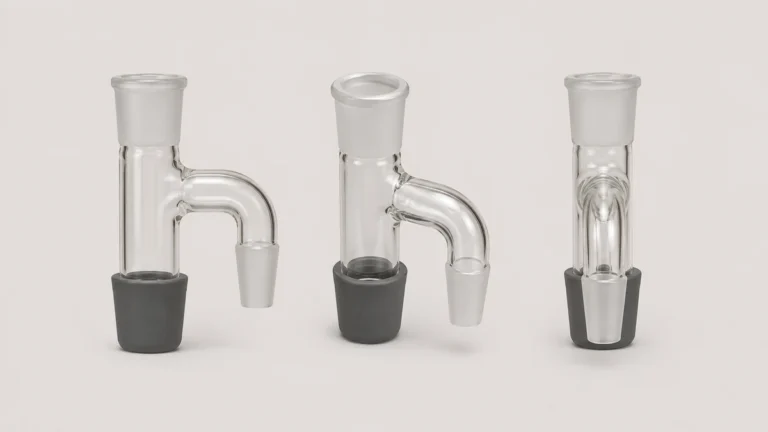
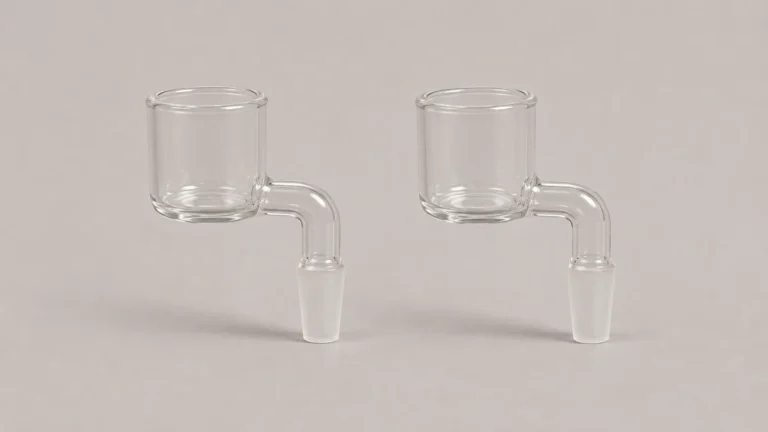
A clear glass banger can look like fused quartz even when its material is unknown. The rim, bend and frosted connector are visible shape features. They can help identify the part in a catalog. They cannot tell you whether a loose accessory from a secondhand kit is made from borosilicate, fused silica or another glass. Look for documentation tied to the actual part before assigning it a material.
The terminology is part of the confusion. “Glass banger” can mean any transparent cup-shaped attachment in a casual listing. In a product specification, glass may mean borosilicate or another named glass, while quartz often refers to fused quartz or fused silica. Fused silica is itself a glass. Before interpreting one of those terms, check what object it modifies and who made the claim.
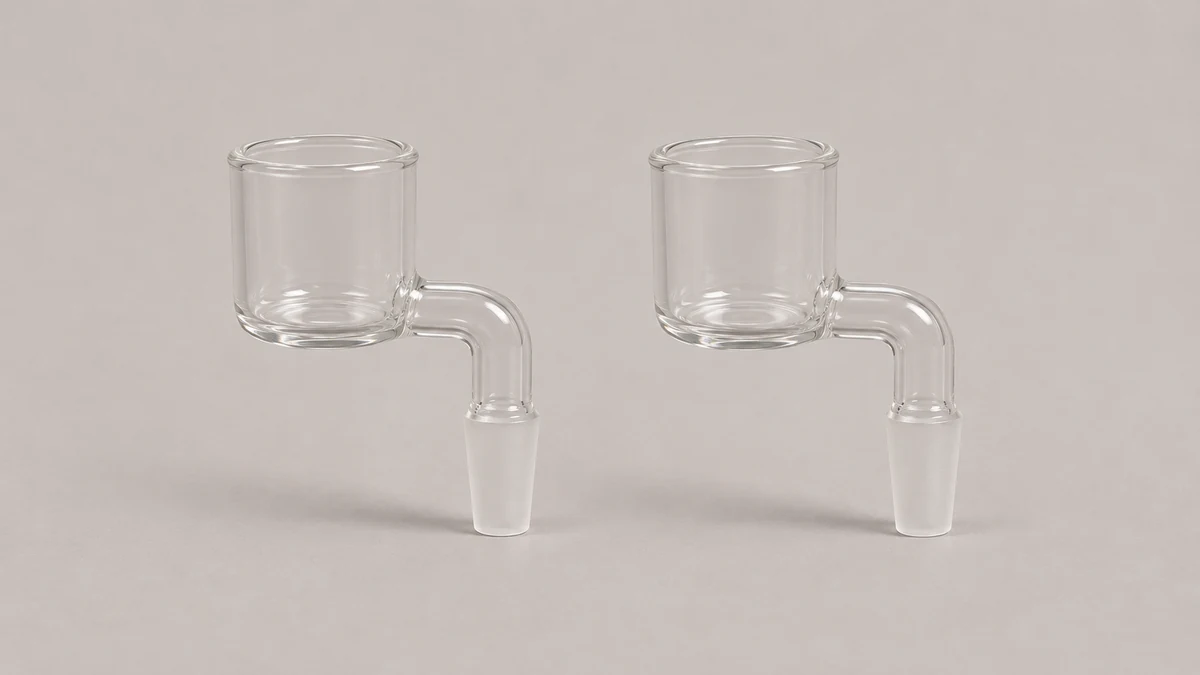
🔎 1. Name the Part Without Naming Its Material
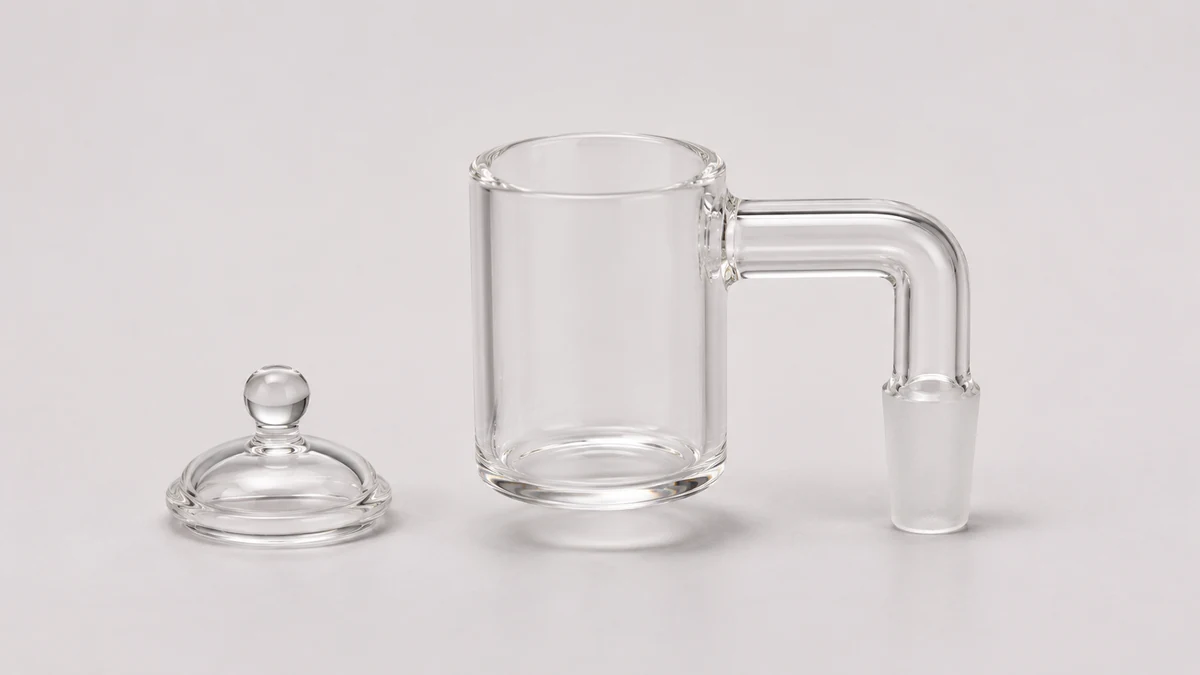
There is plenty you can describe before you know the composition. The bucket is the open cup. The neck or arm carries the connection away from it. The frosted taper is the part of the accessory that mates with a corresponding joint. These names describe functions and shapes. A clear cup and a frosted taper may be different optical surfaces even if the maker identifies them as one material throughout. Frosting at the joint alone does not indicate a material transition.
📐 1.1 Fit and Material Belong in Separate Notes
A nominal joint size and the direction of its opening help identify a compatible interface. They are independent of the claim that the cup is quartz. The published specifications for GRAV’s named 90-degree banger illustrate this separation. The product name and description identify quartz, and the maker lists the male joint and size separately. That information describes the specified model. The same size and shape on a loose part does not establish that it came from that model.
Our guide to male banger joint fit explains how to attach a size and connector description to the correct object. Use that information to narrow the set of possible models. Keep the material field marked unknown until there is a reason to fill it. This lets a support agent confirm the geometry without inheriting an unsupported assumption about composition.
Use names for the exact thing shown. A listing might call a part clear, polished, frosted or full-weld. Those words say something about appearance or construction. If quartz appears only in a category heading and the item description names no material, record that distinction. Conversely, a clear listing with a model-specific named material gives you a useful identification lead even if the piece has no mark on the cup.
🧪 2. Understand Why Two Clear Materials Can Look Alike
Corning’s fused silica brochure identifies selected grades as noncrystalline silica glass and documents their optical properties. SCHOTT’s DURAN tubing specification describes a separate family of clear borosilicate glass. These sources document named materials and explain why transparency cannot identify the composition of a loose accessory.
📘 2.1 A Materials Datasheet Has a Defined Scope
The test conditions and specific material grades in an industrial datasheet belong to the materials and specimens described by that producer. A formed finished part introduces its own dimensions, construction and condition. A material property from a supplier document is not a finished-product rating for an unlabeled banger. Nothing in a tubing datasheet can establish that the accessory in a retail kit was even made from that supplier’s product.
Similarly, a coating, an opaque region, a formed rib or a visible seam can make two versions of the same basic shape look different. Treat those as construction clues, such as a detail that may distinguish one catalog photo from another. They remain weak evidence for chemistry. If a listing mentions the cup material but says nothing about a separate lid or accessory, keep the omission visible rather than extending the material claim to the entire package.
📦 3. Read the Kit and the Loose Accessory as Different Records
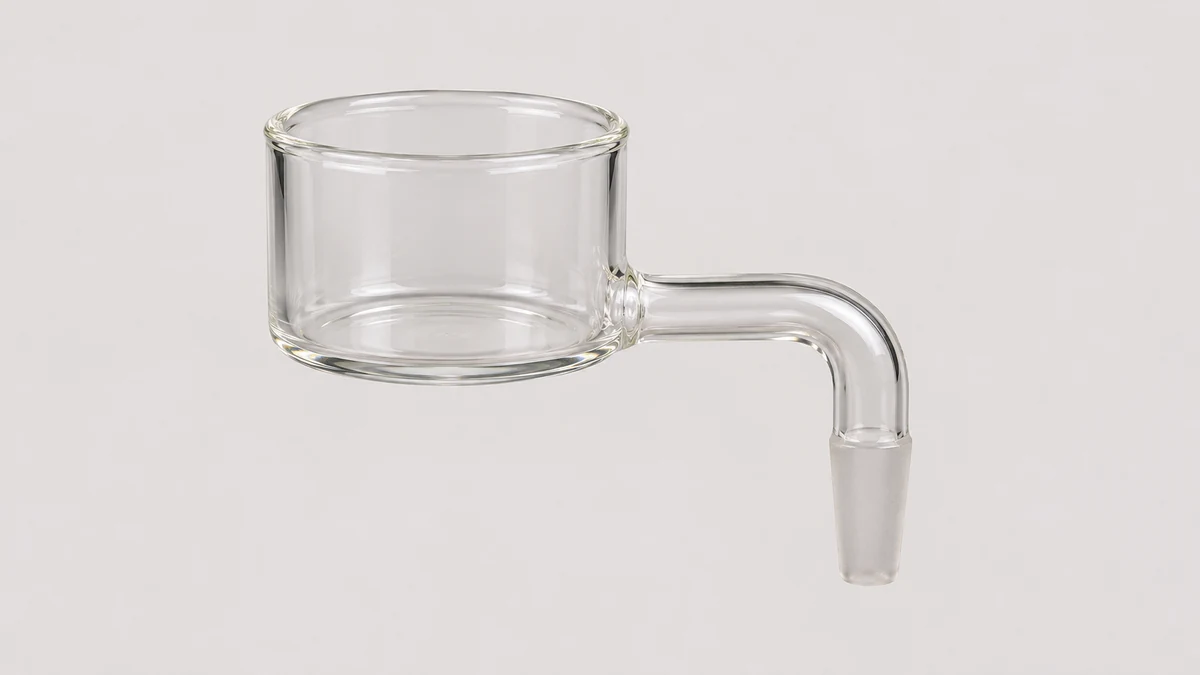
Manufacturers and retailers can illustrate a kit with accessories placed beside the vessel. A caption may name the body material without describing the cup, or name an optional accessory that is not included in the base package. The useful document is the one that identifies the actual variant or accessory. Look for an itemized box list, a part number printed on a sleeve or an archived order description. Save the version of the page that applies to the item you have if it is still available.
🧾 3.1 Give a Package Label Its Proper Weight
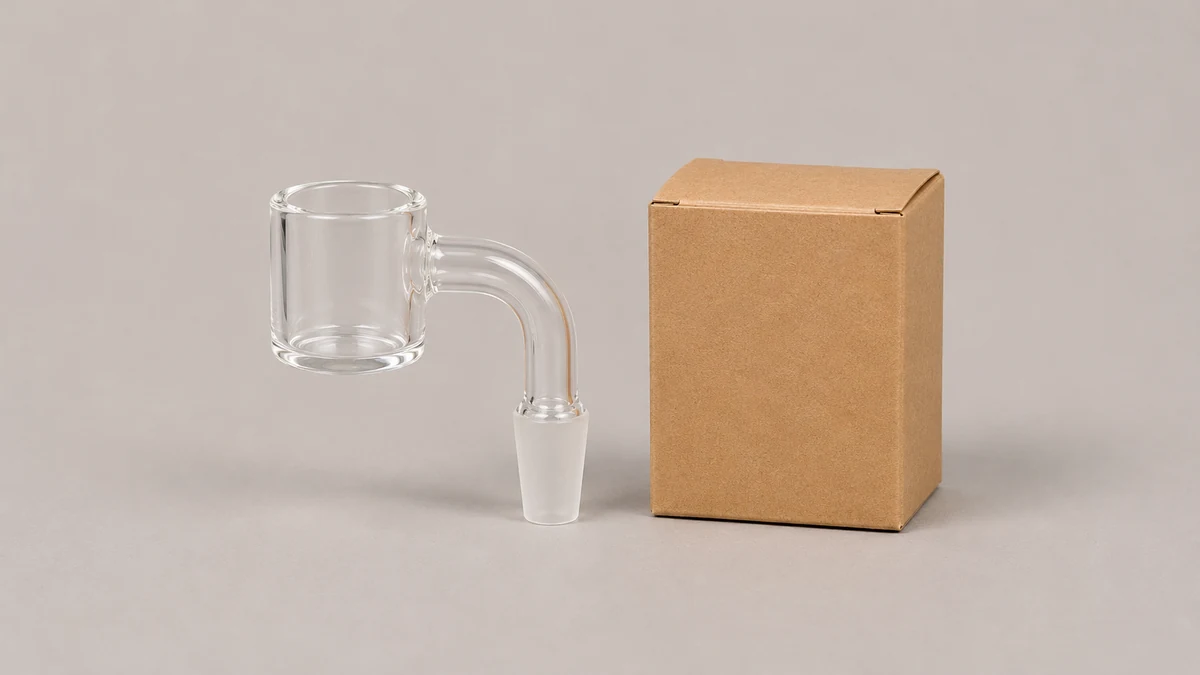
A small box marked “quartz” is evidence of how that box was labeled. It is stronger evidence about a particular loose part when there is a clear connection between the part, its packaging and the maker’s identifier. A used box can hold a replacement. A reseller can pair a different cup with a familiar body. If you can’t establish that relationship, say that the paperwork describes a likely model and that the loose piece hasn’t been linked to it. Do not report the label as a material test.
Suppose the main vessel has a recognizable maker’s logo and the transparent arm was stored in a pouch beside it. The logo can help identify the vessel. It does not identify the loose arm, even if the accessory can seat in the vessel. A traceable part description for the actual arm is the stronger source. When the product gallery offers several fitted accessories, identify which one appears in the original purchase record before comparing its shape with the one you have.
👁️ 4. Know What Appearance Can Support
Good lighting makes the opening, rim and joining area easier to document. It also helps you see whether a line follows the shape of a seam or shifts when the reflection changes. This is valuable for a complaint about condition. It is a different task from testing the glass composition. Thickness, bubbles, cloudiness and the finish around a weld can vary with the way parts were formed. Those observations do not establish material.
🧰 4.1 Skip Improvised Material Tests on a Finished Part
A ring when tapped combines the shape, support and condition of the whole object. A weight comparison can be dominated by cup and wall dimensions. A scratch or an abrupt hot-to-cold trial would change or damage the object and still would not provide traceable evidence of its origin. Leave the part cool and unmodified while you look for the actual specification. If the manufacturer cannot tie an old generic part to a material when you inquire, retain the uncertainty. No photograph needs to be made definitive through a risky experiment.
With a visibly cracked part, establishing the cause is a separate question from establishing the material. Our guide to cracked and chipped bangers explains how to document the damage without putting the part back into use. You can note that a crack starts beside an arm or that the rim is chipped without using the crack as evidence for a material family. A manufacturer reviewing your photos may need the model information to say more.
Included pictures can also create an apparent contradiction. A retailer may show a single-piece accessory in the main gallery and list a removable insert in the caption to a different option. A reader without the original box could reasonably think the insert is missing. The first step is to identify whether the stock number documents a separate insert at all. Once you know that, you can ask what the material line applies to with less risk of borrowing it from an unrelated option.
🧩 5. Separate an Insert or a Cover From the Banger Itself
A clear object listed beside a cup may be a cap, insert, dish or an entirely separate attachment. Compare how its outlines and openings align in the product drawing. A round cover may have the same apparent diameter as the cup from above and look like part of the wall when photographed in place. Ask which of the objects a material line describes if the illustration shows several. If a maker gives a material for the cap alone, put the claim next to the cap, even if both objects look identical from one angle.
📷 5.1 Preserve the Views That Actually Show Boundaries
For the cup, include the rim and the full neck in profile. For a removable item, show it separately if the designer identifies it as removable and it is already loose. If the two look like one continuous shape, use the documented parts illustration before assuming there is a seam or a removable layer inside. Our comparison of centered dishes and offset bangers explains these physical outlines. It can help identify the kind of attachment without assigning the material to a specific piece.
There can also be several clear accessories of unknown origin in the same storage tray. Give the pieces separate names based on their visible shape: a straight-sided bucket, an offset arm with a frosted connector, or a small clear cover. Match each against its own evidence. This avoids using a box marked with one part’s description to make a claim about every transparent part stored beside it.
🗂️ 6. Keep Manufacturer, Retailer and Observation Separate
A manufacturer specification associated with a part number normally has a clearer scope than an unlabelled sale listing. A retailer confirmation can still be useful if it identifies the model, the included accessory and the particular variant. A statement from a previous owner explains how the piece was described to them. Record the speaker and the product named with the statement so those sources cannot become interchangeable by accident.
Help the person answering by making the unresolved question precise. Provide the retailer’s stock number if you have it and the description on the original protective box. Ask whether the manufacturer intended the clear part depicted in your side view to be the accessory with the named material. A good answer should identify the component and model to which it applies. The question can be answered in words and a drawing without any demonstration on the glass.
Compare differences that survive changes in lighting. A molded outline, an exact shape of the neck, and the location of a visible joint may help you exclude a photo match. The color of a highlight can change with the surrounding surface. Keep photographic variation out of the material field. When a material statement comes from a datasheet, preserve the grade and source name in a separate note so it cannot be read as a finding about the loose part.
It can help to keep the words material and condition in separate fields when you contact support. First describe any apparent chips, cracks or damage in the photo. Then ask whether the original accessory for that code was documented as borosilicate or fused quartz. The answer to the second question does not resolve the first. Even a documented composition would not make a marked or altered part equivalent to an undamaged one.
If multiple versions carry the same retail display name, ask for the most specific identifier the maker can recognize. The model, packaging revision or separately named spare can be more informative than the name printed in large type. A screenshot with the date and selected variant prevents a generic product page from overwriting the record you have for the original box.
✅ 7. Work Through a Secondhand Example
Imagine receiving a glass vessel with a clear cup-shaped accessory and a clear cap. The old receipt names a model for the vessel, and the catalog for that model offers a regular bundle and a separately described quartz option. The receipt doesn’t identify the option. In your inventory, you can identify the vessel model and describe the loose cup’s geometry, but the cup remains unverified. The cap receives its own entry and does not inherit either material label.
Then suppose the seller sends a photo of an old sleeve marked with the quartz accessory’s exact item code. That improves the source record only if the seller can explain that the sleeve belongs to the accessory they sent you. Save that association and the maker’s specifications in the same record. If there is another loose piece with the same shape and no original sleeve, it still needs independent confirmation. The practical outcome is a short record that distinguishes what fits, what the maker specified, and what remains an unidentified glass component.
Keep the final wording proportional to the evidence. “Manufacturer lists fused quartz for item A” is a specific material statement. “Clear cup with a side arm and frosted joint, material unconfirmed” is a useful observation about item B. Both descriptions tell the next person how much is known and what information could close the remaining gap.