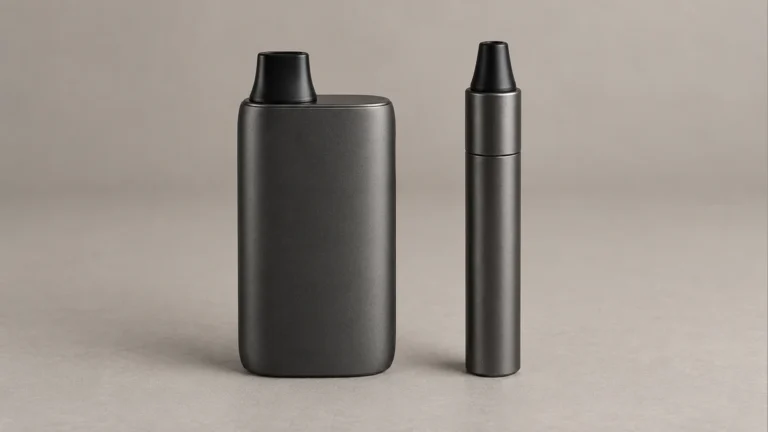
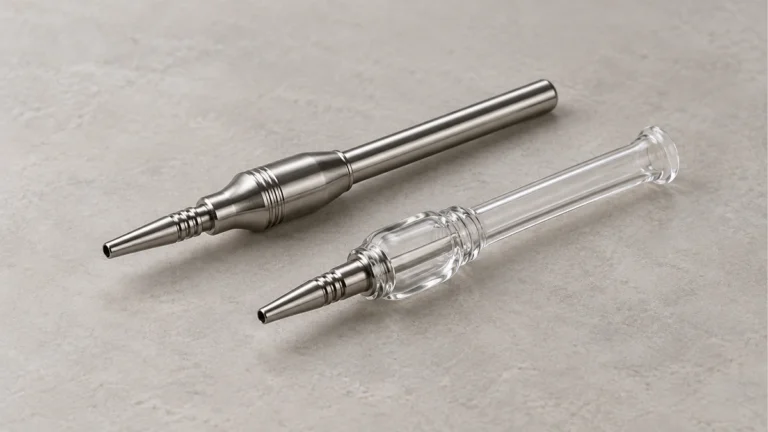
Treat a grinder catch as a small collection compartment, not a miniature processing lab. The screen, the amount of agitation, and the grinder’s cleanliness determine what falls through—and extra plant dust or metal debris cannot be fixed by giving the mixture a more impressive name.
Loose powder collected below a grinder screen is usually called kief. It does not become hash merely because it has been gathered in the bottom chamber or pressed between fingers. Hash making adds deliberate separation and consolidation steps, and the result depends heavily on starting material, cleanliness, and process.
⚙️ 1. A grinder catch usually collects kief, not finished hash
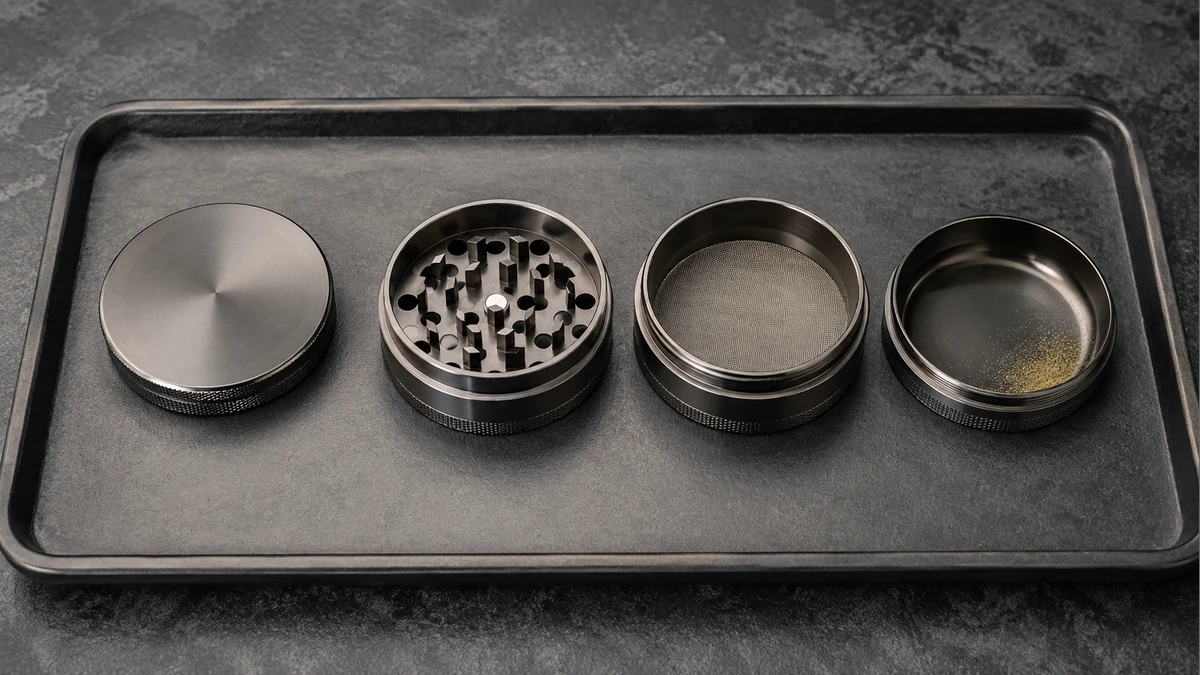
What collects in a three- or four-piece grinder’s bottom chamber is kief: the trichome heads that break off the flower during grinding and fall through a mesh screen into a catch tray. Trichomes are the small, resinous structures on the surface of dry herb, and grinding mechanically knocks a portion of them loose. Gravity and the screen do the rest, sorting out plant fiber and larger leaf matter while letting the finer trichome heads pass through.
Hash, by contrast, is a separate product made by deliberately concentrating those trichome heads through pressure, heat, water, or a combination of methods, then compressing the result into a cohesive mass. Kief is the raw material that hash making starts from — not the finished product itself. A grinder catch gives you the starting ingredient, not the end result, even when the pile in the tray looks compacted or clumpy.
This distinction gets blurry because kief doesn’t always sit as loose powder. Static, moisture in the air, and simple gravity over days or weeks of use can cause it to clump together in the catch tray. A clump is not the same thing as hash, even if it holds together when you pinch it. The material still lacks the intentional compression and consistent structure that separates a genuine hash product from powder that happened to stick to itself.
📌 2. Pressure changes texture before it proves identity
It’s common for grinder catches to develop a firmer, almost puck-like texture over time, especially in grinders with strong magnetic lids or tight-fitting compartments. Every time the lid closes, a small amount of pressure gets applied to whatever is sitting in the catch. Repeated over dozens of uses, that pressure can pack loose kief into a denser layer.
This is where a lot of confusion starts. A denser, more compact texture feels like progress toward hash, but texture alone doesn’t establish what something is. Pressing kief by hand between two fingers, or letting a grinder lid apply incidental force, changes the physical shape of the material without changing its composition. The powder is still unrefined kief — it’s just been squeezed into a different form.
Genuine hash-making techniques apply pressure in a controlled, repeatable way, often alongside heat, and the goal is to purge plant material and bind the trichome heads into a stable mass. Incidental pressure from a grinder lid closing shut is neither controlled nor purposeful. It’s a byproduct of normal use, not a production step. If the material still crumbles apart easily or contains visible plant fiber once broken open, it hasn’t gone through anything close to an actual pressing process.
⚙️ 3. Screen condition changes what falls through
The mesh screen between the grinding chamber and the kief catch does more work than most users give it credit for. Its hole size determines how much material passes through, and its condition over time determines what kind of material ends up in the tray.
A clean screen with intact mesh lets fine trichome heads fall through while blocking larger leaf and stem fragments. As a screen ages, gets bent, or accumulates buildup around its holes, that filtering becomes less consistent. Bent or torn mesh can let larger plant particles through alongside the kief, which changes the color, texture, and purity of what collects below. Anyone comparing catch results from a two-piece versus a multi-chamber grinder should keep this in mind — a guide to two-piece herb grinders explains why those simpler designs skip the screen and catch chamber entirely, which is worth understanding before assuming a two-piece grinder should be producing kief at all.
Users who want a more consistent catch often look toward grinders built specifically with a screen and a dedicated collection layer in mind. A breakdown of herb grinders with a dispenser covers how these designs separate ground material from kief collection while adding a controlled way to portion out flower, which is a different function from the sifting chamber but often gets confused with it.
Screen holes also clog gradually. As kief builds up around the mesh openings, less material passes through per grind, and what does pass through may be finer or coarser than what came through when the screen was new. If your catch results have changed noticeably compared to when the grinder was new, screen wear or buildup is a more likely explanation than any change in your flower.
📌 4. Coins add agitation and contamination variables
Many grinders, particularly ones marketed around kief collection, include a small metal coin or ball inside the kief chamber. The coin’s job is to add agitation: as the grinder is used and moved, the coin shifts around and knocks loose kief that might otherwise stick to the mesh or the walls of the chamber.
That agitation is genuinely useful for maximizing how much kief ends up in the catch tray rather than stuck to the screen. But it introduces its own set of variables worth thinking about. A coin sitting in a metal chamber accumulates the same buildup as everything else around it — oils, fine dust, whatever has been ground in that chamber over time. If the coin isn’t cleaned along with the rest of the grinder, it becomes a source of residue rather than a purely mechanical agitator.
There’s also a physical safety consideration that has nothing to do with hash quality: coins can occasionally jam a chamber, get misplaced during cleaning, or end up mixed in with the kief if a user isn’t careful when scraping material out. None of this means coins are a bad design choice — they’re standard in a lot of grinders for a reason — but they’re a maintenance item, not a passive component. Custom and specialty grinders sometimes handle this differently, and a look at custom tobacco grinder designs shows how chamber and coin configurations vary across grinder styles built for different herbs and different collection goals.
🧱 5. Color alone cannot grade the material
It’s tempting to judge kief quality by color the same way people sometimes judge other plant products — darker equals more refined, or lighter equals cleaner. Neither assumption holds up well in practice. Color in a grinder catch is influenced by several things that have nothing to do with concentration or purity.
Oxidation is one factor. Kief exposed to air over time can darken slightly, the same way many plant materials shift color with prolonged exposure. Contamination is another. If plant fiber, small leaf fragments, or dust from the grinding chamber mixes into the catch, the color can shift darker or take on a greener tint depending on what got through the screen. Neither of these changes reflects an increase in trichome concentration.
A lighter, more uniform color doesn’t automatically mean higher quality either. It might simply mean the screen filtered more consistently, or that the material hasn’t been sitting long enough to oxidize. Without a controlled way to measure trichome content, color is a visual cue at best and an unreliable one at that. Basing an assessment of “is this good hash” purely on how dark or how pale the material looks skips over the more relevant questions: how was it collected, how was it handled afterward, and was it ever actually pressed into anything.
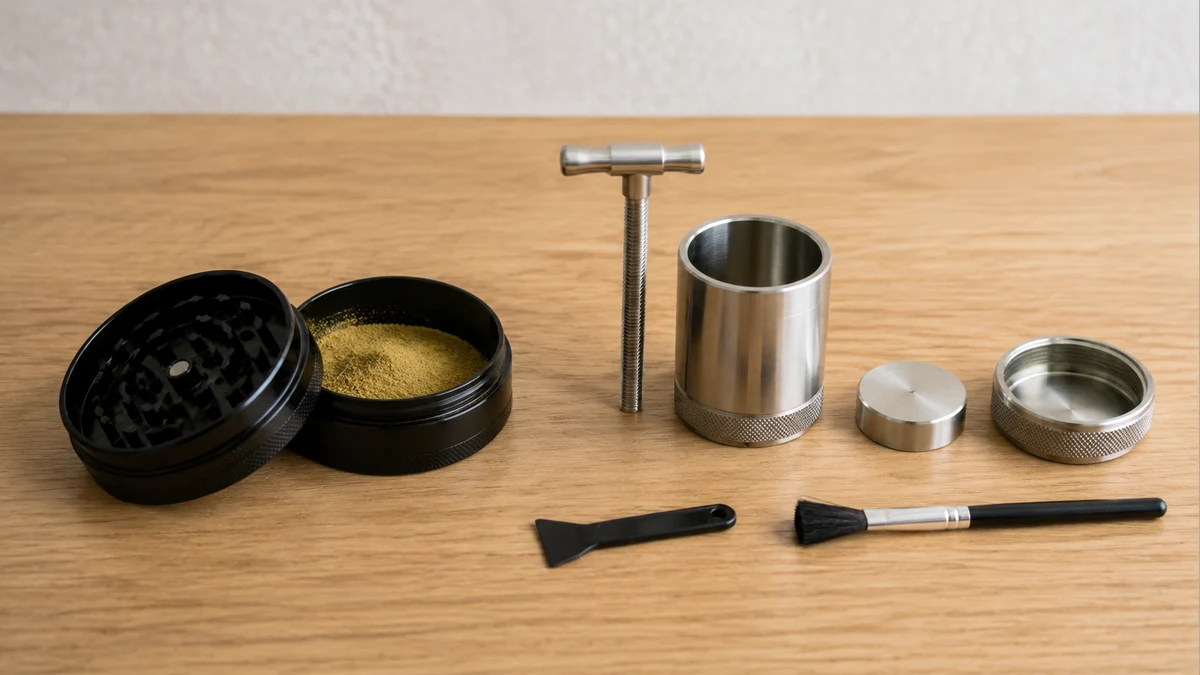
🧼 6. Clean the grinder before forcing more through
A frequent instinct when the catch tray seems to be filling slowly is to grind more material, more aggressively, or with more twisting force to push additional kief through the screen. This usually backfires. A screen that’s already coated in built-up residue won’t pass more material just because more pressure is applied above it — it just compacts what’s already stuck there and can push plant fragments through gaps that would normally block them.
Cleaning the grinder addresses the actual bottleneck. A screen clogged with dried resin restricts airflow and particle movement the same way any filter does when it’s overdue for maintenance. Removing the buildup restores the screen’s original filtering behavior, which means more consistent kief collection going forward rather than a one-time forced yield.
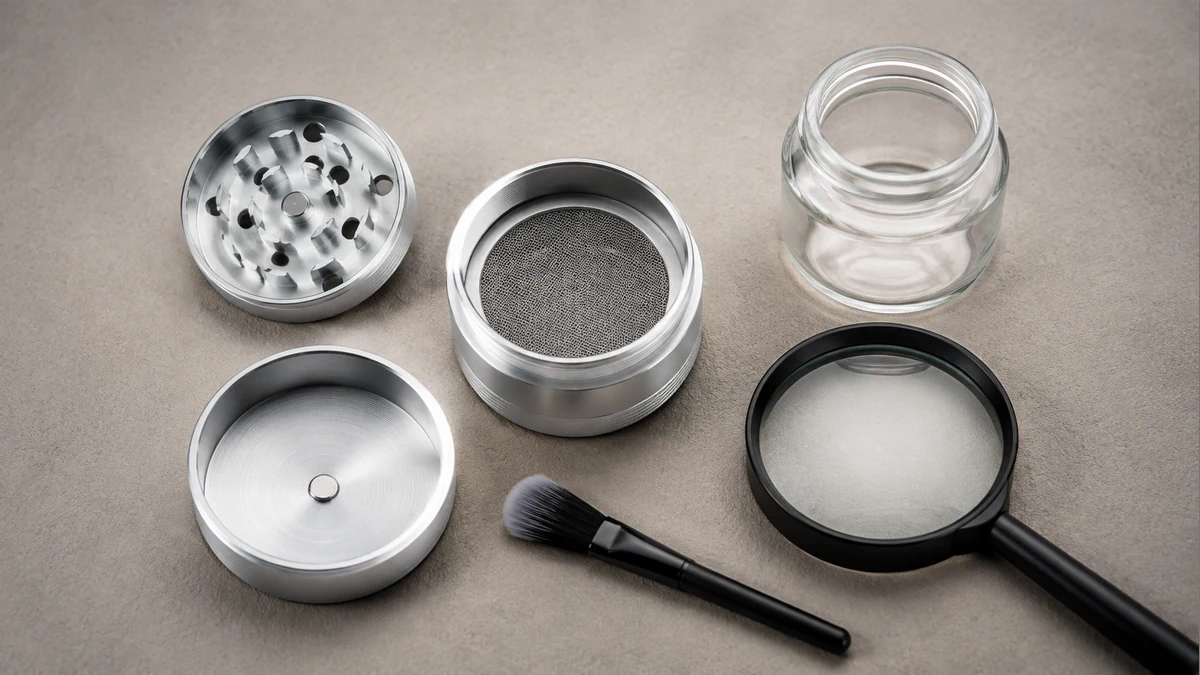
Basic maintenance for most grinders involves disassembling the pieces, removing any coin or agitator, and cleaning each chamber and the mesh screen separately. Isopropyl alcohol is commonly used to dissolve built-up resin on metal components, followed by thorough drying before reassembly. The mesh screen itself deserves particular attention since it’s the piece most responsible for what makes it into the catch tray. A soft brush can help work residue out of the mesh openings without bending or tearing the screen in the process.
Grinders with dispenser mechanisms or multiple moving parts, like the designs covered in the herb grinder with dispenser guide linked above, often have more surfaces where residue can accumulate, which makes a regular cleaning routine even more relevant to consistent results. Skipping maintenance in favor of grinding harder tends to produce more contaminated material, not more kief.
🧱 7. Store collected material dry and labeled
Once kief is out of the grinder and set aside, how it’s stored affects how it behaves later, whether it’s used as-is or eventually pressed into something else. Moisture is the primary concern. Kief exposed to humid air can clump, lose the loose texture that made it easy to work with, and become more prone to mold-favorable conditions if left in a damp environment for an extended period.
A small airtight container kept in a cool, dry, dark location is a straightforward way to preserve texture and limit degradation from light and air exposure. Clear glass jars are common, but if light exposure is a concern, an opaque or dark-tinted container works better for longer-term storage.
Labeling matters more than it might seem, especially for anyone collecting kief from more than one grinder or more than one type of flower. Kief from different sources can look nearly identical once separated from its original context, and without a label noting the source and collection date, it becomes guesswork later. A simple label with the strain or flower source and the date collected removes that ambiguity.
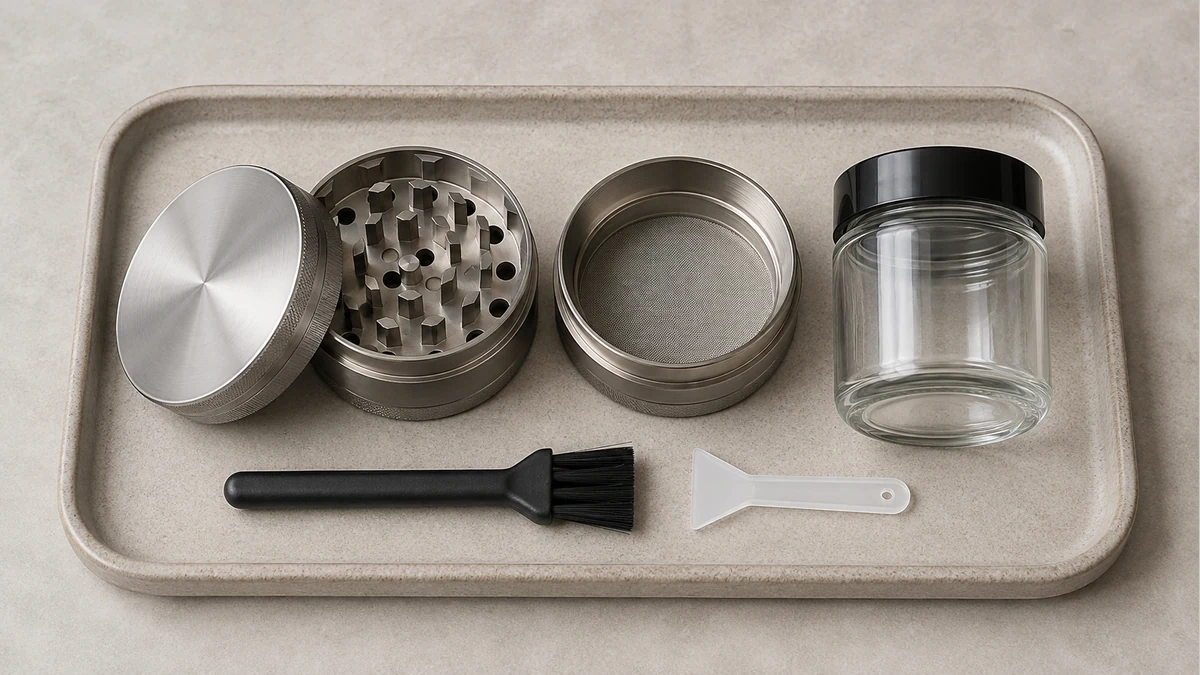
Keeping collected kief separate from finished hash, if you have both, also avoids confusion down the line. Storing them in different containers with clear labels reinforces the distinction that matters most here: one is raw sifted material, and the other — if you actually have it — went through a deliberate process to become something more than powder in a catch tray. Treating a grinder’s kief chamber as a passive collection point, not a production step, keeps expectations realistic and the material easier to use for whatever comes next.
🗂️ 8. Keep collection separate from processing
Use the lower chamber to collect what naturally passes through a clean screen during ordinary grinding. Empty it before residue compacts into the corners, and use only a tool that will not gouge the finish or deform the mesh. If the grinder sheds coating, shows a damaged screen, or produces visible foreign debris, retire the affected component rather than trying to sift the contamination out later.
Label collected material with its source and date if it will not be handled immediately. A small clean glass container makes changes easier to see than leaving the material against grinder threads. Keep it dry and follow applicable product and local guidance; the grinder itself does not establish purity or storage life.