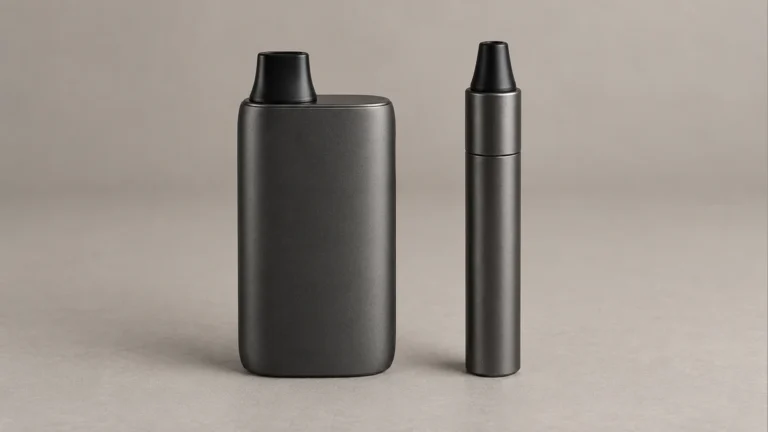
The practical question is therefore not simply whether heat can reach the wax. It is whether the complete glass and airflow path was designed to contain a changing liquid, apply heat predictably, and be cleaned without stressing the pipe. Dedicated concentrate hardware solves those problems more directly.
Wax can be heated in improvised ways, but an ordinary glass pipe is shaped around dry plant material rather than a concentrate that melts and moves. Once wax liquefies, gravity can pull it into a narrow airway, onto an uneven hot spot, or toward a cool section where it hardens and blocks the path.
🧼 1. An Ordinary Bowl Was Built to Hold Plant Material, Not Liquid Residue
A standard flower bowl is a shallow, open chamber with a carb hole or slits at the bottom. That design works because ground flower is a solid, porous mass. It sits still, air moves through it, and combustion happens at the surface while the bulk of the material stays put in the bowl until it’s spent.
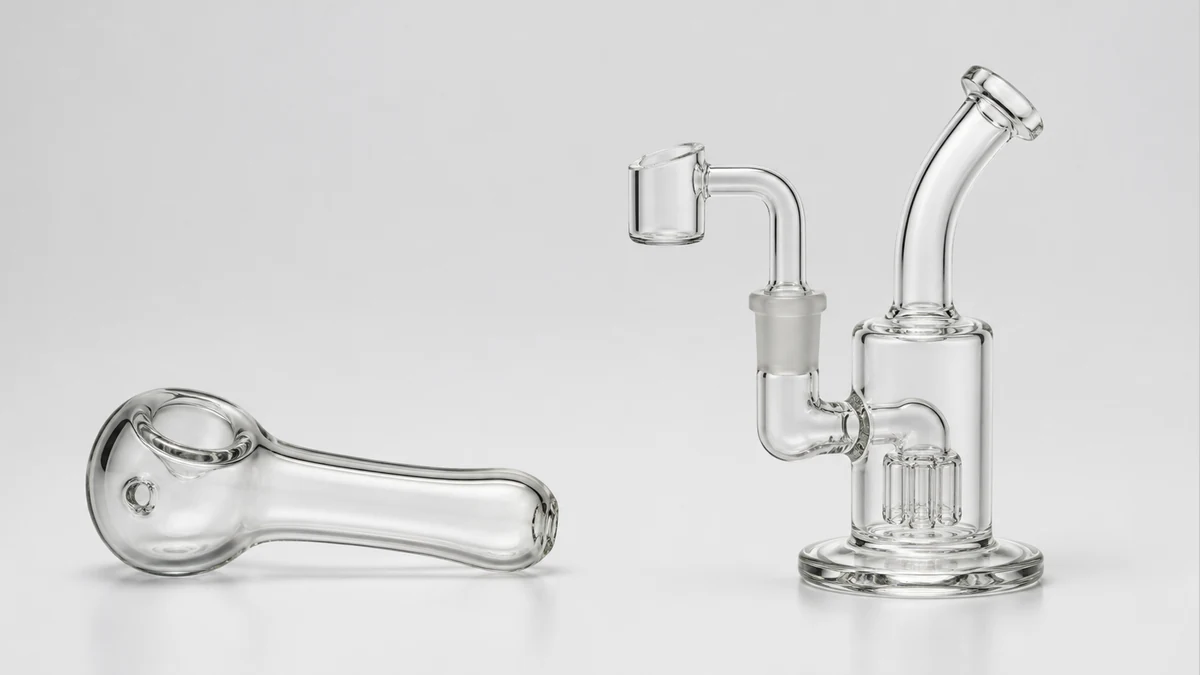
Wax doesn’t behave like that. It’s a concentrate that softens and liquefies well before it reaches combustion temperatures, and an open bowl has no real way to contain a substance that changes state. There’s no lip designed to hold a puddle, no cool surface built to catch runoff, and no airflow path shaped around a liquid rather than a solid. The geometry that makes a flower bowl efficient for dry herb is the same geometry that makes it a poor match for anything that melts.
📌 2. Wax Changes Phase and Follows Gravity
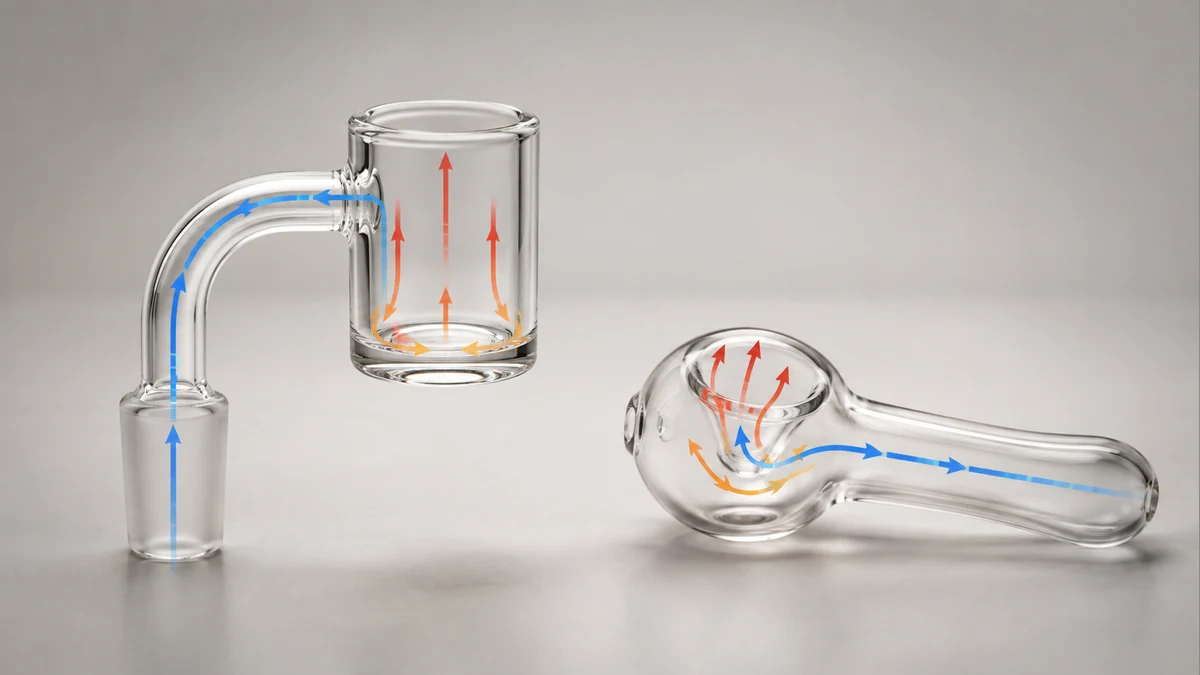
The moment a concentrate is exposed to heat, it stops behaving like a static chunk of material and starts behaving like a fluid. That’s not a flaw in the wax — it’s simply how concentrates are formulated to vaporize. The problem is that an open flower bowl has nothing to stop that fluid from doing what fluids do: spread, pool, and travel downhill along the path of least resistance.
In a flower piece, “downhill” usually means through the carb hole and into the stem or down toward the base. Once wax reaches those narrower passages, it doesn’t stay isolated. It can coat the inside of the stem, collect in low points, or drip toward the water chamber if the piece is a bubbler or small water pipe. None of that is reversible in the moment — you can’t easily lift melted concentrate back out of a joint the way you can tap ash out of a bowl.
This is also where waste becomes a practical issue rather than just a cleanliness one. Material that runs down a stem isn’t being consumed efficiently; it’s being lost to a surface it was never meant to touch, and it tends to leave a sticky residue that’s genuinely annoying to clean out of curved glass.
🔥 3. Direct Flame Isn’t the Same as Controlled Surface Heating
Flower pipes are lit with an open flame held at an angle over the bowl, which is exactly right for combusting dry plant matter. Concentrate hardware works on a different principle: a surface — usually a nail, banger, or bucket — is heated first, and the material is introduced afterward so it vaporizes off contained, evenly heated glass or quartz rather than sitting inside an active flame.
Holding an open flame directly against wax skips that entire step. There’s no buffer between the flame and the material, no way to gauge how hot the contact surface actually is, and no opportunity for the heat to distribute evenly before the wax hits it. Instead of gentle, gradual vaporization off a stable surface, you get a fast, uneven reaction driven by whatever the flame happens to touch first.
That mismatch is part of why direct flame on wax tends to produce more harsh, uneven results than dabbing off heated glass or quartz — the underlying physics of surface-heated vaporization and flame-driven combustion just aren’t interchangeable, regardless of what’s sitting on top of them.
📐 4. Improvised Inserts Bring Their Own Fit and Breakage Problems
A common workaround is dropping some kind of small metal or glass insert into the bowl to create a makeshift nail. On paper it sounds reasonable — add a hard surface, heat that instead of the glass directly. In practice, fit is the first obstacle. Flower bowls aren’t manufactured to any concentrate-specific dimension, so an insert that seems close in size often sits at an angle, wobbles, or doesn’t seat against the joint the way a purpose-built banger does.
That instability matters more than it seems. A loose insert can shift while being heated, and glass that’s heated unevenly — hot in one spot, cool a few millimeters away — is exactly the setup that leads to thermal stress cracks. Flower bowls are typically thinner-walled than dab nails or bangers because they were never engineered to handle the kind of repeated, direct heat concentrate use involves. Pushing a flower piece to work that way puts stress on glass that has no thermal cushion built in.
There’s also a practical downside beyond the piece itself: a bowl retrofitted with an improvised insert still doesn’t have anywhere for melted material to go except the same joint and stem that weren’t built for it. The insert might change how the material is heated, but it doesn’t solve the containment problem underneath it.
🧱 5. A Dedicated Concentrate Path Keeps the Material Contained
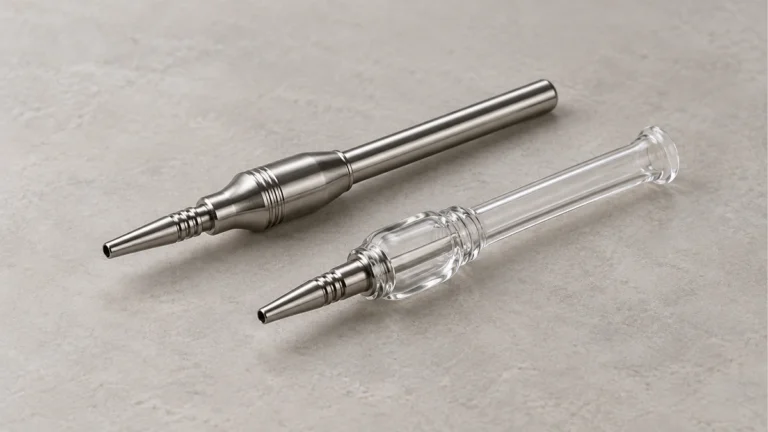
Purpose-built concentrate hardware solves these problems by design rather than by workaround. A banger or nail has a defined surface for the material to sit on, walls with thickness suited to repeated heating, and a joint connection sized for that specific function. Even simpler tools built specifically for concentrates — including compact options covered in this glass dab straw guide — are shaped around the idea that the material needs a contained, heat-appropriate surface rather than an open chamber.
For anyone who doesn’t want to invest in a full rig setup right away, there are also lower-commitment ways to handle concentrates without one, which is worth reading about in this breakdown of how to take a dab without a rig. The common thread across all of these options is that they’re built around containment and controlled heat transfer, not an open bowl and a lighter flame.
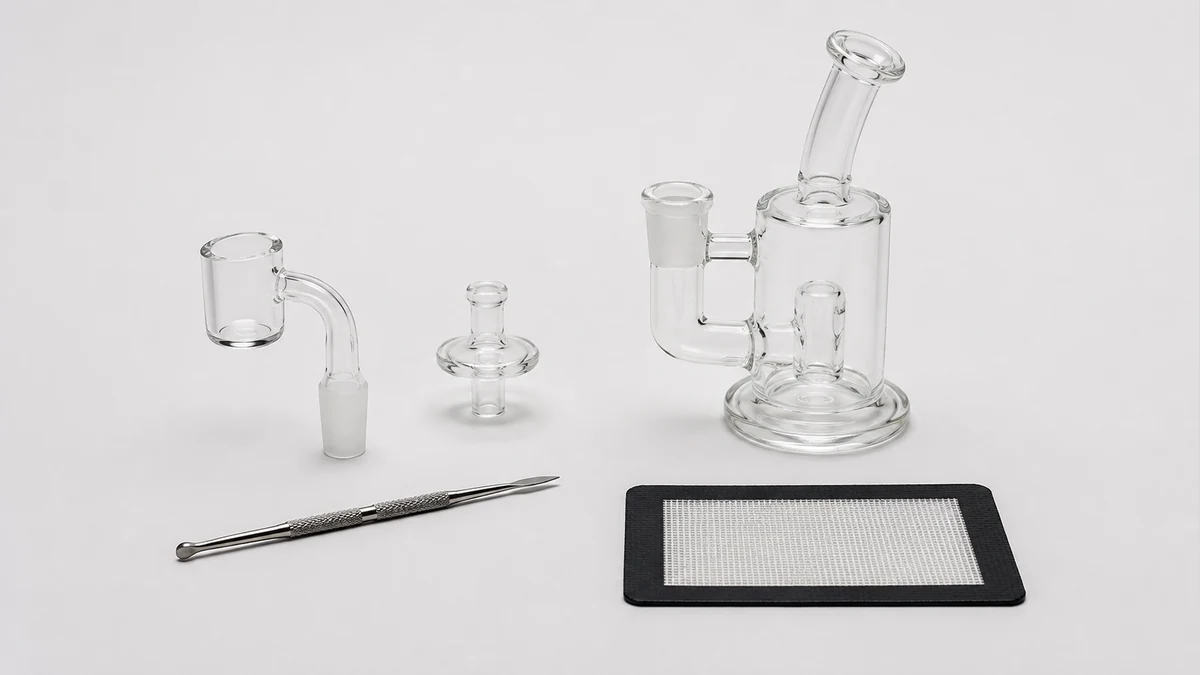
None of this is about brand preference or gimmicks — it’s about matching the physical shape of the tool to the physical behavior of the material. A flower bowl is open because flower needs airflow through a solid mass. Concentrate hardware is closed and surface-focused because concentrate needs a stable, contained spot to change state without running off somewhere it shouldn’t.
🔍 6. Inspect the Glass Before Changing How You Heat It
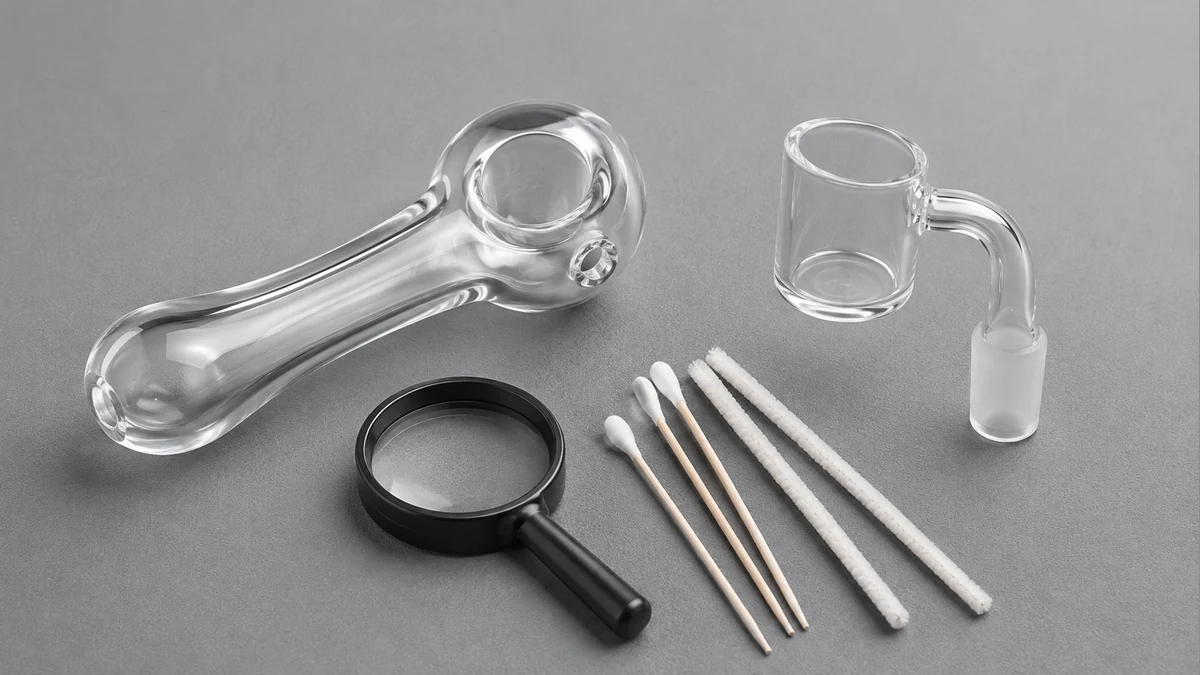
Before deciding how to use any glass piece with a different material than it was designed for, it’s worth actually looking at the piece itself. Existing cracks, thin spots near the bowl, or old thermal stress marks from previous use are all signs that the glass is already compromised in ways that won’t show up until it’s under new heat stress.
Discoloration or a cloudy buildup inside the bowl or stem is also worth noting, since it usually means residue has already accumulated in places that weren’t easy to clean — a sign that the piece has been asked to handle more than dry flower before. That kind of buildup doesn’t just affect appearance; it can affect how heat moves through the glass in that spot.
A quick visual check — good lighting, turning the piece slowly, looking at the bowl, the joint, and the stem — takes a minute and tells you a lot more than guessing. If a piece already shows stress marks or thin walls, that’s a piece to retire from any kind of heavier heating rather than one to push further with wax and an open flame.
🧱 7. Match the Tool to the Material Instead of Forcing a Substitute
The underlying question isn’t really whether a flower pipe can physically hold a piece of wax — it can, briefly. The real question is whether that setup manages heat, containment, and airflow in a way that matches what the material actually does when it’s heated. An open bowl, a direct flame, and a stem shaped for dry plant matter weren’t engineered with a phase-changing substance in mind, and no amount of improvisation fully changes that.
This is also where the broader comparison between dedicated concentrate rigs and flower-style pieces becomes useful context rather than an abstract debate. The differences covered in this look at dab rig vs bong design come down to the same core idea running through everything above: each style of glass is shaped around the material it’s meant to handle, from bowl geometry to joint size to how heat is applied.
None of this means a flower piece is a bad piece — it means it’s a specialized one, just like concentrate hardware is specialized in the opposite direction. Keeping the two separate isn’t about following an arbitrary rule; it’s a direct response to how differently solid plant material and liquefying concentrate behave once heat enters the picture. A dry bowl stays a dry bowl, a dab surface stays a dab surface, and the glass — along with whatever’s inside it — lasts longer for it.
If there’s a single takeaway worth carrying forward, it’s that hardware mismatches tend to show up as mess, waste, or stress cracks rather than as an obvious warning in the moment. Choosing equipment built for the material at hand sidesteps that entire category of problem before it starts.
🧱 8. Map the path the melted material would take
Before considering any hardware, look at it cold and imagine a small liquid droplet moving under gravity. In a dry-material pipe, the bowl often narrows directly into an airway. There may be no flat containment surface, no reclaim area, and no removable section that exposes the route for cleaning. A screen made for loose plant particles does not necessarily become a stable concentrate platform.
Dedicated concentrate designs generally separate the heated surface from the intake and give liquefied material a more intentional direction to travel. That does not make every banger, chamber, or insert compatible with every device. Joint size, gender, angle, material, cap system, and manufacturer instructions still have to agree.
📐 8.1 Cold fit is the first test for any removable part
Never force a makeshift cup, metal piece, or glass insert into a bowl simply because the diameter looks close. An insert can expand differently under heat, wedge against the wall, block airflow, or put leverage on a thin glass rim. Test only components explicitly intended for that hardware, and check their fit while clean, dry, and cold.
If a listing is vague about intended material or heat application, ask the manufacturer rather than inventing a procedure. A product photograph is not a compatibility specification, and a part that rests in place on a table may move once airflow, heat, and a handheld angle are introduced.
🧼 8.2 Cleaning access belongs in the buying decision
Concentrate residue cools into a film that can narrow small passages. Hardware that opens into a wide, visible chamber is easier to inspect than an ordinary pipe with a long bent airway. Confirm which components are removable and which cleaning methods are approved for their materials.
Stop using glass with a chip, crack, stressed joint, or residue in a place that cannot be safely reached. More flame is not a cleaning method, and abrupt heating or cooling can stress glass. The best substitute for purpose-built hardware is not a clever improvisation; it is waiting until the correct, compatible path is available.