A 510 cartridge has to move oil from the reservoir to the heating core through one or more openings in the core or post assembly. Those openings are easy to collapse into a single catalog word such as “4-hole core” or “large intake.” They should not be. Feed-hole count is how many openings are designed to let oil reach the core. Hole diameter, or another documented opening size, is a separate dimension on the same part. A brief that names only one of those facts is incomplete.
That distinction is not the same as where the cartridge draws air, and it is not the same as where the cart is designed to be filled. Bottom Inlet or Side Inlet: Where a 510 Cartridge Is Designed to Draw Air already identifies the airflow inlet. Center Airway or the Fill Opening: Where a 510 Cart Is Designed to Be Filled already identifies the fill path. This guide stays on the oil-feed openings themselves: how many there are, what size the drawing names, and what a listing photograph cannot prove.
🔎 1. Oil Feed Holes Are Not Air Inlets and Not the Fill Opening
The first cut is simple. Oil feed holes are the openings that are designed to let oil move from the reservoir to the heating core. Air inlets are the openings that are designed to let air enter the cartridge when it is drawn. The fill opening is the path used to put oil into the reservoir. Those three identifications can live on the same cartridge, but they are not interchangeable.
A hole that is visible near the 510 base may be an air inlet, a window onto the core, or something else entirely. Do not assign it a job from a silhouette. Bottom Inlet or Side Inlet: Where a 510 Cartridge Is Designed to Draw Air is the place to identify where air is supposed to enter. Center Airway or the Fill Opening: Where a 510 Cart Is Designed to Be Filled is the place to identify the fill path. This guide does not retell either subject. It only asks the buyer to name the oil-feed openings, and to keep that name apart from airflow and from filling.
The heating-core construction is a separate question again. 510 Ceramic Cartridge: Material and Hardware Guide already treats “ceramic” as a label that may refer to more than one part of a cartridge. A feed-hole description does not identify the core material, and a core-material description does not identify the feed openings.
🏷️ 2. A Hole-Count Label Is Not a Complete Feed Specification
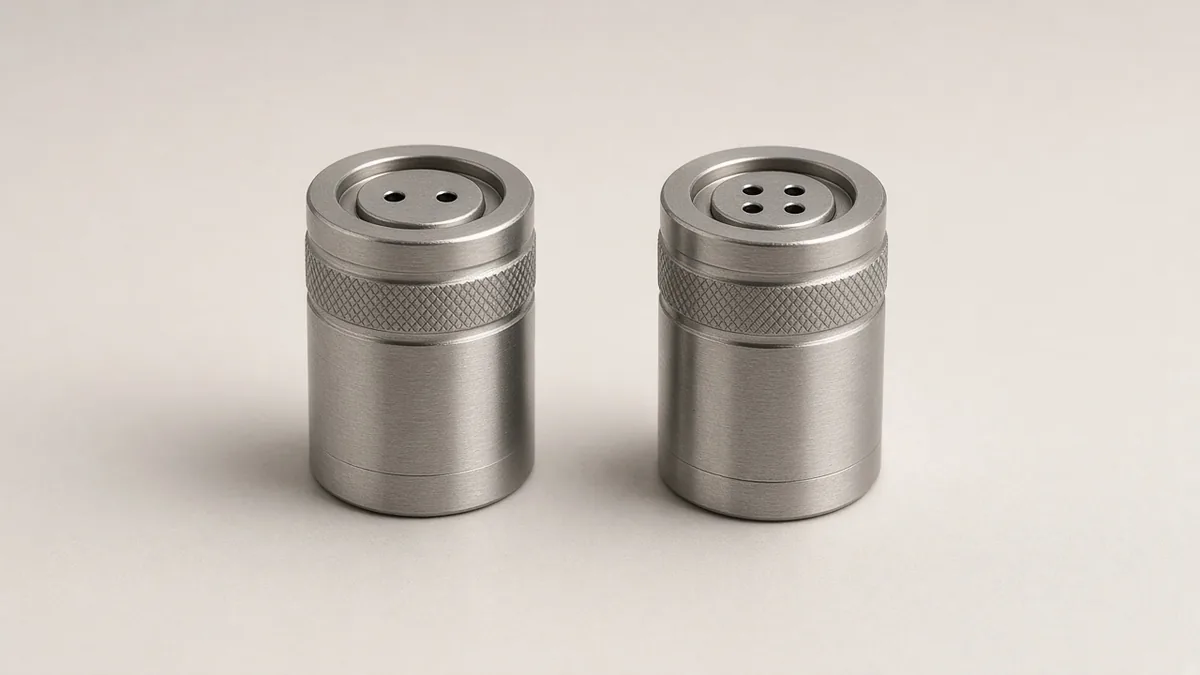
“Two-hole,” “four-hole,” and “large intake” are starting labels, not finished specifications. Count tells you how many openings the design is supposed to present. It does not tell you the diameter, the shape, the length of the opening, or which surfaces those openings cut through. Two cores can share a “four-hole” label and still differ in opening size, spacing, and how the holes meet the reservoir.
A diameter or size callout is also incomplete on its own. A single documented width does not tell you how many openings exist, whether they are round, oval, or square, or whether they are all the same size. If the listing says only “big holes for thick oil,” write that wording down and ask which count, which size, and which revision the drawing actually names. Do not treat a viscosity claim as a substitute for those dimensions. Oil viscosity is a project input that has to be stated separately; it is not a feed-hole identification.
Empty 510 Thread Cartridge: Hardware Fit Guide already treats empty-cart hardware and fit. Refillable Vape Cartridge Hardware Guide already treats refillability. Neither subject is retold here. A feed-hole identification can be correct on an empty sample and still leave fill, closure, and airflow questions to be answered on their own pages.
🧩 3. Counting Openings on an Empty Sample
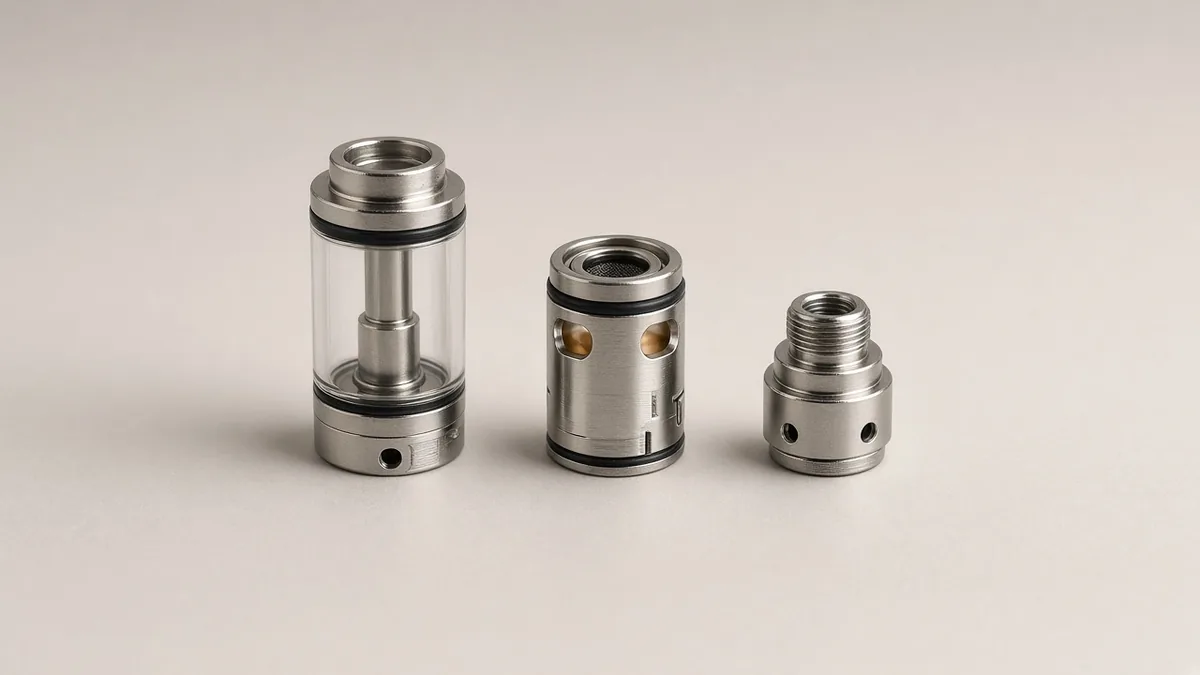
An empty sample is the right place to count openings that are actually present, not openings that a listing photograph suggests. Remove only the parts the version work instruction allows you to remove. Look at the core or post assembly from the reservoir side, and count the openings that are designed to let oil reach the heating surface. Record the count as a count, not as a preference.
The same view can be misleading if a window, a molding mark, or a blocked opening is counted as a feed hole. If an opening is painted, taped, or otherwise closed on the sample in front of you, record what you see and check the drawing before writing a purchasing line. Do not assume that every visible recess is an intended oil path.
If the mouthpiece is still seated, you may not be able to see the feed openings at all. Ceramic Mouthpiece or a Plastic Tip: What Sits on Top of a 510 Cart and Press-Fit Mouthpiece or a Threaded Tip: How a 510 Cart Is Closed After Filling already identify the top part and how it seats. Unseat the mouthpiece only as the version instruction allows. A closed cart is the wrong sample for a feed-hole count.
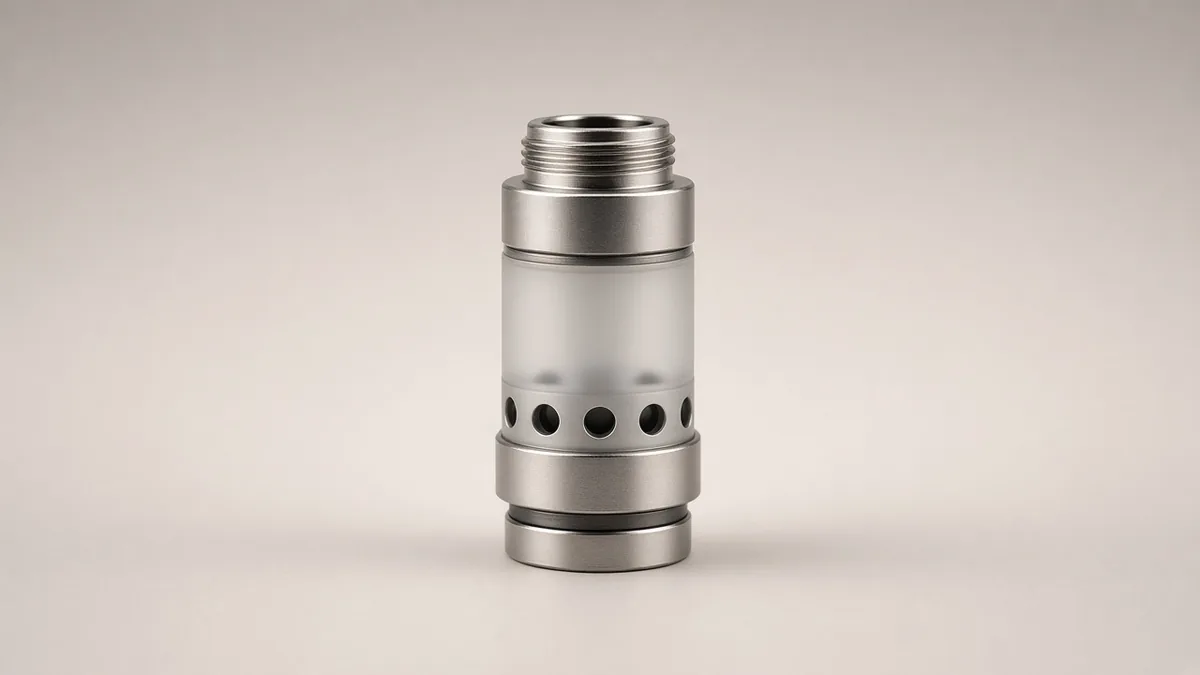
📐 4. Diameter and Shape Still Have to Be Named
Once the count is recorded, the size and shape of those openings still have to be named. The drawing should state a diameter or another documented opening size, and it should say whether the openings are round, oval, square, or another shape. If the openings are not all the same, the drawing should say so. A photograph that makes one hole look “large” is not a dimension.
Do not borrow a size from another cartridge that happens to share a hole count, a tank outline, or a “ceramic core” label. A size stated for one official or catalog example is that version’s documentation, not a default for the next cart in the same photograph style. If the brief will be reused across 0.5 ml and 1.0 ml bodies, or across more than one core revision, confirm the feed-hole callout on each version. Reservoir volume is a different identification and is not settled by hole count.
If the drawing and the empty sample disagree—if you count three openings and the drawing names four, or if a measured opening does not match the called size—stop and confirm the revision before the part is treated as approved.
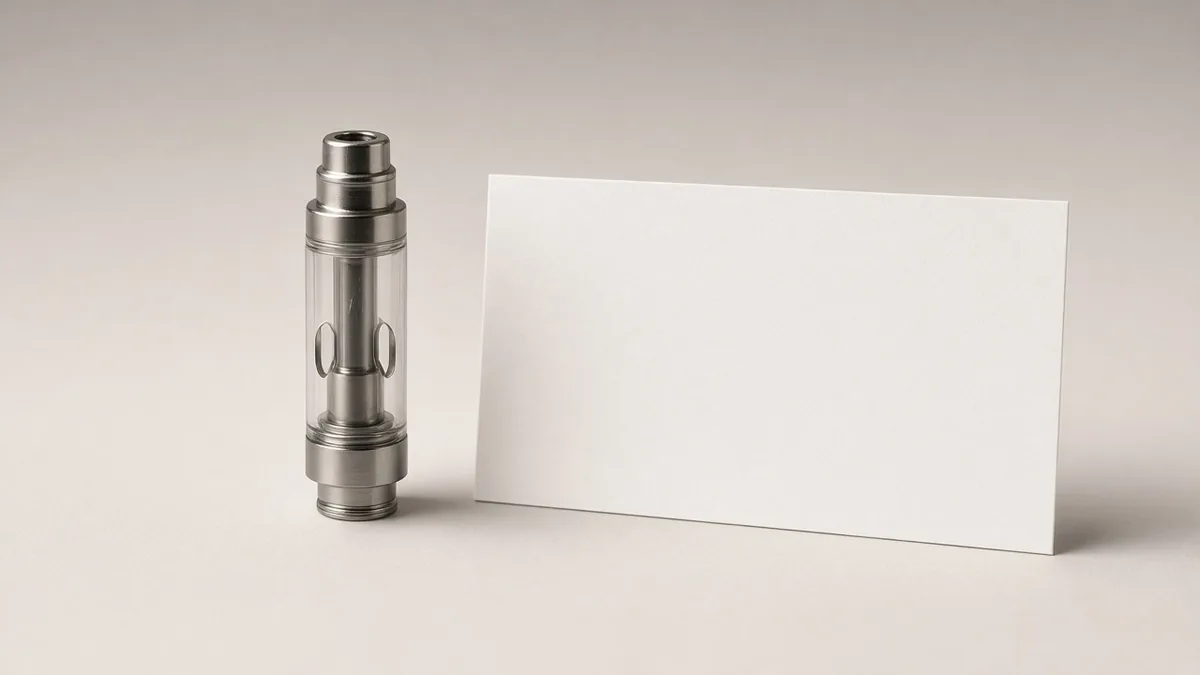
📷 5. What a Listing Photograph Can Hide
A listing photograph can support a feed-hole identification if the core is clearly visible, the openings are in sharp focus, and the listing names a count and a size that match the sample. Often it is not. A beauty shot of a filled cart hides the core completely. A cropped close-up can make a small opening look large, or can hide openings that sit on the far side of the post. A rendered cutaway may show a design that is not the revision in the quotation.
The photograph is also the wrong place to borrow a performance claim. A marketing image that says “works with thick oil” does not identify hole count or hole diameter. Those assignments come from the drawing and from an empty sample of the exact version. If the listing says “4-hole core” and shows only a closed cartridge, write both facts down and request an empty sample, a section or exploded drawing, and the size callout for the openings.
✅ 6. What to Check on a Sample, a Drawing, and a Brief
A one-line description a team can reuse should name both the count and the documented size, and should keep those facts apart from airflow and from filling. Example: “510-thread cartridge; oil feed is four openings, diameter as named on the version drawing; airflow inlet location and fill path are documented separately.”
On the empty sample:
- Identify the core or post assembly as the part that presents the oil-feed openings.
- Count the openings that are designed to let oil reach the heating surface. Do not count air inlets or the fill path as feed holes.
- Record the visible shape of the openings, and whether they appear to be the same size.
- Unseat the mouthpiece only as the version instruction allows. Do not force a closed cart in order to “discover” a hole count.
On the drawing and the current brief for that exact version:
- Record the feed-hole count and the documented size or shape callout.
- Record whether all openings share the same size.
- Keep airflow-inlet location and the fill opening in separate lines.
- If the drawing and the sample disagree, stop and confirm the revision before writing a purchasing line.
On the listing:
- Treat “2-hole,” “4-hole,” “large intake,” and “thick-oil core” as labels to reconcile with the sample and the drawing.
- A hole count or size stated for a named catalog example is that page’s documentation, not a default for the next cart in the same photograph style.
Questions worth sending with a sample request:
- How many oil-feed openings does this exact version use, and where are they located on the core or post assembly?
- What diameter or other opening size does the drawing name, and are all openings the same?
- Are those openings distinct from the airflow inlets and from the fill path?
- Which revision of the core does the quotation cover, and does the empty sample match that revision?
- If the brief mentions oil viscosity, which feed-hole count and size is actually specified for that project?
❓ 7. Short Answers a Brief Can Reuse
❓ 7.1 Identification Questions
What is an oil feed hole on a 510 cart? It is an opening designed to let oil move from the reservoir to the heating core. It is not, by itself, an airflow inlet or a fill opening.
Does a “4-hole” label complete the specification? No. Count is one fact. The documented size and shape of those openings are separate facts, and they have to be named on the drawing.
Can you infer the right hole size from oil viscosity? Not from a catalog phrase. Viscosity is a project input. The brief should name the intended oil separately, then reconcile that input with the count and size the drawing actually specifies.
Is a hole near the 510 base automatically a feed hole? No. It may be an air inlet or another opening. Identify the job of each opening on the sample and in the drawing.
Is feed-hole identity the same as core material? No. A ceramic or cotton-wick construction is a different identification. Name the core, then name the openings in that core.
Can a listing photograph settle count and diameter? It can support an identification if the openings are visible and match the sample and the drawing. It often hides size, far-side openings, and the revision. Confirm both facts on an empty sample and in the version drawing.