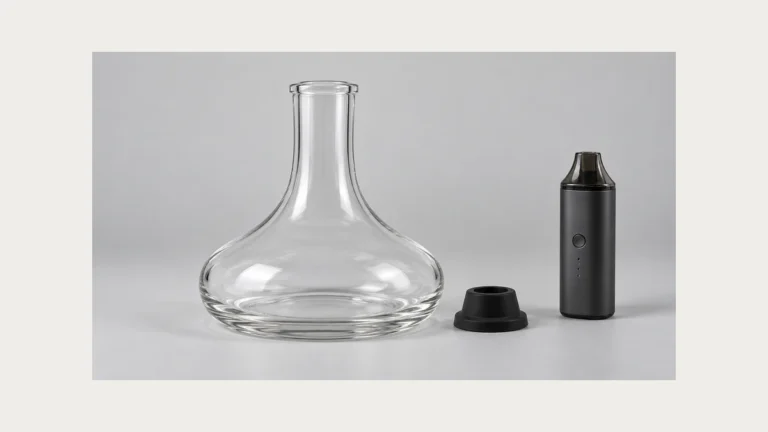
Hookah base replacement starts at the connection, not the silhouette. A similar-looking glass vase may use a different grommet, threaded collar or quick-lock arrangement, and a matching opening width alone does not establish compatibility. Identify the original hardware and connection generation before treating another base as a match.
That is especially frustrating when the original vase was a gift or has a distinctive decoration. You may be trying to preserve its appearance as well as identify a serviceable replacement. Those are separate questions. A photograph can help describe the pattern; it cannot establish what will mate with the stem you already own. Keep damaged glass out of the identification process rather than handling a broken neck to obtain measurements.
🔍 1. A matching silhouette is not a matching connection
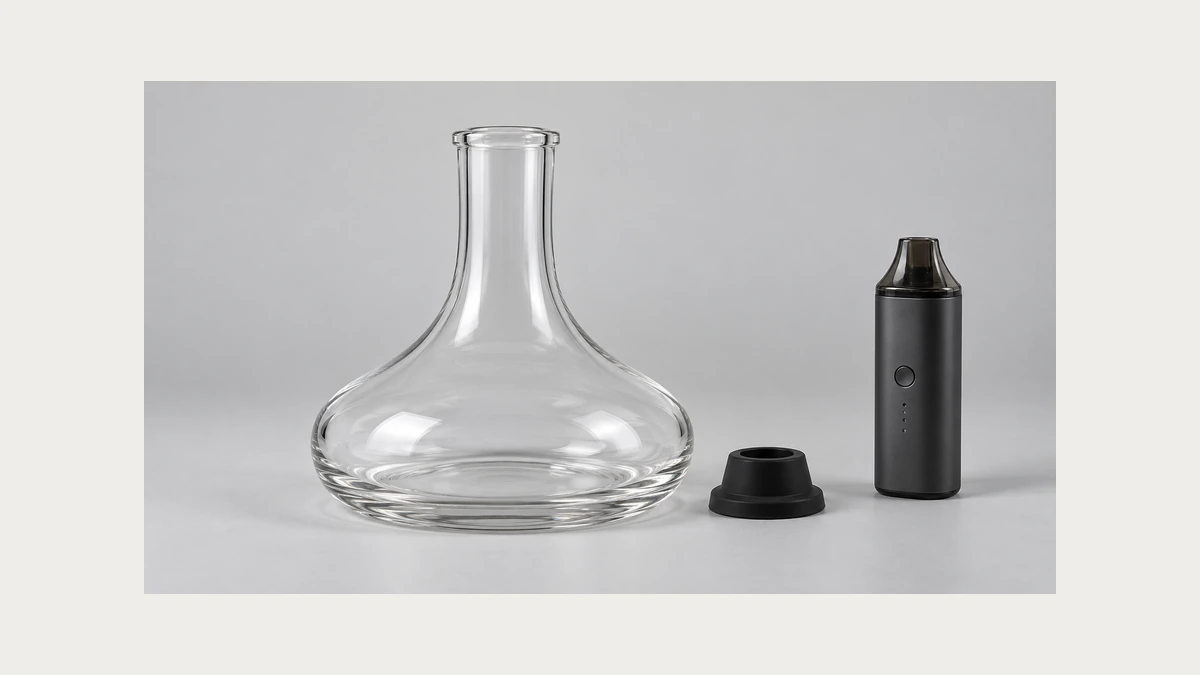
A vase’s color, overall height and outline can help you recognize a style. They do not specify its connection. Two bell-shaped bases can have different neck hardware, while two differently decorated bases may belong to the same documented connection family. Work from the manufacturer’s parts information where it exists, rather than treating a familiar outline as an engineering standard.
An owner in a January 2025 replacement-base discussion supplied a height and neck-opening measurement while looking for a particular design. Visible replies suggested familiar base styles, but those suggestions did not constitute measured compatibility confirmation. The useful distinction is between identifying the decoration and identifying the connection.
AOVAPE’s hookah-versus-bong explanation provides broader category context. It should not be read as a cross-compatibility chart. The fact that both categories include glass vessels does not transfer one system’s fittings, seals or part names to the other.
None of this means a wide or tall vase is automatically wrong — it only means that appearance has not yet told you anything about the connection itself. That requires a closer, physical look at the neck.
🔧 2. Identify grommet, threaded collar or quick-lock hardware
Start with the parts information or an existing photograph of the intact connection. Grommet, threaded and quick-lock are useful categories, but they are not a guarantee that every base fits neatly into one simple family. Some systems combine a mechanical connection with separate seals. Do not probe an unfamiliar or damaged neck to identify it.
🧩 2.1 Grommet
A grommet is a separate sealing component between the base and the stem assembly. In a grommet-based design, the maker specifies how that component belongs with the surrounding hardware. For example, MYA’s documentation for its own Petite base describes a thick black grommet between the base and stem and identifies particular compatible stems. This is a product-specific pairing, not evidence of one universal grommet size.
If the original grommet is missing, the plain glass opening is only part of the picture. Record that the seal is missing rather than assuming the new base should fit the bare stem. A seal’s color or general shape does not establish its material or dimensions.
🧩 2.2 Threaded collar
A threaded system has mating screw-thread components, often involving a collar at the vase neck. The presence of a collar matters as well as its connection to the matching body. A similar-looking metal ring does not establish the same thread or connection generation. Do not run a finger around a rim to search for threads, and do not rule out threaded hardware solely because the visible glass lip looks smooth.
🧩 2.3 Quick-lock
Quick-lock systems use a maker-defined connection that should be identified from its documentation, not from a guessed turning motion. The label does not specify one universal latch geometry. A useful example is WOOKAH’s own older threaded-vase range: the manufacturer explicitly says those vases do not match its newer quick-lock edition. Even within that one brand, the connection generation changes compatibility.
That example is a naming lesson, not a recommendation or a complete guide to the manufacturer’s models. For other hardware, obtain the equivalent connection or revision information from the maker. A brand name by itself can leave the most important distinction unresolved.
If the hardware type cannot be confidently identified from the neck alone, the base should be treated as unconfirmed rather than guessed at. Identifying the connection family is the first filter; it comes before any measurement is meaningful.
📏 3. Measure the opening without mistaking it for the seal
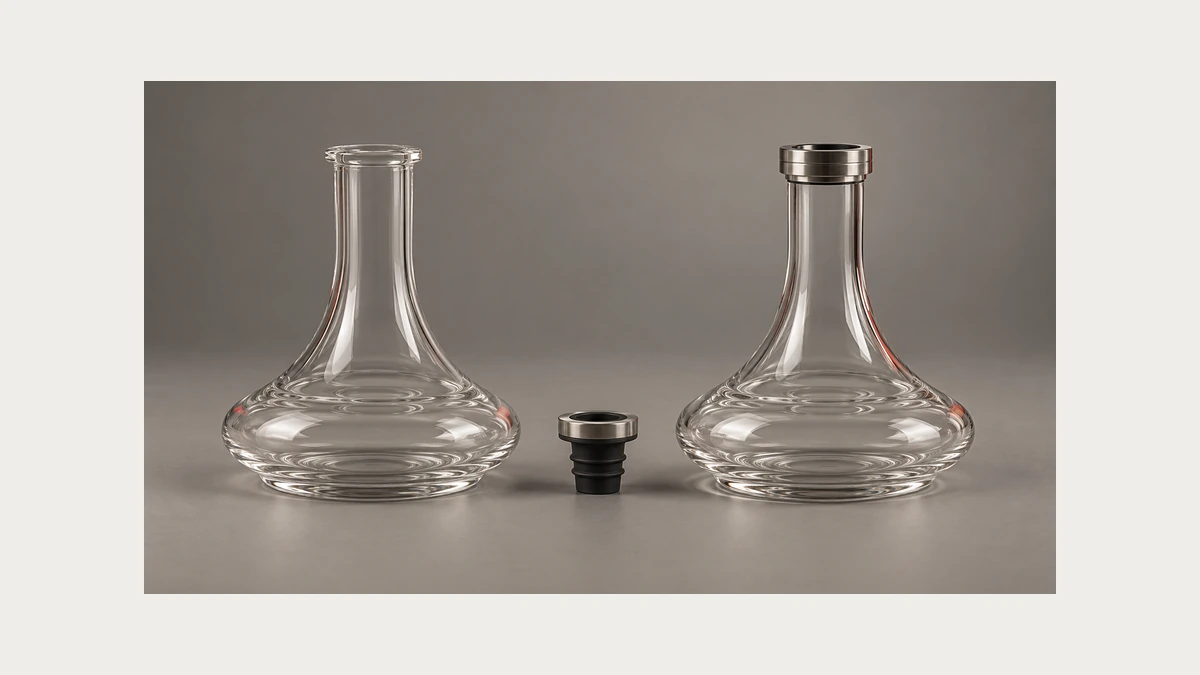
For intact, identified hardware, distinguish the inside opening from the outside of the neck and from any attached collar. “Neck diameter” is ambiguous unless you say which surface the measurement describes. A number taken across the outside glass cannot automatically be compared with a listing for the inside opening.
Similarly, the opening is not the seal. A base may have room for a component to enter while lacking the matching grommet or mechanical interface. Record the dimension and the presence or absence of the original seal separately. If the manufacturer’s specifications use a particular measuring point, keep that reference rather than inventing a different one.
Care information also remains product-specific. WOOKAH’s own care page separates body and vase care, specifies room-temperature water for its glass and warns against extreme or rapid temperature changes. That is not permission to wash another maker’s glass, coating or attached collar the same way. Check the instructions for the actual item before cleaning it for inspection.
A measurement does not resolve a dirty, obscured or damaged interface. If you cannot identify an edge clearly, record that uncertainty. There is no need to introduce an unsupported claim about thermal expansion or to clean more aggressively just to produce a precise-looking number.
Use the opening dimension as an identifier to compare with documented specifications, not as proof that the assembled connection will seal or support the stem. Compatibility includes the intended seal and connection parts, even when the measurement looks close.
📐 4. Downstem clearance and neck depth are separate dimensions
Owners describing a base to someone else — or comparing two bases side by side — often default to a single number, usually height or neck opening width, and treat it as sufficient. It isn’t. Neck opening diameter, outside diameter of the neck itself, and the depth to which a stem is meant to insert are three distinct measurements, and a base can match on one while differing on the other two.
The January 2025 discussion illustrates the limits of a height-and-opening description. It can help someone narrow a search, but it does not describe the internal depth below the connection. Overall height includes the base and its glass thickness; it is not necessarily the free space available beneath the stem.
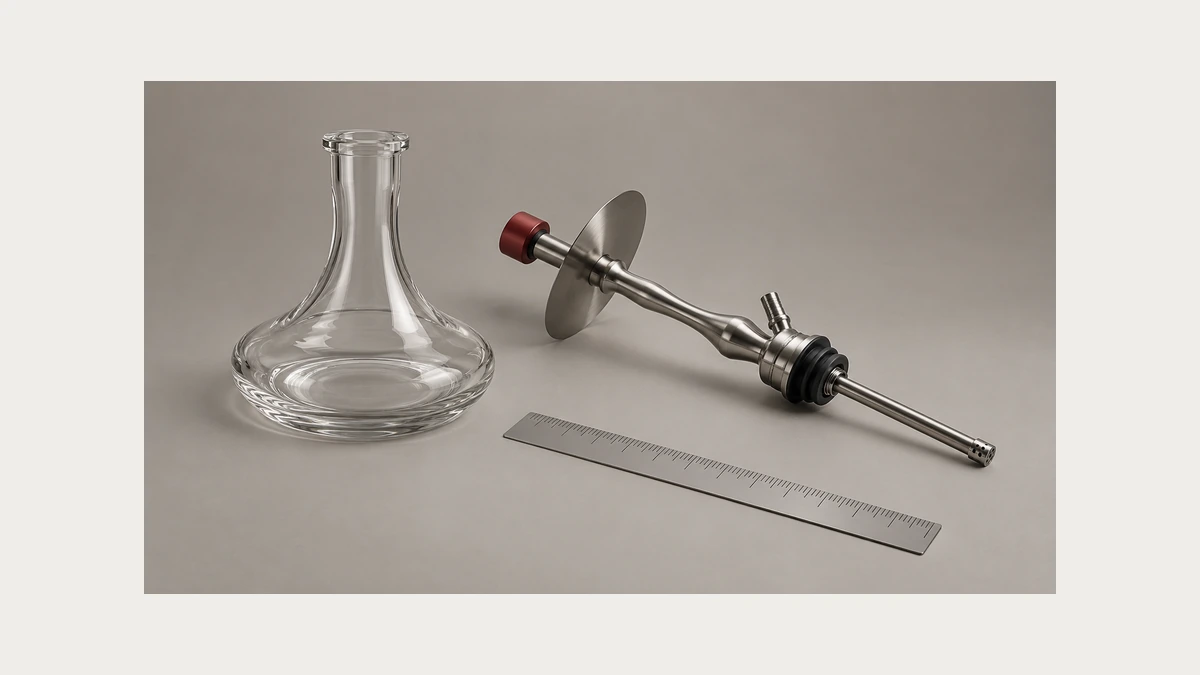
Think of an empty vase sitting beside a disconnected stem assembly. The relevant comparison begins at the maker’s seating reference, not automatically at the vase’s highest edge or the stem’s longest point. If the original documentation does not identify that reference, ask for clarification instead of subtracting unrelated dimensions and declaring a fit.
Keep the measurements separate in your notes: inside opening, outside neck or collar where relevant, intended seating depth, and the space needed below the seated connection. Some may need confirmation from the maker rather than direct measurement. Mark them as unknown when they are unknown.
The same part-name discipline appears in AOVAPE’s guide to identifying individual glass components. It helps with vocabulary, but it does not establish that a bong fitting and a hookah base use the same dimensional standard.
⚠️ 5. A base that sits crooked has not passed a fit check
A stem that drops into a neck and appears to sit there is not the same as a stem that has passed a fit check. Visual inspection — with the piece dry, empty, and resting undisturbed on a stable, flat surface — should include looking at the connection from more than one angle for any lean or visible gap between the stem shoulder and the base’s rim.
In a May 2019 discussion, an owner described a grommet that did not fit, another that allowed movement, and concern about the stem leaning. The thread did not establish a measured nominal-size match. It illustrates why “it goes in” and “it belongs with this base” are different claims.
Do not copy the thread’s tape-wrapping or seal-cutting suggestions as a fit solution. A photograph and an anecdote do not establish an acceptable amount of movement. If an identified assembly no longer sits as the maker specifies, leave it inactive and describe the changed fit to support.
The separate question of handling should not be used as a connection test. Do not lift an unfamiliar assembly by its top to see whether the base stays attached. If components are already separate, keep them supported separately during identification. An absence of visible movement while the item is standing still does not verify that the connection is intended to carry the base’s weight.
🚫 6. Broken glass and donor collars are not a shortcut
A September 2024 owner report describes a base falling and breaking after the assembly was handled from the top. Replies proposed removing a surviving collar, gluing components and using adapters. None of those comments provides manufacturer approval for the proposed replacement combination. Treat them as evidence of the owner’s unanswered serviceability question, not as a repair procedure.
A donor collar introduces another unknown: its own interface with the new glass. Matching the upper threaded connection would not establish that the lower bond, collar height or seating geometry is correct. Do not chisel out glass or transplant hardware based on a visual resemblance.
Broken glass is not a measuring aid. Do not handle a chipped neck or loose shards to recover an opening dimension. Use original specifications, an earlier clear photo of the intact item, or information from the manufacturer. If a requested dimension cannot be obtained without approaching the damage, leave it unconfirmed.
Donor hardware from an unidentified source — a collar or grommet of unknown origin fitted to a different base — also cannot be assumed compatible just because it physically fits into the opening. Unknown-manufacturer parts remain unconfirmed hardware until there is a basis for matching them to a specific, identified connection type and generation, not simply because they happen to slide into place.
📸 7. Send useful fit information instead of guessing from a photo
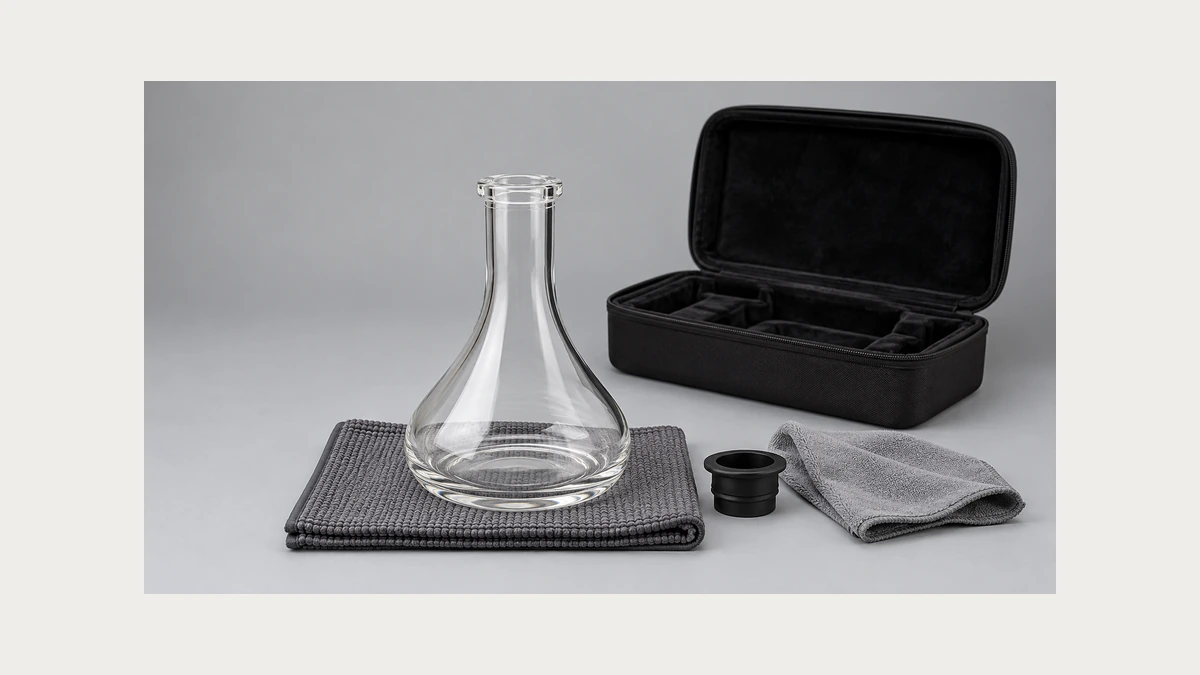
When an owner wants help identifying their own hardware — whether from a seller, a knowledgeable friend, or simply for their own records — a single photo of the whole assembled piece is rarely enough. Three more targeted photo descriptions tend to be far more useful than one general shot, though none of them substitutes for a hands-on check.
🧩 7.1 A straight-down view into the empty neck
For an intact, empty vase with the removable components already separated as permitted, a view of the neck can show the visible connection surfaces. Do not reach into a damaged opening or disassemble fixed hardware to make that photograph possible.
🧩 7.2 A side profile of the connection area
A level side view of an intact neck helps distinguish its outer profile from the surrounding body. Include the connection area rather than only the decoration. A visible edge in a photograph is still not a measured thread specification or a seal test.
🧩 7.3 A scale reference next to the opening
A ruler placed beside an intact object can provide rough scale, but perspective and camera angle limit precision. Label any independently recorded dimensions with units and measuring points. Do not present an estimated photo dimension as a factory specification.
Useful identification photos describe the part rather than prove compatibility. They cannot confirm a seal, reveal every internal surface or establish the strength of an attached collar. Keep the vase and loose components dry and supported as appropriate to their own care instructions while awaiting an answer.
Where several pieces are stored together, AOVAPE’s display-case guide discusses shelf space and support for dry glass. It is background about storage, not a validation of an assembled hookah base connection.
For an unlabeled base, send the maker whatever identifiers remain available: the original body or stem model, connection generation if known, photos of intact components and separately labeled dimensions. State which parts are missing. That gives support a defined compatibility question without turning an approximate neck measurement into a promise that the replacement will fit.