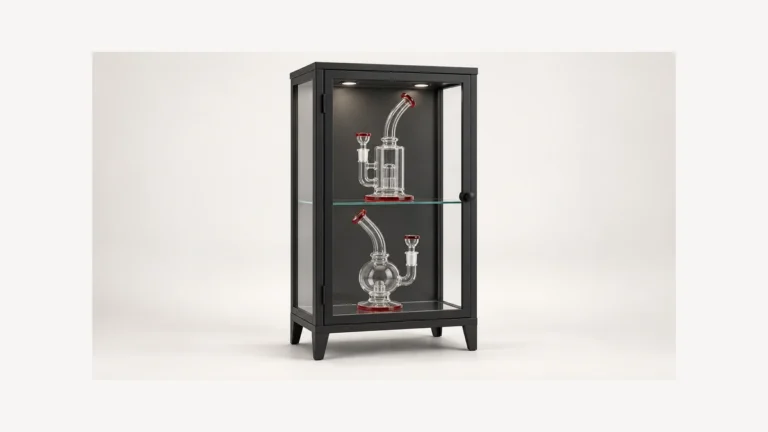
A display case for bongs needs to accommodate the stored glass, the door movement and the cabinet’s own shelf limits. A piece can fit beneath a shelf while still being awkward to take out through the opening. A cabinet can also look spacious without being rated for the weight placed inside it. Begin with those separate questions rather than assuming that a closed door completes the storage job.
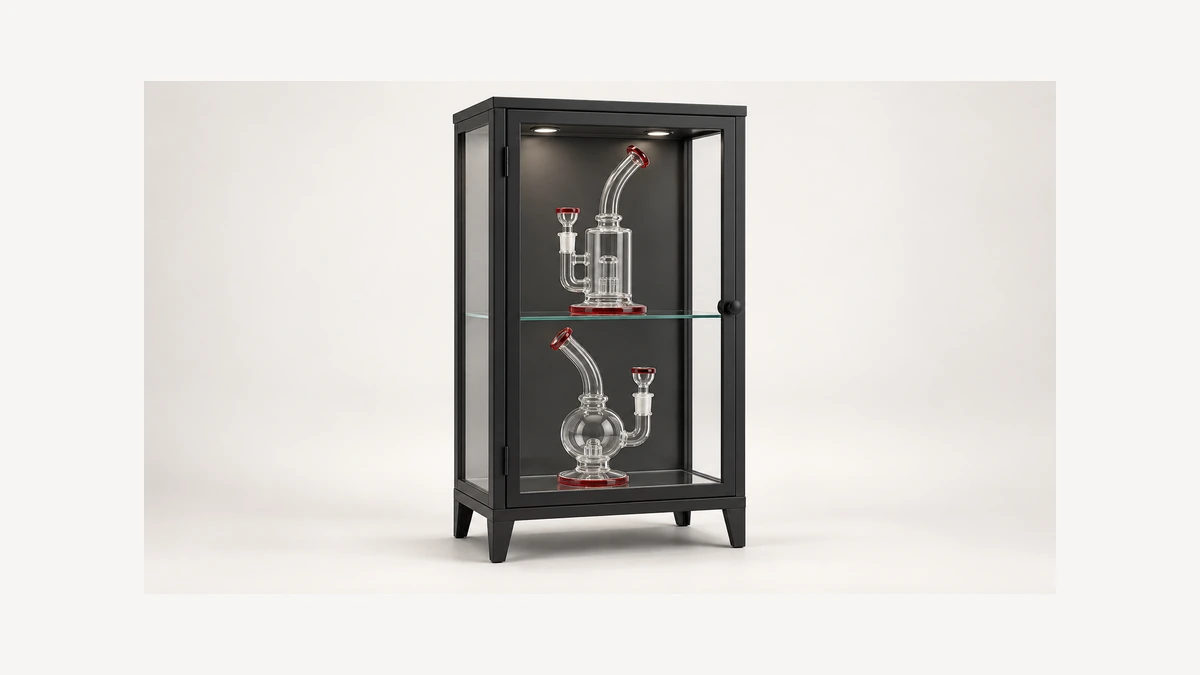
🚪 1. Start with the tallest complete piece and the door path
Measure the configuration actually intended for storage. If the equipment instructions call for a removable fitting to be kept separately, use that configuration rather than a photograph showing the piece fully assembled. Record the tallest point, the widest base and any fixed side projection. The description should make clear which parts are included, since a single height figure does not describe the complete outline.
Compare that outline with the accessible opening, not only the shelf behind it. A door frame, hinge or track can occupy space along the route in and out. As a hypothetical example, a piece may sit comfortably inside a compartment but require an awkward sideways movement past the door edge. The useful observation is that the access route differs from the resting space; do not force the glass through to prove it fits.
📏 1.1 Record the route as well as the final position
Keep access measurements distinct from resting measurements in your notes. For example, the space between two shelves may differ from the clear opening beside the hinge. A cabinet description giving external width and height does not necessarily provide either of those internal measurements. Ask for the dimension that answers the obstruction you have identified, rather than assuming an outside measurement describes usable space.
A simple sketch can identify a side projection which a front-facing photograph hides. It need not calculate a force or establish a minimum safety distance. Its purpose is to show which part is close to which surface. If an opening appears too narrow, do not turn the glass sideways through a series of trial positions to discover a route by contact.
Also note whether the door can reach its documented opening position in the cabinet’s actual location. A nearby wall, chair or other furniture can change the available access without changing the cabinet itself. Keep that environmental difference separate from a claim that the manufacturer misstated the dimensions.
⚖️ 2. Shelf space is not shelf load capacity
The footprint answers where an object sits. The load specification answers what the shelf is intended to support under the manufacturer’s stated conditions. These are different quantities. Do not infer a shelf rating from its apparent thickness, the amount of empty space around the glass or the fact that another owner displays more pieces on a similar-looking unit.
For a specific example, IKEA’s US BLÅLIDEN listing gives a maximum of 7 pounds per shelf. That figure belongs to the identified cabinet, not glass cabinets generally. Check the actual cabinet documentation and the load of everything stored on each shelf, including organizers or added objects. Do not treat a whole-cabinet figure as a per-shelf allowance, or the reverse.
🛠️ 3. Cabinet installation belongs to its own instructions
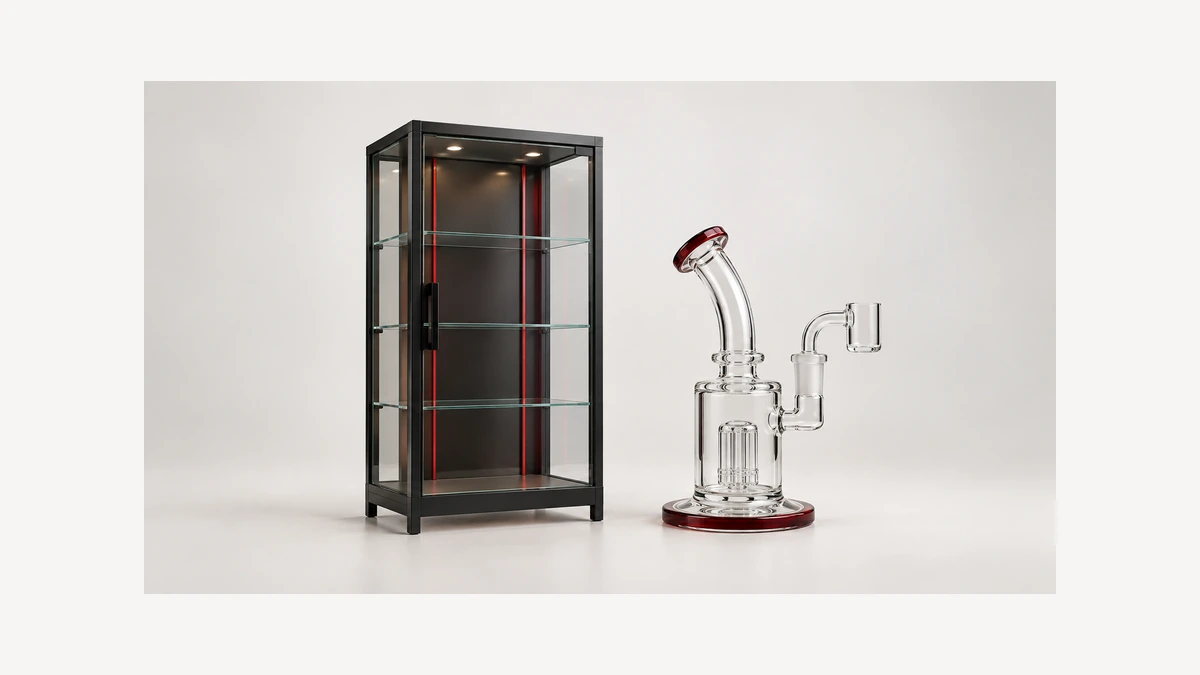
Installation is a separate furniture task. The IKEA listing cited above requires secure anchoring and directs owners to seek professional advice when the wall-fixing situation is uncertain. Follow the instructions for the actual cabinet and wall rather than copying an attachment from a collection photograph. The glassware being displayed does not determine which fastener or installation method is appropriate.
An adjustable shelf is not permission to modify the cabinet. Use only the shelf positions, supports and installation arrangements specified by its maker. If a desired arrangement requires drilling, substituting a shelf or moving a structural part, the original instructions no longer answer that question. Seek cabinet-specific guidance rather than treating those changes as ordinary display organisation.
🧩 4. Separate small fittings from tall glass
Loose fittings can be visually lost beside taller bodies. Give each identified component its own intended storage place, separate from the space needed to lift a larger piece. In a display-shelf discussion, a commenter described a separate case for smaller items. That account illustrates an organisational question, not a validated protective arrangement.
A mixed collection can contain parts that look similar without being interchangeable. Our guide to identifying glass components addresses the naming problem. Keep the model and part identity with the care record, rather than using an empty socket in another piece as a convenient storage slot. A component’s ability to sit there does not establish an intended match.
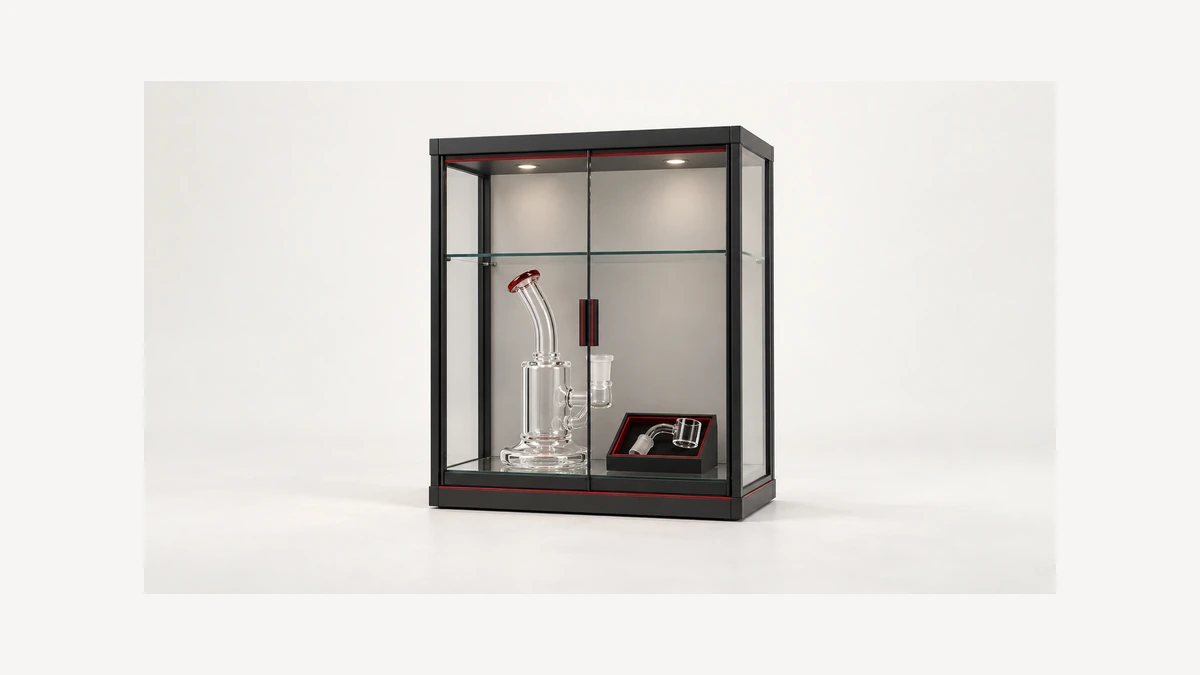
🌬️ 5. A closed door does not promise an airtight enclosure
A door separates the display space from the room, but closure is not the same as a documented seal. Do not label a cabinet dustproof, airtight, odour-proof or pet-proof because it has glass panels. Those are additional claims which need their own support. Gaps, openings and the maker’s stated purpose matter more than the impression created by a tidy photograph.
A shared-cabinet discussion includes an owner explaining that a cat prompted the move away from an open shelf; comments also raised dust and grouped-breakage concerns. Those are individual concerns, not evidence of a cabinet’s protective rating. Our guide to individual opening covers addresses a different boundary: a cap on a piece does not seal the surrounding cabinet, and a cabinet does not replace that piece’s own care instructions.
🧽 6. Keep cleaning and drying outside the display task
Treat the display as the destination for equipment already prepared for dry storage according to its instructions. A closed cabinet is not a drying appliance, and its appearance does not establish whether moisture remains inside a chamber or removable part. Do not set a universal drying timer from the cabinet size or assume that adding a light or fan would validate a different drying procedure.
Cabinet care and glassware care remain different tasks. A cleaner specified for the cabinet’s door is not automatically specified for the equipment inside it. Remove objects only in accordance with their handling instructions and the furniture instructions; do not spray a loaded display in a way that introduces an unidentified treatment onto the contents.
For a concrete hypothetical example, an owner finishes the documented care of a loose glass fitting while a different cloth has been used on the cabinet frame. Mixing the cloths would lose the distinction between the two care methods. Keep supplies identified and separate, and do not use the display shelf as a temporary place for wet cleaning tools.
If a compartment contains equipment awaiting care, keep that status clear in the private storage record rather than assuming every object behind the same door has been prepared identically. A display photograph is a momentary view, not a cleaning schedule. The individual equipment instructions still determine what needs to happen before it returns to dry storage.
🧩 6.1 Keep the display arrangement distinct from the care workspace
A shelf can become crowded during cleaning even when its normal display is sparse. Taking several components out, placing them temporarily at the front and then returning a tall body creates a different arrangement from the finished display. Plan a separate clear place for parts undergoing their own documented care, so the cabinet opening is not serving as a temporary staging area.
Consider a hypothetical collection with two tall glass bodies and three small removable fittings. In the intended arrangement, the fittings have identified positions and each body has an unobstructed route out. During tidying, the small parts are moved into that route. Nothing about the cabinet dimensions has changed, but access is no longer the same. Restore the intended arrangement before treating the original layout description as accurate.
This example does not assign a universal spacing distance or prescribe a packing system. It shows why an empty-looking gap can already have a function: it may be the route needed to remove another object. Filling that gap with a temporary cloth, an organizer or a spare component can change the task without adding much apparent bulk.
Keep the cabinet manufacturer’s documents separate from the equipment care records, but make both identifiable. A later question about a door, shelf support or glass fitting should go to the relevant maker with the relevant model. A collection photograph alone cannot recover those distinctions once the packaging and part names have been discarded.
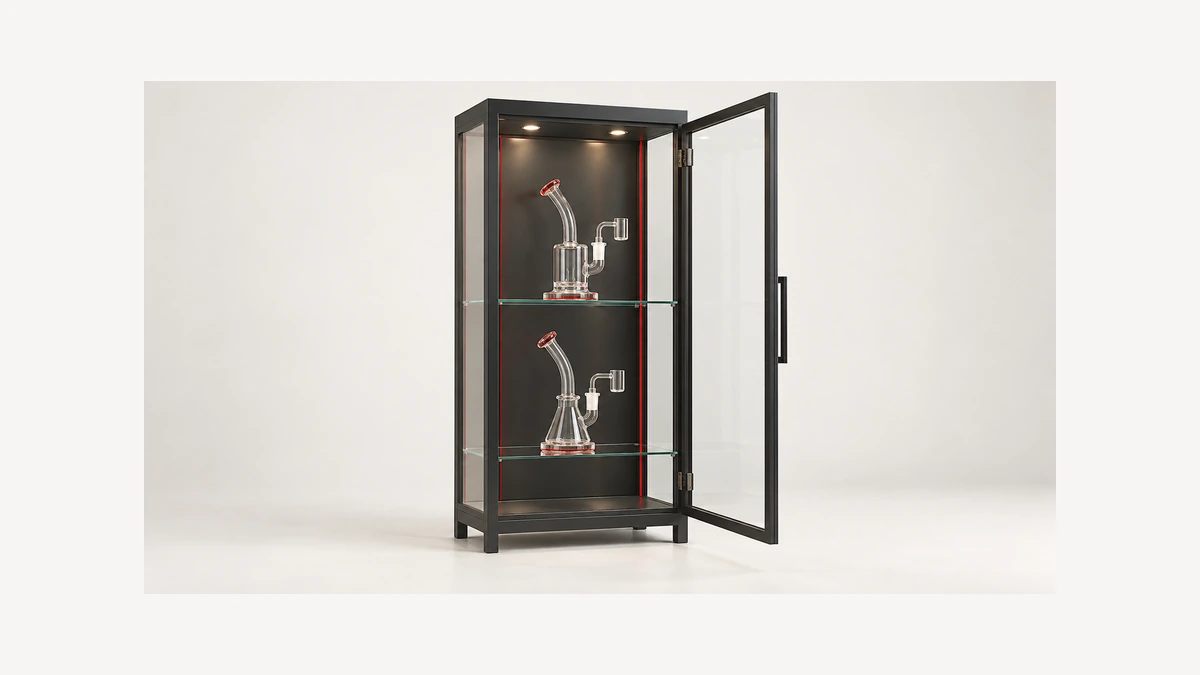
👐 7. Make access simpler than reaching through a crowd
In a storage-layout question, the owner described glass crowded on a lower bookshelf and considered other display arrangements. The practical issue is access: can the intended piece be taken out without reaching through or shifting a group of other glass objects? This concerns the stored outline and hand space, not a recommendation to install a wall shelf.
A hypothetical shelf can look orderly when viewed through the door yet be difficult to use because the front row blocks the rear row. Keep a clear route for the objects that need ordinary handling. Do not move display-only glass to an inaccessible height simply to make the front row look cleaner. For equipment leaving the room or home, our travel-case explanation concerns a separate enclosure and packing task, not the cabinet’s shelf layout.
Access can change when a single object is added. Reconsider the route rather than squeezing the new piece into the last visible gap. The gap may be part of the hand space needed for something already there. Organisers, trays and decorative items occupy that same space, even when their footprint looks small in comparison with a tall glass body.
Keep any cabinet-specific installation and shelf information available after rearrangement. A later owner should not have to infer the shelf rating from the collection that happened to be displayed before. If the cabinet or a loose shelf is unidentified, its capacity is an unresolved information gap, not a number to estimate from appearance.
🔍 8. When a cabinet or shelf changes condition
A changed shelf edge, damaged panel or door that no longer moves as intended calls for the furniture maker’s guidance. IKEA’s product warning specifically addresses damaged edges, scratched surfaces and side impacts for its glass. Do not treat an unfamiliar mark on any cabinet as harmless merely because the shelf still appears to hold its contents.
Inspection has limits. A visible change can be reported without claiming that it caused an internal weakness or predicting when a panel might fail. Do not tap, flex or load a suspect shelf to test it. If the cabinet cannot be used within its instructions, stop treating it as ordinary display storage and follow the maker’s guidance for the condition described.
A useful display arrangement leaves room for the actual stored configuration, stays within the identified cabinet’s limits and allows ordinary access without moving a crowd. When asking about a fit problem, distinguish the resting compartment from the route through the door. When asking about a load or condition problem, identify the cabinet and shelf. Those are separate questions even though they concern the same collection.