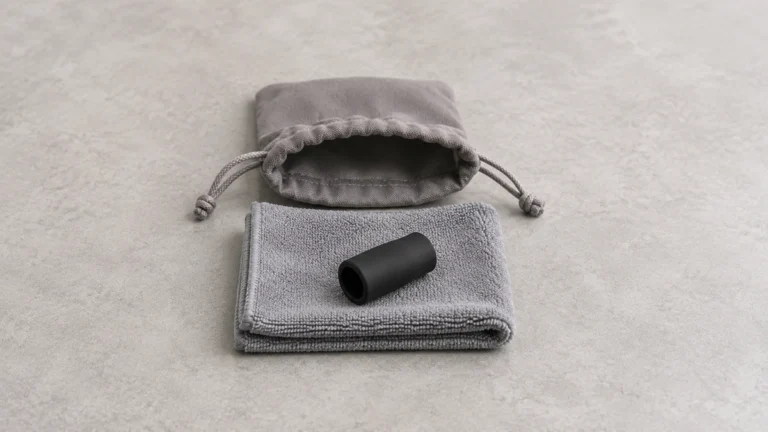
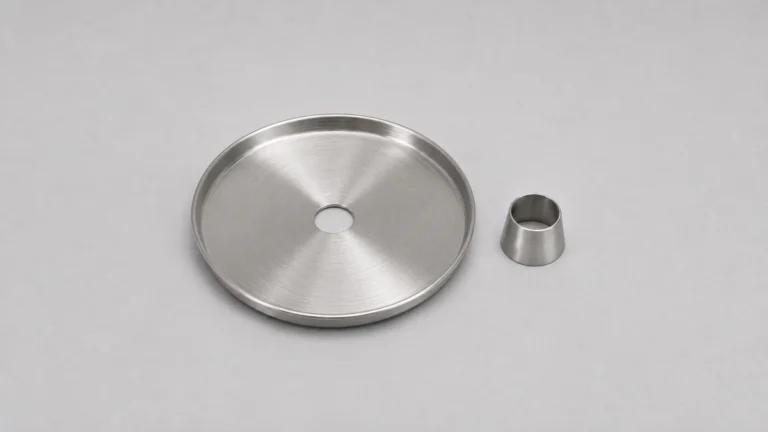
A hookah cleaning kit may contain a brush that enters the vase neck easily but never touches the deposit beneath its shoulder. Entry, reach and contact are separate questions. Before pushing harder or changing cleaners, look at the tool’s bristled section, the narrowest opening it must pass and the shape of the surface beyond it. The kit label does not answer those questions for your particular glass and metal parts.
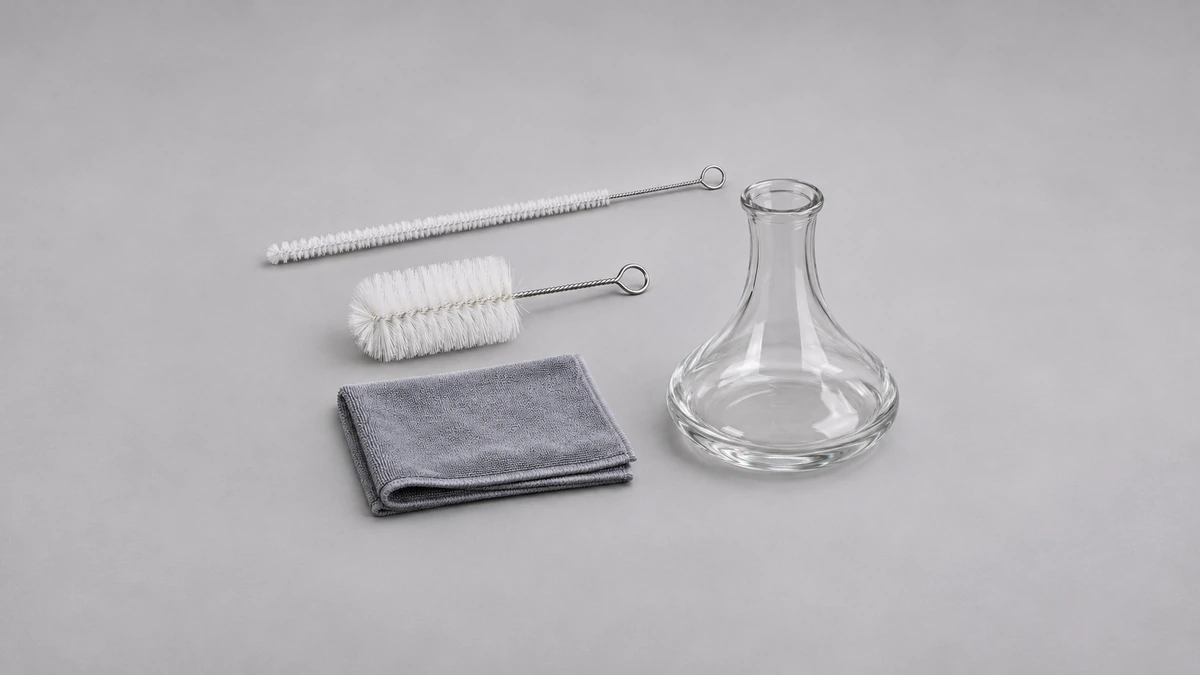
🧽 1. A hookah cleaning kit needs more than a brush that enters
Insertion and contact are not the same event. A brush can pass through the full length of a stem or neck and still never touch the base’s shoulder or its flattened bottom, because the tube it travels through is straight while the vessel it opens into is not. Community cleaning discussions include owners describing hard deposits low in a base that soap alone does not loosen, and noting that the brush supplied with their setup “doesn’t contort well enough” to reach that area. That phrasing is useful mainly because it names the gap honestly: the tool went in, the target stayed untouched.
Start with the target rather than the number of brushes in the pouch. A straight stem, a wide vase shoulder and a small fitting present different shapes. The useful question is not whether the kit looks complete on a table, but whether a permitted tool can reach the particular surface without being forced past a restriction. That is an access question before it becomes a cleaning-method question.
A useful example is a kit with three slim brushes and no broad head. It may contain several different diameters but still offer no way to contact the side of a wide vase. Another kit may contain a large head that reaches the vase body but cannot pass its neck. Neither example proves poor manufacture. It shows why counting accessories is less informative than mapping the empty part you need to clean.
📏 2. Total length versus usable bristled reach
Overall length is not the same as bristled working length. A long handle can make a tool easy to hold while contributing no scrubbing surface inside the vessel. Picture a brush whose head reaches the bottom of an empty vase: the bare shaft may still pass down the middle of its neck without contacting the surrounding wall. Conversely, a short dense head may suit one exposed fitting while offering no reach into a taller body.
An industrial tube-brush datasheet illustrates the distinction by listing a 15 mm diameter, a 310 mm overall length, bristle stiffness and component materials separately. This is an example of specification fields, not a hookah recommendation or certification. A single length printed on a cleaning-kit sleeve cannot stand in for all of those separate properties.
When reading a tool description, keep handle, shaft and head separate. The handle belongs outside your grip-to-opening boundary; a bare shaft provides reach but not the same surface contact as bristles; the head has both a length and a diameter. If those parts are not described, do not invent their measurements from a small listing photograph. An object placed beside a brush in a promotional image is not a reliable scale.
The assembled handle can hide another distinction: a long rigid outer section may surround a smaller component, or a decorative sleeve may be separate from the washable tube. A kit containing several long brushes does not reveal which construction is present. Find that boundary in the original documentation before assigning any tool to an opening. Otherwise it is easy to describe cleaning the handle when only one exposed surface was reached.
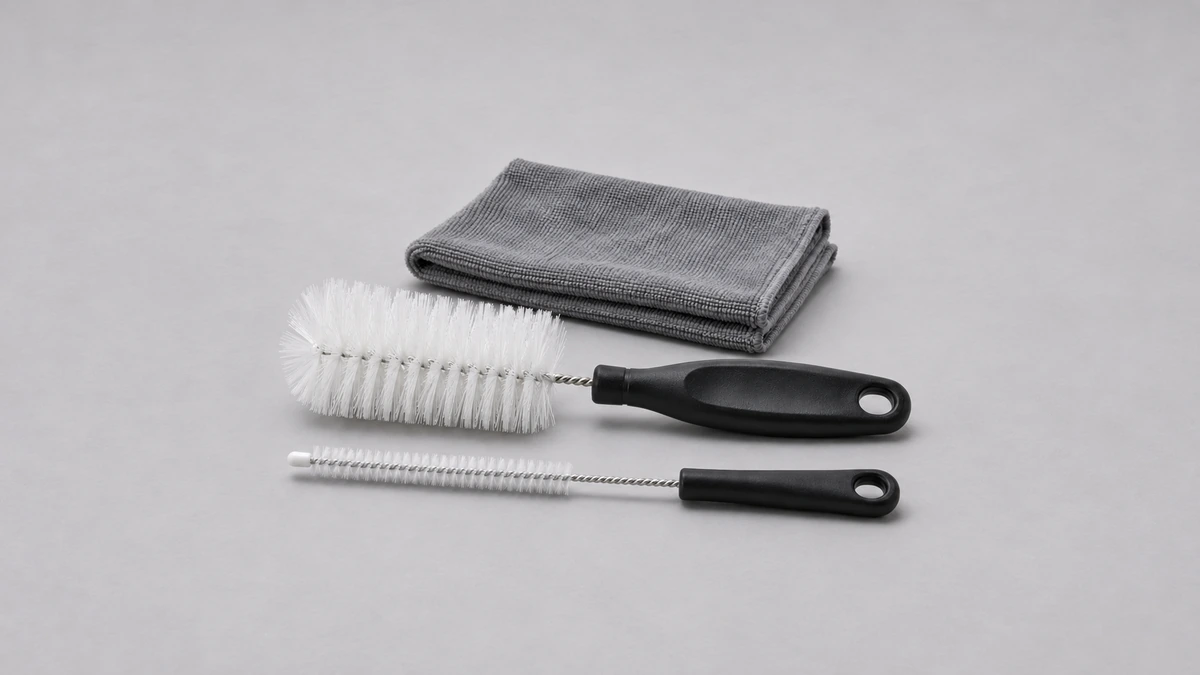
A flexible head is not automatically a smaller head. Bending changes its direction; it does not establish that the head, its rounded end and its core all have the required clearance. Likewise, a soft-looking white filament does not identify a stiffness rating. A picture can show the overall form, but the tool maker’s description is needed to distinguish its working materials and limits.
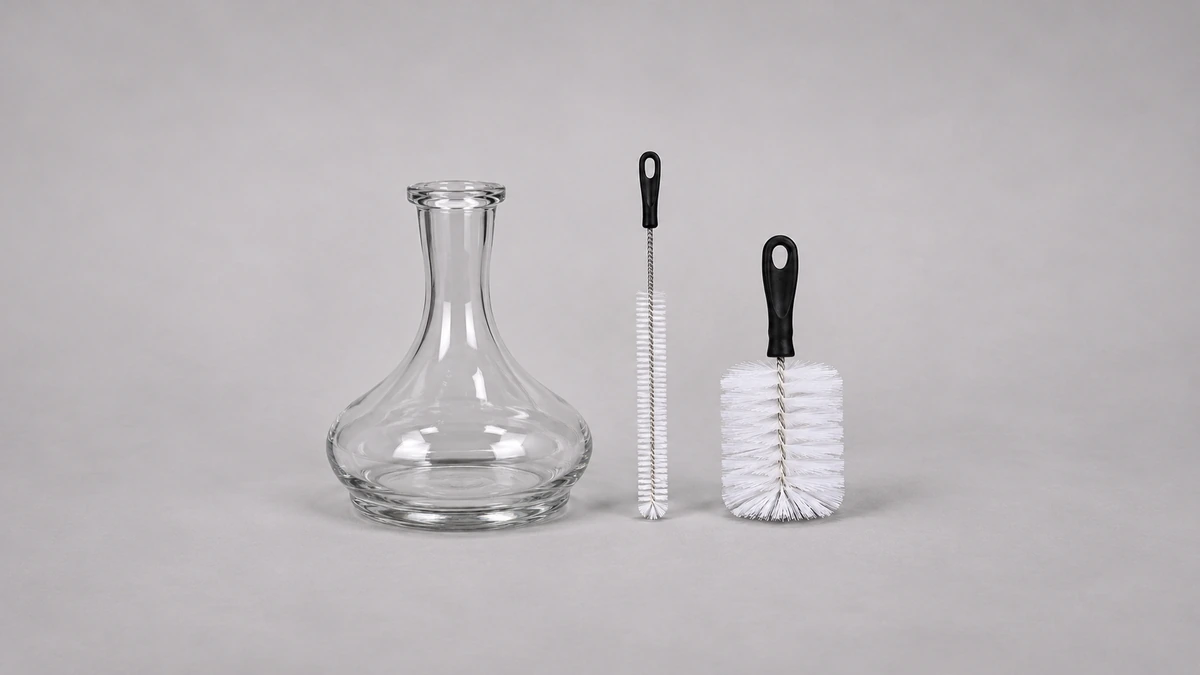
🔘 3. Diameter and the narrow neck restriction
The entrance may not be the narrowest part of the route. A fitted collar, a shoulder in the tube or an attached connection can change the available opening. Do not test that possibility by forcing a compressed brush head farther in. Even if the head passes through one opening, its handle and shaft may have different clearance needs. Read the instructions for the detached part rather than treating the assembled neck as one straight passage.
Because necks and their seals vary by connection type, understanding what’s actually at that narrower point matters more than assuming every hookah neck behaves the same way; a closer look at how neck seals and connections are built is a reasonable next step before deciding a brush should go any further than it already has.
🔎 4. Head shape and the enclosed shoulder
Even a brush with the right diameter and enough bristled length can be defeated by shape alone. Many vase bases curve inward at the shoulder before narrowing into the neck, and a brush head moving straight through the neck need not contact that curve. Picture a hypothetical vase with a pronounced shoulder sitting just below where the neck meets the body: a straight brush can pass directly through the center of that space without its bristles ever grazing the curved wall around it.
The enclosed-shoulder problem is familiar from brush access through a narrow glass neck. It applies to the geometry, not to shared cleaning permissions between different accessories. Seeing a mark through clear glass does not create a route to it. A flexible tool can have its own bending limits, and a bendable shaft is not permission to hook around an unknown internal edge.
A straight brush and an angled shoulder can be considered without inserting anything. Look through the empty vessel from more than one ordinary viewing angle and compare that visible shape with the tool outside it. You are locating the mismatch, not attempting a fit test against hidden glass. If access would depend on levering the shaft against a narrow rim, stop and ask the component maker which method is intended for that area.
Consider a detached glass base with a narrow mouth, a separately identified metal collar and a soft seal. The transparent body may be the most obvious cleaning target, but it is not the whole assembly. The collar may carry a finish with different instructions, and the seal has its own material and handling limits. Calling the complete set glassware can hide those distinctions. This is why a bag advertised for hookah cleaning is not one permission covering every piece.
It is also useful to distinguish an inaccessible surface from a deposit that remains after an approved method. In the first situation, you do not know whether the tool contacted the area. In the second, the documented treatment has not removed what is visible. Those are different questions for support; changing tool shape addresses access, while an unresolved mark requires identification and material-specific guidance. Neither situation is a reason to improvise a stronger mixture.
⚠️ 5. Exposed wire, loose bristles, and bent cores
Inspect the brush itself before assigning it to a surface. A projecting metal tip, a split handle or loose bristles changes the tool you are holding, even if it still fits the pouch. Do not turn that tool into a probe for a blocked passage. If it is damaged or leaves material behind, put it aside and account for the loose material before returning attention to the component.
Also look after permitted cleaning. Has the head kept its shape? Can you still see a protected tip? Is there grit or a fragment caught between the bristles? Those checks describe the tool’s visible condition. They cannot certify that a surface is unscratched or prove the inside of a vase is clean. A tidy-looking brush may simply never have contacted the problem area.
For a second-hand kit, the original pouch may survive after its contents have changed. One brush can have been swapped for a stiffer household brush; an unmarked bottle can contain something other than the printed label suggests. Treat unidentified contents as unidentified. Retaining the original tool descriptions and liquid labels is useful precisely because appearance cannot establish what a previous owner added. Do not use a smell test to identify an unknown cleaning liquid.
🧪 6. A kit’s chemical label isn’t a blanket compatibility claim
A bundled cleaning liquid has its own label and material limits. Those do not transfer automatically from bare glass to a coated collar, adhesive, seal or electronic component. Steamulation’s anodized-surface instructions, for example, specify soft cleaning materials and exclude abrasives, acids and dishwasher cleaning for the surfaces they cover. That example shows why a metal-colored part needs its own finish-specific instructions; it does not approve a treatment for every metal accessory.
The word kit also says nothing about which parts may be immersed. Oduman’s care guidance distinguishes materials and calls for cooled hardware. A pouch of brushes cannot override that boundary. Community threads offer conflicting household recipes, often for hardware unlike the original poster’s. Use them to recognize the question being asked, not as permission to combine cleaners or substitute a kitchen product for a documented method.
A stronger cleaner cannot make the wrong brush shape reach a recessed corner. It may be tempting to change both the liquid and the tool at once, especially after seeing a persistent ring, but that makes the outcome harder to interpret. First establish which part and finish you have, then the maker-approved access and treatment. If those are unavailable, an unresolved mark is a reason to seek instructions rather than improvise an escalating sequence of products.
🧺 7. Separate tools, visual checks, and storage after use
Keep a tool used on a gritty tray separate from one assigned to a delicate finished surface. This does not mean the tray tolerates hard bristles: its finish may have stricter instructions than the plain glass nearby. The purpose of separation is to avoid carrying visible debris into another task, not to invent a universal rough-surface versus delicate-surface classification.
After permitted cleaning, note whether a mark remains and where it is. A waterline-shaped band, a loose particle and a uniform haze are descriptions, not identifications of minerals, microorganisms or chemicals. Dry and store the tools according to their instructions, with their heads visible enough to notice damage next time. Identify the hardware being cleaned just as carefully: a hose, decorative sleeve and rigid stem are not interchangeable places to put the same brush.
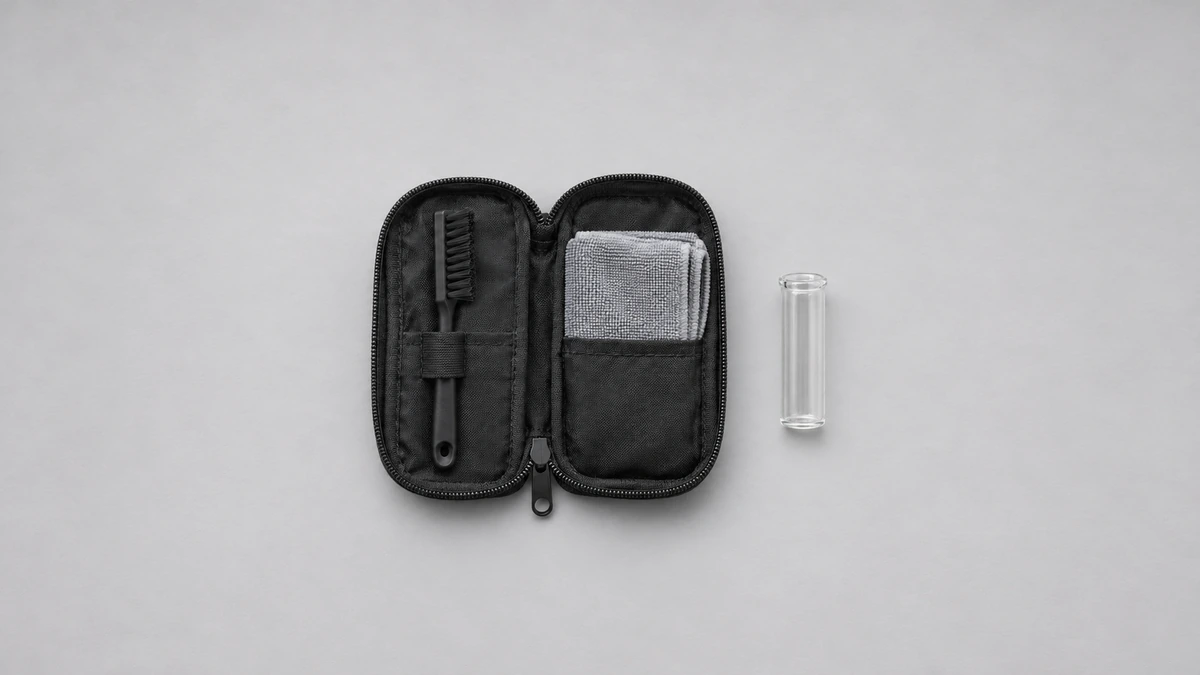
Before closing the pouch, check that the pieces are the same ones you began with and that no loose bristle or broken tip remains unaccounted for. Keep a doubtful brush separate rather than returning it among clean tools. There is no need for a complicated schedule or a larger collection: a clearly identified tool, an identified surface and an accessible permitted route provide a more useful starting point than a bag full of interchangeable-looking accessories.
Keep the tool packaging where its identifying information remains readable. Two brushes with similar handles may have different head materials, and the same pouch can collect replacement tools over time. Recording which description belongs to which brush is a modest practical task, not an invitation to build a large collection. It lets you return to the original care instructions when the brush or the surface changes.