A line across a ceramic hookah bowl is not one problem, it’s a description that could point to at least three different things. A fine web confined to the glossy surface, a single crack that runs into the clay underneath, and a damp patch that appears on the outside wall after use are three separate observations, and they don’t share a cause just because they all showed up on a bowl. Treating any of them as the same issue, or assuming a photo settles which one you’re looking at, skips the step that actually matters: figuring out which layer and which area is involved before deciding whether the bowl stays in service.
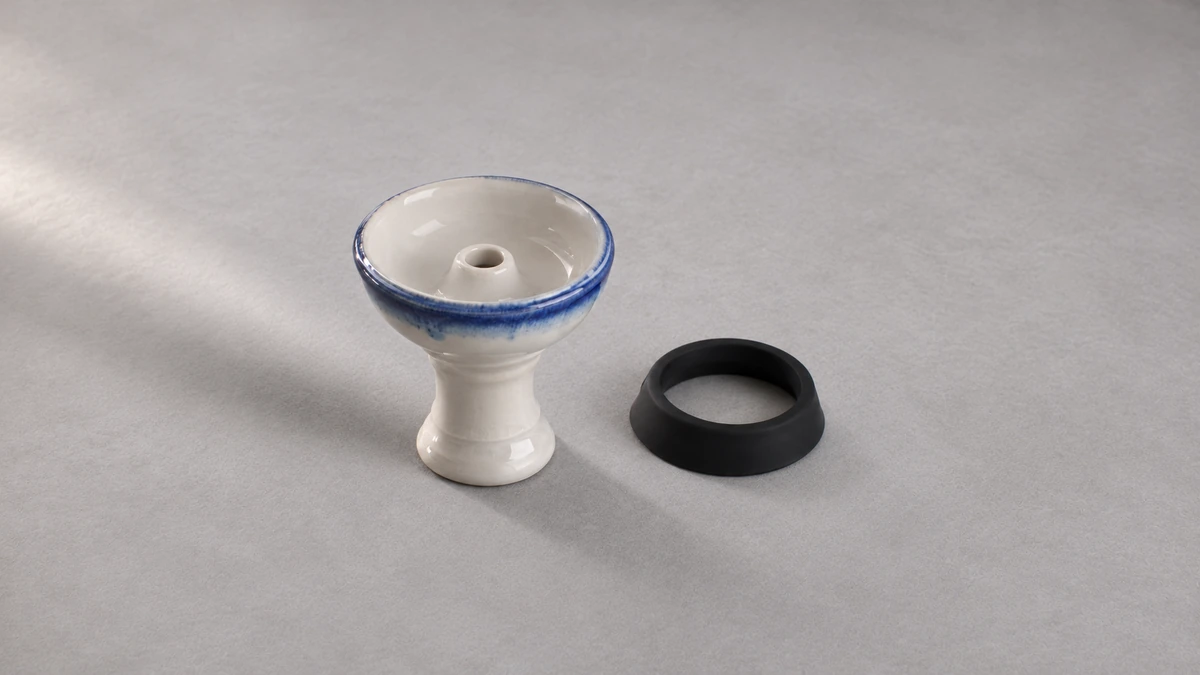
🔍 1. Read the mark on a ceramic hookah bowl before naming it
A fired ceramic bowl typically consists of a clay body with a glaze layer fused to its surface. A “line” could be sitting entirely within that glaze layer, visible as a network of hairline marks that catch the light differently depending on the angle you’re holding the bowl at. A “chip” is a different report altogether: a piece of material, however small, has detached and is physically missing, which is not something a surface pattern can explain away. A “wet trail” or damp patch on the exterior is a third kind of observation, describing moisture appearing somewhere it previously wasn’t, with no information yet about where that moisture originated.
Collapsing these three reports into one question — “is my bowl cracked?” — makes it harder to get a useful answer, from a maker or from your own inspection, because the follow-up questions are different in each case. A line invites you to look at whether it extends past the shiny coating. A chip means you’re assessing a loss of material, not a pattern. A wet trail means you’re tracing a path, not reading a photograph. Keeping these separate from the start is less about terminology and more about not skipping a diagnostic step that a single label would hide.
🧱 2. The body and the glaze are two different materials sharing one surface
Underneath the glossy coating, a ceramic hookah bowl is a fired clay body shaped before the glaze was ever applied. The glaze is a separate glassy layer, melted onto that body during firing so the two bond together, but bonding is not the same as becoming one uniform material. According to Digitalfire, a ceramics reference used by studio potters and industry technicians, the body and the glaze remain bonded while retaining independent expansion characteristics, which is exactly why a surface pattern on one layer cannot, by itself, confirm the condition of the other.
A photograph of a shiny surface does not reveal the condition of the ceramic beneath it. A different viewing angle may show the location of a line more clearly without establishing its depth. The same material-name caution applies to ceramic banger care: different accessories need their own construction and care information.
The finish around the underside deserves the same distinction as the basin. A deliberately unglazed foot can look rougher and more matte than the bowl above it. A newly missing chip also exposes a different-looking surface. Those similarities do not establish that the two have the same history. Compare the original maker photograph or a picture of your own bowl when it was new, without scratching the area to see what lies underneath.
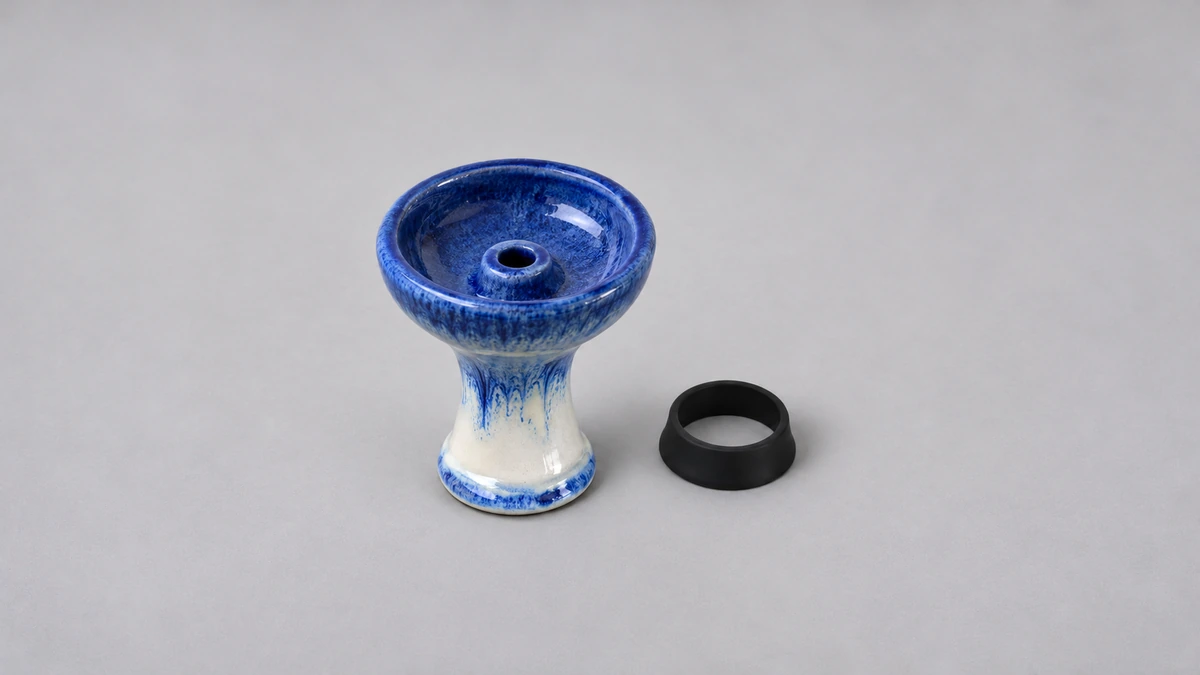
🕸️ 3. What a crazed pattern in the glaze actually describes
The specific fine-line network that commonly gets described as “glaze cracks” has a name in ceramics literature: crazing. Digitalfire describes crazing as a network of fine cracks in a fired glaze, arising from a mismatch between how much the glaze and the body expand or contract as temperature changes; this mismatch can exist from the moment a piece leaves the kiln or can show up only later, and a subsequent thermal shock can be what makes an already-present mismatch visible for the first time rather than causing it outright.
That last point is worth sitting with, because it means the moment you notice a line is not necessarily the moment the underlying condition began. A pattern that appears after a single use could reflect something intrinsic to how that particular glaze and that particular body were fired together, surfacing under ordinary heating and cooling rather than being created by anything unusual that happened during that one session. None of this tells you, from a description or a photo alone, whether a given bowl’s pattern is confined to the glaze or extends further — only that “crazing” is a recognized, named phenomenon in glazed ceramics generally, not a verdict on any specific bowl.
A technical term is not an assessment of an individual object. When asking the maker about a line, include the entire bowl as well as a close view of the marked area. State whether the original finish looked that way when new. Avoid presenting an assumed cause as part of the description.
💧 4. Leakage has more than one possible origin
The word sweating describes an appearance rather than an established cause. Moisture on the outer wall, a trail originating at the rim and water remaining after permitted washing are separate observations. Describe the first visible location on the empty, cooled piece. Do not recreate the event with heat or liquids to try to prove a theory.
These are not interchangeable explanations, and jumping to one of them, such as assuming the clay has simply “absorbed” liquid through ordinary porosity, skips over the other candidates without actually checking them. If the damp area appears to be isolated to a jointed connection rather than the open bowl surface, that is a different question from a wall or seam issue, and one that overlaps with how hookah stem and base connections seal in the first place — a topic covered separately in our piece on hookah base seals and connection types. Narrowing down where moisture is actually originating, rather than naming a cause from the outset, is the useful first step, and it’s one that generally requires looking closely at the dry, cooled bowl rather than reasoning from a general description of “sweating.”
🧽 5. Cleaning a stain off the surface answers a cosmetic question, not a structural one
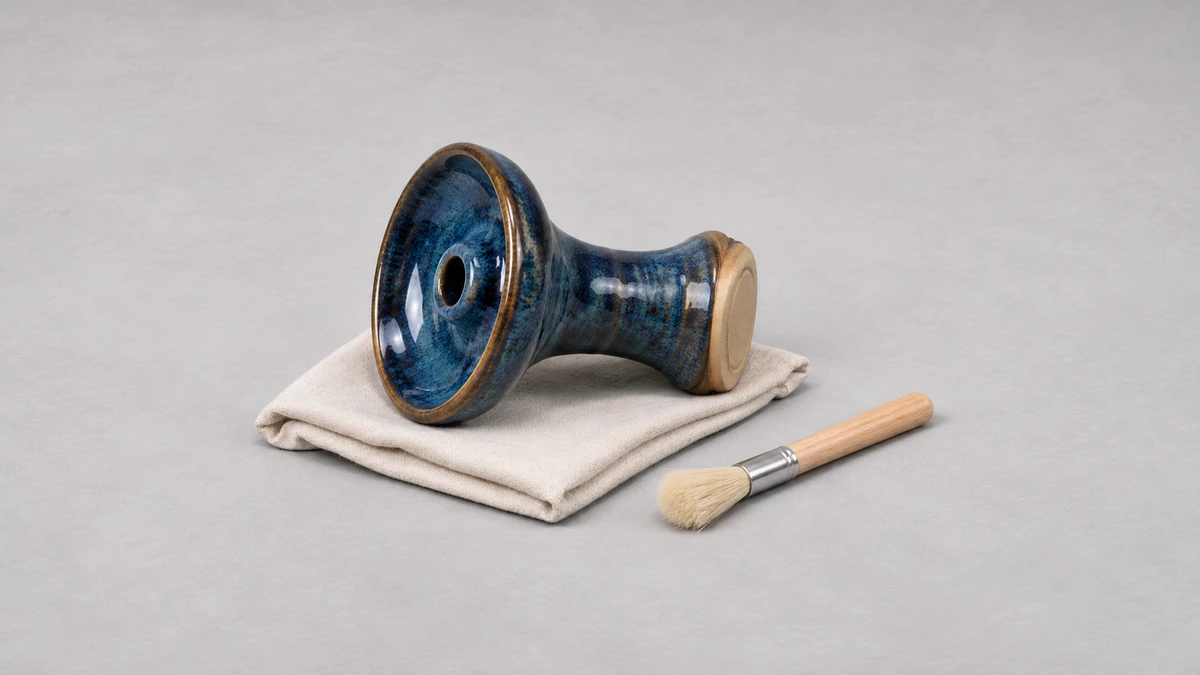
A brown or discolored mark on a ceramic bowl is a surface condition, and removing it with permitted cleaning is a cosmetic result. It tells you the surface looks different afterward. It does not tell you anything about whether a line underneath or around that stained area is confined to the glaze, and it does not address a chip, a loose section, or a wet patch that happened to be near the same spot. These are genuinely separate questions, and getting a satisfying cosmetic result on one of them can make it easy to feel like the bowl has been “handled,” when nothing about a structural concern has actually been evaluated.
This is particularly relevant when a stain and a line show up close together, because cleaning tends to involve some scrubbing or soaking, and it’s worth remembering that any cleaning routine for ceramic needs to account for its own risks separately from the stain itself. None of this amounts to a repair step. A clean bowl with an unresolved line is still a bowl with an unresolved line; it’s simply easier to photograph clearly now.
A dark mark that follows a fine line may attract more attention than an equally fine pale line nearby. That visual contrast does not establish their relative depth. State what is visible in each location rather than judging the darker mark to be structurally worse solely because it photographs more clearly. If a line continues around a rim or onto an underside, include that continuation in the wider photograph rather than cropping it out.
❄️ 6. Cooling and handling practices belong to the owner, but they don’t settle what already happened
How a bowl is cooled and cleaned afterward is within an owner’s control, and there is a genuine reason to be deliberate about it. According to the cleaning guidance published by Oduman USA, exposing very hot ceramic directly to cold water can crack it, which is why letting a bowl cool fully before any cleaning step is a reasonable habit regardless of what caused a prior line or stain.
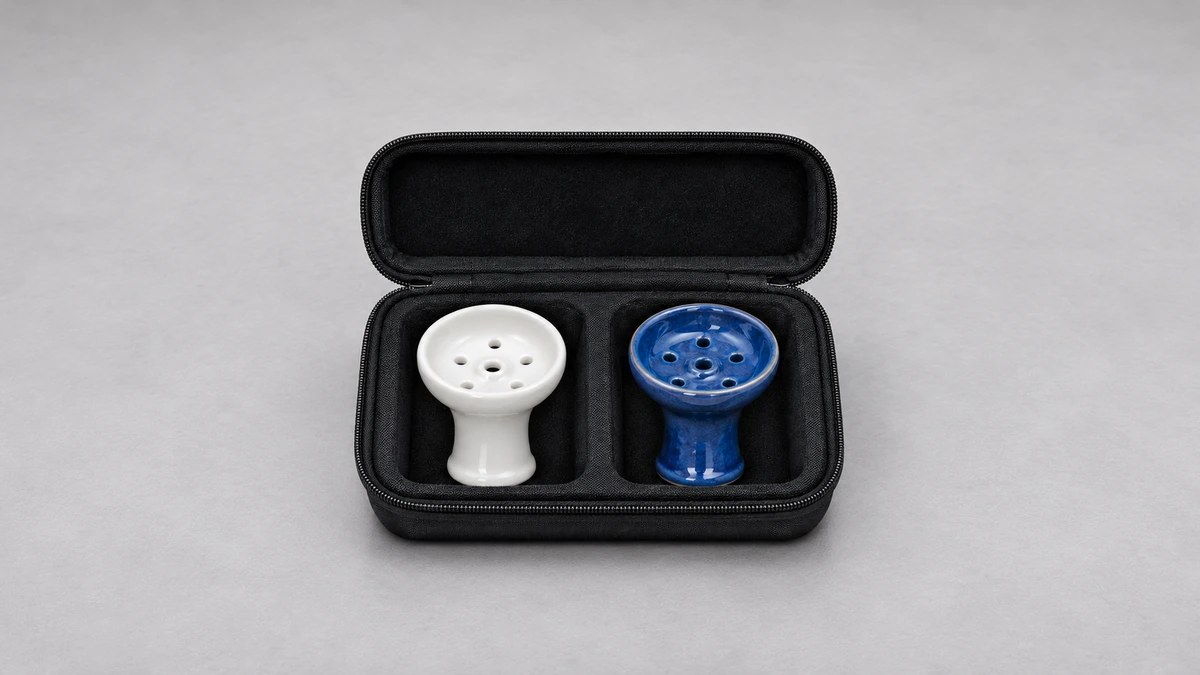
What this kind of care does not do is retroactively confirm the condition of a bowl that already shows a line, a chip, or a damp patch. Finding a pattern after careful cooling does not establish its cause, and an owner who finds the same pattern without having been especially careful has not necessarily caused it either — attributing a visible line to a specific handling mistake, after the fact and without more information, is a guess dressed up as an explanation. Good cooling and cleaning habits are worth keeping for their own sake, including when storing cooled, dry pieces afterward, a subject that connects to how separate hookah components are kept apart in transit, covered in our piece on hookah case fit and component clearance. But they are a going-forward practice, not a diagnosis of what already occurred.
📋 7. When a bowl should wait for an actual assessment rather than continued guessing
Some observations call for stepping back rather than continuing to use the bowl while trying to interpret it from a distance. A section that has become loose and shifts under light pressure, a piece that has visibly separated or come away from the rest of the bowl, or a line that you can see runs through the full thickness of the wall rather than sitting on the surface are all situations where the honest answer is that a photograph or a written description isn’t enough information for anyone, including the owner, to resolve safely. In those cases, a cooled, dry bowl kept aside for assessment by the maker or a qualified ceramics professional is a more useful next step than continued use based on community reassurance.
Before setting a piece aside, documenting it accurately is worth the few minutes it takes: photographs taken in even lighting, from more than one angle, of the bowl cooled, empty, and in its original finish, rather than mid-cleaning or still warm. Noting roughly when a line or chip was first noticed, and whether it changed in appearance afterward, gives a maker something concrete to work from. None of this is a substitute for their assessment, and it isn’t meant to produce a self-diagnosis — it’s simply the difference between handing someone a vague account after the fact and handing them a clear, dated record of what the piece actually looked like.
Keep an unresolved damaged piece aside for the maker’s assessment. A clean appearance or another owner’s reassuring account does not establish the condition of this bowl. Supply the original identification, dated photographs and a factual description of the change without attempting a repair.
For a second-hand bowl, describe any pre-existing patch, unusual glossy area or unknown repair honestly. Matching color does not identify the material that was applied, and an apparently neat finish is not proof that the original body has been restored. Keep uncertainty in the description. General ceramic fillers and decorative repair products do not, by their names alone, establish suitability for this specific accessory.