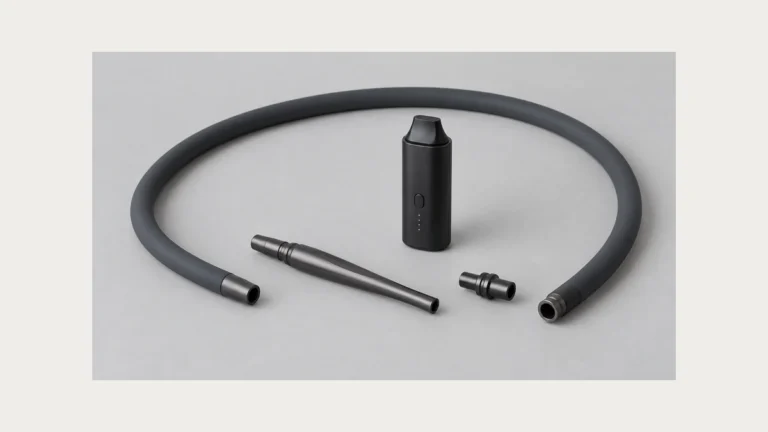
A hookah tube that looks flexible is not necessarily a washable hose. First identify whether the part is the flexible hose, a decorative outer sleeve, a rigid stem or a removable handle. The name alone does not supply cleaning instructions. That ambiguity is easy to encounter when an older hose is separated from its packaging, or a handle and tube have been put away in the same drawer. The whole-system distinction between hookah and bong hardware is a separate question.
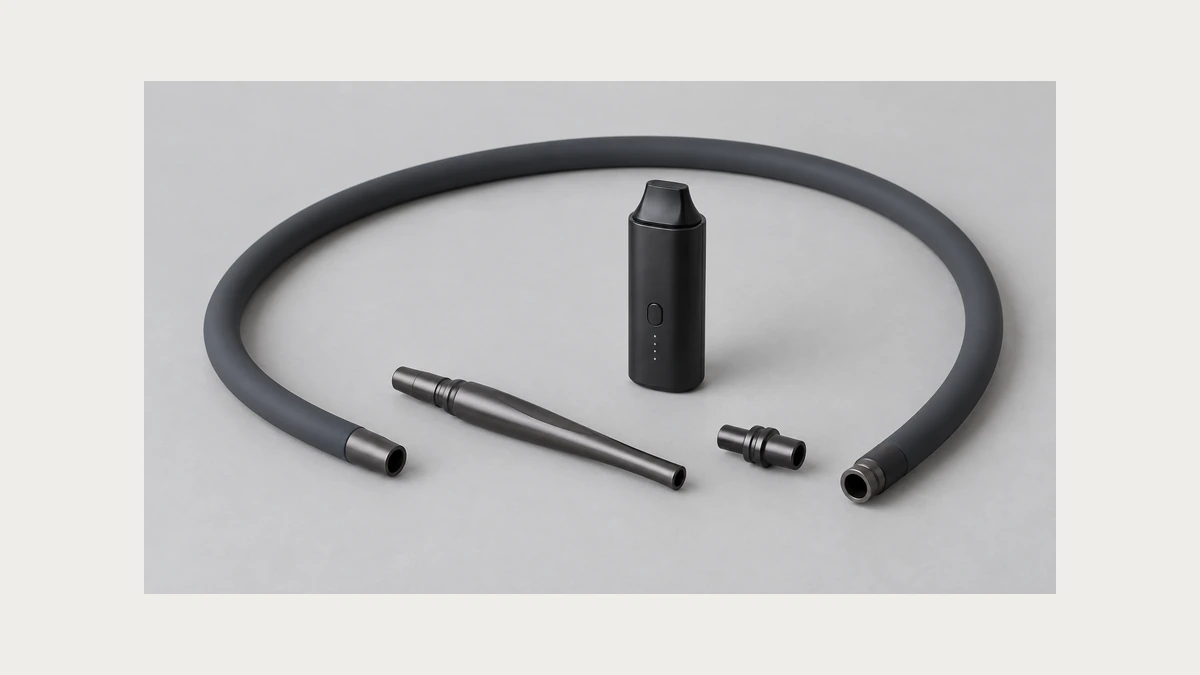
🧩 1. Hookah tube can mean several different parts
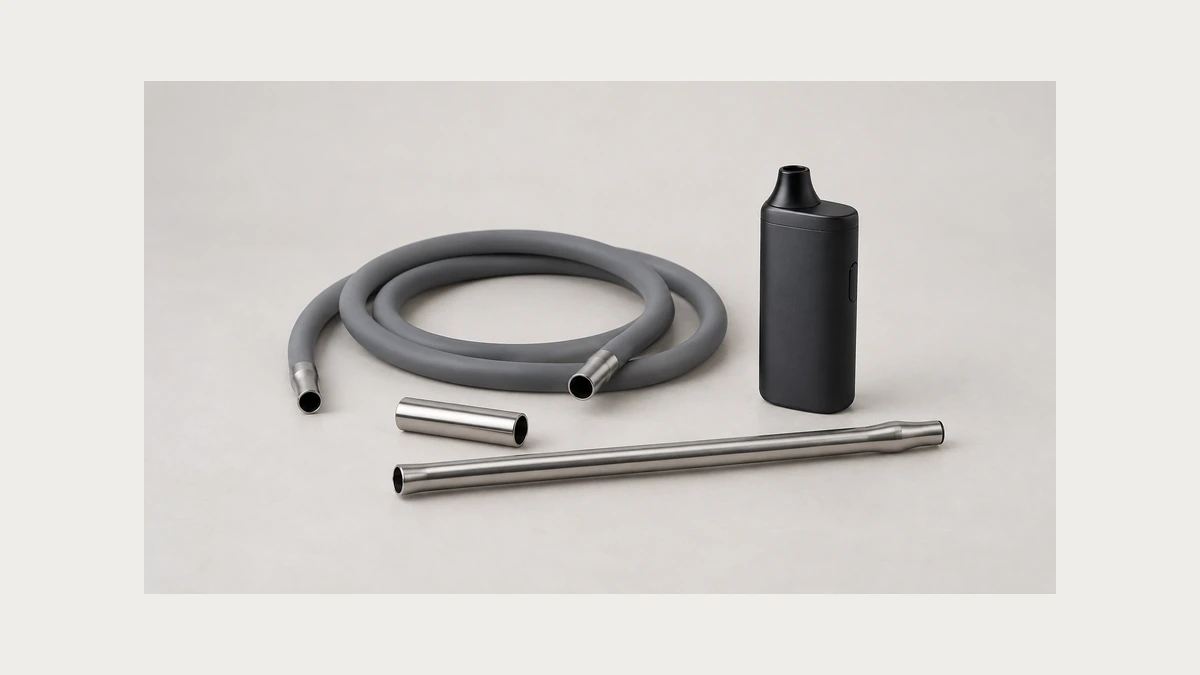
For an owner sorting existing parts, the flexible hose is the long bendable assembly, while the rigid stem belongs to the main hookah body. A long rigid mouthpiece handle can look like another stem when it is disconnected. Small end connectors complicate the naming further. Their location in the original diagram matters: a hose-end fitting and a base-neck connection are not interchangeable simply because both are round. Identify the part before asking how to clean it.
Flexibility distinguishes a hose from a rigid tube, but it does not identify the hose’s hidden construction. Likewise, a metal finish tells you little about the layers beneath it. A handle may be a separate serviceable part, or part of a fixed assembly; its shape alone cannot settle that. Keep a complete unidentified assembly together until the maker’s information shows which pieces actually detach. A visible join is a place to describe, not automatically a place to pull.
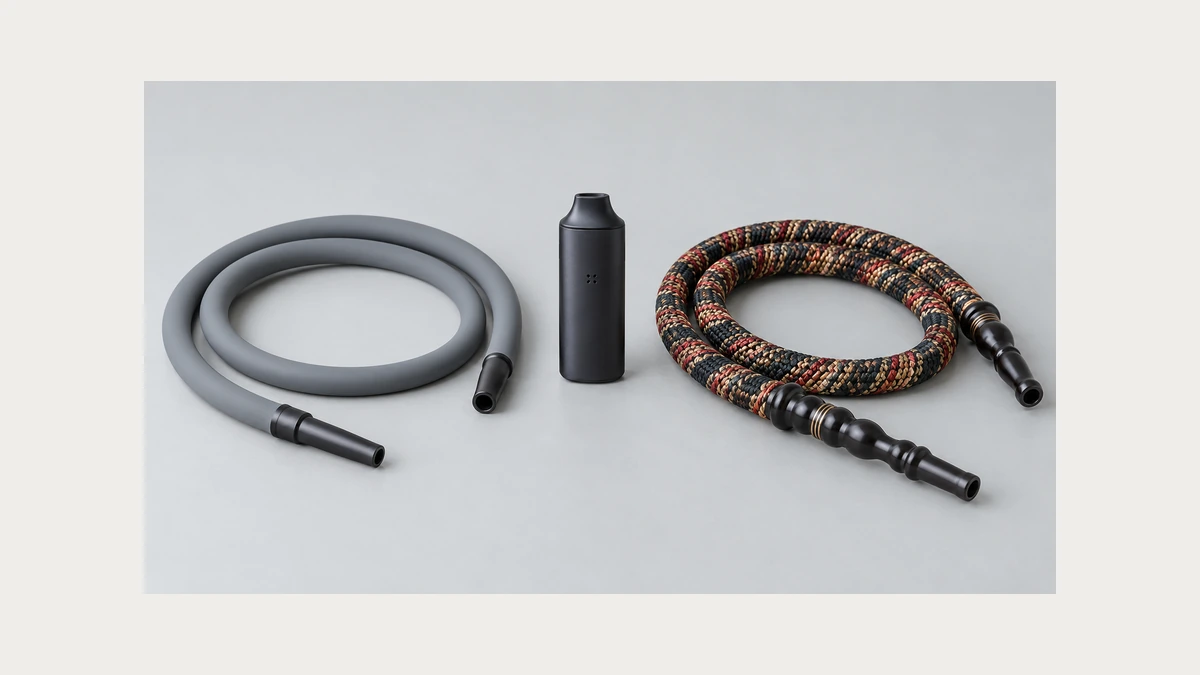
A useful everyday example is an older hose with an ornate wrap and a plain detachable handle stored beside it. The wrap draws attention, but the handle’s original connection may be the only feature that helps locate the correct parts information. Keep a view of both ends as well as the decorative length. A photograph cropped to the middle of the hose hides precisely the area where another owner or the maker might recognize the assembly.
👁️ 2. The outside jacket does not tell you what is inside
A decorative outer layer can obscure the actual tube. In a September 2023 discussion, an owner described the outside as paper-like while asking whether the hose could be washed. That description identifies a visible or tactile feature, not the inner construction. A traditional-looking jacket and a modern-looking smooth surface both need the same missing information: what the maker says about that exact assembly.
What the jacket does tell you, honestly, is its own condition. Fraying threads, a sleeve that has pulled loose from the hose underneath, or a printed pattern that has worn through are all real observations, but they describe the outer wrap, not the core. Treating a worn jacket as evidence about the inner tube’s washability or durability is a step beyond what the jacket can actually show you, and it is the same kind of mistake as assuming a stem’s finish tells you what metal is underneath it.
The paper-like description in one owner’s question captures the difficulty well. A surface can feel papery without telling the owner whether the inner tube is washable. In that discussion, visible replies proposed both rinsing and keeping it dry. Their disagreement is a reason to look for the product’s care information, rather than treating the most confident reply as an identification. Do not peel the covering back to settle the question.
💧 3. Washable must describe the actual hose assembly
“Washable” only means something when it is attached to a specific hose by the party that built it. MYA Hookah identifies its own 668 Soft Silicone Hose as washable and pairs it with a multipart handle, packaged with that handle in a compartmented box (myahookah.com). That is a maker describing one named product; it is not evidence that silicone hoses in general are washable, and it says nothing about hoses from other makers that happen to feel similar in the hand.
This matters because the opposite assumption shows up often enough to be worth naming. In one discussion, an owner asked about a hose that appeared to be nonwashable, and other participants pushed back on the idea that only silicone counts as washable, pointing out that traditional cloth-covered or print-covered hoses can have washable liners built in underneath the decorative exterior. Neither claim settles the question for any hose you are holding. The only reliable path is a washability statement tied to that exact product, not a rule inferred from what the hose looks or feels like from the outside.
Check what a care statement actually names. ‘Washable hose’ may describe the flexible length in a particular product’s parts list. ‘Washable set’ might refer to an assembly, but still needs its instructions for handles or decorations. A sentence about the main glass vase says nothing about either. Keep the subject of the instruction attached to the instruction itself; otherwise an accurate sentence about one part can become incorrect advice for another.
🔌 4. Handles, tips and end connectors need their own identification
The long flexible section and its end pieces should be named separately, even when the maker sells them together. A mouthpiece, handle and base-end connector may have different care instructions. The fact that a hose is described as washable does not identify every decorative part or authorize soaking an assembled handle. For the short manufacturer example above, the listed multipart handle establishes only that this particular design has separately described components.
Read the maker’s removal instructions before trying to twist or pull an end piece. A collar that resembles a removable fitting may be fixed in place. If parts are already detached, keep their relationship documented without pushing them onto an unfamiliar connection. The analogous question for a vaporizer whip tube is also about its actual ends and authorized care; that guide does not establish hookah-hose compatibility.
A handle that resembles another long metal tube deserves a full view rather than a cropped end photograph. Note its original position in the parts diagram, any already visible connection and whether it is identified separately. That is more informative than calling it stainless steel from a silver finish. An external coating, collar and decorative grip may all be visible while the underlying construction remains undocumented. None needs to be dismantled simply to produce a more detailed description.
A hose end and a handle can also be mismatched in storage without either having visibly broken. Suppose a drawer contains a flexible length, a detached long handle and two similar-looking cuffs. Their proximity is not evidence that they formed one original assembly. Keep them separate while checking an identifiable parts diagram. A fitting that almost accepts a tube is not a confirmed connection, and pushing harder would not resolve which cuff belonged to which part. This is a naming problem before it is a fit problem.
🔎 5. Bends, splits and loose collars are visible hardware problems
Look for visible splits, an opening at an end connection, a loose wrap or a persistent sharp bend. Describe those changes without diagnosing their cause. A crease does not prove material fatigue, and a collar that rotates does not prove adhesive failure; either may need the maker’s assessment of the intended construction. Visible damage is enough reason to stop using the affected assembly. There is no need to inhale through it, pressurize it or cut it open as a condition check.
Location makes a loose-part complaint more useful. “The cuff has separated from the flexible hose” describes a different area from “the connection at the vase neck is loose.” The latter belongs to the base, neck and seal identification question. Neither observation alone confirms which replacement part fits. Keep the suspect part disconnected while obtaining model-specific information rather than compensating for looseness with tape or an improvised sleeve.
Odor is another complaint that easily gets assigned to the wrong component. If an owner notices it after the equipment has been put away, the description should specify whether the complaint concerns the stored hose, its handle or the box holding everything together. That does not identify the substance causing it. Nor can an improved smell prove that an unknown hose is clean or serviceable. Avoid using a fragrance or a taste test to decide whether the part can return to use.
📦 6. Drying and storage depend on what the maker permits
El-Badia’s own hose-care guidance describes rinsing a washable hose and hanging it vertically to dry. The important condition is a hose already confirmed washable. This is not a general hot-water instruction for every decorated assembly, and the page supplies no identification for an unknown hose in a drawer. Follow the actual maker’s permitted method and drying instructions for that product.
A 2024 hose-cleaning discussion now has a deleted original post and visible replies about odor, care and uncertain washability. Those replies do not recover the missing original question or identify the hose. Another November 2024 discussion contains disagreement about whether a traditional-looking hose can have a washable liner. These are real reader questions, but neither exchange provides manufacturer instructions for the part in front of you.
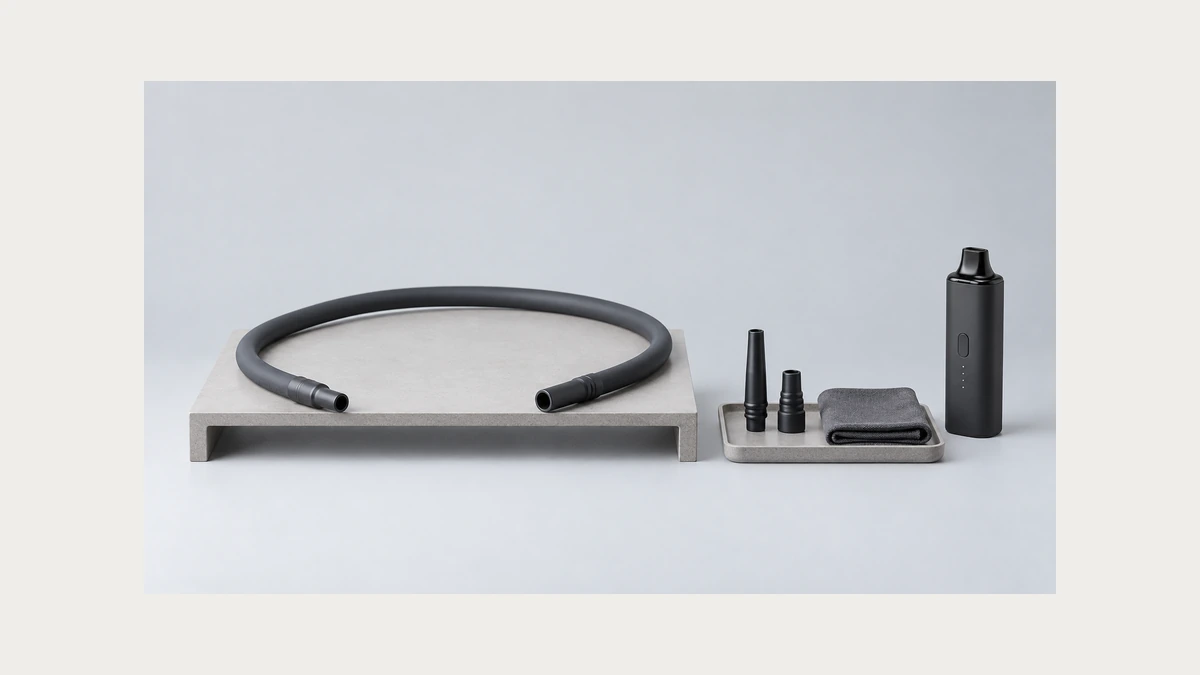
For storage after an authorized wash, follow the maker’s drying directions before enclosing the hose. A loose length on an open support and a tightly packed drawer present visibly different arrangements: one leaves the hose exposed, while the other may press it against neighboring objects. Check the end pieces and the storage space too. A box can have enough room for the flexible loop yet leave an attached handle wedged against a wall or its lid.
Dry storage also includes the space around an identified hose. A drawer lid should not flatten a loop or bear against the handle. A folded cloth can share the storage area without being stuffed inside the hose as a drying aid. Keep the original end pieces with the hose, identified separately, so that a later cleaning question does not begin with another mixed collection of anonymous parts. Any product-specific instructions about storage position or covers still take priority over a general photograph of a neatly arranged shelf.
🛑 7. When the hose remains unidentified, stop experimenting
When a hose remains unidentified, keep the uncertainty attached to the part. A traditional-looking wrap might conceal a washable construction, or it might not; the outside cannot settle it. A magnet response, a smooth feel or a familiar color is not a washability certificate. Do not insert another tube inside the hose or strip away its jacket to turn a forum guess into a repair. Those changes would create a different assembly without identifying the original one.
Set an unidentified or visibly damaged assembly aside while looking for its maker’s parts and care information. A useful request includes the whole disconnected hose, both ends, the original handle and any packaging information already available. Describe the symptom without naming an unverified cause. If serviceability cannot be established, leave the part out of service; another rinse or a stronger cleaner cannot supply the missing identification.
You do not need to recover the entire history of an old hose to describe its present uncertainty accurately. Keep together the information that exists: an identifiable maker, a product photograph, the complete end arrangement and the actual condition. If one of those remains unknown, say so. That gives a service response a concrete question to answer and avoids turning an anonymous decorative accessory into a presumed washable assembly.