A hookah tray that rotates and a tray that tips off its support present different observations. Movement alone does not establish whether a mounting arrangement is correct. Identify the original parts and the visible support before interpreting a loose fit. Treat damaged edges and changing finishes as separate concerns.
This discussion concerns empty, cold, unlit hardware. It supplies no operating or removal procedure. Consult the original maker’s diagram when the mounting arrangement is unclear.
🔄 1. A hookah tray can rotate or tilt for different reasons
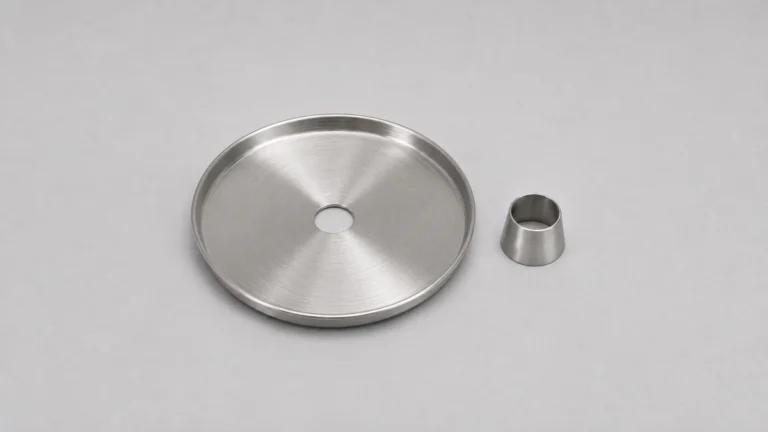
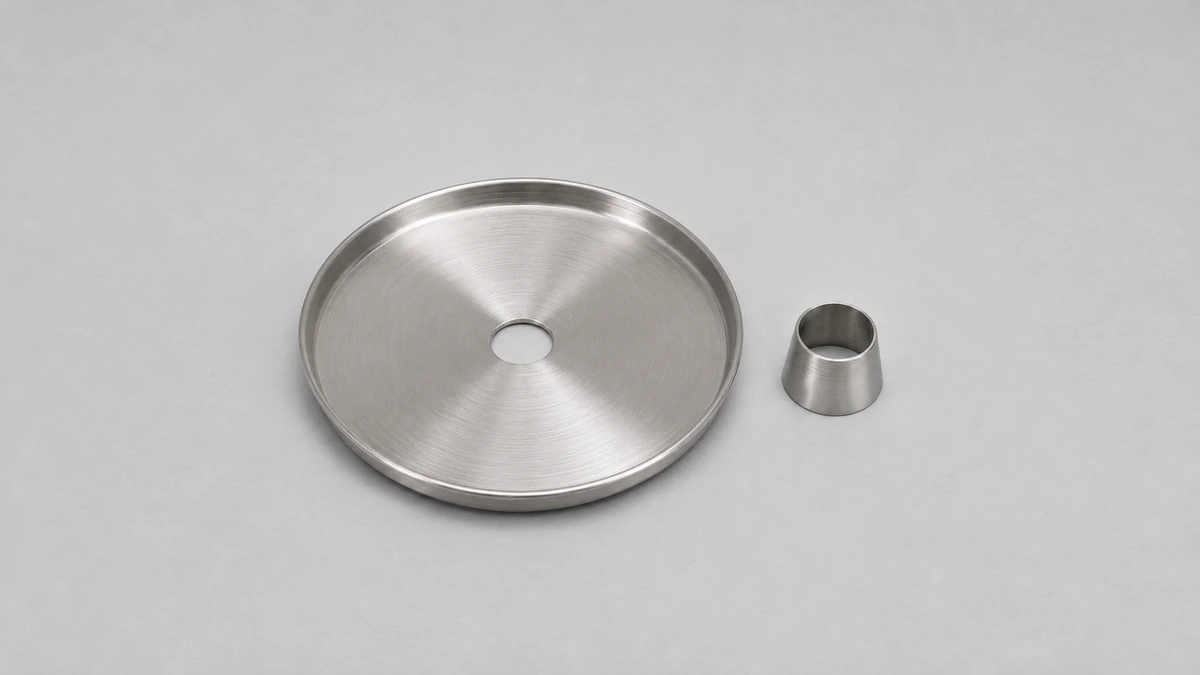
People describing a “hookah tray” are sometimes talking about two different objects. The most common is the wide, flat plate that rides low on the stem, below the bowl, where falling ash and spent coal fragments collect during a session. On other setups, a smaller plate performs a narrower heat-management role closer to the bowl itself, and it is mounted differently from the main stem tray even though both get called “the tray” in casual conversation. Confusing the two matters because advice about one does not automatically apply to the other, and a part that looks similar in a photo can sit on a completely different collar or shoulder underneath.
Describe whether the tray turns while level, moves sideways, or lifts away from its support on one edge. These details are more useful than calling every movement a fault. A discussion about a tray that would not lift away illustrates why another model’s appearance is not a removal instruction. The same identification problem occurs with hookah hoses, decorative sleeves and stems.
⭕ 2. The center hole, the support collar, and ordinary clearance
In a resting mounting arrangement, the center opening surrounds one section while a support surface carries the plate beneath it. Clearance around an opening and contact beneath a plate are different features. Their acceptable dimensions must come from the identified assembly; no general allowance is established here.
A retained mounting arrangement may not release like a simple resting plate. Compare the visible parts with the maker’s diagram rather than treating any circular seam as a joint. Hookah base connections illustrate the same need to identify the original connection in a different part of the assembly.
A broad outer diameter, a center opening and the depth of the dished surface describe different parts of the tray. Two plates can have the same outside width and still have different mounting openings. Two center openings can look similar from above while their surrounding contact surfaces differ underneath. The rounded outside silhouette therefore cannot establish a matching replacement. A maker needs the actual part identification and the relevant mounting information, rather than a statement that both trays are large.
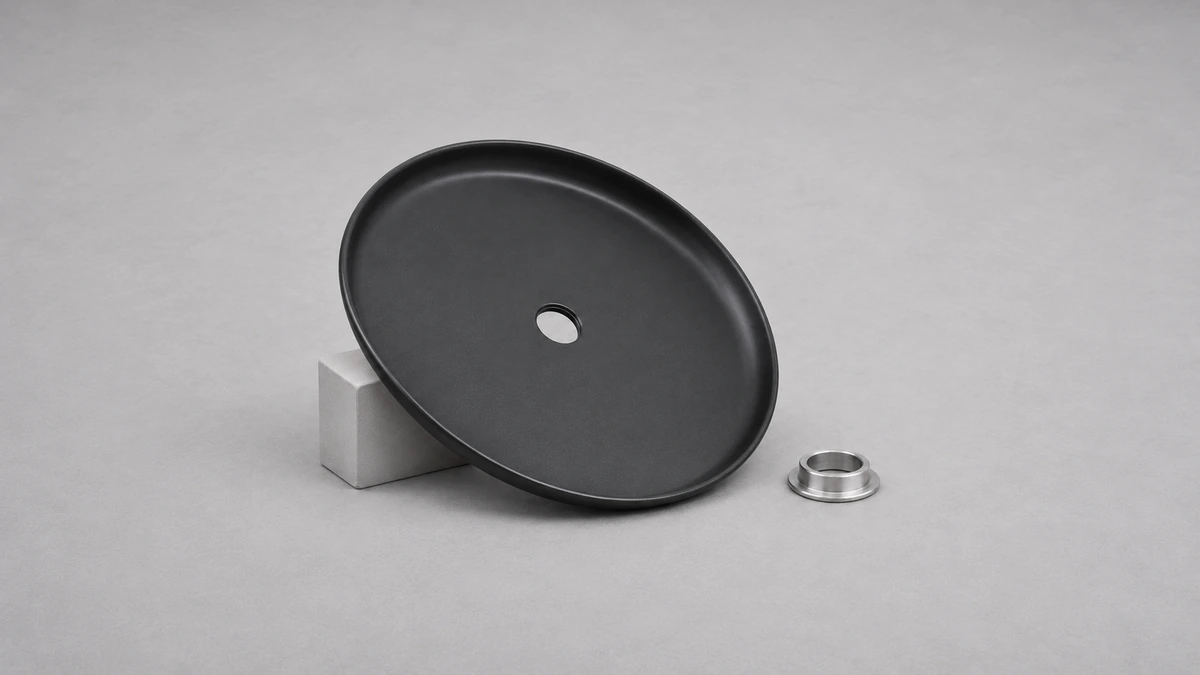
A raised outer lip also belongs to a different location than a raised area around the center. The outer lip defines the edge of the dish; the central area may be associated with its support. A photograph taken straight down can make their height differences hard to see. A separate ordinary side view provides context without requiring a person to bend the plate, remove a retained part or demonstrate movement against another component.
🎯 3. Finding where a rattle is coming from, without forcing anything
A sound near the plate does not confirm which component moved. Note whether visible movement accompanied it and whether the behavior changed after a known event. Do not deliberately tap or twist the assembly to reproduce the noise. Record the observation for the maker instead.
In a discussion of a rattling tray, replies suggested several unrelated modifications. The thread identifies a reader concern but does not validate those suggestions. First establish what the original documentation says supports or retains the plate.
Look at what is visible beneath the center rather than assuming that the outer rim carries the weight. If the documentation shows a separate support collar, retain its original identification along with the tray. A matching color or polish is not a reliable way to pair loose parts from a drawer. A collar belonging to a different assembly may look familiar while answering a different mounting question. This is particularly important with second-hand sets whose original boxes no longer describe every included piece.
The word universal on an accessory listing is a compatibility claim, not a description of the hardware already in front of you. It does not supply the mounting dimensions, identify a retained connection or explain a change that happened to an original plate. Ask what the claim covers before relying on it. A loose original tray and an unidentified replacement tray are separate cases, even when both appear to have a circular hole in the middle.
🛠️ 4. Bent rim, damaged hub, flaking and color change are not the same defect
Describe a bent outer lip separately from a distorted mounting area. A whole-object photograph shows the location of the change, while an underside view may show the visible support. Neither photograph establishes the condition of a hidden contact face.
A scratch, a color patch and a loose flake are different surface observations. Color alone does not establish the cause or which layer changed. Keep unexplained loose material or mounting damage out of service for the maker’s assessment instead of scraping the surface to reveal another layer.
One clear description is that the outside edge looks bent while the center remains visibly level. Another is that the plate looks even around its perimeter but the central area appears distorted. Keep the overall and close photographs together so the location of each observation is preserved. Avoid using a straightedge, another tray or a hand as a lever to turn an uncertain shape into a more definite demonstration. A photograph of its current condition is preferable to a newly altered part.
Likewise, a loose flake should not be rubbed away merely to decide whether the surface underneath looks cleaner. It may be relevant to the maker’s assessment of the finish. Record where it appeared and any known cleaning history. Do not infer the coating process from whether the plate is black, gold-colored or silver-colored: color is not a reliable identification of paint, plating, anodizing, PVD or the uncoated base material.
🧽 5. Finish-specific care instructions exist, and they usually don’t transfer between makers
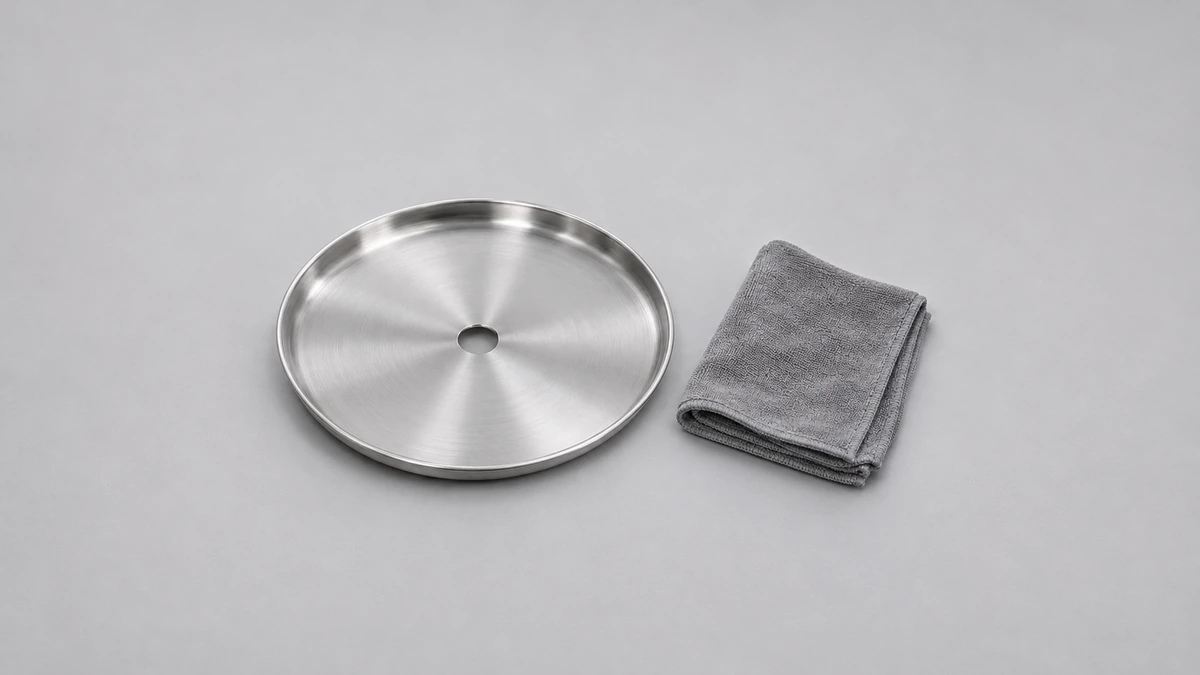
Trays are made and finished in more than one way, and the cleaning guidance that applies to one finish does not automatically apply to another. One maker of PVD-coated accessories, for example, instructs owners to clean with a soft cloth and mild soap, to avoid abrasive pads and acidic cleaners, and to keep the piece out of a dishwasher; the same guidance separates the role of a cold tray catching falling ash from any question of storing hot coals directly on that surface, treating those as two different situations rather than one general rule (manufacturer PVD care instructions).
A separate maker of engraved and painted trays gives different instructions for that different finish: a soft sponge rather than a metal brush, no chemical cleaners, and no pressure washing, along with an explicit warning against leaving hot charcoal resting on the painted surface (engraved tray care guidance). Neither set of instructions is a general rule for metal trays; each is specific to the finish that particular maker applies, and using one maker’s method on a different finish risks the exact damage the instructions were written to prevent. This is also why a universal “metal polish” is not a safe default. Corrosion resistance in stainless steel depends on the grade, the surrounding conditions, and whether deposits or contamination are present, so a treatment suited to one grade or finish is not automatically suited to another (stainless corrosion resistance overview).
🚫 6. When removal is unclear, that is a question for the maker, not a workaround
If the tray does not release as documented, stop and ask about that specific assembly. One owner’s report of finding a workable angle does not provide a method for another mount. Preserve the original geometry while seeking identification.
Do not add magnets, spacers, adhesive or foil to silence an unexplained movement. An improvised addition changes the contact without establishing the cause. If an original part is missing, identify that absence rather than replacing it with an unrelated object.
The original care leaflet can matter even when two surfaces appear to be the same metal. A tray described as coated stainless steel has both a substrate description and a surface description. Guidance for the base metal does not automatically cover the surface above it. Steamulation’s linked PVD instructions are an example of a maker placing limits on the finished surface, while the separate engraved-tray instructions address a different product. Neither example turns a household metal cleaner into a default treatment.
Read a cleaning claim at the level it is actually made. A product may describe removing marks from one kind of surface without saying it is compatible with every decorative layer or attached seal. A successful-looking wipe also does not answer a mounting question: the plate may look cleaner while its center opening, support or missing original part remains unchanged. Keep the visible finish and the original fit as two separate records when asking for guidance.
📦 7. Storing the tray on its original support, and case fit
Use the original packing guidance for the actual assembly. Do not assume the tray must stay on the stem in transit simply because it can rest there on a table. A retained component should not be forced apart merely to fit another case.
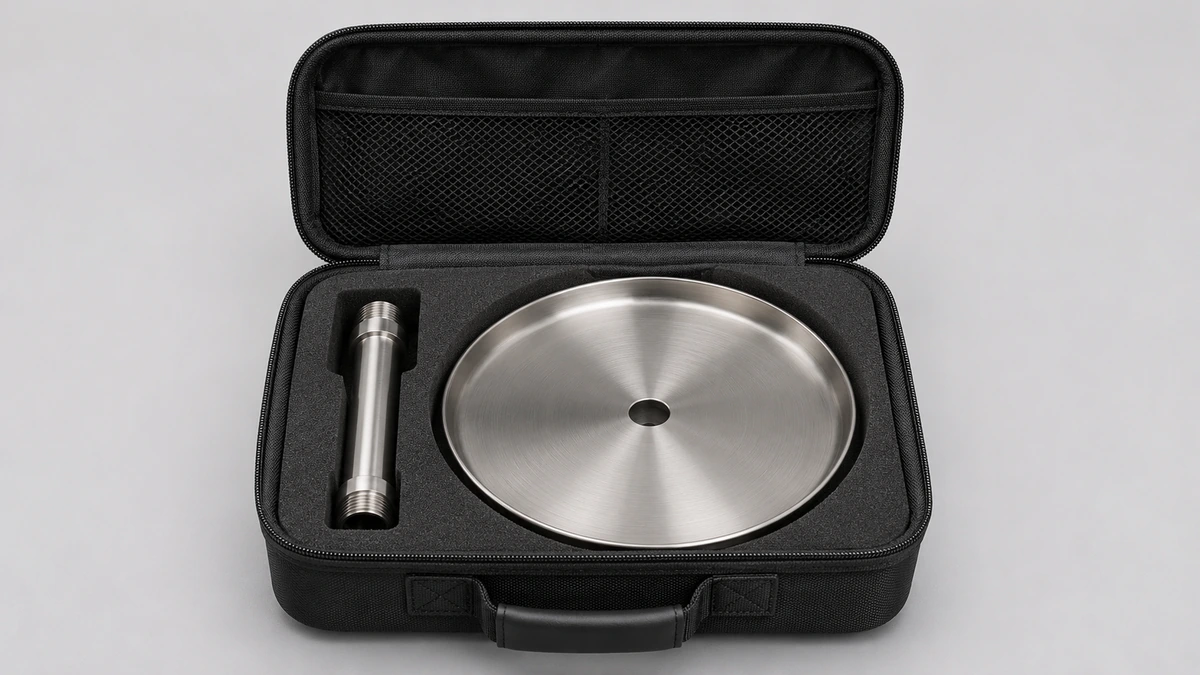
Packing and case choices follow the same logic. A travel case built around one external silhouette does not necessarily give a tray, a stem, and a base each their own appropriately sized space, and a tray resting loose against a metal stem or a glass base in transit is a common way for a fine rim to end up slightly bent without anyone noticing until the next time the hookah is assembled. That question, whether separate compartments exist for each distinct shape rather than one shared outline, is covered in more detail in this look at case fit for vase, stem, and lid clearance. None of this requires guessing at a fix for a loose tray; it only requires treating storage as its own separate question from whatever is actually happening at the center hole.
Before packing, distinguish the usable compartment from the case’s outside dimensions. The fabric around a recess, a raised pocket in the lid and another rigid part beside the tray all occupy space. A circular outline alone says little about what contacts the plate when the lid closes. Use the documented packing arrangement rather than pressing the lid to make the contents fit. This protects the evidence of the existing condition while the original mounting or finish question remains unresolved.