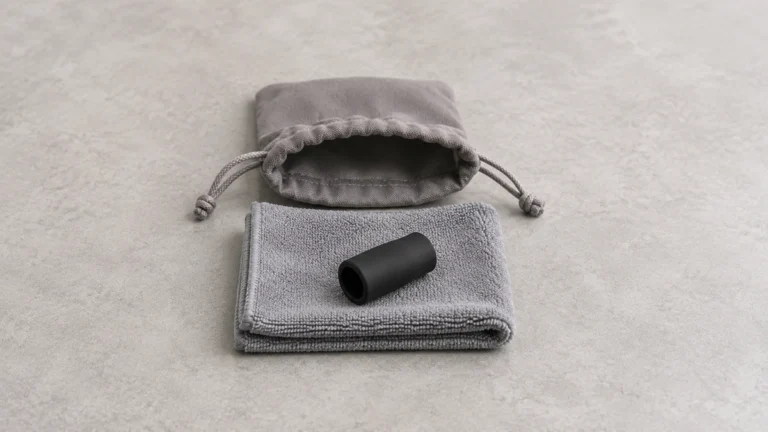
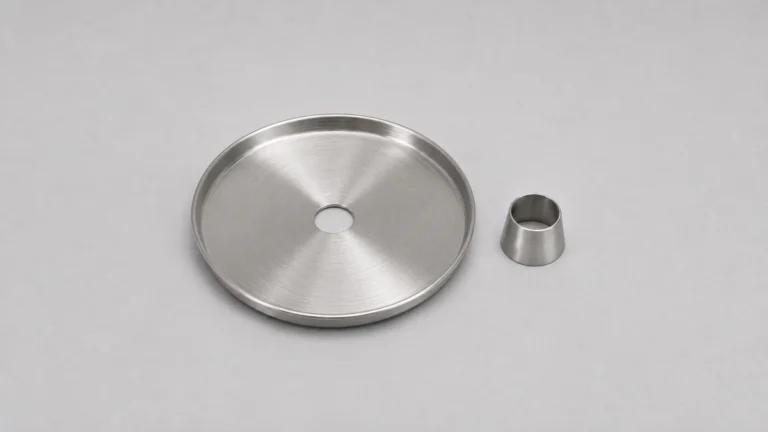
Hookah tips may mean a short end accessory, a soft connector or a complete handle. These are different components. Identify the original object and its separate parts before interpreting a name printed on an accessory bag.
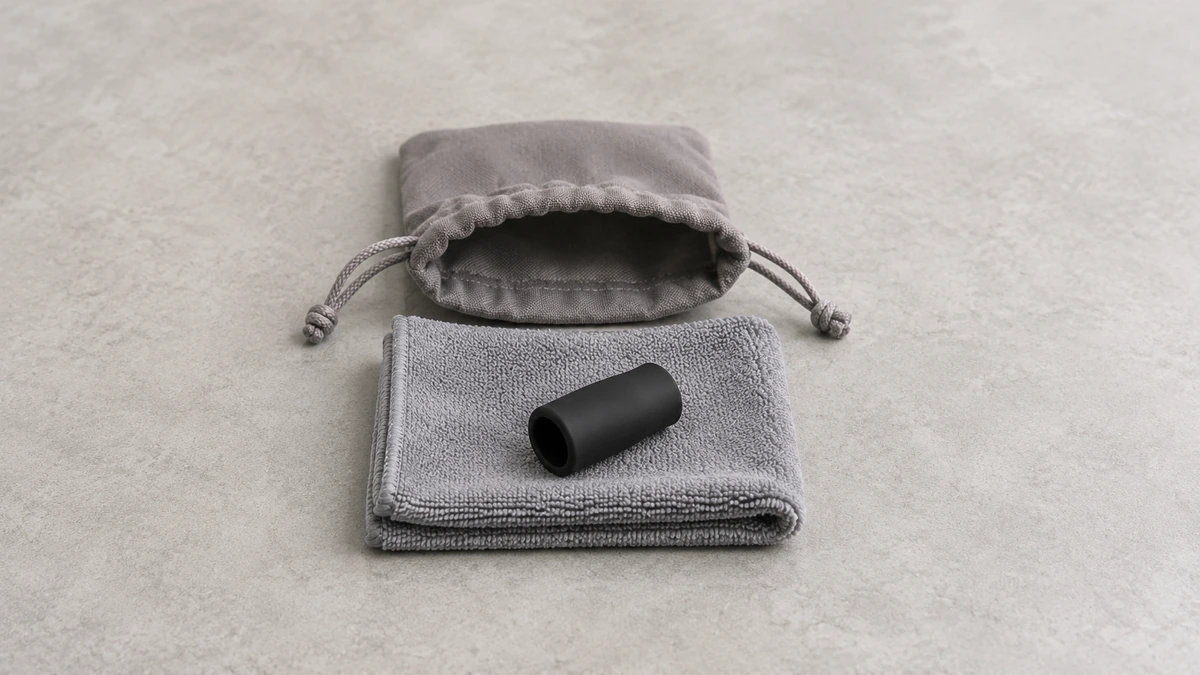
🔍 1. Hookah tips are not complete hose handles
Consider a hypothetical scenario: imagine a person orders a set labeled “hookah tips” expecting a handful of small mouth covers, and the package instead arrives with full hose-end sleeves that are considerably longer and made of a different material than expected. Nothing was defective; the mismatch exists in the name itself. This kind of labeling gap shows up repeatedly across retail listings, where sellers use whichever term seems most searchable rather than a name tied to a specific physical design. Readers trying to identify what they own are better served by looking at the object’s size, shape, and attachment style than by trusting the word printed on a bag.
👄 2. The Mouthpiece Naming Confusion
A manufacturer parts diagram labels mouth tip, mouthpiece, flexible hose and adapter separately. That is an example of maker-specific nomenclature, not a naming rule that every assembly follows.
This split naming convention creates a practical identification problem. A person holding a loose accessory and trying to describe it to a seller, a forum, or a parts department may use the word “mouthpiece” while the listener assumes a completely different component. Without a maker-specific parts sheet, there is often no way to know whether a given manufacturer treats the terms as separate categories or as overlapping synonyms. A different pipe-component family, discussed in a piece on pipe mouthpiece, stem, and tenon cover fit, follows its own naming logic that does not automatically transfer to hose-end tips, reinforcing that naming conventions are local to each product family rather than universal across the hobby.
A wide view is useful when several small parts have been put in the same pouch. A close image of an opening may hide whether it belongs to a short accessory or to the end of a much longer handle. Photograph the complete objects separately, with their original packaging if it remains available. The purpose is to preserve the physical distinction, not to infer a connection from a visual resemblance.
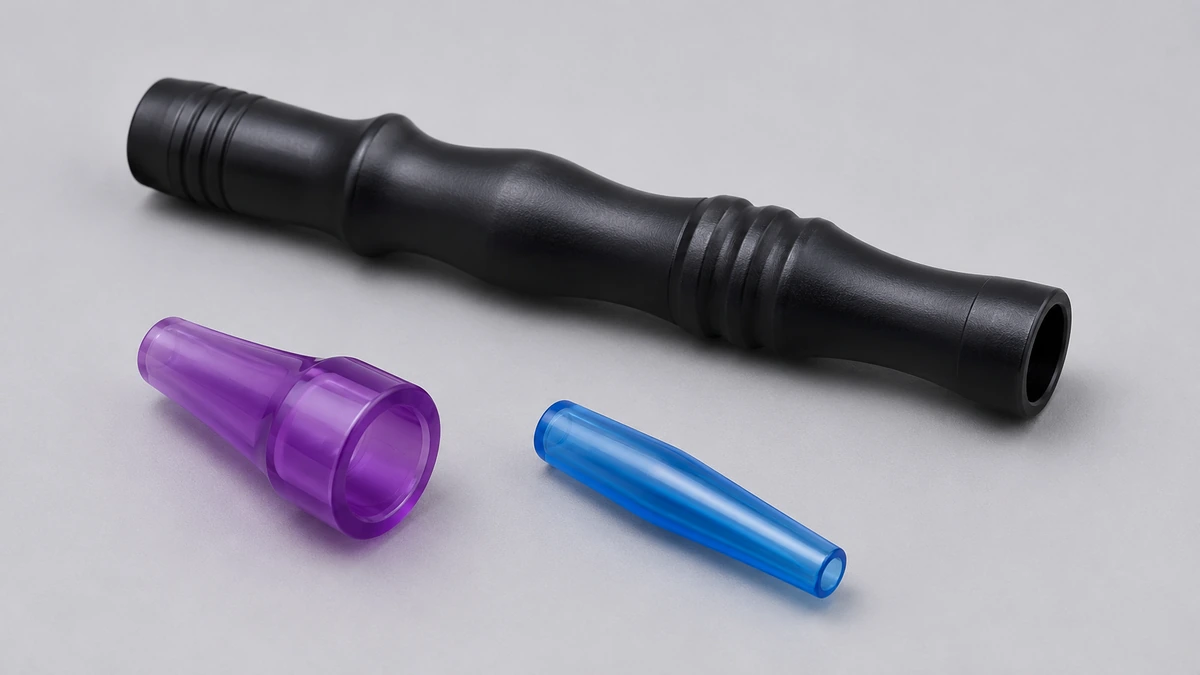
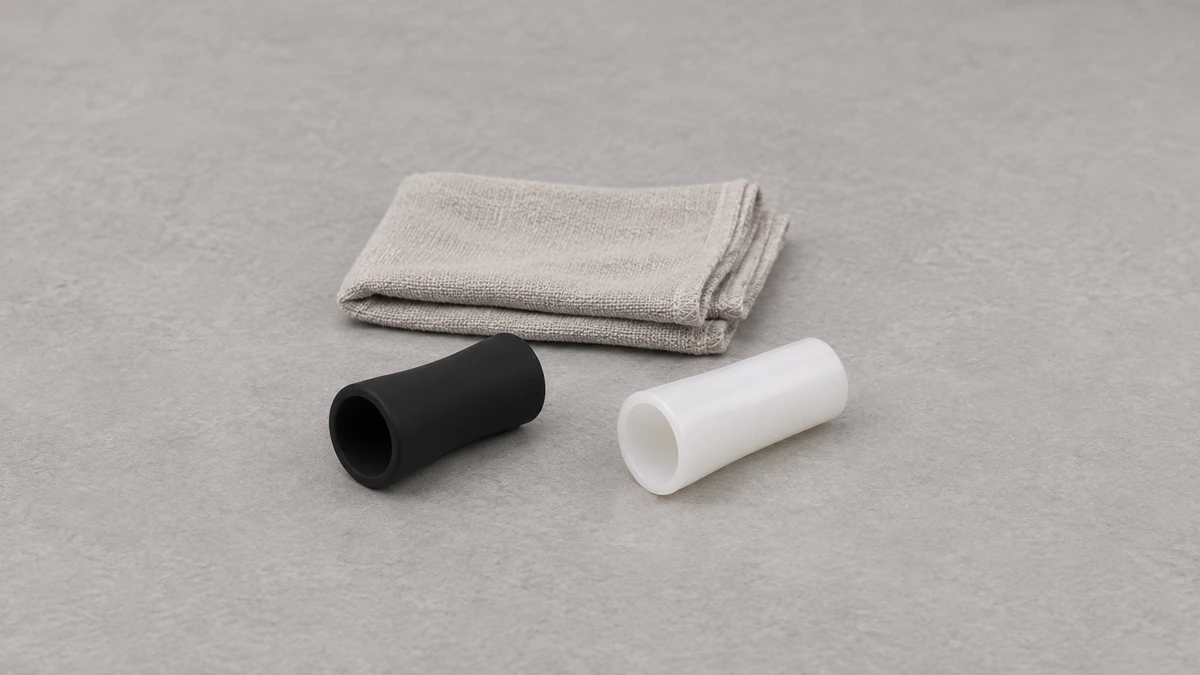
For example, a detached soft piece might be described as a cover, sleeve or connector. Those words suggest possible roles but do not establish which side of an original assembly it belonged to. The maker’s parts list may distinguish it from the decorative rigid body beside it. Keep that distinction rather than treating every loose soft part as a spare for another accessory.
🔄 3. Inside and Outside Labels Describe Geometry, Not Size
Retail listings for hose-end accessories often include the words “inside fit” or “outside fit.” These labels describe a geometric relationship, not a measurement. An outside-fit accessory is shaped to slip over the exterior of a hose end, enclosing it from the outside. An inside-fit accessory is shaped to be inserted so that the hose end instead surrounds part of the accessory. Neither label tells a reader how wide, long, or thick the part actually is. Two accessories can both be labeled “outside fit” and still differ enough in actual dimension that one works with a given hose and the other does not.
A manufacturer accessory guide separates short tips from hose handles and distinguishes inside and outside connector categories. Those descriptions identify component types without supplying dimensions for an unknown loose part.
This separation of geometry from size is worth sitting with, because a listing that mentions “inside fit” can sound reassuringly specific without actually being specific at all. A reader comparing two accessories from different sellers, both marked inside fit, has learned how each part is oriented relative to a hose end, but has learned nothing about whether either one will physically match a particular hose without separately checking actual dimensions, which neither label provides.
An inside opening and the outside width of a body are independent dimensions. An accessory can look broad in a side photograph while its visible opening remains narrow, or have a thin wall around a comparatively broad opening. A single outside measurement therefore does not describe every surface at a connection. This geometric distinction explains why appearance alone cannot answer a question about an unidentified connector.
The overall length is a separate description again. A long outer body does not establish the length of the actual connecting section, and a short accessory can have a shape that is difficult to infer from a photograph taken directly from the end. Preserve both a side view and an end view when seeking identification. Neither view should be turned into a reason to push the pieces together or modify a tight part.
📏 4. Why “Jumbo” and “Standard” Are Names, Not Specifications
This matters particularly for anyone trying to match a loose accessory to a hose purchased separately, sometimes years apart or from an entirely different brand. The size words printed on either item’s original packaging, if that packaging still exists at all, describe each seller’s internal naming choice, not a shared industry scale. Treating “jumbo” as equivalent to a specific millimeter range, based on one brand’s usage, risks misapplying that assumption to a second brand’s unrelated product line.
Words such as standard and jumbo do not provide a dimension by themselves. If a maker defines one of those words within an identified product range, retain that definition with the range rather than transferring it to an unrelated accessory. In a discussion of regular and jumbo tips, the owner’s question was precisely whether the name actually meant a different opening. The replies did not supply verified dimensions for every alternative.
Another discussion about an unmatched tip quickly moved toward products and improvised treatments. That is not the evidence needed to identify the original object. A useful description instead retains the original label, the known handle identification and the particular dimension or shape that remains unknown. It can end with an unanswered question without becoming a recommendation.
🧩 5. Rigid Body, Soft Connector: Two Materials, Two Jobs
Many hose-end accessories are not made from a single material. A common design pairs a rigid section, often hard plastic, wood, or metal, with a softer connector section, often silicone or a rubber-like compound, joined at one end of the part. The rigid section typically forms the body a person would hold or that gives the accessory its outer shape, while the softer section forms the connecting surface that meets the hose. These two sections can wear differently, respond differently to handling, and carry different care considerations, precisely because they are not the same material.
The care instructions for one material or surface do not identify the construction of another accessory. A maker’s PVD care leaflet, for example, concerns the specified coated surface. It does not authorize a treatment for an unrelated soft connector or mixed-material object.
Separately, the hose itself, which connects to these end accessories, is its own component with its own material questions, covered in a dedicated discussion of hose, sleeve, and stem construction. The point carried over from that distinction is the same one at play here: a hookah assembly is rarely one uniform material end to end, and identifying a part correctly often requires separating the rigid structural piece from the soft connecting piece rather than treating the whole accessory as a single, uniform object.
📦 6. What Packaging and “Single-Use” Labels Do Not Tell You
Keep the original maker’s single-use or reusable classification with the item. These classifications should not be guessed from whether a surface looks rigid, soft, glossy or matte. They do not by themselves supply a cleaning method, specify removable parts or identify an unknown material. An unlabeled accessory remains unlabeled even when another piece in the same bag has familiar instructions.
The condition of the package and the identity of its contents are also separate records. A branded pouch can contain loose accessories from more than one original set. Likewise, a replacement soft connector can be stored beside an original rigid body without that pairing being documented. Preserve the distinction between what the maker described and what happens to be together in the drawer today.
For a visibly damaged accessory, record the location of the change rather than using it to infer the material. A missing edge, a split soft opening and a separated decorative surface are different observations. They do not establish the same cause or a common repair. Keep a doubtful part aside and ask the original maker about it without trimming, heating, stretching or applying an unknown treatment.
🗄️ 7. Keeping Loose Accessories Identifiable in Storage
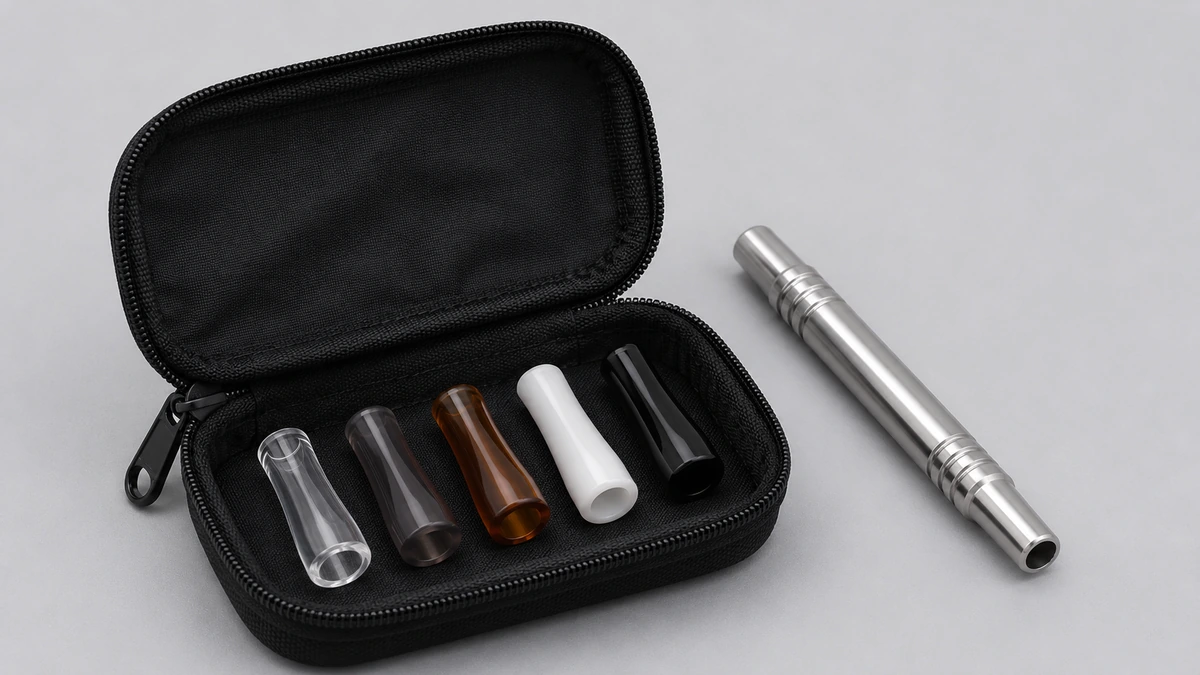
Once an accessory is separated from its original packaging, identifying it later becomes noticeably harder. A soft connector sleeve removed from its box and placed in a drawer alongside several similar-looking items from unrelated products can be difficult to trace back to a specific maker or model months later, especially once any printed labeling has worn off or was never present on the item itself. Keeping such loose parts dry and physically separated, rather than mixed together in a single container, is a simple way to preserve whatever limited identifying information might still be visible on the piece itself, such as a molded logo or a distinct seam pattern.
When an accessory genuinely cannot be identified, whether by naming convention, size category, or material composition, the question of what it actually is and where it came from belongs with the item’s original manufacturer rather than with general discussion among hobbyists, since only the maker can speak authoritatively to their own product line’s naming and construction choices. This also applies to accessories meant to travel inside a storage case alongside a stem or vase assembly; the clearance and compartment questions that arise there are addressed separately in a discussion of case fit around a vase, stem, and lid, and that same logic, that fit and storage questions are specific to each case design rather than universal across products, applies equally to loose hose-end accessories kept outside their original packaging.
A storage recess has at least two relevant shapes: the space around the rigid body and the room around any projecting connector. A slot that visually matches the larger body may still press against the smaller end when the pouch closes. Use the documented storage arrangement for the actual accessory rather than forcing a zip closed. A familiar silhouette is not a protective-fit test.
Keep loose components identifiable during permitted drying and storage. An original ring or soft piece can be difficult to distinguish from another once it is mixed with unrelated hardware. A plain label on the storage container and the original parts description are more useful than guessing later from color. This records identity without claiming that the storage arrangement changes the accessory’s performance.