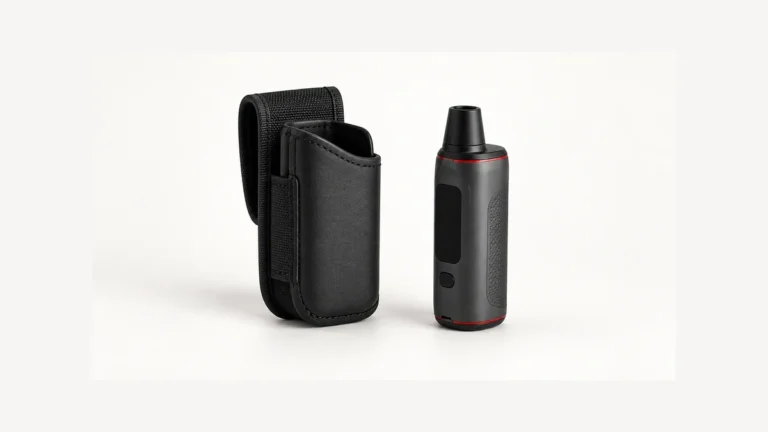
There’s no single answer to how long a 1g cart lasts, and that’s the honest starting point. A cartridge that lasts one person four days might last another person three weeks, because “how long” really means “how much liquid is used per session, how often, and under what device settings.” Instead of chasing a universal number, it helps to build a rough estimate from your own habits and hardware.
🧭 1. A 1g cart has no fixed number of days
Search around and you’ll find wildly different claims about how long a gram of vape liquid lasts. That spread isn’t because people are lying or using bad math — it’s because “1 gram” describes a quantity of liquid, not a quantity of time. Time depends on how much of that liquid gets vaporized per draw and how many draws happen per day. Two people with identical cartridges can land on very different numbers just from differences in draw length, session frequency, and device power.
This is also why online estimates and forum comments about cartridge life are all over the map. Someone describing a cart lasting a few days and someone describing weeks aren’t necessarily contradicting each other — they’re usually describing different consumption patterns on different hardware, not reporting a defect or a design flaw. Treat any specific day count you read as a data point about that person’s habits, not a benchmark for your own cartridge.
🧩 2. Estimate by consumption pattern instead of anecdotes
A more useful approach is to work backward from your own usage rather than forward from a stranger’s timeline. Start with the two variables that actually determine cartridge life: how much liquid you use per session, and how many sessions you have per day. If you know roughly how many sessions you tend to take in a day and can compare that to how quickly the liquid level in the tank visibly drops, you can build a personal estimate that’s far more accurate than any generic answer.
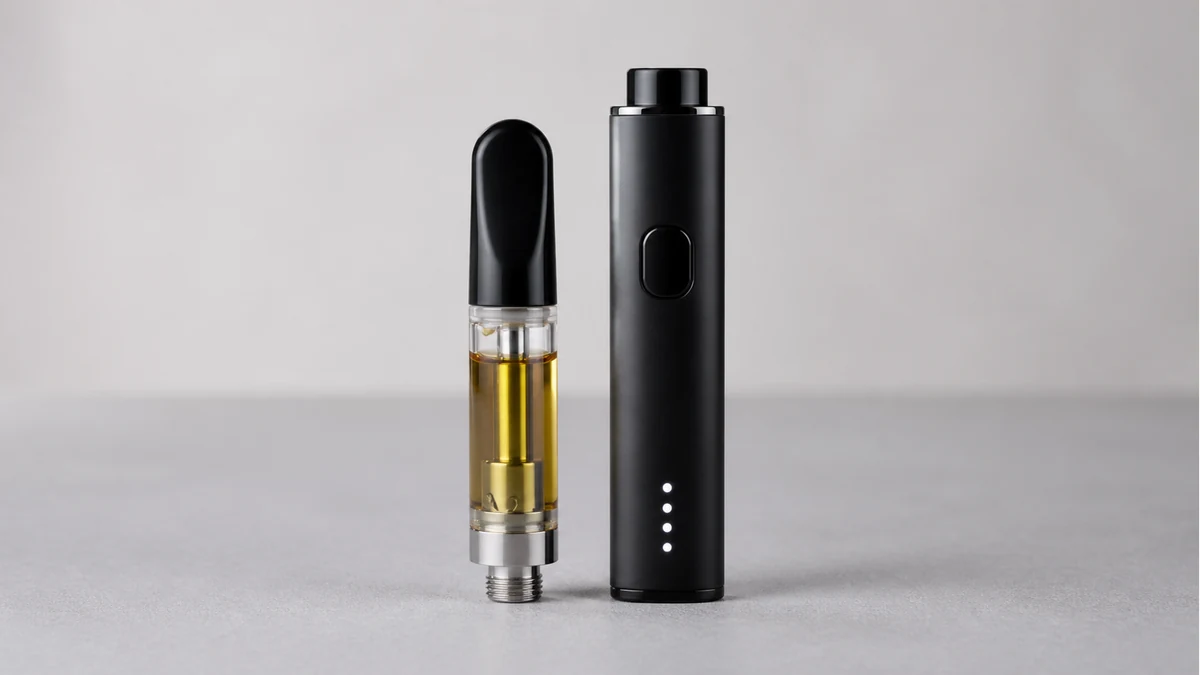
Because liquid volume in most 510-thread cartridges is visible through the tank window, the simplest tracking method is just periodic visual checks — noting roughly what fraction of the tank remains after a set number of sessions, rather than trying to measure exact volume. That ratio, extrapolated across your typical week, gives a workable estimate without requiring any precise measurement equipment.
🛠️ 3. Hardware settings change liquid use
Device power is one of the biggest variables in how fast a cartridge empties, and it’s largely under your control. Higher voltage or wattage settings heat the coil more aggressively, which vaporizes more liquid per draw. A cartridge run consistently on a low-power setting will generally stretch further than the same cartridge run on a high-power setting, simply because less liquid is being converted to vapor in each draw.
Preheat functions add another variable. Preheating warms the coil and surrounding liquid before the main draw, which can pull additional liquid into the wick before you even inhale. Whether that’s worth the tradeoff depends on your device and your priorities — our guide to what preheating a cart does breaks down the mechanics in more detail. The general principle — more power and more preheating both mean faster liquid use — holds across most 510-thread hardware, but exact settings and their effects vary by device, so check your device’s manual for specifics rather than assuming your cartridge behaves like someone else’s.
🌡️ 4. Leaks, clogs, and residue reduce usable volume
Not all of the labeled 1g ever actually gets vaporized and inhaled. Every cartridge design leaves some amount of liquid unreachable by the wick, particularly near the bottom and edges of the tank, once the liquid level drops low enough that it can no longer make consistent contact with the heating element. That unusable residue isn’t a malfunction — it’s a normal characteristic of vape cartridge design — but it does mean the effective usable volume is somewhat less than the full gram.
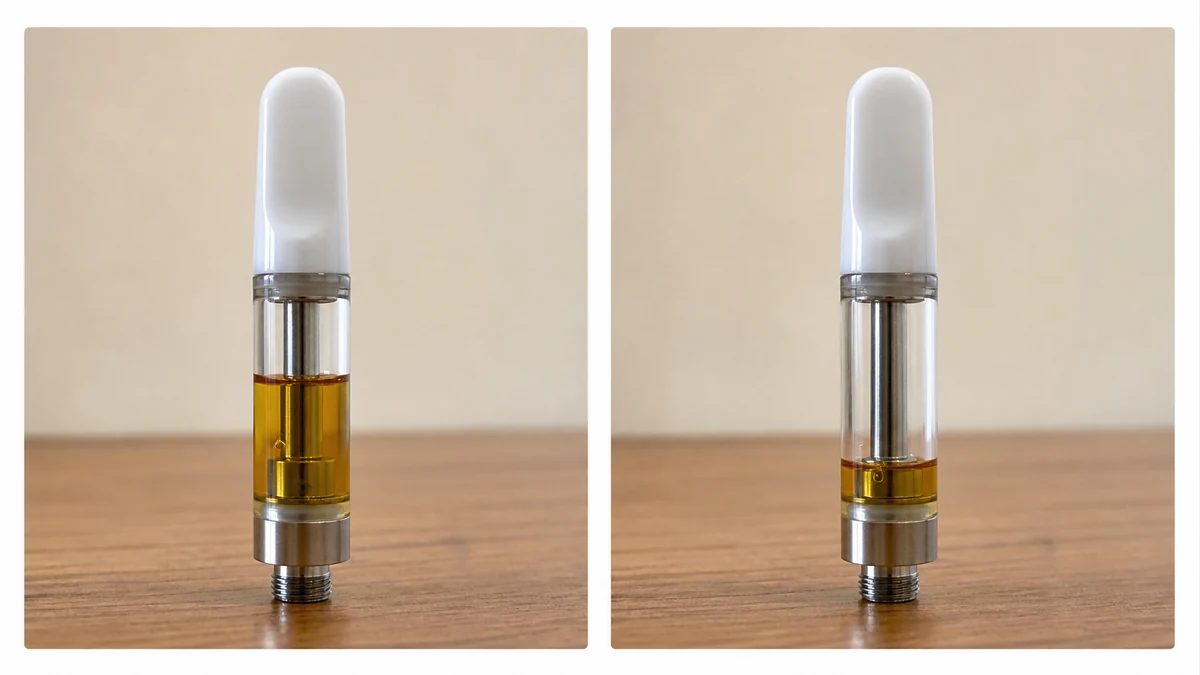
Leaks and clogs cut into usable volume more unpredictably. A cartridge stored on its side or upside down, or exposed to temperature swings, can leak liquid out through the airflow path or around the mouthpiece, losing product without a single draw being taken. Clogged airflow or a saturated wick can have the opposite visible symptom — weak or absent vapor — while liquid still sits unused in the tank. If you’re using a refillable system, proper filling technique and storage orientation make a measurable difference in how much of the liquid you actually get to use; see our refillable vape cartridge guide for storage and filling practices that reduce leakage.
💨 5. Why puff-count and potency math can mislead
It’s tempting to try to calculate cartridge life with precision: divide the total liquid amount by an assumed number of puffs, or by a potency figure, and arrive at a clean number. This math looks rigorous but rests on inputs that aren’t fixed. Draw length varies from one inhale to the next, even for the same person, so “puffs” isn’t a consistent unit of liquid consumed. Not all of the liquid drawn into the wick during a puff is fully vaporized and inhaled, either — some stays in the wick, some condenses, and airflow efficiency differs by device and coil condition.
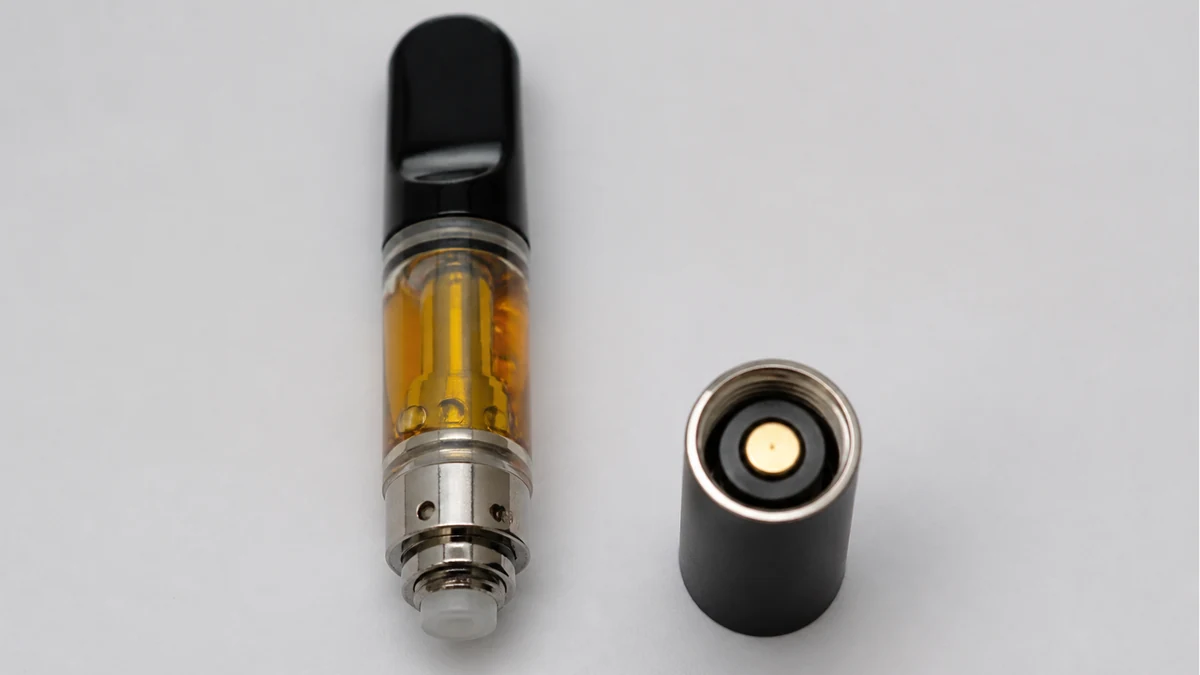
Potency-based math compounds the problem, because it assumes a fixed, evenly distributed concentration and a fixed conversion from puff to dose — assumptions that don’t hold up in practice and that we won’t attempt to quantify here. This is why we’re not going to walk through per-puff dosage arithmetic or make any claims about how much reaches you per draw. That kind of precision implies a level of control that cartridge hardware and personal draw habits simply don’t provide. Estimating cartridge life by pattern and observation, as described above, is more honest than treating a cartridge like a metered dosing device.
🧼 6. Track one cartridge without turning it into a test
You don’t need a spreadsheet to get a useful estimate of how long your cartridges last. A simple approach: pick one cartridge, note the date you start using it, and check the liquid level at a few natural intervals — say, every few days — rather than after every session. After a week or two, you’ll have a rough sense of your personal burn rate that you can apply to future cartridges of the same size on the same device and settings.
If you switch devices, wattage settings, or how often you use preheat, expect that estimate to shift — recheck rather than assuming your old numbers still apply. The goal here isn’t precision measurement; it’s building a realistic personal baseline so that when a cartridge empties faster or slower than expected, you actually notice the deviation instead of just wondering why “the internet’s number” didn’t match your experience.
🧩 6.1 Build a personal estimate from two measurements
Write down the date a new cartridge enters service and photograph the liquid level in the same upright position and lighting. Check it again after a normal week. The change gives a more useful personal baseline than another person’s answer because it captures your device, settings, draw pattern, and storage habits. If the first week included unusual travel or heavy use, keep tracking rather than multiplying that week into a confident forecast.
The result should stay a consumption estimate, not a dose calculation. A cartridge label may state total mass and concentration, but a visible change in level does not tell you exactly what reached the user on each draw. Heater efficiency, condensation, residue, puff duration, and product formulation all interrupt that arithmetic. Use labeled product information for what the package actually states, and do not turn a rough hardware estimate into medical guidance.
🧩 6.2 Separate use from loss
If the level falls faster than the session pattern explains, inspect the cartridge while it is cool. Look for liquid around the base, center contact, air inlets, mouthpiece, and the point where glass or plastic meets metal. A sticky battery connection suggests leakage, while gurgling may indicate flooding or excess liquid in the airpath. Stop using a cracked or visibly leaking cartridge; wiping the exterior does not restore a failed seal.
Storage can change what appears usable. Heat can reduce viscosity and encourage liquid to migrate, while a cartridge left on its side may wet areas that were not designed to hold pooled material. Follow the maker’s orientation and temperature guidance. Do not apply open flame or aggressive heat to recover the last film from the wall.
🧩 6.3 Why the last portion often behaves differently
A cartridge rarely delivers every visible trace. Some liquid remains on the wall, around inlet openings, or inside the ceramic and wick structure. Near the end, an inlet can become uncovered when the cartridge tilts, causing a dry or inconsistent draw even though a thin layer remains elsewhere. That does not automatically mean the battery needs more voltage.
When performance changes, let the cartridge settle upright and return to the documented power range. Repeated preheats and longer draws may consume more liquid while baking residue onto the heater. If the cart remains clogged, tastes scorched, or leaks, treat that as a hardware condition—not a challenge to empty the final drop.
A second cartridge is not automatically a fair comparison. Different oils, inlet layouts, heater materials, and device settings can produce different consumption even when both packages say 1g. Compare repeated use of the same cartridge family before deciding that a single fast or slow result represents normal service life. The honest answer is a practical range built from careful observation, not a universal promise.
⚖️ 7. When fast loss points to a hardware problem
Sometimes a cartridge draining much faster than your established baseline isn’t about consumption pattern at all — it’s a sign something’s off with the hardware. A cracked tank, a loose connection at the 510 thread, or a damaged seal around the mouthpiece can all let liquid escape without producing a single puff worth of vapor. If you notice liquid pooling around the connection point, an unexpected drop in level between checks, or an oily residue where the cartridge meets the battery, that’s a leak, not unusually heavy use.
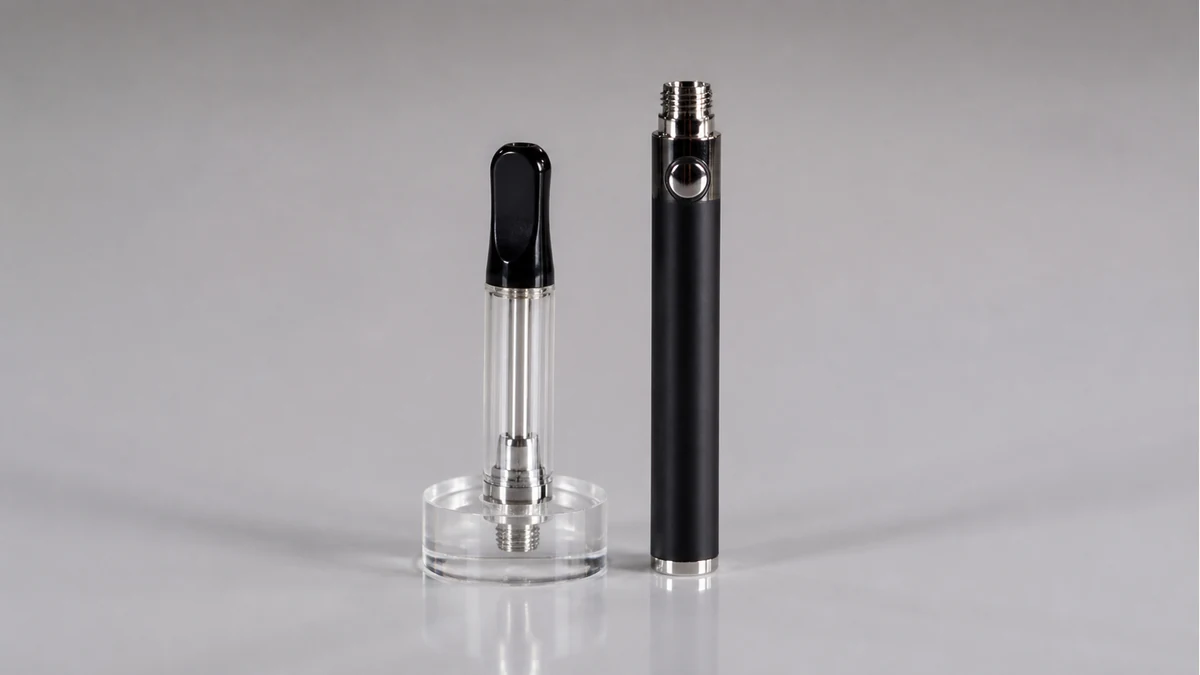
An unexpected odor is another useful cue worth paying attention to, since leaking liquid outside the sealed vapor path can produce a smell that a properly functioning, sealed cartridge normally wouldn’t — our piece on whether carts smell walks through what’s typical versus what suggests a leak. Gurgling sounds, a sudden drop in vapor production despite an unchanged draw, or visible liquid in the mouthpiece are similarly worth treating as troubleshooting signals rather than just chalking up to fast use. Because failure symptoms and fixes differ by device design and thread type, check your specific hardware’s manual for troubleshooting steps once you suspect a leak or clog — general principles point you toward the problem, but the manufacturer’s instructions are the right source for what to do about your particular device.
📚 8. Sources and Reader Questions Reviewed
Reddit discussions informed reader questions and failure scenarios only; they were not used as proof of technical, health, safety, or legal claims. Technical statements follow manufacturer-specific instructions where applicable.