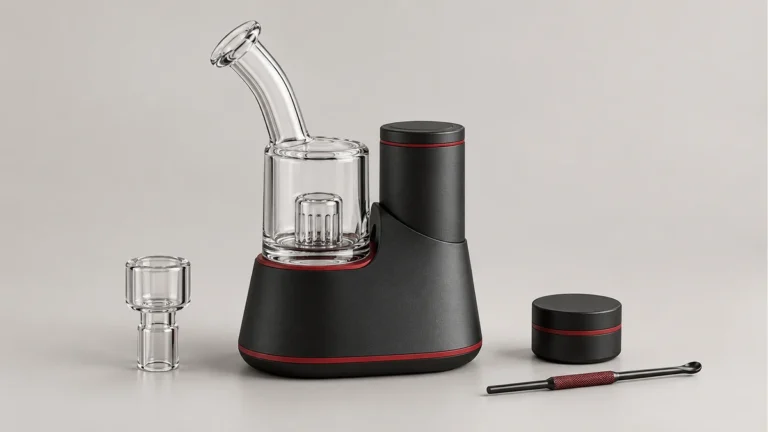
An induction dab rig uses a changing magnetic field to heat an electrically conductive receiver. A separate quartz insert, where documented, receives heat from that receiver rather than being the conductive workpiece itself. That distinction answers a common question: which part actually gets heated? The word induction identifies an energy pathway, not a complete material specification or a guarantee about temperature control. Separating the field-generating coil, heated receiver, contact surface and control interface makes the description much easier to understand.
⚙️ 1. What the Induction Label Actually Describes
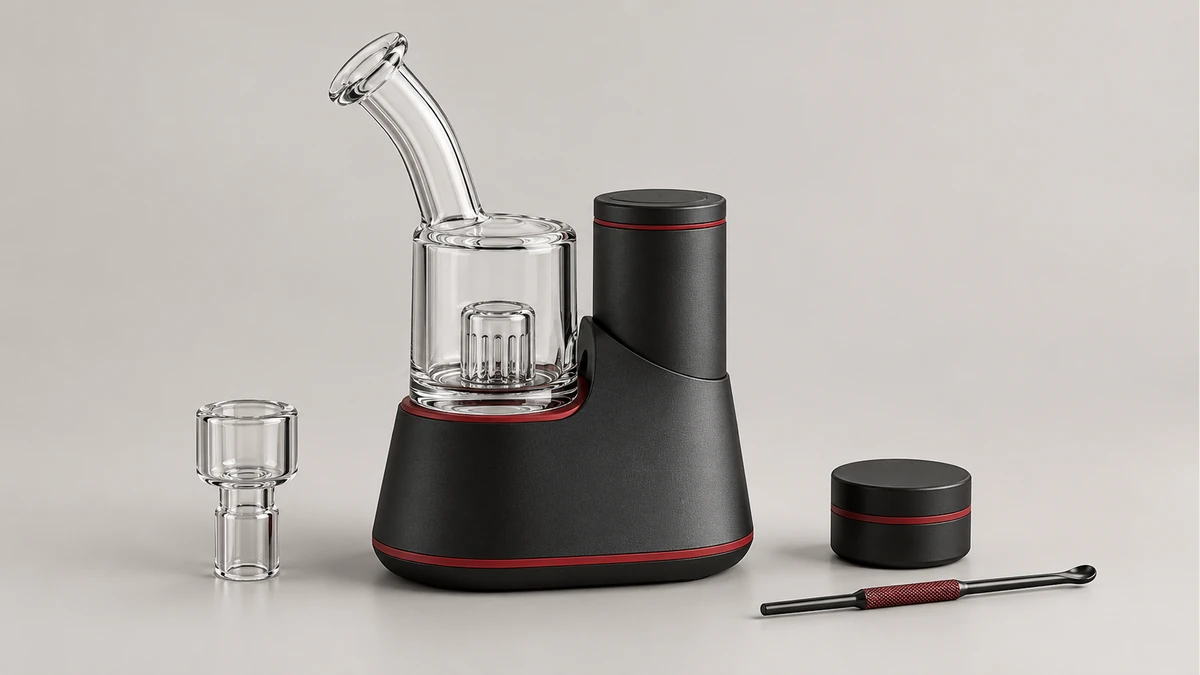
The label names the heating mechanism. A changing magnetic field can induce electrical currents in a suitable conductive receiver; resistance within that receiver produces heat. The coil and receiver therefore have different jobs, even if both are hidden inside one housing. The label does not also specify a temperature range, a removable insert or the type of controller. To understand a particular device, ask which component receives energy and which component forms the accessible working surface. These may be the same part or separate parts of an assembly. A product photograph can show an empty cup while leaving that relationship unresolved. Similarly, a screen beside the cup shows that an interface exists, but not what it measures. Keeping those questions separate avoids assuming an induction unit has a particular feature simply because another electric rig does.
🧲 2. The Work Coil and the Workpiece
Industrial terminology calls the field-generating component the work coil and the heated conductive object the workpiece. Ambrell’s technical primer explains that a conductive susceptor can receive energy and transfer heat to a nonconductive piece. This provides vocabulary for understanding a layered assembly. It does not establish the location, cooling arrangement, frequency or power of the coil in any consumer device. Those details require documentation for the actual unit. A picture of a cup beside a housing cannot reveal them.
🍽️ 3. Receiver Versus Loading Insert
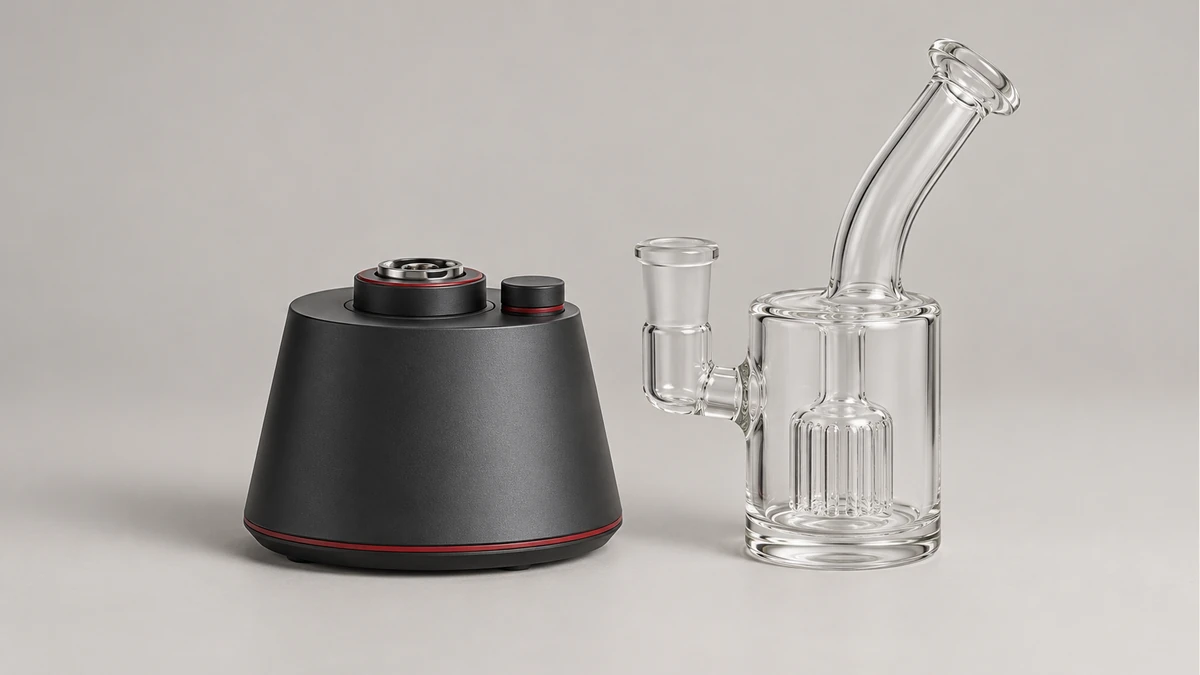
In the layered arrangement considered here, a conductive receiving piece and an inner insert are distinct parts. A quartz dish can sit inside a metal receiver without being the conductive workpiece itself. The same everyday word, cup, might name the outer piece, the inner piece or the complete assembly. That is why a replacement-part name matters when someone asks what needs cleaning or replacing. If the instructions call for removing an insert, identify that insert in the drawing rather than treating every part around it as removable. Do not infer an invisible receiver’s alloy from the color of the loading surface. A clear inner dish, white surface and metal rim describe appearances; they do not, by themselves, identify the whole assembly’s construction.
🧩 3.1 A Documented Layered Assembly
A narrow documented example appears in Dr. Dabber’s original Switch knowledge base: a quartz dish sits inside a titanium induction cup, and other cups have a ceramic coating over titanium. This illustrates receiver, insert and coating as different descriptions. It does not establish compatibility with another device or a general specification for induction rigs.
🧱 4. Material Word Versus Complete Assembly
A material name such as titanium or quartz needs an identified component before it can describe the heated assembly. Titanium is conductive and can function as a work coil’s receiver; an electrically nonconductive quartz insert is not the conductive receiver in the layered arrangement described here. When a listing or a forum post says a rig is “titanium” or “quartz induction,” the accurate reading is that one named material is present somewhere in the heated assembly, while the rest of the stack, including the coil, any intermediate conductive receiver, and the insert the substance actually touches, is unstated.
This ambiguity appears in discussion threads where readers ask directly what part of the device is actually being heated and how. A promotional maker’s thread on r/trees prompted questions about temperature, while the maker’s response described a moving heated component. That exchange raises two separate questions about the hardware: which piece is heated, and what a stated temperature refers to. The account is a reader question and a maker’s explanation, not an independent temperature test. Naming one material is not the same as describing the complete energy path from coil to receiver to insert, and the two are often conflated in casual descriptions.
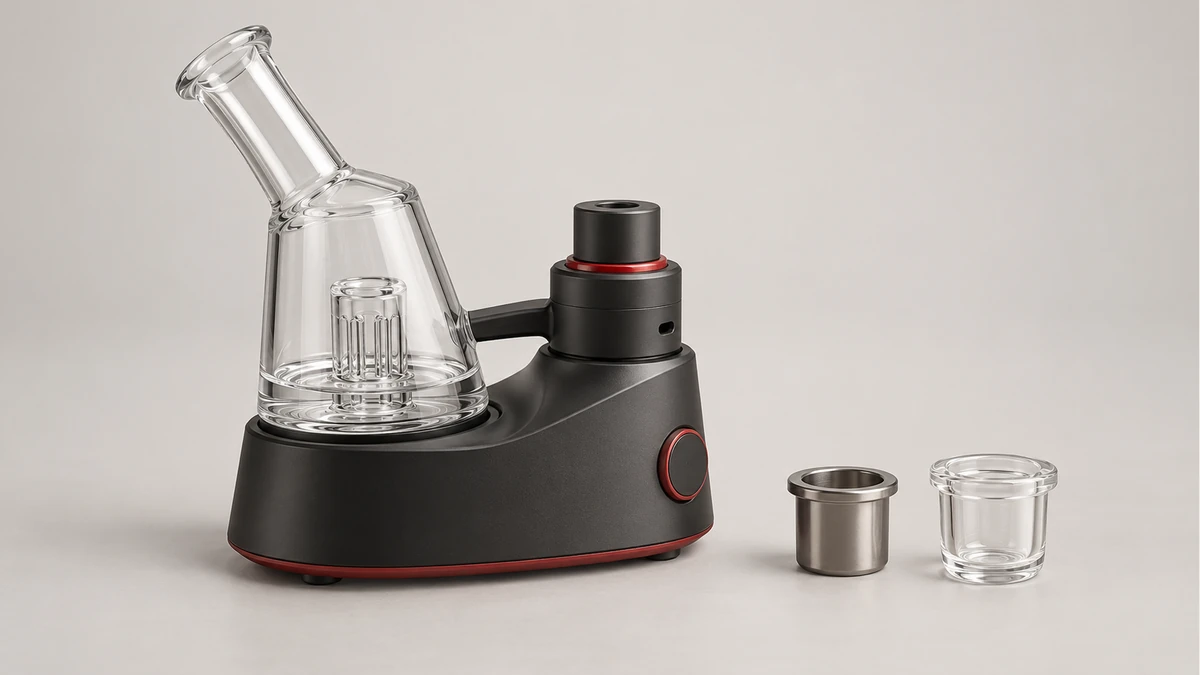
📡 5. Heating and Battery Charging Are Separate Functions
A contactless heating arrangement does not establish that the device also has wireless battery charging. Heating the receiver and replenishing the device’s battery are separate functions. The unit may have a charging cable, a dock or another documented power arrangement; the induction label alone cannot answer which. Likewise, an electrical connection may be absent from a removable cup while still existing elsewhere on the rig. A reader checking a loose accessory should therefore distinguish its interface from the charging interface on the base. Asking where the cup sits is one question; asking how the powered body is charged is another. Neither answer should be supplied by a marketing photograph that only shows the assembled silhouette.
🔢 6. Control Display, Setpoint, and Evidence of Sensing
A number on a display may represent a selected target, a measured value or a numbered operating mode. The interface documentation must identify which meaning applies. A setpoint is a target; a measurement describes an observed quantity. They should not be treated as synonyms. Likewise, several selectable power levels do not by themselves establish temperature measurement. In this vaporents thread, the writer explicitly describes three power settings separately from precise temperature control. That is a useful distinction in the visible account, rather than independent verification of the device’s internal sensing method. The displayed interface and the quantity being controlled still need to be identified separately.
📐 7. Documented Dimensional Pairing, Not Arbitrary Drop-In Inserts
A replacement part should be identified for the actual device and version. Similar diameter is not enough to establish that a loose cup is the documented receiver or insert for a particular assembly. A part can appear to sit in an opening while leaving questions about its height, support surfaces, clearance and intended role unresolved. Read the manufacturer’s assembly drawing and part identification rather than trying unrelated pieces to see what heats. A community discussion groups several electric rig formats together. It helps explain the terminology problem, but does not establish interchangeability. An externally wired heater, a resistive chamber and an induction receiver remain different component relationships even when the finished units all sit on a table.
🔎 7.1 Separate Fit from the Energy Path
Imagine two pieces with the same visible diameter. One is a conductive receiver intended to sit near a work coil; the other is an insert intended to rest inside a receiver. Their similar outline does not make them the same component. The first participates in the electromagnetic part of the energy path. The second belongs to the thermal connection that follows it. Calling both a cup hides the distinction that the description needs to explain.
Now imagine a listing that specifies only an insert material. That statement may be accurate, but it leaves the receiver material and the complete assembly unnamed. It is not necessary to assume the listing is wrong. The useful response is to recognize the level of detail it provides. An insert description is not automatically a receiver description, just as an exterior housing finish is not automatically a statement about the heated part.
Photographs can help resolve component boundaries when they clearly show separate pieces, but they cannot measure conductivity or establish a hidden coil arrangement. A parts drawing can add names and relationships. Model-specific documentation can explain which pieces belong together. Each source contributes a different kind of information; none should silently be made to answer a question outside what it shows.
This distinction also explains why an accessory name can be broader than its material label. An assembly sold as a cup may include a receiver and an insert, while a replacement insert may be only the inner piece. Before interpreting a material statement, establish which item the document names. That simple step prevents a claim about one surface from becoming a claim about the entire heating system.
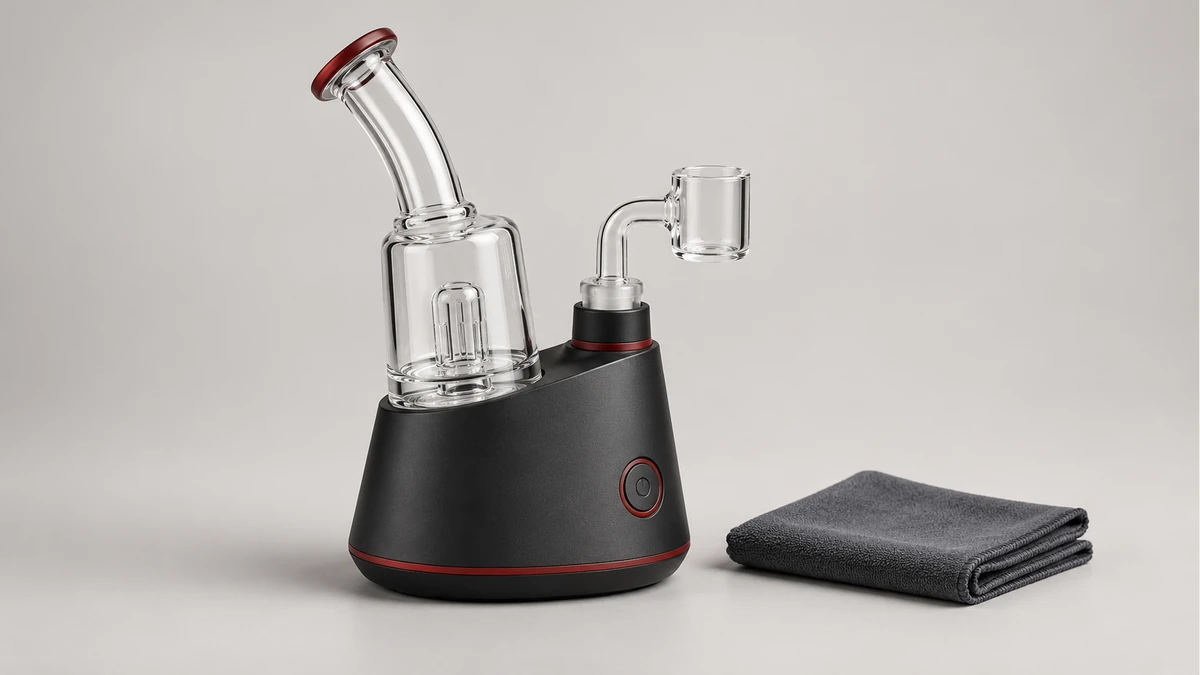
🧼 8. Keeping Accessible Pieces Separate From the Powered Housing
An accessible receiver or insert and a powered housing have different roles. Where a manufacturer documents a removable accessory, that permission applies to the identified part; it does not establish that the housing may be opened or that every induction device uses the same arrangement. A component may be removable in one design and integrated in another. “Removable cup” and “serviceable electronics” are therefore separate claims. Keeping them separate avoids turning a parts photograph into instructions it was never intended to provide.
🧽 8.1 Identify the Part Before Choosing a Care Method
A photograph of a removable dish beside a base does not mean the two share a cleaning procedure. The dish, its support and the powered housing may have different instructions. Locate the relevant part in the manual and keep any permission to remove or wet it attached to that part. A glass attachment’s care method does not automatically apply to a coated cup or to the opening beneath it. If a deposit is visible at the edge of a housing, describe its location rather than reaching farther inside to find out how deep it goes.
This is also where a chipped insert differs from a dirty insert. A visible crack, missing fragment or damaged seating edge is a condition of the part itself. An exterior wipe cannot restore its original shape. Conversely, a darker patch does not establish a crack or identify a failed heater. Photograph the component while it is cool and disconnected as the manual directs, without running the device to demonstrate a suspected fault. The question for support is whether that identified part should remain in service, rather than which improvised cleaning treatment might hide the mark.
📦 8.2 Keep Loose Parts Identifiable
When several removable accessories are stored together, retain their original part labels and the device version they belong to. A loose inner insert can be mistaken for a complete replacement chamber after its packaging is gone. Keep it separate from unrelated cups, adapters and glass attachments. This is ordinary organization, not a compatibility test: a part that looks familiar still needs the correct model identification. A useful support photo shows the complete accessory and the relevant mating opening without dismantling the powered housing.
For the separate architecture of a controller and wired heating attachment, our dab rig heater guide distinguishes the controller, coil, nail and support. The thermal quartz banger guide addresses a different glass geometry; its material name does not make it an induction insert. If the concern is the power connection rather than a removable heated part, the charging troubleshooting guide helps keep cable, port and device observations separate.
📚 9. A Useful Vocabulary for Reading Induction Rig Descriptions
When asking about an induction dab rig, start with the piece that prompted the question. Is it the inner dish, the receiver surrounding it, the glass attachment or the powered base? Then describe what is visible: a chipped edge, a loose accessory, a deposit on an accessible surface or a message identified in the manual. That description gives support a useful starting point without naming an unverified cause. The core distinction is straightforward: the work coil, heated receiver and optional insert have different jobs. Knowing which one a document calls the cup helps connect its care instructions and replacement information to the correct physical part.