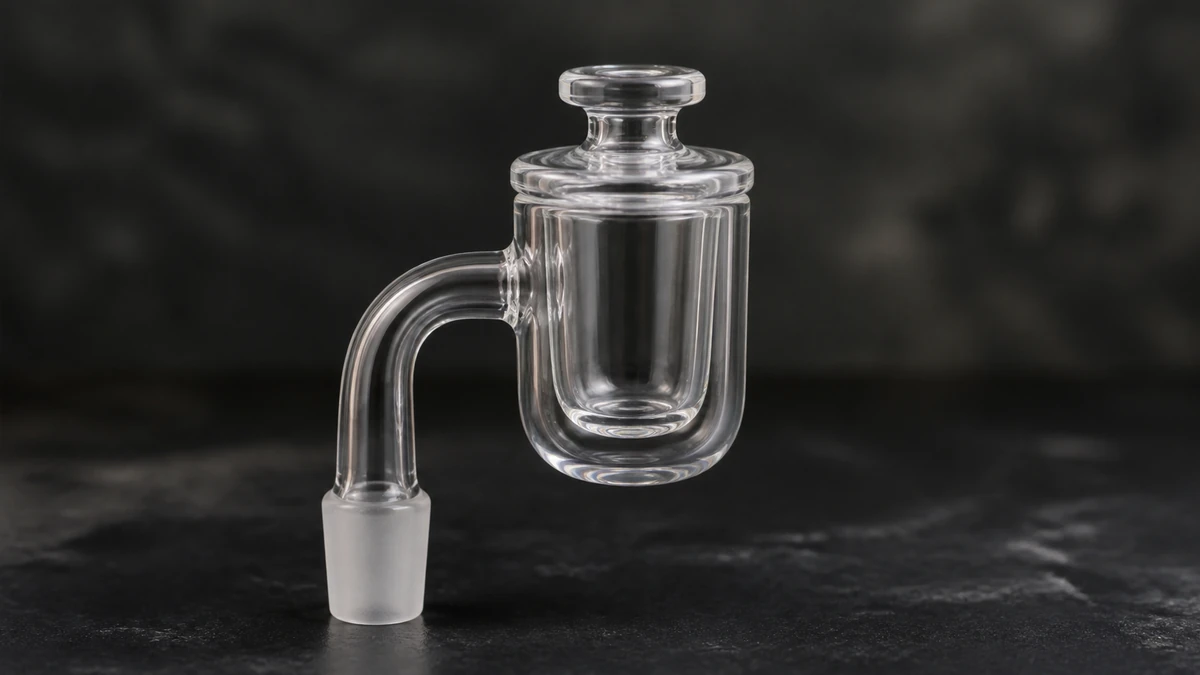
A thermal quartz banger places a second wall inside the bucket. That extra geometry changes how the quartz stores and releases heat, but it also creates a narrow space where residue can collect beyond the reach of an ordinary swab. The right question is not whether thermal is universally better. It is whether its heat behavior is worth the added cleaning and compatibility work for your routine.
Two bangers that share a joint size can still respond differently because wall thickness, inner-cup shape, welds, mass, and airflow are not identical. Treat every new banger as a new system with its torch, cap, rig, and temperature-reading method.
🧭 1. A thermal banger adds an inner wall to the quartz bucket
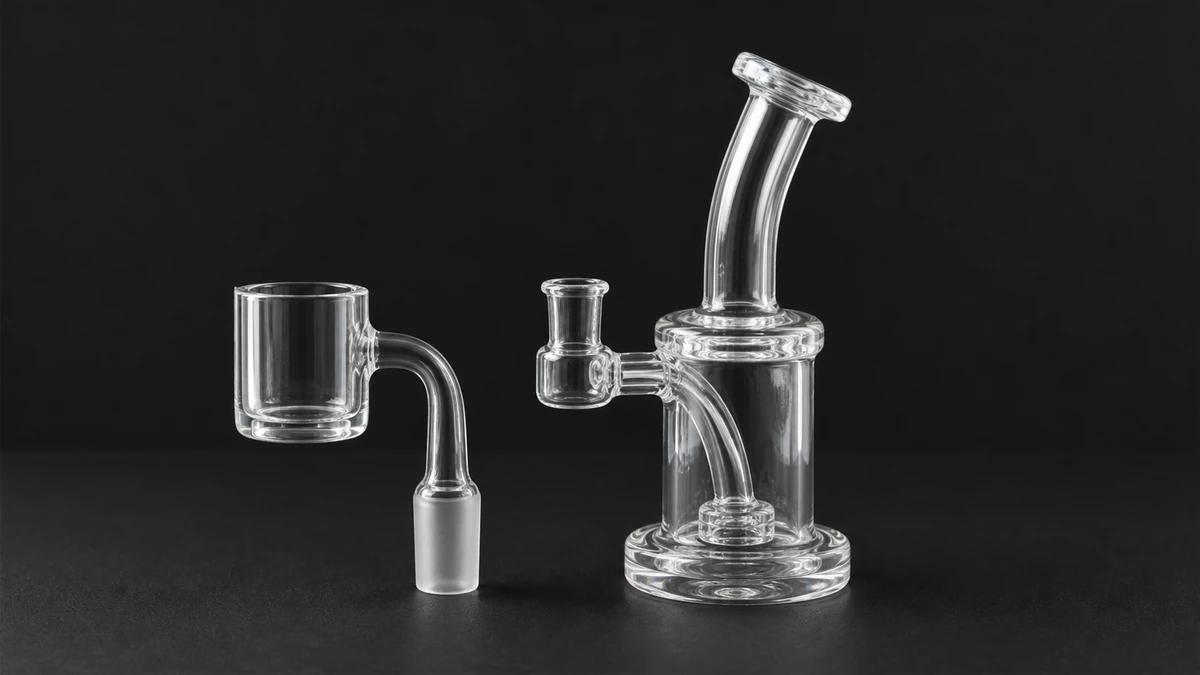
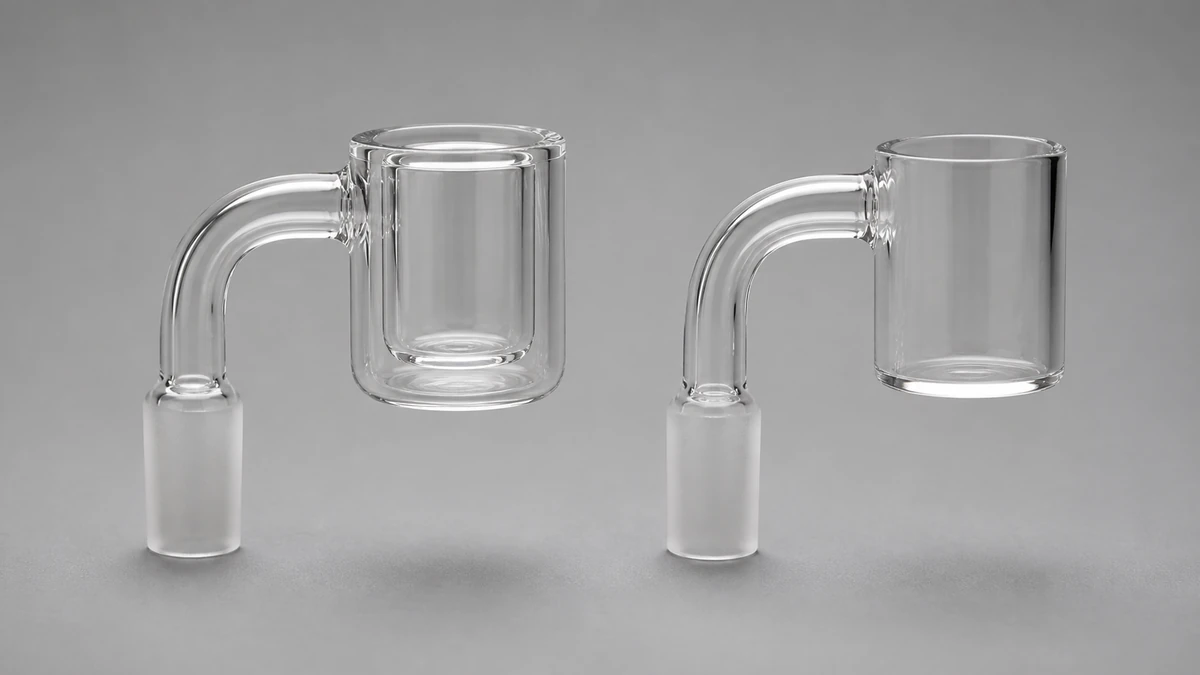
A conventional bucket presents one main quartz wall around the heated chamber. A thermal design adds an inner cup or barrier, leaving a space between layers. Depending on the construction, the air path and material remain inside the inner area while the outer wall receives much of the torch’s heat.
The additional quartz increases complexity rather than guaranteeing a specific result. More mass can slow temperature change, but the location of that mass matters. A thick base, thin inner wall, narrow gap, or uneven weld will not behave like another design with the same marketing name.
Inspect the banger cold and clean. The inner wall should appear centered, the accessible rim should be smooth, and no crack, chip, cloudy fracture line, or questionable joint should be present. Do not heat damaged quartz to see whether the mark gets worse.
🧩 2. The double wall changes where heat and residue collect
The outer wall receives energy from the torch while the inner surface presents the working area. Heat must move through that structure before it reaches a stable distribution. This can make the response feel less immediate than a light single-wall bucket, followed by a longer period of retained warmth.
Residue follows the geometry as well. Material can climb the inner wall under airflow, pass into a seam or gap, or condense where a swab cannot make full contact. Once residue is reheated in that hidden area, it can darken and become harder to remove.
Use an amount and airflow that stay within the functional area described by the manufacturer. A larger load does not prove that the banger is using its thermal mass effectively; it can simply push more material toward inaccessible surfaces.
🔍 2.1 Read the location of the leftover film
A puddle remaining in the accessible base suggests a different adjustment than a dark ring high on the inner wall. The first may indicate that the surface cooled before the material was processed. The second may point to excessive heat, hard airflow, or residue being repeatedly baked where it cannot be wiped promptly.
Change one variable at a time. Altering torch distance, heat duration, cool-down, cap, pearl, and draw in the same session makes the result impossible to interpret.
🔍 3. Heating times cannot be copied from another banger
Forum timers are descriptions of someone else’s torch, flame, banger mass, room, and preferred result. They are not specifications for your quartz. Even two examples of the same nominal design can differ in actual thickness and response.
Begin with the banger maker’s method. If no usable guidance exists, approach the routine conservatively and use repeatable observations rather than chasing a universal time. It is easier to make a small adjustment after an underheated result than to reverse heat damage or baked residue.
A temperature reader can improve consistency only when it measures the same location at the same distance or contact point. The number belongs to that measurement method. An infrared reading on the outer wall should not be treated as identical to a contact reading on the inner base.
⚙️ 3.1 Keep the torch pattern consistent
Use the torch only according to its instructions and keep the flame moving over the intended exterior area. Concentrating heat on a weld, joint, or one small point creates a steep gradient through already complex geometry. Never heat the ground-glass joint or an area the banger maker excludes.
Stop if the torch sputters, the banger shifts in the joint, or a new crack-like line appears. Let the complete assembly cool before inspection.
⚙️ 4. Cap fit and airflow still control the draw
Thermal walls do not eliminate the need for a cap that fits the rim. A bubble cap may need room to move without striking the inner cup. A spinner cap requires inlet geometry that actually moves air through the available chamber. A flat cap must make an effective seal without rocking on an uneven rim.
Check cap movement while everything is cold. The cap should not wedge inside the opening, scrape the wall, or sit so high that outside air bypasses the intended inlet. If pearls are used, confirm the manufacturer supports them and that their diameter leaves room for clean movement.
Hard suction is not a fix for a poor seal. It can pull material up the wall and into the thermal gap. A steady draw that keeps the cap stable is a more useful starting point.
🧼 5. The hardest area to clean is also the least accessible
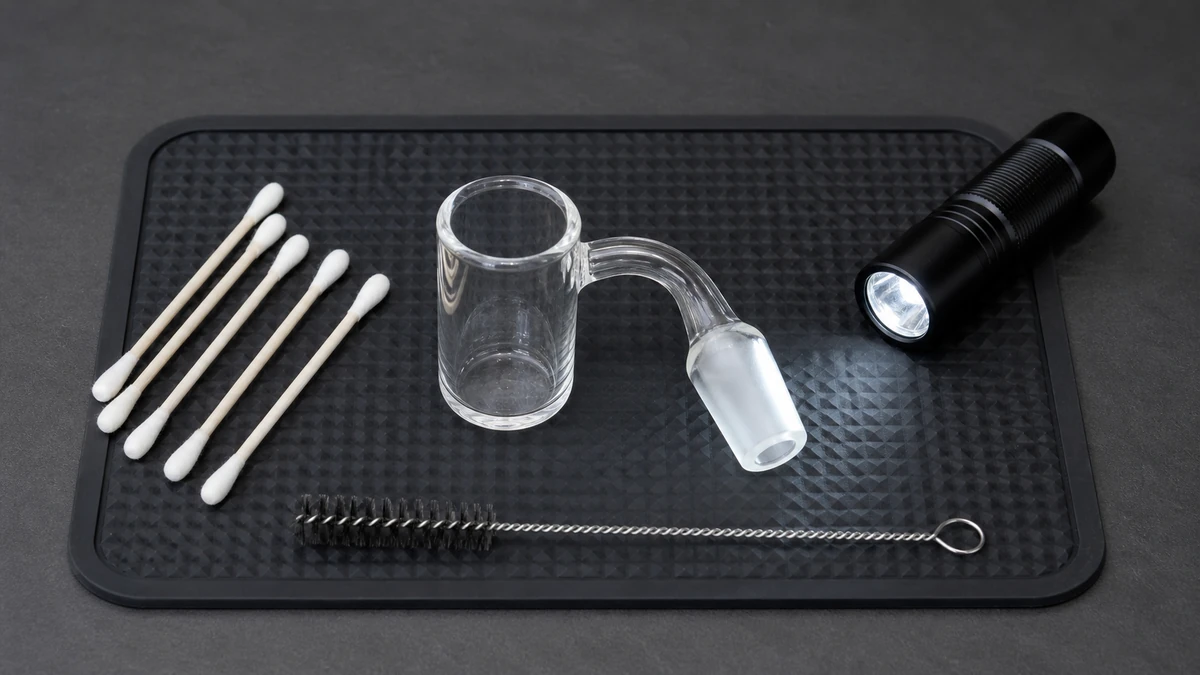
Clean the accessible surface after the banger has cooled to the condition specified by its maker. Use only approved tools and cleaning materials. A swab should contact the base and inner wall without being forced into the gap or leaving fibers behind.
When residue enters the double-wall space, improvised wire, needles, or abrasive scraping can scratch quartz or stress a seam. Torching the residue until it disappears may leave the banger cloudy and does not restore the original surface. Follow the maker’s soak procedure if one is provided; otherwise ask the seller how that inaccessible area is intended to be serviced.
🛠️ 5.1 A cleaning bath has its own safety boundary
Let hot quartz cool naturally on a stable heat-resistant surface. Do not move a banger directly from torch heat into a cool liquid. Sudden temperature change can stress quartz and its welds even when no crack is immediately visible.
Keep flammable cleaning liquids far from open flame and hot equipment. Use them only in a ventilated area according to their label, then rinse if required by the banger maker and allow the piece to dry completely. Never heat a banger that still contains cleaning liquid or vapor.
🛠️ 6. Thermal shock and existing damage set the stop line
Quartz tolerates high working temperatures, but that does not make every temperature transition harmless. Uneven heating, impact, a tight joint, and rapid cooling can concentrate stress around the base, welds, and neck.
Before each session, look for chips at the rim and joint, cracks around the inner cup, or a wobble that was not present before. Retire questionable glass. A banger carries heat close to hands and the rig; failure is not something to investigate while it is hot.
Place the rig where the banger clears nearby objects and the torch can approach without crossing cables or storage containers. The more complicated bucket does not justify a more complicated workspace.
✅ 6.1 Inspect construction before comparing heat behavior
Look through the clean quartz under neutral light. The inner cup should be evenly positioned and the transition to the base should not contain visible cracks or sharp irregularities. The neck and ground joint must align with the bucket so the assembly does not lean unexpectedly once seated in the rig.
Product photos cannot confirm those points across a production batch. Buyers should inspect the delivered piece before heating and contact the seller about defects rather than trying to burn away a questionable mark.
📦 6.2 Keep the system compatible from joint to cap
Start with the joint size, gender, and angle required by the rig. AOVAPE’s dab nail, banger, and e-nail comparison explains why those interfaces are not interchangeable merely because they serve a similar purpose. Confirm bucket outer diameter and rim geometry against the intended cap while every part is cold.
Use the banger temperature guide to understand why the sensor location and observed result matter more than copying one number. Pair that with the dab-rig cleaning guide so the quartz and the rest of the glass remain separate cleaning tasks.
🧭 6.3 Decide whether an insert adds useful complexity
An insert adds another thermal body and another contact surface inside an already double-wall design. It may physically fit while leaving too little room for airflow, cap movement, or swab access. Use only inserts documented for the bucket dimensions and intended routine.
Inspect removable inserts cold before and after use. A chipped insert can scratch or concentrate force inside the bucket. Never pry an insert from warm quartz or strike the banger to release a stuck part.
🧩 6.4 Make teardown part of the buying decision
Imagine the session ending with residue on the inner cup and the banger still warm. The user needs a stable landing point, an approved cleaning tool that reaches the working surface, and enough time for the quartz to cool before any deeper cleaning. If the design requires inaccessible residue to be ignored, its theoretical heat benefit comes with a recurring maintenance debt.
A simpler bucket is not a downgrade when it encourages complete cleaning and lets damage be seen. Choose geometry the owner can inspect after every use, and keep the thermal design only when its additional surfaces remain manageable.
🔍 6.5 Compare samples under the same cold checks
If several bangers are being considered, seat each one in the same clean reference joint without forcing it. Compare lean, rim level, cap seating, visible weld quality, and whether a swab can reach the stated working surfaces. These checks reveal usable differences before any torch is involved.
Do not heat multiple unfamiliar samples simply to rank retention. Heating changes their condition and adds torch variation. Approve construction and serviceability first, then follow the chosen maker’s start-up method on the final piece.
⚙️ 6.6 Store quartz so the joint cannot strike another part
After the banger is cool, clean, and dry, keep it in a compartment that supports the body without pressing on the inner cup or neck. Separate it from metal tools and other glass joints. A chip caused in storage may be subtle until the next inspection.
Label thermal and standard bangers when they share a case. Their routines may differ, and the wrong cap or copied heating sequence can erase the reason they were separated in the first place.
Keep a cold spare only when its fit and condition have already been checked. An unfamiliar replacement should not enter the routine during a hot session, when joint alignment and damage are harder to inspect. Record which cap and rig were confirmed with each banger so compatible parts do not become mixed in storage.
✅ 7. Choose thermal geometry only if the maintenance tradeoff fits
A thermal quartz banger can make sense for an adult user who values slower temperature change, uses a compatible cap, and is willing to clean the inner geometry after each session. It is a poor match when the main priority is fast swab access and the simplest possible routine.
Compare actual construction rather than the word “thermal”: joint size and gender, angle, inner-cup geometry, rim diameter, cap compatibility, wall access, and the manufacturer’s cleaning instructions. A standard quartz bucket that stays clean and fits the rig is more useful than a double-wall design whose hidden residue is ignored.