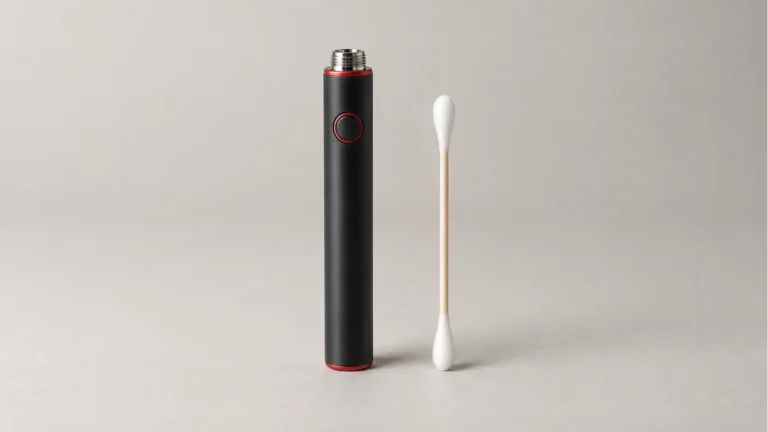
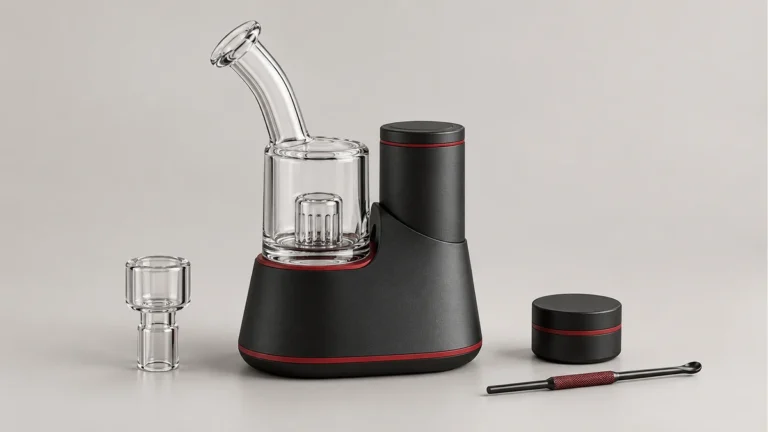
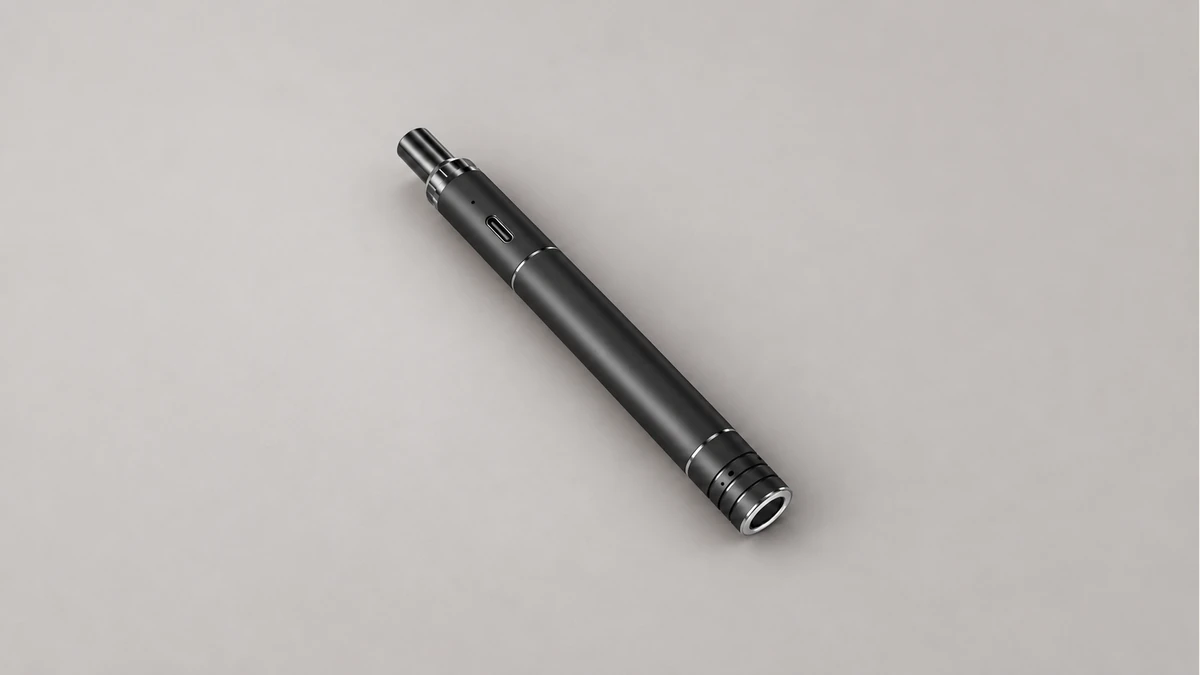
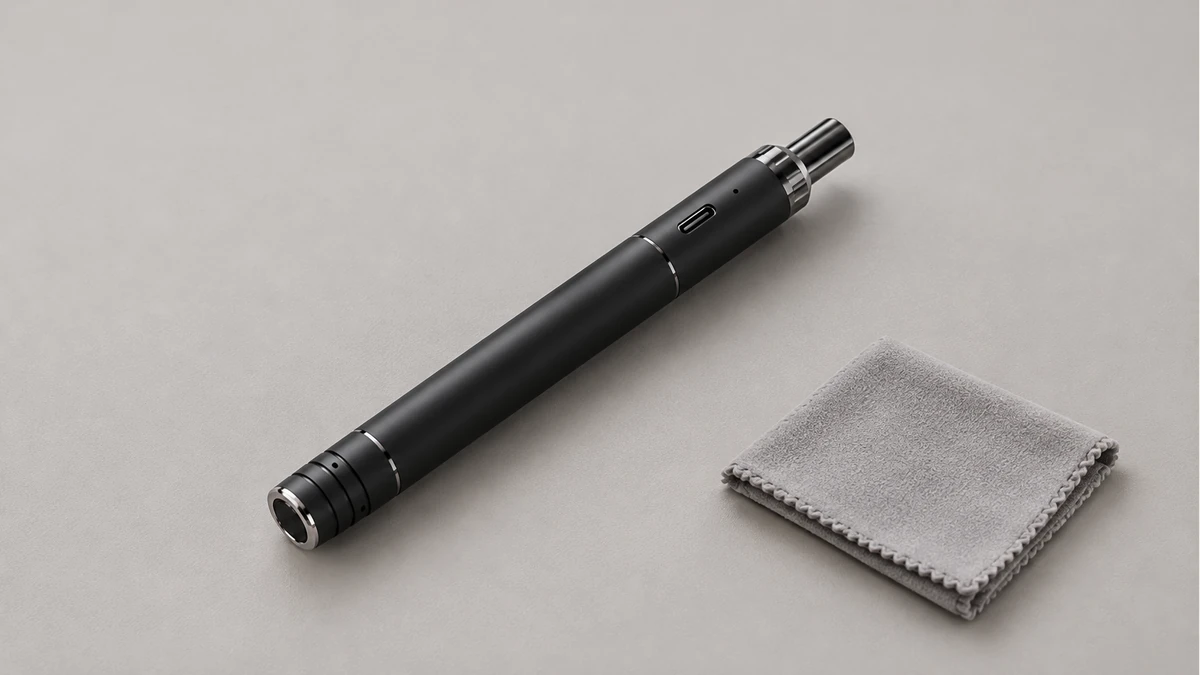
A self heating nectar collector has an electrically powered heater at its working end, rather than a working surface that needs a separate external heat source. The name does not tell you whether activation is automatic, where the power source sits or which pieces detach. Those distinctions become useful when the tip looks dirty, a sleeve comes off or a replacement accessory has an unfamiliar shape. Start with the heater, its activation interface and the parts around it; calling everything the pen makes an otherwise simple maintenance question harder to answer.
⚡ 1. What “Self-Heating” Means in Electrical Terms
In the electrically heated handheld designs discussed here, a powered heater generates heat within the tool rather than relying on an externally heated working surface. “Self-heating” is a category description, not a complete circuit specification. It does not establish battery location, sensor type, activation method or which parts can be removed.
The word “self” is particularly easy to overread. Electrically generated heat need not mean automatic activation: a device can have a button-controlled input. Nor does the phrase prove that every component shares one housing. The more precise description names the power source, activation interface and heater separately where the documentation identifies them. That gives the reader useful information without turning a casual category name into an unsupported promise about the construction.
🧩 2. Six Components, Six Different Jobs
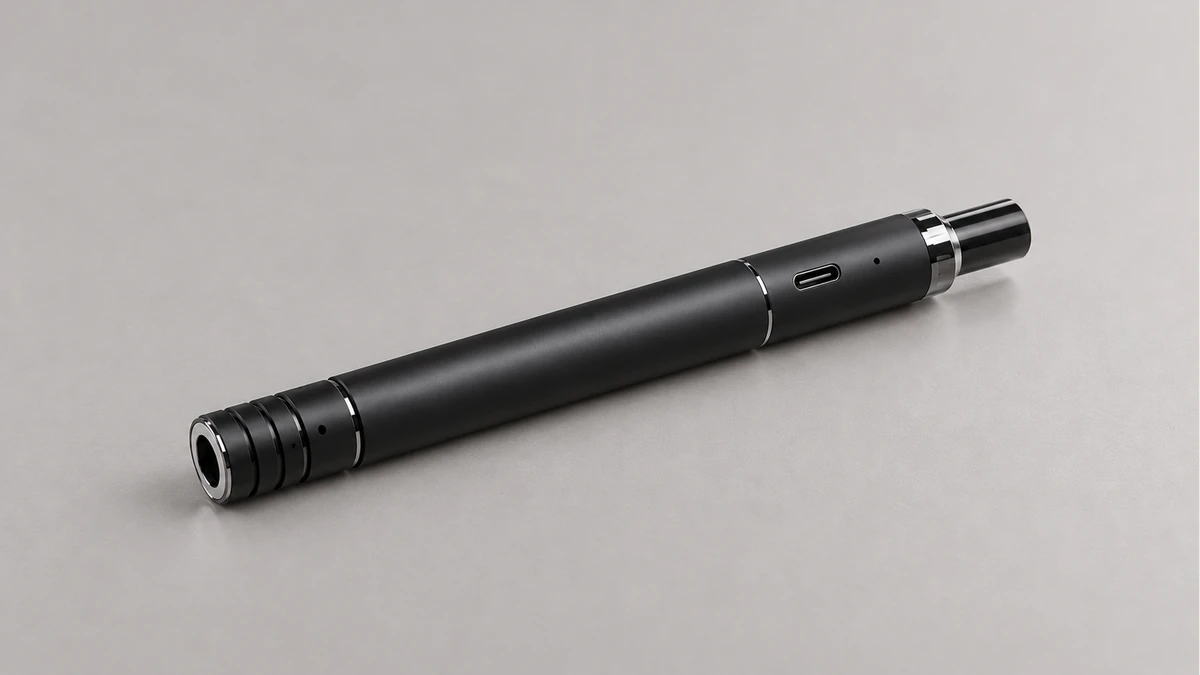
Because a self-heating collector bundles electronics with mechanical parts, it’s easy to lump everything together as “the pen.” In practice, these devices are usually described in terms of several distinct components, each doing a different job. Keeping them separate in your head is the fastest way to understand what’s powered, what’s replaceable, and what’s just structural.
🔎 2.1 Tip
The tip is the part that makes direct contact at the working end of the device. It’s often made of ceramic, quartz, or metal, and it’s frequently the piece people picture first — but the tip itself is not necessarily the electrical component. It’s a geometry: a shape and a material that determines contact and insertion, sitting at or around the actual heater. Reader discussion on a Waxpen subreddit thread shows how easily this gets confused — commenters there described mixing up different replacement tip shapes, and separately conflating simple cleaning with a full tip replacement.
⚡ 2.2 Replaceable Heater
The heater is the powered element, which may be supplied as part of a replaceable assembly. One manufacturer FAQ identifies nichrome wiring in its coil. That documented example does not identify the heater material in another collector. “Replacement coil” can also name the complete accessory rather than only the small electrically active wire inside it.
🧱 2.3 Sleeve
A body sleeve and a battery casing need not be the same part. The manufacturer FAQ referenced here names them separately. A sleeve can describe an exterior cover, while a casing describes the housing beneath it. Whether either also has an electrical role cannot be established from its material or its name alone. The useful point is the separation of components, not an assumption that every metal cover is electrically inactive.
💨 2.4 Mouthpiece
The mouthpiece is the component through which air is drawn. It’s typically unpowered and, on some devices, removable — sometimes made of glass. A glass mouthpiece should be identified separately from the working tip. The Waxpen discussion includes comments about glass breakage and different replacement tips; those observations do not establish that two similar-looking glass parts are interchangeable. Use the actual assembly drawing to identify the removable mouthpiece and its matching parts.
🎛️ 2.5 Sensor
A sensor-based activation interface detects an input and provides a signal for heater control. Its precise sensing method needs model-specific documentation. The bndlstech FAQ describes this design choice directly, noting inhale sensor activation on the devices it documents. That’s one documented example of how a sensor-driven device behaves, not a claim that every self-heating collector works this way.
🔋 2.6 Power Body
The power body is the portion associated with the power source and control components. Its exterior finish does not identify the internal arrangement. In particular, a documented removable sleeve does not establish a user-replaceable battery. The distinction between an accessory attachment and access to electronics must come from the instructions for that specific device, not from the fact that an exterior piece moves.
🔘 3. Button-Driven vs. Sensor-Driven Activation
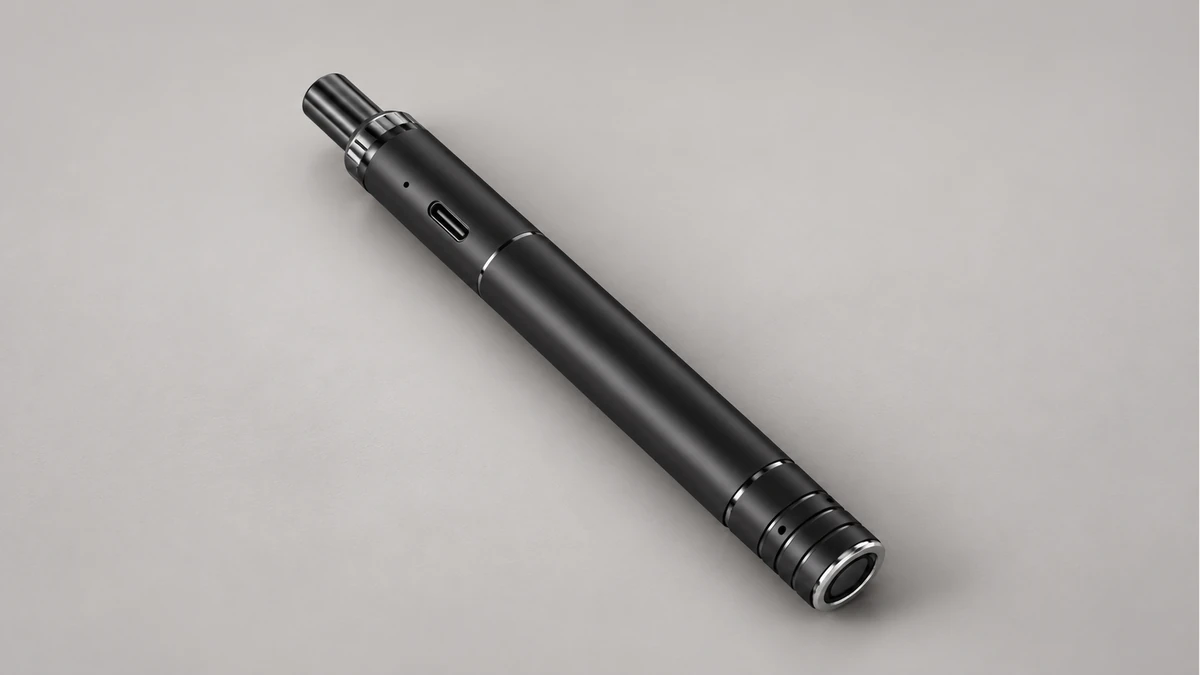
A button-operated interface and a sensor-operated interface describe different activation inputs. Neither tells you the complete circuit layout. A button may signal control electronics rather than carry the heater’s working current directly. Likewise, a documented inhale-activated device does not establish the precise sensor type or placement in another collector. The input, controller and powered element are separate roles even when the user experiences them as one action.
A reader discussion about separable, cleanable parts illustrates why the distinction matters. Wanting access for cleaning is different from knowing which parts are intended to separate. A detachable cover does not identify a compatible power source, and a battery connection does not document the controller or heater requirements. Use the complete manufacturer-approved assembly and its parts instructions. A homemade concept in a discussion can reveal a reader’s question without becoming evidence that the proposed electrical arrangement is suitable.
💨 4. Tracing a Conceptual Airpath
For designs with a water attachment, the electric collector bubbler guide separates the heater from the water path. Separate from the electrical circuit, there’s a physical path that air takes through the device — drawn in, routed near the heated tip region, and pulled back out through the mouthpiece. This airpath is worth describing in general terms because it’s conceptually distinct from the electrical trigger path, even though the two can overlap physically. Not every self-heating collector routes air the same way, so this is best understood as a general concept rather than a universal blueprint.
The overlap matters most on sensor-driven designs, where the same airflow that a user draws through the mouthpiece is also what the sensor detects to trigger the heater. In other words, an airflow route and an activation input can be related — moving air mechanically, and providing an input associated with activation. A manufacturer product page for one specific device describes its layout as an exposed ceramic coil, compared to a loading bowl rather than an enclosed chamber — a structural description of how that particular design is laid out, not a claim about speed, taste, or performance.
🧽 5. Discoloration, Debris, and Damaged Surfaces
A color change, a visible particle and a crack are different observations. Our metal collector maintenance guide discusses loose tips and accessible obstructions in that separate hardware category. Discoloration describes appearance, not a diagnosis of the surface beneath it. Debris describes foreign material; one discussion reports sticky residue and swab fibers. A crack or missing piece describes a physical discontinuity. None of these observations should be substituted for another merely because all three might appear in a photograph of the working end.
These descriptions call for different questions, not automatic diagnoses. A color change alone does not prove either damage or harmless cosmetic wear. A visible particle does not establish that all residue is accessible. A crack or missing piece identifies a different observation again. In the 15caoks discussion, commenters suggested heating and solvent tricks; those are not evidence that a particular assembly permits either treatment. Boundless’s own FAQ cautions that alcohol can damage an exterior coating in its product range. That is a narrow attributed example, not permission to apply the opposite rule to every other collector.
🔗 6. Replaceable Accessories vs. Universal Connectors
“Replaceable” and “universal” get used almost interchangeably in casual conversation, but they describe different things. A replaceable heater or tip assembly is one that’s designed to be swapped out on a given device — but that doesn’t mean the same part fits a different brand, or even a different model from the same maker. Connector shapes, thread patterns, and electrical contacts vary enough across the self-heating category that a part built for one power body often won’t seat correctly, electrically or mechanically, in another.
This is precisely the kind of confusion that shows up in the Waxpen thread referenced earlier, where readers struggled to match specific replacement tip shapes to specific devices, and separately had to work out whether a given issue called for cleaning an existing tip or replacing it outright. Because self-heating devices span a wide range of internal architectures — different sensor types, different heater geometries, different sleeve designs — it’s worth treating “replaceable” and “universal” as two separate claims, not one.
🏷️ 7. Naming the Parts Precisely
Pulled together, a self-heating nectar collector is easier to describe through distinct component roles than through the word pen alone. The tip is at the working end; the mouthpiece is at the other end of the described air route. A sleeve, casing, heater and activation interface can then be identified separately where the specific design documents them. These names organize the discussion without requiring every device to contain six individually removable parts.
A useful description distinguishes what is observed from what is inferred. “The indicator does not light” is an observation; “the battery is dead” is one possible explanation. “The tip has a dark patch” is an observation; “the heater has failed” is a separate claim. Component names help identify the location of a problem without pretending to establish its cause.
🔎 7.1 Describe the Assembly, Not Just Its Shape
Imagine a photograph showing a cylindrical tool, a narrow working end and a detached cover. The photograph can establish their visible shapes and relative positions. It cannot establish that the cover is a removable battery compartment, that the narrow end contains a particular alloy, or that a hidden sensor measures pressure rather than another condition. A helpful caption describes the visible parts. An engineering explanation adds only the internal details supported by the specific documentation.
This is also why two accessories that look alike need not have the same role. A protective cap may cover the working end without being part of the operating air route. A sleeve may surround the body without defining where the battery begins or ends. A replacement heater may contain both an electrically active element and supporting components. The assembly name and the material name therefore answer different questions: what piece is being discussed, and what a documented portion of it is made from.
📝 7.2 Turn a Vague Question into a Useful Description
“My pen is sticky” leaves the location open. “There is visible residue on the outside of the removable cover” names a surface and avoids suggesting that the powered body has been opened. Likewise, “the detached accessory will not seat” describes a fit issue without assuming that the control electronics are responsible. These examples are descriptions, not repair instructions. Their value is that another reader can understand the observation before suggesting a cause.
Four details usually make that account clearer: the documented component name, whether it is attached or detached in the observation, the visible condition, and the relevant model-specific instruction. A photo can supplement those details, but it should not replace them. A close view of a connector, for example, may show a damaged edge while leaving its electrical specifications unknown.
For storage, identify what the protective cover actually encloses. A cap that covers the working end should not be confused with a removable outer sleeve. Keep loose accessories from pressing against an exposed working end or connector, using the storage arrangement specified for the device. The separate collector case guide explains why a case needs to accommodate more than the tool’s overall length. A cover can protect a part without being part of the operating air route.
Part names can change between documents, too. An accessory catalog may use “coil” for the item sold as a complete assembly, while an engineering explanation uses the same word for its resistive wire. That is not necessarily a contradiction. The two documents may be naming different levels of the assembly. Reading the illustration and the description together helps establish which meaning applies before treating a statement about one level as a statement about all of them.
The practical endpoint is a clear description of the hardware, not a universal diagnosis. Knowing which component a question concerns makes the next exchange more useful even when the cause remains unresolved.