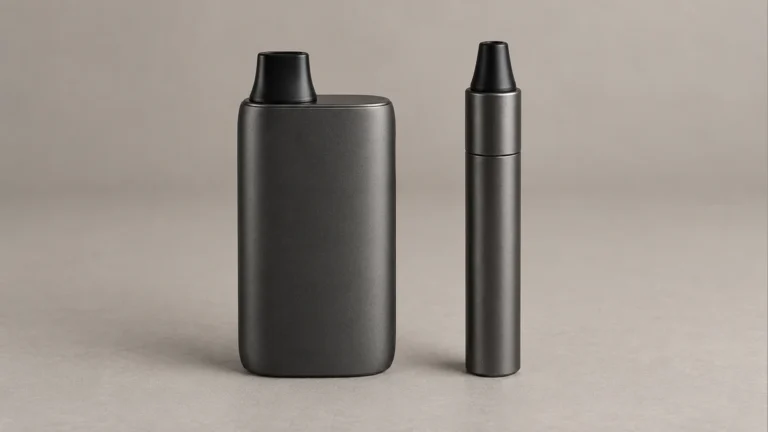
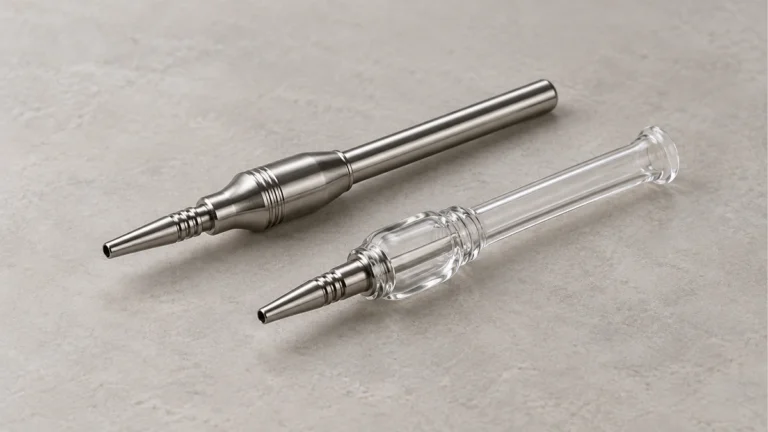
A titanium dab tool can be light in the hand and still feel awkward at the working end. A scoop may not fit a narrow container. A broad paddle can reach a flat surface but leave residue in a rounded corner. A smooth handle can turn in your fingers just when you want the tip to stay still. These are useful distinctions because changing the metal alone does not change the shape of the tool.
The practical questions are straightforward: how wide should the scoop be, what is the other end for, why does a thin shaft flex, and how do you clean a tool with a separate handle? Reddit discussions about handmade titanium tools bring up these exact kinds of details. This guide works through them as ordinary design and care questions, without treating a shiny finish or a material label as a substitute for a comfortable shape.
🔧 1. Scoop or Paddle: Matching the Tip to the Job
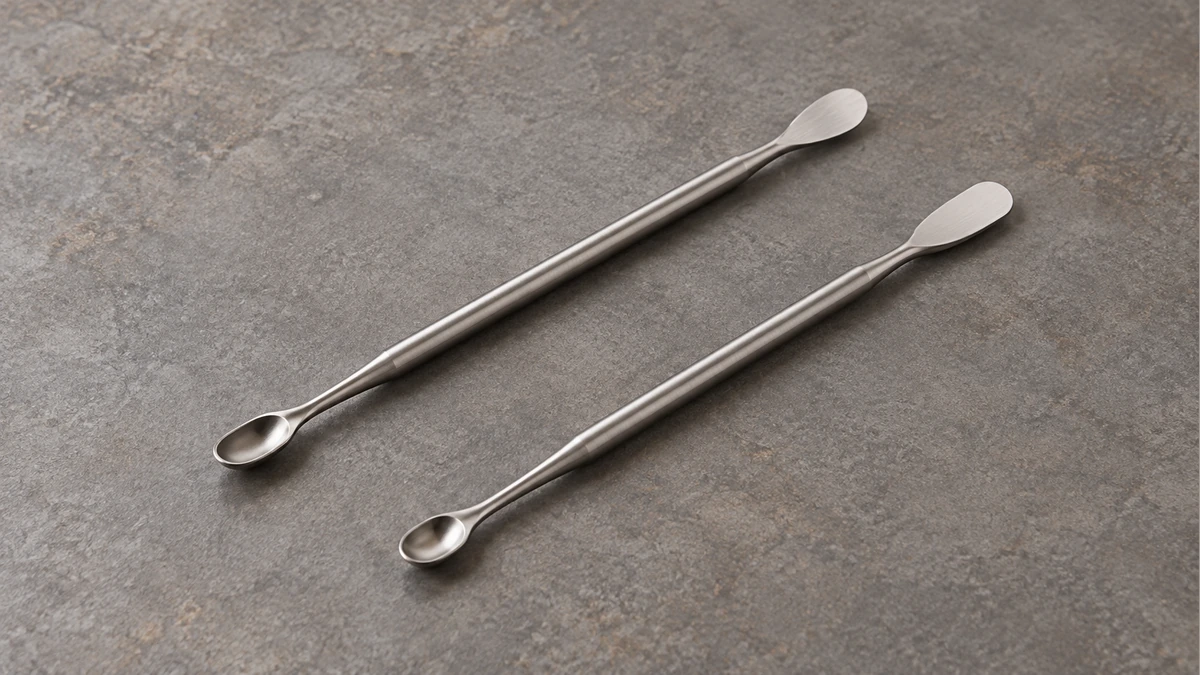
Scoop and paddle ends solve different handling problems. A scoop has a concave working surface with some room to hold material. A paddle has a flatter face for contacting a surface and lifting residue from it. Pointed and angled variations add further choices, but the important distinction is the area that touches the container. A broad flat face and a narrow curved face do not follow the same corner. Neither shape needs to be sharp enough to cut the container, and a handling tool should not be used as a pry bar against a fragile edge.
🥄 1.1 Tiny Scoops vs Broad Scoops
Scoop size is a tradeoff between access and carrying area. A small, shallow scoop leaves room to move inside a narrow opening, while a wider scoop may meet the container wall before its base reaches the bottom. Depth matters separately from width: a deep bowl can leave residue in a corner that a cloth cannot easily reach. In one handmade-tool discussion, the maker directly asked whether the scoop looked big enough. That is a shape question, rather than evidence that the particular tool worked poorly. To make the question concrete, compare the working end with the opening, bottom curve and depth of the container it needs to reach. Overall tool length tells you none of those dimensions.
🛠️ 1.2 Flat Paddles and Dual-Ended Tools
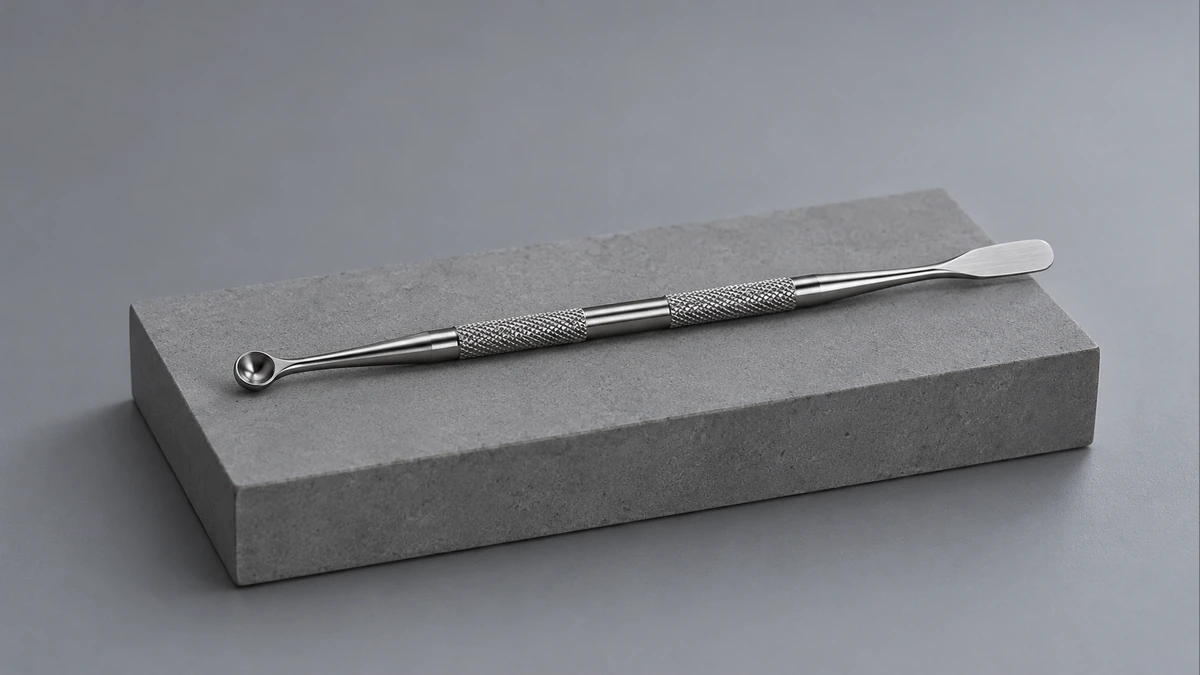
A flat paddle presents a broader contact face than a small scoop. Its width can be useful against a flat container surface, while its corners may be awkward against a rounded bottom. A cleaver-shaped tool shown in another titanium-tool discussion prompted a debate about titanium and steel, but the broad silhouette is a separate design choice from the metal. A wide blade-shaped accessory also needs a storage space that protects its edge and keeps it from rubbing against other parts. A dual-ended tool combines two working shapes, often a scoop and a paddle. It saves a separate handle, but it also gives you two ends to keep clean when setting it down. The dab tools guide covers the wider range of shapes and materials.
📏 2. Shaft Shape, Grip Length and Build Style
Once the tip shape is sorted out, the next source of everyday annoyance is usually the shaft — how long it is, whether it curves, and how it’s put together. A tool can have the perfect tip and still feel awkward if the shaft fights your hand or your working angle.
↪️ 2.1 Curved vs Straight Shafts
A straight shaft puts the tip in line with the handle. An angled shaft changes the relationship between your wrist, the container opening and the working face. That may be useful when a straight handle meets the rim before the tip reaches a corner. It is not a guarantee of better control: a bend can also make the tool less convenient to rotate or store in a narrow sleeve. Length has a similar tradeoff. A short shaft keeps your fingers closer to the working end; a longer shaft provides more reach but can feel more cumbersome over a small container. Judge reach and angle together. A long tool with the wrong tip angle can still leave the same corner inaccessible.
🪵 2.2 One-Piece Tools vs Handled Tools
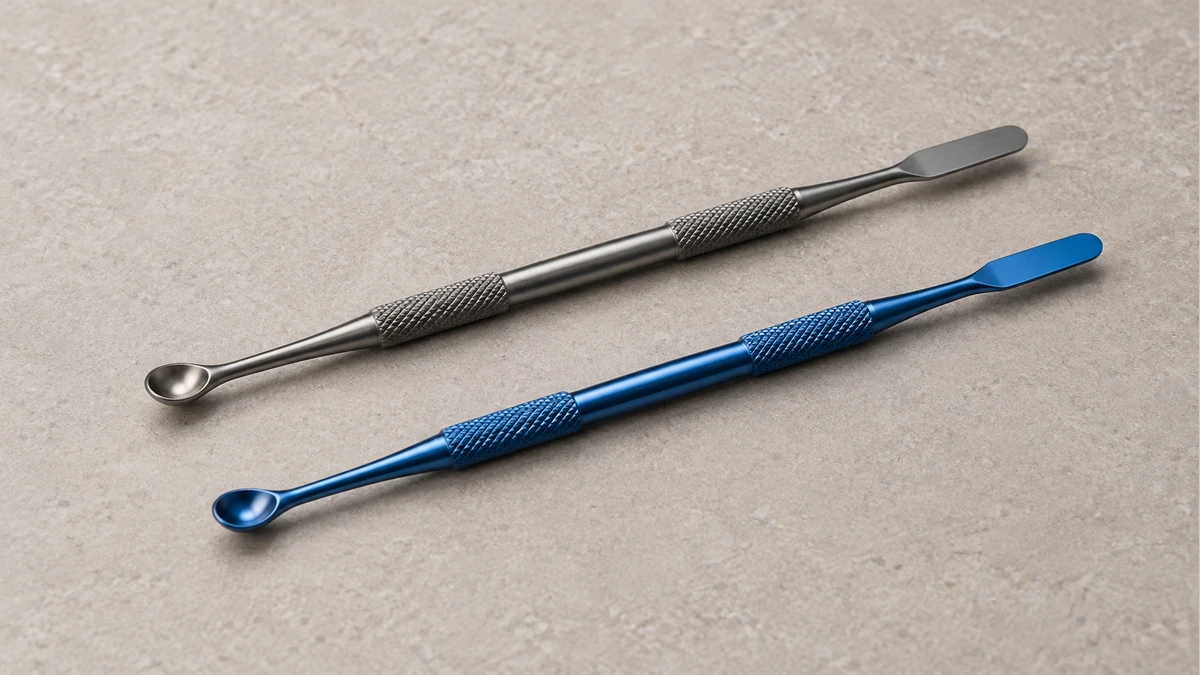
A one-piece metal tool has no separate handle joint, although the grip can still be textured or shaped. A handled tool adds a different material around or behind the metal shaft, such as wood or resin. The handle may provide a wider gripping area, but its attachment becomes another detail to maintain. A Reddit question about wood and resin handles illustrates why the metal insert and the handle socket need to match. Shaft diameter, insertion depth and the intended attachment method all matter; two parts are not interchangeable simply because they are both called dab-tool components. A handle that rotates independently of the shaft makes precise positioning difficult. Do not force an oversized insert into a socket or improvise a repair with an unknown adhesive. Cleaning also needs to follow the complete assembly: the cleaner suitable for bare metal may not suit the handle finish or its adhesive.
⚖️ 3. Weight, Stiffness and the Grade 2 Question
Weight is usually what people notice first about a titanium tool, and it’s also the most misunderstood property. Lighter doesn’t automatically mean more flexible, and heavier doesn’t automatically mean stronger — the two ideas get mixed up constantly in casual comparisons between titanium and steel.
🔩 3.1 Titanium vs Steel, By the Numbers
The published properties explain one useful difference. TIMET’s Grade 2 datasheet gives a density of 4.51 g/cm³ and an elastic modulus of 105–120 GPa. Alleima’s 316L datasheet gives a density of 8.0 g/cm³ and a modulus of about 200 GPa at 20°C. For equal volumes, that titanium is lower in mass. For the same geometry under comparable elastic bending conditions, the steel is stiffer. Stiffness describes resistance to elastic deflection; it is not the same measurement as resistance to permanent damage. A thicker shaft or a different cross-section can change a finished tool’s bending behavior, so a broad titanium tool and a slender steel tool are not a controlled material comparison. The glass dab tool guide discusses another material option whose construction introduces different handling considerations.
✨ 3.2 Plain Metal vs Anodized Finish
Plain and colored titanium tools can share the same outline while having different surface treatments. TWI describes anodizing as an electrolytic process that forms an oxide layer and includes titanium among the metals to which it applies. That description does not tell you how a particular accessory’s finish will respond to cleaner, friction or repeated contact. For everyday handling, inspect the actual working surface: is it smooth, are there recessed areas that hold residue, and can you wipe around the transition into the shaft? Color is easy to notice in a photo; a rough transition near the scoop may matter more during cleanup. Plain metal also needs care. A lack of decorative color does not make an abrasive cleaning method appropriate.
🏷️ 3.3 “Surgical Grade” vs Grade 2
Grade 2 is a defined commercially pure titanium grade. An adjective such as “surgical” does not specify that grade or a finished accessory’s performance. That distinction deserves a brief answer, rather than dominating the tool discussion. The label does not tell you whether the scoop fits a container, whether the grip rotates comfortably or whether the working face has a rough edge.
🧽 4. Everyday Care and Keeping Tools Off the Table
Cleanup is easiest to understand by separating the working face, the shaft and any handle joint. Residue on the tip needs a different kind of attention from dust on the grip. The purpose is to remove what is on the tool while preserving its finish and assembly, rather than repeatedly making the entire tool look newly polished.
🚿 4.1 Cleaning Without Overdoing It
Let the tool cool before cleaning if it has been near a warm surface. Use the accessory maker’s compatible cleaner and a soft cloth or swab on the metal end, then dry it before storage. Work around the inside of a scoop and both faces of a paddle; a clean-looking upper face can hide residue underneath. Keep cleaner out of a wood or resin handle joint unless the maker explicitly allows contact there. Whole-tool soaking is not a default method for an assembly with several materials. Avoid flame cleaning as a substitute for ordinary residue removal, and do not scrape the face with another hard metal tool. If residue is difficult to remove, check the permitted cleaning method instead of escalating to an abrasive. The ceramic dab tool guide explains why another accessory material calls for its own care approach.
🗄️ 4.2 Storage and Dirty Tabletops
A dedicated rest keeps the working end from picking up dust or lint from the tabletop. A stand, washable tray or fitted storage sleeve can serve that purpose, provided its contact surfaces are clean. For a dual-ended tool, check where both ends land: holding one tip above the table while the other touches a dirty edge defeats the arrangement. Tool stands also appear in a shared titanium-tool collection, although the discussion is not a controlled test of hygiene or material performance. The useful idea is simple organization. Give a cleaned tool a place where its tip is protected and accessible, and clean that place too. A carrying case needs the same attention; residue on its lining can transfer back onto the tool after a careful wipe.
If a tool starts to feel different, name the change before changing the cleaning method. Is the handle slipping, is the shaft visibly bent, or is the scoop still holding a film? Those observations point to different parts. A loose handle needs attention to its attachment, while residue on an intact tip calls for suitable cleaning. A damaged edge should not be disguised by polishing or forced back into shape during use. Keep the part out of service until it can be assessed or replaced.
🧩 5. When the Tip Fits but the Tool Still Feels Awkward
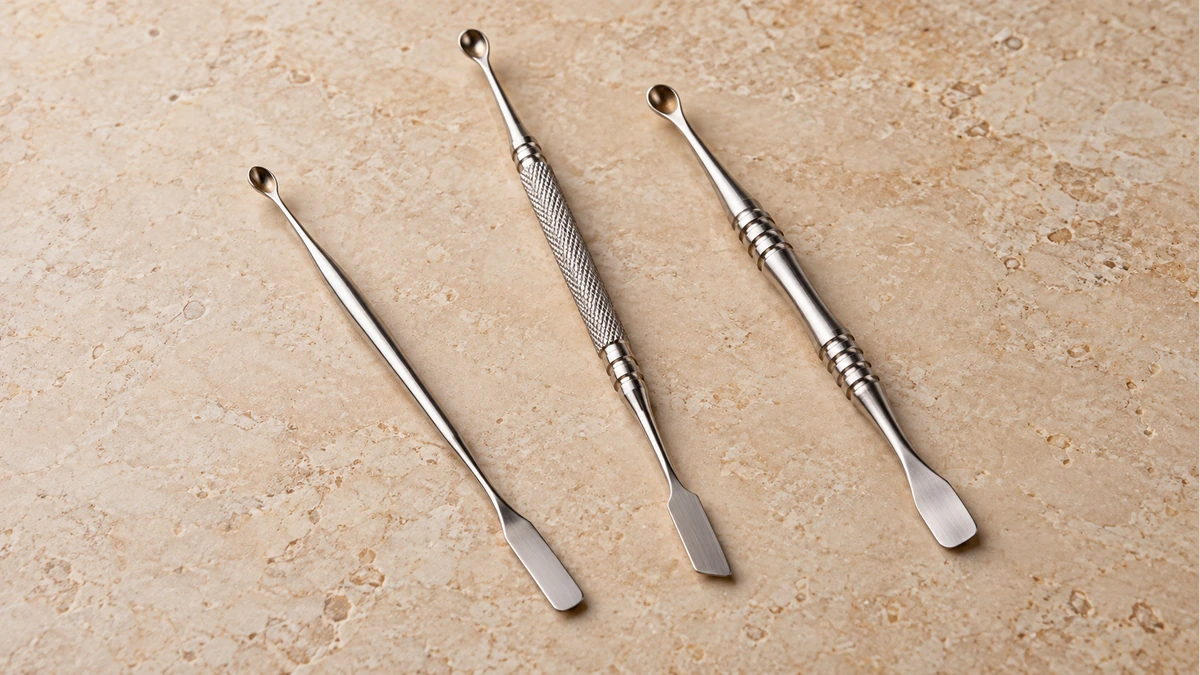
Container access is a combination of opening width, working-end width and the angle of the shaft. A scoop can pass through the opening yet fail to sit against a rounded bottom. A paddle can reach the bottom while leaving no room to rotate the handle. That is why a photo of the whole tool is more useful when it also shows the working face and its transition into the shaft. Neither a large handle nor a long shaft answers the smaller question of how the tip contacts a corner.
The gripping area deserves a separate look. A polished round shaft can rotate between the fingers, while a flattened section gives a visible reference for the orientation of a paddle. A textured section may offer more purchase, but it also introduces small recesses to keep clean. Texture at the handle is a different feature from texture on the material-contact face. The first concerns holding the tool; the second changes the surface you will need to wipe. Avoid treating decorative grooves across the entire accessory as a single benefit.
A useful way to describe an awkward tool is to identify the motion that is difficult. Does the tip fail to reach a corner, does the handle roll, or does a long shaft hit the container rim? Those observations point to shape, grip or reach, respectively. They do not call for heating the tool, sharpening its edge or forcing it against the container. When recording dimensions for a replacement part or discussing a repair, include the tip width and handle connection as well as the overall length.