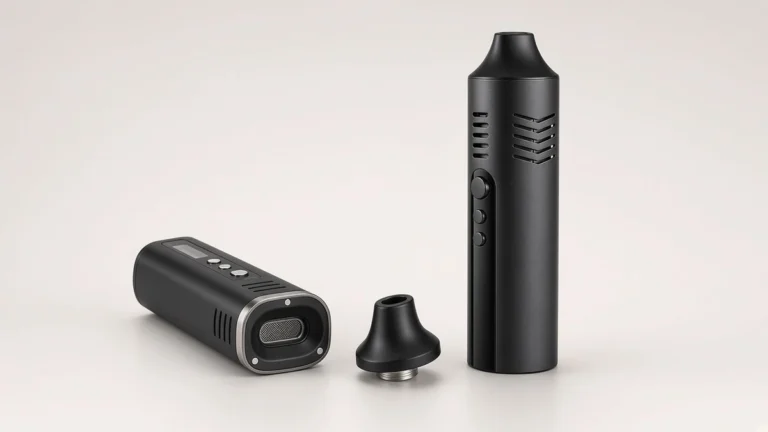
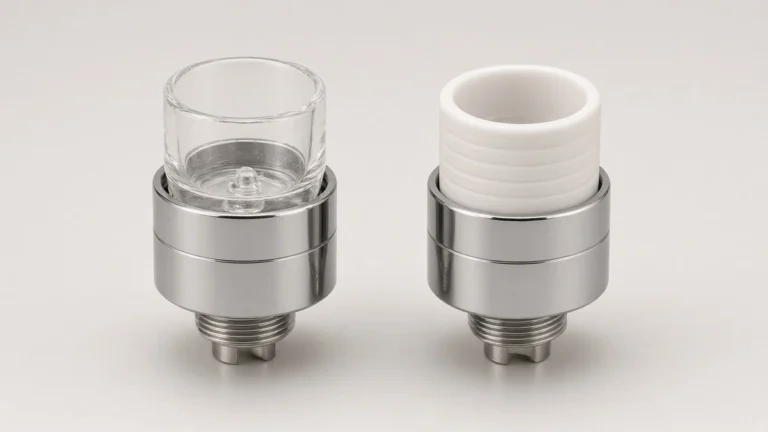
A wax pen listing often leads with “quartz,” “ceramic,” “coil-less,” or “bucket chamber,” as if those words all identified the same part. They do not. One question is how the chamber holds concentrate: on an open heater or in an enclosed dish. A different question is what that enclosed dish is made of, when the version uses a bucket at all. A “quartz” label may refer to rods, to a cup, or to another documented part. A “ceramic” label may refer to a donut, to a dish, or to a body around a heater. The bucket material, if a bucket is present, is its own specification line.
That distinction is not the same as naming the chamber family, and it is not the same as naming the heater construction. Open Coil or an Enclosed Bucket: How a Wax Pen Holds Concentrate already treats open heaters versus enclosed dishes. Quartz Rod or a Ceramic Donut: What Heats a Wax Pen Chamber already treats rod and donut heaters. What Does Coil-Less Mean in a 510 Wax Atomizer? already treats how a coil-less label can point at a surface, a heater, or an assembly. This guide does not retell those subjects. It stays on two enclosed-chamber materials that still have to be named on their own: a quartz bucket, a ceramic bucket, and what a listing photograph cannot prove.
🔎 1. The Quartz Bucket and the Ceramic Bucket Are Not the Same Chamber Material
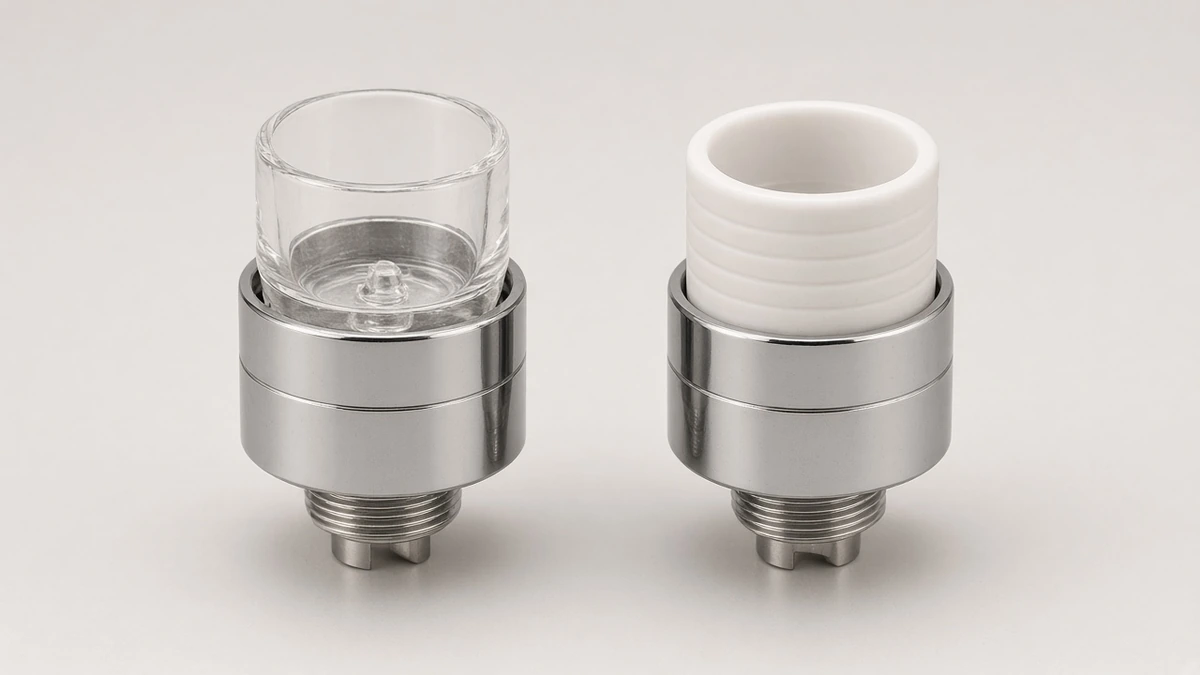
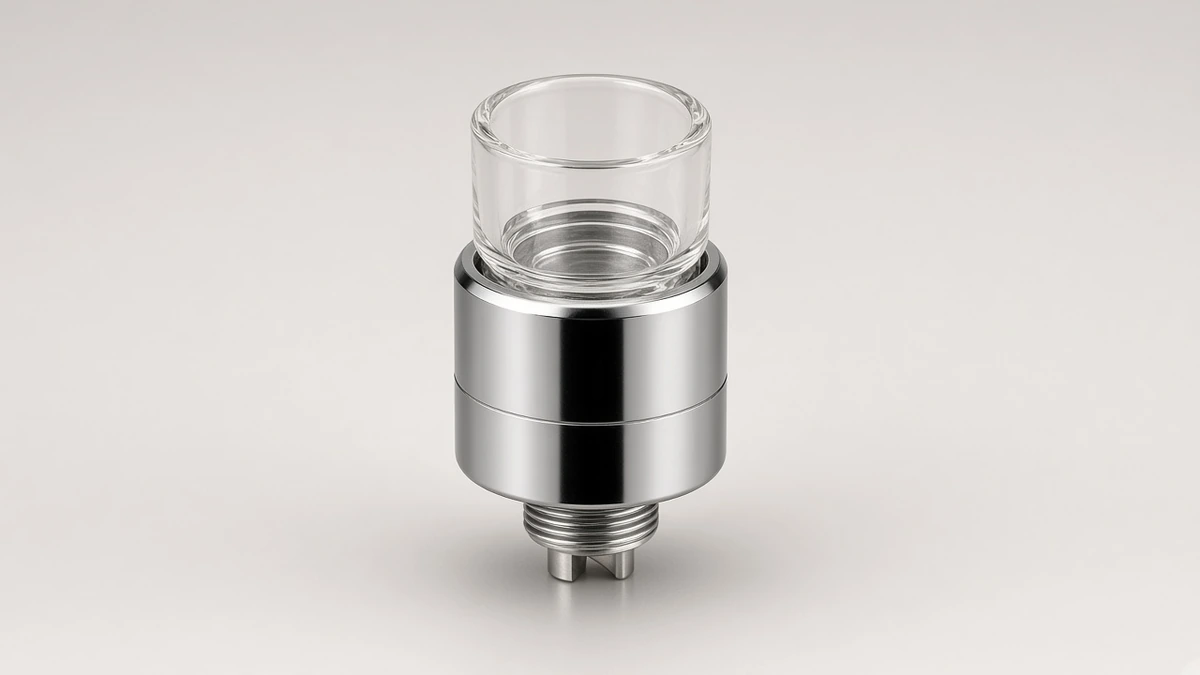
The first cut is simple. A quartz bucket is an enclosed dish or cup that the version documents as quartz. A ceramic bucket is an enclosed dish or cup that the version documents as ceramic. One names a quartz contact surface. The other names a ceramic contact surface. They can both appear in the same product family, and they can be omitted or substituted independently. Another documented dish material, if the version names one, is a third fact again; it is not a default stand-in for either of these two.
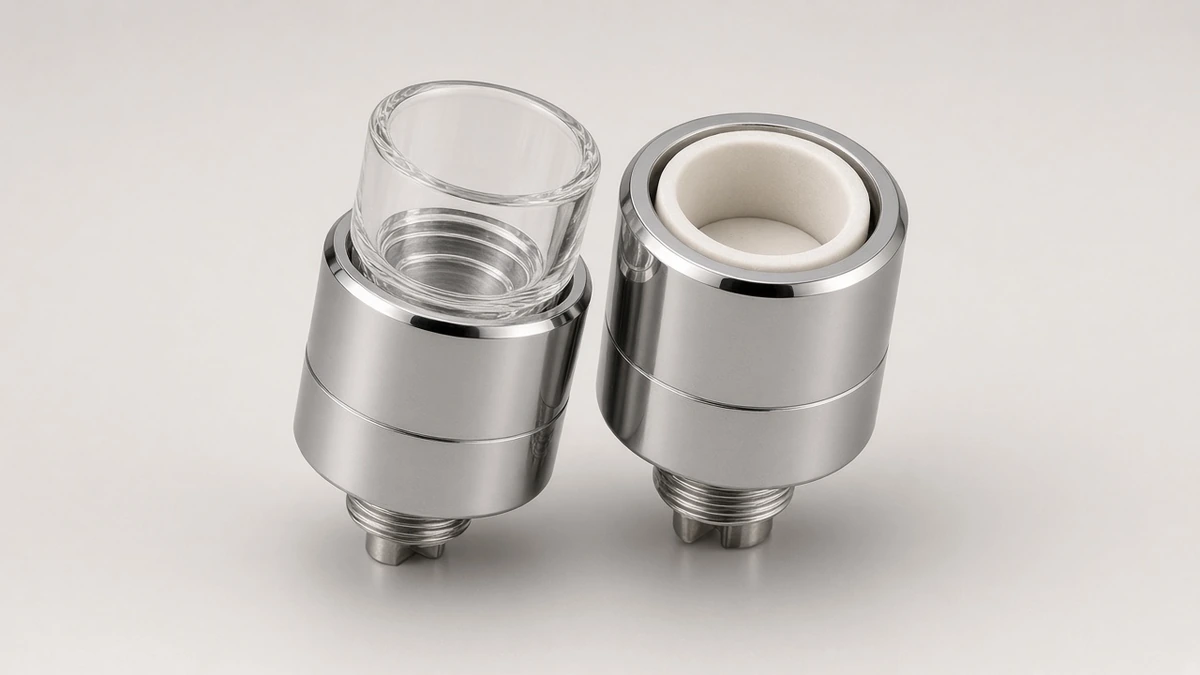
A “quartz” label does not identify a quartz bucket. A “ceramic” label does not identify a ceramic bucket. A photograph of a pale cup or a clear cup does not prove either material. Two chambers can share a similar outline and still differ on whether the dish is quartz, ceramic, or another named material, or on whether the visible surface is the heater itself. Do not assign a bucket material from a lone material word, and do not treat a clear cup as automatically quartz or a white cup as automatically ceramic.
Chamber family is a separate identification. Open Coil or an Enclosed Bucket: How a Wax Pen Holds Concentrate already treats whether concentrate sits on an open heater or in an enclosed dish. A bucket material question only arises once an enclosed dish is actually present. This guide does not retell that family cut. It only asks the buyer, when a bucket is specified, to write the dish material as its own line, including whether the drawing actually names quartz, ceramic, or another material.
🏷️ 2. A “Quartz,” “Ceramic,” or “Coil-Less” Label Is Not a Complete Chamber-Material Specification
“Quartz,” “ceramic,” “coil-less,” “bucket,” and “dish” are starting labels, not finished chamber-material specifications. A material word tells you that someone is talking about a substance. It does not tell you which part that substance belongs to: the enclosed dish, a rod or donut heater, a chamber body, or a cap. A “coil-less” claim tells you that someone is talking about a heating arrangement. It does not tell you the material of the visible cup, or whether the cup and the heater are the same part. Two versions can share a “ceramic coil-less” label and still differ on the dish that actually contacts the load.
A bucket material does not become a heater construction on its own. Quartz Rod or a Ceramic Donut: What Heats a Wax Pen Chamber already treats rod and donut heaters as constructions that have to be named separately. A quartz rod is not a quartz bucket. A ceramic donut is not automatically a ceramic bucket. What Does Coil-Less Mean in a 510 Wax Atomizer? already treats why a smooth cup and a heating element can be different parts in a description. This guide does not retell that vocabulary. It only asks the buyer not to treat “quartz,” “ceramic,” or “coil-less” as a finished dish-material line.
Chamber Volume or a Recommended Load: What a Wax Pen Is Specified to Hold already treats how much the chamber is specified to hold. A larger-looking cup is not a material identification, and a material name is not a load figure. If the listing says only “quartz bucket” or only “ceramic chamber,” write that wording down and ask which part is being named, what material the drawing assigns to the dish, and which revision that callout belongs to.
🧩 3. Identifying a Quartz Bucket on a Sample and a Drawing
The version drawing is the right place to look for a quartz-bucket callout. The drawing may name a quartz cup, a quartz dish, or a quartz bucket as the enclosed contact surface. Record the exact wording and the revision. If the drawing also names a separate heater under or around that cup, write the dish and the heater as two lines. Do not replace the dish callout with a “quartz coil” or “quartz rod” phrase from the catalog title.
A sample can support that identification, but it cannot invent the material. A clear or translucent cup can be consistent with a quartz claim; it cannot prove the claim by appearance alone. Look at the cold, empty chamber and record the shape of the enclosed dish, whether a separate heater is visible, and what the documentation says the dish is made of. Do not treat a studio highlight, a “glass look,” or a familiar cup outline as a material test.
If you only have a finished retail device, you may be able to see a clear cup and still not know whether the version documents that cup as quartz, as another clear material, or as a window over a different part. Record that limit. Ask for the drawing and the named dish material before a “quartz bucket” line is written into a brief.
📐 4. The Ceramic Bucket Still Has to Be Named as Its Own Chamber Material
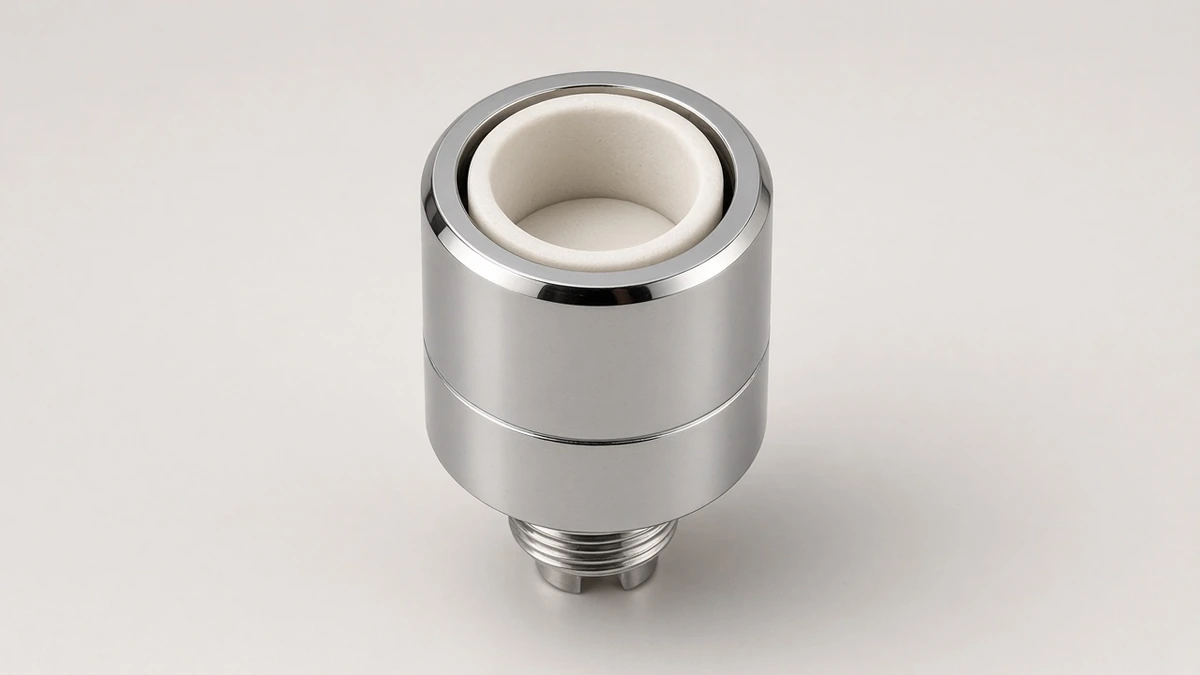
Once a quartz bucket is recorded, or recorded as absent, a ceramic bucket still has to be named as its own chamber material, or recorded as not specified. A ceramic bucket is a statement that the enclosed dish is documented as ceramic. It is not a donut-heater name. It is not proved by a white, glazed, or opaque photograph, and it is not proved by a “ceramic” or “coil-less” label on its own.
If the catalog says “ceramic bucket” and the drawing says “ceramic donut,” those are still two facts. They may belong to the same version, or they may be naming different parts. They do not replace each other. If only a “ceramic” label is present, write it as a material word and ask which part it modifies. If the sample shows an enclosed dish and the drawing names ceramic for that dish, write that as the bucket material and keep any heater construction on a separate line.
Do not settle the material by ranking flavor, heat-up, or cleaning. Those comparisons are outside this identification task, and they cannot be inferred from a cup color or a catalog adjective. If the drawing and the catalog disagree—if one says quartz bucket and the other shows or names a ceramic dish without a shared revision—stop and confirm the revision before either material is treated as approved. If the version uses another documented dish material, record that name instead of forcing the part into one of these two labels.
📷 5. What a Listing Photograph Can Hide
A listing photograph is a poor place to finish a chamber-material specification. A clear cup can be lit to look like quartz when the drawing names a different material, or when the visible surface is only a lid or a sleeve. A white or opaque cup can be photographed so that it looks ceramic when the dish is another material, or when the ceramic part is a heater under a different cup. A top-down crop can hide rods or a donut that would show the chamber is not a bucket at all.
The photograph is also the wrong place to collapse a coil-less label into a material. A smooth interior can be a cup, a coating, or a different construction, as What Does Coil-Less Mean in a 510 Wax Atomizer? already notes. Those assignments come from the drawing and a sample of the exact version. If the listing says only “quartz” or only “ceramic bucket” and shows a cup, write both the chamber-family question and the dish-material question down and request the documented construction.
✅ 6. What to Check on a Sample, a Manual, and a Brief
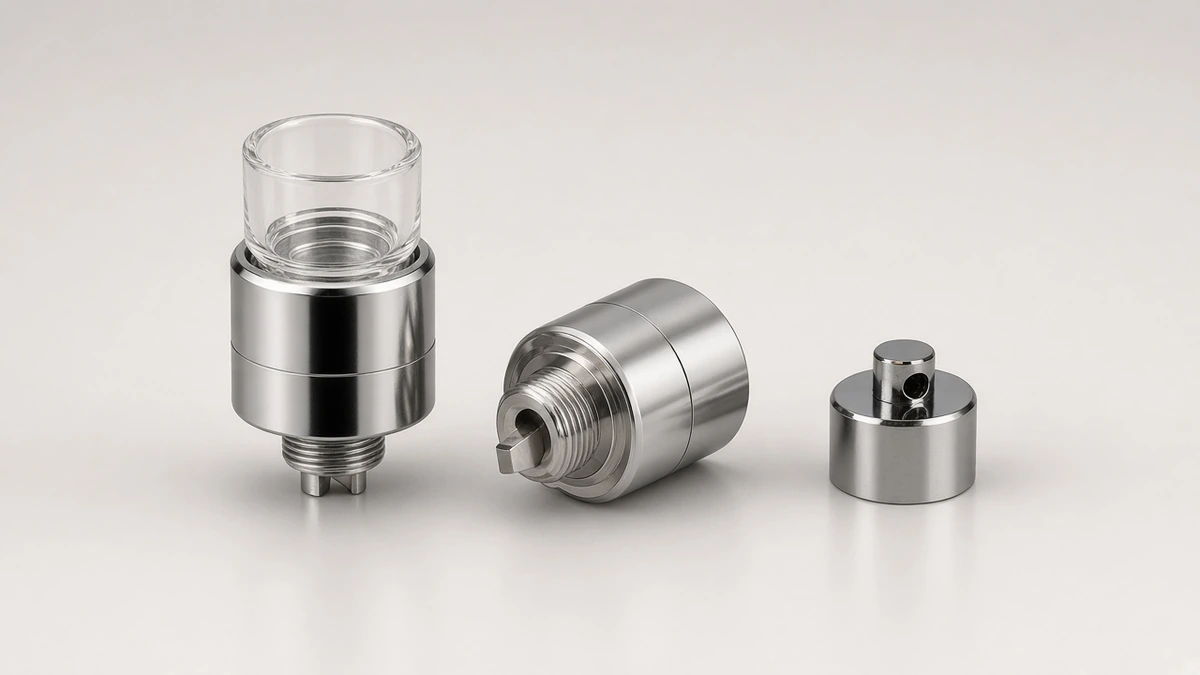
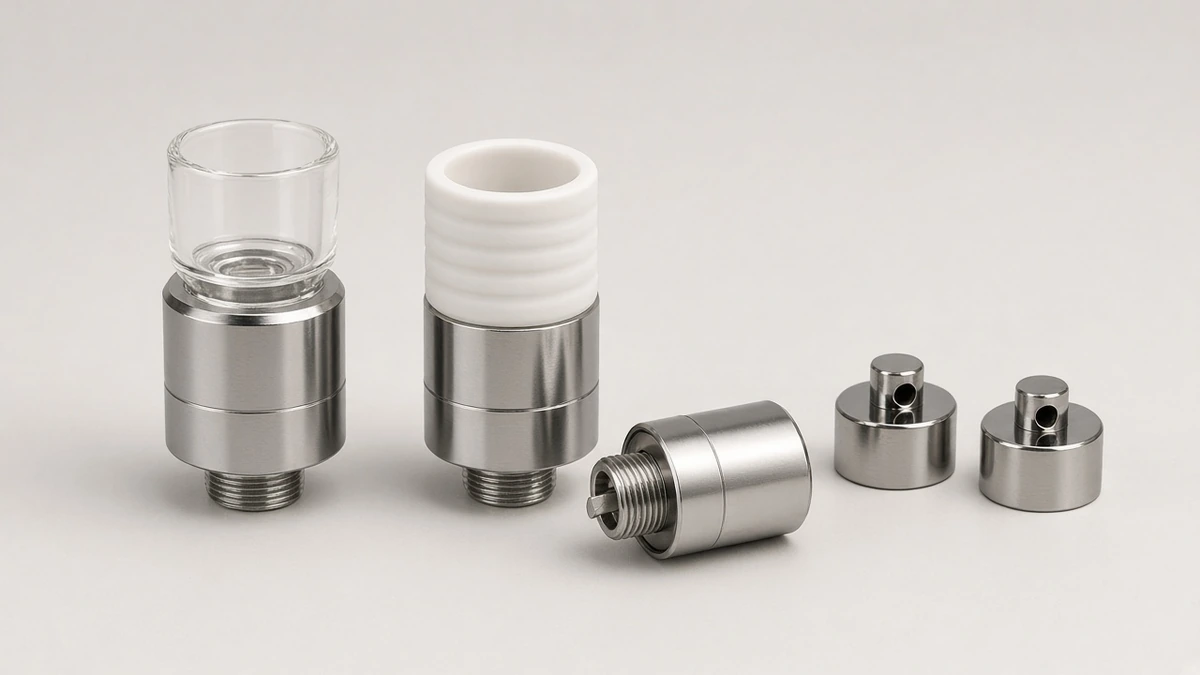
A one-line description a team can reuse should name the enclosed-dish material and should keep it apart from chamber family and heater construction. Example: “Wax pen or 510 wax atomizer; enclosed bucket or dish material as named on the version drawing or manual, such as a quartz bucket or a ceramic bucket; chamber family and heater construction are documented separately.”
On the sample:
- Look at the cold, empty chamber and record whether an enclosed dish is actually present, as opposed to an open rod or coil heater.
- Record the visible shape of that dish, and whether a separate heater can be seen under or around it.
- Do not treat a clear cup as proof of quartz, or a white or glazed cup as proof of ceramic.
- Compare the sample with the drawing or the current manual when you need to confirm that the chamber in hand is the revision the material callout belongs to.
On the drawing, the manual, and the current brief for that exact version:
- Record the dish material, if one is named, including the exact wording (quartz bucket, ceramic cup, or another documented name), and record the revision.
- Record the heater construction as its own line when the documentation names a separate element.
- Do not infer flavor, temperature, or cleaning performance from the material name.
- If the drawing and the catalog disagree, stop and confirm the revision before writing a chamber-material specification.
On the listing:
- Treat “quartz,” “ceramic,” “coil-less,” and “bucket” as labels to reconcile with the part being named and the material of that part.
- A cup shown as quartz or ceramic for a named catalog example is that page’s documentation, not a default for the next chamber in the same photograph style.
Questions worth sending with a sample request:
- Is this exact version specified with an enclosed bucket or dish, and what material does the drawing name for that dish?
- Is the visible cup the heater, or does a separate heating element sit under or around it?
- If the listing says only “quartz” or only “ceramic,” which part does that word modify?
- If a “coil-less” label is also used, what does the manual mean by that word on this version?
- Do the quotation, the drawing or manual, and the sample all use the same dish material?
❓ 7. Short Answers a Brief Can Reuse
❓ 7.1 Identification Questions
What is a quartz bucket on a wax pen?
It is an enclosed dish or cup that the version documents as quartz. It names the material of that contact surface, not a rod heater and not a chamber family on its own.
Is a ceramic bucket the same fact as a ceramic donut?
No. A ceramic bucket is an enclosed dish documented as ceramic. A ceramic donut is a heater construction. They can appear together or separately, and each has to be identified on its own line.
Does a “quartz,” “ceramic,” or “coil-less” label complete the chamber-material specification?
No. Those phrases are starting labels. They do not, by themselves, say which part is being named, whether an enclosed dish is present, or what material that dish is.
Can a photograph of a clear or white cup prove the bucket material?
It can support an identification if the named material matches the drawing and the sample is the same revision. Appearance alone cannot prove quartz, ceramic, or another material, and a crop can hide a different heater.
Is bucket material the same thing as chamber volume?
No. Chamber volume and a recommended load are quantity facts. Bucket material is what the enclosed dish is specified to be made of. A larger-looking cup does not identify the material.
If the version uses another dish material, should it be forced into one of these two names?
No. If the documentation names another material, record that name. Quartz bucket and ceramic bucket are two common identifications, not a complete list of every enclosed chamber.