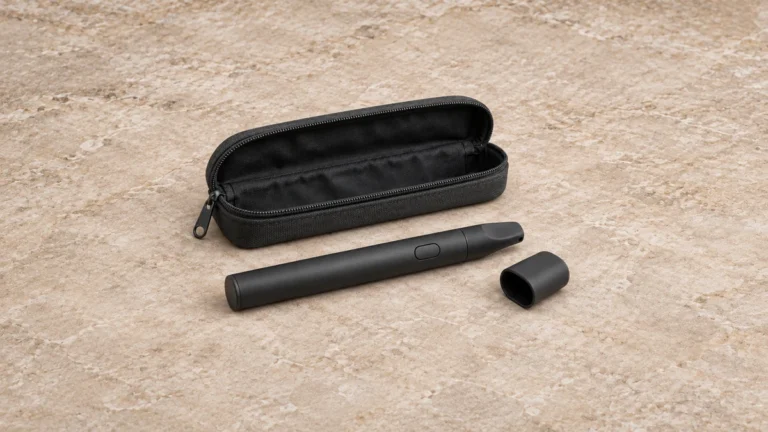
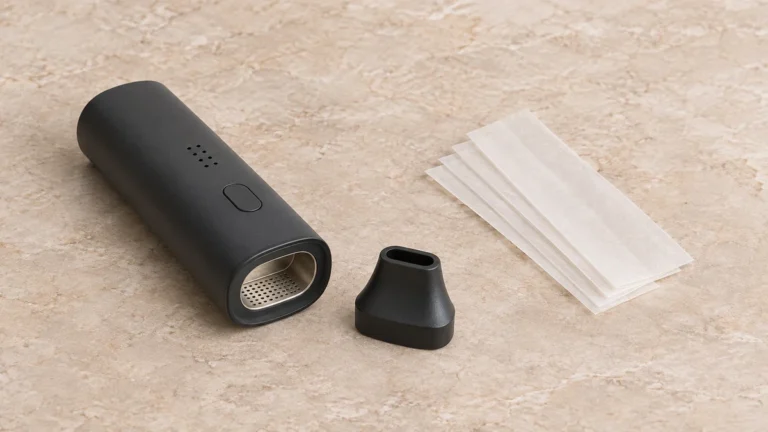
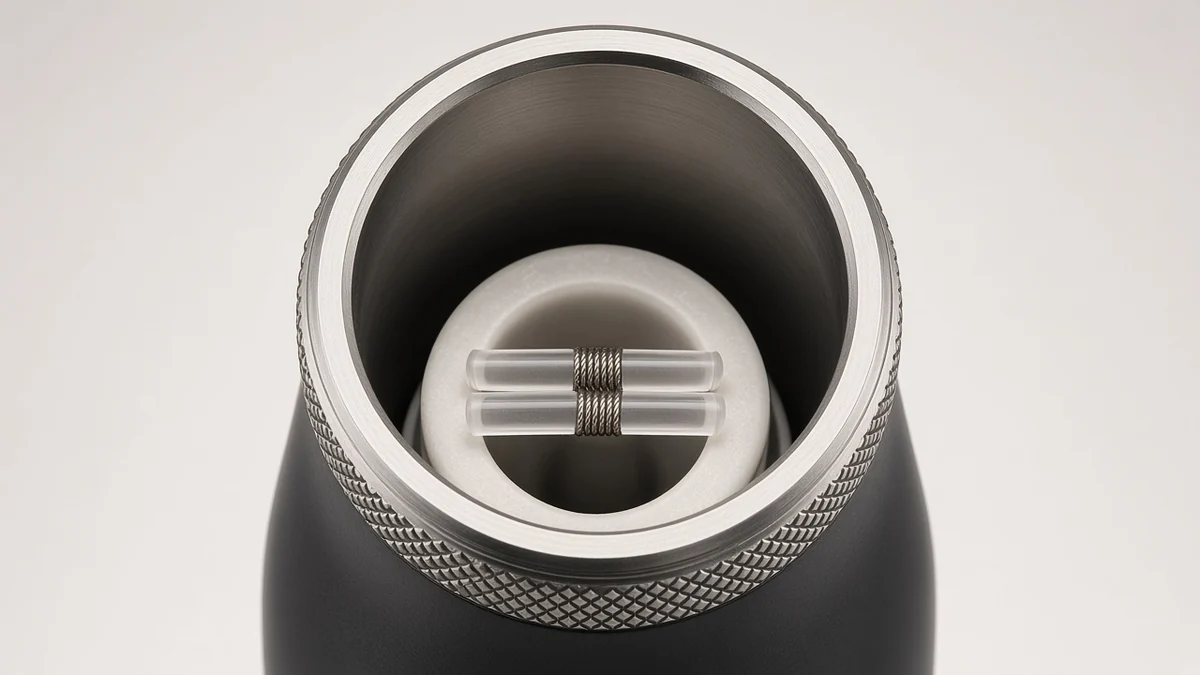
A wax pen chamber has to have a heater, and that heater is not always the same construction. On some versions the concentrate is heated on one or more quartz rods, often a dual-rod assembly with a visible wire wrap. On others the heater is a ceramic donut or disk: a ring- or plate-shaped ceramic element, often seated in a cup. Those constructions are easy to collapse into a single catalog phrase such as “quartz coil,” “ceramic chamber,” or “replaceable atomizer.” They should not be. A quartz-rod heater and a ceramic donut are different parts. A brief that names only a material, or only a chamber family, is incomplete if it does not say which heater construction is specified, and on which version.
That distinction is not the same as whether the chamber is an open coil or an enclosed bucket, and it is not the same as whether the listing is a 510 wax atomizer or a complete wax pen. Open Coil or an Enclosed Bucket: How a Wax Pen Holds Concentrate already identifies the chamber family. 510 Wax Atomizer or a Dedicated Wax Pen: What the Power Unit Is Built For already treats the power-unit match. Coil Cap or the Mouthpiece: What Comes Off a Wax Pen Before Loading already treats what is removed before a load. This guide does not retell those subjects. It stays on two heater constructions that still have to be named on their own: the quartz rod, the ceramic donut, and what a listing photograph cannot prove.
🔎 1. The Quartz Rod and the Ceramic Donut Are Not the Same Heater
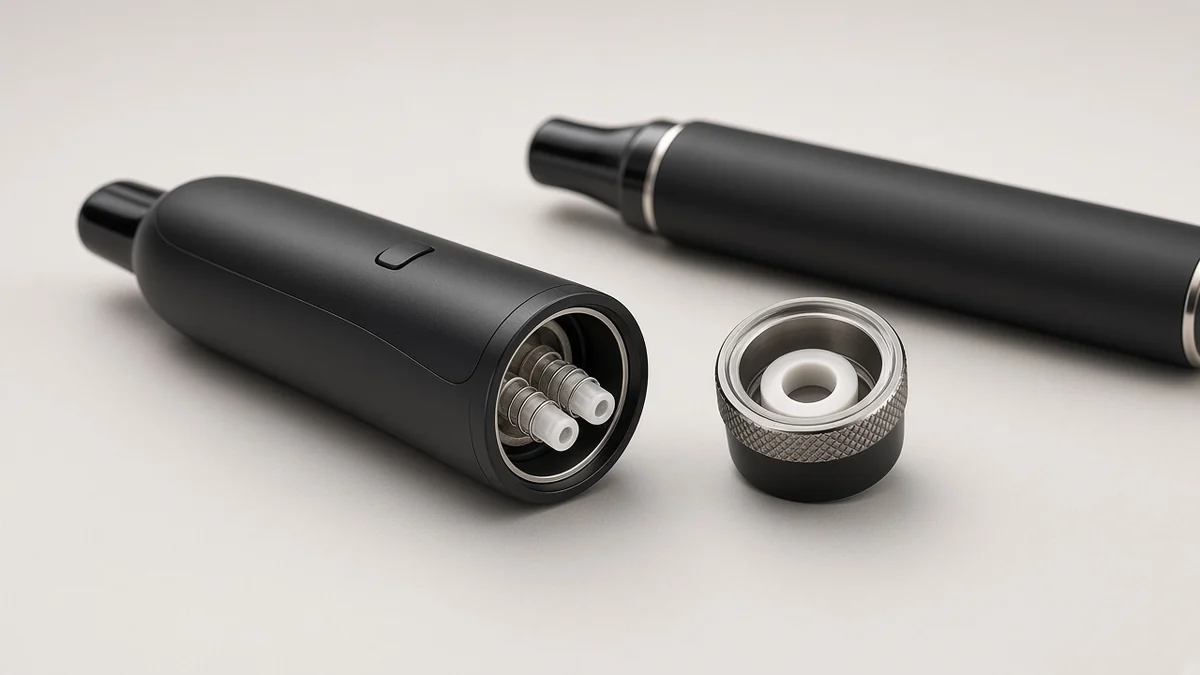
The first cut is simple. A quartz-rod heater is a construction the version treats as one or more quartz rods in the chamber, often a dual-rod pair, that the concentrate is supposed to contact when it is loaded and heated. A ceramic donut is a construction the version treats as a ring- or disk-shaped ceramic heater, often seated in a cup or dish. One is a rod assembly. The other is a ceramic ring or plate. They can both be described as “coils” in a catalog, and they can be omitted or substituted independently on different atomizer versions.
A “quartz” label does not identify a rod heater. A “ceramic” label does not identify a donut. Quartz can appear as rods, as a cup, or as another documented part. Ceramic can appear as a donut, as a cup wall, or as another documented part. A photograph of an open chamber does not, by itself, prove which of those constructions is present if the heater is out of focus, dirty, or hidden by a cap. Do not assign both constructions from one material phrase.
The chamber family is a third identification again. Open Coil or an Enclosed Bucket: How a Wax Pen Holds Concentrate already treats whether concentrate sits on an exposed coil or in an enclosed cup. A quartz-rod heater can appear in more than one chamber family. A ceramic donut often sits in a cup, but the cup is not the donut. This guide does not retell chamber family. It only asks the buyer to write the heater construction as its own line, including the material and the shape the drawing actually names.
🏷️ 2. A “Quartz” or “Ceramic” Label Is Not a Complete Heater Specification
“Quartz,” “ceramic,” “quartz coil,” “ceramic bowl,” and “replaceable atomizer” are starting labels, not finished heater specifications. Material tells you what a part is said to be made of. It does not tell you whether that part is a rod, a donut, a cup, a wall, or a different heater. Two atomizers can share a “quartz” label and still differ on whether the heat comes from rods, from a cup, or from another construction. Two atomizers can share a “ceramic” label and still differ on whether the heater is a donut, a disk, or only a ceramic-lined bucket.
A chamber-family claim is also incomplete on its own as a heater identification. An enclosed bucket tells you how concentrate is held. It does not tell you what sits in the floor of that bucket. Chamber Volume or a Recommended Load: What a Wax Pen Is Specified to Hold already treats how much the chamber is specified to hold. Volume is not heater construction. Top Airflow or Bottom Airflow: Where a Wax Pen Chamber Draws Air already treats air entry. Airflow is not the heater.
If the listing says only “quartz coil” or only “ceramic chamber,” write that wording down and ask which construction is actually in the chamber, whether the atomizer is replaceable as a unit, and which revision the drawing names. Do not treat a material word as a heater shape, and do not treat a bucket photograph as proof of a donut or of rods.
🧩 3. Identifying the Quartz Rod on a Sample and a Drawing
An open chamber on a sample is the right place to look for a quartz-rod heater. With the cap or mouthpiece removed as the version instruction allows, look into the chamber and record what the concentrate is supposed to contact. A quartz-rod version typically shows one or more clear or cloudy rods, often a parallel pair, sometimes with a visible wire wrap. Record the number of rods if you can see them clearly, and record that count as an observation on that sample, not as a default for every “quartz” atomizer.
Do not assume that every shiny or transparent element in the chamber is a quartz rod. A quartz cup, a glass wall, or a residue film can look similar in a small opening. The drawing or the atomizer documentation should name the heater as quartz rods, or as another quartz part, before the construction is written into a brief. If the rods are coated, broken, or buried in residue, you may not be able to finish the identification from the used sample alone. Record that limit and ask for a clean sample or a named drawing.
510 Wax Atomizer or a Dedicated Wax Pen: What the Power Unit Is Built For already treats whether the listing is an atomizer or a complete device. If the heater is in a replaceable 510 wax atomizer, identify the atomizer version, not only the battery it happens to be threaded onto. A thread that fits is not a heater identification.
📐 4. The Ceramic Donut Still Has to Be Named as Its Own Heater
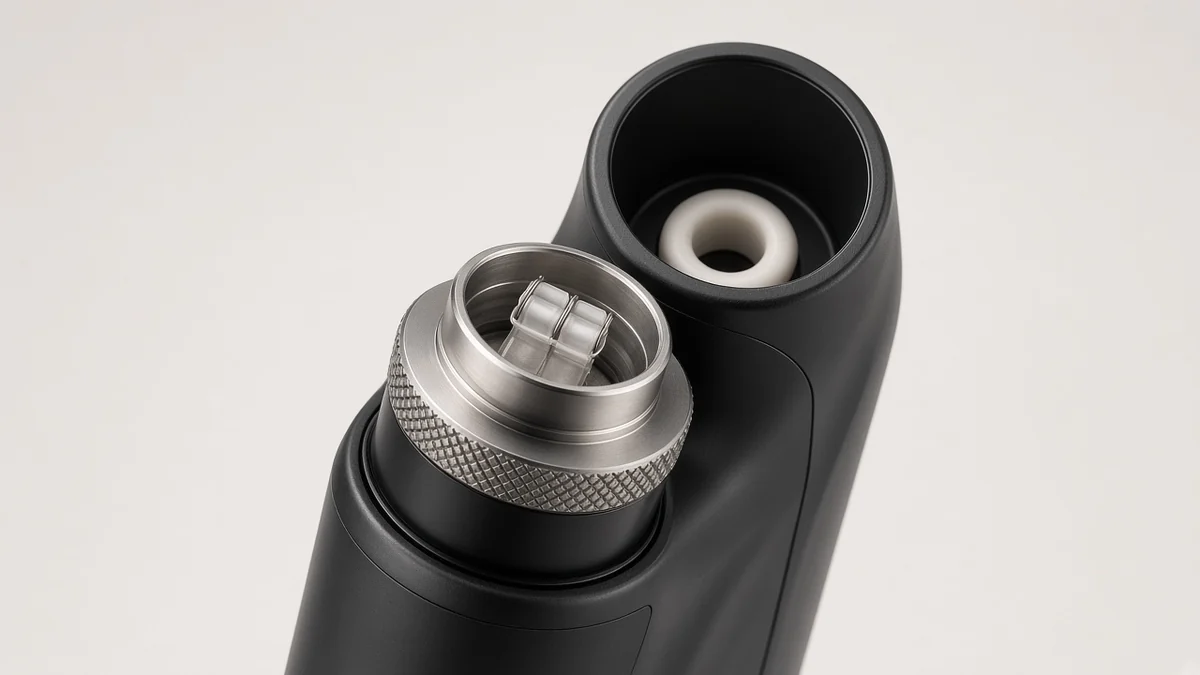
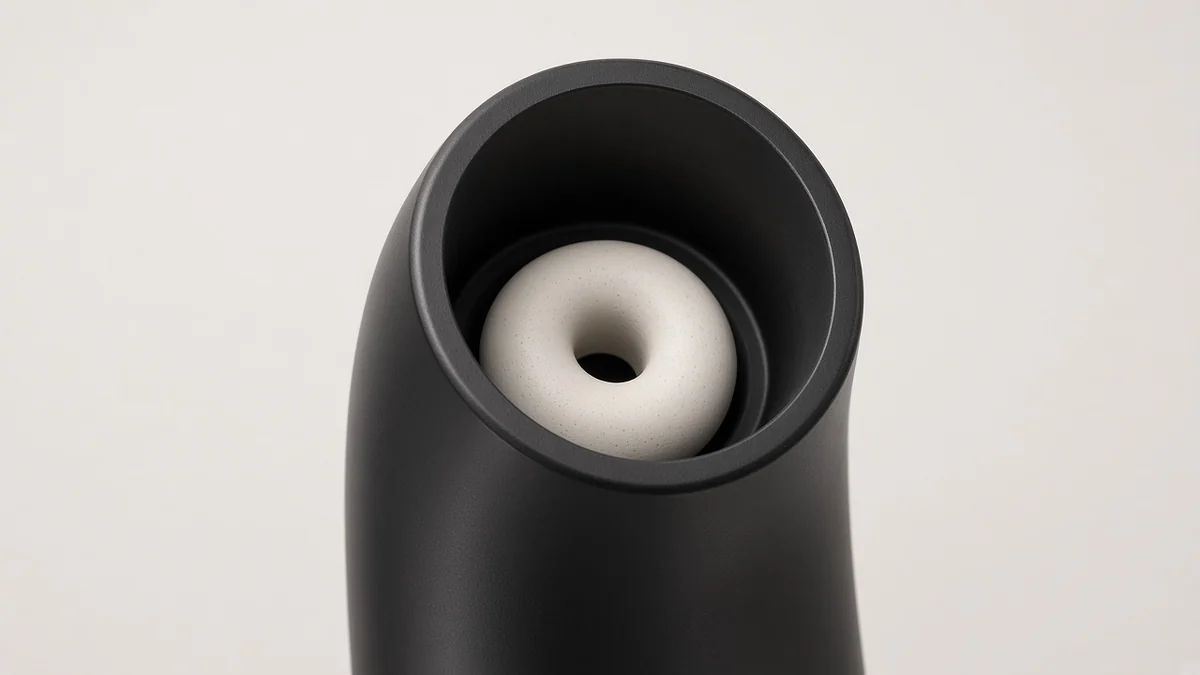
Once the rod construction is recorded, or recorded as absent, a ceramic donut still has to be named if that is the heater, or recorded as not used. A ceramic donut is a ring- or disk-shaped ceramic element. It often sits in the floor of a cup, with a center opening or a solid disk, depending on the version. The cup around it is not automatically the heater. The donut, disk, or other named ceramic element is the heater that has to be written down.
A “ceramic bucket” or “ceramic chamber” label can hide this step. The bucket may be ceramic, and the heater may still be a different part, or the heater may be the ceramic donut itself. Write what you can see, then reconcile it with the drawing. If the version uses another heater—such as a different ceramic shape, a metal cup, or a construction the drawing names in other words—record that construction as its own line. Do not force it into the rod family or the donut family.
If the sample and the drawing disagree—if a sample shows rods and the drawing names a ceramic donut, or the reverse—stop and confirm the revision and the atomizer model before the heater is treated as approved. Chamber family, airflow, and load volume remain different identifications and are not settled by the heater alone.
📷 5. What a Listing Photograph Can Hide
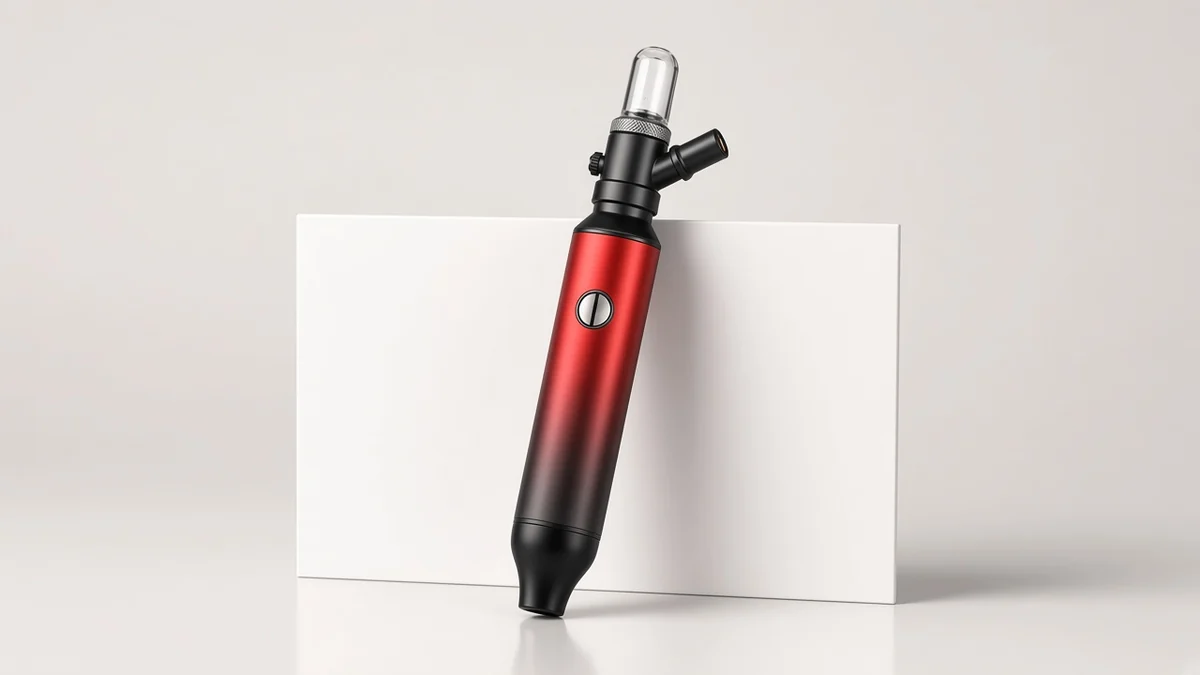
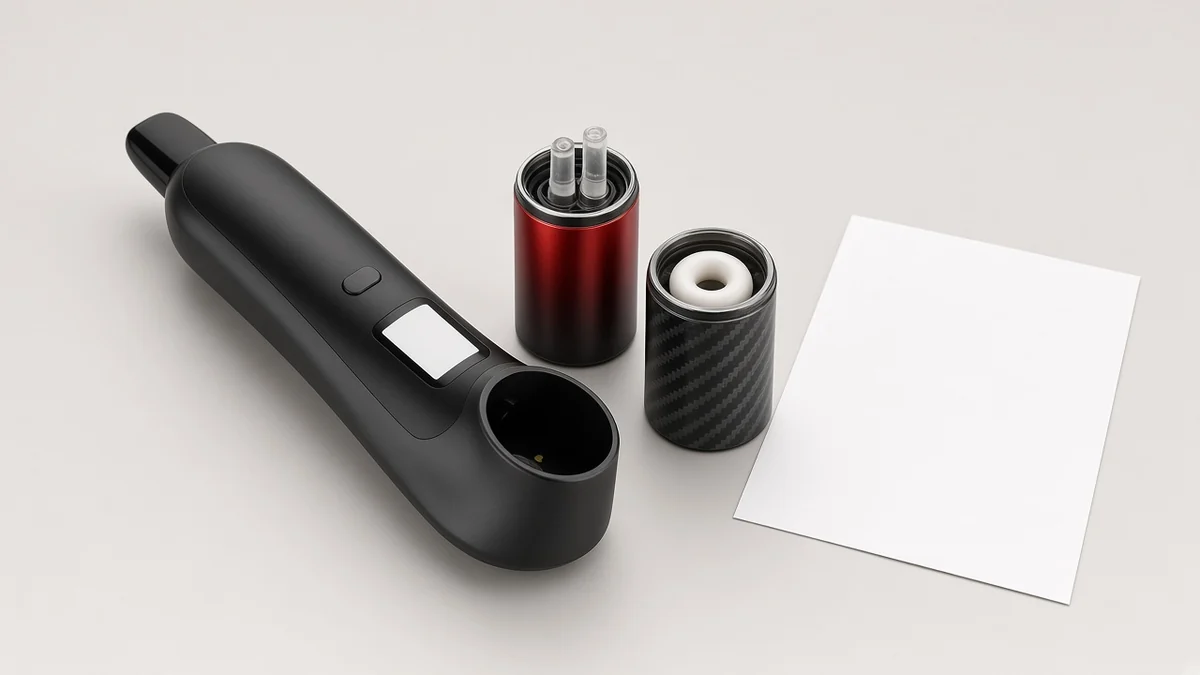
A listing photograph is a poor place to finish a heater specification. A seated mouthpiece or coil cap can hide the chamber completely. A beauty shot of a complete wax pen can show the body and never show the rods or the donut. A tight crop of a bucket can show a cup wall and still leave the floor of the chamber unclear. Residue, glare, or a dark interior can also make a donut look like a solid floor, or make rods disappear.
The photograph is also the wrong place to borrow a material claim. A marketing image that says “quartz coil” or “ceramic flavor” does not identify the heater construction. Those assignments come from an open sample and the version drawing or atomizer list. If the listing says only “quartz” or “ceramic” and shows an assembled pen, write the heater construction down and request a clear view into the open chamber, plus the documented atomizer version.
✅ 6. What to Check on a Sample, a Manual, and a Brief
A one-line description a team can reuse should name the heater construction and should keep it apart from chamber family and material shorthand. Example: “Wax pen or 510 wax atomizer; heater construction as quartz rod(s) or a ceramic donut or disk, as named on the version drawing or seen on an open sample; chamber family and airflow are documented separately.”
On the sample:
- Remove the cap or mouthpiece only as the version instruction allows, and look into the chamber at the part the concentrate is supposed to contact.
- Record whether you see rod(s), a ceramic ring or disk, or another named heater, and record if residue or glare prevents a clear identification.
- Do not treat a cup wall, a glass or quartz bucket, or a generic “coil” nickname as the heater construction.
- If the atomizer is replaceable, record the atomizer version separately from the power unit.
On the drawing and the current brief for that exact version:
- Record the heater construction, the material the drawing names, and the revision or atomizer model.
- Keep chamber family, recommended load, airflow, and cap or mouthpiece parts in separate lines.
- If the drawing and the sample disagree, stop and confirm the revision before writing a heater specification.
On the listing:
- Treat “quartz,” “ceramic,” “quartz coil,” and “ceramic chamber” as labels to reconcile with the actual heater construction.
- A heater shown for a named catalog example is that page’s documentation, not a default for the next wax pen in the same photograph style.
Questions worth sending with a sample request:
- Does this exact version heat concentrate on quartz rod(s), on a ceramic donut or disk, or on another documented heater?
- If the listing says “quartz” or “ceramic,” which part of the chamber is that material, and what is the heater shape?
- Is the heater part of a replaceable atomizer, and which atomizer revision does the quotation cover?
- Does the open sample match the drawing for that revision?
- If another heater construction is used, how is it named on the drawing, rather than forced into a rod or donut label?
❓ 7. Short Answers a Brief Can Reuse
❓ 7.1 Identification Questions
What is a quartz-rod heater on a wax pen?
It is a construction in which one or more quartz rods, often a dual-rod pair, are the parts the concentrate is supposed to contact when the chamber is heated. A “quartz” label alone does not prove that the heater is a rod assembly.
Is a ceramic donut the same fact as a quartz-rod heater?
No. A ceramic donut is a ring- or disk-shaped ceramic heater, often seated in a cup. The two constructions have to be identified separately, including the chamber they sit in.
Does a “quartz” or “ceramic” label complete the heater specification?
No. Those words are material labels. They do not, by themselves, say whether the heater is a rod, a donut or disk, a cup, or another construction.
Is heater construction the same thing as an open coil or an enclosed bucket?
No. Chamber family describes how concentrate is held. Heater construction describes the part that heats it. A rod heater or a donut can appear in more than one chamber layout and has to be named on its own.
Can the cup or bucket stand in for the heater?
Not by itself. The cup may hold concentrate, and it may be ceramic or another material, without being the heater. Record the cup and the heater as separate observations unless the drawing names them as the same part.
Can a listing photograph settle the heater construction?
It can support an identification if the chamber is open, the heater shape is clear, and the sample matches the drawing or the atomizer list. It often hides the chamber under a cap or shows only a cup wall. Confirm the heater on an open sample and in the version documentation.