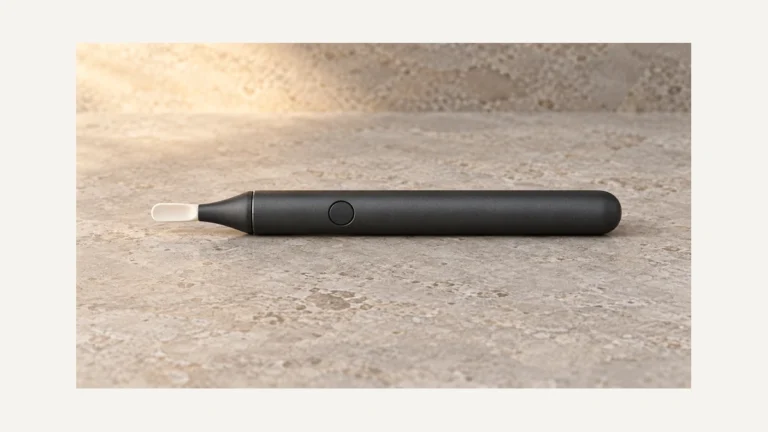
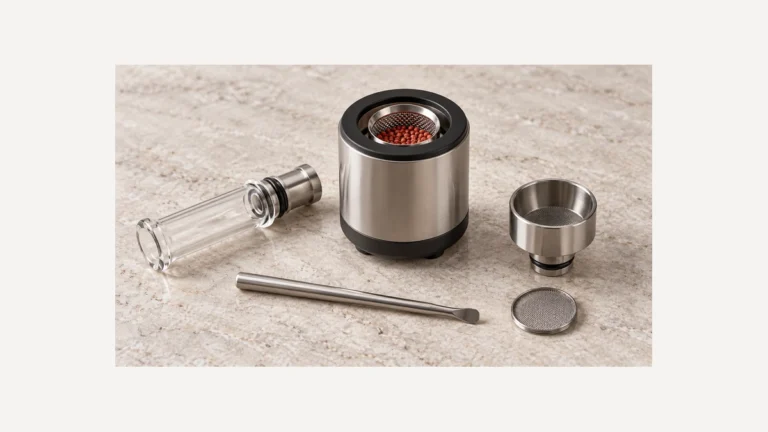
Quartz shows up on a lot of dab tool listings, usually as a tip material rather than the whole tool. It’s easy to see why: quartz has a clean, glassy look and a reputation tied to nails and bangers, so the word carries a certain weight. But a quartz tip tells you very little about how a tool is built, how it balances in the hand, or how it holds up over time. Shaft thickness, joint construction, handle weight, and surface finish do far more to explain how a tool actually behaves than the tip label does on its own.
This is a common point of confusion in online discussions — people comparing dab tools often end up talking past each other because one person means the tip material and another means the handle or shaft material. Understanding the difference is the first step toward reading a listing accurately instead of assuming “quartz” answers every question.
🔍 1. What “Quartz” Actually Describes
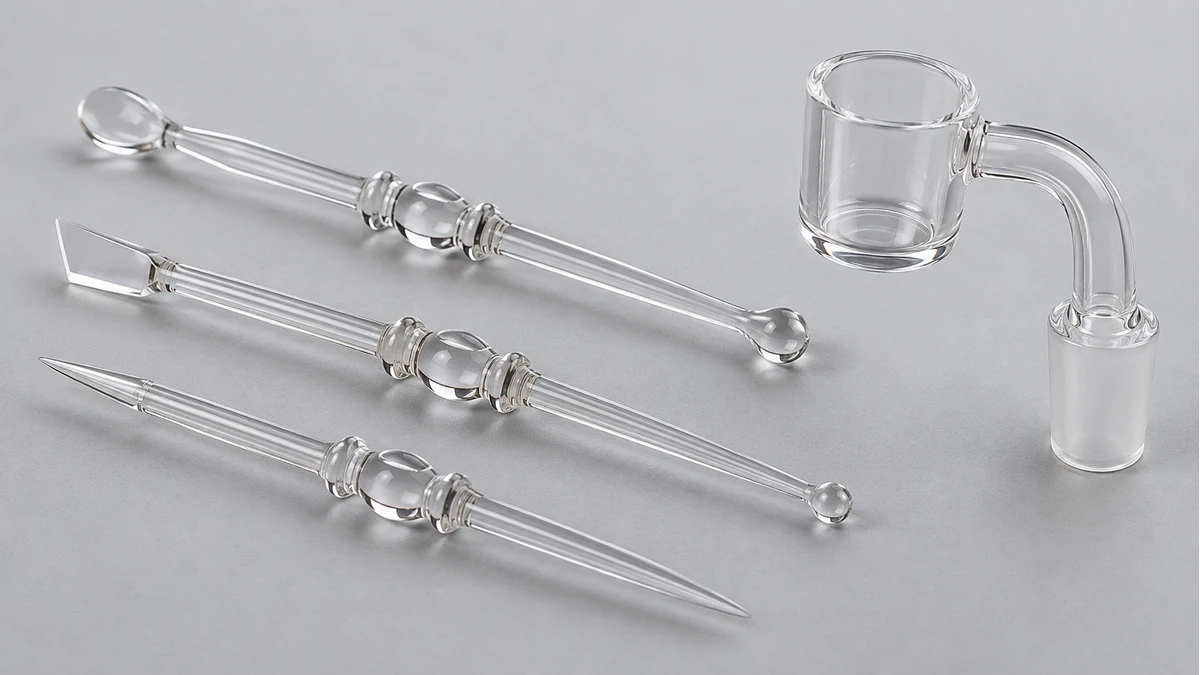
Quartz is a mineral-based material known for its smooth surface and resistance to sticking, which is part of why it’s popular for banger surfaces. When a dab tool has a quartz tip, that description usually applies to a small working end fused or set into a shaft made of something else, often glass, metal, or a composite. The rest of the tool — the shaft, the handle, the joint where the tip meets the body — can vary widely between brands even when the tip material is identical.
This is exactly the kind of mismatch that trips people up when comparing options. A search for a “quartz dab tool” can return products with a quartz tip and a stainless shaft, a fully fused quartz piece from tip to handle, or a quartz-tipped tool with a resin or wood grip. None of these are wrong to call quartz, but they behave very differently once you look past the label.
💎 2. Tip Shape and What It Signals
Tip geometry is one of the more practical details buyers tend to skip past, even though it affects how a tool interacts with a surface. Flat tips, angled tips, pointed tips, and rounded scoop tips each distribute contact differently. A flatter tip spreads pressure over a wider area, while a pointed or angled tip concentrates it into a smaller point. Neither shape is universally better — it depends on the surface being worked and personal handling preference.
What matters more than shape alone is how cleanly that shape was formed. A well-finished tip has consistent edges and a uniform surface, without visible pooling, bubbling, or asymmetry where the quartz was shaped. Listings rarely describe this in detail, so photos from multiple angles are often the only way to judge it before deciding.
💎 2.1 Symmetry and Finish Quality
Symmetry is worth a second look because it’s one of the easiest things to check visually and one of the easiest things for a manufacturer to get wrong. An off-center tip or a shaft that doesn’t line up with the tip axis can make a tool feel unbalanced even if the quartz itself is fine. This kind of asymmetry doesn’t always show up in a product description — it shows up in the object itself.
💎 2.2 Why Shape Doesn’t Indicate Grade
It’s worth being clear that tip shape and quartz grade are unrelated. A precisely shaped tip can be made from lower-grade material, and a slightly rougher-looking tip can still be solid quartz. Shape reflects design intent and manufacturing skill; it doesn’t confirm purity, density, or thermal behavior, none of which are typically disclosed in casual retail listings anyway.
🧵 3. Shaft Thickness and Fused Joints
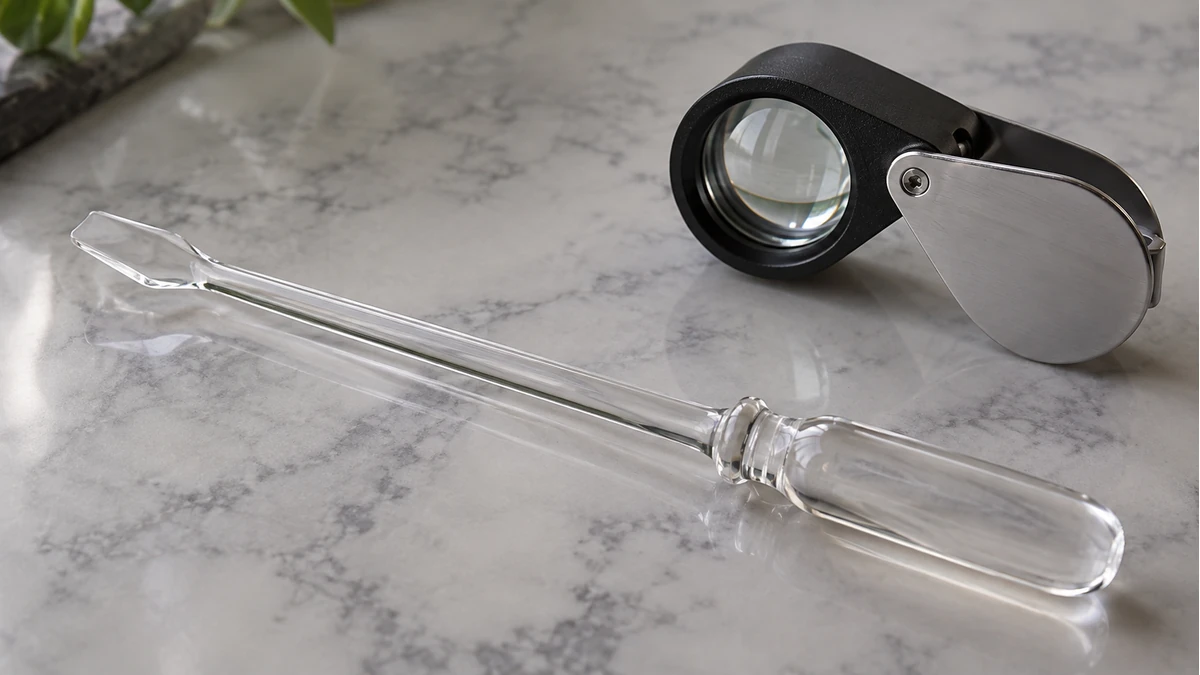
The shaft is where a lot of a dab tool’s real-world feel comes from, and it’s also where quartz tools diverge the most from one another. Some tools use a shaft that’s the same quartz as the tip, fused into a single continuous piece. Others attach a quartz tip to a shaft made of glass, resin, or metal using a joint, weld, or adhesive bond. Both approaches show up under the “quartz dab tool” umbrella, but they carry different considerations.
A fully fused quartz piece has no seam to worry about, which some people find reassuring from a cleaning and inspection standpoint. A tool with a separate joint introduces a transition point that’s worth examining — is it smooth, is there a visible gap, does the tip sit flush against the shaft, or is there a lip where debris could collect?
🧵 3.1 Reading Shaft Diameter in Listings
Shaft thickness affects both grip feel and how much flex or rigidity a tool has. A thinner shaft can feel more precise but may also feel fragile in the hand, especially for anyone used to heavier stainless steel tools. A thicker shaft feels sturdier but can be less nimble. Listings sometimes give a diameter measurement, but just as often they don’t, which means photos next to a reference object (a coin, a pen) are the more reliable way to judge scale before buying.
🧵 3.2 Joint Integrity Over Time
Where a quartz tip meets a different shaft material, that joint is a point worth watching over the life of the tool, not just at purchase. Repeated temperature cycling and handling can stress a bonded joint differently than a single continuous material would. This isn’t a defect specific to quartz — any composite tool made of two different materials has a similar consideration — but it’s part of why fused, single-material designs get mentioned favorably in comparison discussions.
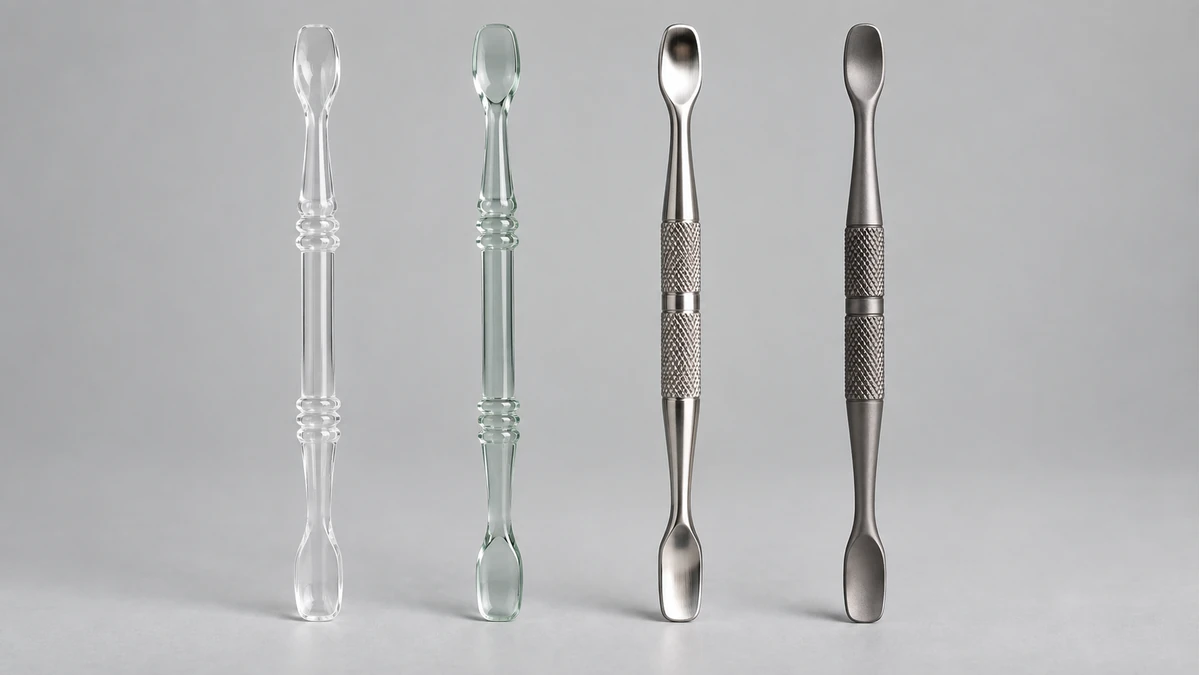
⚖️ 4. Handle Balance and How Quartz Compares to Other Declared Materials
Handle weight and balance point are often what people notice first when they actually pick up a tool, yet they’re rarely described in any specific way on a product page. A tool that’s tip-heavy behaves differently from one that’s balanced toward the palm or weighted at the very end. Quartz-tipped tools with a lightweight shaft can feel front-loaded, while those with a metal or resin handle often shift the balance point back toward the hand.
Comparing quartz to other commonly declared materials helps frame what buyers are actually choosing between, since the decision is rarely quartz versus nothing — it’s quartz versus stainless steel, titanium, or borosilicate glass, each with its own handling profile.
| Declared Material | Typical Feel | Common Handling Note |
|---|---|---|
| Quartz (tip or fused) | Smooth, glass-like surface | Surface feel varies by finish; fused designs avoid a joint seam |
| Stainless steel | Solid, often heavier | Rigid shaft, minimal flex, straightforward to wipe down |
| Titanium | Lighter than steel, still rigid | Favored in some comparisons for a lighter feel with similar sturdiness |
| Borosilicate glass | Lightweight, visually similar to quartz | Distinct from quartz despite a similar look; more flex-averse handling |
None of these comparisons are about one material being definitively better. They’re about matching handling preference — weight in the palm, rigidity, how the tool feels being turned between fingers — to what a buyer already knows they like, which is often shaped by tools they’ve used before.
⚖️ 4.1 Weight Distribution in Composite Tools
Composite tools — a quartz tip on a non-quartz shaft or handle — tend to place more weight toward whichever material makes up the bulk of the tool. A metal-handled quartz tool can feel closer to a stainless steel tool overall, with the quartz tip functioning almost like an accessory at the working end. This is worth noting because someone shopping specifically for “a quartz feel” might end up with something that handles more like metal, simply because the tip is the only quartz component.
⚖️ 4.2 Personalized Builds and Handle Choice
Some buyers look for a specific handle material or shape independent of the tip, which is where a broader look at build options — covered in more depth in a custom dab tools guide — becomes useful. Matching a preferred handle weight or grip texture to a quartz tip is a separate decision from choosing the tip material itself, and treating them as two separate choices tends to produce a better match overall.
🧽 5. Surface Inspection, Chips, Cleaning Access, and Storage
Quartz has a reputation for being durable in normal handling, but it’s not immune to chipping, especially at thin tips or sharp edges where a knock against a hard surface can leave a mark. A small chip doesn’t always affect how a tool functions, but it’s worth inspecting for periodically, particularly on tools that get set down on hard countertops or tossed into a bag without protection.
Cleaning access is another practical factor that has nothing to do with the quartz label. A tool with a smooth, seamless profile is generally easier to wipe down than one with grooves, textured grips, or a joint where the tip meets the shaft. Textured handles can improve grip but tend to trap residue in ways that smooth quartz or metal surfaces don’t.
🧽 5.1 What to Look For During Inspection
A quick visual check under decent light can reveal hairline cracks, cloudy patches, or small chips that aren’t obvious at a glance. Running a finger gently along the tip edge (once cooled and out of any active setting) can also catch rough spots that a visual scan misses. None of this requires special tools — just a habit of checking rather than assuming a smooth-looking surface is intact. For related hardware context, see AOVAPE’s hot knife dab tool guide.
🧽 5.2 Storage Habits That Protect the Tip
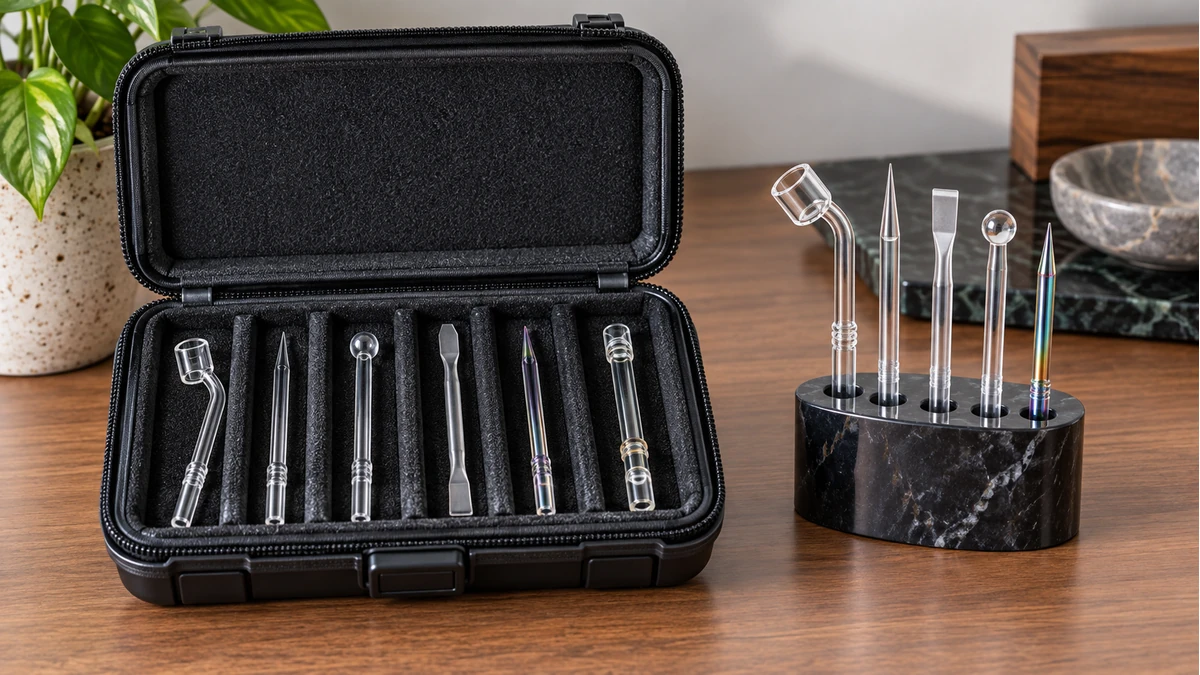
Because quartz tips can chip on contact with hard surfaces, how a tool is stored matters more than it might seem. Loose storage in a drawer alongside other hard objects increases the odds of contact damage over time. This is one of the more practical reasons people move toward a dedicated stand or holder — a topic explored further in a dab tool stand guide — since keeping a tip elevated and separated from other objects reduces the chance of accidental chipping between uses. For related hardware context, see AOVAPE’s dab tool stand guide.
🧽 5.3 Comparing Passive Tools to Other Formats
Online discussions sometimes bring up powered tools, like heated blades, as a point of comparison to passive quartz, steel, or titanium tools. The comparison usually comes down to a difference in category rather than a simple upgrade path — a passive tool relies entirely on its shape and material, while a powered format introduces a heating element and its own set of handling considerations, which is covered separately in a hot knife dab tool guide. Keeping these categories distinct helps avoid conflating a quartz tool’s properties with something that functions on a completely different principle.
Put together, tip geometry, shaft construction, joint quality, handle balance, and storage habits give a much fuller picture of a quartz dab tool than the word “quartz” does by itself. The material tells you something about surface feel, but it doesn’t confirm grade, thickness, or how the tool will hold up against a stainless, titanium, or borosilicate alternative. Reading the full construction — not just the label — is what actually predicts how a tool will handle day to day.
For related hardware context, see AOVAPE’s custom dab tools guide.
🧭 6. Match the Tool to the Storage and Inspection Routine
Quartz tools benefit from storage that keeps the tip suspended or isolated from harder objects. A loose compartment shared with metal parts makes visual inspection harder and creates avoidable point contact. A fitted slot or individual sleeve keeps the fragile end visible and easier to check before it returns to the workstation.
Material labeling should remain modest: a listing that says quartz does not, by itself, establish composition, grade, annealing quality, or performance. Useful documentation identifies the maker, dimensions, construction method, and any care limitations that apply to that exact tool.