A convection dry herb vaporizer describes a heat path: moving air carries energy toward the chamber. On-demand describes an activation schedule. The terms can overlap, but neither means the other. That distinction helps when a device is described as convection, hybrid, session or on-demand in the same conversation. Start with three separate questions: what is heated first, how heat reaches the chamber, and when the controller activates it. A single category label cannot answer all three.
🌬️ 1. When “Convection” and “On-Demand” Get Blurred Together
A reader comparing a convection dry herb vaporizer with an on-demand model may be comparing two overlapping descriptions. In a vaporents discussion, the terminology makes recommendations difficult to interpret. Another reader discussion raises questions about convection and hybrid labels. These are examples of the questions readers ask, rather than test results. Start by separating the air route, chamber construction and activation schedule; then a disagreement about one of them does not have to become a disagreement about all three.
🔥 2. Conduction, Convection, and Radiation: Three Different Heat Paths
Conduction transfers heat through material; convection involves heat transfer associated with fluid motion, including moving air. Radiation transfers energy through electromagnetic waves. OpenStax’s convection chapter explains the moving-fluid distinction. A convection-oriented vaporizer description emphasizes air carrying heat toward the chamber. That emphasis does not mean every other heat-transfer mechanism disappears, or establish the exact share contributed by each path in a particular assembled device.
A companion NASA resource on heat transfer distinguishes heat capacity—the energy associated with a temperature change—from the direction of heat transfer, warmer to cooler. Heat capacity alone does not establish how quickly a complete device warms. Geometry, thermal connections and supplied power also belong to that question. Keeping an energy requirement separate from a heating rate avoids a common shortcut: assuming a material label predicts the response time of the entire chamber.
In vaporizer design language, “convection” is used to mean that the intended heat path relies primarily on moving air carrying energy to the material, rather than the material resting directly against a hot solid surface. That’s a meaningful engineering distinction. But it is a statement about geometry and airflow, not about scheduling, and definitely not about intensity or quality.
💨 3. Following the Air: A Conceptual Path from Heater Region to Chamber
It helps to trace, in purely conceptual terms, what a convection-oriented design is trying to accomplish with airflow — without claiming to describe the internal engineering of any particular device, since that detail varies and is usually undisclosed. Picture air entering the device from outside, passing through or alongside a region where a heating element is located, and then continuing onward into a chamber where it meets the material before exiting through a mouthpiece. The air is the vehicle; the heating region is the energy source it picks up warmth from along the way.
🔥 3.1 Warm Air Does Not Require Cold Chamber Walls
A warm chamber wall and warm moving air can exist in the same assembly. Calling the design convection does not establish that its walls remain cold, just as calling another design conduction does not mean no air passes through it. Treat the name as a description of the intended main route. To make a stronger claim about the balance between routes would require device-specific measurements, a stated test method and clear conditions. A diagram showing an inlet and a chamber is useful for locating those parts, but it cannot supply an unmeasured heat-transfer percentage.
💨 3.2 The Chamber Interface Is Where Design Intent Gets Tested
Once warmed air reaches the chamber, how it interacts with the material inside depends on chamber geometry, airflow volume, and how the material is arranged — details that vary by device and are not something a generic conceptual description can responsibly claim to know. What can be said in general terms is that a convection-oriented chamber is designed so that moving air, rather than a heated chamber wall pressed against the material, does the primary work of warming it. Whether that intent is achieved in practice for any specific unit is a separate, device-specific question outside the scope of this kind of overview.
⏱️ 4. On-Demand and Session Modes Describe Schedules, Not Heat Paths
Separately from how heat travels, there’s the question of when the heating element is actually doing anything. This is what “on-demand” and “session mode” are about, and it’s a scheduling distinction, not a heat-path distinction. In an on-demand arrangement, the heating element is typically only active while the user is actively drawing or has pressed an activation control, and it stops or cools between those moments. In a session mode arrangement, the heater reaches and holds a set condition for an extended stretch of time, regardless of whether the user is actively drawing air through it at any given second.
Neither of these scheduling patterns tells you anything about whether the device relies on convection, conduction, or some combination of the two for moving heat toward the material. A convection-style airflow path can be paired with an on-demand schedule just as easily as with a session-based one, and the same is true of conduction-oriented designs. The schedule is a control decision about timing and activation; the heat path is a design decision about physical transfer. Treating “on-demand” as though it implies anything about airflow design is where a lot of the online disagreement over device categories originates — readers assume the words are pointing at the same underlying fact when they’re actually answering unrelated questions.
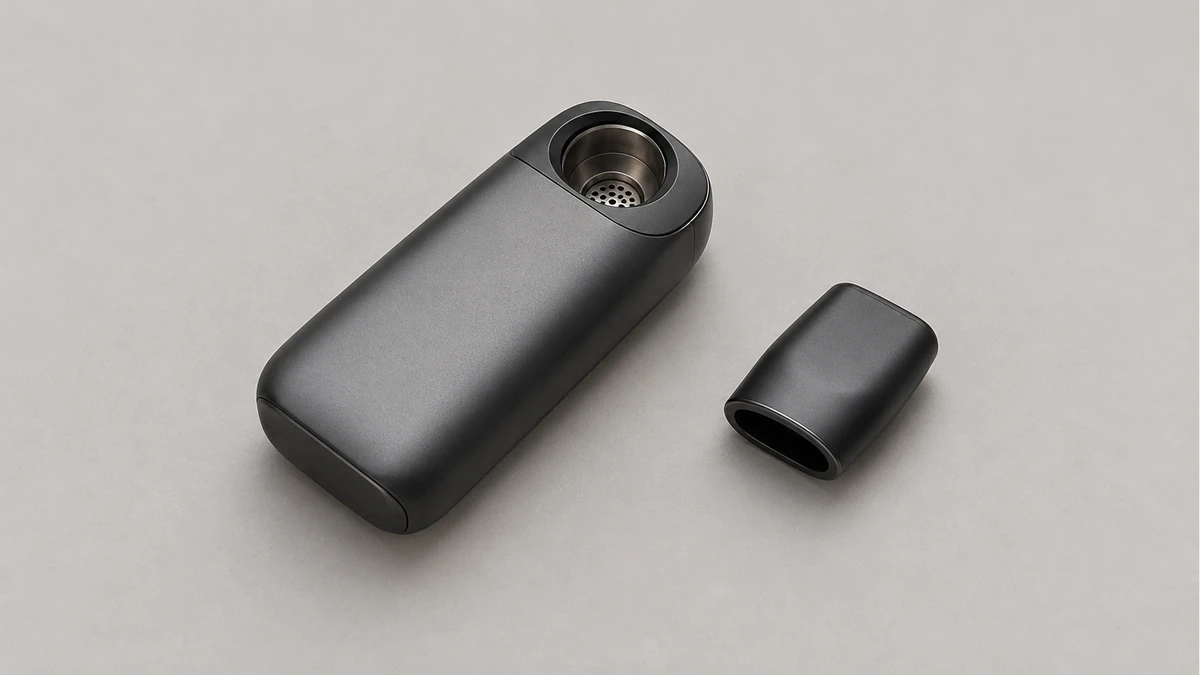
🌀 5. Hybrid Devices and the Myth of Pure Categories
“Hybrid” is the label used when a device is described as combining more than one heat-transfer path rather than relying on a single one exclusively. In practice, this term gets applied inconsistently, because it describes a category rather than a measured ratio. Two devices both marketed as hybrid could combine conduction and convection in very different proportions, and the label itself doesn’t specify which path is dominant, how the two interact, or under what conditions. It simply signals that more than one transfer mechanism is understood to be involved in the design.
This is also where a lot of reader disagreement shows up in open discussion: people compare notes on devices they assume share a category because both are labeled “hybrid” or both are labeled “convection,” and then find their experiences or understanding of the airflow don’t match. That mismatch isn’t necessarily evidence that someone is wrong — it’s often evidence that the category label was never precise enough to guarantee a single, consistent configuration in the first place. Labels in this space function more like loose descriptive buckets chosen by whoever is writing the copy than like standardized technical specifications with agreed-upon thresholds.
🌡️ 6. Why a Setpoint Isn’t the Same as a Measured Surface Temperature
A selected setpoint is a control target, not automatically a measurement of every surface in a chamber. Before describing a display as a live chamber temperature, the documentation needs to identify what is measured, where, and what the interface reports. A display might show the selected target rather than a sensor reading. The heating-method label does not settle that distinction, and neither does a photograph of a screen with a number on it. Without a device-specific description, the honest term is the selected setting, not a verified temperature map.
That leaves two separate questions: what the interface displays, and what the controller measures. A selected target does not prove there is a sensor at that location—or even identify a location. Where a manufacturer documents a sensor, its position matters to the meaning of the reading. A heater measurement and an air-temperature measurement describe different objects. Neither should silently become a claim that the entire chamber has one uniform temperature.
📍 6.1 Name the Object Behind the Number
Consider two otherwise identical descriptions: “the heater is at the selected temperature” and “the air entering the chamber is at the selected temperature.” They make different claims even when the number is the same. The first names a solid component; the second names a moving gas at a particular point. A meaningful temperature statement needs that noun. Without it, an apparent disagreement between two descriptions may simply be a disagreement about what was measured, rather than evidence that either number is wrong.
The same distinction applies to an illustration. A colored chamber drawn beside a number is not automatically a measurement of the chamber wall. It may be a convenient way to represent a setting. Conversely, a documented sensor location can provide useful information even when the interface is visually simple. Screen detail and measurement detail are not the same thing.
🗺️ 6.2 A Useful Way to Read a Convection Description
Separate a description into three short statements: what is warmed first, how energy reaches the chamber, and when the controller activates the heater. “Moving air carries heat” belongs to the second statement. “On-demand” belongs to the third. A material name, such as a ceramic chamber, may help identify a component in the first two statements, but it cannot fill in the entire route by itself. This approach makes even a brief specification easier to read without inventing missing engineering detail.
For example, an explicitly hypothetical device could warm a metal heat exchanger, send air past it toward an empty chamber, and activate its heater only during a defined operating window. Those are three separate design choices. Changing the operating window would not, by itself, change the exchanger into a directly heated chamber wall. Changing the chamber material would not, by itself, establish a new activation schedule. Keeping the choices separate is more informative than assigning the whole device a single label and asking that label to explain everything.
📄 7. What Diagrams and Manuals Can (and Can’t) Tell You
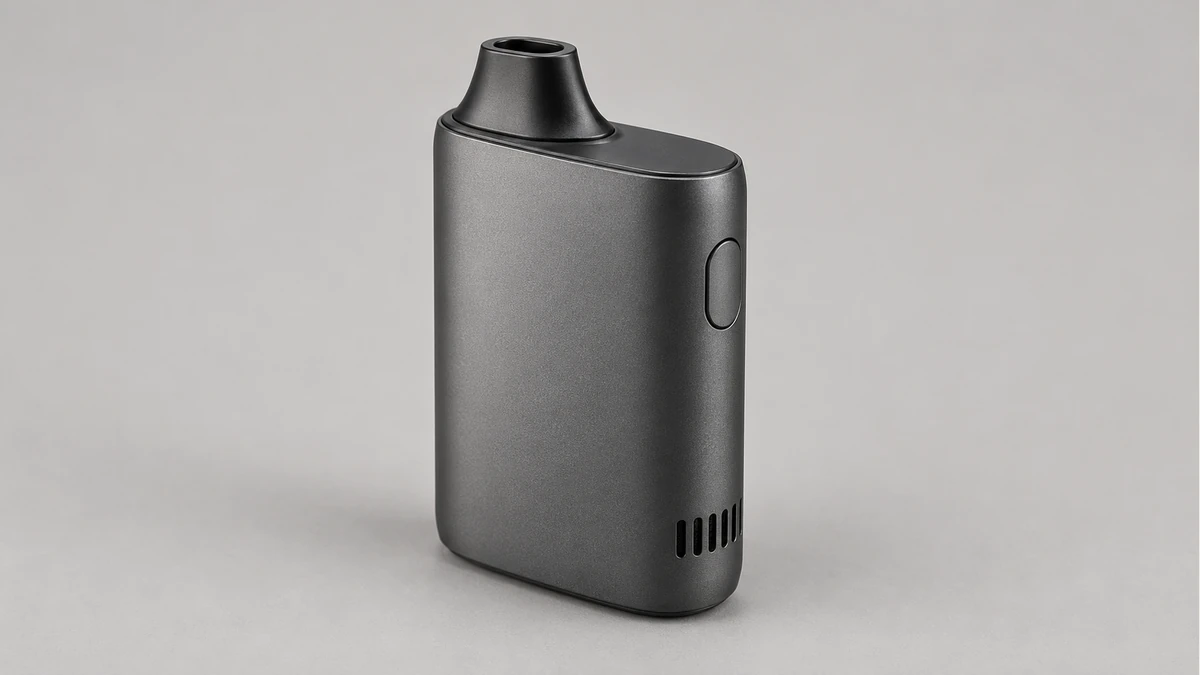
Manufacturer diagrams and instruction manuals can be useful for identifying externally visible, confirmable features: where vents are located, where the mouthpiece attaches, whether the documented chamber is removable, and where buttons or dials sit on the housing. These are facts you can verify by looking at the device itself, and diagrams that show them are describing real, observable geometry.
A schematic, parts drawing and temperature test report have different jobs. A schematic may show a proposed or documented route without representing dimensions. A parts drawing may identify how a mouthpiece attaches without measuring heat transfer. A test report may describe a particular measurement under stated conditions without showing every passage. It is reasonable to use each for the question it actually answers. It is not reasonable to treat an attractive cutaway as a full test result—or to dismiss every internal diagram merely because the parts cannot be seen from outside.
🧹 7.1 Keep the Air Route Separate from the Cleaning Route
A question about airflow often becomes a question about access: does removing the mouthpiece expose an ordinary removable screen, or only the opening above the chamber? The drawing and care section should identify which pieces the owner can remove. An inlet drawn beside the heater is not an invitation to put a brush or liquid into the powered body. A visible vent may serve a different purpose from the vapor route. Keep the named opening and the permitted care procedure together rather than treating all openings as one passage.
If the mouthpiece is removable, identify its seals and screen as separate pieces before deciding where residue is located. An obstruction at an accessible mouthpiece is a different observation from a fault inside the housing. Our mouthpiece cleaning guide covers that external component. Neither a clean mouthpiece nor a visible inlet establishes that an internal heater passage is clear. The useful outcome is knowing which accessible part has actually been checked.
Accessories add another distinction. A capsule sits within a chamber; its fit and openings belong to the assembled route rather than to the heating label alone. The dosing capsule guide explains why the accessory name cannot establish fit by itself. For a broader introduction to heat-transfer categories, see how dry herb vaporizer heating works. Here, the narrower question remains whether a heat-path label has accidentally been used as a timing, temperature or maintenance specification.
🧭 8. Read the Heat Path and the Schedule Separately
Read convection as a description of heat transfer and on-demand as a description of timing. Then check the chamber, accessible airpath and control interface as separate parts of the design. A hybrid label does not specify a percentage, and a selected number does not identify a sensor location. Keeping those distinctions clear makes it easier to ask a useful question about an actual device: which route, which component and which operating mode does the description mean?