“`html
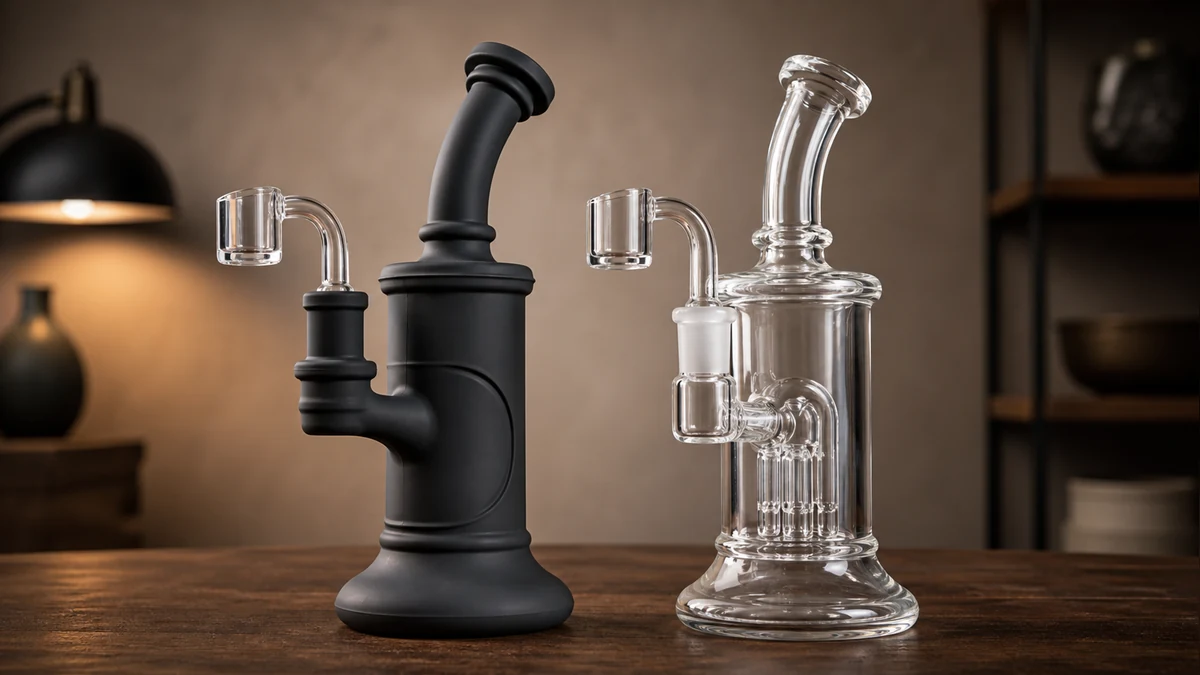
Anyone who has watched a glass piece slip off a counter in slow motion understands the particular dread that comes before the shatter. It is the reason so many concentrate users eventually start asking about silicone. A dab rig gets picked up, set down, packed in a bag, and handed between people more often than most other pieces of smoking or vaping hardware, and every one of those moments is a chance for glass to meet a hard surface at the wrong angle. That fear is legitimate, and it is also only half the story, because material choice affects far more than breakage risk. Visibility, odor control, cleaning routine, joint hardware, and even how the piece behaves near a torch flame all shift depending on whether the body is glass, silicone, or some combination of the two.
For distributors and private-label buyers stocking rigs for adult concentrate users, the glass-versus-silicone question is less about picking a winner and more about matching material to use case. A rig meant for home use on a stable surface has different priorities than one meant to travel. This comparison walks through the practical differences point by point, without leaning on health claims or manufacturer-specific specs, so the tradeoffs are clear regardless of which brand or build is on the table.
💥 1. Durability: What Happens When It Hits the Floor
Glass is the material concentrate users are most used to, largely because it is chemically inert and lets a session look and feel a certain way. It is also the component most likely to end a session early. A borosilicate rig can survive a light bump on carpet and shatter completely on tile, and the outcome often has more to do with the angle of the fall and the surface it lands on than the thickness of the glass itself. Once a joint or a female connection cracks, the piece is typically done, since repairs on smoking glassware are not a realistic option for most owners.
Silicone bodies remove that specific failure mode from the body of the rig. A silicone piece dropped on a hard floor is far more likely to bounce than to break, which is why it shows up so often in travel kits, outdoor setups, and situations where a rig gets passed around a group. The tradeoff is that silicone does not offer the same rigidity or visual clarity as glass, and the parts of a rig that still need to be glass or quartz — the joint, the nail, sometimes the bowl — remain exposed to the same breakage risk they always had. A silicone body does not make a rig unbreakable; it just moves the vulnerable point to the smaller glass components that still have to be there.
👁️ 2. Visibility: Watching Your Session vs. Guessing
One reason glass remains the default for a lot of users is that it lets them see exactly what is happening inside the chamber — water level, percolation, and any buildup on the walls are all visible at a glance. That visibility is part of why glass pieces get cleaned promptly: residue is impossible to ignore once it is staining the inside of a clear chamber.
Fully opaque silicone bodies trade that visibility away. Water level has to be checked by feel or by pouring rather than by sight, and buildup inside the chamber is invisible until it starts affecting airflow or taste. This is one of the clearest reasons hybrid designs exist: a silicone outer body paired with a glass or borosilicate insert keeps the impact resistance of silicone on the outside while restoring a clear view of the water chamber. For buyers comparing types of dab rigs, the presence or absence of a glass insert is often the single detail that determines how a silicone piece actually performs day to day.
🧽 3. Odor Retention and Cleaning Access
🧴 3.1. Why Porous-Feeling Surfaces Hold Onto Smell
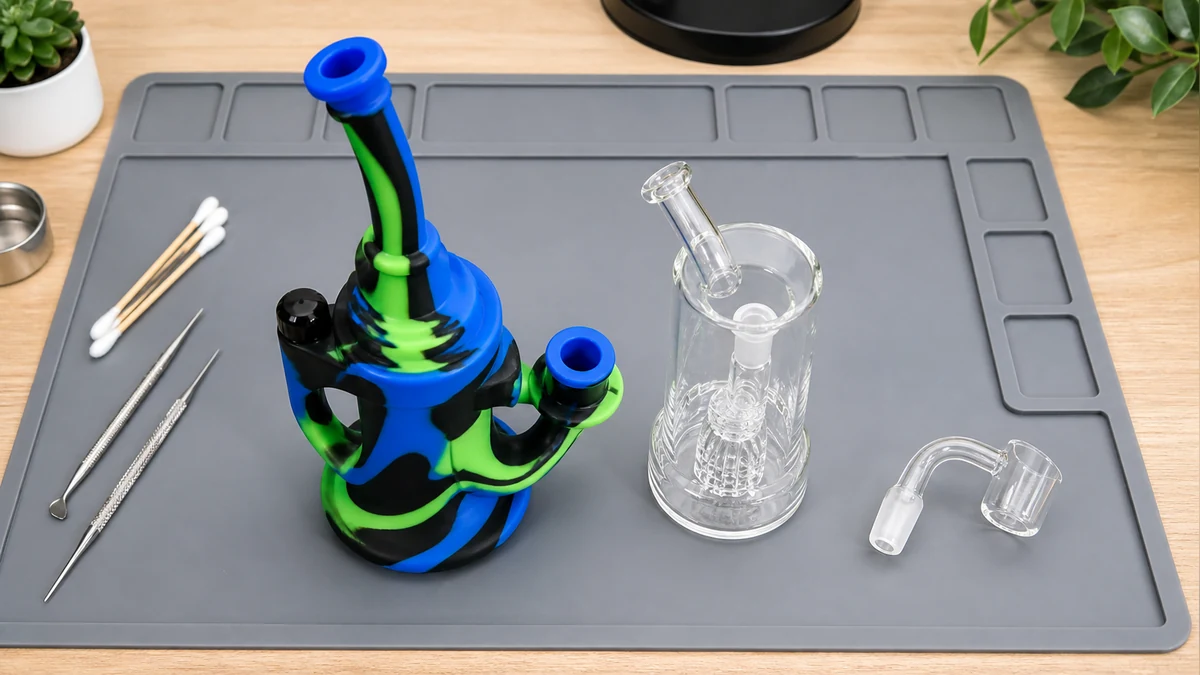
Glass has a smooth, non-porous surface that does not hold onto smell once it has been rinsed clean. Silicone, by contrast, has a texture that many users describe as slightly porous, which gives odor more surface area to cling to over repeated sessions. This does not mean silicone is unsanitary or unsuitable — it means the cleaning routine needs to be more consistent to keep smell from building up, particularly in tight spaces like a downstem or a narrow joint where residue collects and stays wet longer.
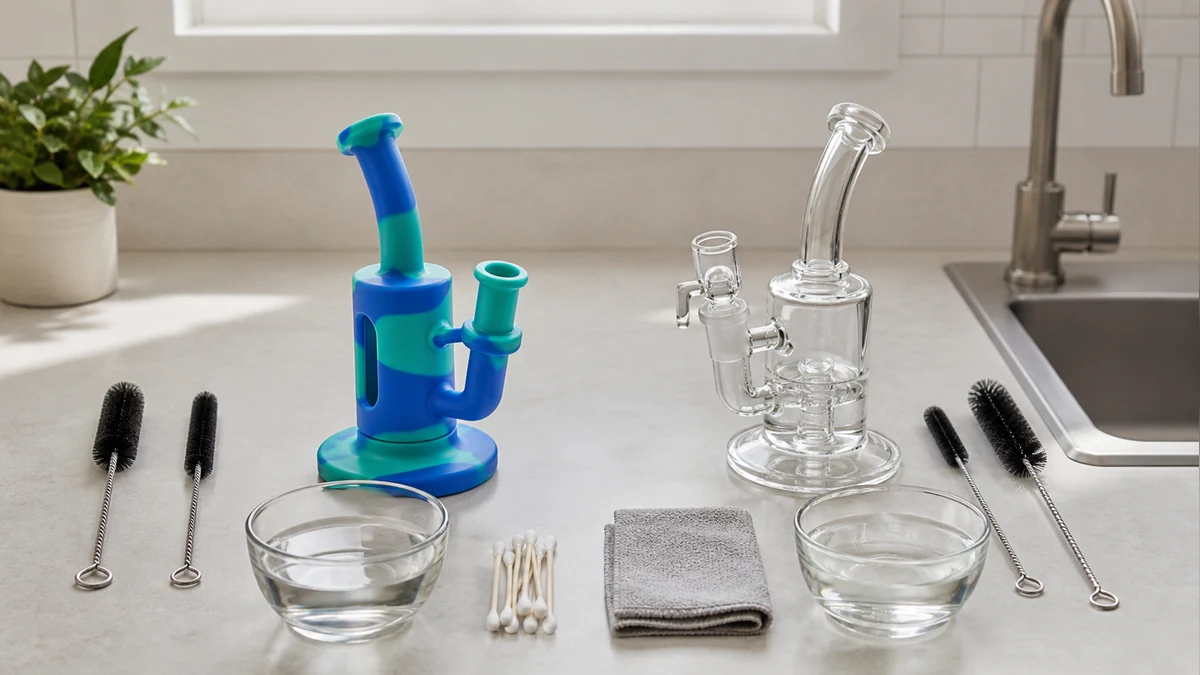
🪥 3.2. Cleaning Routines That Fit Each Material
Glass pieces are typically cleaned with isopropyl alcohol and coarse salt, shaken to scrub the interior, then rinsed thoroughly — a routine that works well specifically because the surface is smooth and doesn’t absorb the solvent. Silicone generally calls for a gentler approach: warm water and mild soap for regular maintenance, since harsh solvents are more likely to interact with a silicone surface over repeated use than with glass. Some users soak silicone components in warm water to loosen buildup before a more thorough wipe-down, which lines up with general guidance on caring for silicone smoking accessories, including cleaning advice published by Pulsar Vaporizers. One detail worth flagging for anyone assembling a hybrid piece: a silicone downstem is harder to see through and can trap residue in ways a glass downstem won’t, so it typically needs more frequent attention to avoid clogging. Buyers stocking cleaning-adjacent SKUs alongside rigs can point customers to a fuller walkthrough at how to clean a dab rig.
🔩 4. Joints, Downstems, and Connection Hardware
Regardless of body material, the joint is where most rigs fail or succeed functionally. Glass-on-glass joints seal well and are familiar to most concentrate users, but they are also rigid, which means any torque applied while removing a bowl or nail transfers directly to the joint — a common cause of cracks that have nothing to do with the piece being dropped. Silicone joints and silicone-to-glass adapters flex slightly under that same torque, which reduces stress on the connection, but that flexibility only helps if the joint is sized correctly. An adapter that’s a loose fit can shift or leak air during a session regardless of what it’s made from.
Because rigs increasingly combine materials — silicone bodies with glass bowls, quartz nails paired with silicone downstem adapters — it’s worth checking that every interfacing part is rated for the joint size and use it’s being paired with before assuming compatibility. Manufacturer documentation is the only reliable source for that fit, since joint tolerances vary between product lines even when the listed size looks identical. Buyers sourcing hardware separately from the rig body can browse general connection and adapter options at vape parts, and rig-specific extras like carb caps, dab tools, and torches at dab rig accessories.
🔥 5. Heat Exposure and Where the Line Gets Drawn
Heat is where the two materials diverge most sharply, and it’s also where the most caution is warranted. The part of a rig that gets heated directly — the nail or banger — is glass, quartz, or titanium, never silicone, and that division of labor is intentional. Silicone bodies are built to sit away from direct flame contact; the heated component does its job while the silicone body, joint boot, or base stays at a safe distance, handling structural support and impact resistance instead. Users should never bring a torch flame into contact with a silicone component, and should always follow the manufacturer’s instructions for how far the heated nail should sit from any silicone parts during a dab.
This is also why the “which is more heat-resistant” framing can be misleading. It isn’t that silicone is more or less heat-tolerant than glass in isolation — it’s that a well-designed rig never asks silicone to do a job that requires direct heat exposure in the first place. If a piece is designed correctly, heat exposure isn’t really a point of comparison between the two materials; it’s a point of design that keeps each material doing what it’s suited for.
⚖️ 6. Stability, Portability, and Mixed-Material Designs
On a stable, flat surface, weight and base design matter more than material. A wide glass base with a low center of gravity can be just as stable as a silicone one, and neither material inherently prevents tipping if the base is narrow relative to the rig’s height. Where material starts to matter more is portability: a silicone body is lighter, more forgiving of an off-angle setdown, and generally easier to pack for travel without dedicating a hard case to it.
Hybrid designs are increasingly common for exactly this reason. A rig with a silicone outer shell, a removable glass or borosilicate water chamber insert, and standard glass or quartz heating components tries to take the strong point from each material: impact resistance on the outside, visibility and inert surface contact where the water sits, and proper heat-rated components where the flame goes. For distributors, this middle category is often the easiest sell, since it answers the durability objection that pushes buyers toward silicone without giving up the visibility and premium feel that keeps them attached to glass. For readers comparing hardware categories more broadly, background on how concentrate rigs relate to other vapor formats is available at vaporizers.
| Factor | Glass | Silicone |
|---|---|---|
| Drop resistance | Low — cracks or shatters on impact | High for the body; joint and nail remain glass or quartz |
| Visibility | Full view of water and buildup | Opaque unless paired with a glass insert |
| Odor retention | Low — smooth surface rinses clean | Higher — needs more consistent cleaning |
| Cleaning approach | Alcohol and coarse salt, rinse | Warm water, mild soap, occasional soak |
| Direct heat contact | Nail/banger only, never the full body | Never — heated components stay glass or quartz |
| Portability | Requires a padded case | Packs easily, tolerates handling |
❓ 7. Frequently Asked Questions
Can a silicone rig go directly on a torch flame? No. The heated component in any rig should always be glass, quartz, or titanium, positioned according to the manufacturer’s instructions so the flame never contacts silicone parts.
Does silicone change how a rig tastes? This varies by build and hasn’t been independently verified across products, so it isn’t something to promise buyers as a fixed outcome. What is consistent is that a silicone downstem or chamber requires more attention to keep clean than a glass one, since residue is less visible.
Is a hybrid rig always the more practical stocking choice? Not automatically — it depends on the buyer’s audience. A hybrid design generally reduces total breakage risk and keeps visibility, but every interfacing part (joint, insert, nail) still needs to match the manufacturer’s fit specifications.
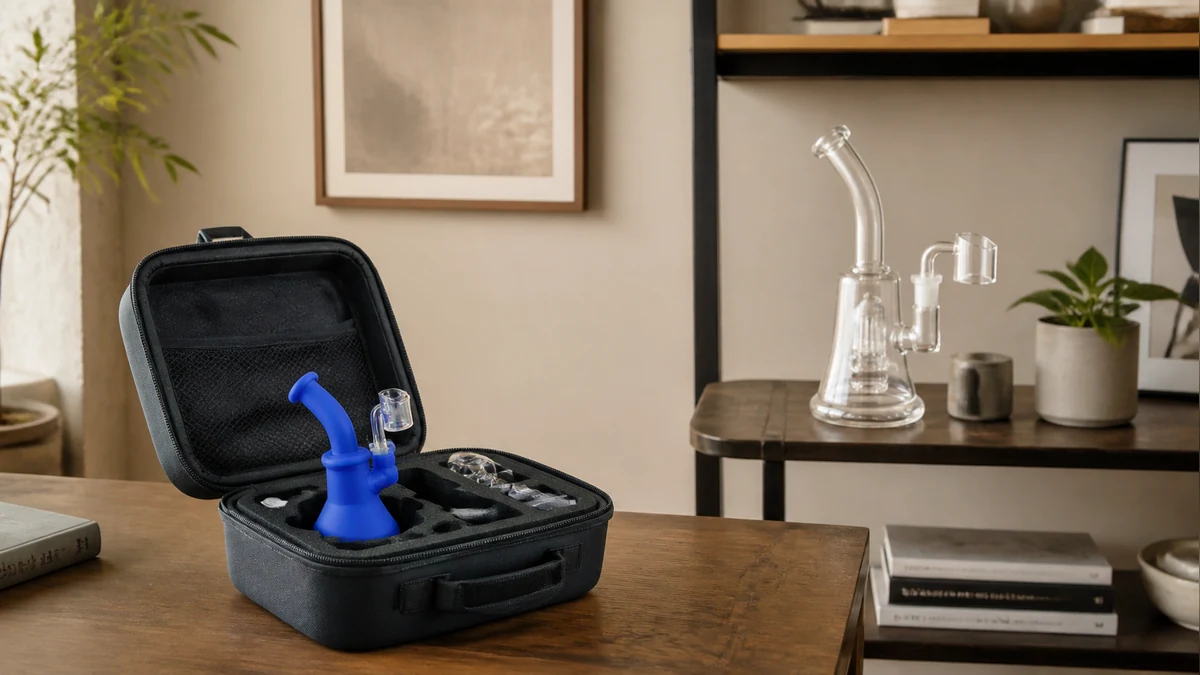
There isn’t a single correct answer to glass versus silicone — there’s a correct answer for a given use case. A home setup on a stable table has little to gain from silicone’s impact resistance and loses real visibility by switching. A travel kit, a shared piece, or anything handed between users benefits from a silicone body specifically because it removes the single biggest failure point glass introduces. Hybrid builds exist because most real-world use sits somewhere between those two extremes, and they let a buyer keep a visible water chamber and familiar heating hardware while cutting down on breakage from everyday handling. For distributors and private-label buyers, the more useful question isn’t which material is better — it’s which failure mode matters most to the end customer: a cracked joint from an accidental drop, or a chamber they can no longer see into.
📚 8. Sources
- Pulsar Vaporizers — How to Clean a Silicone Bong
“`