Silicone bong mouthpiece guide drafted — HTML fragment, hierarchical numbered headings with unique emojis, four image and three link placeholders inserted at natural points.
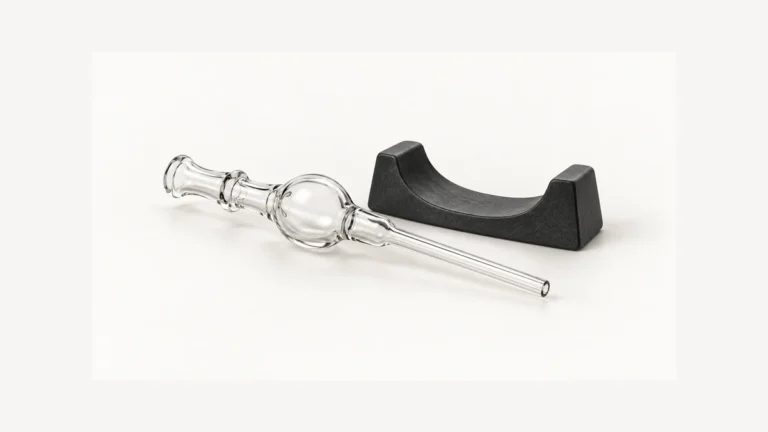
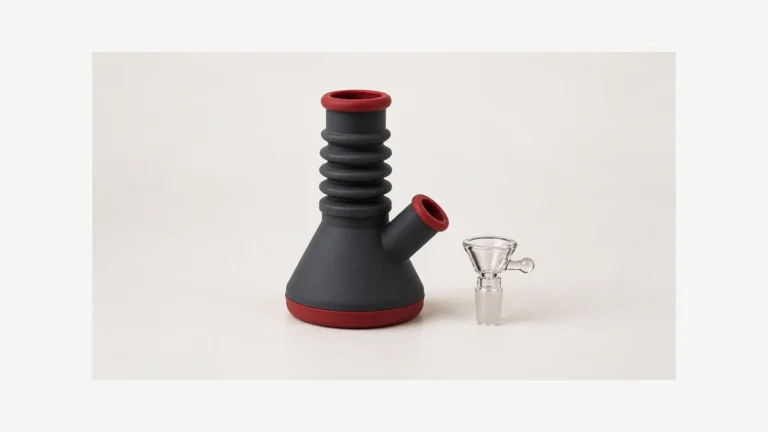
A silicone mouthpiece is a separate, flexible component that fits over or into the lip end of a glass bong. It is not a type of bong, and it does not replace the glass bowl, downstem, or chamber. Confusion often starts right there: a bong described as “silicone” in casual conversation may really mean a glass piece with a silicone mouthpiece, base, or bowl insert, while the body doing the actual water filtration stays glass. Knowing which part is silicone — and which part is glass — determines how the piece should be gripped, cleaned, and replaced.

🧭 1. Mouthpiece Terminology: Lip Guard vs Integrated Tip
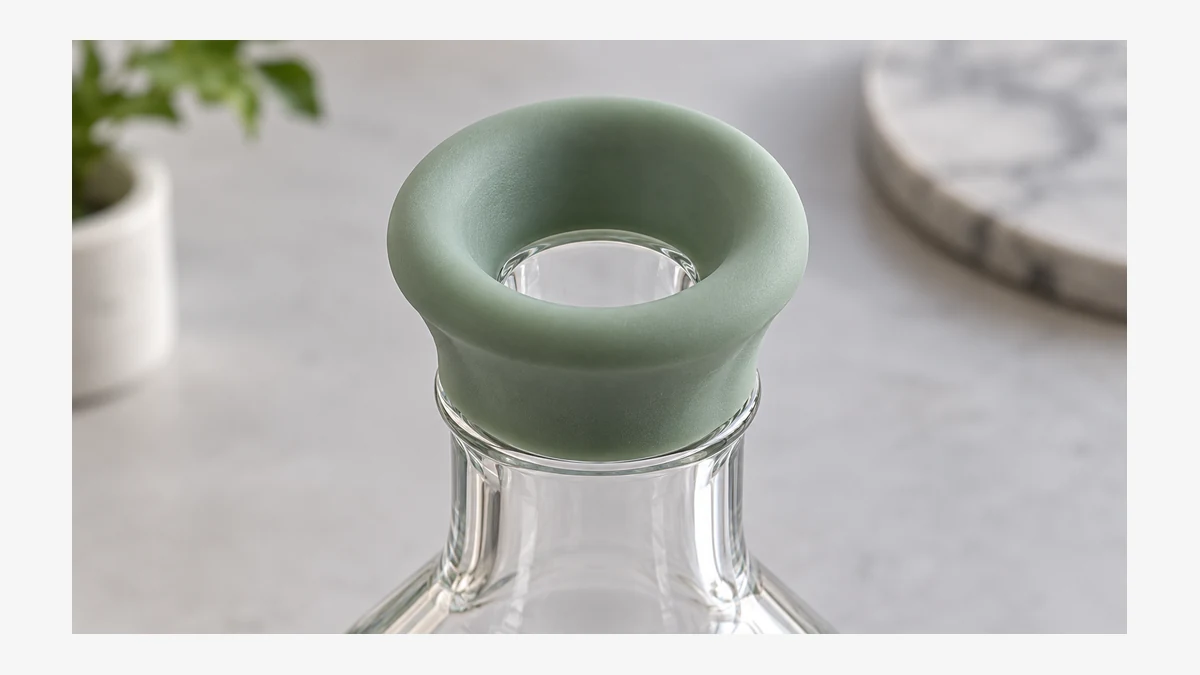
“Mouthpiece” gets used for two different hardware situations, and mixing them up leads to buying the wrong replacement part. A lip guard is a thin silicone sleeve or cap that slides over an existing glass rim purely to cushion contact and reduce chip risk. It adds nothing to the airflow path — air still travels through the glass tube underneath. An integrated silicone mouthpiece, by contrast, is molded as part of a silicone adapter or full silicone bong top, meaning the air actually passes through the silicone itself before reaching the user.
Listings that simply say “silicone mouthpiece” without specifying which of these two it is are a common source of mismatched expectations. A buyer looking to change their draw resistance or joint size needs the integrated, air-path version; someone just trying to protect a chipped rim only needs the lip guard. The two are not interchangeable even though both get marketed under the same name.
The practical difference also shows up during cleaning and replacement. A lip guard can be pulled off, washed, and swapped without touching the rest of the piece. An integrated mouthpiece is usually bonded or press-fit into a larger silicone section, so replacing it means replacing that whole section, not just a cap.
📐 1.1. Why “Universal Fit” Silicone Still Needs a Size Check
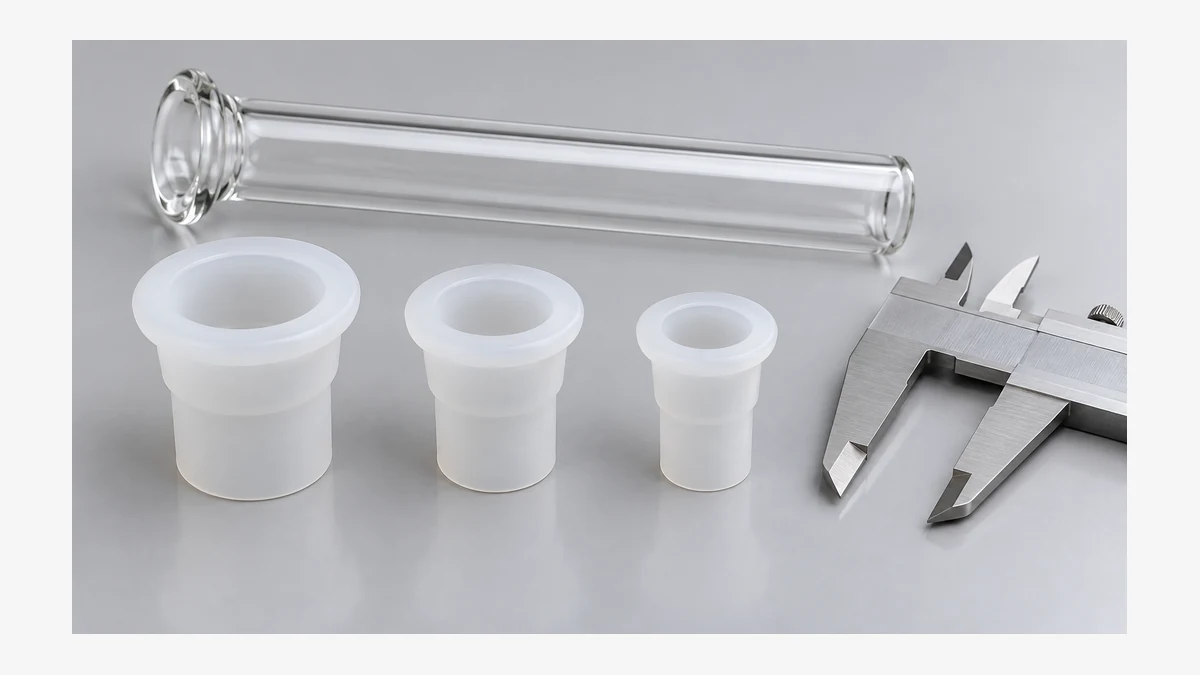
Silicone is flexible, which creates an assumption that any silicone mouthpiece will stretch to fit any glass rim. In practice, rim outer diameters vary enough across bong necks that a sleeve molded for a narrow tube will either sit loose and spin or need to be forced past its comfortable stretch limit. A sleeve stretched well beyond its molded diameter tends to thin out at the stress point, which is where tears start. Comparing the glass rim’s outer diameter against the listed inner diameter of the silicone piece, rather than relying on a “universal” label, avoids both the loose-fit wobble and the overstretch tear.
For related component context, see the bong mouthpiece guide.
🌬️ 2. Diameter, Compression, and the Seal
A silicone mouthpiece or adapter relies on compression, not adhesive, to stay sealed against glass. The silicone opening is molded slightly smaller than the glass joint or rim it covers, so the material has to stretch to go on. That stretch is what generates the inward pressure holding the seal — and holding the piece in place during use.
Three factors interact to determine whether that seal holds:
- Diameter match — how close the silicone’s resting inner diameter is to the glass outer diameter.
- Wall thickness — thicker silicone walls resist deformation better but require more force to seat.
- Surface condition — residue, moisture, or old adhesive on either surface reduces the friction that keeps a compression fit from sliding.
New silicone also tends to feel stiffer right out of the packaging than it will after a short break-in period of normal handling. Forcing a cold, stiff piece onto a rim with more pressure than necessary can distort the opening before it has had a chance to relax into shape, which is worth keeping in mind during the first few fittings rather than assuming the piece is simply too small.
When any one of these factors is off, the usual symptom is air leaking at the joint rather than being pulled through the bowl — a sign the seal is compromised, not that the bowl or downstem is faulty.
🔥 3. Airflow Path Through Silicone vs Glass
Airflow behaves differently depending on which section is silicone. In a glass-bodied piece with only a silicone lip guard, airflow is unaffected by the silicone entirely — it only contacts the user’s mouth, not the air column. In a piece with a silicone downstem adapter, mouthpiece tube, or full silicone top section, the internal bore diameter of that silicone part becomes a real constriction point if it is narrower than the glass it connects to.
A molded silicone tube that steps down in internal diameter compared to the glass neck it is replacing will narrow the air column at that junction, independent of bowl size or water level. This matters most for interchangeable attachments, such as those discussed for portable vaporizer-to-bong adapters, where the adapter’s own bore — not just how snugly it fits — sets the airflow ceiling for that connection point.
The effect is usually most noticeable on pieces that were already low-restriction before the adapter was added. A short, wide-chamber glass piece will show a bore mismatch as a clearly harder draw, while a longer or more restrictive piece may mask the same mismatch because the glass itself was already the limiting factor.
🧩 4. Where Silicone Belongs on a Bong (and Where It Shouldn’t)
Silicone components on a bong typically appear in a limited set of locations:
| Location | Typical silicone role | Contact with air or vapor path |
|---|---|---|
| Rim / lip guard | Cushion and grip, chip protection | No |
| Base ring or foot | Shock absorption, tabletop traction | No |
| Downstem-to-mouthpiece adapter | Connects differently sized joints | Yes |
| Full silicone body with glass bowl | Replaces most of the glass chamber | Yes |
Parts that never carry air or vapor — rim guards, base rings — are chosen mainly for grip and shock absorption, so their fit tolerance is forgiving. Parts that sit directly in the air path, like adapters, have much tighter fit requirements, because any gap at a load-bearing junction becomes a leak path rather than just a cosmetic looseness.
A quick way to tell which category a given piece falls into is to check whether removing it exposes open glass tubing underneath. If pulling the silicone off reveals a continuous glass bore that the mouth would otherwise touch directly, it was an air-path component. If it only reveals a solid glass rim or a flat glass foot, it was a non-air-path accessory.
🔍 5. Residue, Staining, and Material Memory
Silicone is porous at a microscopic level compared to glass, which is why silicone mouthpieces and adapters discolor over time while the glass next to them stays clear. Combustion byproducts and oils penetrate slightly into the silicone surface rather than sitting on top of it the way they do on glass. This is a cosmetic and maintenance issue, not a seal issue — staining does not by itself loosen the compression fit.
What does affect fit over time is material memory loss. Silicone that has been stretched over a rim repeatedly, especially while warm, can gradually lose some of its original recoil and sit slightly looser than it did new. This is a separate, slower process from staining and is the usual explanation when an older silicone piece that used to fit snugly now feels like it needs an extra twist to stay seated.
🧼 6. Cleaning Boundaries: What the Material Tolerates
Silicone and glass have different cleaning limits, and treating a silicone mouthpiece exactly like the glass it’s attached to is a common source of damage.
- Glass tolerates abrasive brushing and stronger solvent soaks without structural change.
- Silicone can absorb some solvents into its surface layer rather than letting them evaporate off, which can leave a slight tackiness or smell behind.
- Repeated high-heat exposure — boiling water used for deep cleaning glass, for example — is tolerated by silicone up to a point, but prolonged exposure near its upper heat limit can cause gradual softening or shape distortion rather than an instant failure.
Separating the silicone piece from the glass before any soak-based cleaning lets each material be treated according to its own limits instead of a compromise routine that under-cleans the glass or over-stresses the silicone. If a piece includes manufacturer care guidance, that guidance reflects the specific silicone compound used and is a better reference than assuming all food-grade silicone behaves identically under heat or solvents.
⚙️ 6.1. Heat, Solvents, and Deformation Risks
Deformation in silicone is cumulative rather than sudden. A mouthpiece that is briefly exposed to high heat once will typically return to its molded shape. The same piece exposed repeatedly, or for extended periods, near the top of its heat tolerance can settle into a slightly different shape — an oval opening instead of round, for instance — which then affects how evenly it compresses against a round glass rim. An unevenly deformed mouthpiece can seal on one side while gapping on the opposite side, producing an intermittent leak that’s easy to mistake for a cracked joint elsewhere in the piece.
For related component context, see the silicone beaker bong guide.
🧱 7. Reading Compatibility Before Replacing a Mouthpiece
Because silicone mouthpieces and adapters are sold separately from the glass pieces they attach to, compatibility has to be checked against the glass, not assumed from the silicone packaging alone. The dimensions that matter most are:
- Outer diameter of the glass rim or joint the silicone will stretch over.
- Internal bore diameter of the silicone part, to confirm it is not narrower than the existing air path.
- Joint type — a mouthpiece sized for a direct-pull rim will not function the same way clamped onto a ground-glass joint meant for a removable downstem.
Wall thickness is worth noting too, since a thicker-walled adapter adds more overall reach between the glass and the user’s mouth than a thin sleeve does, which can change how the piece balances in hand even when the diameters match correctly.
Measuring the glass piece directly, rather than matching by the bong’s overall size or brand name, is the only reliable way to confirm fit before the silicone is stretched into place.

💧 8. Quick Reference: Matching Mouthpiece to Joint
| Symptom | Likely cause | Check first |
|---|---|---|
| Mouthpiece spins or slides on the rim | Diameter too large or material memory loss | Re-measure glass outer diameter vs silicone resting diameter |
| Air leaks at the joint during a pull | Compression seal broken by stretch, residue, or deformation | Clean contact surfaces, inspect for a warped opening |
| Draw feels more restricted than before | Silicone adapter bore narrower than the glass neck | Compare internal bore diameters at the connection point |
| Mouthpiece discolored but still seals fine | Normal material staining, not a functional issue | No action needed beyond routine cleaning |
| Mouthpiece feels tacky or smells like solvent | Solvent absorbed into the silicone surface during cleaning | Air-dry fully and avoid repeat solvent soaks |
For related component context, see the bong cleaning kit guide.
When a silicone mouthpiece stops behaving the way it did when new, the fix almost always traces back to one of three things: a diameter mismatch with the glass it covers, a change in the silicone’s own shape from heat or repeated stretching, or a bore size that was never matched to the airflow path in the first place. Identifying which of those three applies — by measuring, not guessing — is what separates a five-minute fix from an unnecessary full replacement.
Silicone should support the rim without creating a new restriction. After assembly, look straight through the dry mouthpiece and confirm that the inner lip has not folded into the airpath. A folded edge can feel like a device airflow problem even though the glass and water level have not changed.