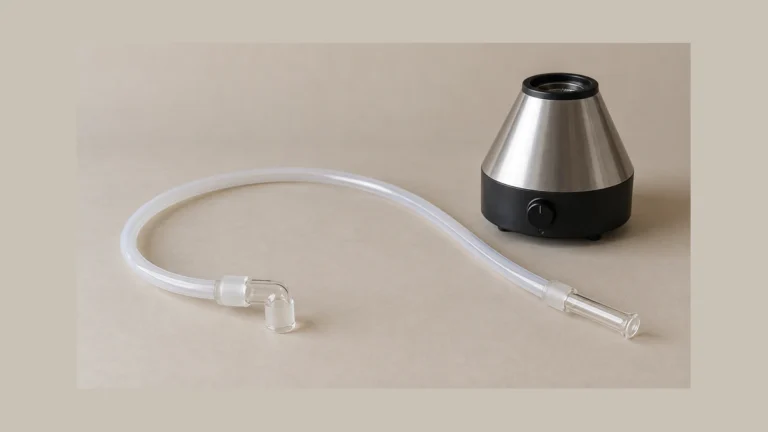
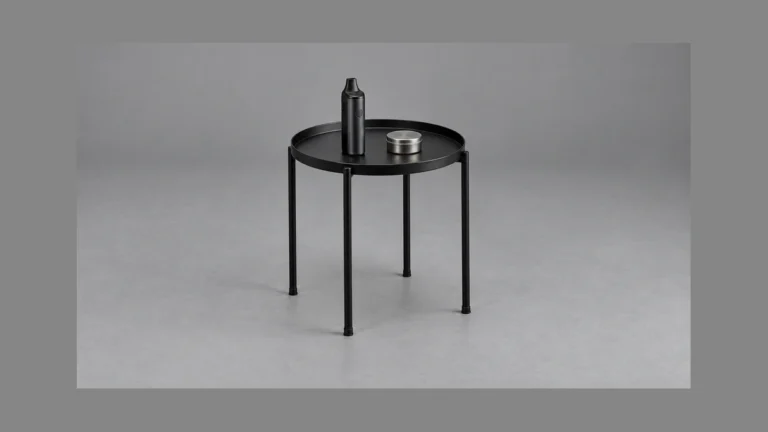
Steel bongs trade a view through the body for an opaque shell. If you are used to checking a glass water pipe from the side, that changes how you inspect the interior and follow the filling instructions. It also makes the parts list important: a steel exterior does not establish what the inner surface, downstem, bowl or seals are made from.
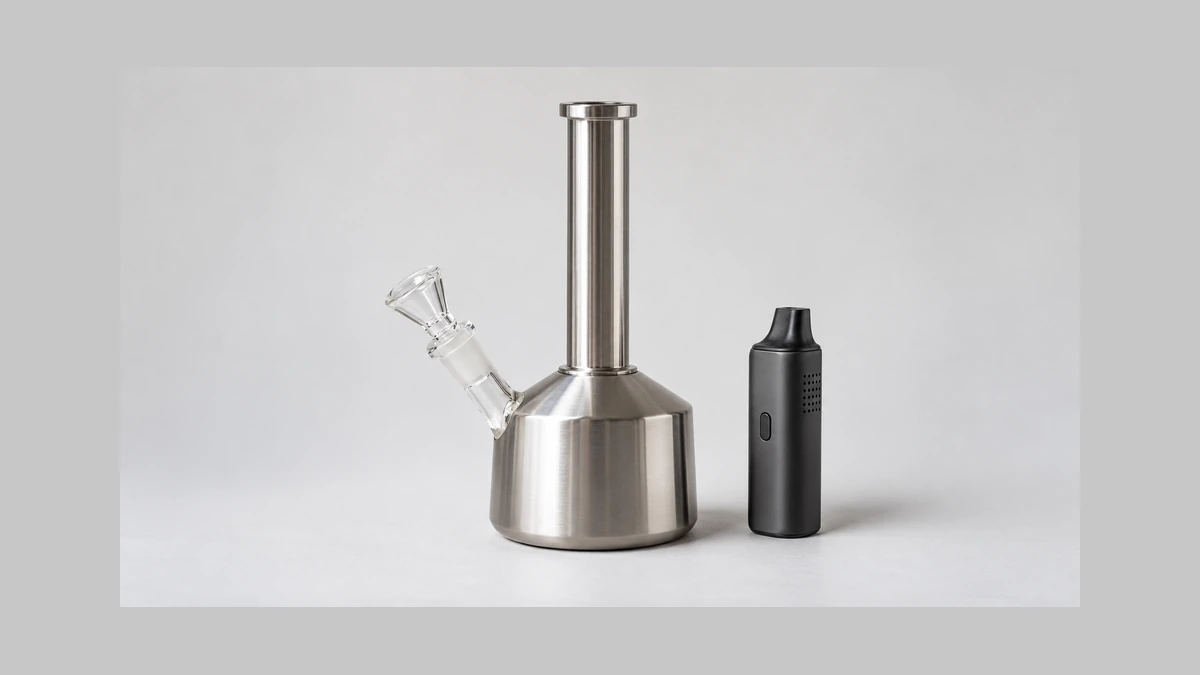
The practical adjustment is to treat the body and its attachments separately. Use the access points the maker provides, match cleaning to the actual surfaces and support the complete piece by its intended body or handle. A metal shell is not permission to treat every attached part as unbreakable.
This guide concerns generic metal-bodied water-pipe hardware and compatible accessories. It does not rank products or assume that a particular attachment works with a dry-herb vaporizer. That connection needs its own confirmed compatibility information.
🔩 1. Start with the inside surface, not the outside finish
“Steel” may describe an exterior that you can see while leaving other parts unidentified. Look for the original parts description and care guide. Distinguish the main body, any interior coating or liner, the neck, seals and removable attachments. Do not infer those materials from the color or weight of the complete piece.
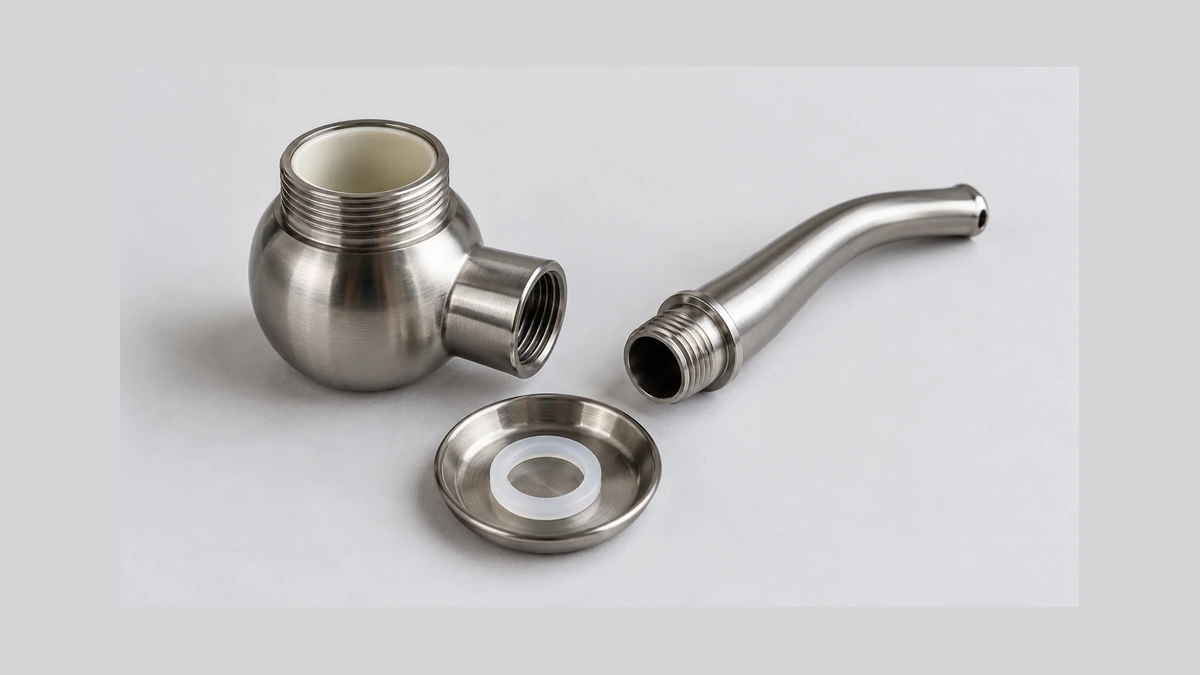
One documented example illustrates why this distinction matters. Chill Steel Pipes describes its own construction as a stainless-steel body with a ceramic interior, a separate glass bowl and silicone gaskets. That description applies to its product. It demonstrates that a metal-bodied assembly can contain several different materials; it does not identify the inside of another maker’s pipe.
The removable bowl is a separate question again. A dark bowl does not tell you the body’s inner finish, and replacing a bowl does not change the care requirements of the main vessel. Our guide to metal bowl components explains that smaller assembly without treating it as a description of the entire pipe.
If the original instructions are missing, record the maker and visible identifying marks before cleaning. Ask which parts are removable and whether the interior is coated. Those are concrete questions that can resolve the next step. A general statement that the outside looks like stainless steel cannot answer them.
👀 2. Use the designed opening to inspect an opaque body
A clear wall lets you observe some of the interior while a piece remains assembled. An opaque wall removes that view. Once the hardware is cool, empty and disconnected from any powered accessory, follow its disassembly directions to reach the openings intended for inspection and cleaning.
Some designs offer a removable neck; others have different access. Do not assume a visible seam is a user-serviceable joint. If a section does not release by the documented method, stop instead of adding leverage. An opening that looks large enough for a tool is not necessarily an invitation to insert one.
Look at accessible surfaces in good light without scraping or probing an unknown area. A long metal pick or improvised rod is a poor substitute for a missing view. You may still be unable to inspect every recess. Record that limitation instead of claiming the whole interior is clean because the area nearest the opening looks clear.
A useful comparison is a dark storage bottle: its outside can look spotless while telling you little about a hidden corner. The response is better access and the correct care instructions, not treating the exterior as an indicator for everything inside. Keep removable parts organized while the body is open so reassembly does not become a guessing exercise.
💧 3. Follow the actual filling reference
Do not import a remembered water level from a glass piece simply because the outside dimensions look similar. The original maker’s fill reference belongs to that design. Establish whether it uses an indicated amount, an accessible mark or another stated method, and follow that method without adding an invented universal measurement.
Reading the instructions before filling is particularly helpful if a neck must be removed to see the relevant area. Otherwise you may find yourself repeatedly assembling and opening the piece to check a level you have not yet identified. Set aside a stable space for the removed parts and read the full sequence first.
A small chamber and a tall body should not be assumed to share the same reference. The mini bubbler hardware guide discusses compact layouts separately. Its measurements, or those from a different water pipe, should not be transferred to an unidentified steel body.
If the documentation does not make the filling reference clear, ask for clarification with the model and a photograph. Sounds, a guessed finger-width and an improvised inhalation check are not documented specifications. There is no need to turn uncertainty about a vessel into an operating experiment, particularly with a powered device attached.
🧩 4. Give removable connections their own attention
A threaded neck connection and a push-fit gasket connection need different handling. Identify the mechanism and follow its own directions. Keep the body supported on a stable surface while inspecting it, rather than holding the whole assembly by a narrow removable neck or an accessory.
If a thread does not start squarely, stop and look at the accessible mating surfaces. If a gasket is visibly displaced, do not keep pressing the attachment into it. The useful observation is where the fit changed and whether a part was recently removed, cleaned or replaced. Avoid concluding that a tighter fit must be a better fit.
🔍 4.1 Do not turn a fit problem into a modification
Adding tape, glue, oil or a hose clamp would change the interface before its compatibility is established. Reaching for a wrench also introduces force beyond ordinary handling. Unless the exact instructions call for a specified tool or material, leave those approaches aside and ask about the connection.
Keep confirmed replacement seals identified by their intended location. Two rings can look alike while belonging to different interfaces. A photograph taken before permitted disassembly can help you remember the arrangement, but the manual should still govern how it goes back together.
🏺 5. Treat attachments as separate pieces
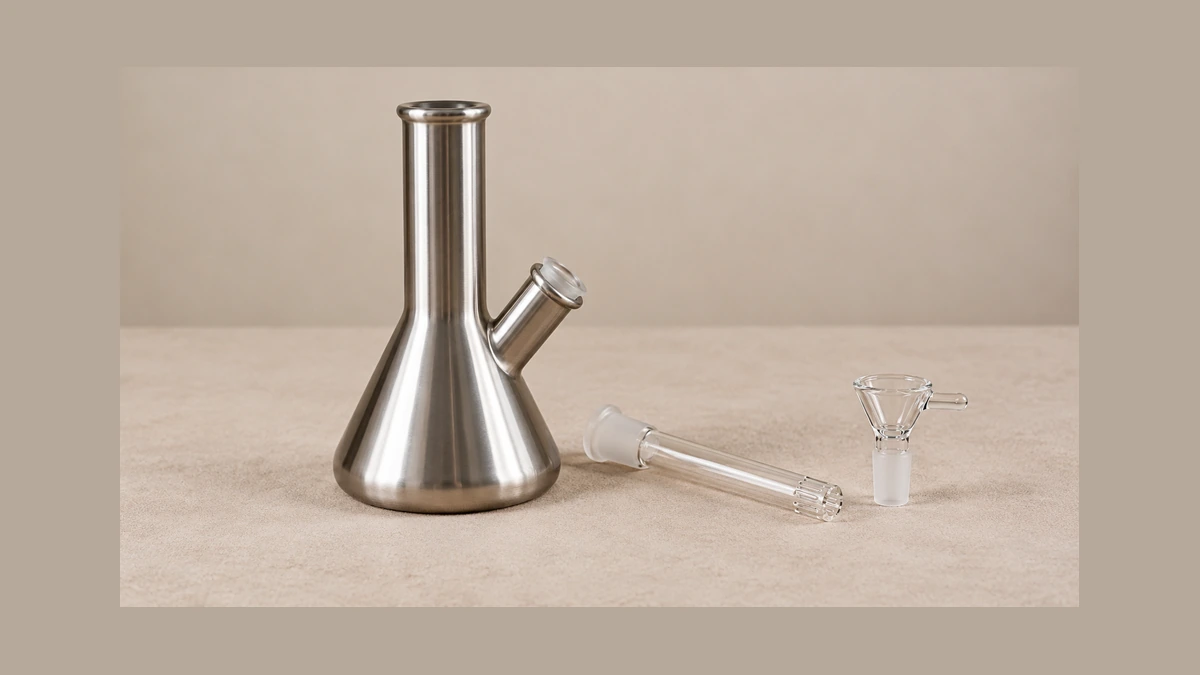
A robust-looking main body can distract from a protruding glass joint or thin attachment. Plan where each detached piece will rest before removing it. Do not leave an empty bowl or downstem rolling beside the sink while you handle the heavier body.
When moving the assembled hardware, use the support points described by the maker. A bowl, adapter or narrow side fitting should not become an improvised carrying handle. If the accessory must be removed before transport, do that while the setup is cool and in the documented condition rather than trying to carry everything in one grip.
Dry-herb vaporizer compatibility adds another set of parts to identify. Confirm the exact adapter and its intended connection; a general claim that a water pipe accepts accessories does not verify a particular device combination. Check the documented clearances and keep cords away from paths where they can be caught.
Consider the whole arrangement on the counter. A projecting attachment can occupy space beyond the main body’s footprint. Leave room for ordinary hand movement and remove unused accessories instead of building an increasingly crowded assembly. The fact that a connection can be fitted says little about whether the surrounding workspace remains practical.
🧼 6. Cleaning instructions follow the surface being cleaned
A recipe remembered from glass should not be applied automatically to a coated interior, gasket or decorated exterior. Identify each part and read its restrictions before introducing a cleaner. The important question is what the cleaner will contact, not which material is most prominent on the outside.
In its own FAQ linked above, Chill advises against salt, clay-based cleaners and dishwasher cleaning for its product. That is an attributed example of a care boundary. It does not establish a universal recipe for steel bongs, and another maker’s different finish still needs its own instructions.
Forum reports that someone ignored a restriction without seeing immediate damage do not override it. Nor does a clean-looking result prove a method was compatible. Treat those comments as an explanation of why readers are confused, rather than as permission to repeat the experiment on your hardware.
Prepare the cleaning area so the vessel and removed parts do not collide. Follow the specified tools, cleaner, rinse and drying method for each permitted component. If the correct method is unclear, obtain it before using more force, stronger chemicals or an abrasive tool. Do not attempt to polish away an unknown inner finish.
🧺 7. Empty and dry the permitted parts before storage
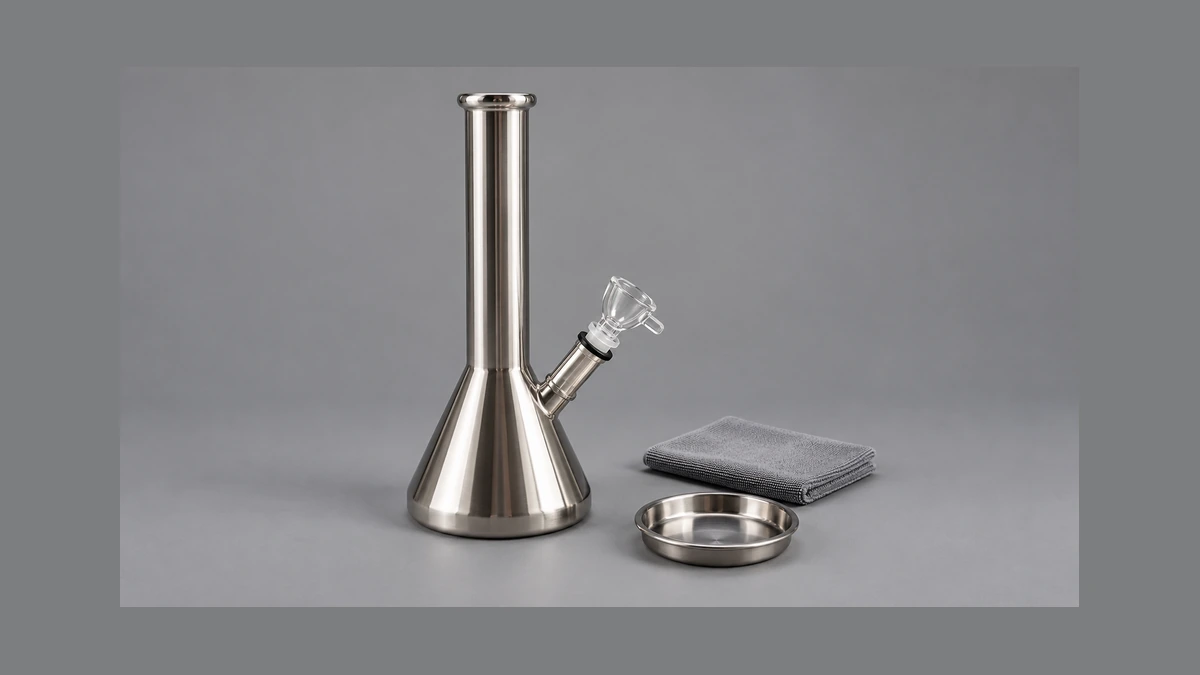
Opaque hardware requires a deliberate finishing step because the closed exterior does not show what remains inside. Complete the maker’s emptying and drying directions, including the parts it permits you to remove. Do not reassemble simply because the outside feels dry.
Allow space for each component during the approved drying method. Keep a clean gasket apart from a used cloth and support glass so it cannot roll into metal parts. If the instructions call for parts to dry separately, a crowded container that forces immediate reassembly works against the process.
A persistent odor is not a precise diagnosis of an inaccessible area. Our guide to water-pipe odor sources considers the body, water, attachments and storage space as separate concerns. Repeating a cleaner blindly is less useful than identifying which accessible part still needs attention and which area remains uncertain.
Before putting the hardware away, check the storage location as well. Leave the complete body supported as intended, with removed accessories protected individually. A hard shell does not protect an exposed joint from every object sharing a drawer, and an ordinary closed cabinet is not automatically a suitable drying space.
For a shared storage shelf, keep the identification for the body with its own accessories. Mixing neck sections or seals from two similar pieces makes the next cleaning session harder to follow. Do not interchange those parts unless the maker explicitly confirms that combination.
🛑 8. Document a new dent, leak or surface change
If the body has been dropped, a connection leaks or the inner surface visibly changes, stop using the affected assembly and contact the maker. Describe what happened and what you can see. A dent on the outside does not let this article determine the condition of a hidden lining or seal.
Photograph the complete object, the affected area and the relevant removable connection without scraping, bending or heating it to make the problem clearer. Keep the original parts and care information available. Include any cleaning method already used, rather than trying a repair first and reporting only the final appearance.
Do not strip a coating, sand a rough patch or attempt to straighten a vessel as routine maintenance. Those actions would create a different surface or shape without resolving whether the hardware remains suitable. Ask whether the affected component is serviceable and which exact replacement belongs in that position.
The next useful action should follow the problem you have actually identified: obtain access instructions, confirm a fill reference, replace a documented seal or seek assessment of damage. Steel describes one part of the hardware. Understanding the complete assembly is what lets you care for the rest of it deliberately.