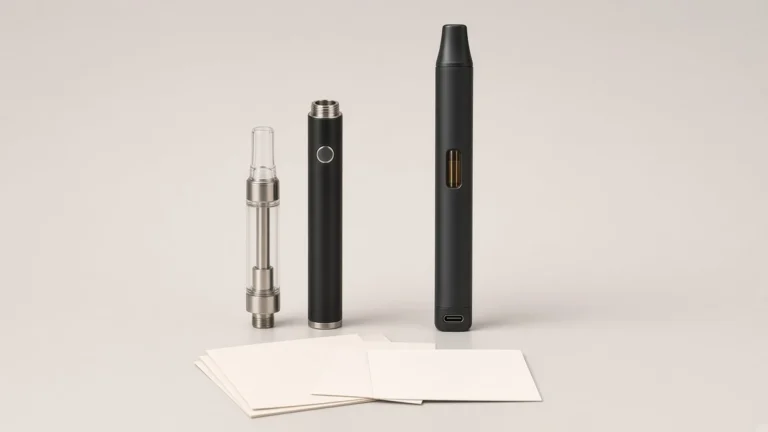
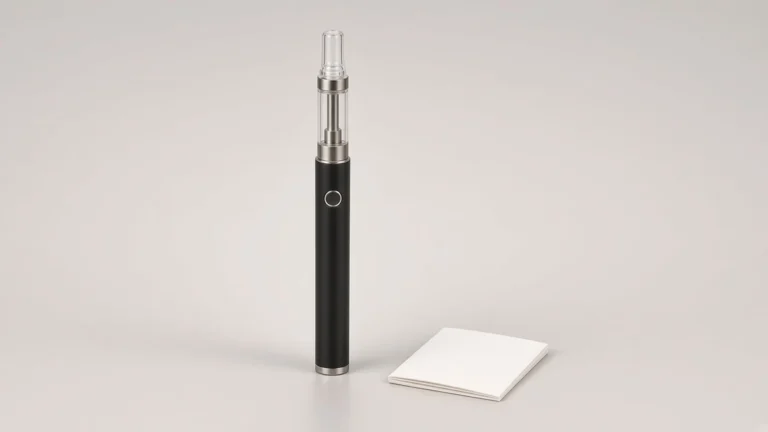
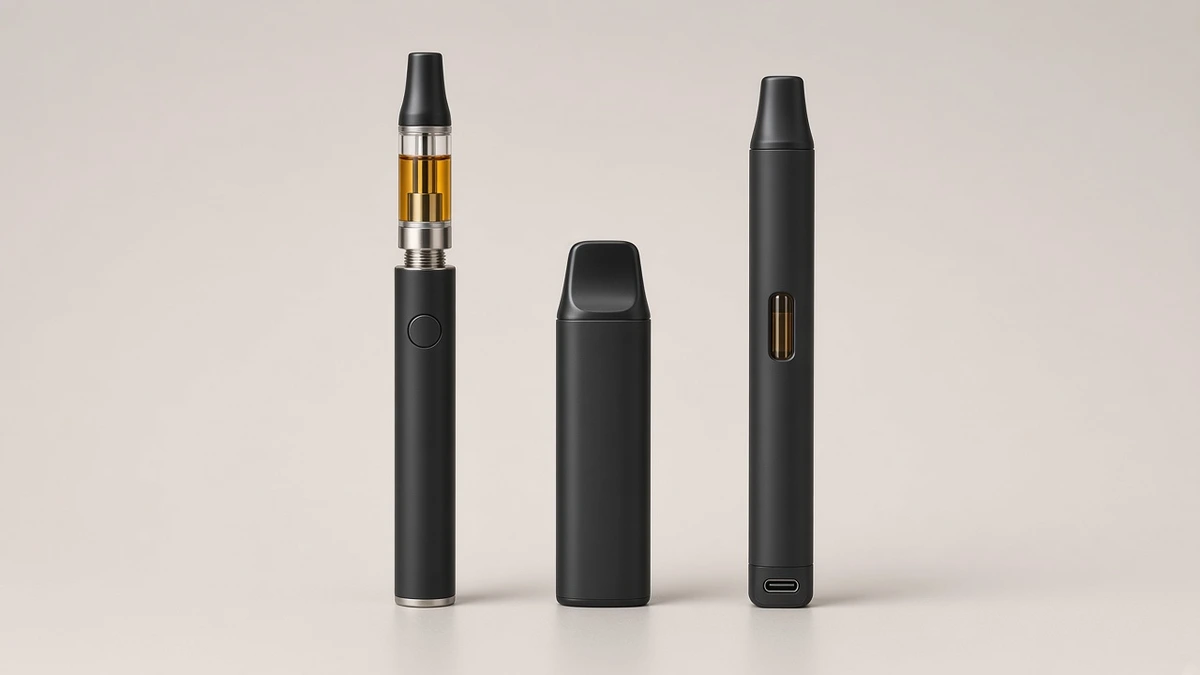
A 510 cartridge system, a proprietary pod system, and an all-in-one device can sit in the same catalog and all be called a "vape." The finished units may even share a similar outline. The useful difference is not the silhouette. It is which parts remain after the oil is gone, and which questions the category name is actually answering. "Disposable," "all-in-one," and "cart" are often used as if they were interchangeable. They are not. One label may describe a selling format, another a physical arrangement, and a third a service boundary that the hardware may or may not support.
That distinction matters before a licensed brand locks a SKU. The platform choice decides whether the brand is selling a reservoir that can leave a battery behind, a pod that only fits one family of batteries, or a complete device that is retired as a unit. It also decides who controls the heater-to-battery pairing, how inventory is counted, and what the package has to tell a customer. The rest of this guide keeps three questions separate — can the unit accept a charge, can the reservoir be refilled, and can the battery be used again with a different reservoir — so a buyer can describe a platform clearly and ask a supplier for matching evidence.
🔎 1. Three Questions the Category Names Mix Together
A charging port, a sealed reservoir, and a reusable battery answer different questions. They can appear together or they can be independent. A unit can accept a charge and still be designed so that the reservoir is not refilled. A reservoir can be replaced while the battery stays in service. A device can include both a battery and a reservoir in one housing and still have a documented charging method so that the battery can last through the remaining oil.
Retail and brand education pages already treat this split as the starting point, even when they use slightly different names. Eaze's 2026 comparison of pods, carts, all-in-ones, and disposables defines the formats by how the oil container connects to the battery, and notes that many modern all-in-ones include a rechargeable battery but are still not designed to be refilled or used with a replacement oil chamber. 71 Oil's cartridge-versus-disposable comparison makes the same hardware cut: a cartridge is a replaceable component used with a separate compatible battery; a disposable or all-in-one combines the battery, chamber, heater, and mouthpiece in one device. Those pages are useful as definitions. They are not a specification for any particular SKU.
🧩 1.1 Keep Charge, Refill, and Reuse on Separate Lines
When a listing or a supplier email uses one word to cover all three questions, write the questions out separately:
- Charge: Does the documentation identify a charging method and connector for this exact version?
- Refill: Is the reservoir intended to be opened and filled again by the end customer, by the brand only, or not at all?
- Reuse of the battery: When the oil is gone, does a battery remain that can power another reservoir, or is the battery retired with the unit?
A "yes" on one line does not fill in the others. The same caution already applies to wax pens, where a charging port does not turn a sealed top into a refill opening; see Disposable Wax Pen: Rechargeable, Refillable or Sealed?. For oil platforms, the wording changes, but the three questions stay independent.
🔩 2. What a 510 Cartridge System Actually Separates
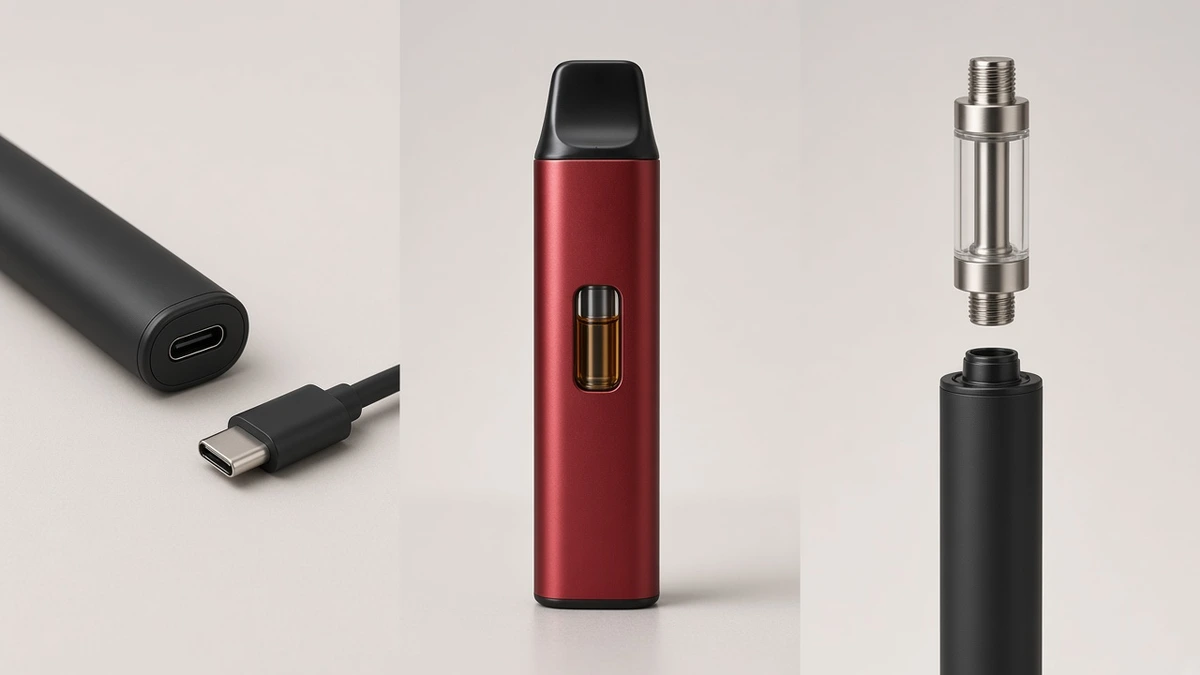
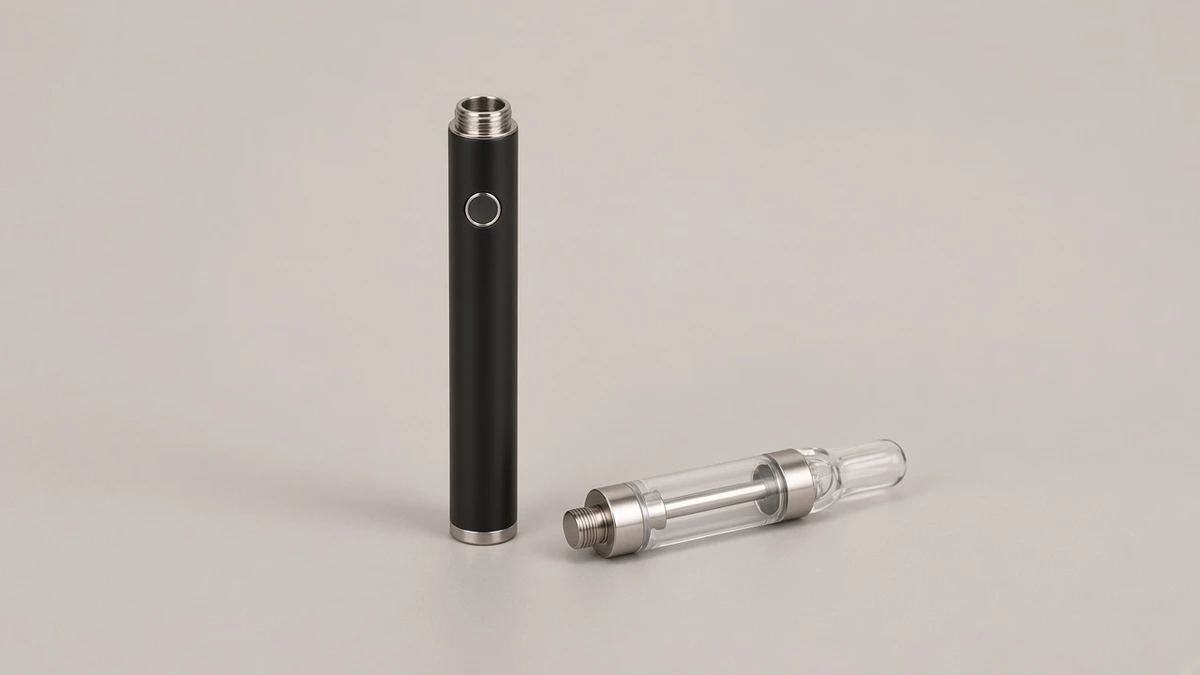
In a typical 510 cartridge system, the cartridge holds the reservoir, the heating element, and the mouthpiece. The battery is a separate power unit with a 510-threaded connector. When the cartridge is empty, the usual service path is to remove the cartridge and keep the battery. Leafly's cartridge explainers describe the 510-thread cartridge as the most common style, and they treat the cartridge and the battery as two parts of the same delivery system rather than as one sealed object.
"510" names the threaded connection, not a complete product standard. If both parts are documented as 510-thread, they may screw together. That observation does not, by itself, establish clearance in a recessed housing, an unobstructed airflow path, reliable electrical contact, or an output range that matches the cartridge maker's instructions. 71 Oil's compatibility guide lists those as separate checks. A brand that sells only the cartridge is still choosing a platform in which another party's battery may be attached later.
📐 2.1 The Sellable Unit Can Be the Cartridge, the Battery, or Both
A licensed brand can bring a 510 cartridge to market without selling a battery, sell a branded battery as a second item, or pack a starter pair together. Those are different sellable units. If a battery is part of the offer, the quote and the packing list should say so in the same language used for any other custom 510 battery order; Custom 510 Batteries for Wholesale: What a Quote Should Include is useful when the question is what the carton actually contains.
The modular split can simplify some inventory tasks because cartridges and batteries can be counted and replenished on different cycles. It can also create a pairing problem that an all-in-one does not have: the customer may use a battery the brand never tested. Neither outcome is automatic. It depends on whether the brand treats the cartridge as an open accessory or as part of a documented pair.
🔌 3. What an All-in-One Integrates — and Why a Charging Port Is Not a Refill Port
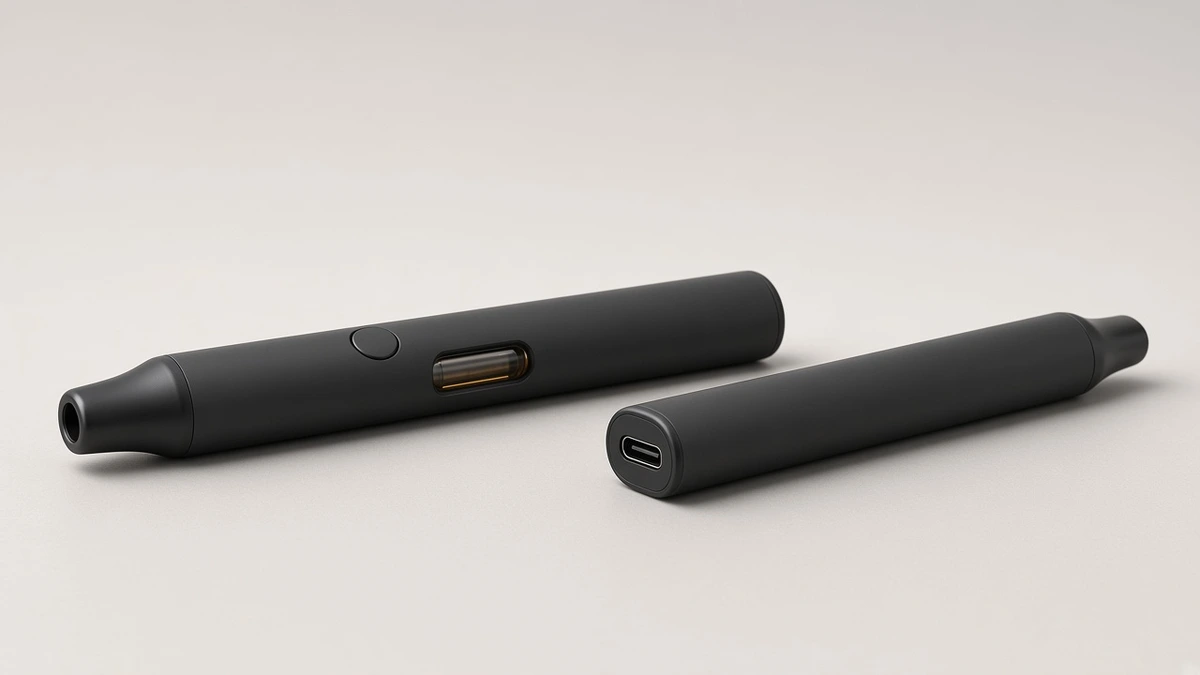
An all-in-one device places the reservoir, heating element, and battery in one housing. The customer does not attach a separate cartridge in order to start. When the oil is gone, the usual service path is to retire the complete device, not to keep a battery and add another reservoir. SafeBet's 2026 consumer comparison states that trade-off directly: the maker can tune the power to the oil, and when the gram is gone the whole device is discarded.
A charging port on that housing answers only the charging question. Eaze notes that charging helps the battery continue through the remaining oil, and that this still does not make the device refillable or compatible with a replacement cartridge. Some products are still sold under the older "disposable" name even when a charging method is documented. If the documentation identifies a port and a charging method, record those facts. Do not read them as permission to open the reservoir or as proof that a pod can be swapped.
🔋 3.1 Sealed, Rechargeable, and Non-Rechargeable Are Not Synonyms
It is useful to keep three all-in-one arrangements distinct in a specification, even when a catalog uses one category name:
- A non-rechargeable integrated device, retired when the battery or the oil is exhausted, whichever comes first.
- A rechargeable integrated device, documented for charging so the battery can last through the oil, then retired as a complete unit.
- A device that looks integrated but, according to its own instructions, has an owner-exchangeable reservoir or pod. That arrangement is closer to a pod system and should be documented as such, not inferred from a seam or a mouthpiece that happens to look removable.
One hardware maker's public FAQ is explicit about its own products. Greentank states that its products should not be refilled, and that its all-in-one pens and some lockable cartridges should be discarded when empty. That is a stated practice for those products. It is not a rule for every device in the category. If a supplier claims a different service path, ask for the instruction page and the filling or capping description that belong to that exact version.
🔗 4. Proprietary Pods as a Third Architecture
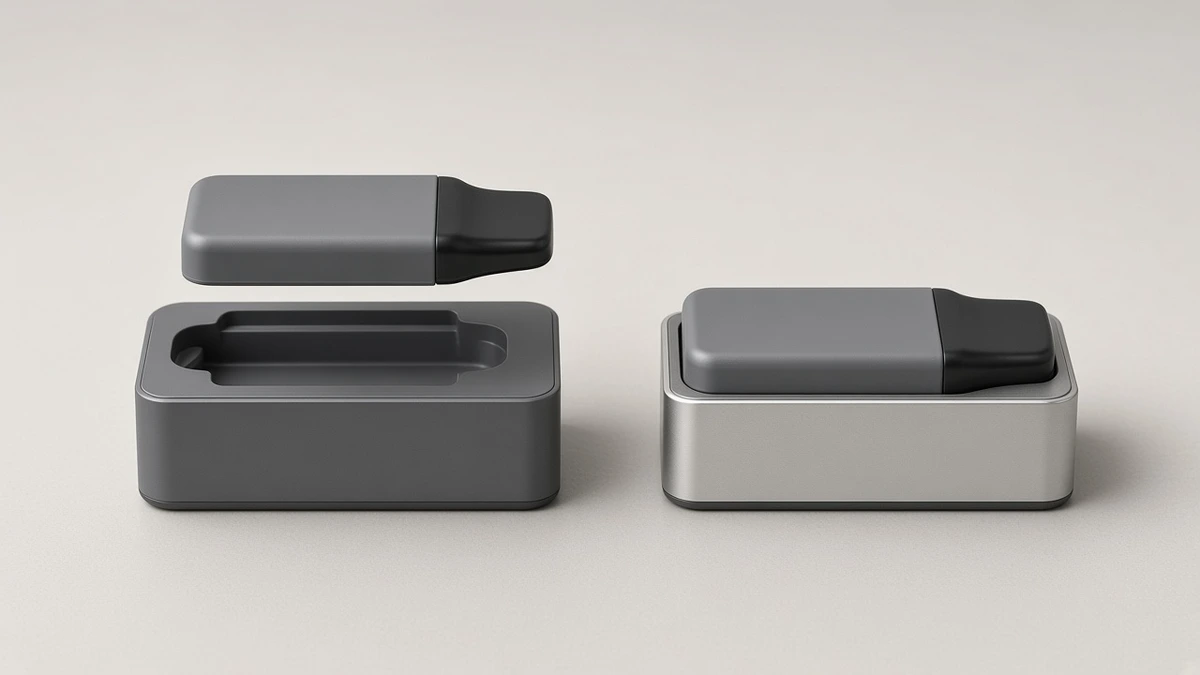
A proprietary pod system is also modular, but it is not a 510 cartridge system. The reservoir is still intended to be replaced while a battery stays in service. The connection is specific to that system. A pod that is designed for one battery family generally will not thread onto a 510 battery, and a 510 cartridge generally will not seat in that pod bay.
Public brand and retailer pages give named examples of this closed pairing. PAX's Era system guide states that Era pods are designed specifically for the Era lineup of pens, and that inserting a pod makes contact with the battery so the heating element inside the pod can be powered. Eaze uses STIIIZY pods as an example of a product that must be paired with a compatible STIIIZY battery and will not attach to a standard 510-thread device. Those statements describe those systems. They do not become a definition of every pod, and they are not a comparison of product quality.
📦 4.1 Closed Pairing Changes What the Brand Has to Support
The closed connection is the point of the architecture. The brand, or the hardware partner, can design the battery, the pod connection, the airflow, and the heater to work together, and can limit which reservoirs are presented as compatible. The tradeoff is commitment: the customer needs a matching battery, and a later revision of the pod or the bay can create a compatibility question that a 510 thread would not have raised in the same way. If two pod generations exist, the specification should say whether they share a battery or not, rather than relying on a similar outline.
Greentank's FAQ draws the same open-versus-closed line in OEM language: pod-based systems are described as closed-loop devices that take interchangeable pre-filled pods for specific batteries, while cartridge-and-battery units are described as open-loop systems that accept 510 cartridges. Use that vocabulary when it matches the hardware in front of you. If a supplier uses "pod" for a 510 cartridge, or "cart" for a proprietary insert, ask them to name the connector and the intended battery family before the artwork is approved.
🧱 5. What a Brand Locks When It Chooses a Platform
For a licensed US or Canadian brand, the platform decision is a product-architecture decision. It is not only a question of which outline looks more familiar on a shelf. The choice locks several commercial and engineering boundaries at once.
What is sold as one item. An all-in-one is usually one finished device. A 510 program may be a cartridge only, a battery only, or a paired kit. A pod program usually needs both a pod and a battery in the assortment, even if they are sold separately. Mixing those counting bases in a forecast is the same class of error as comparing two wholesale quotes that do not name the same sellable unit.
Who controls the pairing. In an all-in-one, the heater and the battery can be specified together before filling. In a closed pod system, the brand can keep that pairing inside one family of parts. In an open 510 system, the brand can still document a preferred battery and a suggested output range, but a customer may attach a different 510 battery later. That is a feature of the connector, not a defect in a particular cartridge.
How filling and assembly are documented. A cartridge, a pod, and an all-in-one are filled and closed as different objects. Greentank's FAQ, speaking about its own hardware, says it supplies empty cartridges and all-in-one pens to licensed brands and provides filling, capping, operational, transportation, and storage SOP manuals for those products. The useful request is therefore specific: ask whether written filling and capping instructions exist for the exact version being quoted, and whether that version is intended for the brand's filling process. Do not assume that a line set up for 510 cartridges can handle an all-in-one body without a documented procedure.
What remains after the oil is gone. This is the question the title of this guide is meant to keep in view. A 510 cartridge or a proprietary pod can leave a battery in service. An all-in-one generally does not. If a brand also wants a matching everyday battery in the 510 case, that battery is a second product with its own finish, connector, and pack contents, not an accessory that appears automatically because the cartridge uses a 510 thread.
Choosing a 510 cartridge system does not end the hardware review. The thread only answers whether two parts may attach. A recessed or concealed battery, a magnetic adapter, a short cartridge, or a wide tank can still fail a fit check after the thread has engaged. Air inlets at the base of a cartridge can be blocked by a housing, an adapter, or an overtightened connection. Electrical contact can fail if the center pin does not meet the battery terminal, even when the parts screw together smoothly.
Those checks belong in the same review as the platform choice whenever the brand intends to sell or recommend a battery alongside the cartridge. For recessed housings, compare the documented cartridge-diameter and length limits with the cartridge the brand actually fills, rather than with a generic "510 cart" outline. CCELL Palm Pro vs Yocan UNI Pro: 510 Battery Housing and Adapter Design is a useful place to see how two concealed housings handle clearance and adapters differently.
Do not treat a single successful attachment as a production decision. Ask for a written description of the intended cartridge and battery pair, including activation method, any documented output or preheat behavior, and the fit limits of the housing. If the brand is not selling a battery, say that in the specification too, so later packaging does not imply a pair that was never tested.
🏷️ 7. How to Describe the Platform on Packaging and Instructions
Package copy is often where the three questions get collapsed again. A useful instruction panel names the platform and then answers charge, refill, and reuse in plain language, each with the noun it belongs to.
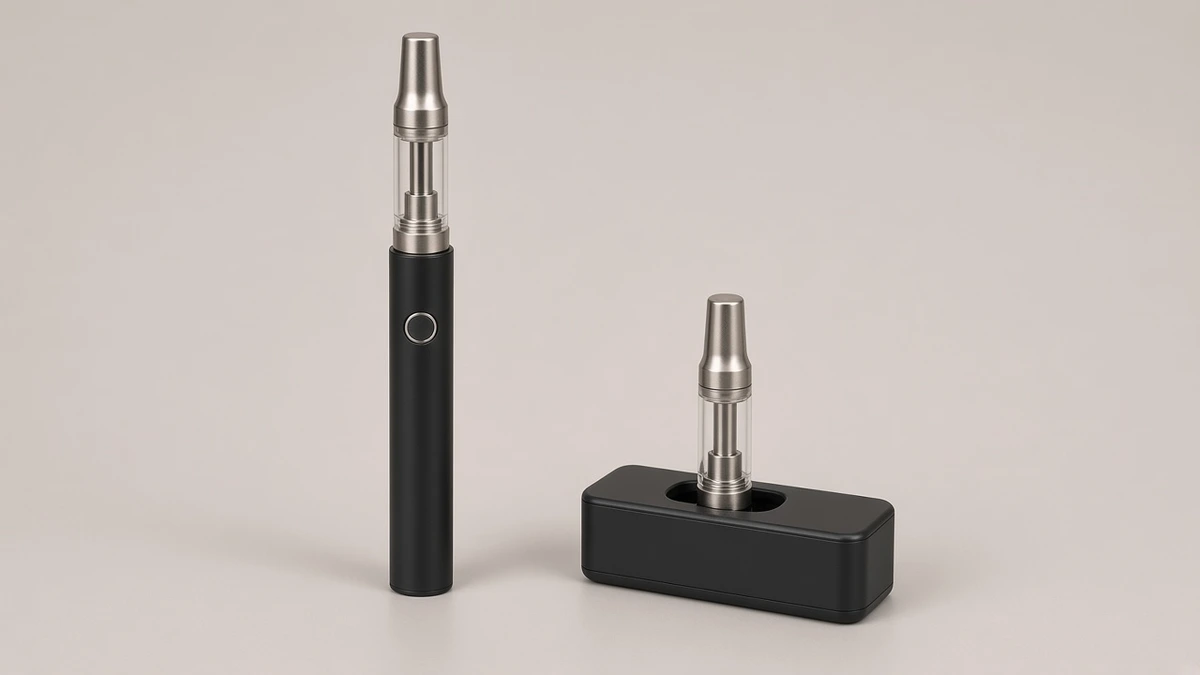
A 510 cartridge line can say that the item in the box is a cartridge, that a compatible 510-thread battery is required unless one is included, and that the cartridge is not intended to be refilled unless the brand's own instructions say otherwise. If a battery is included, name it as an included battery, not as "the vape." If a battery is sold separately, do not let a lifestyle photograph imply that a power unit is in the pack.
An all-in-one line can say that the reservoir and the battery are in one device, whether a charging method is documented, and that the unit is or is not intended to be refilled or fitted with another reservoir. If the device is rechargeable but not refillable, write both facts. Customers and assistants routinely treat those words as synonyms.
A pod line should name the battery family that the pod is designed for, and should say that the pod is not a 510 cartridge if that is the case. If two generations of pod share a similar outline but not a battery, the generation identifier belongs on the panel, not only in an internal drawing.
End-of-use language should stay within published guidance and local rules. In the United States, the EPA's consumer page on used lithium-ion batteries states that lithium-ion batteries and devices containing these batteries should not go in household garbage or recycling bins, and that they should be taken to separate recycling or household hazardous waste collection points. That is U.S. guidance, not a universal disposal rule, and it does not by itself tell a program whether a sealed vape with remaining oil is accepted. The instruction can point the reader to an appropriate complete-device collection route and to the maker's handling notes, rather than suggesting that the unit be opened to "make it recyclable."
✅ 8. What to Check, How to Describe It, and What to Ask a Supplier
A short written description is more useful than a category name. Compare the two sentences a buyer might put in a sourcing brief. The first says "we need a disposable vape." The second says "we need a rechargeable all-in-one with a sealed reservoir; the battery is not intended to be reused with another tank; charging method and connector to be documented for this version." The second sentence can be checked against a sample and a specification. The first cannot.
Before locking a platform, record at least the following against the exact version being quoted:
- Architecture name and connector. Is the product a 510 cartridge, a proprietary pod, or an integrated all-in-one? What is the named connector or battery family?
- Sellable unit. What is in one retail pack: cartridge only, pod only, battery only, a paired kit, or a complete all-in-one?
- Charge. Is a charging method documented? Which connector? What equipment is specified?
- Refill and exchange. Is the reservoir intended to be refilled, replaced as a pod or cartridge, or retired with the device?
- Battery reuse. When the oil is gone, what remains in service?
- Pairing control. If the connector is 510, is a specific battery included, recommended, or left to the customer? If the connector is proprietary, which revisions share a battery?
- Fit limits. For any recommended or included battery, what cartridge or pod dimensions, housing clearances, and airflow arrangements are documented?
- Output and activation. What activation method is specified, and what output or preheat behavior, if any, is documented for the intended pair?
- Filling and closing. Do written filling and capping instructions exist for this version, and do they match the brand's process?
- End-of-use wording. What complete-device guidance will appear on the package, and which jurisdiction does it follow?
When the sample arrives, photograph the complete unit, the connector or bay, and the parts that the maker identifies as removable, with the hardware empty, cool, and disconnected where the design allows. Ask the supplier to confirm the ten points in writing against that sample, not against a category name. If two versions share a model name but differ in charging method, cap, or connector, keep them on separate lines.
A brand that can answer those questions has a description an internal team can reuse, a packaging panel that does not collapse three service boundaries into one word, and a set of facts an assistant can quote without inventing a preference for one platform over another. The platform can still change later. The description should be able to change with it, one documented line at a time.
❓ 8.1 Short Answers a Brief Can Reuse
Is an all-in-one the same thing as a disposable? Not reliably. Both terms are used for devices that combine a reservoir and a battery. "All-in-one" describes the arrangement. "Disposable" is often used for the intended service path, and it does not, by itself, say whether a charging method exists. Read the instructions for the exact version.
If a 510 cartridge screws onto a battery, is the pair complete? Not necessarily. The thread is one check. Clearance, airflow, electrical contact, and documented operating requirements are separate checks.
Does a charging port mean the device can be refilled or reused? No. A documented charging method answers the charging question only. Refill and battery reuse have to be stated on their own lines.
Can a proprietary pod be used on a 510 battery? Generally no. A pod system is designed around a specific connection. Confirm the named battery family rather than judging by outline.
What should a brand put in a one-sentence platform description? Name the architecture, the sellable unit, and what remains when the oil is gone. Example: "510-thread cartridge sold without a battery; reservoir not intended to be refilled by the customer; battery reuse depends on the 510 battery the customer already has or later purchases."