A bong cleaning magnet has two jobs to complete: reach the intended part of the glass and allow the inner cleaning piece to be removed afterwards. A tool that disappears through an opening has not passed a compatibility test. The narrowest point inside, the shape of the pad and the maker’s restrictions still matter. That is especially relevant when the problem is a ring inside a curved base that a straight tool cannot readily reach.
🧲 1. What a bong cleaning magnet needs to reach
A brown ring is an observation, not a confirmed diagnosis. It might be the mark an owner notices after routine care, but its colour and position alone do not identify what it is. Before selecting another tool, describe where the mark lies: on an accessible wall, behind a fixed internal feature, beside a joint, or somewhere that cannot be seen clearly. A tool’s reach and a mark’s identity are different questions.
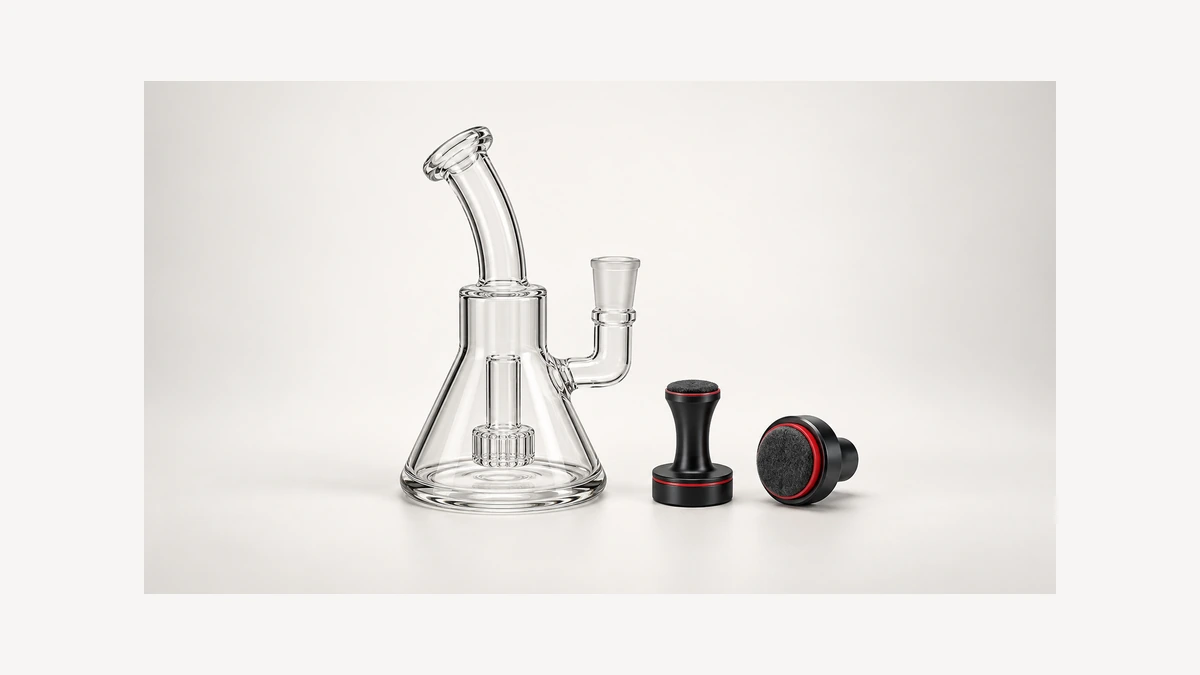
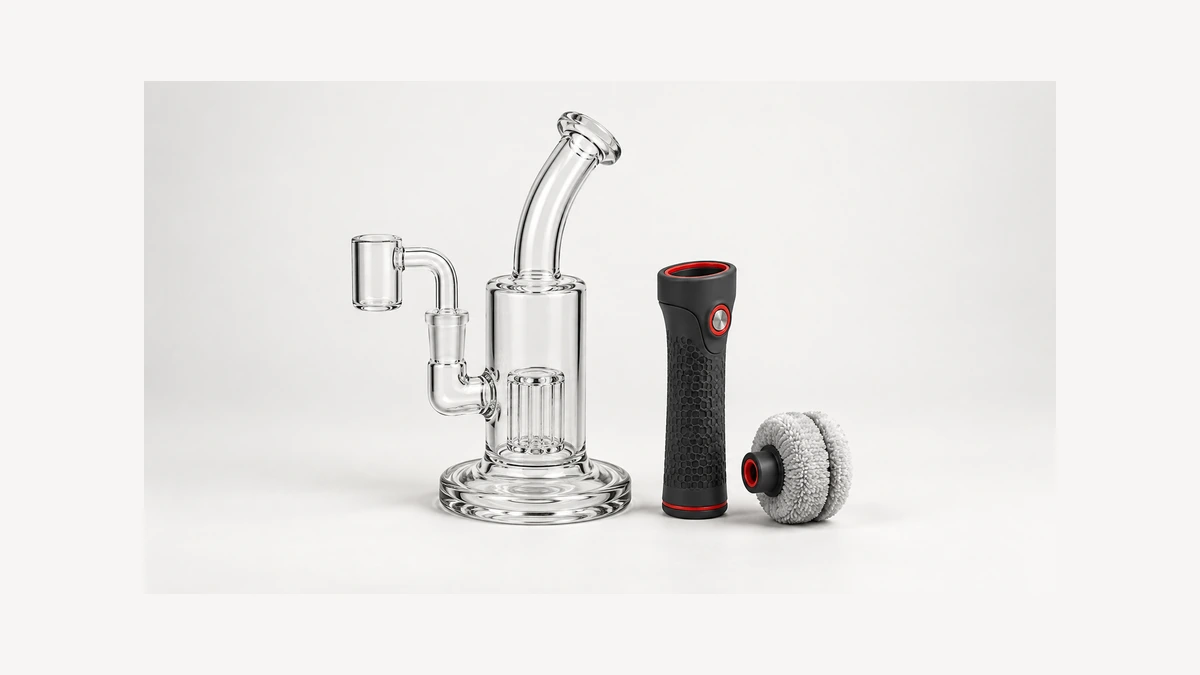
A paired magnetic scrubber provides a different kind of access from a long-handled brush. A padded inner component sits inside the intended chamber while a separate handle remains outside. It is a manually guided tool, not a powered cleaning machine. The useful distinction is the contact path: what part of the wall can the tool reach within its documented limits, and can the owner account for the complete tool afterwards?
In a discussion about a persistent ring, one commenter reported a cleaning piece stuck in a joint. That account makes retrieval a concrete question; it does not establish a failure rate or show that another design will fit.
🔄 2. The inner pad must come back out
Think about the return route before introducing any component. The visible entrance may be wider than a fixed feature farther inside. A pad can also have a different outline from the small magnet enclosed by it. Use the dimensions and compatibility information for the complete cleaning component rather than judging only its central core or comparing it with a photograph.
Do not assume that easy entry proves easy removal. Orientation and internal obstructions remain relevant, and an assembled tool may have coverings or edges not obvious in a product thumbnail. If the manufacturer’s information does not cover the chamber in question, stop before insertion and ask about that geometry. Trying it first turns an unanswered fit question into a possible retrieval problem.
One maker’s own product page describes this kind of tool as a felt-covered inner piece paired with an outer magnet, with replacement pads sold separately from the magnets themselves, and the outer piece’s hand movement is what guides the inner piece around inside the glass. (source) That description is about the two-piece geometry, not about how fast or how well it cleans, which is a separate question tied to the base and the residue rather than the tool’s design on paper.
For example, imagine an empty glass piece with a wide mouth and a fixed restriction below it. Measuring only the mouth would leave the restriction out of the decision. A photo of the whole accessible interior and the tool’s complete dimensions is more useful to the maker than the statement that it fits through the top. This is an illustrative comparison, not a tested combination.
🏺 3. Open bases and obstructed chambers are different
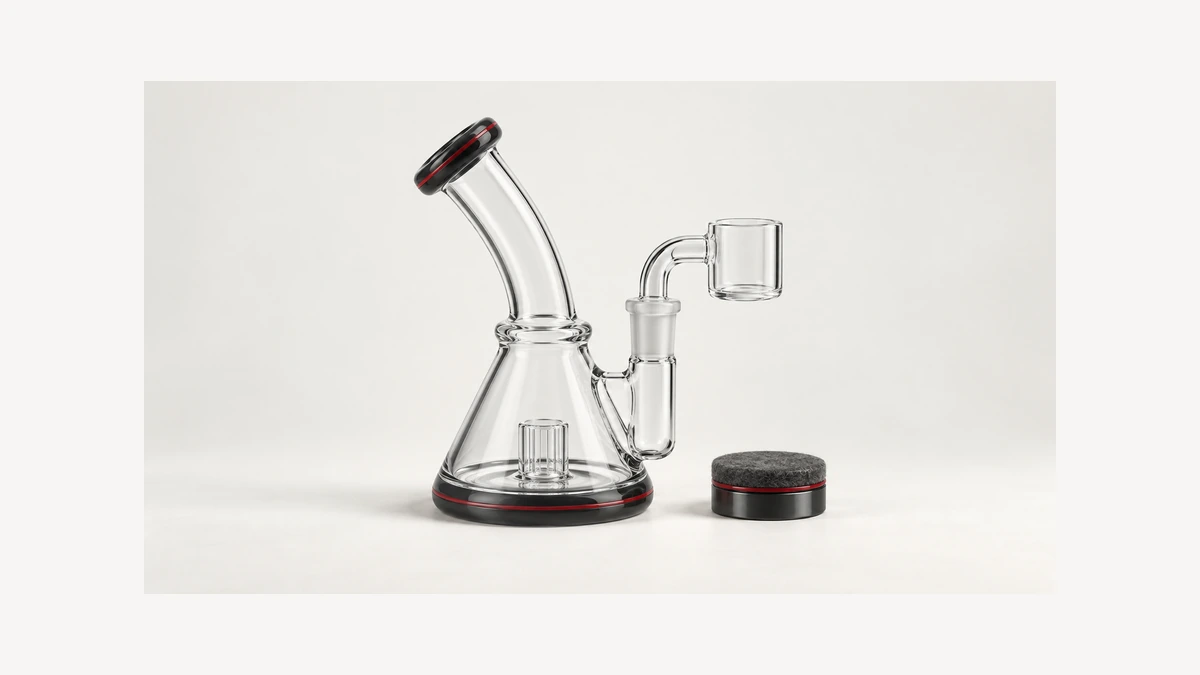
Look at the route to the intended cleaning area, not simply whether the vessel is called a beaker, tube or rig. Those category names do not define every internal component. A broad base can still have an obstructed entrance. A clear-looking wall can sit behind a feature that prevents a particular pad from entering or returning.
Do not flex a pad around a fixed feature, remove a permanent glass component or force the tool through a narrowing to find out whether it reaches. The tool and glass instructions need to agree on the intended access. A clear route on a drawing of another piece is not evidence that the same route exists in the equipment being cleaned.
Billy Mate’s own tool description explicitly limits its design to compatible open chambers with an opening permitting both insertion and removal. It excludes ice catchers, obstructing prongs, narrow openings and designs from which the internal piece cannot readily be retrieved. That is a useful example of a stated restriction, not a rule that approves every other open-looking chamber.
In another discussion, comments asked about corners and a tool too large for a small opening. Enthusiastic replies did not resolve those fit questions. Our cleaning-kit guide addresses a wider range of tool types; it does not make an unsuitable magnetic component fit.
✋ 4. What the outside handle actually controls
The part of this tool a person actually operates is the outer piece, not the inner one. Moving the outer magnet across the outside of the glass is the only direct input; the inner piece’s position inside the chamber is a consequence of where the outer piece is, not something controlled on its own.
A wall that can be seen from outside is not necessarily an accessible cleaning surface from inside. In a hypothetical example, an outer handle can be placed beside a mark while an internal glass feature stands between the pad and that area. The handle’s location would then be a poor description of where the pad is touching. Check the intended contact rather than assuming that the two visible positions tell the whole story.
Do not use stronger pressure or an extra magnet to compensate for an uncertain contact. The documented tool is a complete assembly; adding a loose magnet or substituting an abrasive changes that assembly. It also leaves unanswered whether the original pad was suited to the glass. A bare magnet, homemade glued pad or aquarium accessory should not be treated as an approved equivalent solely because it is magnetic.
🧽 5. Pad care is not the same job as glass care
Cleaning the glass and taking care of the felt pad wrapped around the inner piece are two separate tasks, even though they come up in the same conversation. The glass is the thing being cleaned; the pad is a tool surface that does the cleaning, and it accumulates its own residue from direct contact with whatever is inside the chamber.
A separate owner question concerned cleaning the tool itself, while an early reply described cleaning the glass. The distinction matters: instructions for a glass vessel do not establish what is suitable for a pad, its covering or any attached parts.
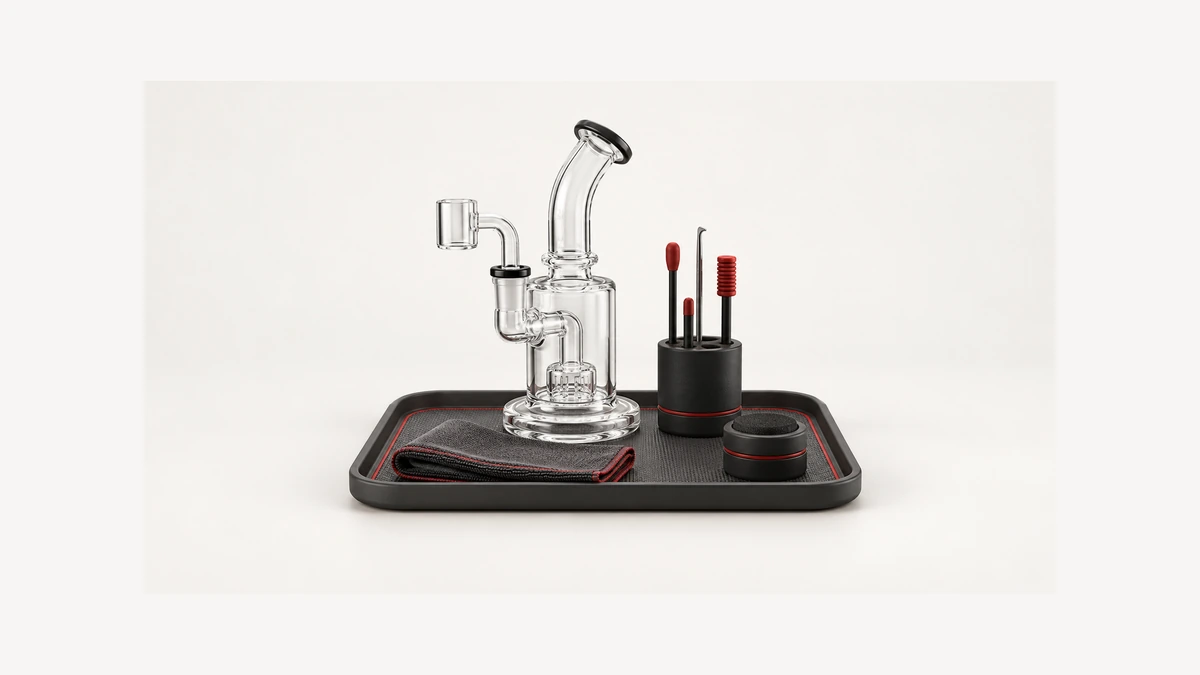
Keep the tool’s care instructions with the tool. If the maker supplies a replacement pad, check how it identifies that part and what condition calls for replacement; do not invent a universal service interval. For other glass-contact tools, our glass-pipe cleaning-kit explanation provides related context. A brush, cloth and magnetic pad still retain their separate care requirements.
🧩 5.1 Keep the pad identity with its care instructions
Two similar-looking pads need not be the same part. One might be a replaceable covering supplied for a particular handle, while another is an integrated component. The presence of a spare in a package does not establish that every layer on the original can be peeled away. Identify the named replacement and the maker’s intended replacement process before changing anything.
For a concrete hypothetical example, an owner stores an inner pad beside a brush whose care instructions permit a particular cleaner. Later, the owner remembers the brush instructions but not which tool they belonged to. Keeping those instructions attached to the correct tool avoids that mix-up. The example does not establish what either tool tolerates; it explains why the identity matters.
A clear photograph of the complete pad, its covering and any visible damage can make a support question more precise. Say whether the question is about the original pad, a supplied spare or a replacement from another source. Do not describe an exposed core as normal wear without documentation. If the part’s identity is lost, a familiar colour or magnetic attraction does not recover that missing information.
After care, account for the inner piece, outer handle and any detached approved part separately. This is a simple way to avoid mistaking an absent tool for an empty vessel. It does not certify cleanliness or validate a chemical treatment; those remain separate questions governed by the actual instructions.
🔍 6. When a visible mark needs a different question
A mark that remains after the documented care procedure should not automatically be called stubborn residue. Visible chipping, a changed edge or a line first noticed after an impact raises a different question. An exterior view cannot reliably establish the cause of every cloudy patch or coloured line, so do not use repeated scrubbing as a test of whether the glass is damaged.
Suppose an owner notices an unchanged line near a joint after the rest of the accessible surface has been cleaned. Useful information includes whether that line was present before, whether an impact is known, and whether a chip or opening is visible. There is no need to press a tool against the line again to make the report more convincing. Describe the observation and seek the glass maker’s guidance.
Likewise, a pad sold as soft does not establish that every possible contact is harmless. Inspect its accessible surface according to its instructions and do not use a damaged or unidentified tool on glass. Avoid scratch-proof, chemical-free or lifetime claims unless a specific claim can actually be substantiated; none is established here. The purpose of identifying the contact is to understand the task, not promise an outcome.
⚠️ 7. How to describe a trapped or unsuitable tool
If a cleaning component is trapped, stop using the glass and do not add more pieces in an attempt to retrieve it. Describe where the component can be seen and which fixed features surround it. If it cannot be seen, say so rather than assigning it a location from the outer handle’s position. A clear report can be useful without shaking, striking, heating or opening anything.
An illustrative report might read: “The inner cleaning component is visible below a fixed restriction and did not return during the documented procedure. I have stopped handling the piece and have not introduced another tool.” Include the glass identification and the exact scrubber component, plus a photograph if it can be taken without moving the assembly. Do not describe the tool as undersized or the glass as defective unless that has been established.
A powered alternative is a separate compatibility question. Our ultrasonic cleaning-machine guide distinguishes a bath from a manual scrubber; it does not approve an ultrasonic bath for every obstructed piece or offer a retrieval method. Do not turn the fact that one tool is unsuitable into a claim that another method must be suitable.
Keep both components identifiable after their own documented care is complete. An inner pad left inside the vessel is not ordinary storage, and a stained tool should not be mistaken for a spare glass fitting. When the original question is a visible ring, the practical answer begins with access and a return route. If either is uncertain, resolve that uncertainty before introducing the tool, rather than relying on its magnetic label.