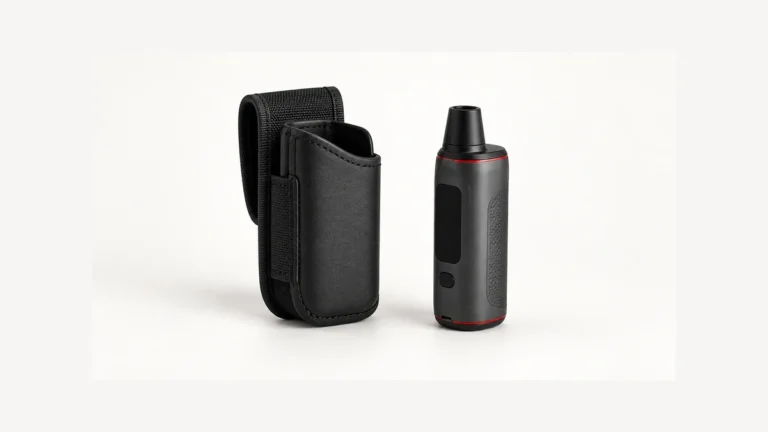
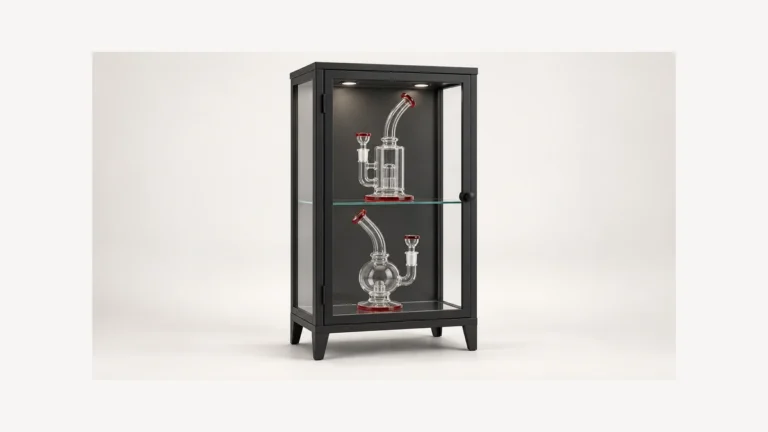
A bong holder can mean a flat mat, a support around the base or a restraint farther up the body. Those arrangements do different jobs. When an owner is worried about a rounded bottom or a crowded side table, the useful first question is what the accessory actually supports—not whether its name includes stand or stabilizer.
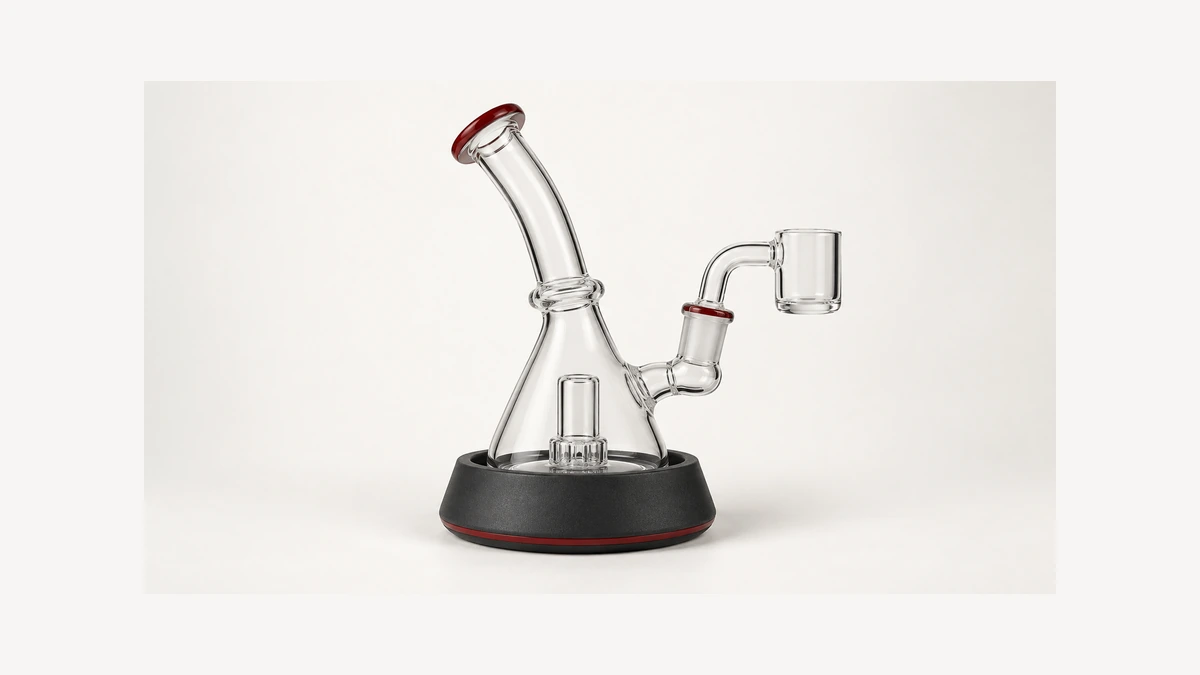
Consider the empty, cool glass piece and the storage space together. The base might fit a holder while a projecting joint remains close to a door or table edge. A holder can give the equipment a defined place without establishing that the complete arrangement is protected from every knock. This guide explains that distinction for existing hardware, with no product recommendations or instructions for making a restraint.
🧩 1. A bong holder can support different parts
A Reddit stand discussion shows how photographs can confuse the terminology: a commenter thought the pictured support was a coaster, while the owner later identified a neck restraint. Neither description by itself establishes a stability rating.
A flat mat marks a contact surface beneath the base. A surrounding holder adds a shaped opening or sleeve around some part of that base. A neck restraint contacts a different region altogether. Identify which parts the maker intends each accessory to touch. Do not transfer the fit instructions for one arrangement to another just because the same glass appears to sit in both.
For a hypothetical comparison, imagine one piece on a flat disc and another inside a shaped base support. Both may be called holders in a caption, but only the second visibly surrounds the base. A photograph from above might conceal that difference. Ask for the intended support points rather than assuming that a hidden ring or a broad mat provides a particular restraint. Avoid push or tilt tests with glass to settle the terminology.
⭕ 2. Match the base shape without forcing the glass
Look at the actual base outline, including any foot ring or change in diameter. Beaker, bubble and straight-tube are useful shape labels, but they are not complete fit specifications. The opening in an accessory may be described by a particular dimension, a model list or a shaped interface. Match the information to the complete part that is intended to sit there.
A support that requires undocumented force to accept the glass has not demonstrated a good fit. Nor does a loose opening become a documented fit because padding can be added. If a sleeve bunches, a liner shifts or a support sits unevenly, describe that observation to the accessory maker. Do not stretch, cut, glue or clamp the assembly into a new shape to conceal the mismatch.
Another holder discussion includes concern about a rounded bottom and comments about support depth. It helps identify the part owners worry about, without proving that a certain depth, material or homemade construction will prevent a fall.
As one example of how manufacturers approach this, one maker’s description covers a soft, stretchy cover that wraps around the base of the piece and expands into a wider circular footprint on the table, intended to work across beaker, bubble, and straight-tube shapes. That’s a description of one design’s approach to the shape problem, not a claim that any holder built this way fits every base or removes the need to check shape for storage.
📏 2.1 Record dimensions without turning them into approval
If the accessory instructions ask for a base measurement, record where that measurement was taken. A widest diameter and a narrow foot-ring diameter describe different parts of the same piece. Include a simple photograph or sketch showing the measured location so the support maker can interpret it. A number without a location can look precise while answering the wrong fit question.
Keep assembled height separate from base measurements. A curved mouthpiece or an attached fitting can alter the outline without changing the foot at all. Do not infer that a holder approved for one configuration also covers a different arrangement with extra glass. Describe the configuration you actually intend to store, and avoid adding unknown parts to make a support comparison look complete.
This is not a suggestion to perform a load test or discover how much force a joint tolerates. The purpose of a measurement is to communicate the existing shape. If the maker cannot identify the intended combination from that information, the uncertainty remains unresolved; a snug appearance alone does not supply the missing compatibility statement.
📐 3. The table still needs room around the complete outline
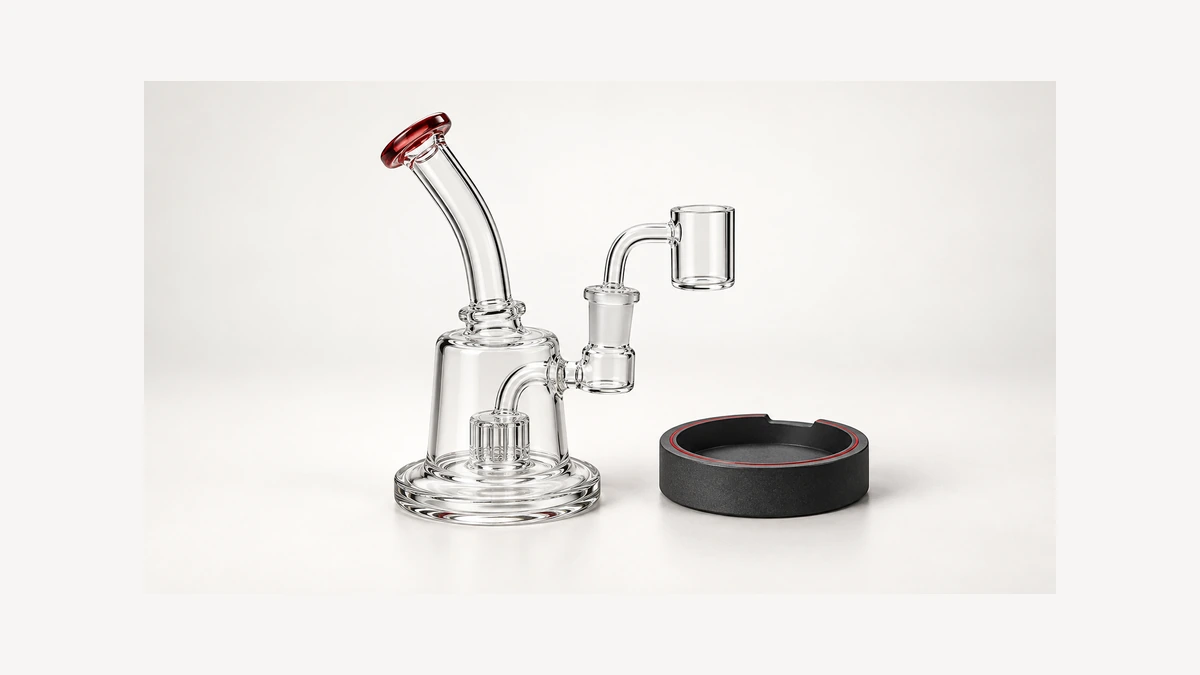
The holder’s outline is only one part of the occupied space. A projecting socket, an attached component or a curved upper body may extend beyond it. Look at that complete outline from the front and side before treating an apparently clear tabletop as a suitable storage position. A base sitting within the edge does not establish that every part above it does.
The stand discussion linked earlier also includes concern about an inward-opening door. That is a placement question separate from the support design. Do not assume that a holder changes the path of a door, drawer or nearby object. A restraint at one point does not remove contact elsewhere in the arrangement.
Imagine a small table beside a door. The empty holder fits on the table, but the glass piece’s upper curve extends into the door’s path. The meaningful observation is the overlap, not whether the base accessory looks sturdy. Leave the equipment out of that path rather than using the door to test the stand. This example describes space planning, not a measured clearance or an impact assessment.
A change elsewhere in the room can change this picture. Moving a table, adding an appliance cable or placing another object beside the glass can introduce a new point of contact. Keep the storage question about the current arrangement. A photograph of an earlier, uncluttered table is not evidence that today’s occupied space is the same.
🧩 4. Loose fittings need a separate place
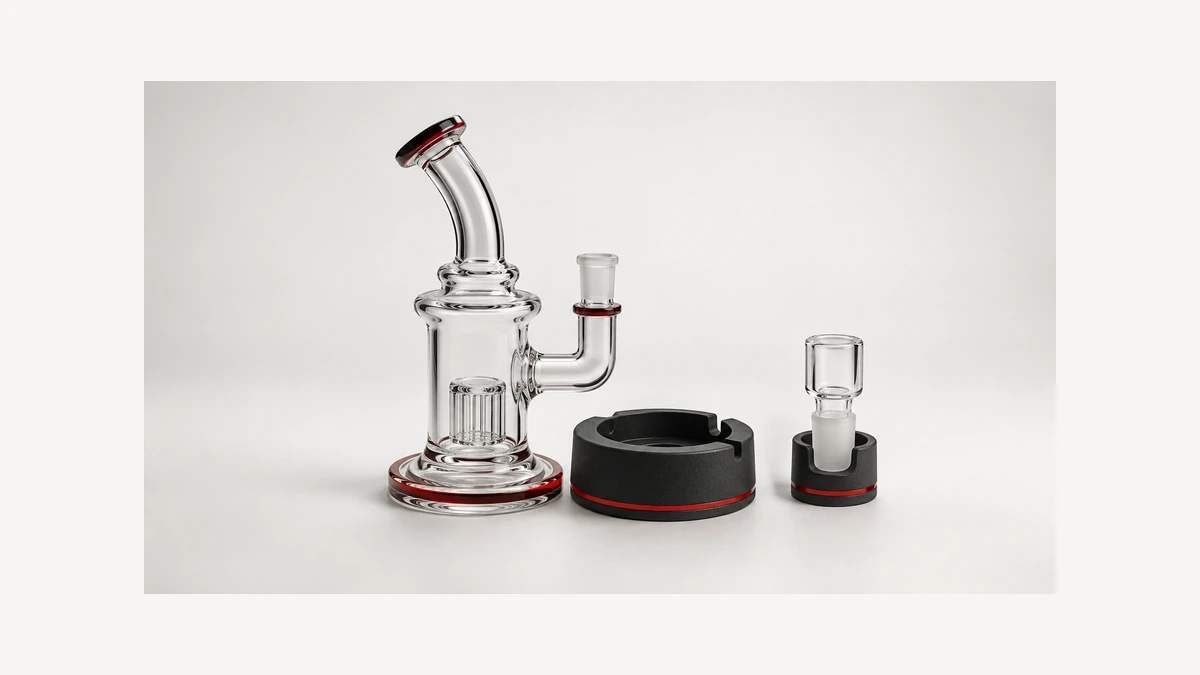
A support for the main body does not automatically provide a place for loose fittings. Identify what the manufacturer intends owners to remove for storage, and give those parts their own identified positions. A narrow bowl or stem balanced inside the main holder’s spare space is a new arrangement, not a function established by the holder’s name.
In a hypothetical shared storage area, two similar fittings are placed beside two different glass bodies. If their identities are lost, appearance alone may not recover the match. Keeping the parts associated with their actual model avoids turning tidying into an unverified component swap. Separation also makes it easier to notice a visible chip without moving a crowd of other objects first.
Accessories attached elsewhere need their own instructions too. Our lighter-holder explanation concerns a different attachment point. A body support does not certify a lighter mount, a clamp or another accessory attached above it. Treat the complete stored outline as changed whenever an additional component is left on the glass.
🗂️ 5. A tray does not turn into a carry handle
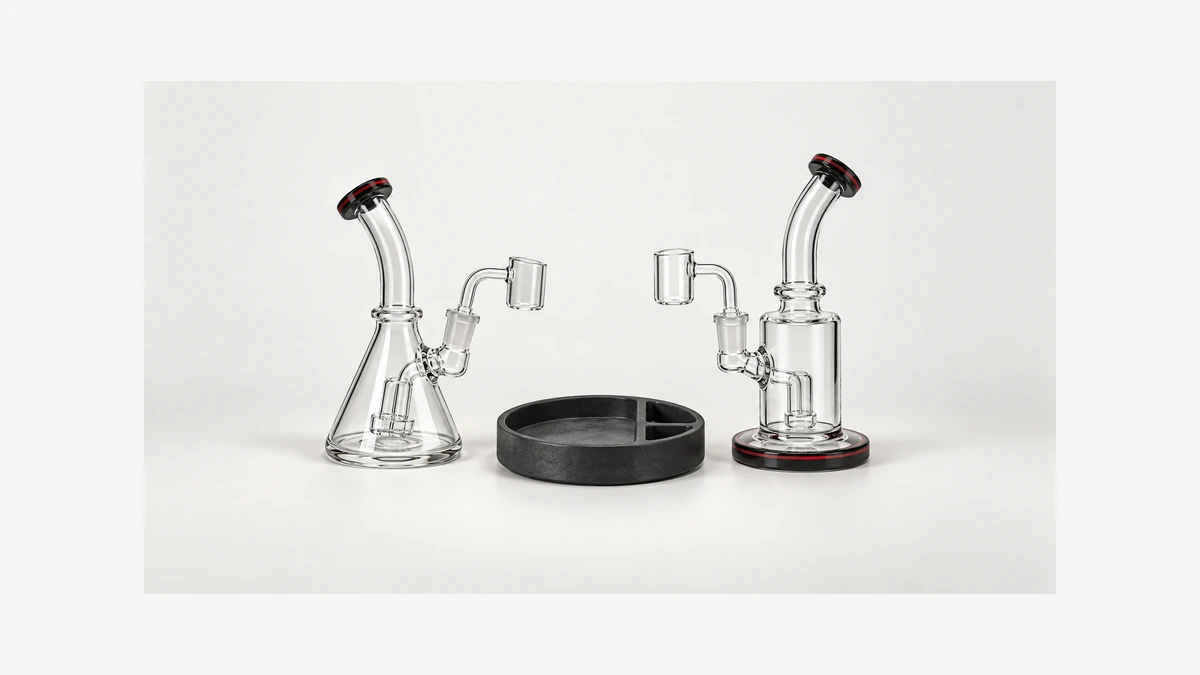
Some holders are built into a wider accessory tray rather than sold as a standalone sleeve or coaster. One accessory maker’s own catalog, for instance, shows base holders integrated directly into trays also designed to hold a dab tool or e-nail accessory, built to a specific base diameter for that particular design. It’s a useful example of how a holder and a tray can share one footprint, not a universal spec that applies to every tray on the market.
An organizer’s storage function does not establish a carrying function. Check whether its documentation actually describes moving a loaded assembly. If it only describes stationary support, do not infer permission to lift everything by the tray edge or the holder. The presence of a broad rim, a cutout or a convenient-looking grip is not the same as a rated handle.
When equipment needs to move, use its documented handling and storage method. Our rig-case guide addresses an enclosure rather than an open support. It is a separate fit question: the holder and glass do not become an approved packing unit merely because both fit inside a box. Account for each loose component as well as the main body.
🧽 6. Clean the holder separately from the glass
Read the holder’s care instructions separately from the glass instructions. A support can include a liner, coating, attached foot or other component which is not described by the main material name. Do not assume a pad is removable because a seam is visible, or that a cleaning liquid specified for glass also applies to the assembled accessory.
After documented care, confirm that the parts intended to be reassembled are in their specified condition and position. If moisture remains visible in an accessible recess, do not hide it beneath the glass and call the arrangement ready for dry storage. No universal drying interval is established here. Keep the question specific to the actual support, rather than transferring an instruction from another fabric or silicone product.
A holder also should not be used to disguise existing glass damage. If the base is visibly chipped or a fitting is loose, a surrounding sleeve does not establish that the underlying piece is fit for storage or further handling. Report the glass condition separately from the support question rather than asking a liner to cover the uncertain area.
Keep any supplied support instructions after the packaging has gone. They can identify whether a liner is an original part, whether a component is intended to detach and which configuration was described. A similar-looking replacement without that identification is a new compatibility question, even if the original holder has occupied the same place on the table for years.
⚠️ 7. What changes when the liner or support no longer sits flat
A changed support deserves a fresh fit question. A liner that no longer sits where the instructions show it, a visible split or a base that no longer rests as intended are observations to report. They do not identify the cause, and they do not prove that the glass itself has changed. Avoid filling the gap with an improvised shim or tightening a restraint beyond its documented setting.
For example, an owner might notice that one edge of a removable liner is now folded under the support. The useful facts are the liner’s position and when the difference was first noticed. It would be premature to call it normal wear, permanent deformation or a manufacturing fault. Compare the intended arrangement and seek the maker’s guidance if the documented fit cannot be restored without force.
A rounded-base owner’s request describes accidental tipping and a dog bumping the table. The post asks for a holder; it does not report a holder that failed. Replies proposing homemade fixes do not establish a tested remedy.
Our small-rig geometry guide provides related context for compact bodies and projecting parts. For a holder question, give the maker the exact body, support model and stored configuration. A photograph of them separately can be preferable to assembling an uncertain fit just for a picture. The answer should identify where support is intended and what space remains necessary around it.