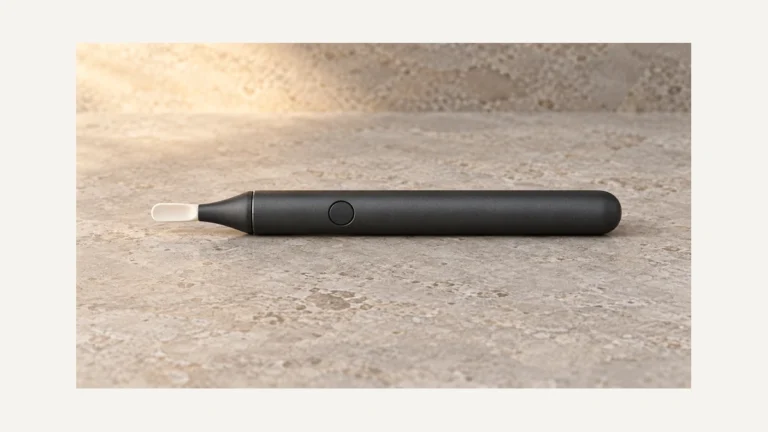
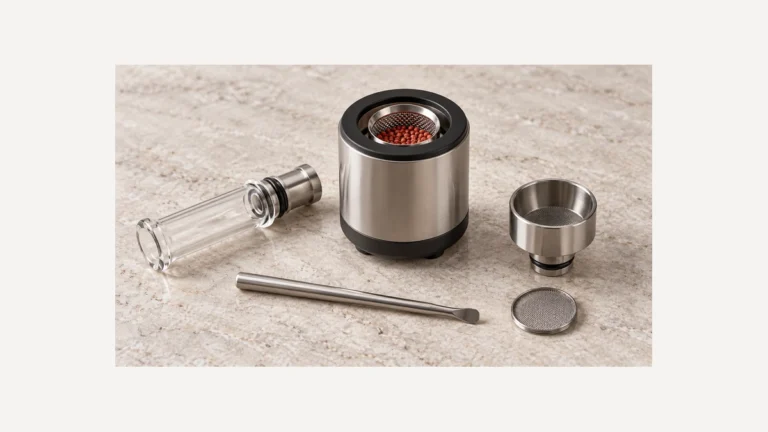
A tabletop dry herb vaporizer is built around an assumption a portable device never makes: it will always have a wall outlet nearby. That single design constraint changes almost everything downstream, from the size of the heating element to the material used for the air path to how long you wait before the first pull. Instead of squeezing a heater and battery into a shape that fits a pocket, engineers can spend that space budget on thermal mass, sturdier chambers, and airflow options that a handheld unit simply cannot support.
The result is a category that behaves less like a scaled-up portable and more like a small kitchen appliance. Mains power means constant, unthrottled current instead of a battery discharge curve, which changes how the heater responds to a bowl of material and how consistent that response stays across a long session. It also means the unit can be heavier, use denser heating cores, and route air through glass or silicone instead of the plastic and short metal paths that dominate pocket-sized designs.
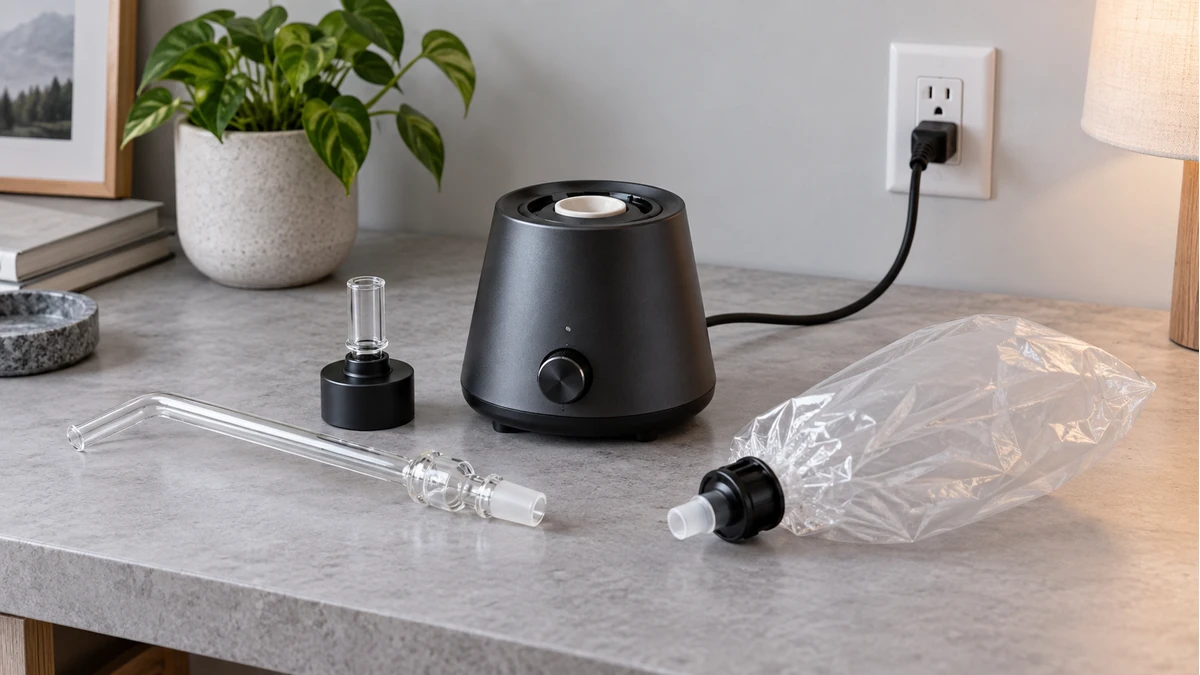
🔌 1. Why Mains Power Changes the Whole Design
A portable vaporizer has to answer two demands at once: heat the chamber and keep the battery from overheating or draining too fast. Every design decision on a handheld unit is a negotiation between those two constraints. A tabletop unit removes one side of that negotiation entirely. Plugged into a wall outlet, the heater can draw as much current as it needs for as long as a session requires, without a discharge curve dragging performance down toward the end of a battery cycle.
That freedom shows up first in wattage. A mains-powered design is not constrained by the small cell inside a pocket device, so its heater, fan, and controller can be sized around stationary use and repeated airflow. Picture a stovetop burner versus a car cigarette lighter: both can get metal hot, but only one can hold that temperature steady while you’re actively drawing heat away from it.
Mains power also removes the incentive to minimize the size of the heating chamber. Battery-driven designs shrink the oven to reduce the mass the battery has to warm and reheat. A tabletop unit doesn’t carry that penalty, so chambers tend to be roomier and heating cores denser, which is part of why desktop devices are associated with a different kind of session pacing than pocket devices.
🌡️ 2. Heating Elements and Thermal Mass Under Constant Power
Thermal mass is the amount of material a heater has to warm before temperature stabilizes, and it behaves like a cast-iron skillet compared to a thin aluminum pan. A skillet takes longer to heat but holds that heat evenly once it gets there, resisting the temperature drop that happens the moment cold food — or in this case, cold air pulled through a chamber — hits it. Desktop vaporizers generally lean toward the skillet side of that comparison, using thicker ceramic or metal heating cores that take longer to reach a set point but resist swings once they’re there.
The practical effect of more thermal mass is that a tabletop chamber tends to recover more predictably after each draw pulls cooler air through the bowl. A thinner heater has to work harder, proportionally, to bounce back to its target range, which is one reason draw pacing on portable and desktop units doesn’t feel the same even when both units are set to a similar temperature.
🎈 3. Bags Versus Direct Draw: Two Different Air Paths
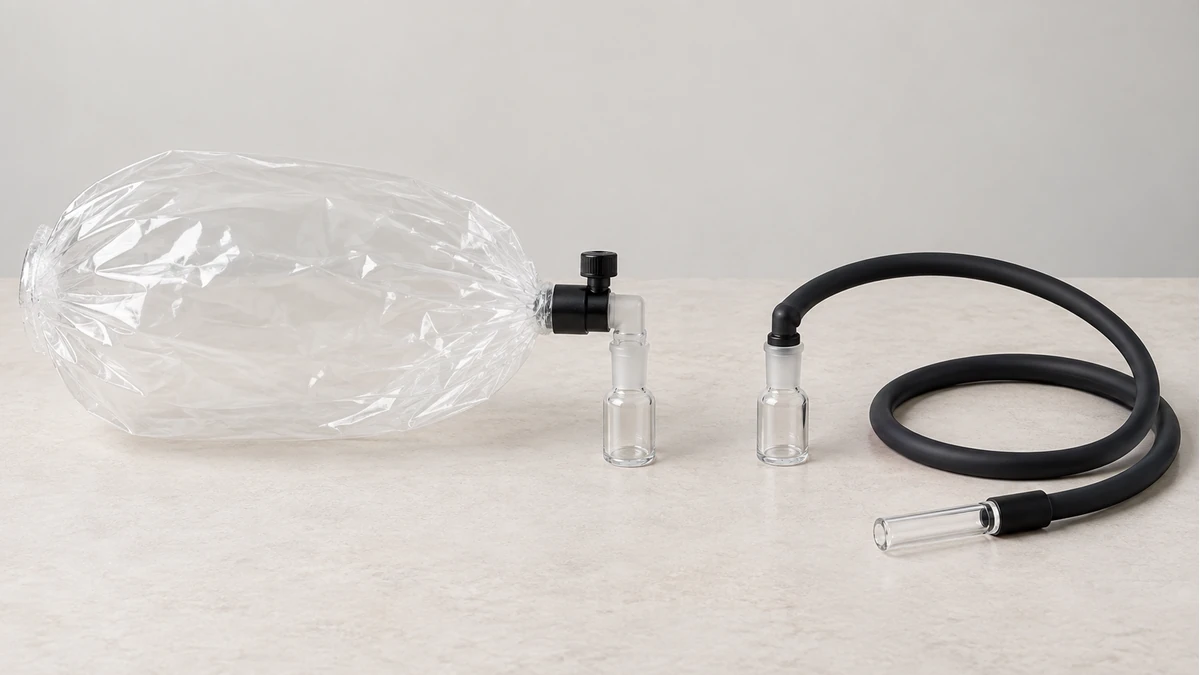
One of the most consistent points of confusion for people new to tabletop vaporizers is the assumption that every desktop unit fills a balloon-style bag. That reputation comes from one well-known design that popularized the format, but bag delivery is only one of two common air paths on tabletop hardware — the other is direct draw through a whip, similar in concept to a hose, where you inhale straight from the chamber the way you would from a handheld device.
The two paths change more than just how vapor reaches your mouth. They change how the heating element and fan (if the unit has one) interact with airflow, how quickly vapor cools before inhalation, and how much the session resembles sitting at a table for a few minutes versus taking a quick pull and setting the unit back down.
🎈 3.1 Fan-Assisted Bag Systems
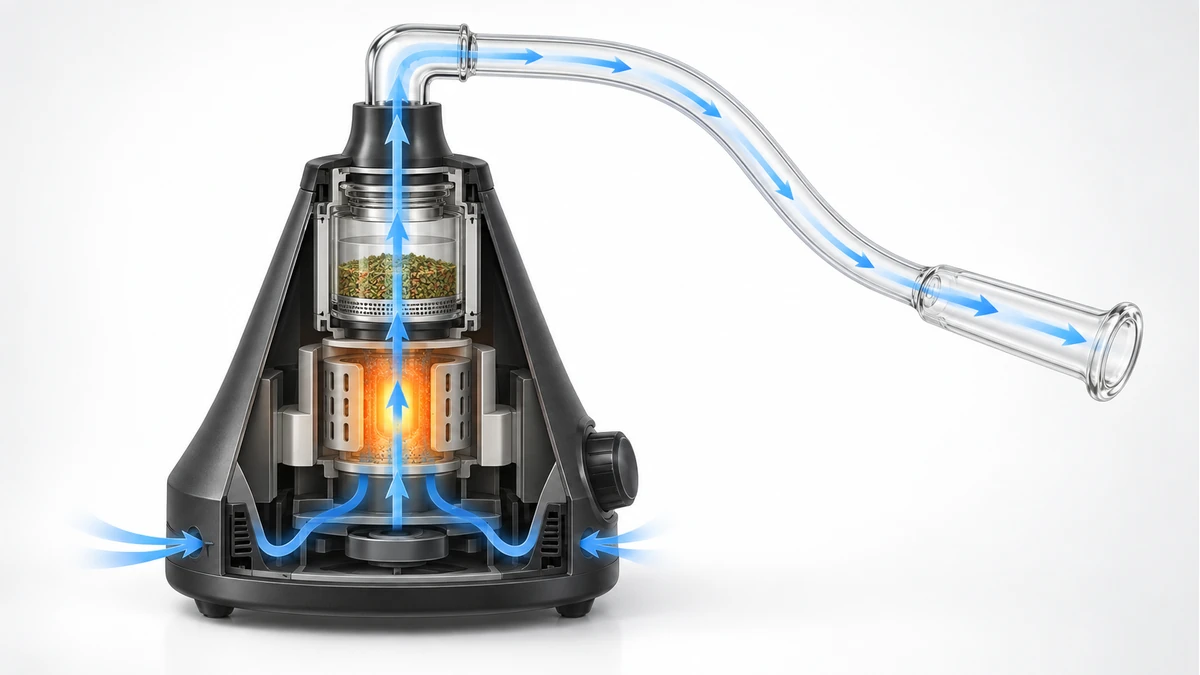
Bag-based tabletop units use a small fan to push warm air through the chamber and inflate a detachable bag, made from a replaceable film specified by the manufacturer, which then disconnects from the heater once filled. Because the fan does the work of moving air rather than your lungs, draw resistance isn’t really a factor — the airflow speed is set by the fan, not by how hard you inhale.
This separates the heating step from the inhaling step in time. The bag fills while the chamber is actively heated and can then sit for a short period before use, during which the vapor continues to cool and interact with the plastic film. That decoupling is the core mechanical difference between bag systems and direct-draw designs, and it’s the reason bag-filled sessions tend to be described as more passive or hands-off compared to pulling directly from a whip.
💨 3.2 Whip and Direct-Draw Tubing
Whip-based tabletop units skip the fan and bag entirely. A flexible tube, often silicone with a glass or metal mouthpiece, connects directly to the heating chamber, and inhaling through the whip pulls air across the hot material the same way a portable vaporizer’s mouthpiece does — just with a longer path and a stationary heat source at the other end.
Because there’s no bag buffering the vapor, direct draw delivers it with less time between heating and inhalation. That shorter path also means draw resistance is something you control with your own lung effort, similar to using a straw of varying length, rather than something the fan predetermines. For someone whose main comparison point is a handheld device, direct-draw tabletop units tend to feel more familiar than bag systems specifically because the inhale mechanics are closer to what they already know.
| Air Path | How Vapor Moves | Draw Feel | Session Pacing |
|---|---|---|---|
| Fan-assisted bag | Fan pushes air through chamber into a detachable bag | No inhale effort needed to fill the bag | Fill, then sip at a separate pace; more passive |
| Whip / direct draw | Lung effort pulls air through chamber and tubing | Resistance depends on tube length and your draw | Continuous, similar rhythm to a handheld unit |
Some desktop units offer both attachments on the same base, letting the heating chamber stay constant while the delivery method changes depending on the accessory installed — which is worth knowing if the choice between bag and whip feels like it should be permanent. For more context, see how conduction and convection change a dry-herb vaporizer.
🧭 4. Chamber Layout and Airflow Geometry
Because tabletop units aren’t constrained by pocket dimensions, chamber shapes vary more than they do in portable hardware. Some use a straight vertical tube where air is pulled or pushed up through a screen and packed material, similar to how a coffee percolator draws hot water up through grounds. Others use a wider bowl with air entering from the side, spreading heat less evenly but allowing for larger loads.
🧪 5. Glass and Silicone in the Vapor Path
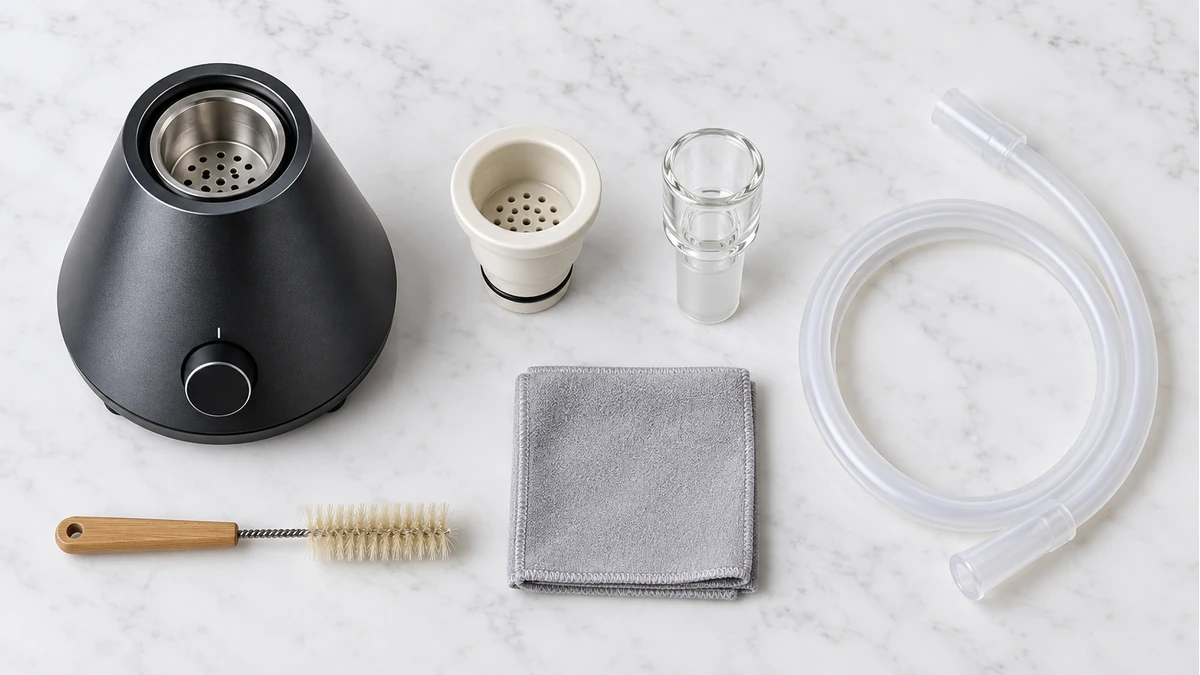
Portable vaporizers often rely on plastic or short metal mouthpieces because glass is fragile in something meant to be carried in a bag or pocket. A tabletop unit, staying in one place, can use glass for a much larger share of the air path without the same breakage risk, which is why whips, stems, and sometimes entire chamber assemblies on desktop units are glass rather than plastic.
Glass has a practical advantage in this context: it doesn’t retain flavor from previous sessions the way some plastics can, and it’s easier to see through, which matters for confirming that a chamber or stem is actually clean rather than just visually clear. Silicone shows up in flexible sections — typically the whip tubing itself — because it can bend repeatedly at the connection points without cracking the way rigid glass or plastic would under the same stress, similar to why a garden hose is rubber while the spigot it connects to is metal.
The tradeoff is durability under impact. Glass components on a tabletop unit are more resistant to heat and buildup than plastic equivalents, but they’re also the piece most likely to need replacement if the unit is bumped or dropped while assembled, which is a real consideration for anyone setting the unit up somewhere with foot traffic or curious housemates.
🧽 6. Cleaning Realities for a Fixed Unit
Cleaning a tabletop vaporizer is shaped by the same architecture decisions covered above. Glass parts are removable and can usually be soaked separately, which is more thorough than wiping a fixed plastic path the way many portables require. But more surface area — longer stems, wider chambers, detachable bags — also means more individual pieces to disassemble, clean, and dry before the next session.
Bag systems add a maintenance step that direct-draw units don’t have: the bags themselves. Reusable bags need periodic cleaning or replacement as the film can pick up residue over repeated use, while single-use or longer-lasting bags shift that consideration toward replacement frequency instead. Whip-based units skip the bag question entirely but put more cleaning demand on the tubing, since silicone whip interiors can accumulate residue along their length in a way that’s harder to see and reach than a straight glass stem.
A few maintenance habits apply across most tabletop designs regardless of air path:
- Let glass components cool completely before cleaning to avoid thermal shock from sudden temperature changes during a wash.
- Separate removable parts — stems, bags, screens — for cleaning rather than trying to clean the whole assembly at once.
- Check screens or mesh filters for buildup periodically, since restricted airflow at the screen changes draw resistance regardless of which delivery method is attached.
- Store bags flat and dry between uses if the unit uses a reusable bag system, since folding or crushing a warm bag can affect the film over repeated cycles.
⏱️ 7. Warm-Up Behavior and Session Planning
Warm-up behavior follows heater mass, control logic, chamber size, and airflow. A large heater can take longer to stabilize, then recover more consistently when moving air removes heat from the chamber. A compact heater may indicate readiness sooner while reacting more noticeably to a long draw.
That tradeoff changes how a session gets planned. A portable device is built for a heat-and-go rhythm, since it needs to be ready quickly to justify carrying it around. A tabletop unit, sitting in a fixed spot, doesn’t need to optimize for speed the same way, so a longer warm-up isn’t treated as a flaw in the design — it’s a byproduct of the thermal stability the larger heating core is providing.
🏠 8. What Stationary Use Actually Means Day to Day
The most obvious consequence of mains power is that the unit stays put. That’s a genuine tradeoff against portable devices, not just a footnote — a tabletop vaporizer is meant to live on a shelf, desk, or table, plugged in and ready, rather than travel between locations throughout the day.
In exchange for giving up mobility, a stationary setup gains a few practical things a pocket device can’t offer: no battery to monitor or recharge before a session, room for larger heating chambers and thermal mass, and enough physical space for glass components that would be too fragile to carry around. It also means the unit’s footprint on a table or shelf is a real consideration in a way it isn’t for something that lives in a pocket, since cords, bags, and glass attachments all need a stable, out-of-the-way spot to sit between uses.
For anyone weighing whether a fixed setup or a portable device better matches their situation, the deciding factor usually isn’t performance — it’s whether the use case is built around one location or several. AOVAPE’s guides to ball-vape dry-herb systems and mapping a vaporizer to a water piece show how those stationary paths differ.
If most sessions happen in the same room — a desk, a living room chair, a specific corner of an apartment — the tradeoffs favor a tabletop unit: more thermal stability, a choice between bag and direct-draw delivery, and glass components that wouldn’t survive daily transport. If sessions need to move between rooms, outdoor spaces, or locations outside the home, that stationary requirement becomes the limiting factor regardless of how the heat and air path perform, and a portable device becomes the more realistic fit. The air path format — bag or whip — is a separate decision from the power source itself, and increasingly it’s one some tabletop units let you make on the same base rather than locking you into a single delivery style from the start.