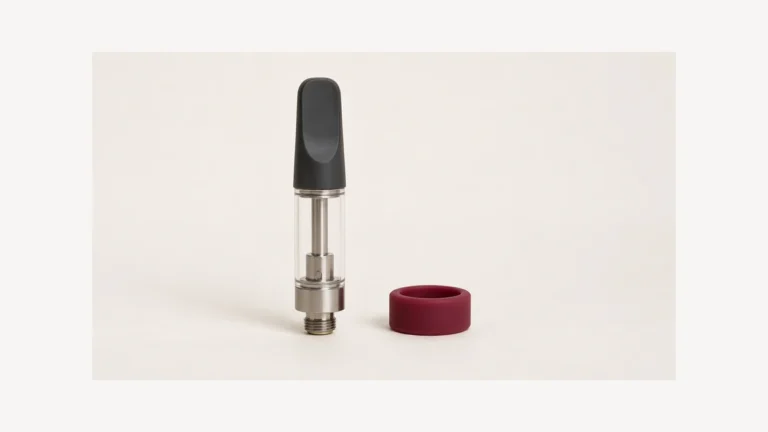
A cart protector may be a narrow ring around the glass, a longer sleeve or an enclosing carrier. Those objects leave different parts exposed. If a small ring arrived loose with a cartridge, identify it before assuming that it is a mouthpiece dust cap or that it fits the battery body. An accessory that covers one strip of glass is different from a cartridge storage case enclosing the detached part, and from a lanyard supporting a device through an intended attachment point.
🔍 1. The ring in the package may not be a dust cap
In a discussion about a ring found in packaging, the owner notes that it fits the cartridge but not the battery. Replies call it a glass protector, an identification ring or a dust cover. Those are guesses about a particular loose accessory. An open ring and a closed cap have visibly different shapes, but the intended fit should come from the actual package information or maker. A clear description should establish which accessory you have before discussing where it belongs.
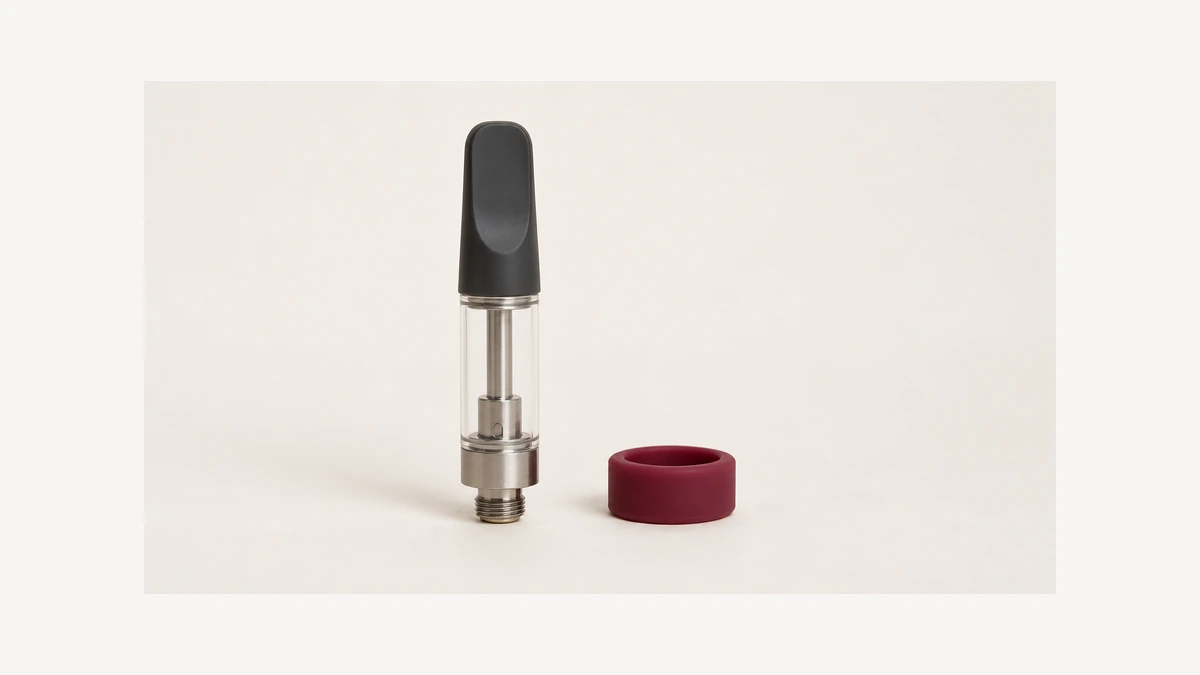
In practice, a ring like this sits around the glass portion of a cartridge, below the mouthpiece and above the threaded metal base. That placement alone tells you most of what you need to know. It is a band occupying a fixed strip of surface, not a label that confers a function. If it covers glass, it covers glass. If it happens to also sit near a seam or a vent, that is a separate fact that needs its own look, not an assumption drawn from the ring’s name.
🧩 2. A narrow band leaves other surfaces exposed
Most rings of this kind are sized to grip a specific diameter along the cartridge body, which means they cover a band of glass roughly as wide as the ring itself and nothing more. The glass above that band, closer to the mouthpiece, stays exposed. The glass below it, closer to the threaded base, usually stays exposed too, unless a second ring or a longer sleeve is used. A single narrow ring is, by definition, a narrow intervention. It does not extend itself to cover the whole reservoir, and nothing about the rubber changes that geometry.
An exterior covering is not a demonstrated impact rating. The band maker VapeBand specifically warns against covering battery vent holes and exposing its bands to direct flame. Its site also makes protection and universal-fit marketing claims; this article does not treat those claims as independent drop-test evidence or a fit guarantee for an unknown assembly. Keep the narrow placement warning separate from assumptions about how a band performs. The visible width of a ring cannot establish what happens when the mouthpiece, base or another exposed surface meets an object first.
📏 3. Sleeves and cases change different clearances
📏 3.1 Sleeve fit
A sleeve is a longer, thicker cousin of the ring, usually stretching over more of the cartridge body rather than one narrow strip. Because it adds material around the glass, it also adds thickness, and that thickness has to go somewhere once the cartridge is seated into a battery’s receiving chamber. Some batteries have a recess sized closely to the bare cartridge, with very little spare room. A sleeve that was never test-fitted against that specific recess can leave the cartridge sitting slightly proud, seated at an angle, or simply unable to click fully home. None of this is a flaw in the sleeve; it is a mismatch between two parts that were never designed as a matched pair.
📏 3.2 Case fit
A rigid case is a different category of object entirely, built to enclose a cartridge for carrying or storage rather than to stay on during use. It does not sit in a battery’s recess at all, because the cartridge is meant to be removed from the case before it is connected to anything. The two accessories solve different problems — one changes clearance at the point of connection, the other removes the cartridge from use entirely while it travels — and conflating them leads to the wrong expectation about either one. The dedicated guide to cartridge cases goes into that enclosing design in more detail for anyone comparing the two.
🔎 4. The mouthpiece and threaded base are separate parts
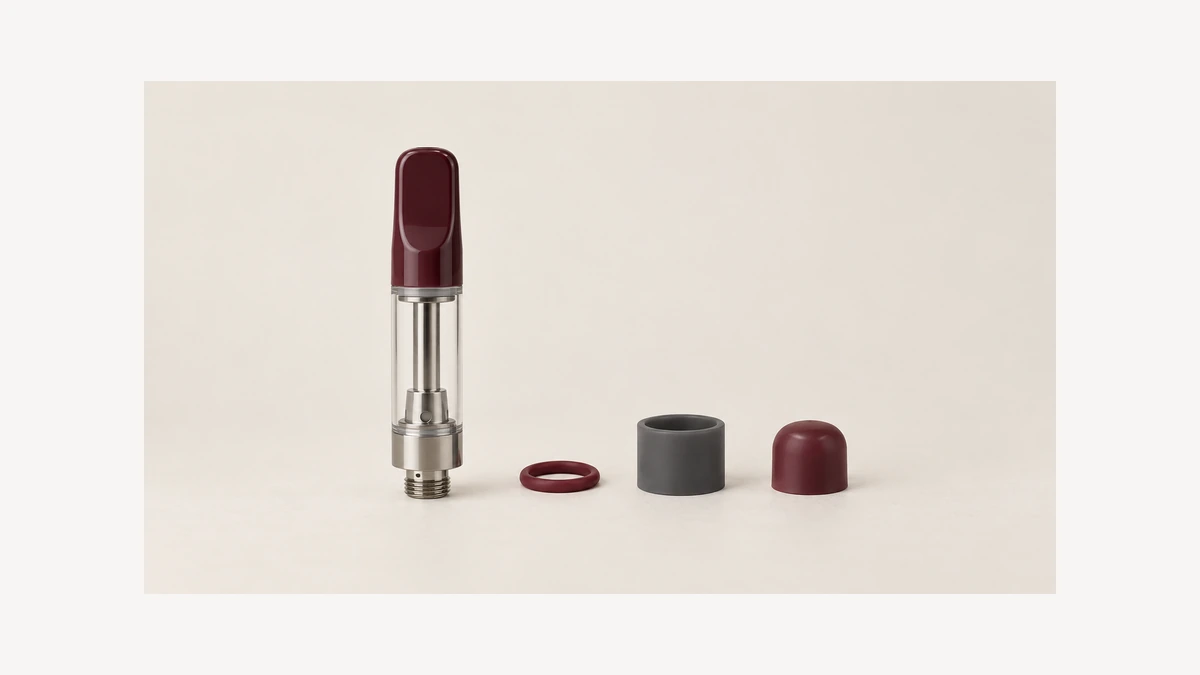
For the cartridge layout discussed here, name the mouthpiece at the top, the reservoir wall and the threaded base separately. A narrow ring around the middle does not enclose the top opening or protect every part of the connector. Other sleeve shapes may extend farther, so inspect their actual outline rather than assigning the same coverage to every accessory. A closed end cap is different again: it has a closed face intended to cover a specified opening or end. A ring that remains open through its center is not automatically interchangeable with that cap.
The threaded base is where the actual electrical connection happens, whether that connection is a direct screw-on battery or an intermediate magnetic adapter, a separate category of hardware covered in a guide to 510 thread magnetic adapters. A covering that changes the outer fit can still interfere with seating in a recess, even though it does not change the thread itself. Keeping these sections mentally separate — tip, glass, base — makes it much easier to see exactly what a given accessory is and is not doing, instead of treating the whole cartridge as one undifferentiated object that a single small ring somehow covers end to end.
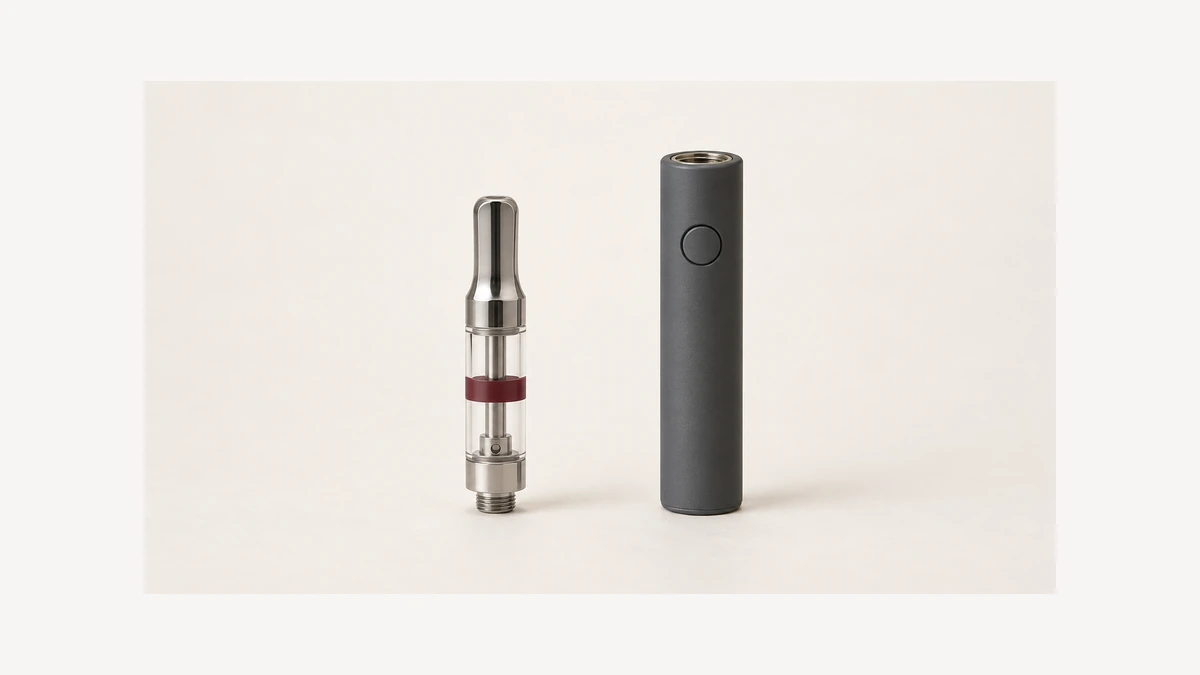
🔧 5. Keep controls and ventilation visible
Keep any openings and controls required by the device unobstructed, following its own instructions. The band maker’s warning about battery vents is particularly relevant if an accessory migrates from the cartridge onto the battery housing. Do not assume every visible hole has the same purpose, or that you can identify all ventilation from a photograph. If the accessory’s intended position is uncertain, leave it off until the maker identifies a compatible arrangement. Cutting a sleeve or trimming a cap is not a substitute for confirmed fit.
The same source warns against keeping the band near open flame. That is a statement about the band material and heat, not a claim about the cartridge or about fire resistance of any kind, and it should be read exactly that narrowly — as a handling note for the rubber itself, not as a safety rating for the assembled hardware.
⚠️ 6. A visible crack is not repaired by a cover
A separate kind of question shows up when the glass is already damaged. One account describes an owner with a cracked cartridge asking whether tape could help, and a reply in that same discussion suggested trying to recover what was inside rather than addressing the crack itself. Both the question and that particular answer point to a misunderstanding worth correcting directly: a ring, a sleeve, tape, or any other exterior covering sits on top of glass that is already structurally compromised. It does not reseal a crack, does not restore the reservoir’s original seal, and does not turn broken glass back into intact glass. At most, a covering can hide a crack from view, which is a cosmetic result, not a structural one. What happens to any contents of a cracked cartridge is outside the scope of what an exterior covering can address, and nothing about adding a ring or wrap changes that.
📋 7. Inspect the covering and the object separately
Inspect the accessory as a separate part only through normal removal permitted by its instructions, with the assembly disconnected and cool. This is not a reason to empty or open a sealed cartridge. Look for a loose, torn or displaced covering and visible damage on the accessible glass. Do not force a tight ring across a mouthpiece, pull on a sealed top or manipulate broken glass to reveal what is underneath. If damage is suspected beneath an obstructing covering, set the assembly aside and seek the maker’s guidance rather than experimenting with it.
One thread about this kind of rubber band includes an owner mentioning a single earlier break, with other commenters suggesting pencil grips as a substitute. That is worth noting only as an example of how varied these improvised fixes get — it is an anecdote about one person’s workaround, not a tested result, and it should not be read as a drop test, a performance claim, or a set of instructions to copy. The right takeaway is the opposite: informal substitutions and one-off stories don’t establish how any covering performs, they just show that people reach for whatever is on hand.
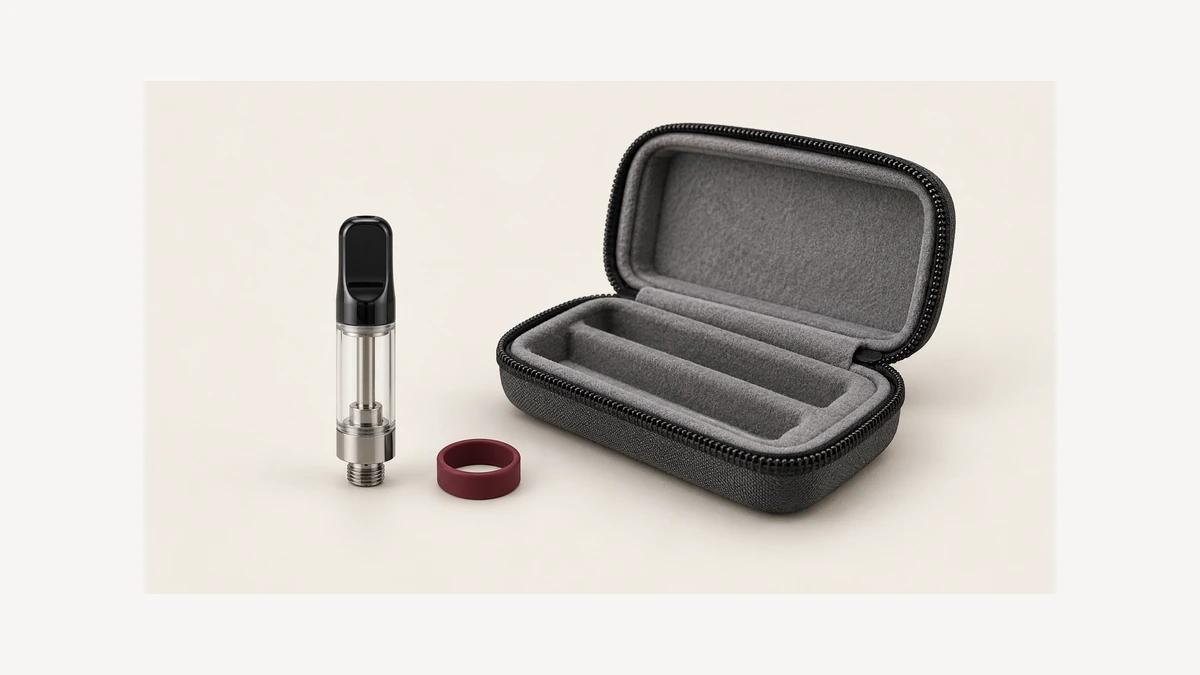
Consider a detached cartridge that normally fits inside a recessed battery body. A narrow ring may add little length but still increase the widest outline; a longer sleeve may reach toward a shoulder or connector. Do not force the covered part into the recess as a fit test. Compare the documented compatible arrangement instead, including whether an accessory is intended to stay on at all. If the bare and covered outlines are different, an existing case or recess may no longer accommodate the same assembly. A shared 510 connector name does not standardize that outer space.
The same issue can arise in a fitted carrying case. A cartridge may appear to lie in its original slot while an added ring sits above the liner. That does not establish that the lid can close without pressure on the glass or mouthpiece. Keep the carrier open if the arrangement is uncertain, and ask about the intended accessory combination. Do not pack extra padding tightly around a glass component to compensate for an unclear fit. A loose ring, an enclosed cap and a molded recess have different shapes, so a single word such as protector is too broad to describe the packed arrangement.
An identification color needs its own record too. A plain red or black ring does not establish the cartridge maker, contents, service history or replacement compatibility. In the packaging discussion, one reply mentions identification as a possible role, but a loose ring cannot recover the information that was never recorded with it. Keep the original label or part reference rather than assigning a meaning to the color. That distinction remains useful even when a ring has writing: a separate accessory is not the cartridge manufacturer’s original identification.
If you are sorting accessories that have become mixed in a drawer, separate open rings, closed caps and sleeves before matching them to hardware. Do not stretch each one over a cartridge to discover where it catches. A packing photograph or the maker’s component diagram may identify an intended location without that trial. If no matching information is available, keep the unknown accessory aside. Its resemblance to another ring is a description of its appearance, not evidence that the same fit or care instructions apply.
🗂️ 8. Keep the original part identity with its carrier
Keep the accessory identification with the carrier and the cartridge’s own documentation. A plain ring that has become separated from its package is an unknown part again, even if it looks similar to one you previously used. Describe its open or closed shape, where it was supplied and the component it was intended to accompany. If a covering now prevents normal inspection, changes the fit in a recess or needs force to remove, that is the condition to resolve before further handling. The original hardware and the added covering each need their own answer.