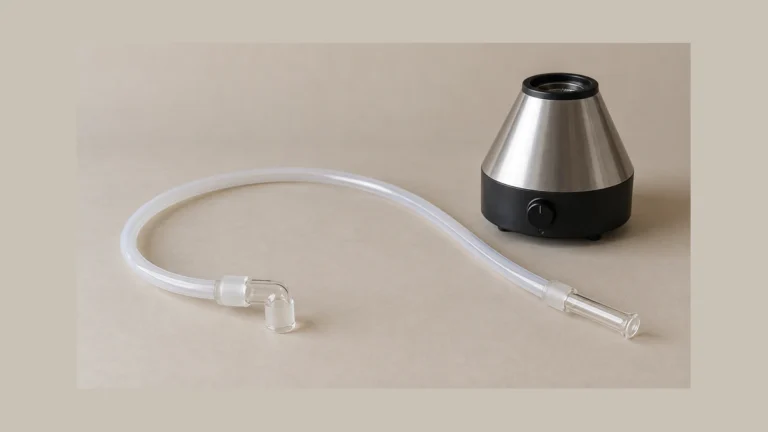
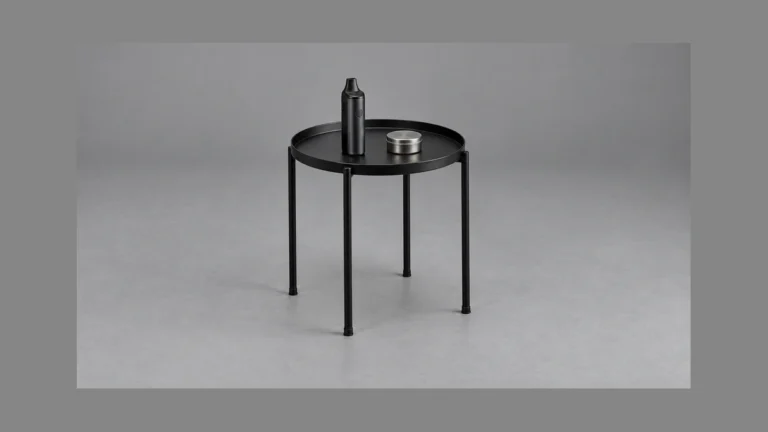
A ceramic banger can look like a familiar bucket-shaped rig attachment in an unfamiliar white finish. Start by identifying the actual part: the open cup, its neck and mating joint, and any separate bowl or insert the maker says is removable. White color alone does not tell you the material formulation or authorize the cleaning routine you use on another piece.
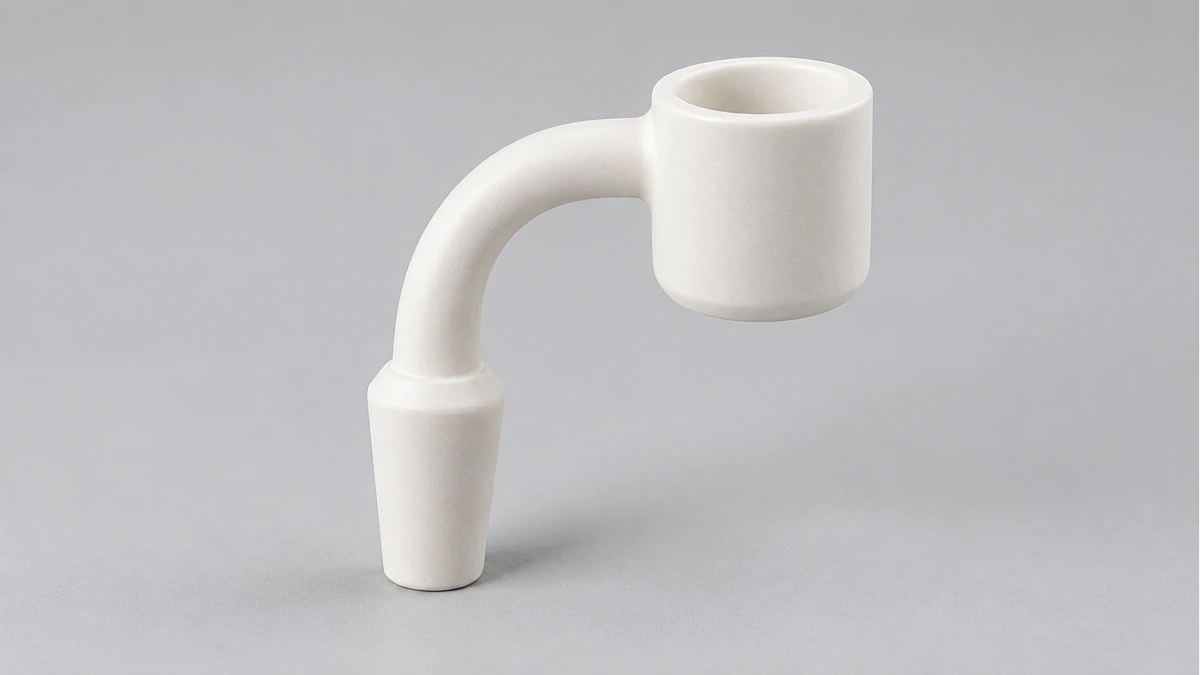
The everyday question is usually more specific than “ceramic or quartz?” Perhaps a brown mark remains after permitted care, the old cap rocks on the new rim or an unexplained line appears in a photograph. Those observations need different responses. A stain is not automatically a crack, but neither does an intact-looking white surface prove that an unknown part is ready to use.
This is about unpowered banger and nail attachments used with rigs. A white cup inside an electronic pen or a complete electric chamber is another assembly. Do not transfer that device’s cleaning or disassembly instructions to an unpowered accessory simply because both contain a bowl-shaped surface.
🥣 1. Find the Cup, Neck and Connection
On a familiar bent-neck banger, the bucket sits to one side of the rig’s connection. The neck links that cup to the mating joint. The joint fits the rig; the cup does not sit inside the joint. Keeping those locations straight makes a top-down photo and a side photo much easier to interpret.
The overhead view shows the opening, rim and visible interior. The side view shows whether the cup is offset by a bent neck and how the connection is shaped. Take both views of a fully cool, detached part where the manufacturer’s handling instructions permit. If it is stuck or visibly damaged, do not remove it by force just to produce a better picture.
Some nail designs instead have a dish over a more central connection or airway. “Nail” and “banger” are used inconsistently in casual listings, so the noun alone may not explain the arrangement. A listing for a ceramic domeless nail, for example, identifies a different form from the familiar bent-neck bucket. That listing documents its own item; it does not establish a rule about every ceramic attachment.
Describe what you can actually see before choosing a care instruction. “The whole bent attachment” and “the little bowl inside it” may refer to different replaceable parts. If the diagram names only the complete attachment, do not assume a visible inner edge marks a removable insert.
⚪ 2. A White Bowl Does Not Identify Itself
White and opaque describe appearance. They do not establish a ceramic formula, a coating, a manufacturing process or the condition of the surface. The practical consequence is simple: a photograph cannot tell you which cleaner or handling routine the maker permits. Use the original part information for that decision.
In a discussion about an all-ceramic banger, the original question concerned a white bucket rather than a familiar nail shape. Replies asked for a picture and then speculated about porosity. Another discussion of a white attachment produced conflicting claims that it was ceramic or opaque quartz. These are examples of an identification problem, not evidence that one appearance determines the answer.
Technical ceramics also do not all share a single pore structure. CoorsTek’s own porous-ceramics page describes deliberately controlled porosity for industrial applications. That is a narrow materials example, not a description of this banger. It is a reason not to assume every ceramic item behaves like a household ceramic object or an unrelated cup.
If the packaging is gone, an order record and a clear overall photo may help the seller identify the original item. Avoid assigning a formula from a similar-looking listing you found later. A visually close match is a lead for a question, not confirmation that the care instructions can be exchanged.
🧩 3. Check the Rim Separately From the Joint
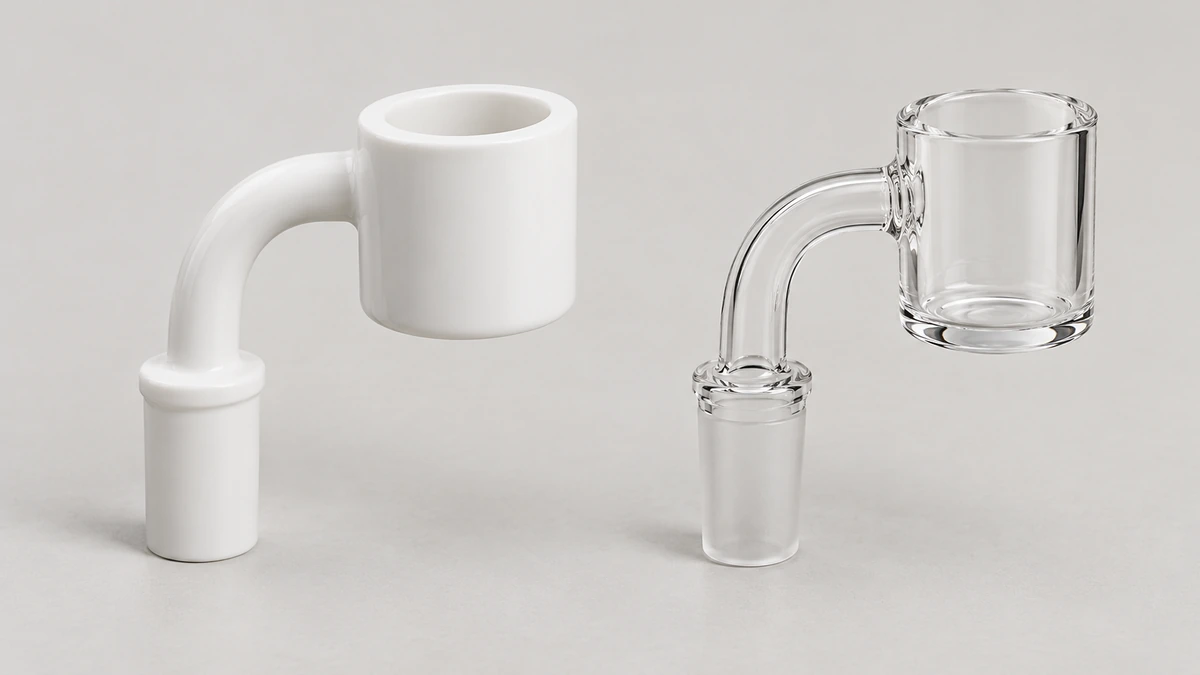
A cap rests at the cup opening; the joint connects the attachment to the rig. Those two interfaces have different dimensions and different jobs. A connection that fits the rig does not establish that the old cap belongs on the new bucket. Likewise, a cap sitting neatly on top does not confirm the connection below.
Use the part’s documented connection size, gender and angle when identifying the rig interface. Use the documented rim and cap compatibility when identifying the top. A mating glass-style taper is not normally a screw thread; do not twist harder because a familiar size label appears on both pieces.
↔️ 3.1 When the Old Cap Rocks on a New Cup
A cap that tilts or rests unevenly deserves a fit question, not extra pressure. Set it separately and compare the intended cap shape with the new opening. The guide to banger and carb-cap fit explains the geometric relationship in more detail. Its examples do not authorize a quartz accessory to be combined with an unidentified ceramic one.
Also leave room around the complete shape. A wider cup can occupy space near the rig body or another accessory even when the joint name matches. Read the maker’s arrangement and clearance information rather than balancing the part against another object to make it sit at the desired angle.
🧽 4. Clean the Approved Surface, Not the Color
A white surface makes marks conspicuous. That does not tell you whether a particular mark is removable residue, a lasting surface change or something that needs the maker’s attention. Do not label every brown area as harmless staining, and do not label every dark line as a fracture from a photograph.
Follow the cleaning instructions for the actual component and stop where those instructions stop. A care routine may name only an accessible cup surface, or it may describe the complete detached attachment. It may also distinguish a plain part from an assembly with other materials. The word ceramic does not replace those distinctions.
If a mark remains after permitted care, record what changed and what did not. For example, the accessible residue may be gone while the color remains, or a line near the rim may still be visible. Those descriptions are more useful than scrubbing progressively harder until the surface looks new. Do not turn a tool into a probe to determine how deep a line goes.
Cleaning is also not a material test. A surface becoming lighter does not certify the part’s condition, and a stubborn mark does not identify its composition. If you are uncertain whether a line represents damage, keep the attachment out of use while the maker reviews it. The next task is resolving that uncertainty, not inventing a stronger routine.
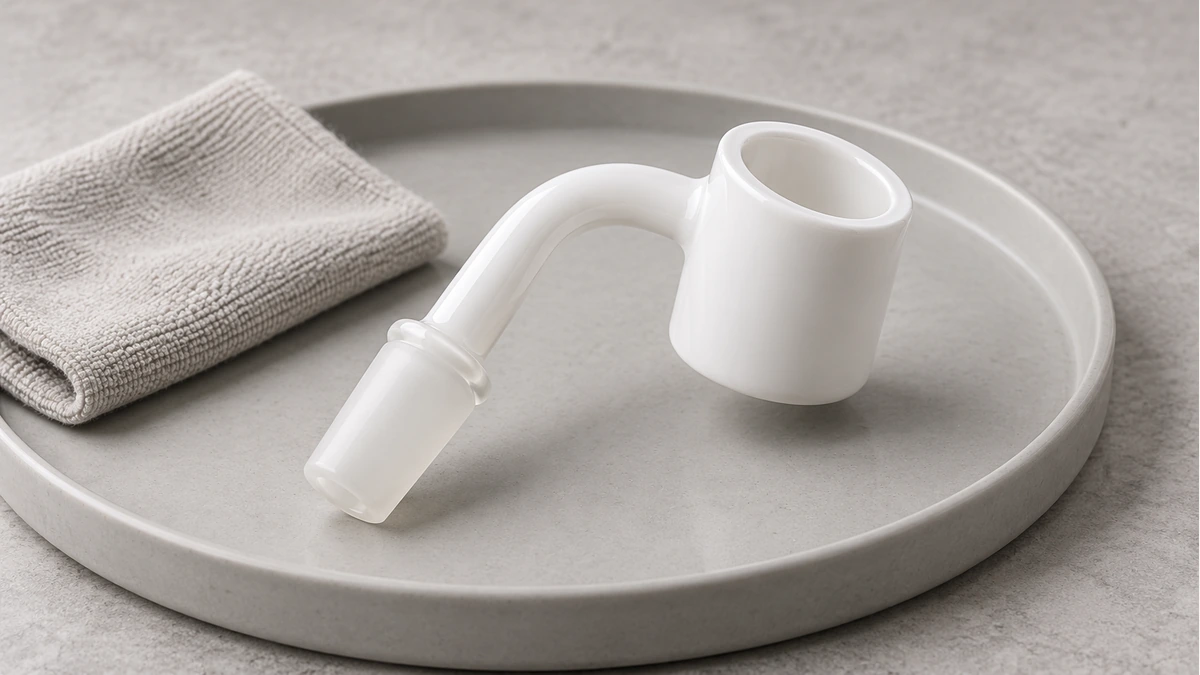
🔍 5. Is That Inner Bowl Meant to Come Out?
A distinct bowl shape is not proof of a removable part. Look for a parts diagram or instruction that explicitly describes removal and replacement. If the attachment is supplied as one complete component, treat it as that component unless the maker says otherwise. Do not pry along an edge because another design has a removable cup.
This distinction matters at the cleaning table. An owner may see a dark ring near the bottom and assume an insert must lift out to reach it. But without a documented removable part, trying to lift that edge changes the task from surface care to undocumented disassembly. Ask what the maker calls the bowl and whether it is sold separately before attempting that step.
A loading tool is not automatically a lifting tool. The ceramic dab tool guide concerns a separate accessory; its material does not make it suitable for levering a bowl out of a banger. Use only the handling method specified for a confirmed removable component.
If a bowl is documented as removable, keep its replacement reference with the attachment’s information. The bowl, outer body and cap may each have their own identifiers. Do not assume an empty-looking space accepts any cup that appears close in diameter.
⏸️ 6. Stop at Unexplained Smoke, Chips or Cracks
Unexplained smoke from an empty attachment is a reason to stop using it and contact the maker. A forum cannot reliably identify the cause from color and a short description. Do not add a cleaner, apply more heat or try a burn-off to see whether the behavior goes away.
The white-banger discussion mentioned earlier is useful precisely because the comments disagreed about the material and cause. Some proposed further heating. Those guesses do not become a care instruction through repetition. Tell support what you observed, when it occurred and which product you have. Avoid recreating the event to make a video.
A chipped rim or a suspected crack similarly needs to be taken out of use. A separate discussion of a white ceramic component described difficulty capturing a line in a photo; that difficulty is not evidence the line is cosmetic. Try an ordinary overall and closer photograph of the cool part, without scraping, flexing or adding material to make the line show.
Keep affected accessories separate from clean spares until their condition is addressed. Do not move a cap or loose insert directly into another setup if it may have been involved in a break. Describe the connected components as well as the attachment itself when asking what needs assessment.
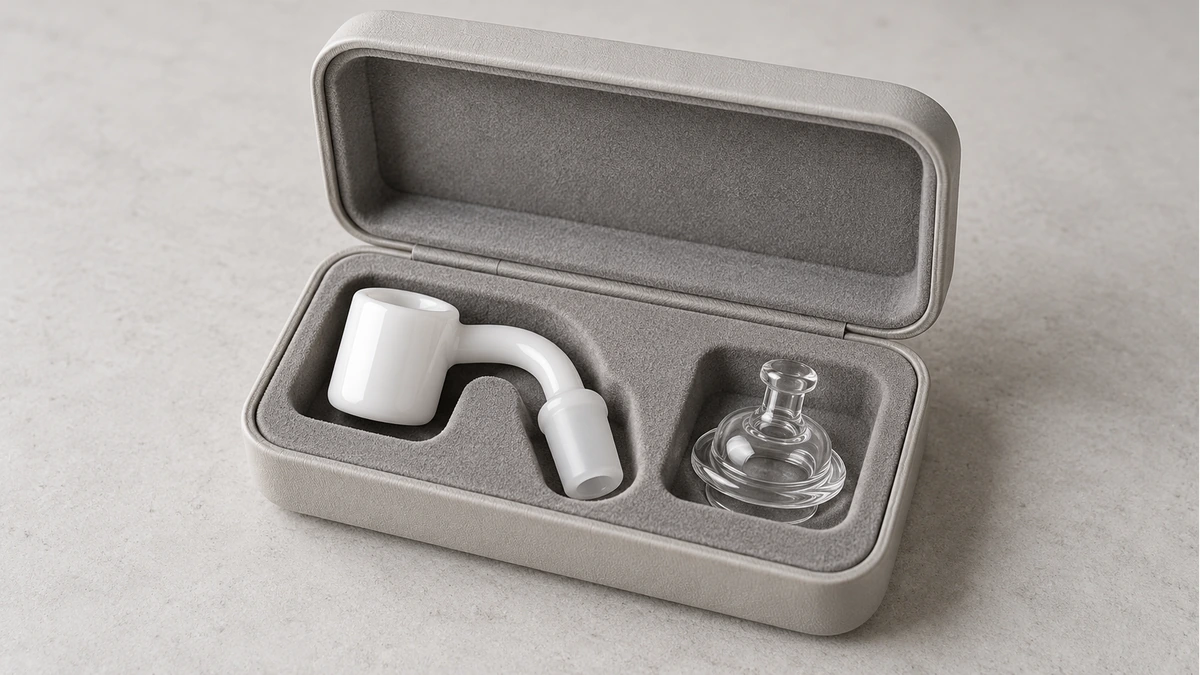
📦 7. Store the Complete Shape With Room Around It
Only put the attachment into ordinary storage once it is fully cool and has completed its specified care and drying requirements. Give the cup, neck and connection support appropriate to the storage arrangement. The shape that looks compact from above may have an elbow projecting sideways where another piece can contact it.
Keep a separate cap and any confirmed removable bowl in their own appropriate spaces. A soft outer pouch does not by itself stop the objects inside from touching. The dab storage box guide discusses that organization question separately from cleaning. The case or holder must suit the actual pieces rather than just the collection’s overall volume.
Before moving the container, consider what happens when it tilts. An open desktop holder is a resting place, not automatically a transport retainer. Do not carry a loose white attachment and a metal tool in the same recess because both fit while the box is flat on the table.
Keep the part information near the stored accessory. A small note identifying the maker, model and relevant replacement reference can save another round of guessing when the cup is no longer in regular use. Put unidentified spares elsewhere so they are not mistaken for confirmed replacements.
💬 8. Ask About the Particular Piece
Include the original listing or order reference if available. If a replacement was supplied separately, identify that replacement as well as the rig it was paired with. This avoids receiving advice for an earlier component that happened to have the same white finish. Keep the answer with the part information for the next time it is cleaned or put away.
When the care instructions are missing or unclear, send the maker two views and one concrete question. For a persistent mark, identify the area and the permitted care already completed. For a bowl, ask whether it is removable and which replacement reference belongs to it. For an unusual behavior, describe it without claiming a chemical cause.
You do not need to resolve whether ceramic is universally better than quartz to handle any of those situations. You need to know which attachment you own, what its maker permits and whether the particular part is still appropriate to use. Leave an uncertain piece aside while that question is answered, and keep its cap, bowl and replacement information together so the answer applies to the right component.