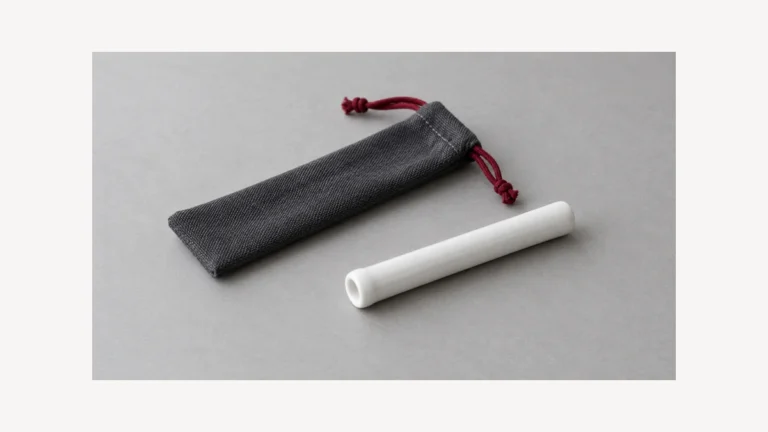
A dark end can make a ceramic one hitter appear shorter in a photograph. That does not establish that the tube has lost material. Separate the color of the surface from the outline of the rim: a darker patch, a missing edge and a line through the body are different observations, even when they appear near the same end.
In a July 2025 comparison of two ceramic pieces, commenters disagreed about just that distinction. Some read the dark end as lost length; another said the tip had turned black. A separate owner mentioned faded decoration. These comments reveal the question people are trying to answer, but they do not identify the cause of a change or establish that any particular piece is still fit for use.
🔍 1. What a Ceramic One Hitter Actually Is: Tube, Ends, Bore and Decoration
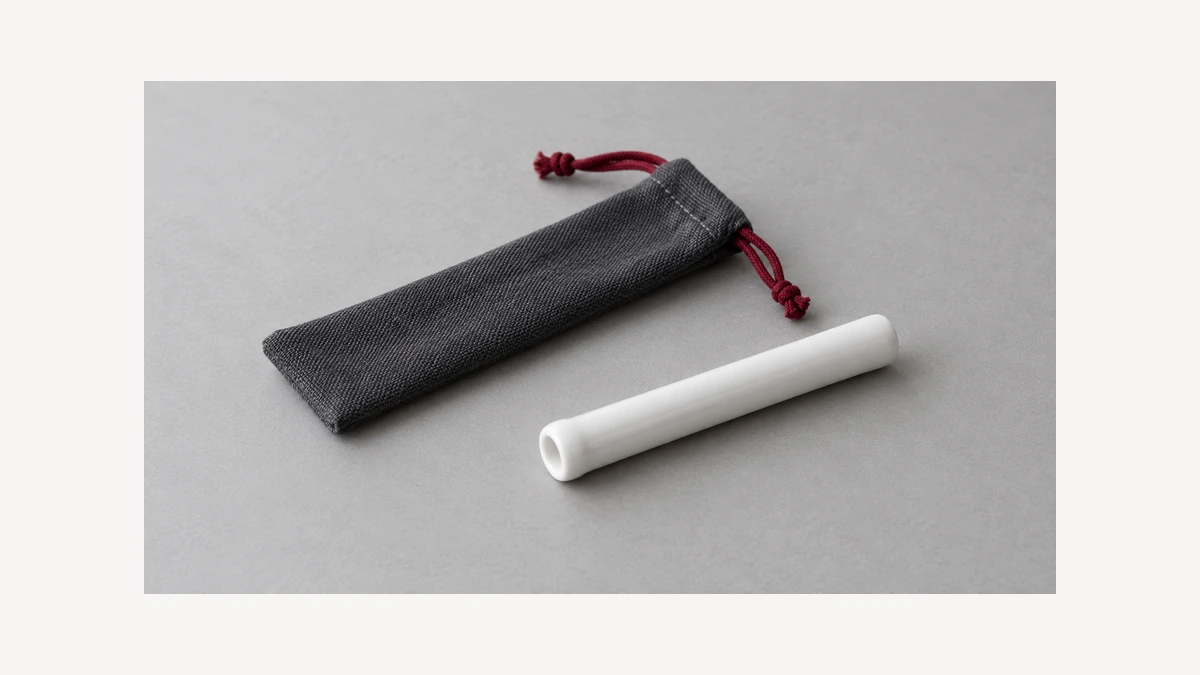
For a simple ceramic tube, locate the outer body, both end rims and the internal passage, often called the bore. Surface decoration belongs in the description too. A mark on the outer color band is in a different location from a notch in the rim or a dark patch visible inside the passage. Those locations help an owner describe the problem without guessing which material or finish has changed.
- The outer tube — the ceramic body itself, including its wall thickness and taper.
- The first end rim — describe its outline and the location of any dark patch or notch.
- The opposite end rim — distinguish a changed edge here from a mark at the other end.
- The bore — the internal channel connecting the two ends.
- Surface decoration — any glaze, slip, color banding, or printed pattern applied to the outer tube.
None of these parts require explanation of how the piece is used in order to be identified. An owner inspecting a ceramic one hitter for changes in condition only needs to know which end is which, where the bore runs, and where decoration sits on the body, so that a described change can be located precisely rather than described vaguely as “the end” or “the tip.”
🌗 2. Darkening vs. a Changed Outline: Looking Under Ordinary Light
An existing photograph can provide a reference for the outline, especially if it shows the same end from a similar angle. Look for whether an edge is visibly missing, rather than deciding from how far the dark color extends. Different lighting, shadows and camera angles can change how a rim appears. A photo comparison helps describe a difference; it cannot confirm that the body is intact or establish the composition of a dark patch.
This is also where fading decoration becomes relevant as its own category, separate from end-darkening. One comment in the same Reddit comparison thread described a piece whose decoration had faded over time, distinct from the discoloration at the tip. Fading of an applied pattern or color band is a surface-level change to decoration, not evidence about the ceramic body underneath it, and it should not be folded into the same observation as a dark end simply because both involve color.
None of this calls for a scrape test, a heat test, or any attempt to remove surface material to see what is underneath. Ordinary room light, a steady hand, and a side-by-side comparison with an earlier photo are sufficient to describe what has changed. Anything beyond that — testing with a flame, a blade, or an abrasive — risks creating new damage in the process of trying to understand existing damage, and does not reliably tell an owner anything a careful visual comparison would not.
🧩 3. Glaze, Surface Color and Maker-Specific Unglazed Areas
Surface color on a ceramic one hitter is not a fixed, universal property. Different makers apply different glazes, different firing processes produce different surface textures, and some pieces are deliberately left unglazed in specific areas as part of their design rather than as a defect. This matters directly for anyone trying to decide whether a dark patch is unusual: without knowing how a specific piece was finished when new, it is not possible to say with confidence that a given area was ever meant to look uniform in the first place.
House of Puff’s own stoneware pipe care page provides one specific example: it specifies hand washing rather than a dishwasher and says to replace its product if cracks or crazing develop. Its FAQ also notes that some unglazed areas on its own pieces are intentional. Those statements identify features and care boundaries of that maker’s line. They do not establish the finish, chemical compatibility or condition of a different ceramic one hitter.
An uneven sheen therefore needs context. Is it present in photographs from when the piece was new, or did it appear after a particular incident? Is it an area the maker identifies as intentionally unglazed, or is its original condition unknown? Describe that uncertainty directly. A rough-looking patch is not, by itself, enough information to call the surface either an intentional finish or newly damaged glaze.
If color appears on a cloth during the maker’s documented care, describe that transfer as its own change. It does not identify the pigment, show which layer came away or establish that the underlying surface is unaffected. Stop rather than repeating the treatment until the color is gone. Keep the name of the cleaner and any earlier photograph for the maker, without trying a second chemical to decide what the first one removed.
⚠️ 4. Chips, Hairline Lines and When to Stop Assuming It’s Just Residue
A chipped rim or a line through the body should not be dismissed as ordinary dirt. At the same time, a line in a photograph is not enough to diagnose a crack. Keep the piece out of use while an unexplained changed edge or line is assessed under its maker’s guidance. Scrubbing until the mark disappears does not establish that a potentially damaged part has been restored.
A different owner discussion from October 2022 concerned color transfer from a non-ceramic replacement. Its owner and another commenter separately mentioned breaking previous ceramic pieces, including one report of a drop onto tile. The distinction matters: the color-transfer complaint was not about the ceramic pieces. None of those anecdotes establishes a breakage rate, explains an unknown chip or demonstrates a repair.
Record where the changed edge is located and what had already happened before it was noticed. If it followed a drop, say so without claiming the impact caused every other surface mark. Do not smooth a rim, add glue or enlarge the passage in an attempt to make the piece seem normal again. Those changes can remove the original reference point without establishing that the resulting hardware is appropriate for its intended use.
🧼 5. Cleaning a Ceramic One Hitter Within the Maker’s Own Directions
Care instructions need to match the actual piece and its finish. The stoneware example above documents a hand-wash limit for its own product. An owner of another ceramic one hitter still needs that maker’s method, rather than treating a ceramic label as a complete cleaning specification. Identify any separate coating, applied decoration, seal or non-ceramic fitting before assuming a direction for the body covers the whole assembly.
- Follow only the cleaning method the specific maker of the specific piece has documented, if one exists.
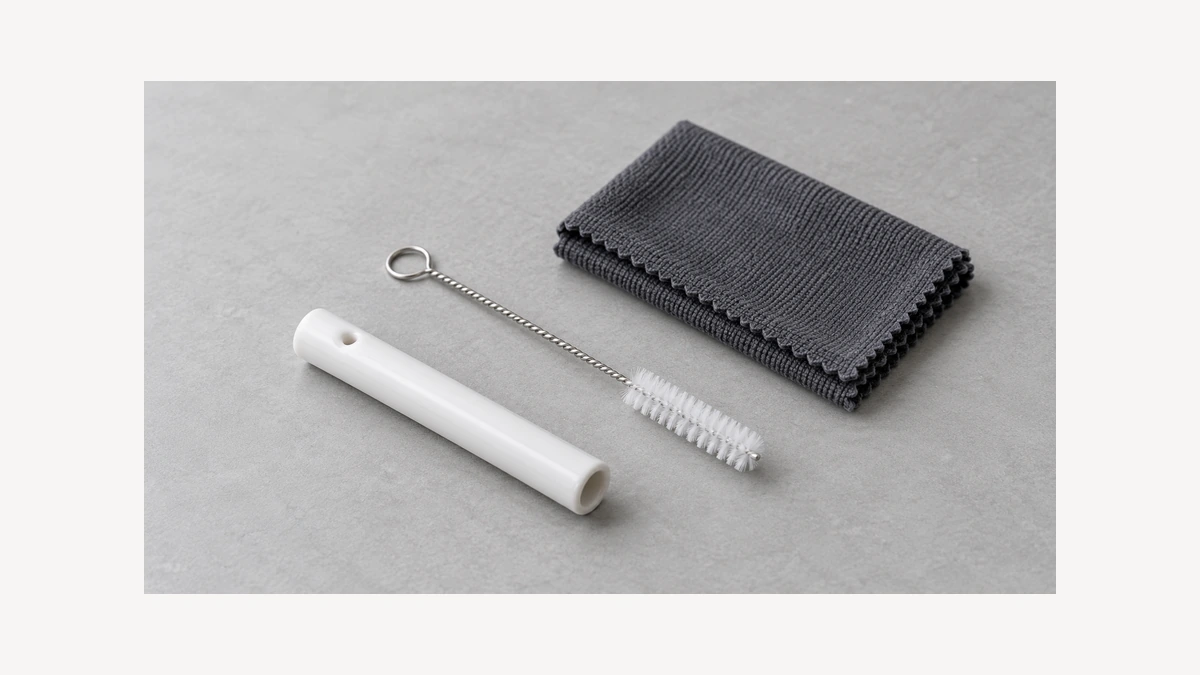
- Avoid inserting any tool, brush, or pick that does not clearly fit the bore’s diameter without forcing it.
- Stop when a tool meets resistance; do not use tableware-cleaning force as a standard for a narrow ceramic passage.
- Treat any new chip, crack, or crazing line discovered during cleaning as a reason to stop, not a reason to continue more aggressively.
The tool also needs enough clearance for the passage, not merely an exposed tip small enough to enter. A brush can have a narrow stem and a wider head, or fit the opening but stop farther along. Our guide to brush head and neck clearance explains that distinction for glass hardware; it does not supply a ceramic cleaning recipe. Do not force a tool that has stopped, or use a pointed metal object to turn an uncertain obstruction into a larger opening.
📦 6. Ceramic Tube and Wooden Dugout Case: Two Separate Care Items
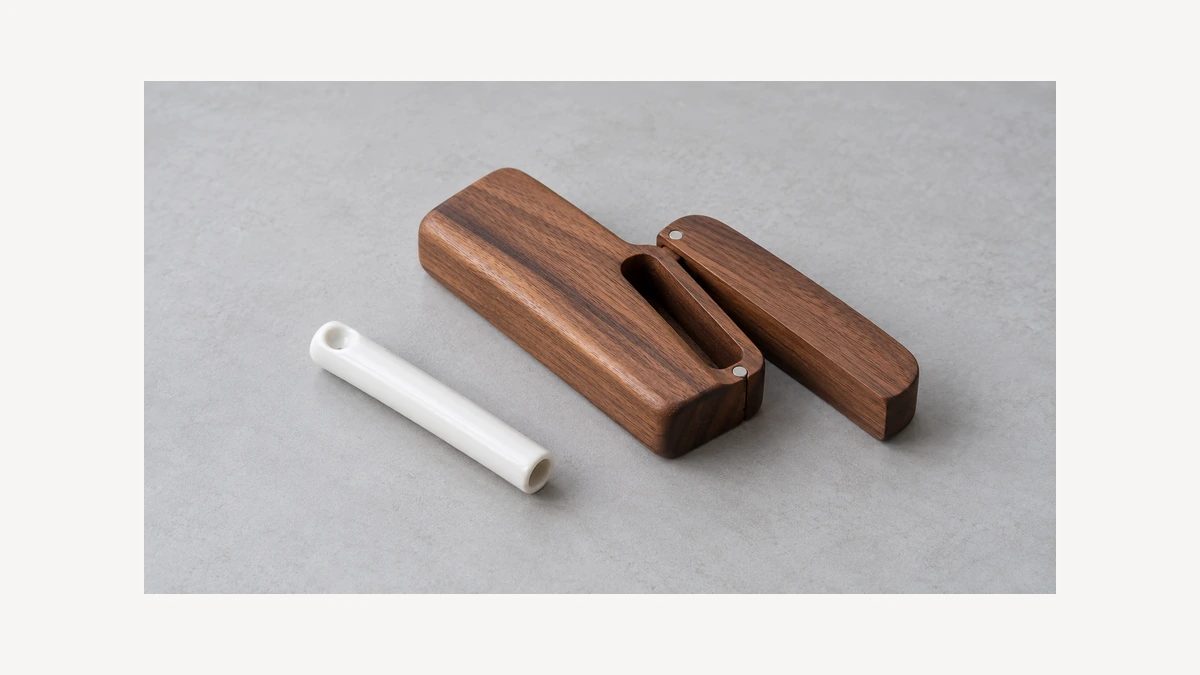
Many ceramic one hitters are carried inside a wooden case, commonly called a dugout, and it is worth being explicit that the ceramic tube and the wooden case are two different materials with two different care needs. Whatever is appropriate for cleaning a glazed or unglazed ceramic surface is not automatically appropriate for an unfinished or lightly finished wooden interior, and the reverse is also true. There is no single soaking protocol, cleaning solution, or maintenance schedule that safely applies to both at once.
In a July 2024 discussion, an owner had replaced an aluminum tube with a ceramic one but was asking about the wooden dugout. It is easy to answer the wrong question if the case and tube are described as one item. That thread does not validate a particular wood treatment. It shows why the separate components need their own care instructions and why a reply about the ceramic part may leave the owner’s actual case question unanswered.
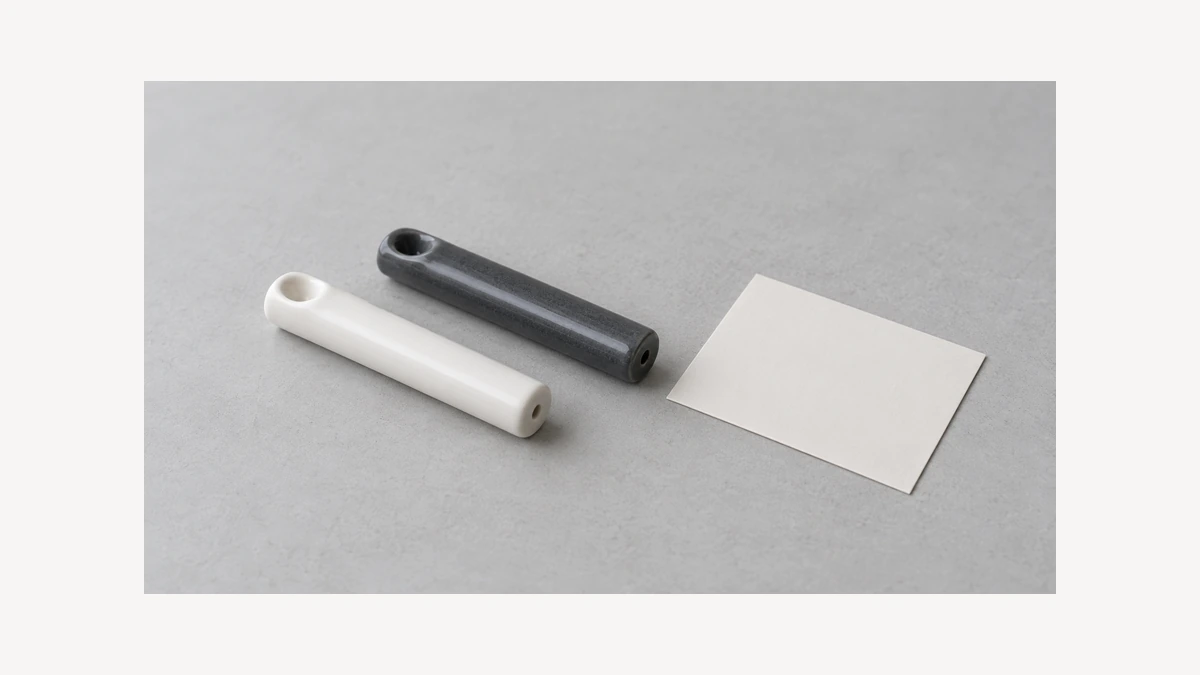
📏 7. Why Length, Diameter and Lid Clearance Differ Between Case and Ceramic One Hitter
A dark end can make a ceramic one hitter appear shorter in a photograph. That does not establish that the tube has lost material. Separate the color of the surface from the outline of the rim: a darker patch, a missing edge and a line through the body are different observations, even when they appear near the same end.
If a previously comfortable fit changes, first distinguish a different replacement tube from a changed condition in the existing pair. Has the tube been exchanged? Is something visible in the empty slot? Does a lid fitting sit differently? Work from accessible observations rather than pressing the tube down, filing a channel or enlarging the case. Our compact one-hitter kit guide discusses matching stored pieces; it is not a reason to assume a given tube is compatible with an unidentified case.
The term one hitter also appears in descriptions of different hardware families. Our guide to one-hitter pipe names and parts separates those meanings. Keep the actual ceramic tube as the reference for a fit or care question rather than borrowing instructions for a powered heater or another material.
For an owner who has already noticed a specific, observable change — a working end that now sits visibly lower in its case slot than it used to, or a rim edge that shows a chip exactly where the lid previously closed without contact — that specific, already-documented change is the right starting point for any further conversation about the piece, rather than a general description of “wear” or “age.” Describing precisely what has changed, where, and compared to what earlier reference point gives anyone who looks at the piece afterward something concrete to evaluate, instead of a vague impression that the piece “looks different” than it used to.
Outer diameter and bore diameter answer different questions. The outside must fit the storage slot; the inside limits the clearance available to a cleaning tool. A thick rim, taper or raised decoration can change the outside profile without telling you anything about the internal passage. Likewise, the depth of an empty case channel does not identify the usable clearance beneath a projecting lid fitting. If the case has a spring or insert, identify it from its own parts information rather than compressing or removing it to force a mismatch to fit.