A ceramic weed grinder can have clean-looking teeth and still be difficult to turn. It can also feel smooth while leaving an uneven grind. Those two frustrations show up in owner discussions because the surface finish, rotating rim and cutting layout do different jobs. Calling the whole accessory “ceramic” hides those distinctions. The useful questions are where it sticks, what the coating actually covers, and which parts need attention when brushing the teeth no longer helps.
⚗️ 1. Coated Metal vs. Bulk Ceramic
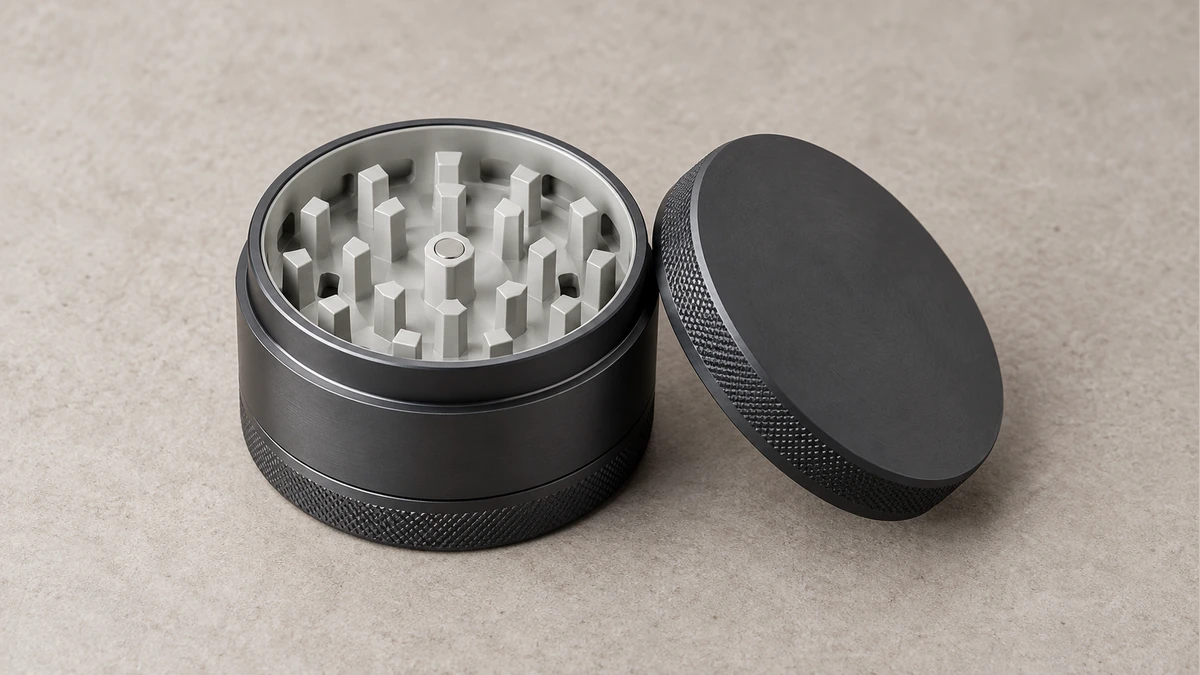
A ceramic-coated metal grinder and a grinder made from bulk ceramic are different constructions. The first has a metal body underneath a ceramic-containing surface finish. The second uses ceramic for the structural part itself. A familiar coated-grinder example uses aluminum beneath the coating, but that example should not be generalized to every product carrying the word ceramic. The distinction matters during cleaning: a removable surface film, a damaged coating and a chipped structural tooth are different problems. Look at the maker’s construction description before treating a colored finish as evidence that the entire grinder is ceramic.
TWI’s explanation of ceramic coatings describes a surface layer used to add properties to an underlying substrate. It also discusses different coating methods, rather than a single universal ceramic finish. For a grinder, that means the body, tooth layout and surface layer should be considered separately. A finish can be marketed for easier material release without changing the number of teeth or the position of the collection holes. It also cannot supply a missing gripping surface on a very shallow lid.
⚙️ 2. Tooth and Chamber Architecture
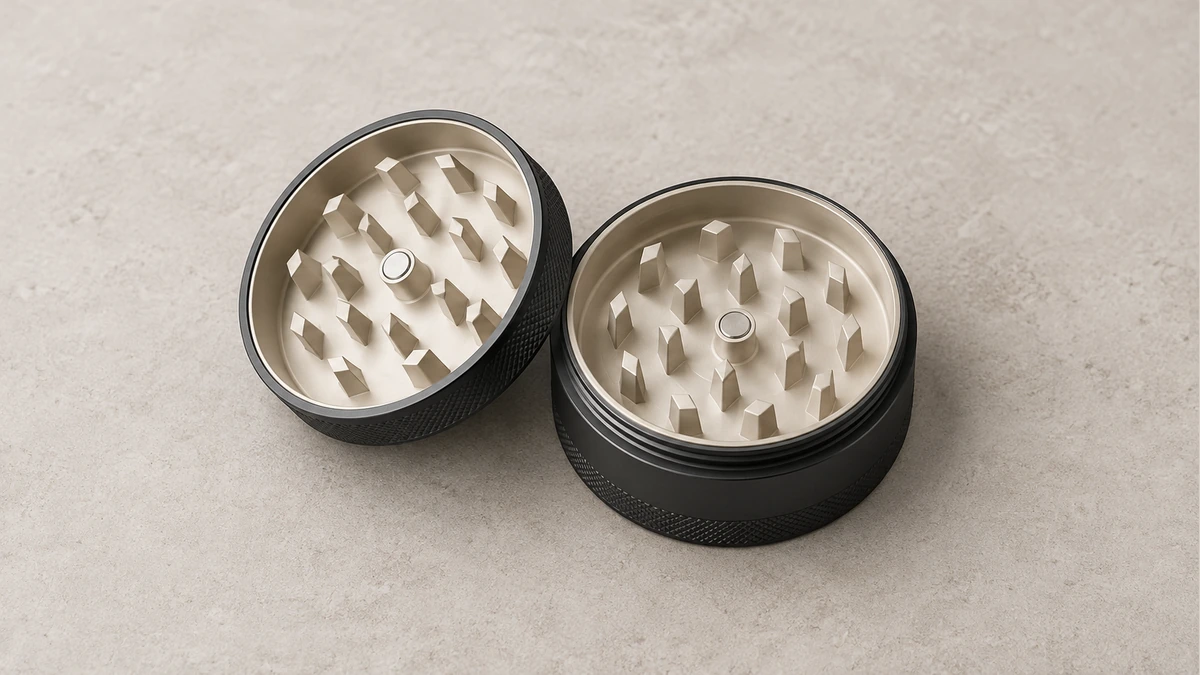
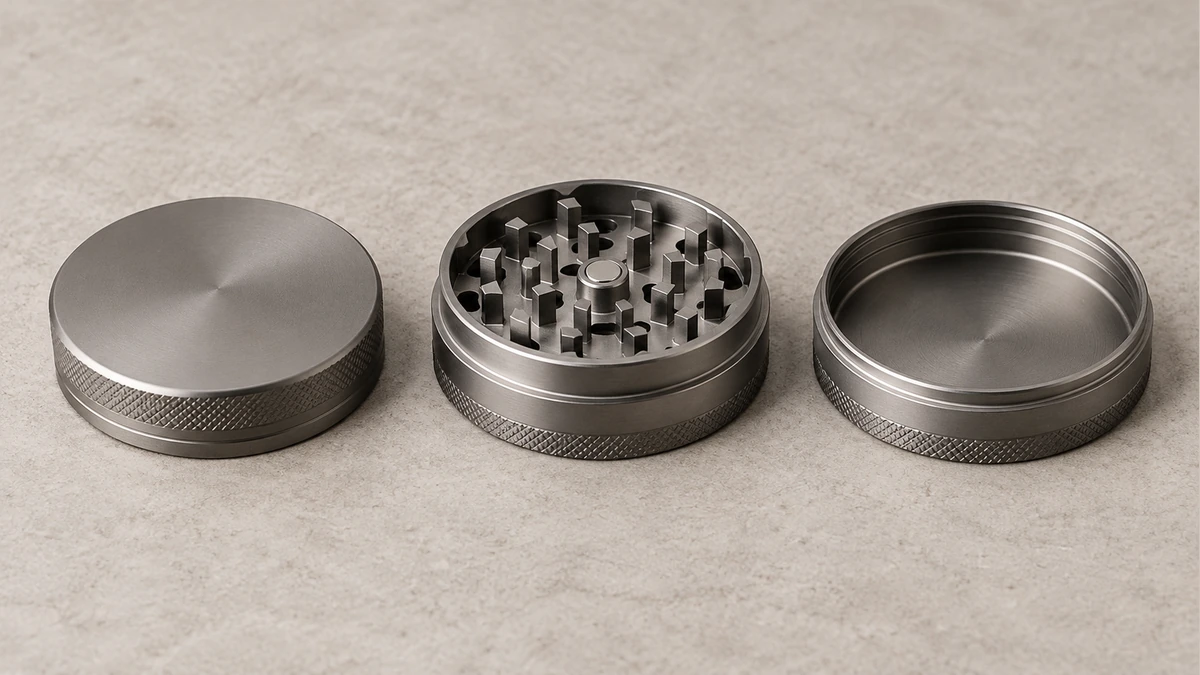
The teeth and chamber shape govern how material meets the cutting surfaces. Tooth spacing, clearance between opposing teeth, chamber depth and the locations of the openings all affect the layout. A coating describes the surface on those parts; it does not specify their dimensions. Avoid reducing the design to a single rule such as “diamond teeth always make a finer grind.” Different grinders can use similar tooth silhouettes with different spacing and clearances. When inspecting an empty chamber, distinguish the cutting area from the places where the lid seats and rotates. A tooth that looks tidy tells you little about residue trapped at that outer contact area.
The number of sections also changes what is accessible. A two-piece grinder combines the grinding space and collection space, while a multi-piece design may separate the cutting chamber from a collection chamber and a lower screened compartment. These are layouts, not ceramic-specific functions. The 2-piece herb grinder guide explains the simpler arrangement. For cleaning, the practical difference is how many seams and surfaces you can expose. An extra collection section can make the underside of the chamber easier to reach, while also adding threads or another joining surface to maintain.
🔎 2.1 Why the Teeth Can Look Clean and Still Stick
If the teeth look clean but the lid catches, inspect the rim where the rotating sections meet. A thin film there may be less noticeable than a clump between teeth. Also look for loose particles at the contact surface, an incorrectly seated lid, or damage to a spacer if the design includes one. In a detailed owner comparison, comments about the coated cutting surfaces were accompanied by separate observations about handling and the rim. That is a useful reason to check different parts, rather than a measured claim that every sticky grinder has the same cause.
Do the inspection with the chamber empty and the parts cool and dry. Separate only the pieces meant to come apart, brush away loose debris and examine the perimeter under good light. If the rim is clear but the lid still binds, forcing it harder can make the underlying issue more difficult to identify. Check for a visible dent, a displaced ring or a part assembled in the wrong position. Teeth, rotating rim and joining threads are separate surfaces, so a cleaning pass over one should not be taken as a check of the others.
🧲 3. Nonstick Coating vs. Actual Residue
A nonstick claim describes an intended surface behavior; it does not promise an accessory with no residue or no cleaning needs. One manufacturer’s ceramic-coating description presents its coating as a release surface on a metal grinder. That is an attributed example of a construction, rather than independent evidence that all ceramic finishes have equal friction or wear resistance. The relevant everyday observation is whether residue remains on the particular surface and whether the permitted care method removes it. The word nonstick is not permission to scrape a coated tooth with a metal edge.
Owner reports are mixed in exactly this area. Some describe easy brushing; others describe sticky deposits despite a coated interior. A discussion about material sticking inside a grinder makes the cleanup problem clear, but replies recommending other products do not establish which finish performs best. Material condition, grinder geometry, cleaning history and frequency of use are not controlled in those comparisons. You can still use the question constructively: record whether the problem is a film on the rim, packed debris between teeth or a blocked screen. That is more useful for maintenance than calling the entire grinder nonstick or sticky.
✋ 4. Grip Height and Handling
Grip height and exterior texture affect how easily your fingers can hold the lid and base. A shallow lid offers less gripping area, while a taller textured side provides a different contact surface. Diameter also matters because the distance from the center affects the torque produced by a given tangential force. Height alone is not a mechanical guarantee of more leverage. A comfortable grip should let you hold the body securely without pressing on the seam or covering the place you are inspecting. Surface residue on the outside can make the accessory feel slippery even when the rotating rim is clear.
This helps explain why a comment about “hard to turn” needs context. It might describe a genuinely obstructed rotation, or a lid that is simply difficult for that person to hold. Those situations call for different responses. Cleaning the teeth will not add grip height, and gripping harder will not clear a misplaced part. Check the outside, the seam and the empty rotation separately. Do not use pliers or another gripping tool to overcome a jam: concentrated pressure on the body may damage the shape or finish without removing the obstruction.
🕳️ 5. Collection Holes vs. Mesh Screens
Collection holes and a fine mesh screen usually occupy different levels in a multi-piece layout. The openings below the teeth allow ground material to move into a collection chamber. A screen below that chamber separates smaller particles into a lower compartment. They are not interchangeable versions of the same opening. A blocked collection hole can retain material near the grinding teeth, while a clogged screen can reduce passage to the bottom compartment even when the grinding chamber looks clear. Understanding those two locations avoids cleaning the wrong part when a lower chamber stops collecting material.
Inspect the underside of removable chamber sections as well as their top faces. Loose particles can sit around the edges of an opening, and a screen may look different when viewed from below. Use a soft brush suited to the part and avoid pushing a hard point through the mesh. A metal pick can damage a coated edge or deform a thin screen. If a screen is removable, follow the intended removal method; if it is fixed in place, do not lever it out just to make cleaning easier. Accessibility is a design detail worth noticing before a part becomes heavily coated with residue.
🕸️ 5.1 Screen Clogging
A screen that stops passing fine particles may have a surface film, packed material or physical damage. These cannot be distinguished simply by how much the bottom compartment collects. Start with a visual inspection of the dry, empty screen and the maker’s permitted cleaning procedure. A gentle brush may remove loose material, while an adhered film may need a compatible cleaner. Do not assume soaking is allowed because the rest of the grinder is metal. Coatings, fixed screens, magnets and joining components may have different care requirements. A torn or separated screen is a parts issue rather than a cleaning issue.
🎯 6. Consistency Is a Separate Question From Nonstick
A smooth turning motion and a consistent particle size are separate observations. A finish does not by itself specify tooth clearance, hole dimensions or the path material takes through the chamber. Two ceramic-coated grinders can therefore have different grinding layouts. In the same way, a clean grinder can still produce a result its owner considers too coarse. The useful comparison is between the mechanical layouts and the intended result, rather than between coating colors. The fine-grind herb grinder guide explains that design question in more detail.
In one ceramic-grinder discussion, an owner liked the release behavior but still wanted a different grind. That is not a contradiction: the owner was evaluating two properties. It is also not a controlled test showing that ceramic grinders grind coarsely as a category. When comparing your own observations, keep the descriptions separate. “The teeth brush clean” says something about cleanup. “The result contains large pieces” says something about the grinding process and layout. Combining them into a single good-or-bad coating verdict loses the detail needed to understand the problem.
🧽 7. Brush-First Care
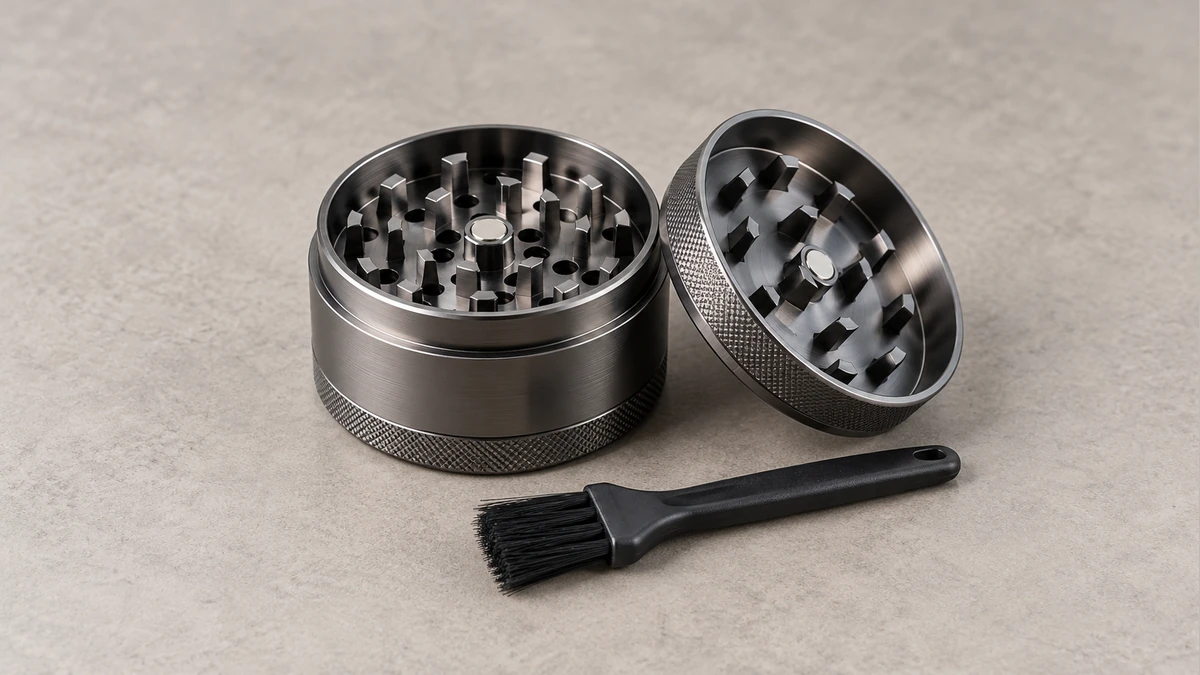
A soft brush is a useful first step for removing loose particles from a dry grinder. Work around the teeth, perimeter, openings and accessible underside instead of concentrating on the most visible area. An exterior cloth and an interior brush do different jobs, so keep both clean. There is no universal schedule that fits every finish and usage pattern. Inspect the accessory regularly and follow its maker’s care instructions before residue becomes difficult to remove. If brushing leaves an adhered film, move to the compatible cleaning method rather than harder bristles or aggressive scraping.
The SLX four-piece care instructions recommend a soft brush and warn that scraping with metal tools can dislodge the coating. Those are useful attributed instructions for that finish. Solvent permission in the same guidance should not be transferred to an unrelated grinder. Before using a liquid cleaner, check whether it is allowed on the interior coating, exterior finish and any removable rings. Cleaning a detached metal section is also a different task from soaking an entire assembled accessory. Keep parts organized so a spacer or screen goes back in its intended position.
🔬 7.1 Coating Wear vs. Residue Buildup
A rough patch can be residue sitting on a surface, or damage to the surface itself. Cleaning may remove the first; it cannot restore a missing coating layer. Use good light and the permitted cleaning method to inspect the difference without scraping at a suspicious area. A long-term coating discussion asks about flaking, but its individual reports do not establish a lifespan or failure rate. If you see loose coating, a chipped tooth or a damaged contact edge, stop treating the issue as ordinary sticking and seek part-specific guidance before further use.
Do not try to hide damaged coating by sanding a tooth or repainting an interior surface. That changes a material-contact part without restoring the original finish or clearances. Photograph the clean, dry area and identify which section is affected when requesting support. Describe whether the surface is lifting, a tooth is chipped, or the rim is rubbing. That concrete description is more helpful than saying the ceramic is “wearing out.” It also keeps a cosmetic exterior mark separate from an actual defect inside the grinding or collection space.
💧 8. Storage and Drying
After any permitted wet cleaning, let the separated parts dry completely before reassembly. Pay attention to recesses, joining threads and the screen area, where a quick exterior wipe may miss water. Do not assume a section is dry because the outside looks dry. Keep the drying area clean, and return removable rings only when they and their seating surfaces are ready. A damp accessory put into a closed case may simply retain that moisture; storing it dry avoids making the next inspection harder.
More sections mean more places to inspect, rather than a fixed extra drying time. The extra-large herb grinder guide covers the handling implications of a larger body. For any size, a useful maintenance note names the part: teeth brushed, rim checked, screen clear, sections dry. That small distinction helps when a problem returns. If the rim catches again while the teeth stay clean, you know where to look first. If the screen is damaged, another round of tooth brushing will not resolve it.