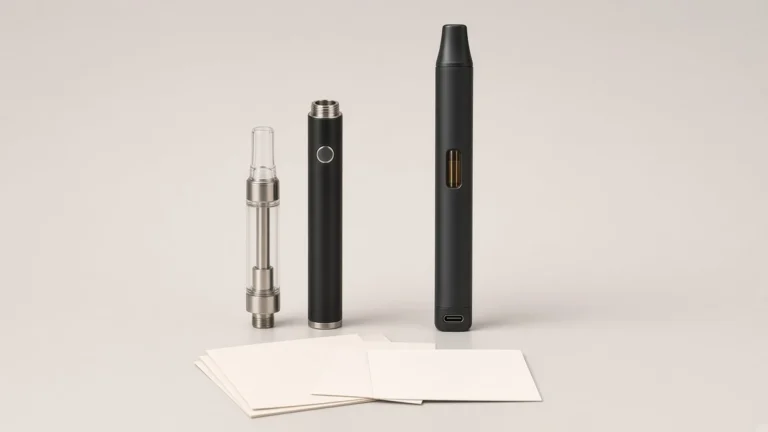
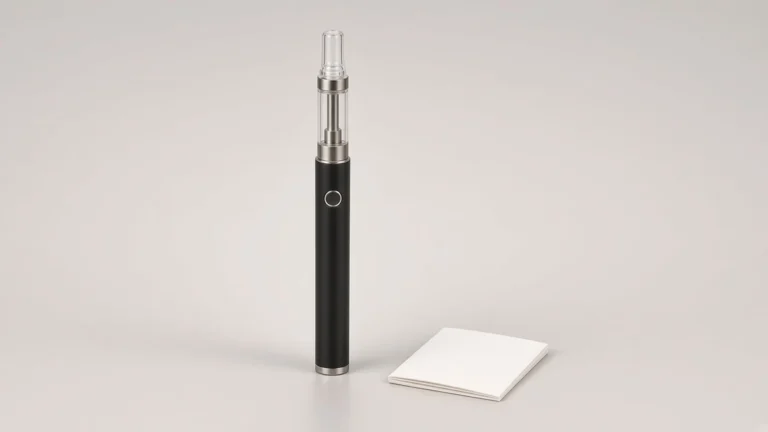
A 510 oil cartridge can show a clear reservoir and still leave a buyer unsure what that wall is made of. Listings use "glass cart," "plastic tank," and "PCTG" as if a photograph of a transparent tube had already settled the material. It has not. A clear polymer can be chosen because it looks like glass. A glass tube can sit in a metal and polymer assembly that includes a plastic mouthpiece. The word on the listing may also be describing the wrong part — the mouthpiece, a ceramic core, or the whole cartridge — rather than the reservoir wall.
That distinction matters before a licensed brand freezes a drawing or writes a package line about the hardware. The tank wall is a contact surface for the oil, a visibility window for fill level, and a shipping and handling risk, but those roles only help a buyer if the material is named and then qualified against the oil and the filling process. The rest of this guide keeps the reservoir wall separate from the core, the seals, and the mouthpiece, and it treats a clear photo as a starting observation, not as a material identification.
🧩 1. The Reservoir Wall Is a Separate Part From the Core and Mouthpiece
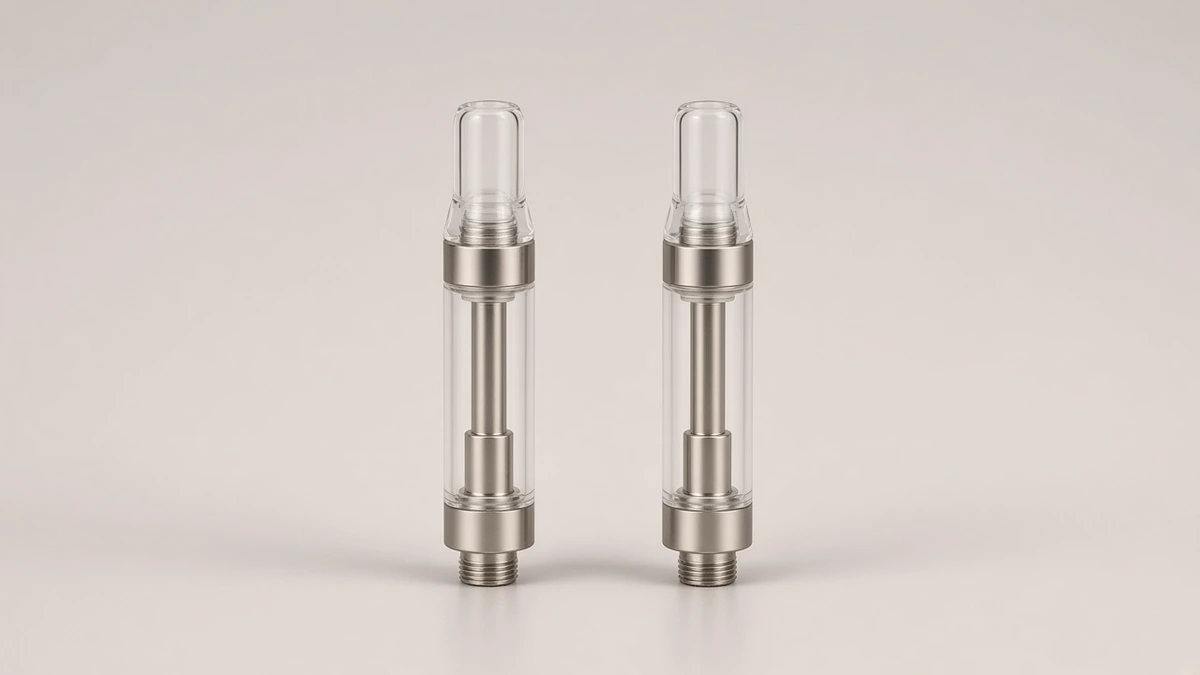
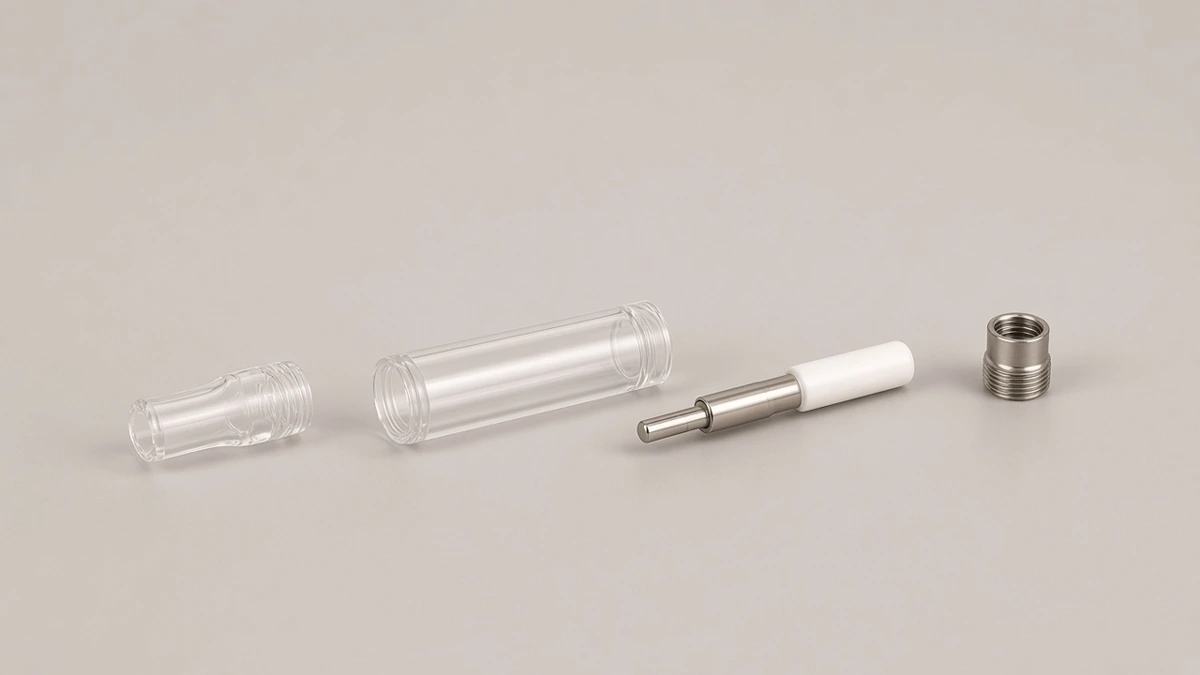
On a typical 510 oil cartridge, the reservoir wall is the chamber that holds the oil. It is not the heating core, the center post or postless path, the mouthpiece, the seals, or the threaded base. Leafly's anatomy of a 510-threaded oil vape pen keeps those jobs apart: a mouthpiece, a tank or cartridge that holds the oil, and an atomizer that heats it are listed as separate components. The same explainer notes that "tank" and "cartridge" are often used interchangeably, which is one reason a material word on a listing can drift from the wall to the whole unit.
Hardware-maker and OEM education pages make the same cut for a different audience. iKrusher's glass-versus-plastic tank article treats tank material as its own decision, alongside format, post style, and other hardware variables. Yoctek's OEM selection page is more explicit: the mouthpiece, the base, the center post or postless path, the seals, and the heating element are different parts, and "a glass tank can sit in a metal and polymer assembly just as a PCTG tank can." A cartridge can therefore be accurately described as having a glass reservoir and still include polymer parts the customer will touch.
That is also why a "ceramic cart" label does not answer the tank-wall question. "Ceramic" may refer to a core, a mouthpiece, or another part; that problem is already walked through in 510 Ceramic Cartridges: What the Material Label Actually Covers and Ceramic Cart Explained. Consumer copy can blur the line in the other direction as well. SafeBet's 510-cartridge FAQ, for example, describes a cartridge as "a pre-filled glass or ceramic tank of cannabis oil with a heating element inside." The sentence is useful as a reminder that public language mixes wall material and heater material. It is not a method for identifying either one on an unlabeled sample.
🪟 1.1 The Wall Has a Job That the Label Has to Match
The reservoir wall is the surface the oil sits against, and it is often the window a filler, a retailer, or a customer uses to see fill level, bubbles, and color. Yoctek notes that a transparent tank can make those observations possible in sampling and in later complaint review. That operational point holds only if the wall is actually transparent and remains inspectable. It still does not name the material. Visibility and material identification are related observations. They are not the same check.
🏷️ 2. “Glass” and “Plastic” Are Incomplete Names
"Glass" names a family of materials, not a grade. iKrusher discusses soda-lime, borosilicate, and quartz among the glass types that appear in tank conversations, and it treats those types as different choices rather than as interchangeable synonyms. A listing that only says "glass cartridge" has not said which of those, or any other glass type, is in the wall. This guide does not assign a glass type to an unlabeled part, and it does not treat any one type as automatically proven by a catalog word.
"Plastic" is even broader. iKrusher spells PCTG as polycyclohexylenedimethylene terephthalate glycol-modified and describes it as a copolyester used for reservoirs, while also discussing polycarbonate as a plastic used for mouthpieces and structural parts. Yoctek's starting point is the same distinction in specification language: the selection is not simply "glass versus plastic." PCTG is a glycol-modified copolyester, and other clear polymers used in tanks can behave differently in heat, impact, and oil contact. If a brief says only "polymer tank" or "plastic cartridge," a factory cannot freeze a resin family.
The useful request is therefore narrower than "glass or plastic." For glass, the documents should name the glass type as the supplier names it. For a polymer wall, they should name the generic family — PCTG if that is the family being offered — and then the grade, the supplier of that grade, and the document set that belongs to it.
🧪 2.1 A Resin Brochure Is Not a Finished Cartridge Rating
Commercial copolyester literature can be a starting description of a resin family. Eastman's product page for Eastar DN004, for example, describes Eastar copolyesters as "brilliantly clear polymers" and lists attributes including impact strength and chemical resistance, with applications that include personal-care and cosmetics packaging. Yoctek points to literature of that kind as a way to understand what some commercial PCTG copolyesters are sold to do, then limits the use of those pages: they are "not a rating for a finished 510 cartridge" and are "not a substitute for the grade-specific datasheet… and oil-contact samples the programme actually needs." Food-contact or cosmetics-packaging uses listed for a resin are not evidence that a finished cartridge, filled with a particular oil, has been qualified. Do not copy impact or resistance figures from a resin brochure into a cartridge specification as if they had been measured on the assembled tank.
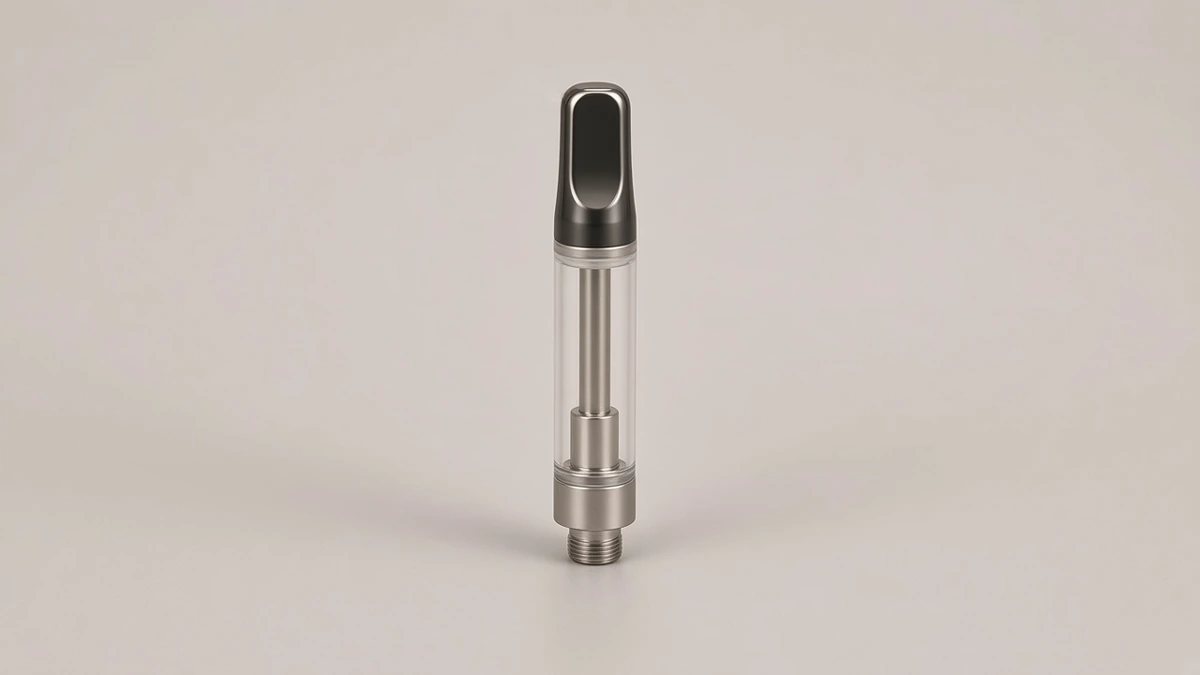
📷 3. Why a Clear Photograph Cannot Settle the Material
iKrusher notes that PCTG can closely resemble glass, which is one reason brands use it as a clear reservoir. If a polymer is chosen in part because it looks like glass, a marketing photograph of a transparent cartridge cannot be the identification method. An empty clear sample can also be misleading later. Yoctek warns that a tank that looks clear when empty can still change after a heated fill or after storage, and that those risks make an unqualified grade a poor choice, not an automatic rejection of PCTG.
What a careful photo can show is more limited. It can show that the wall is transparent or tinted, that a mouthpiece or base is a different part, and that the unit is a cartridge rather than some other 510 device. It cannot reliably name the glass type or the polymer family. This guide does not offer a tap test, a hardness test, or another informal shop-floor method, because no such method was verified here as a substitute for a material callout. If the wall must be identified, the evidence is the drawing, the bill of materials, the supplier's written name for the material, and a sample record that stays tied to that revision.
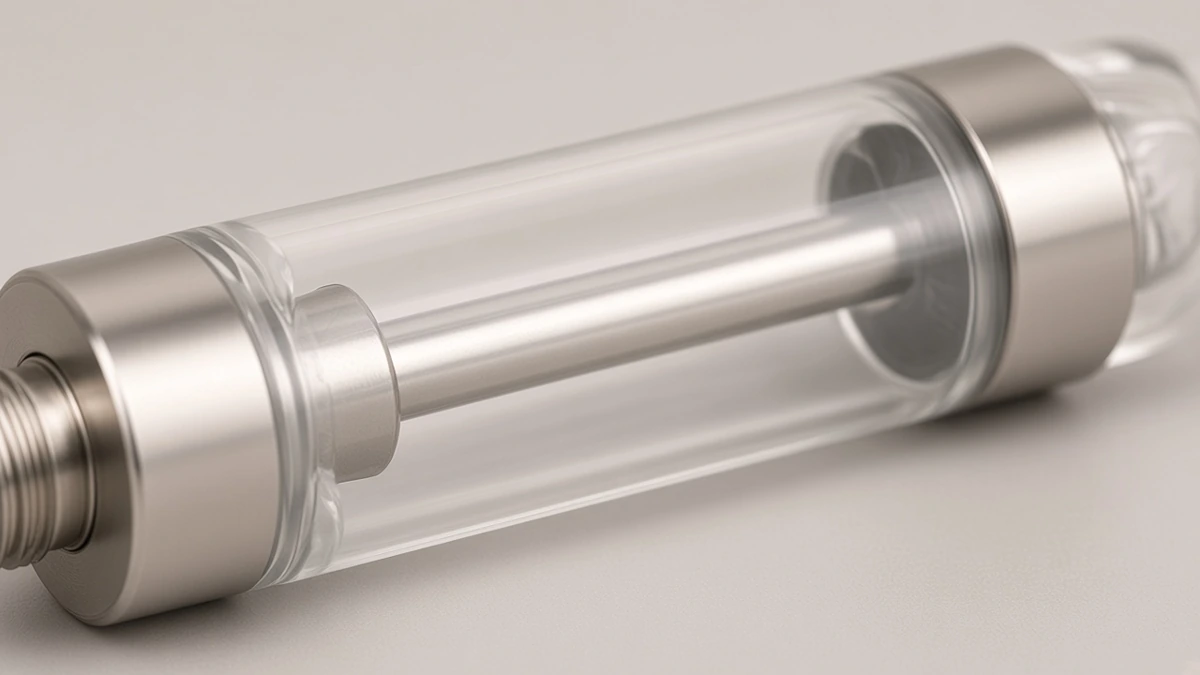
📄 4. What Supplier Documents Should Name
A specification that can be reused later is unusually plain. It names the part, then the material, then the evidence:
- Which part is the reservoir wall, as opposed to the mouthpiece, base, or core.
- The generic material family, in the supplier's words (for example, glass of a named type, or PCTG rather than "plastic").
- For a polymer, the grade name and the grade supplier.
- The drawing revision that freezes the tank geometry, including seal surfaces.
- The document set the buyer intends to review: a current datasheet for that grade or glass type, and any material-contact statements counsel wants on file.
- The oil, fill-temperature window if it is known, and storage condition against which samples will be run.
- A rule that a change of glass source or resin grade requires a new sample gate.
Yoctek's selection page is built around that kind of brief. It also tells buyers not to invent chemical-resistance tables, glass-transition temperatures, or certificate numbers, and to treat food-contact or material-contact statements as documents to review rather than as approvals a factory "has." Those cautions travel well. They are not a claim about any one factory's files.
If the current paperwork only says "glass look" or "PCTG tank" with no grade, the identification is not finished. The sample can still be useful as a visual reference. It should be labeled as an unidentified or incompletely identified wall until the callout arrives.
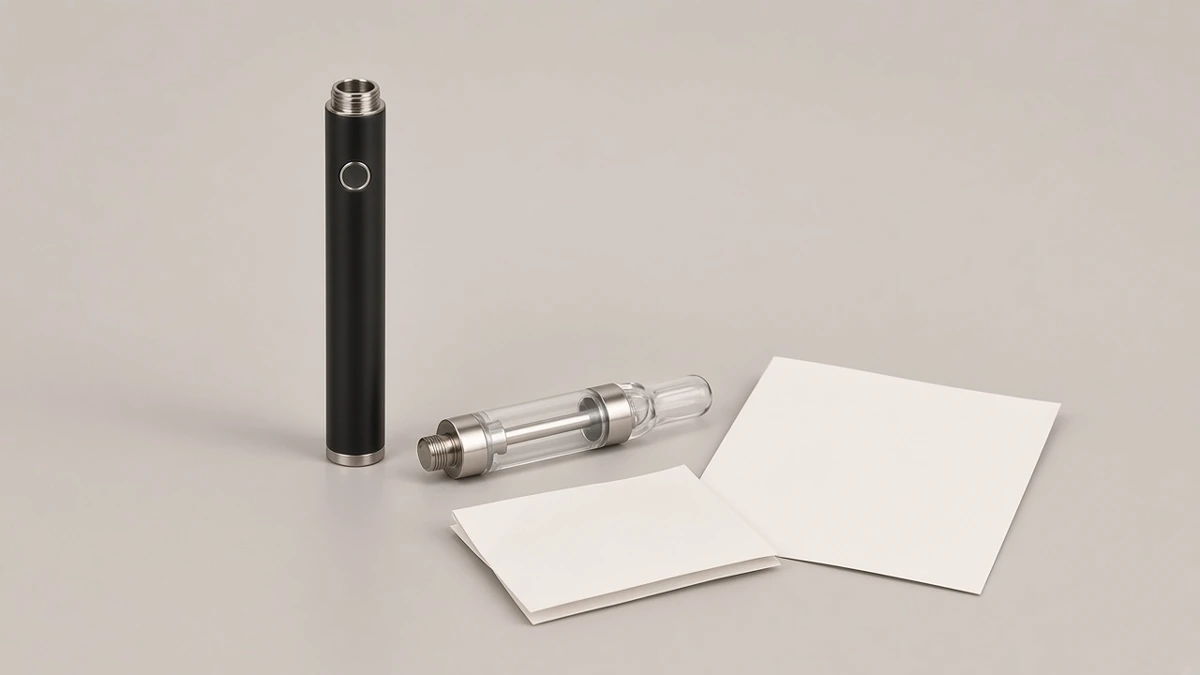
🛢️ 5. How Tank Material Relates to the Oil — Without Treating Marketing as a Test
Tank material is often discussed as an oil-compatibility decision, and it can be one. It is not a decision that a catalog adjective can finish. iKrusher's education page states the limit in one sentence: "neither material is universally better," and "the best tank material complements the oil inside." In that article, standard distillates are described as commonly used with both glass and high-quality plastic tanks, while glass is often preferred there for higher-terpene oils. Those comments map how one hardware maker frames the choice. They are not test results for a named formulation, and they are not a specification for any AOVAPE cartridge.
Yoctek puts the same idea in sampling language: a polymer grade has to be qualified against the actual oil and fill temperature, and a glass wall still has to be matched to the seal surfaces and the fill process. A buyer who wants a compatibility claim should ask for samples run under the conditions the filler will actually use, then keep those results with the drawing revision. Oil-path geometry remains a separate review, already treated for empty 510 cartridges in Empty 510 Thread Cartridges: Match the Oil Path Before Filling.
🔧 6. Do Not Confuse a Cartridge Reservoir With a Replaceable-Coil 510 Tank
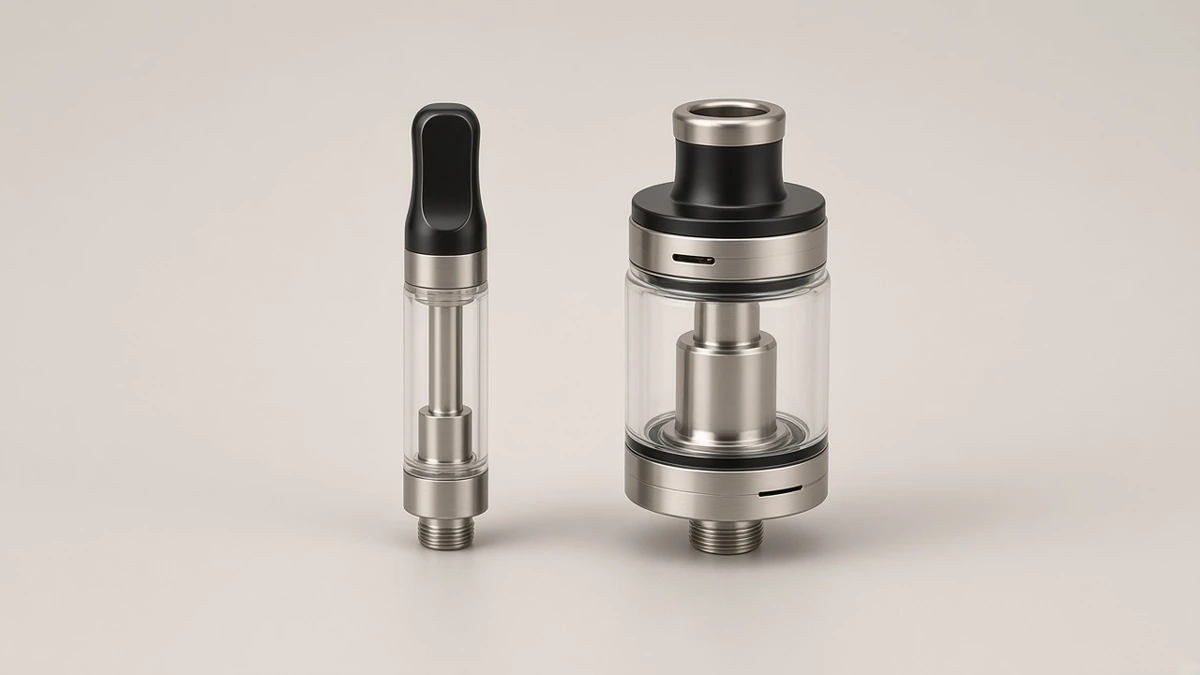
"510 tank" is used for more than one architecture. A 510 oil cartridge reservoir is the wall of a cartridge that carries its own heating element and a 510-threaded base. A 510 thread tank of the rebuildable kind is a different object: it has a reservoir, a chimney, and a coil that is meant to be changed, and it is the subject of 510 Thread Tank: Parts, Coil Changes and Cleaning. That guide is about identifying those serviceable parts, not about choosing a glass or PCTG cartridge wall.
A photograph of a clear cylinder on a 510 thread can therefore be read too quickly. If the listing is selling a replaceable-coil tank, the material question is still real, but the product is not a sealed or fillable oil cartridge in the sense this guide uses. If the listing is selling a 510 cart, coil-change instructions are the wrong template. Identify the architecture first, then name the wall.
Protective accessories raise a smaller version of the same confusion. A case or a sleeve may be sold to protect "the glass," as in 510 Cartridge Cases and Cart Protector: Rings, Sleeves and the Glass They Leave Exposed. Those posts are about coverage and fit. They do not, by themselves, prove that the wall under the sleeve is glass.
✅ 7. A Practical Identification Checklist
The checks that can be finished without guessing are short:
- Name the architecture: 510 oil cartridge, or a different 510 tank.
- Name the part being identified: the reservoir wall, not the mouthpiece, base, or core.
- Collect the current drawing revision and any bill of materials line that calls out that wall.
- Read the supplier's material name. If the line says only "glass" or "plastic," ask for the type or the polymer family and grade.
- For a polymer wall, record the grade name and grade supplier, and request the current datasheet and any material-contact statements the buyer intends to review.
- For a glass wall, record the glass type as the supplier names it, plus incoming inspection expectations for cracks, chips, and dimensions if those are part of the project file.
- Tie any compatibility claim to a sample run against the intended oil and fill-temperature window, and keep the sample ID with the drawing revision.
- Treat a clear photograph, an empty visual sample, or a "glass look" marketing line as incomplete identification.
AOVAPE's vape cartridge collection is a place to begin a hardware conversation. It does not, by itself, identify the tank-wall material on a particular version. That identification belongs in the documents for the version being quoted.
🗂️ 8. What to Check, How to Describe It, and What to Ask a Supplier
A description a brand team can reuse names the part and the evidence. One workable pattern is: "Reservoir wall is [glass type, or PCTG grade and supplier], per drawing [revision]; mouthpiece and base called out separately; oil-contact samples recorded against [oil and fill condition], or not yet run." If a clause cannot be filled, leave it blank. "Clear tank" is an observation about visibility. It is not a material name.
When a sample arrives, photograph the complete cartridge and, if the design allows it, the wall as a distinct part. Ask the supplier to confirm the material callout in writing against that sample, not against a catalog photo of a similar outline. If two versions share a model name but differ in tank material or grade, keep them on separate lines.
❓ 8.1 Short Answers a Brief Can Reuse
If the cartridge looks like glass, is it glass? Not necessarily. A clear polymer such as PCTG may be chosen in part because it resembles glass. A photograph of a transparent wall cannot, by itself, finish the identification.
Is "PCTG" enough to put on a drawing? It is more precise than "plastic," but it is still a family name. Ask for the grade, the grade supplier, and the documents that belong to that grade.
Does "ceramic cart" tell you the tank material? No. "Ceramic" often refers to a core or another part. The reservoir wall has to be named on its own line.
Is a food-contact or cosmetics-packaging statement for a resin enough to approve a cartridge? No. That literature describes a resin, sometimes for other uses. It is not a rating for a finished 510 cartridge filled with a particular oil.
Are glass and PCTG interchangeable if the outline matches? No. Outline is not material identity, and neither material is universally better. Any compatibility claim should be tied to samples run under the intended oil and fill conditions.
Is a 510 thread tank the same thing as a 510 oil cartridge tank? Not reliably. A replaceable-coil 510 tank is a different architecture from an oil cartridge reservoir, even when both are clear and both use a 510 thread.