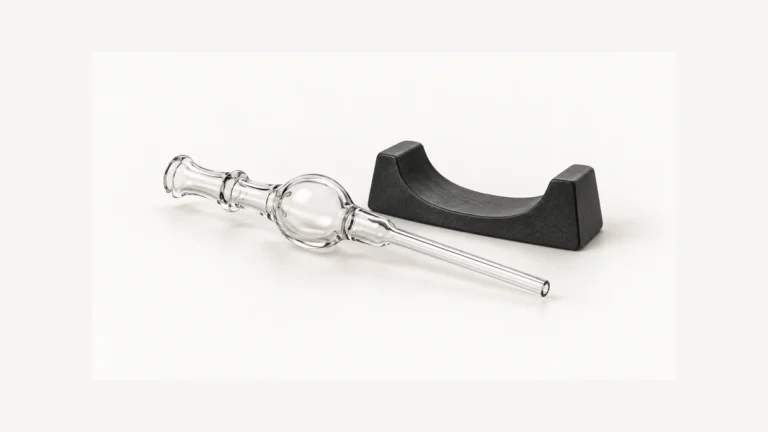
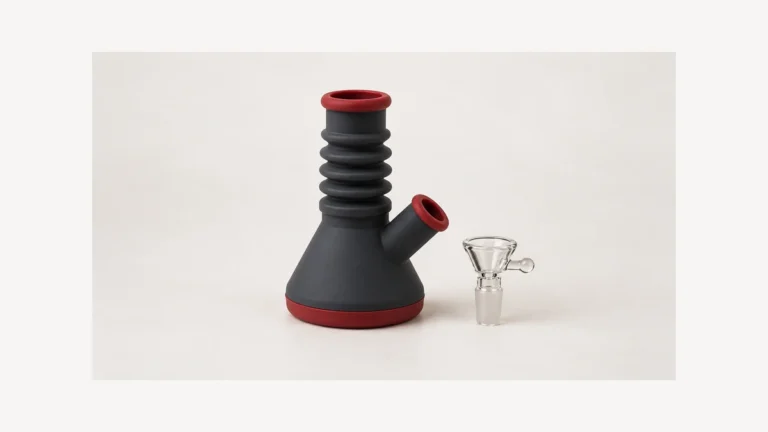
Collapsible bongs can leave an owner with a smaller body and several parts that have not become smaller at all. The flexible chamber may fold, while a glass bowl, a rigid stem or a separate base still needs its own space. Understanding that difference is the starting point for dry storage and careful handling.
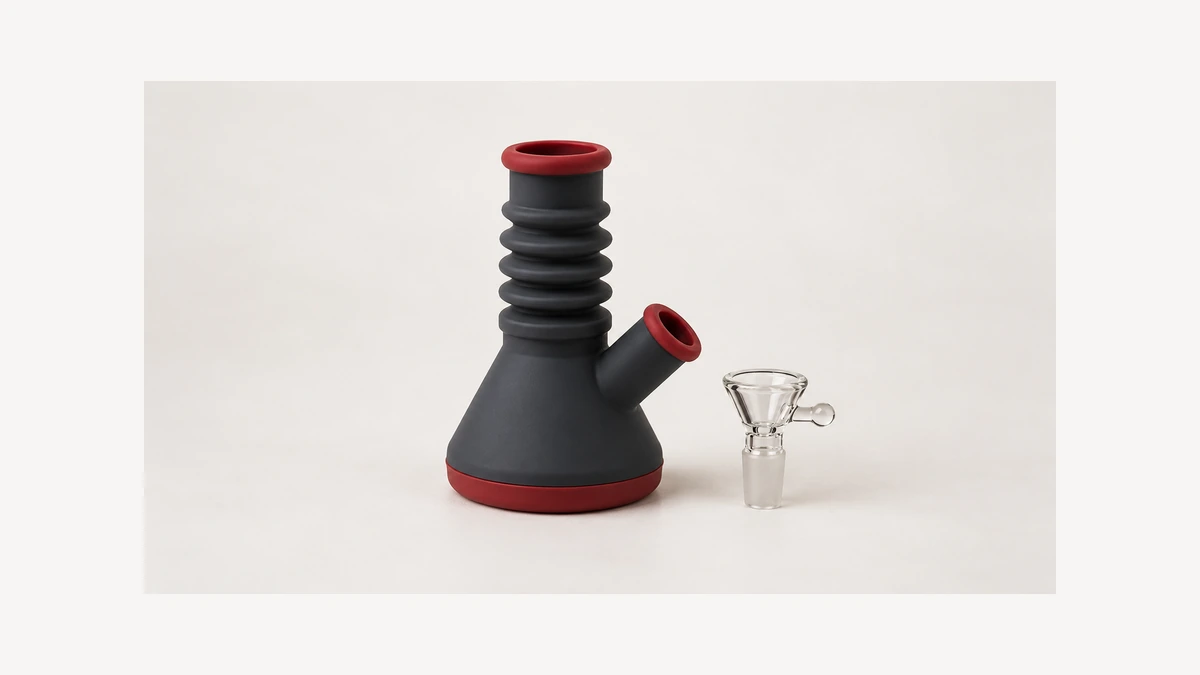
This guide addresses the construction and storage of empty, cool hardware already owned by an adult. It does not explain filling, heating, drawing through or adapting equipment for consumption. The questions here concern what folds, what separates, where loose parts go and what the manufacturer’s care instructions actually cover.
🧩 1. Separate folding from taking a piece apart
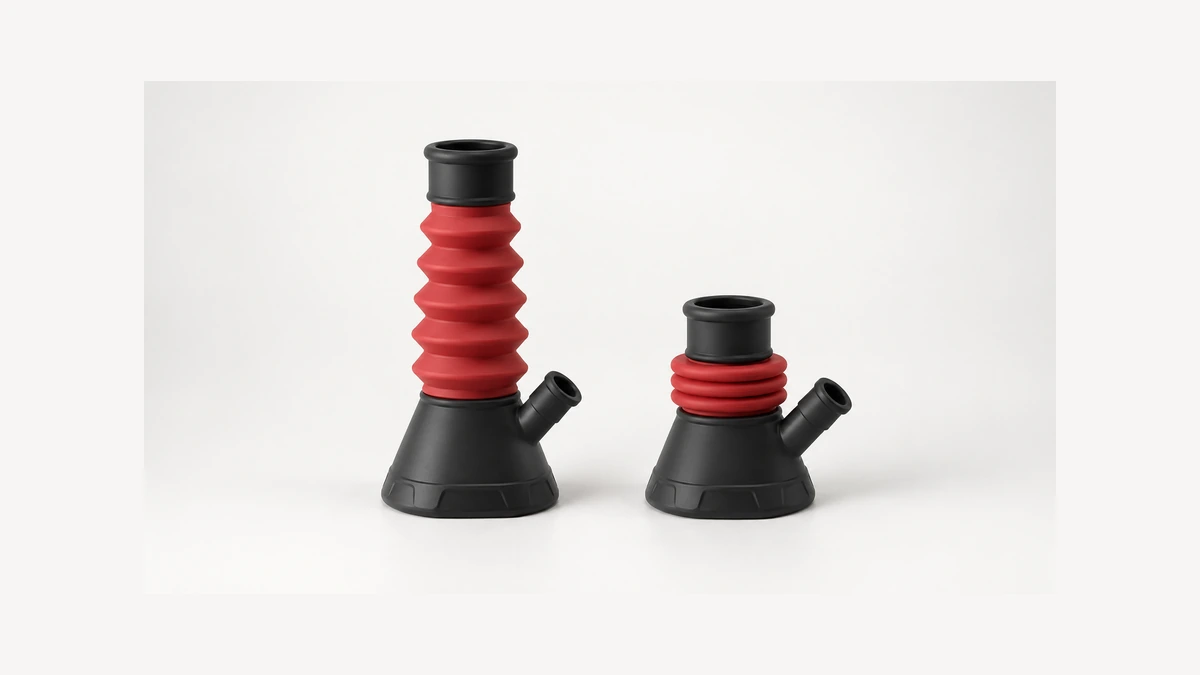
Start by looking at what changes shape. In an accordion-style design, a flexible section becomes shorter as its folds close. In a modular rigid design, the overall package becomes smaller because sections detach. Both can occupy less space, but they create different storage tasks.
Our guide to pieces that come apart addresses the detachable category. A removable mouthpiece or bowl does not by itself make the main body collapsible. Conversely, a folding body may still have parts that the owner must account for separately.
For example, imagine an empty accordion body next to a rigid body separated into three sections. The first changes its outline; the second creates more loose objects. Neither description establishes how much room the complete set needs after glass parts and protective separation are included. Compare the actual stored arrangement rather than just the height of the central body.
Use the manufacturer’s description and diagrams to identify the intended movement. Do not assume a flexible-looking joint is intended to fold, or a visible seam is intended to open. If the part does not move in the documented way, forcing it is not a method of confirming the design.
🌀 2. A flexible body can still contain rigid parts
The important boundary is often between the body and its fittings. A flexible exterior does not make an attached glass part flexible. Nor does it establish that glass can remain inside the body during compression. The maker’s storage instructions need to address that arrangement.
As a documented example, the Waxmaid Springer Mini description identifies an expandable silicone body and a separate glass bowl. That example establishes a mixed construction; it does not justify calling every component unbreakable or treating all similar-looking bodies alike.
A second manufacturer’s spring-shaped design likewise pairs a silicone body with a glass bowl. These are examples of geometry and component boundaries, not recommendations or claims that one folding pattern performs better than another.
Before storage, identify each rigid component in the actual parts diagram. Keep removable parts separate only where the maker intends them to be removed. Do not push a glass fitting farther into a flexible opening to make the package shorter. A compact outline is not worth creating an undocumented contact point inside the body.
🎒 3. Work out the complete stored shape
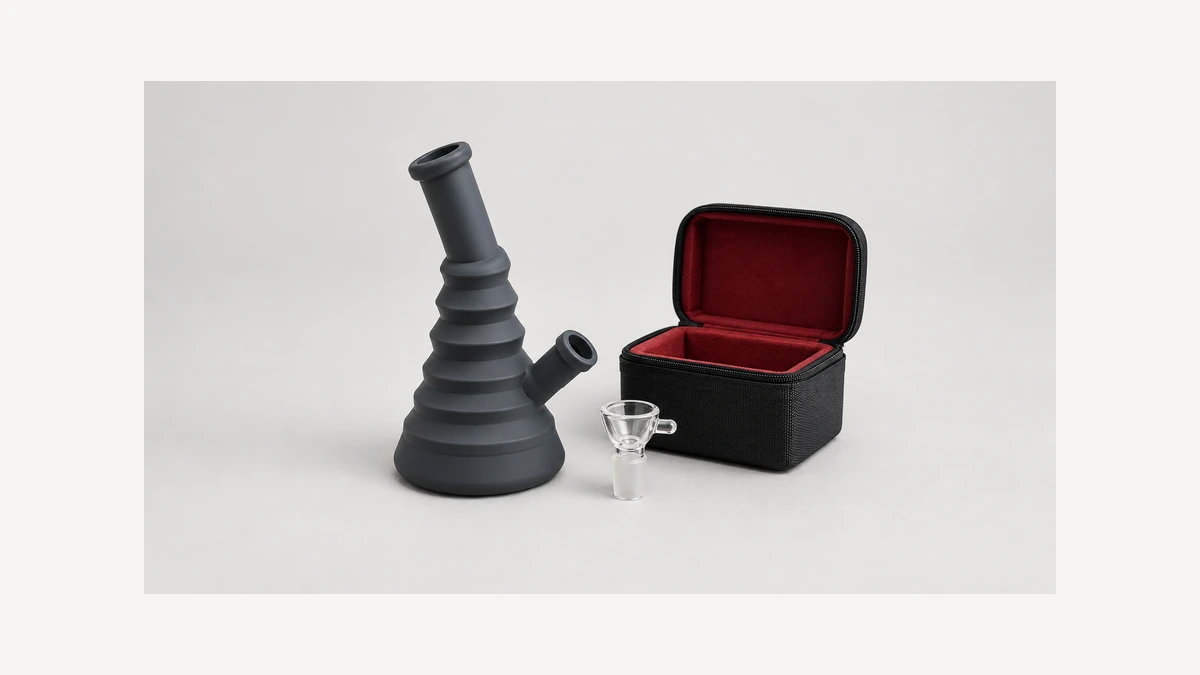
A photograph of a compressed body can hide the rest of the storage problem. The widest part, an angled socket or a loose fitting may determine the space needed in a drawer or case. Think about the whole set as it will actually be put away, not just the part that changes height.
In a hypothetical example, the body fits a small compartment after folding, but its separate bowl is left loose beside a hard zip pull. The body has become compact; the glass part has not acquired protection. A complete storage arrangement needs a place for both, without relying on the flexible chamber as improvised padding.
Our guide to cases and separated hardware covers the enclosure side of the question. An enclosed case and a folding mechanism do different jobs. The presence of one does not establish the suitability of the other, and neither gives permission to store a wet or damaged part.
Allow space to remove the stored item without pulling on a projecting fitting. If a lid or closure only shuts when a part is pressed sideways, the arrangement is asking that part to carry the closure load. Rearranging the storage space is a clearer response than compressing the equipment beyond its documented position.
🧼 4. Read cleaning instructions by component
Collapsible is a shape description, not a cleaning method. An assembled item can include silicone, glass, seals and other fittings whose instructions differ. A recipe associated with one material should not be applied to every part simply because the parts were supplied together.
The Waxmaid description cited above specifically discourages alcohol on its silicone body. That is a model-specific instruction. It is not proof about every silicone formulation, and it does not establish which chemical is suitable for another manufacturer’s product. Read the care instructions for the actual part rather than generalising from the material name.
The silicone-and-glass construction guide helps identify the material boundary. It does not override a maker’s restrictions on attached components. Before applying any method, establish whether the instructions describe the body alone, a removable fitting or the complete assembly.
A Reddit discussion about a collapsible piece includes an owner’s reminder about cleaning. It does not validate a chemical recipe or demonstrate a disinfection result. Such comments identify an everyday concern, while the actual cleaning method still needs equipment-specific documentation.
💧 5. Dry storage includes the folds and loose components
A body can look dry from the front while an accessible recess still contains a visible droplet. Before dry storage, inspect the areas the manufacturer’s care procedure makes available. Do not open sealed parts or turn a normal storage check into disassembly.
If the maker requires the body to dry in an expanded position, do not compress it early just to clear the work surface. If no drying position is specified and moisture remains visible in an accessible fold, ask for the correct care guidance. There is no universal number of minutes that establishes every construction is dry.
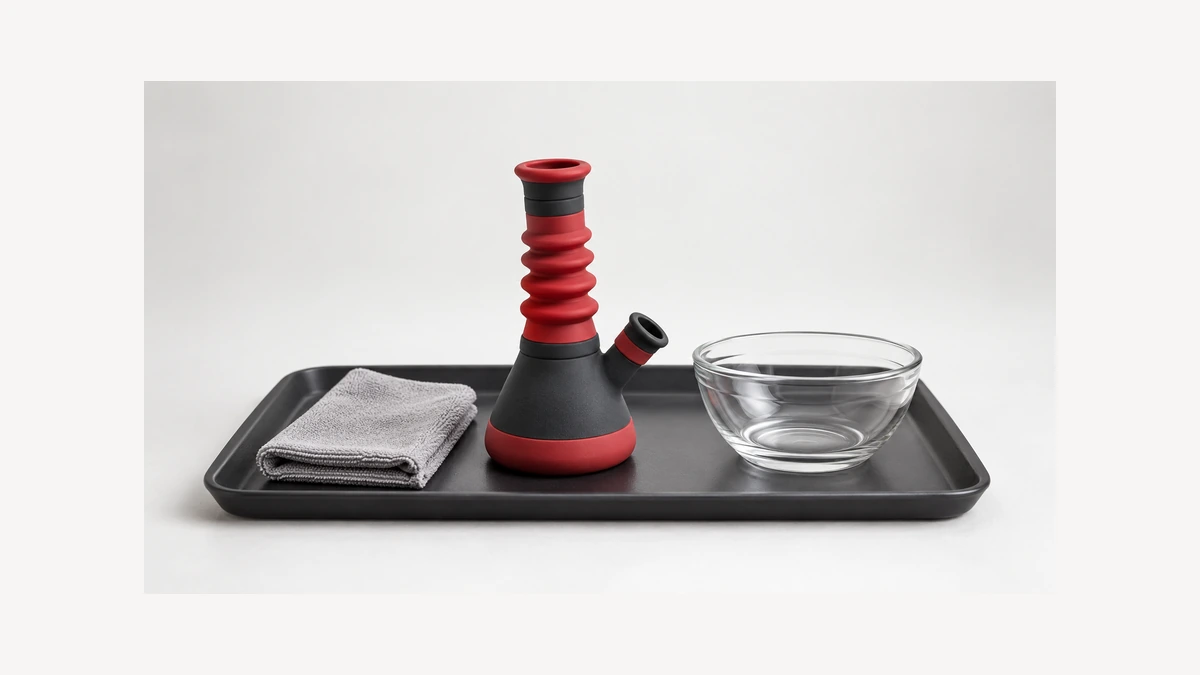
Imagine an empty body left on a tray after its documented cleaning routine. A removable component has been dried separately, but a fold on the body still shows moisture. The useful observation is the visible moisture, not the fact that the outside feels dry. Keep cleaning and storage steps distinct rather than declaring the whole set ready from one surface.
Do not add a hair dryer, oven, radiator or another undocumented heat source to accelerate the process. Likewise, an enclosed bag is not a drying method. This is a care boundary, not a claim about microbial counts, odour removal or a validated hygiene outcome. Use the maker’s instructions for the actual assembled materials.
📏 6. Similar openings do not establish matching parts
A flexible socket can create the impression that a nearly matching rigid part will fit if pushed a little farther. That impression is not a specification. The intended interface needs to be identified from the manufacturer’s parts information, including which replacement component belongs to the model.
A Reddit question about two differently labelled interfaces shows the uncertainty: the owner asked whether nominally different sizes would fit, but the replies did not establish compatibility. The discussion is evidence of a question, not an answer that the parts can be forced together.
For storage, the same principle applies without connecting anything for operation. A spare glass part should have its own identified place. Do not push it into an unrelated opening because that looks like a convenient way to keep the set together. A storage improvisation can create contact that the design never specified.
If a supplied fitting seems loose or no longer seats as described, record which part and interface are involved. Avoid tape, glue, stretching or an improvised insert to conceal the mismatch. The question for the manufacturer is whether the original interface or a component has changed, not which household material can fill the gap.
🔎 7. Notice changes before folding the body away
A quick exterior check is easier while the empty equipment is visible than after it is compressed and enclosed. Look for an opening tear, a distorted fitting or visible damage to a rigid component. An inspection can identify something worth asking about; it cannot certify the equipment’s condition.
Do not assume a crease is damage solely because the design has folds. Compare it with the maker’s illustrations and with the same unit’s previous appearance. A new split, a detached edge or a changed socket is a more specific observation than “the silicone looks old.”
A small-bag storage discussion moves between foldable bodies, spring-shaped designs and other portable pieces. The variety helps explain why a generic forum label is not enough to identify your construction. Use the actual model and part names when asking about a changed fold or fitting.
If something appears damaged, stop handling it as an ordinary folding exercise. Do not repeatedly compress a suspect area to demonstrate the problem, and do not treat a replacement glass part as proof that the surrounding body is sound. Photograph the visible change and seek the maker’s assessment before further use.
Part identification also matters when several similar sets share a drawer. Keep the original component names and model information with your private care records, so a loose fitting is not silently reassigned to another body. Matching colour is not evidence that two parts belong together.
If the instructions show a stored position, keep that illustration available. It can answer whether a section is supposed to remain extended or whether an identified component is stored separately. A general photograph from a forum may omit the very part whose position you need to understand. Asking about a missing instruction is more useful than treating a compact-looking photograph as a complete storage procedure.
📦 8. Keep the next unpacking straightforward
A useful storage arrangement leaves the empty, cool, dry parts identifiable and accessible. The body should occupy its documented stored position; removable rigid parts should not rattle against each other or serve as supports for the enclosure. Keep cleaning materials out of the same contact space.
For a hypothetical drawer arrangement, the folded body sits in one compartment and its identified removable glass part in another protected position. Neither is wedged beneath the lid. This example describes separation, not a tested packing system or a guarantee against breakage.
When taking the set out again, look at the same boundaries: body folds, sockets and separate glass. If a component has shifted, the storage arrangement may need attention. Do not interpret a piece arriving in one part as proof that the same packing choice will always prevent damage.
The word collapsible answers only one question: some part of the object is intended to become more compact. It does not answer which fittings detach, which care method applies or whether the complete set fits a particular enclosure. Those answers come from the actual construction and its instructions, with loose parts and dry storage considered together. Include the model revision when requesting missing instructions, since a similar name may cover a different construction.