A wood vape pen can develop a dark grip area, a sticky patch or a mark beside a metal panel. Those descriptions sound similar until you try to clean them. A mark on the outer housing is a different job from residue inside a removable mouthpiece, and a changed surface is not automatically something that needs oil or wax.
The first task is to identify the surface and the change. This guide concerns the exterior of existing adult-owned hardware: what to notice, how to read care instructions and when to stop treating a mark as a cosmetic problem. It does not recommend devices, finish products or methods for preparing or consuming any substance.
🧩 1. Find out what the wooden-looking part actually is
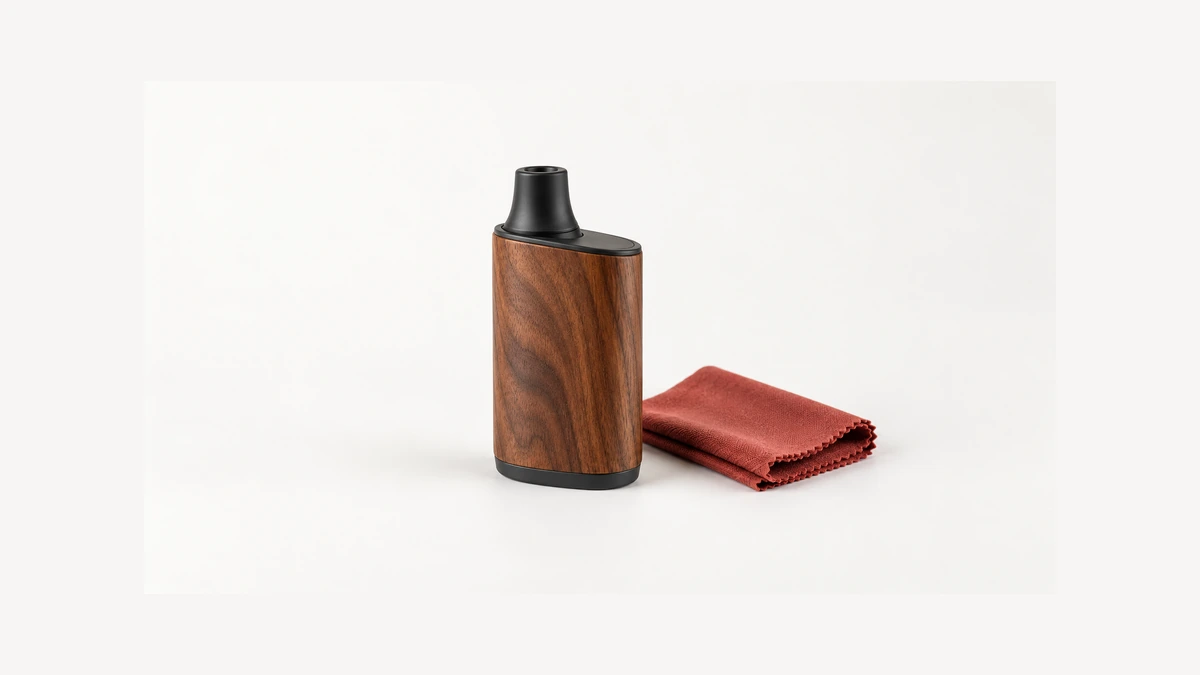
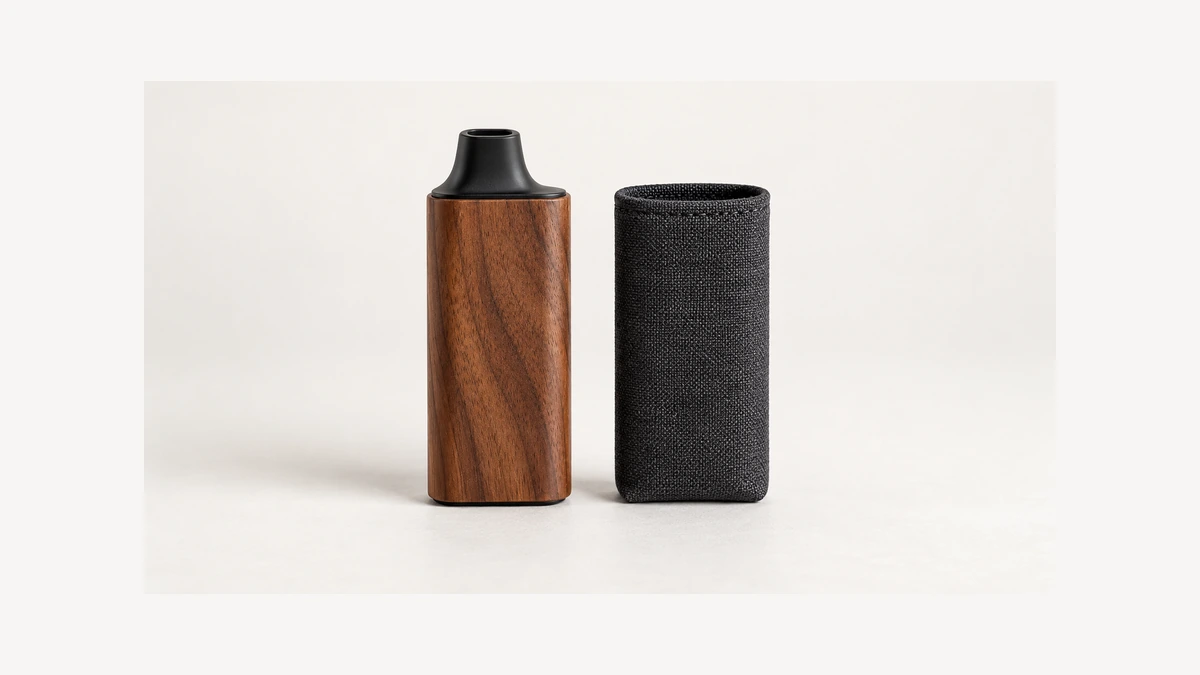
The phrase wood vape pen does not describe one construction. A listing may refer to a wooden housing, a decorative panel, a removable mouthpiece or a wood-look surface. Those parts should not be grouped together simply because their colours match. The care instructions need to identify the part that is actually in front of you.
Start with the model’s manual or parts diagram rather than testing the surface. Look for the name used for the exterior body and any separate panel. If the description only says wood grain, do not take that as proof of solid wood. Equally, a visible grain pattern does not tell you which finish, if any, has been applied.
For example, imagine two brown devices on the same desk. One has a removable wooden side panel; the other has a printed exterior coating. A cleaning instruction for the first cannot be transferred to the second from appearance alone. This is a hypothetical distinction, not a comparison of particular products.
Do not scratch an inconspicuous corner, sand an edge or apply solvent to identify the material. Those actions change the very surface you are trying to understand. If the documentation is unclear, a photograph and the model details give the manufacturer a better starting point than an experimental patch of cleaner.
🔍 2. Describe the mark before deciding what it means
Darkened, shiny, sticky and rough describe different things. A dark patch is a colour observation. Stickiness describes how the surface feels during ordinary handling. A raised edge or an opening seam is a change in shape. Avoid combining them into one explanation such as dirty wood or a dried-out finish.
Notice the location. Is the change where fingers normally rest, under a sleeve, at the base or beside a button? Did it appear after a spill, a new cover or a previous cleaning attempt? These details do not establish a cause, but they keep the question specific enough to investigate.
A useful comparison is with an older photograph of the same housing under similar light. Grain, shadows and reflections can complicate a casual comparison with a photograph of a different unit. You do not need to restore the original colour to prove that the exterior has been cared for correctly.
Suppose a grip area looks darker but remains smooth, while a separate patch below a panel feels tacky. It would be premature to call both normal patina, or to assume both will respond to the same treatment. Keep the observations separate. Do not deliberately run the device to see whether warmth changes the mark.
🧽 3. Exterior wiping is a smaller job than deep cleaning
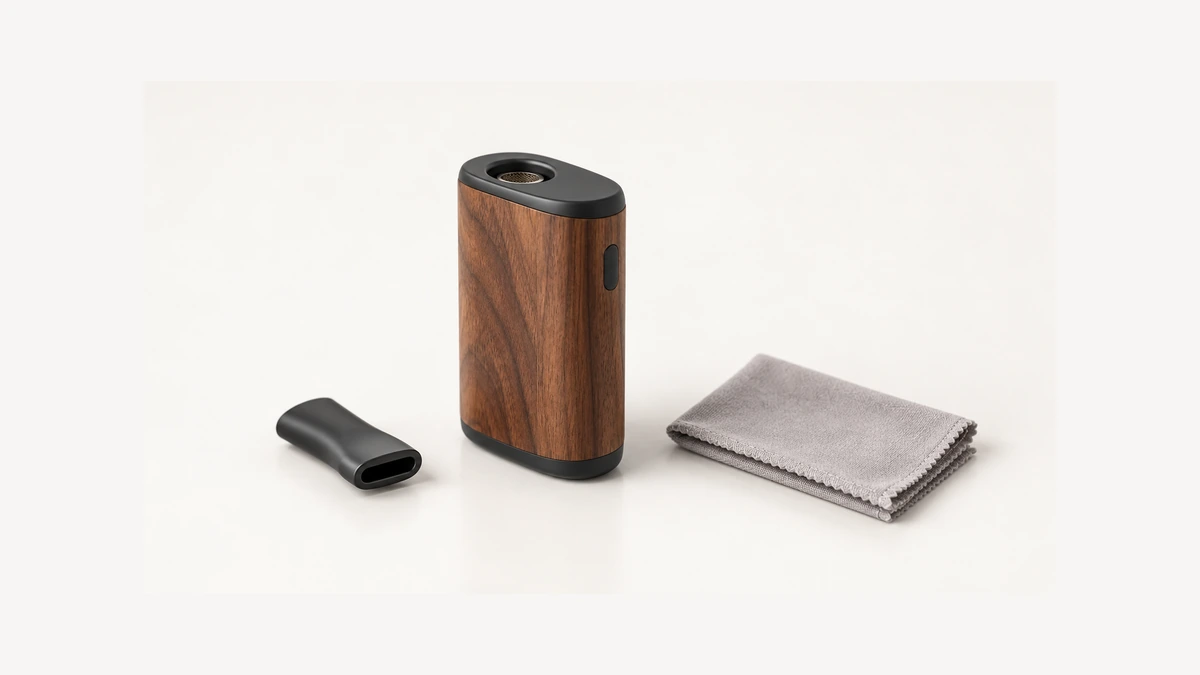
Read the housing-care instructions before introducing moisture or a cleaner. If a dry cloth is the documented method, stay within that method. A cloth used on the exterior should be clean and free of whatever was previously used on glass, metal or household surfaces. A familiar cloth is not necessarily a clean one.
One maker’s instructions provide a useful, limited example. The Tinymight glossary separates glass and metal care from the wooden body, describing a dry cloth and occasional beeswax for its own body. That is documentation for a particular construction, not permission to apply the same routine to every wooden-looking device.
If the approved wipe removes loose surface dirt but the darker colour remains, the result is simply that the colour remains. It does not prove that stronger cleaning is needed. Repeated rubbing, added pressure or a more aggressive chemical can turn an unanswered question into an altered finish.
Keep the purpose modest: removing what the documented exterior method can remove. Do not describe an ordinary wipe as disinfection, sterilisation or a treatment for an internal fault. If the required care method cannot reach a narrow edge, ask about that edge instead of forcing a tool or liquid into the opening.
🧩 4. Separate the housing from removable parts
A removable mouthpiece and the body that holds it may have different care instructions. A direction to soak one removable component does not authorise soaking the surrounding device. The same caution applies to a metal-looking part which may still include seals, coatings or other attached materials.
Use the parts diagram to establish what the manufacturer intends owners to remove. Do not assume that a visible seam is a user-serviceable joint. A panel can be part of the housing even when a line around it makes it look like a lid.
Our article on mouthpiece cleaning and part identification addresses the separate component question. It should be read with the instructions for the actual mouthpiece material. A glass-component method is not a general recipe for a wooden mouthpiece, much less an assembled powered device.
Consider an illustrative cleanup in which the removable mouthpiece is placed on a separate tray while the exterior is dealt with according to its own instructions. The important distinction is the boundary between tasks, not a particular tray or cleaning product. Avoid allowing cleaning liquid from one task to become an accidental housing treatment during reassembly or storage.
🐝 5. Cleaning and conditioning answer different questions
Cleaning asks how to remove unwanted material. Conditioning asks whether a specified finish needs a specified maintenance treatment. A sticky housing does not automatically need conditioning, and a dull housing does not automatically need cleaning. Applying another layer of product can make the original change harder to assess.
In a Reddit discussion about cleaning a wooden exterior, the owner specifically wanted cleaning rather than treatment. Replies suggested different household products and wipes. The exchange exposes a terminology problem; it does not establish that those suggestions suit the housing.
Another discussion about beeswax application contains differing suggestions about frequency and warming. Those comments should not be converted into a universal schedule. An owner’s account of a pleasing result is not documentation of finish compatibility or long-term condition.
If the maker specifies a maintenance product, confirm which surface it applies to and which parts must be kept clear. If the maker gives no such direction, generic furniture, cutting-board or cosmetic advice does not fill the gap. Do not heat the device, add oil to openings or try several treatments in succession to find one that changes the appearance.
🎨 6. A finish changes the care question
Wood is not a complete cleaning specification. The exterior surface may include a finish whose identity is absent from a short product description. Knowing the wood species alone does not tell you which wipe or treatment the manufacturer intends for the assembled housing.
The USDA Forest Products Laboratory’s chapter on finishing wood explains, in general wood-products terms, that finishes affect appearance and provide a cleanable surface. It also treats wood properties and cleanability as considerations in finish selection. This supports paying attention to the finish; it is not a device-care approval or a recommendation to refinish a vaporizer.
For an owner, the practical implication is a better question: “What finish is on this exterior, and what is the approved care method?” That is more precise than asking which oil is best for wood. It also avoids assuming that a glossy surface and a matte surface from different products should be treated alike.
A wooden-device maintenance discussion shows owners exchanging different balm and oil suggestions across different devices. The variety is useful evidence of their uncertainty, not evidence that the products are interchangeable. Do not infer from a photograph that the finish, construction or care history matches your own equipment.
Keep a note of previous care attempts as well. A manufacturer assessing a sticky patch needs to know whether it appeared before or after a wipe, oil or wax was applied. Record the actual product name privately for support rather than describing every treatment as wood care. That history can prevent the next answer from repeating an unsuitable suggestion.
🧳 7. Look at what touches the housing in storage
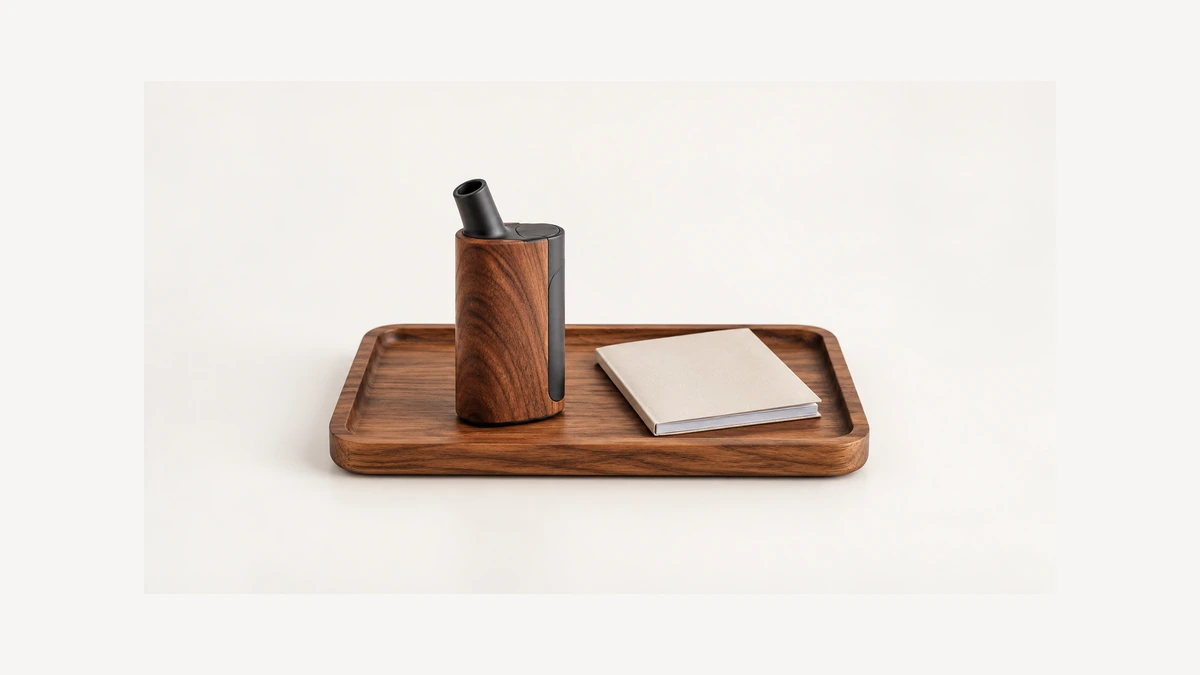
If a mark returns in the same place, examine the surrounding storage arrangement as well as the body. Is that area always against a case lining, a sleeve seam or a loose item? Has a cleaning cloth or treated accessory been left in contact with it? Record what you find without assuming a chemical explanation.
A sleeve can hide an area from view while still leaving it in contact with another surface. Our guide to body sleeves and their separate care explains why the cover and the device need their own instructions. Adding a cover over a sticky or unexplained mark does not resolve the original question.
In a hypothetical example, a clean-looking device is put into a case with a damp cloth after exterior care. That storage choice introduces a condition the owner did not intend. The sensible correction is to keep care materials separate and follow the documented dry-storage requirements, not to invent a new wood-treatment routine.
Do not treat a case, cloth or sleeve as evidence that the housing is protected against every form of damage. Check the parts that remain visible and note changes when the device is next handled normally. A simple record of where the mark appears can be more informative than repeatedly applying something to make it temporarily less visible.
🛑 8. Know when the question is no longer cosmetic
A split, an opening joint, visible charring or a new change beside a control should not be polished away as an appearance problem. Stop using the device and seek model-specific guidance. The location of a mark does not diagnose an internal fault, but it can make cleaning the wrong next step.
Our explanation of unexpected burning symptoms and hardware faults addresses that separate issue. A coating or conditioning product cannot establish that equipment with an unexplained fault is fit to use. Avoid sanding, sealing or covering the area before the manufacturer has had a chance to assess it.
When contacting support, include the model, a photograph of the whole housing, a closer photograph of the affected area and a truthful list of anything already applied. Say whether the change concerns colour, texture or shape. Do not label a substance or a failure cause that you cannot identify.
For an ordinary exterior-care question, the useful result may be a modest one: the documented wipe removes surface dirt, a colour difference remains, and the maker confirms how that finish should be maintained. Cleanliness does not require making every wooden housing look newly manufactured. Accurate part identification and restrained care preserve a clearer picture of its actual condition.