🔍 1. Spotting a Dry Top Among a Drawer of Loose Glass
A dry dab rig top is a glass attachment whose maker designed it without a water reservoir in the air path. An emptied water top still has its reservoir and the internal openings that route air through that space. If both are sitting loose on a workbench, look for that internal structure first. Then use the seat and inlet to identify what each piece attaches to.
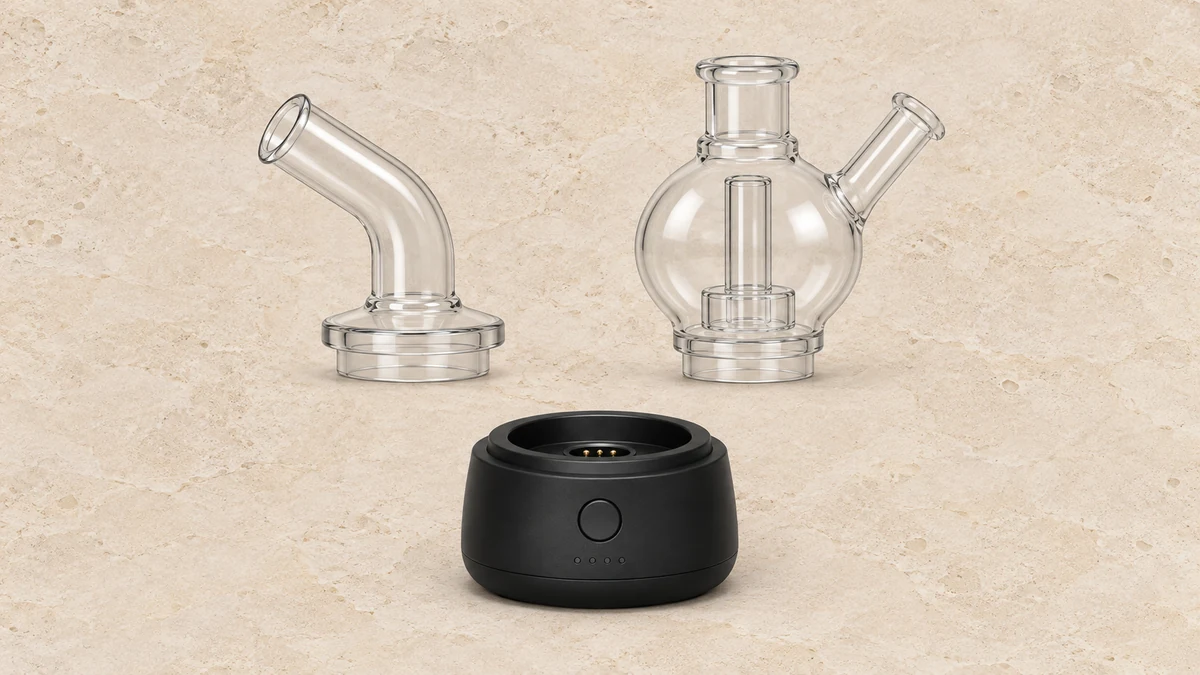
Look at two empty tops against a plain surface. A simple dry design can have one visible passage between its inlet and mouthpiece. A water design may show a small tube inside a wider enclosure, with openings at the lower end of that tube. Where the outer glass hides one of the features, a second angle or a model drawing can resolve the question.
Labels matter when a photo shows only a close crop. A listing can say “replacement glass” without identifying whether it depicts the top by itself or a glass and seal set. Ask which assembly the name describes. An image showing a water chamber empty on a table gives no evidence about the manufacturer’s approved operating conditions.
📐 2. The Airway Structure That Separates Dry Tops From Water Tops
The useful question is whether the attachment includes a chamber designed to hold water around an internal tube or outlet. A dedicated dry top can still bend, widen or take a decorative shape. A water top can have a small reservoir that is difficult to see straight on. A complete side view and the maker’s drawing give those details context.
🏷️ 2.1 What a Documented Dry Top Looks Like
MJ Arsenal describes the Quadra Peak Attachment as a dry top for the platform named on its product page. That description identifies the intended glass format. For an unlabeled part, look for the same kind of explicit description in its own documentation. The apparent length of a tube or the number of curves in a photograph cannot establish which platform it fits.
👁️ 2.2 General Visual Cues Across Other Dedicated Dry Tops
Start with the route visible between the inlet and the mouthpiece. A short straight passage is easy to identify in profile. A wider attachment may need a second view to show the surrounding wall. Reflections can make a single wall look like a second tube, especially against a busy backdrop. A clear outline against a plain background makes the open spaces easier to distinguish.
💨 3. Why an Emptied Water Chamber Still Shows Its Structure
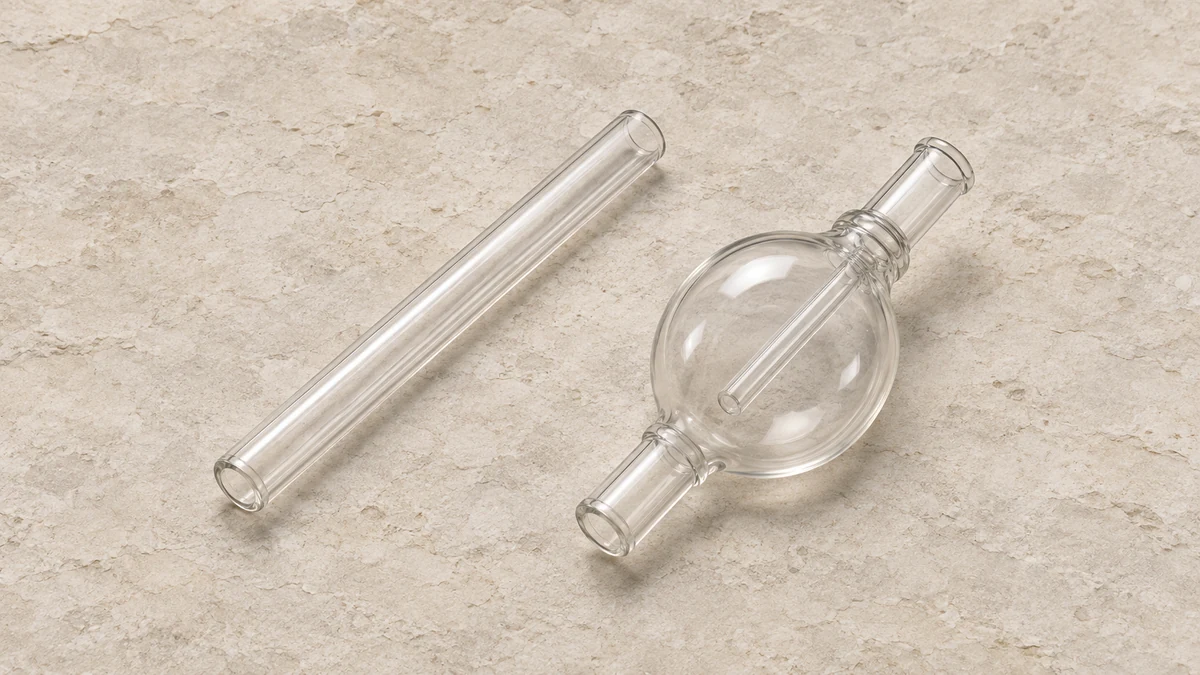
Draining a reservoir leaves the glass partitions and tube openings in the same places. This becomes clear when you rotate a detached piece in front of a diffuse light and look for the outline of an inner tube. A rounded bulge alone is ambiguous. Some dry glass is decorative, and the visible outer wall can look much larger than the airway it contains.
To read a diagram, locate the mouthpiece and inlet first. Trace each line back to its label and check where it ends. A label at a set of holes near the base describes a different feature from the opening that meets the rig. If a maker provides a side profile and a cutaway, the cutaway can explain which openings communicate with the chamber even when both drawings show the same silhouette.
📏 3.1 Length and Airway Width as Separate Variables
Two glass tops can differ in mouthpiece height, maximum outside width, and the position of their inlet. Record these separately. A squat chamber can still have a wide shoulder, while a tall dry attachment may be narrow at the base. A photograph with a scale beside the glass can show the outer dimensions. The manufacturer’s drawing is more useful for a narrow internal feature that the photo hides.
🔗 4. The First Fit Point: The Seat
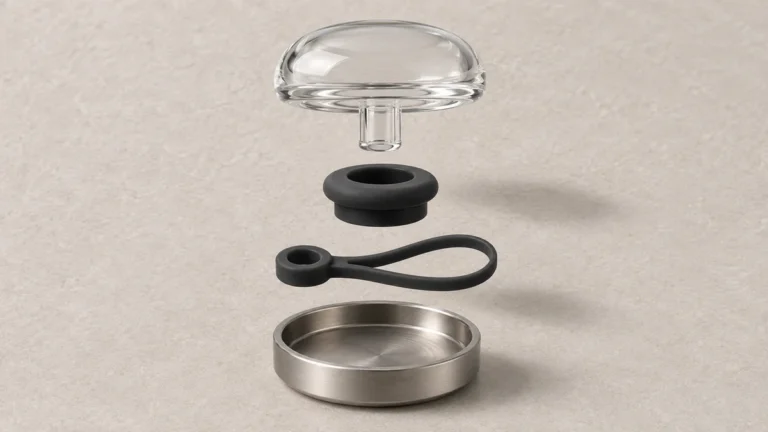
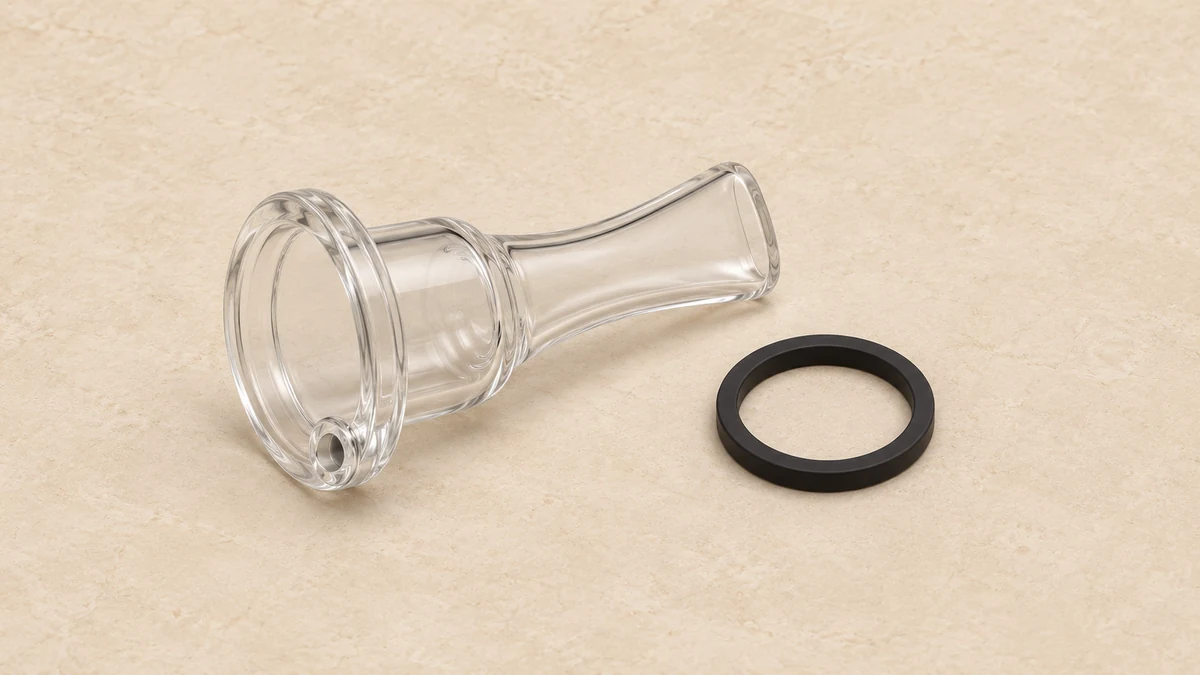
The seat is the part of the glass base that meets the matching recess or support on the rig. A flexible seal can be a separate part of that interface. Look at the whole base from underneath and from the side. A recess can be round while the glass includes a locating lip or another feature that only appears in profile. A match should be confirmed by the model documentation.
Pay attention to where a dimension begins. A listing may give the outside diameter at the widest part of the base. A drawing for a different part may give the width of a narrower band immediately below it. Comparing those figures directly can leave the actual contact surface out of the comparison. Mark the two measurement points on a photo when asking a supplier to identify loose glass.
Two tops listed for the same device can share a mounting interface while having completely different shapes above that interface. With an unlabeled spare, record what is visible without making a compatibility claim from diameter alone. The shape of a seal, the location of the inlet and the maker’s model list are useful additional evidence.
🌬️ 5. The Second Fit Point: The Inlet
The second fit point sits further up the glass piece than the seat, at the inlet, a smaller opening where air or vapor passes from the heating chamber’s own air path into the glass airway. Unlike the seat, which is primarily a mounting surface, the inlet is a functional opening whose position has to line up with a corresponding opening on the device itself. A mismatch at the inlet can occur even when the seat fits correctly, since a glass base seated flush on the collar can still have its inlet opening sitting in the wrong rotational position relative to the opening on the device.
📘 5.1 A Manufacturer Illustration: Puffco’s New Peak Glass
Puffco’s Peak Glass page documents detachable glass with percolator openings near its base. The New Peak manual illustrates an inlet in the glass that aligns with the chamber on the device. These are documented features of those examples. An owner comparing a different model should look for its own parts drawing and any orientation marks on the seat.
👀 5.2 Checking Inlet Alignment Without a Manual
If you cannot locate a drawing, take separate photographs of the visible openings in the detached glass and the unpowered base. Include the seating edge so both openings have a reference point. Some parts have a small opening offset to one side, while others are hard to read through tinted glass. Treat the photographs as a way to ask a more specific question about the exact model.
🧰 6. Outer Clearance Beyond the Two Fit Points
Outer clearance covers everything outside the seat and inlet measurements, mainly whether the glass piece’s outer diameter and overall height fit the space enclosed by any outer lid, sleeve, or carrying case supplied with the device. A dry top built for a compact travel setup, among the compact rig formats covered at portable dab rig travel builds, may need to fit inside a shorter sleeve than a taller water chamber built for a stationary setup. Measuring the glass piece’s maximum width at its widest point, usually across the reservoir or any side arm on a water chamber, against the inside width of the storage case shows whether the piece fits in storage apart from whether it mounts on the device.
A carrying case built around the silhouette of a compact dry top can leave very little spare room inside, so a water chamber’s wider reservoir or side arm may not fit into the same slot even when both pieces share an identical seat diameter and inlet position. Readers storing more than one type of glass for the same device sometimes find that only the dry top, not the water chamber, matches the case originally supplied with a compact build.
Some devices also use an outer cover that encloses the glass piece once mounted, sized for a particular range of glass widths. A water chamber’s side arm or percolator bulb, the kind of structure covered among bubbler joint and water path checks, can extend past the width a dry top’s narrower profile allows. Checking whether the cover closes fully over the mounted glass, without forcing it, is the third clearance check alongside the seat and the inlet.
⚠️ 7. Fitment Problems Are a Separate Question From Dry or Water Preference
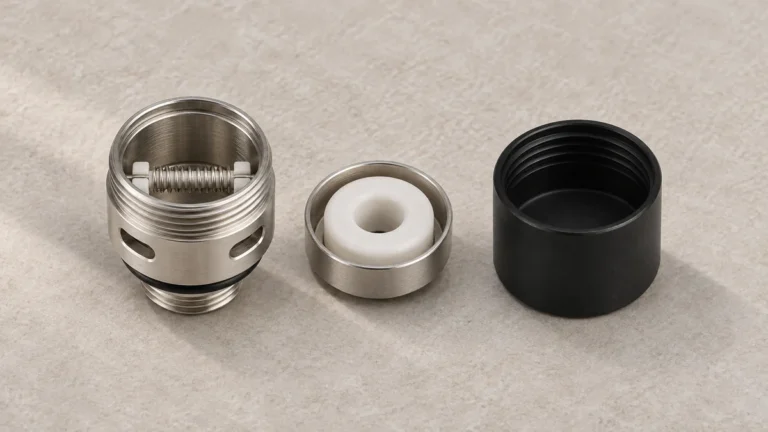
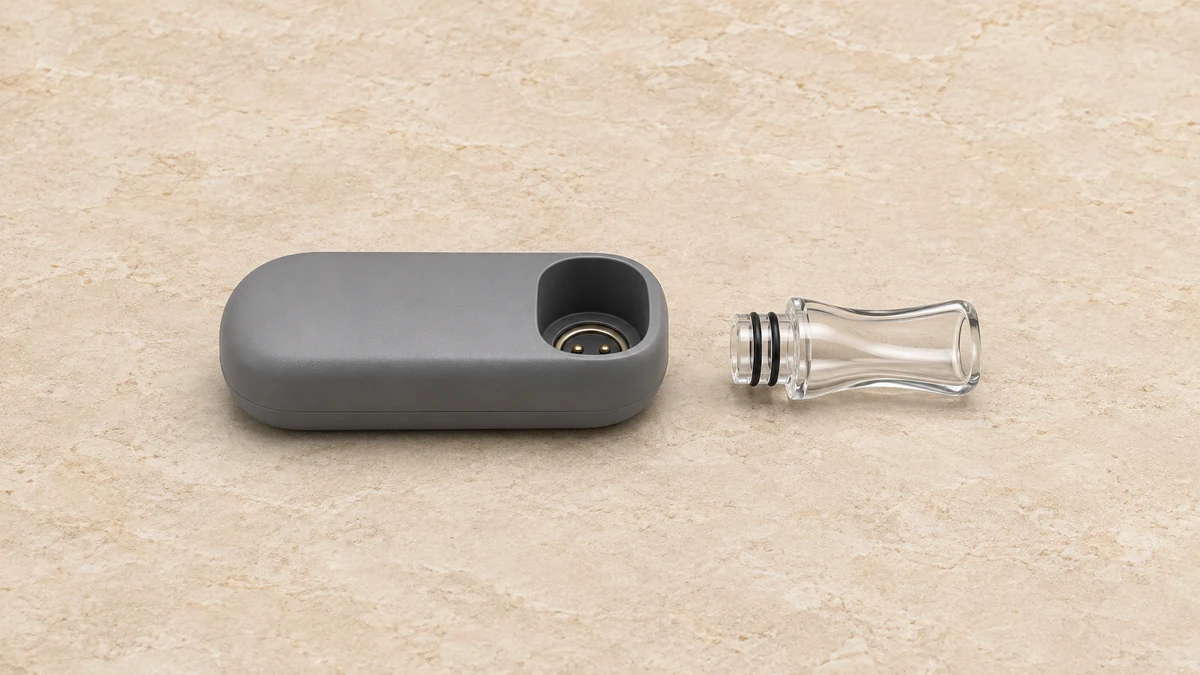
A fit complaint can involve a gap near the seat, a loose glass top, or an inlet hidden behind the collar. Describe which part appears to move and where the gap is visible on the cool, empty hardware. A photo of the mouthpiece alone leaves both of those details out. When a spare arrives with a separate ring, the contents list can establish whether the ring belongs to the glass or to the device base.
Suppose the original glass sits flush but a spare appears higher on one side. Photograph the two lower profiles next to one another at the same scale. Look for a wider flange, a different position for the flexible seat, or a part that remained in the device when the original came off. Describe these as visible differences. The model maker can tell you whether the spare is the expected version and whether the gap is relevant for its particular mount.
A comparable photograph is most helpful when the camera looks straight across the lower edges. An image tilted down can hide a shallow shoulder. A level image shows the height at which the glass begins to widen and the distance to the inlet. Add the model name from the device and the part number from the packaging if both are available.
🔄 8. Separating a Glass Change From Other Hardware Changes
A joystick-style cap belongs to the chamber assembly. A glass top connects to a separate location on the base in the documented layouts discussed here. When both parts appear in one listing, check the name and model scope for each line. A box photo may show the base, cap and glass together without saying which parts are included. A side image of the assembled device helps locate the parts, while the packing list tells you which are in the box.
🗂️ 9. Sorting a Mixed Collection of Dry Tops and Water Chambers
Keep each loose top and its documentation together. A small label on the storage compartment can include the full model, the seller’s part name and whether the maker describes it as dry or water glass. For broader context, the guide to dab rig types shows why a water pipe joint and an electronic rig’s glass seat belong to different families of hardware.
When two replacement pieces look almost identical, photograph their undersides next to each other before they go back into storage. Keep any detachable seals in labeled separate compartments if the manufacturer identifies them as spare parts. If you later need help identifying one top, its photo and label will let you ask about a particular part instead of describing both as “the clear glass.”
📷 9.1 Photograph the Glass From the Seat Up
Imagine a repair bench with two clean, empty glass tops whose outer shoulders look nearly identical. One has a continuous bent passage visible from its base. The other has a transparent wall outside a smaller internal tube. A photo looking directly into each mouthpiece may make both parts look like open tubes. Turn the glass sideways against a plain background and the space around the smaller tube becomes easier to see. That space is the kind of feature a product drawing can identify as part of a reservoir, even when the top arrives empty.
Take one photo of the underside with the full seating edge visible, then take a side photo with the bottom edge in the frame. The first shows where the inlet opens. The second shows how high the shoulders sit relative to the base. If a case is the reason for comparing the parts, include a view of the case pocket beside the glass. The tight point may be the change in width near the base instead of the height of the mouthpiece.
In a photograph of an empty water chamber, the dip tube can be hard to see when it runs directly behind the front edge of the glass. Move the camera slightly to one side and keep a stable background. A second view can show where the tube ends and whether the surrounding space is part of the same assembly. When a diagram is available, make the same comparison with the two views shown there.
Some owners keep a base and several glass attachments in the same case. Put the attachment name and model number on the individual storage slot, especially if two transparent tops have the same height. If a seal is included separately, its label can record which piece it came with. The box label may identify a product family while the instruction sheet identifies the specific top. Keeping both makes a later support request more precise.